In the world of romantic comedies, there are certain tropes (common or overused themes) that come up again and again. In this series, starting with Pride and Prejudice, I’ll analyze Jane Austen’s novels and identify the best romantic tropes used in each one – with the goal of proving that Jane Austen not only used romantic themes ingeniously but also played an important role in developing several key plot devices that are regularly used in modern filmmaking today.
Defining the Relationship
When you look down the list of common themes used in modern romantic movies, there are many to choose from. There’s “Best Friends Turned Lovers,” “The Girl/Boy Next Door,” “Stuck on an Island/In a Car/On a Plane,” “The Makeover,” and of course the “Love Triangle.”
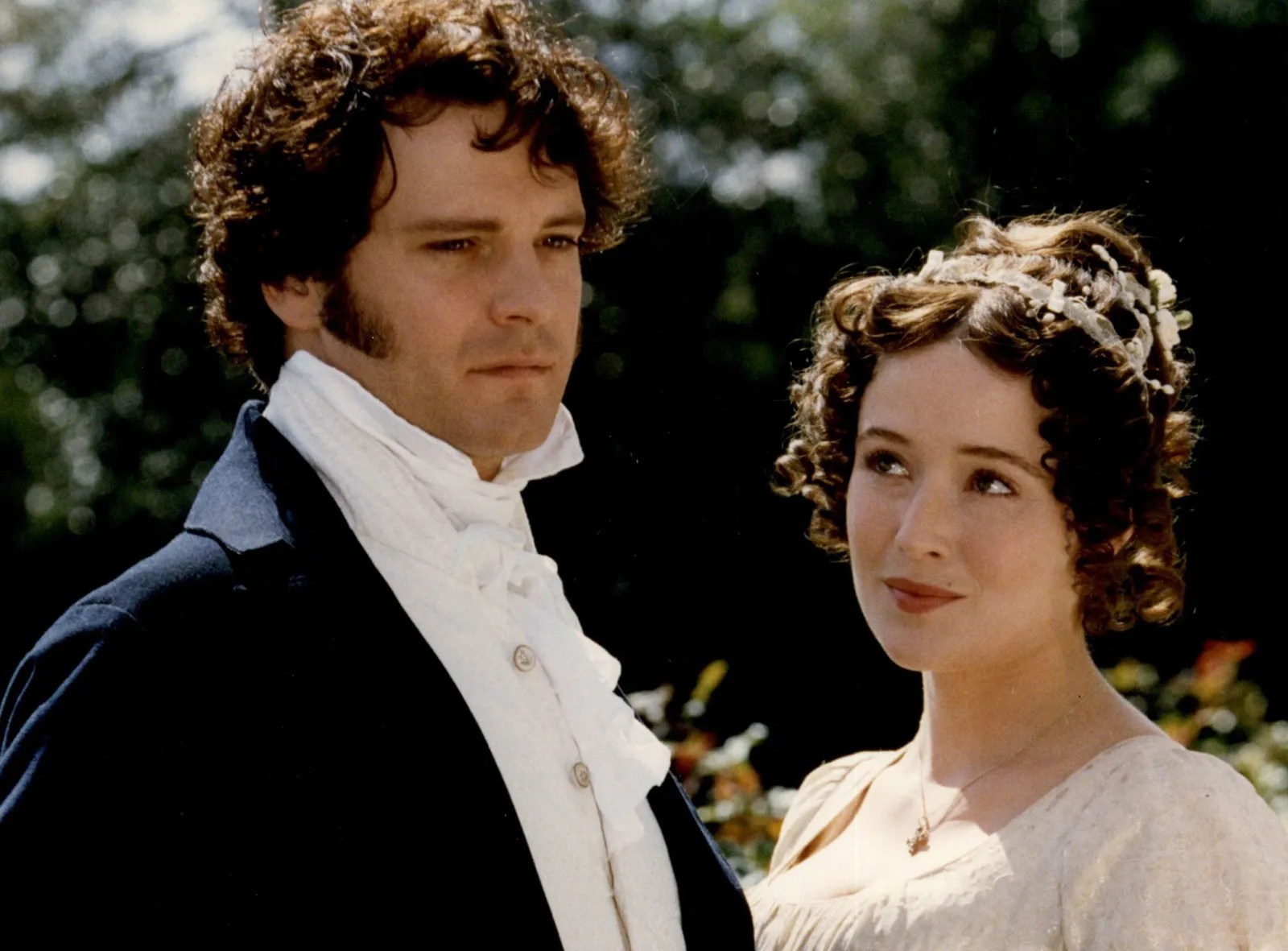
When it comes to Pride and Prejudice, we can all agree it definitely does not utilize a “Cute Meet-Cute” to kick off the romance between Elizabeth and Mr. Darcy. It does seem to fit the “Opposites Attract” theme rather well. However, the theme that Pride and Prejudice models most perfectly is the “Enemies-to-Lovers” trope.
The “Enemies-to-Lovers” plot is one of the most popular themes used in romantic books and movies today. Austen modeled it so well that many romantic movies have borrowed (whether knowingly or unknowingly) from Pride and Prejudice. Though Austen didn’t invent the idea of rivals falling in love, the chemistry she created between Elizabeth and Darcy is unmatched. Modern era movie-makers continue to utilize the heat-factor Austen tapped into with her “Fitz-Lizzy” combo.
Enemies at First Sight
We see this theme play out in many popular romantic comedy movies. A huge majority of Hallmark (and Hallmark-like) movies start with a misunderstanding, a bad first impression, or enemies / rivals who fall in love.
However, it’s not just the made-for-tv rom coms that utilize this popular theme. Some of the highest grossing “date movies” have used some variation or other of the enemies-to-lovers plot. One IMDB list, “Enemies-to-lovers Movies,” includes over 80 titles!
Here are a few popular movies that caught my eye from that list:
When Harry Met Sally, You’ve Got Mail, New in Town, How to Lose a Guy in 10 Days, Runaway Bride, What Women Want, The Breakfast Club, The Cutting Edge, Sweet Home Alabama, A Walk to Remember, Someone Like You, Silver Linings Playbook, Leap Year, Life as We Know It, Letters to Juliet, 27 Dresses, As Good as It Gets, Picture Perfect, French Kiss, and Bridget Jones’s Diary.
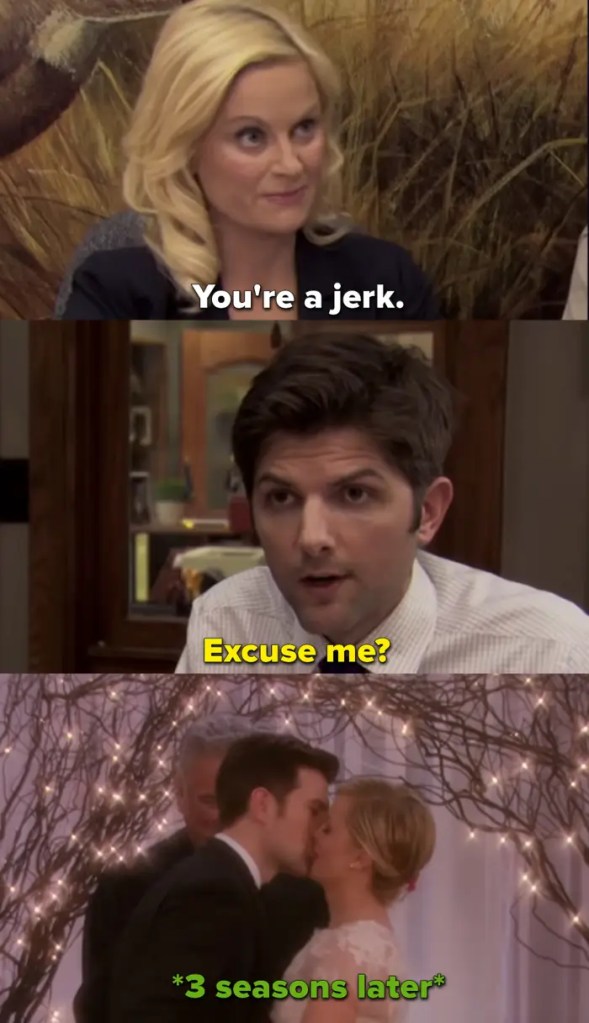
I’m sure there are many other movies (and books) you might add to the list! BuzzFeed nailed it with this funny graphic about Parks and Recreation:
Recipe for Love
The enemies-to-lovers recipe is pretty potent stuff; in order to understand it better, we need to analyze the ingredients that make it possible to change a rivalry into a romance.
The following steps are used in many enemies-to-lovers plot lines. I’ve included modern movie examples for each, plus the clever building blocks Austen used in Pride and Prejudice to create the sizzling chemistry between Elizabeth and Darcy.
It’s the friction between the two characters that provides the spark for romance!
Step 1: A Bad First Impression
In the enemies-to-lovers trope, rather than a meet-cute, there’s a bad first impression (or a “Bad Meet-Cute”) that starts the action. This is where the soon-to-be-lovers first meet and get off on the wrong foot. The fall-out from this first meeting sets the stage for the rest of the story.
You can find the heroine’s “enemy” in a modern rom-com because he’s the one who makes the main character bristle at first sight. He’s the guy that made fun of her growing up, the one who took her spot on the debate team, the business man who stole her cab, or the flower shop owner across the street who’s putting her out of business. (Side note: The “enemy” is usually infuriatingly good looking.)
Bottom line: There is always an initial misunderstanding that causes the two leads to get off on the wrong foot.
Modern Example:
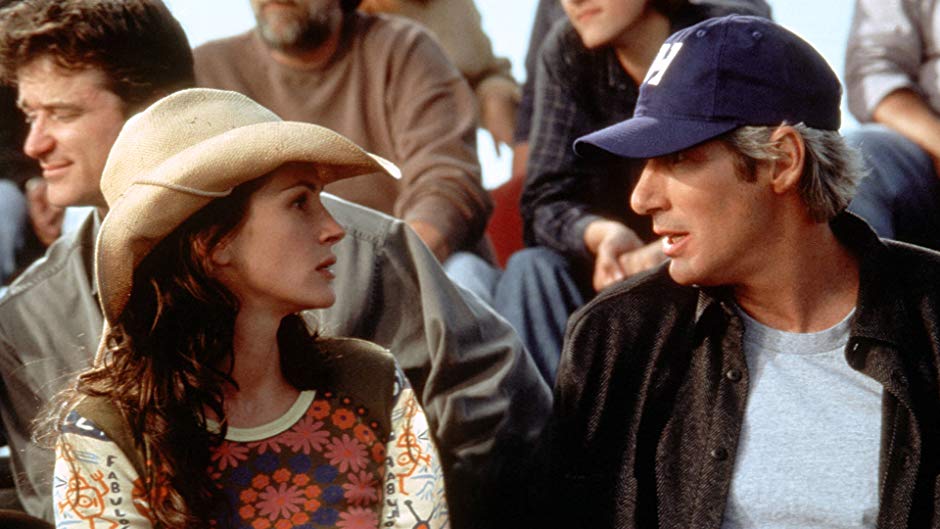
In Runaway Bride, Ike writes an erroneous newspaper article about Maggie, so Maggie gets him fired. From that moment forward, she sees him as the jerk journalist from the big city who made her a laughing stock. Meanwhile, he sees her as the “man eater” who cost him his job. As with most rom coms, their anger-to-attraction ratio sets off some serious fireworks.
P&P Example:
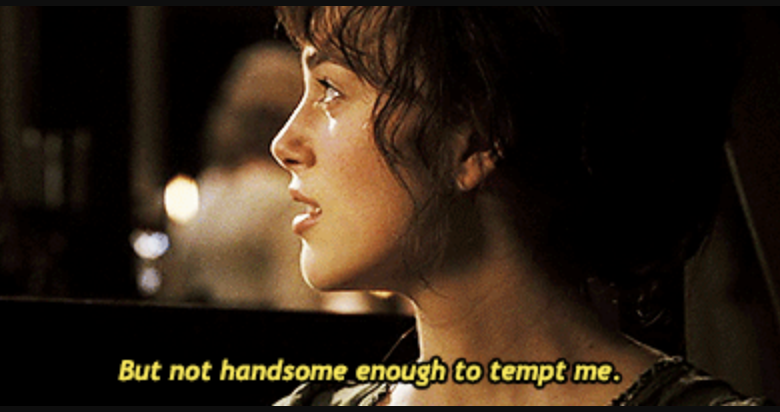
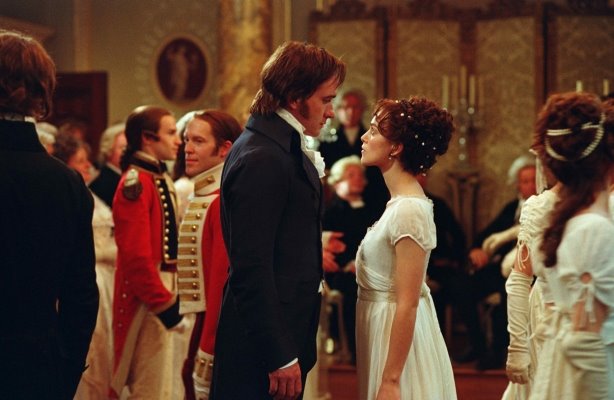
There’s a reason Jane Austen’s first draft was titled “First Impressions.” In Pride and Prejudice, the bad first impression occurs when Mr. Darcy snubs Elizabeth at the ball when they first meet. She overhears Darcy when Bingley says he should dance: “You are dancing with the only handsome girl in the room.”
Worse yet, she hears his response when Mr. Bingley suggests he dance with her: “She is tolerable: but not handsome enough to tempt me; and I am in no humour at present to give consequence to young ladies who are slighted by other men.”
The end result: “Elizabeth remained with no very cordial feelings towards him.” She makes light of it it later, but it affects her more than she lets on. In the history of bad first impressions, Mr. Darcy’s is one of the worst!
Step 2: Confirmation
After the initial meeting or bad impression, there is a series of events in which the main character continues to see the other only through the lens of their first impression.
In this scenario, every next move the characters make only continues to confirm their bad first impressions. When one character tries to make amends or tries for a “do-over,” it usually doesn’t go well. As the characters continually bump into each other, they rub each other wrong. Often, there are further infractions and snubs that add to the initial impression.
Modern Example:
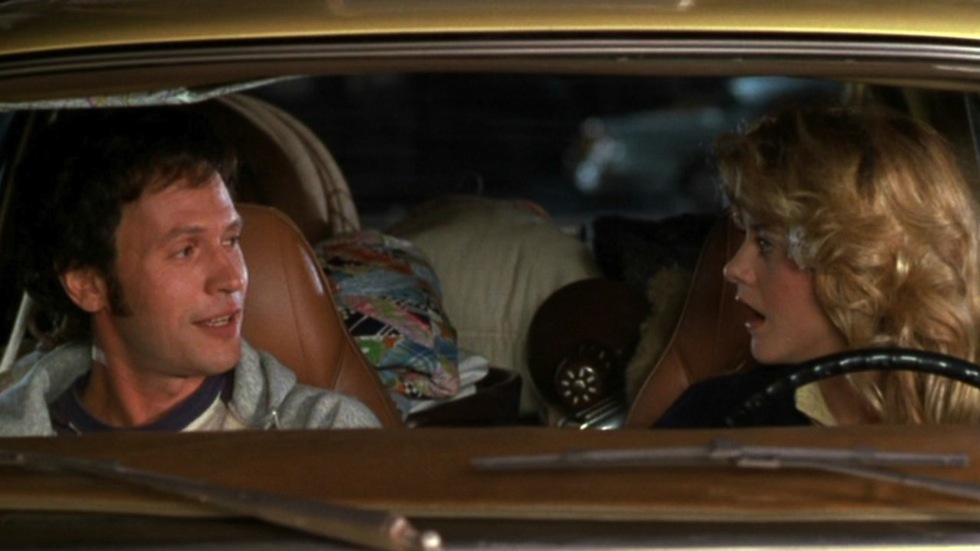
In When Harry Met Sally, Sally’s first impression of Harry, when they drive together on a long road trip, is that he’s arrogant and insensitive. Sally’s bad first impression of Harry is confirmed when they meet several years later. At first, he doesn’t recognize her. Later, he remembers who she is and offends Sally by asking if they slept together in college. Because of their initial interactions, Sally sees Harry as purely guy-friend material until much later in the movie.
P&P Example:
While Darcy finds himself more attracted to Elizabeth at each of their subsequent meetings, Elizabeth’s view of Darcy is unchanged: “to her he was only the man who made himself agreeable nowhere, and who had not thought her handsome enough to dance with.”
Austen builds on this negative first impression by adding further complications. From that first meeting, everything Darcy says or does is interpreted by Elizabeth through the lens of his bad first impression: When Mr. Darcy interferes with Jane and Mr. Bingley, it can only be because he’s arrogant and looks down on the Bennet family. When Mr. Wickham tells his tale about Darcy, Elizabeth quickly believes Wickham must be telling the truth (because Wickham is handsome and charming and Darcy is proud and rude). It takes several meetings, a lot of lively banter, a (bad) first marriage proposal, a lengthy explanatory letter, a visit to Pemberley, and a grand gesture to change Elizabeth’s mind.

Step 3: Attraction
During this step in a rom com, at least one character begins to see something unexpected in the other that makes them reconsider their first opinion. Beneath the initial animosity, anger, or annoyance, attraction begins to build and the characters find themselves (inexplicably) drawn to one another.
Arguments heat up (in more than one way) and turn into exasperated banter that one or the other finds enjoyable instead of infuriating. The characters begin to soften toward one another. Either one or both find that they can’t stop thinking about the other person.
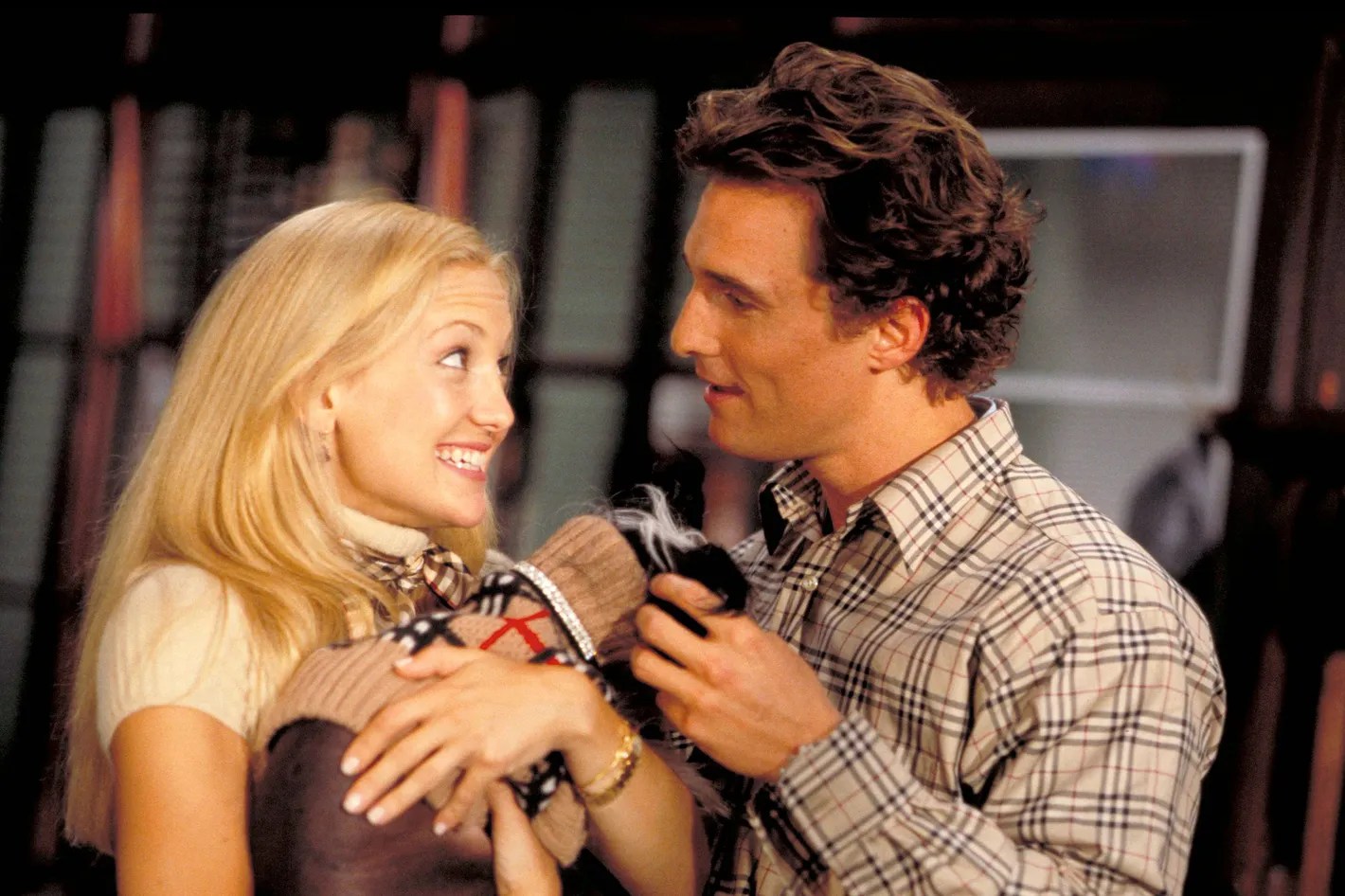
Modern Example: In How to Lose a Guy in 10 Days, Andie and Ben are in a fierce competition–but neither of them knows what the other is doing. While Andie does everything she can to prove she can lose Ben in 10 days, Ben tries to prove that he can make a girl fall in love with him in 10 days. As they face off, instead of pushing each other away, they both find the competition exhilarating.
P&P Example:
In Pride and Prejudice, while it takes longer for Elizabeth to realize her attraction to Mr. Darcy, this stage happens almost immediately for Darcy:
“…he began to find [her face] was rendered uncommonly intelligent by the beautiful expression of her dark eyes . . . he was forced to acknowledge her figure to be light and pleasing; he was caught by their easy playfulness.”
When Elizabeth refuses to dance with Darcy, he isn’t offended: “Her resistance had not injured her with the gentleman.” In fact, he stands in pleasant reverie, thinking about her: “I have been meditating on the very great pleasure which a pair of fine eyes in the face of a pretty woman can bestow.”
While it takes longer for Elizabeth to realize her attraction to Darcy, there’s no arguing the fact that she dearly loves to tease him, verbally spar with him, and toy with him right from the start. She flirts and makes fun of him because she thinks he’s always brooding and judging and looking down on her; meanwhile, he finds her absolutely bewitching.

Step 4: Making Amends
In this step of the typical enemies-to-lovers romantic movie plot, one character tries to make amends, smooth over ruffled feelings, explain a misunderstanding, or admit fault.
In this phase, there may be more misunderstandings and more complications, but it’s an important step toward the two main characters seeing each other as they really are and not as they first appeared. Often, the characters *just happen* to bump into each other on many occasions by chance. In this phase, one character tries to win over the other. Both begin to try to put their best foot forward.
Modern Example:
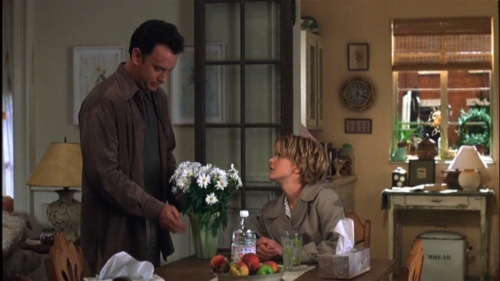
In You’ve Got Mail, Joe tries to show Kathleen that he’s not a heartless business man but is actually the secret pen pal she’s fallen in love with. He meets up with her, takes an interest in her world, tries to give her business advice, and asks her to be his friend. When she’s sick, he brings her daisies—her favorite flower—and take cares of her. Kathleen finds herself wishing Joe was her secret pen pal.
P&P Example:
In Pride and Prejudice, Elizabeth’s demeaner toward Darcy begins to soften over time as she gets to know him. First, she’s surprised and touched by his fondness for his sister. Later, when she reads Darcy’s letter, the narrative she’s believed about him is shattered. Next, when she visits Pemberley and he’s kind to her and her aunt and uncle Gardiner, her heart melts even further. (And it doesn’t hurt that Pemberley is quite something to behold!)
In each instance, as Darcy tries to put his best foot forward, Elizabeth notices something further about him that she didn’t realize before. She finds out that he’s more reserved than arrogant, that he keeps a close circle of family and friends, and that he isn’t naturally at ease in social situations. She notices that he cares for his sister Georgiana, for her aunt and uncle, and finally for her entire family’s reputation. When she visits Pemberley and realizes that he wants to make a good impression on her and on her relatives – and that he wants her to meet and get along with his sister – she is thrown off balance in the most delightful way.

Step 5: The Grand Gesture
In these types of romantic storylines, there is usually a moment where the “enemy / rival” often does something to save or help the other character. There is a great sacrifice or grand gesture that seals the deal.
Often in this phase, one characters needs help (or convincing) and the other swoops in to save the day in order to prove their love for the other character. This phase may also include apologies, gifts, or messages.
Modern Example:
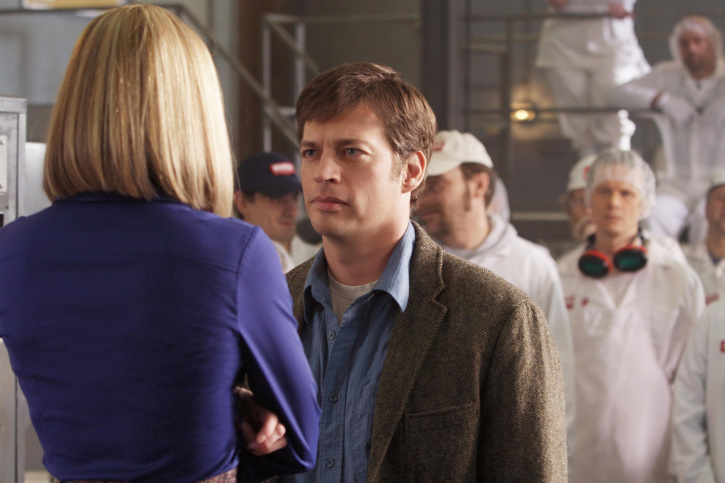
In New in Town, Lucy gives up her high-profile job in Miami and moves to Minnesota permanently. She negotiates a deal to save the local factory, makes it into an employee-owned company, and saves everyone’s jobs. She proves to Ted that she’s more than just a suit and that the people she loves are more important to her than any job.
P&P Example:
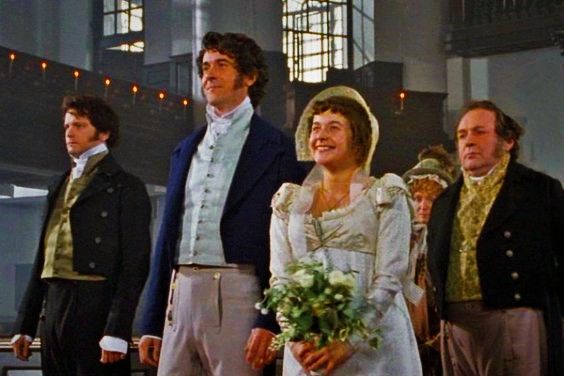
Austen sets the bar pretty high for grand gestures when Mr. Darcy personally hunts down Wickham and Lydia, forces Wickham to marry her, and pays off his enormous debts. He even tries to do it quietly, so that everyone will believe it was Mr. Gardiner who made all the arrangements. When Elizabeth later thanks him, he tells her that he did it for her:
“If you will thank me,” he replied, “let it be for yourself alone. That the wish of giving happiness to you might add force to the other inducements which led me on, I shall not attempt to deny. But your family owe me nothing. Much as I respect them, I believe I thought only of you.”
You Be the Judge
Do you think Pride and Prejudice has had a lasting affect on modern storytelling? Why are we drawn to the enemies-to-lovers theme? Are there other books or movies that fit this theme that I didn’t mention?
I’ll continue this series next month by looking at other common themes in modern romantic comedies that share similarities with Jane Austen’s great works. Next time you watch a favorite movie, start tracking how many plot devices hark back to our Jane!
RACHEL DODGE teaches college English classes, gives talks at libraries, teas, and book clubs, and writes for Jane Austen’s World blog. She is the bestselling author of The Little Women Devotional, The Anne of Green Gables Devotional and Praying with Jane: 31 Days Through the Prayers of Jane Austen. Now Available: The Secret Garden Devotional! You can visit Rachel online at www.RachelDodge.com.







 Jane Austen's World
Fascinating dissection, thank you!
I’m glad you enjoyed it – it was fun to write and research!
Yes, she did. I had a very similar conversation on another blog recently using modern movies and relating the tropes to classic books like Pride and Prejudice.
denise
It’s a fascinating subject!
An accurate analysis – true to P&P, and the rom coms I like. You’ve Got Mail is my favourite. It has the same social satire and character depth as in P&P. It is also a true depiction of the bookselling business at the time. I was very close to the conflict between the pure-minded small bookseller and the big chains waving their profit figures.
Thanks for an interesting post. We’ve added a couple of movies to our watchlist now!
Excellent and fun post! Thankyou
Thank you for the reminder of Jane Austen’s modern adaptions. The banter between the couple before reaching an understanding is the most fun of the movies. My husband would say typical women genre. But I dearly love to laugh and I’ m thinkIng there are not so many really good ones, with clever dialoges, attraction and al lot of chemistry, some brizzel in the air. Jane Austen did write very exactly these things. I’m happy for all the good authors we have. Today in this FF genre their imagination with a lot of knowledge, twisted plots and fun is very entertaining. Some would make a good movie.