Feeds:
Posts
Comments

Archive for the ‘Bath’ Category

25 Gay Street, Bath

Jane Austen’s father died in Bath on January 20, 1805, leaving the family income depleted. Jane & Cassandra had no resources of their own. Their brothers contributed to their income, which was around 460 pounds per year. The sisters moved to #25 Gay street, reducing their staff from a man and two maids to just one maid of all work. The following year they moved to another house in Trim Street.

Jane Austen Center on Gay Street

For more scenes of Bath, click on the Bath Daily Photo.

In Persuasion, Jane writes:

“Sir Walter had taken a very good house in Camden-place, a lofty dignified situation, such as becomes a man of consequence…they had the pleasure of assuring her…undoubtedly the best in Camden-place; their drawing rooms had many decided advantages over all the others which they had seen or heard of; and the superiority was not less in the style of the fitting-up, or the taste of the furniture. Their acquaintance was exceeding sought after. Everybody was wanting to visit them. They had drawn back from many introductions, and still were perpetually having cards left by people of whom they knew nothing.”

On p. 181 in Jane Austen’s Town and Country Style, Susan Watkins says, “As with most resort towns, friendships were quickly formed. In Bath new acquaintances were the means to an introduction to other fashionable visitors, so as to be placed among the select society, although back in London these ‘friendships’ were quickly forgotten.”

Read Full Post »

Bath Daily Photo

The Crescents (top)
St. James Cemetery (left)

The Bath Daily Photo by James Russiello offers photos of sites that are both familiar (in Jane Austen’s World) and unfamiliar (in the 21st Century.)

Here are a few wonderful photos.

Pultney Bridge (right)

Read Full Post »

Sally Lunn’s House in Bath

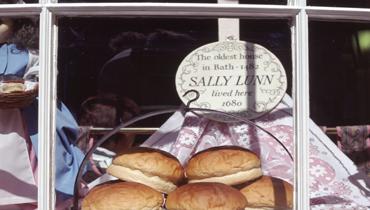
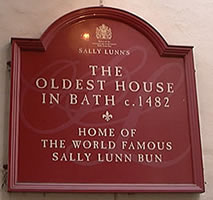
The oldest house in Bath is now know as Sally Lunn’s House, a picturesque building built in 1482 and located near Bath Abbey. The shop’s specialty for over 300 years has been the Sally Lunn Bun, a semi sweet bread made from brioche dough that tourists still purchase by the dozens to take home or eat on the spot in a small tea room setting.

Sally’s history may be more lore than fact. Some say she was a young French woman who lived in the late 17th century and sold bread on the street for a baker. Eventually she found work in a kitchen and began making a bun with sweet or savory toppings that became famous. Others say that the bun was originally created in France, while still others claim that Sally was English and the daughter of a local pastry chef.

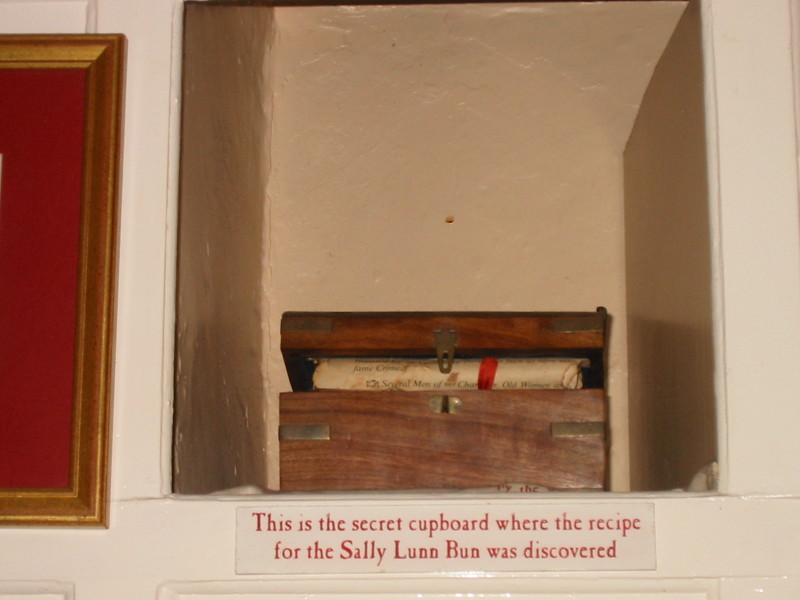
Whichever is the case, the shop, wildly popular during the Georgian Era and open for breakfast and tea, still attracts customers in droves. The orginal recipe of the Sally Lunn Bunn was discovered in the kitchen and was passed down along with the deed to the house.

Today’s visitors can visit the cellar to see the Roman foundations (c. 200 AD) and medieval kitchen (c. 1150 AD). The building itself was erected in 1482, and the stone facade added in 1720.

The following comes from the Sally Lund’s Museum in Bath, England:

“Legend has it that from her home in France, where the Protestant Huguenots were being cruelly persecuted, came young Sally Lunn to find employment with a baker who rented premises in Lilliput Alley. She sold his wares in the street, but when her skill at baking Brioche was discovered she no doubt spent for more time in the bakery itself. Sally Lunn’s Buns were a tremendous success; others tried hard to copy them, but her skill with the rich, soft and delicate dough inspired customers specifically to request the Sally Lunn. ”
Sally Lunn’s

4 North Parade PassageBath BA1 1NXTelephone: 01225 461 634

Read Full Post »

Jane Austen and Bath


Jane Austen and Bath from Ellen Moody’s website leads to a fascinating article and photographs of the places in Bath Jane Austen visited or wrote about. Most of the photos were taken during the 1940’s or before.

Read Full Post »

All Things Bath

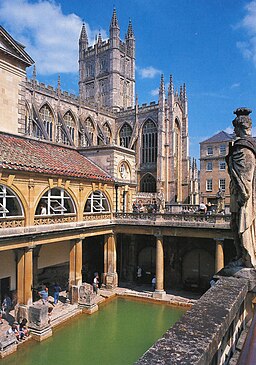
Bath Abbey, Roman Baths, Wikimedia Commons, Public Domain

Links to important places in Bath.

Read Full Post »

« Newer Posts