 Inquiring readers: This is the third guest post by Christine Stewart, who has embarked on the year-long Sense and Sensibility inspired project on her blog, Embarking of a Course of Study. Read her biography on Poets and Writers. Enjoy!
Let’s just say how much I am enjoying rereading Northanger Abbey. The first few times I read it, I think it was right after reading P&P or S&S and I was still steeped in all the (I was going to say romance, but Austen doesn’t really do romance) push and pull, hopes and dreams, of the characters’ road to marriage (let’s go with that), so I was frustrated with the satire and play and narrator’s voice in the book at times – because I wanted it to be another P&P or S&S or Persuasion.
Well, it’s a rollicking good time now and I can appreciate it for all its charms and cleverness. It’s the one book where Jane’s voice speaks to you directly and it’s a fun dialogue. Her wit is beyond compare! She really goes full force, no holds barred. Awesome.
It’s gotten me thinking how much of her characters’ character, and whether they take the high road or low and end up where they want to go, is tied to books. Books have power – whether read or written (women created some measure of independence – money – through writing) – and they make or break the character and her future. The wrong ones give you the wrong ideas and make you the wrong fit (and wrong-headed) for the partner who could have been right otherwise. I’ve mentioned this before, but I’ll say it again. The heroines who do well are the ones with self-command, self-awareness, and the power of self-examination. The ones that follow (to the greater degree) the rules of propriety, and who have a handle on their emotions, go the furthest.
 This is something many women may not be taught today, as young girls. Yes, as children, we knew about behaving at the dinner table and in malls, etc., but I’m pretty sure my friends and I never heard word one about dealing with/managing our emotions (fears, worries, even joys), so they didn’t rule us. And self-examination? What??? Who heard of that as a teenager or young adult, when you needed it most?
With all the silly (ok – STUPID) magazines we read – Tiger Beat, Seventeen, Mademoiselle, Cosmo – that were all about dressing and making oneself up for a man and making him feel important, forgetting about what was inside us and making ourselves feel good first, we didn’t stand a chance. And then it became all about career – women ‘having it all.’ Always looking outside, not inside for ways to manage our lives. Media in general was not (and still isn’t) responsible in how it communicates with young women. And most of our parents didn’t know how to help themselves let alone us.
There’s been a big resurgence of self-help books, classes, and videos geared towards teaching women how to relate to men, how to get what they want from men, how to meet the right one and marry him. Think Bridget Jones’ Diary. But it’s even larger now. Being 43 and single, I get targeted for these kinds of ads/info on the Internet. There’s a huge industry with audio, video, books, teleconferences, soulmate kits, vedic astrology readings, and more. Who knew?
It’s really boomed since The Secret came out and the masses learned about The Law of Attraction on Oprah. It’s a new (and very commercial – because that’s what we Americans do best) version of the ‘how tos’ that Austen’s characters (the sensible ones) demonstrate for us.
And guess what? It’s all about self-examination, self-awareness, and self-command. That’s the good news. It’s still about reading the right books, which is still a minefield experience. That’s the bad.
 Let me ‘share’ that about 13 years ago I had an anxiety disorder that lasted for several years (panic attacks and everything, good times), and that taught me those three skills. It forced me, more like, but I hadn’t known or seen their necessity in my life to that point, so that’s what it took for me to wake up, apparently! I’m grateful that it happened as it was a major turning point in my life and a constant reminder to keep up those practices. It’s not an experience you forget. Still, would have been easier to have had good examples in life and books instead….
So what do you think? How were you raised? Who were your examples/models of womanhood? Do you regularly take stock of your feelings and behavior and adjust where needed? Do you put yourself first (not thinking selfish here, there’s a difference), take care of yourself? Make hard choices/decisions? I’d love to hear.
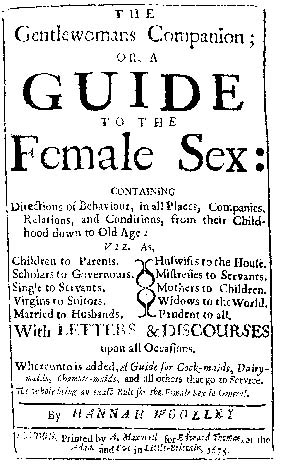
Stop by the website and comment, and check out a video of Jane Austen’s House (12/11 post), and a link to The Gentlewoman’s Companion, or A Guide to the Female Sex (11/30 post). Let’s read along together!
Enjoy Jane’s birthday!







 Jane Austen's World
Hi Christine,
Lately I have been reading reactions towards Northanger Abbey all over the web, and many readers have reactions similar to yours – that they disliked the book the first time around, or didn’t warm to it as much as P&P, and that they appreciated its finer qualities and satire as they matured. In my case, I didn’t like NA until I listened to it on tape. Spoken, the book is a marvel.
As for how I was raised as a girl – I always knew I would have a career. My divorced mother was quite independent and only expected me to marry someone who was my intellectual equal. Not that I am all that bright, but she did not want me to dumb myself down to catch a man, if you get my drift. I was also influenced by my peers and their mothers, and I have often wistfully thought that I never really got to look pretty in pink. I never had the Barbie dolls (thought them ugly), planned a rather small, intimate wedding without all the trappings, rarely went shopping (even now I hate the process) or gossiped over the phone with girlfriends.
That is why Jane’s letters to Cassandra so surprise me. They are full of girlie details and the womanly concerns of cooking, shopping, clothes, and dancing. Very enlightening. One can be a genius and show interest in the mundane without giving up one’s identity or compromising one’s talent. If Jane taught me anything it’s that life is rich no matter where one lives, what challenges you face, or how much spare money you have in your pocket.
Thank you for a most interesting post. Vic
I am thoroughly girlie but had the benefit of reading Austen at a young age, so I learned to check some of this characteristic’s worst manifestations. The first of her books I ever read was Northanger Abbey and it is amongst my favorite of her novels. Books have a remarkable power and Northanger Abbey taught me not to live too much in them, at a time when I was remarkably prone to do so, while awakening a lifelong fascination with Austen’s writing. She has taught me so much about self-examination, self-aware, and self-command – I know very few people who manage themselves as well as Anne Elliott or Elinor Dashwood but, ever since first reading Austen, have attempted to try and do so myself. It is an ongoing struggle.
Christine,
Loved reading your post! Isn
t some of what self-examination and self command is also called old fashioned? Now a days you are encouraged to say it all out, put yourself out there and sometimes bare it all in terms of emotions and behavior. Indeed it it the thing to do on reality TV. Isn’t cat-fight with claws out is what we see in those bachelor shows on reality TV. I did grow up in an env that did say I need to self-examine and not be given to sensibility as Austen would say, but self-aware arena that is definitely I am lacking in. Learn to love oneself in a non-selfish way probably comes only ever so slowly to me. Not to say I don’t lose my temper ever or I am perfect in every way.
I love Austen analysis of human character and how she does it with humor without preaching or sermonizing. I haven’t read Northanger Abbey yet, but you have given me a push to start with your musings on character.
Vidya
I started reading Jane Austen when I was 15 and I must say she has been a really major influence in my life. First of all I learned the importance of self discipline and of interacting with others in a graceful way. One can speak one’s mind without being loud or rude, it just takes a little bit of practice. This of course does not mean that feelings are not important, quite the opposite, but one doesn’t have to express them without considering also other people feelings as well.
I always enjoyed the keen observations of human nature which has not changed at all. Every time I reread an Austen book I feel like I’m learning something new about life, even after so many years.
[…] Austenolatry Possibly related posts: (automatically generated) […]