• Home
  • Audio/Podcasts
  • Austensites
  • AV/E-Texts
  • History
  • JA Novels & Bio
  • Links
  • Original Sources/19th C. Texts
  • Social Customs During the Regency
  • Teacher/Student
  • Writer/Literature Resources

Jane Austen's World

This Jane Austen blog brings Jane Austen, her novels, and the Regency Period alive through food, dress, social customs, and other 19th C. historical details related to this topic.

Feeds:
Posts
Comments
« Pride and Prejudice 1995: 20 years Later
Awkward! The Regency Court Gown: Regency Fashion »

Buttons, Georgian Style

October 18, 2015 by Vic

For a few years I have been collecting images of beautiful hand-crafted 18th century buttons on my Pinterest board: Buttons, Georgian Style. The buttons, as you can see from the collection, are tiny works of art. Some feature scenes or portraits, others are embroidered or worked metal.
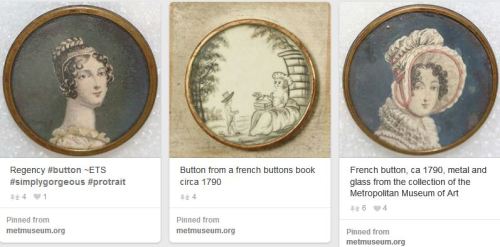
Buttons from the collection at the Metropolitan Museum of Art.
Buttons from the collection at the Metropolitan Museum of Art.

Button with shank

Button with shank

The history of buttons is fascinating. The earliest discovered button was made 5,000 years ago from a curved shell. It served a decorative function and fit into a loop, such as for a heavy robe or flowing garments. By the middle ages, the wealthy began to wear buttons that helped to fit their clothes more tightly around the body. Unlike today’s buttons, many of which are punctured with holes, most buttons back then were made with shanks, which gave button-makers leeway to decorate button faces with artistry and imagination.

Buttons for men's coats

Buttons for men’s coats

The first button-makers guild was formed in France in 1250. Only the very wealthy – kings and nobility – could wear buttons then. They were such a valuable commodity that one could pay off a debt with a single button. Ladies could detach their sleeves with laces or bows or buttons. These sleeves could be washed separately from their garments, exchanged with other outfits, or even given to a lover as a token. During the Renaissance, luxurious buttons indicated social status. King Francis I ordered buttons from his jeweler; Henry VII met his future wife, Anne of Cleves, wearing bejeweled buttons.
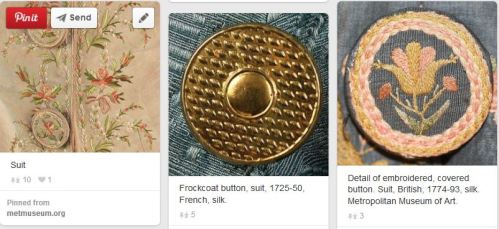
more buttons

As an aside, ladies wore their buttons on the left to make it easier for their maids to dress them. Men usually dressed themselves and thus their buttons were placed on the right. Button decoration, of course, changed with the taste of the time, from the renaissance to the baroque, to rococo, and neoclassic. By the mid-18th century, the more prosperous middle class merchants advertised their new status wearing elaborate and expensive buttons.

Steel Buttons

In a period when ladies were piling towers of greased and powdered hair on their heads, men were adorning themselves with immense cut steel buttons and shoe buckles. One exquisite thus decorated gives a lady a Coup de Bouton which has the same effect as a mild sunstroke Plate XXVI, Social Caricature in the Eighteenth Century, George Paston, 1902, Google eBook

The variety of buttons made in the 18th century was staggering. They were crafted with ceramics, enamel, fabric, metal, repoussé or hammered metal, horn, bone, tortoise, gemstone, glass, ivory, papier mache, wood, iridescent white oyster, conch,  and materials under glass, such as fabric paint, feathers, paper collage or decoupage, etc. Dandies in the Georgian era resembled colorful peacocks, dazzling onlookers, as the caricature above points out. Beau Brummel’s influence on male fashion subdued such bright fripperies.
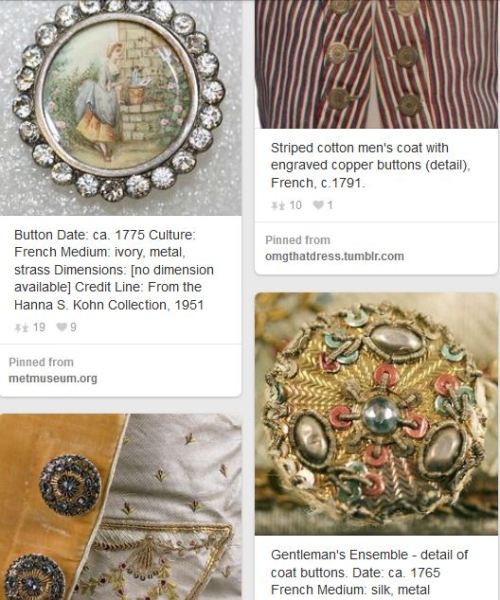
buttons met museum2

Buttons also took on many forms, like those that were hollowed-out for smugglers to carry contraband for transporting jewels .The poor fashioned their own buttons from bone, horns, shell, or wood. Dorset buttons, which resembled tiny wheels, were made by binding linen yarn or cheap woolen yarn over a disc.
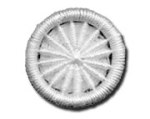
dorset_button

Dorset button image from the Dorset Guide. Dorset Guide.

There was quite a cottage industry for Dorset buttons at this time. Work was scarce in that region in the mid-18th century, but there were some women who made buttons from home. This was a primary industry in Dorset for over a century. Women workers, often the sole breadwinners of the family, averaged 2 shillings a day for making 6 or 7 dozen buttons, which provided more preferable conditions for making money than laboring on a farm. Tracey Chevalier wrote a novel, Burning Bright, which was about Philip Astley and his amphitheatre. In it she featured a girl from Dorset who made buttons for a living – fascinating.

Interestingly, these beautiful buttons on my Pinterest page were worn by males. It wasn’t until the mid-19th century that women’s clothes began to feature buttons again. During the Georgian and Regency periods women’s clothes were pulled together and kept in place by laces, pins, sashes, and bows.

Links:

  • Booth Draper – Buttons
  • Byson Buttons
  • National Button Society
  • A History of Buttons, PDF
  • The Simple, Humble, Surprisingly Sexy Button: Slate

Share with others:

  • Click to email a link to a friend (Opens in new window) Email
  • Click to print (Opens in new window) Print
  • Click to share on Facebook (Opens in new window) Facebook
  • Click to share on Reddit (Opens in new window) Reddit
  • Click to share on X (Opens in new window) X
  • Click to share on Pinterest (Opens in new window) Pinterest
  • Click to share on Tumblr (Opens in new window) Tumblr
  • Click to share on LinkedIn (Opens in new window) LinkedIn
Like Loading...

Related

Posted in Clothes, Jane Austen's World | Tagged Georgian era buttons, Regency Fashion | 17 Comments

17 Responses

  1. on October 18, 2015 at 13:11 Sarah Waldock's avatar Sarah Waldock

    I’ve made Dorset buttons, but on a ring, not a disk. I’m puzzled as to how to do the edging on a disk, I must say! It’s time consuming but very satisfying to have make your own.
    An excellent and informative post, thank you.


    • on October 18, 2015 at 14:37 nokomarie's avatar nokomarie

      I think you make it on a ring with a disk floating inside held by the threads. At least that’s what the picture looks to be.


      • on October 18, 2015 at 14:40 Sarah Waldock's avatar Sarah Waldock

        That could work. We just filled them with thread… used curtain rings!


    • on October 18, 2015 at 15:26 Vic's avatar Vic

      During the Industrial Revolution, metal rings were made for Dorset buttons in such quantities that women making them could keep up with the demand and make a decent wage.


  2. on October 18, 2015 at 13:37 Gail warner's avatar Gail warner

    Very interesting. Thank you.gcwarner36@gmail.com


  3. on October 18, 2015 at 14:10 Regan Walker's avatar Regan Walker

    I love old buttons and have enjoyed seeing the images. Thanks so much!


  4. on October 18, 2015 at 16:03 Janice's avatar Janice

    No more twist
    the tailor of Gloucester
    beatrix potter


  5. on October 18, 2015 at 16:56 sophy0075's avatar sophy0075

    Men were such colourful birds before Brummell’s navy and black became the rage.


  6. on October 18, 2015 at 17:14 Laurel K Scott's avatar turfwriter

    Lovely article! By the way, there are descriptions and drawings of original Regency gowns that either fasten with buttons or have decorative buttons in both Nancy Bradfield’s Costume in Detail and Janet Arnold’s Patterns of Fashion I. In none of these cases do the buttons appear to be later additions. :)


    • on October 18, 2015 at 18:05 Vic's avatar Vic

      Thanks for that information. I’ll look at the costumes and reconsult my source. I believe that ladies riding outfits, made by tailors, not dressmakers, had buttons.


  7. on October 18, 2015 at 18:25 andrewfez's avatar andrewfez

    2 shillings per day or, assuming a 6 day work week, allowing 312 days of work per year, 624 shillings, equal to 31.2 pounds, per year. Maybe not middle class, but certainly not dire poverty either.


  8. on October 19, 2015 at 08:50 Jane Hawkins's avatar Jane Hawkins

    Loved this article. Welcome back!


  9. on October 19, 2015 at 10:07 Francine's avatar Francine

    We are all so happy to have you and your beautiful posts back.


  10. on October 19, 2015 at 13:17 S.K. Rizzolo's avatar skrizzolo

    I especially like the idea of giving a button as a lover’s token. Lovely post, thanks.


  11. on October 25, 2015 at 13:07 Ann Mettert's avatar Ann Mettert

    I remember covered buttons on “good” clothes when I was a kid (late 50s-60s).
    I also remember my mom sewed a lot and had these buttons that had a metal ring to hold the fabric on. But I’ve never seen any with portraits. Those are amazing.


  12. on October 25, 2015 at 20:41 Nessa's avatar Nessa

    Very nice post! I recently bought a pewter shank button with a Grecian miniature in France. Now, to decide on which Regency gown I can put it. ;)


  13. on October 26, 2015 at 18:01 suzanlauder's avatar suzanlauder

    Love it! Very educational and helpful.


Comments are closed.

  • Enter your email address to subscribe to this blog and receive notifications of new posts by email.

    Join 7,249 other subscribers
  • 2025 AGM in Baltimore

  • Items of Interest

  • Blog Stats

    • 18,359,906 hits
  • Follow Jane Austen's World on WordPress.com
  • RECOMMENDED BOOKS AND RESOURCES

  • Fashionable Goodness: Christianity in Jane Austen's England is now available! By JAW contributor Brenda S. Cox. See Review. Available from Amazon and Jane Austen Books.
  • We also recommend JAW contributor Rachel Dodge's devotionals based on Jane Austen's prayers and classic literature. Reviews:
    Praying With Jane: 31 Days Through the Prayers of Jane Austen
    The Anne of Green Gables DevotionalThe Little Women Devotional
    The Secret Garden Devotional
  • The Tour of Doctor Syntax. Edited by Ben Wiebracht. Read the review of the book at this link. Click to order the book on Amazon US or Amazon UK or Jane Austen Books
  • FREE Student Membership to JASNA

    Available through December 31st, 2025. Click on image for details, and share this poster with other teachers and students!

  • The Obituary of Charlotte Collins by Andrew Capes

    Click on image to read the story.

  • Comments

    “My idea of good company…is the company of clever, well-informed people, who have a great deal of conversation.” – Jane Austen, Persuasion


    Gentle readers: Please feel free to post your comments and continue the conversation! Due to SPAM, we will no longer accept comments on posts after 30 days of publication. In some instances, links will be removed from comments as well.

  • Administrators and Contributors

    Vic Sanborn, founder of this blog, is supported by a team of talented and knowledgeable writers about Jane Austen and the Regency era. They are:

    • Brenda Cox
    • Rachel Dodge and
    • Tony Grant, who now contributes his photos from London and England

    Click on their names to enter their own blogs.

    In addition, we thank the many experts and authors who frequently contribute their posts and opinions, and who continue to do so freely or at our request.

  • Pin It!

    Follow Me on Pinterest
  • Top Posts

    • The heaving Regency bosom, or was it? Some facts laid bare.
      The heaving Regency bosom, or was it? Some facts laid bare.
    • Regency Fashion: Men's Breeches, Pantaloons, and Trousers
      Regency Fashion: Men's Breeches, Pantaloons, and Trousers
    • Highclere Castle Floor Plan: The Real Downton Abbey
      Highclere Castle Floor Plan: The Real Downton Abbey
    • Dressing for the Netherfield Ball in Pride and Prejudice: Regency Fashion
      Dressing for the Netherfield Ball in Pride and Prejudice: Regency Fashion
    • Jane Austen’s Christmases
      Jane Austen’s Christmases
    • Regency Hygiene: The Bourdaloue
      Regency Hygiene: The Bourdaloue
    • Social Customs During the Regency
      Social Customs During the Regency
    • Segmented Sleep: A common Phenomenon Before the Industrial Revolution
      Segmented Sleep: A common Phenomenon Before the Industrial Revolution
    • Dancing at the Netherfield Ball: Pride and Prejudice
      Dancing at the Netherfield Ball: Pride and Prejudice
    • Inspector Lewis: Your Sudden Death Question. Review of a PBS Masterpiece Mystery!
      Inspector Lewis: Your Sudden Death Question. Review of a PBS Masterpiece Mystery!
  • Recent Posts

    • Coming Soon: Birthday Tales for Jane Austen’s 250th
    • Book Review: The Austens, by Sarah Emsley
    • Praying with Jane Audiobook with Amanda Root
    • Book Review: The Worlds of Jane Austen: The Influences and Inspiration Behind the Novels
    • Books Purchased at the 2025 AGM in Baltimore
  • Links to Jane Austen Blogs

    Click here to enter the page. Topics include Regency fashion, historic foods, Jane Austen societies, British sites, related topics. Click on image.

  • May we suggest?

  • Unknown's avatarHello, my name is Vic and I live in Maryland, USA. I have adored Jane Austen almost all of my life. I am a proud lifetime member of the Jane Austen Society of North America. This blog is a personal blog written and edited by me and my team. We do not accept any form of cash advertising, sponsorship, or paid topic insertions. However, we do accept and keep books and CDs to review.

    If you would like to share a new site, or point out an error, please email us. (Yes, we are fallible. We'll own up to our mistakes and will make the corrections with a polite smile on our faces.) Write us at

    gmailbw

    Thank you for visiting this blog. Your comments and suggestions are most welcome.

  • Project Gutenberg: eBook of Stage-coach and Mail in Days of Yore, Volume 2 (of 2), by Charles G. Harper

    STAGE-COACH AND MAIL IN DAYS OF YORE: A PICTURESQUE HISTORY
    OF THE COACHING AGE, VOL. II, By CHARLES G. HARPER. 1903. Click on this link.


  • Top Posts & Pages

    • The heaving Regency bosom, or was it? Some facts laid bare.
    • Regency Fashion: Men's Breeches, Pantaloons, and Trousers
    • Highclere Castle Floor Plan: The Real Downton Abbey
    • Dressing for the Netherfield Ball in Pride and Prejudice: Regency Fashion
    • Jane Austen’s Christmases
    • Regency Hygiene: The Bourdaloue
    • Social Customs During the Regency
    • Segmented Sleep: A common Phenomenon Before the Industrial Revolution
    • Dancing at the Netherfield Ball: Pride and Prejudice
    • Inspector Lewis: Your Sudden Death Question. Review of a PBS Masterpiece Mystery!
  • Tour Chawton Cottage on YouTube

  • Disclaimer: Our team makes no profit from this blog. We may receive books (physical or digitized) for review purposes.

  • Copyright Statement: © Jane Austen's World blog, 2009-2024. Unauthorized use and/or duplication of this material without express and written permission from this blog’s author and/or owners is strictly prohibited. Excerpts and links may be used, provided that full and clear credit is given to Jane Austen's World with appropriate and specific direction to the original content.

Blog at WordPress.com.

WPThemes.


  • Reblog
  • Subscribe Subscribed
    • Jane Austen's World
    • Join 7,249 other subscribers
    • Already have a WordPress.com account? Log in now.
    • Jane Austen's World
    • Subscribe Subscribed
    • Sign up
    • Log in
    • Copy shortlink
    • Report this content
    • View post in Reader
    • Manage subscriptions
    • Collapse this bar
 

Loading Comments...
 

    %d

