Reviewed by Brenda S. Cox
I very much enjoyed Sarah Emsley’s new novel, The Austens. It is written as a series of first-person diary entries and letters, mostly invented, but based on solid research. It shows the relationship between Jane Austen and her younger brother Charles’s wife, Fanny Palmer Austen.
Sarah Emsley gives us deep insights into the lives and struggles of women of Austen’s time. We see contrasts and commonalities between the lives of a young naval wife and mother traveling the world, and an unmarried author living with her family in rural Hampshire.

We asked Sarah Emsley, who lives in Canada and has explored the Austen connection to Nova Scotia, to tell us more.
Jane Austen’s World: Sarah, what led you to write this book? Why did you choose Fanny Palmer Austen as the second main character?
Sarah Emsley: The striking contrasts between the lives of Jane Austen and her sister-in-law Fanny Palmer Austen sparked my imagination, leading to The Austens. I wanted to tell a story about the Austen family set partly in North America and to focus on sisterhood and friendship.
While Jane is writing fiction in England, not knowing if any of her novels will ever be published, Fanny is sailing from Bermuda to Nova Scotia and back again, and eventually to England. She is dealing with the challenges of pregnancy and childbirth and caring for her young daughters.
No letters between the two of them survive, and that gap seemed an area worth exploring in fiction. I imagined Jane and Fanny developing a friendship through letters sent across the North Atlantic and then meeting in person the summer before Sense and Sensibility was published.
Also, as I researched The Austens, my own first novel, imagining my way into the story, I found my heroine Fanny asking Jane urgent questions about her books: What was left out? What might happen to her heroines after the happy endings?
From the beginning of my work on The Austens, the voices of both Jane and Fanny were central. I don’t think it could have been a novel about just one heroine or the other.
JAW: What do you admire most about Fanny Austen?
I like and admire Fanny Austen’s courage in doing the best she could to adapt to the challenges and uncertainties of her husband’s naval career. Like Mrs. Croft in Persuasion, she and other naval wives learned that “We none of us expect to be in smooth water all our days.”
JAW: How long did it take you to research and write the book?
Eighteen years! When I began, I had no idea it would take that long. It wasn’t my only project during that period, but it was the main one. I worked on it steadily over all those years. I learned through experience that books need to take the time they take. The writing and publishing process are different every time, for every book and every writer. I sort of knew that before, from writing and publishing nonfiction, but this novel taught me far more about patience and persistence. I cared so much about the Austens, Jane and Fanny and their extended family, that I couldn’t give up on them.
JAW: There are many books on Jane Austen and her family. What makes yours unique?
My novel has a particularly North American flavour because it’s set on this side of the Atlantic as well as in England, during Jane Austen’s lifetime. I was inspired to begin the book when I learned about the Austen family’s connections with my hometown of Halifax, Nova Scotia at the 2005 Jane Austen Society (UK) conference. The organizer was Patrick Stokes, a direct descendant of Charles Austen and Chairman of the Society. He had asked the archivist at St. Paul’s Church in Halifax to search for the baptismal record for Charles and Fanny’s first daughter, Cassy.
I was a parishioner at St. Paul’s and got married there. I had written a short, illustrated history of the church in 1999, without knowing about the Austen connection. Details of Cassy’s baptism were first published by Sheila Johnson Kindred in Jane Austen and the North Atlantic, a collection of conference papers I edited for the Jane Austen Society in 2006.
When I began my novel in 2007, I did extensive research on the Austen family and their historical period. I had already visited Austen-related sites in England. I began to visit Austen-related places in my own hometown, including Government House in downtown Halifax, featured on the cover of The Austens. Those visits were among the many joys of working on this book.
JAW: What was the hardest part of this book for you to write?
The Harris Bigg-Wither section, near the beginning of The Austens, was the hardest to write. In early drafts, I used a flashback to 1810 to show Jane accepting and rejecting his marriage proposal. I wasn’t satisfied with that approach, and I kept going back to imagine what it might have felt like for her to live through those painful hours. Early in 2019, after almost twelve years of work, I finally wrote a draft of this section I liked. Then I revised it many more times before the book was published.
One of the hardest parts of writing this book was figuring out where to begin the story! Some of the earliest drafts began with Fanny’s perspective in 1809. As I worked, I saw where I needed to expand and deepen the story, going further back in time.
JAW: What was the most fun part of the book to write?
I loved bringing to life the ball at Government House. Fanny wrote to her sister Esther that this ball was “splendid” (12 June 1810). She also referred to Captain Pechell, one of Charles’s brother officers, as her “very great favorite” (14 August 1810). (You can read these letters in Sheila Johnson Kindred’s biography, Jane Austen’s Transatlantic Sister: The Life and Letters of Fanny Palmer Austen.) It was such fun to research and write this scene.
I pictured Fanny arriving at Government House with her husband on a chilly evening in June, wishing she could linger with him in the garden. But she knows she must follow him into the ballroom and socialize with Admiral and Lady Warren and other guests. Each time I visited Government House, I could see Fanny there, dancing with Captain Pechell, playing cards with Lady Warren, and feeling naïve and excluded from the inner circles of Halifax society when she hears about a scandalous poem.

JAW: Why did you choose to write in the first person as Jane Austen? What source material did you use to echo her voice? How difficult was it to get into the mind of the author?
When I began to work on this book, I wrote in third person—first person didn’t even occur to me. I suppose it was too intimidating to think of writing in the voice of Jane Austen, one of the greatest writers of all time. At the same time, I was trying to write a novel that would look and sound sort of like an Austen novel. Paradoxically, then, I was trying to echo her voice, style, and structure too closely.
Through research and immersion in Jane Austen’s world for many years, I got a good sense of what she might have been thinking and feeling. However, I was at first too scared to say any of it from her point of view. But after about twelve years (!), once I had worked out the shape of the plot, I decided to try writing in the first person. I wanted to see what Jane would sound like, and that transformed the novel. Reading, and rereading, her letters and teenage writings helped me find the voice I wanted.
Jane herself gave me courage, especially through her strong heroines, Fanny Price and Elizabeth Bennet. I needed to stay true to my vision of this story, told from inside the minds and bodies of my two heroines. I found my own voice, and allowed myself the freedom to include letters, newspaper clippings and notices, and other pieces of writing. Once I invented letters from Jane to Fanny and from Fanny to Jane, it felt natural to write longer chapters also in the first person.
Figuring out how to write in both Jane’s voice and Fanny’s voice was part of the long, eighteen-year process of helping the novel find its best possible shape.
Thanks very much, Brenda and Vic, for the opportunity to talk about The Austens!
Brenda: Thank you, Sarah, for your insightful answers.
Gentle readers, I think you will love The Austens, as I did. No matter how well you know Jane Austen, it will give you new perspectives on her novels, her life, and the life of her sister-in-law. You may also enjoy Sarah Emsley’s blog.
You can find the book at:
Woozles (signed copies, personalized on request, for shipping in the United States and Canada)
Bookmark (signed copies, personalized on request, for shipping within Canada)
Amazon in the UK (available in March, 2026)
ebook from:
Amazon in the US (Kindle only right now, paperback later)
In brief:
The Austens: Jane Austen chooses art and the freedom to write fiction instead of marrying for money and thereby selling her body and soul, while her sister-in-law Fanny chooses to marry for love. Their disagreements about work and family threaten their friendship in a world that is hostile to art and love, and even the idea of a woman making a choice.
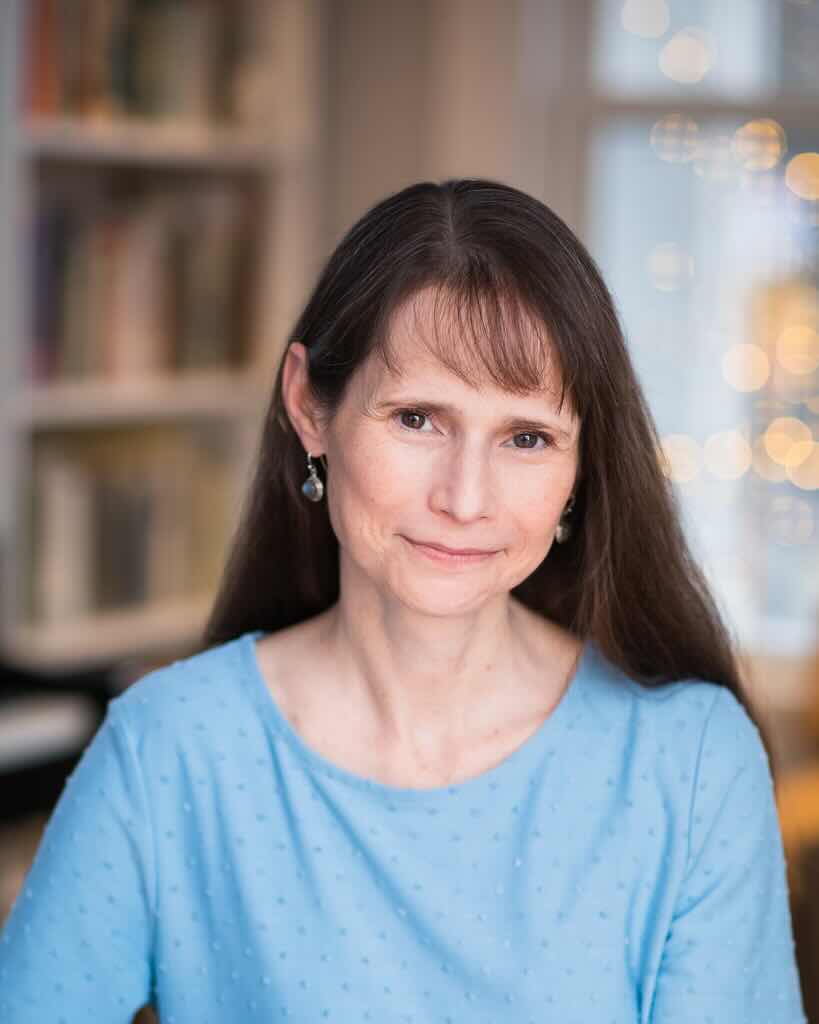
Sarah Emsley is the author of Jane Austen’s Philosophy of the Virtues and the editor of Jane Austen and the North Atlantic. She lives in Halifax, Nova Scotia, with her family, and she writes about Austen and other authors she admires at www.sarahemsley.com. The Austens is her first novel.
Happy reading!







 Jane Austen's World
Enjoyed the interview.
Thank you!
Thank you so much! I’m thrilled that you enjoyed reading The Austens, Brenda. Thanks for the great questions and the opportunity to talk about the process of writing this novel.
I LOVED this interview, Sarah and Brenda. The questions were clear, and Sarah’s description of how and why she wrote this novel are so descriptive and interesting! Kudos. Can’t wait to finish reading the book! Vic
Thanks very much, Vic—that’s wonderful to hear! I enjoyed chatting with Brenda and am grateful to both of you for your interest in The Austens. As you know, I’ve been reading—and admiring—Jane Austen’s World for a very long time. It’s an honour to see my own book featured here. Thank you so much for creating this wonderful place for conversations about Jane Austen.
A friend and I are trying to arrange a cruise from Baltimore along the coasts of New England and Canada. High on my bucket list? Nova Scotia!!
Oh, fabulous!! This is such a beautiful place. Please keep me posted, as it would be lovely to see you here.
Oh this sounds absolutely fabulous!
Lovely to hear—thank you!