• Home
  • Audio/Podcasts
  • Austensites
  • AV/E-Texts
  • History
  • JA Novels & Bio
  • Links
  • Original Sources/19th C. Texts
  • Social Customs During the Regency
  • Teacher/Student
  • Writer/Literature Resources

Jane Austen's World

This Jane Austen blog brings Jane Austen, her novels, and the Regency Period alive through food, dress, social customs, and other 19th C. historical details related to this topic.

Feeds:
Posts
Comments
« Jane Austen, Bright and Dark?
Godmersham: Inspiration for Pemberley? »

Wild Jane Austen?

January 26, 2026 by Brenda S Cox

Book Review by Brenda S. Cox

“Loving Jane Austen, to me, is dependent on continuing to find something new to appreciate, mull over, research, or reconsider in her writings. What’s wild is that although her books don’t change, I do. . . . Reading, and loving, Austen’s fiction means something far different to me at fifty-seven than it did at seventeen.”—Wild for Austen, 262.

A few days ago we reviewed Living with Jane Austen by Janet Todd. Today we get a personal perspective from another Austen expert, Devoney Looser, giving her view of Jane Austen as ‘wild,’ in Wild for Austen.
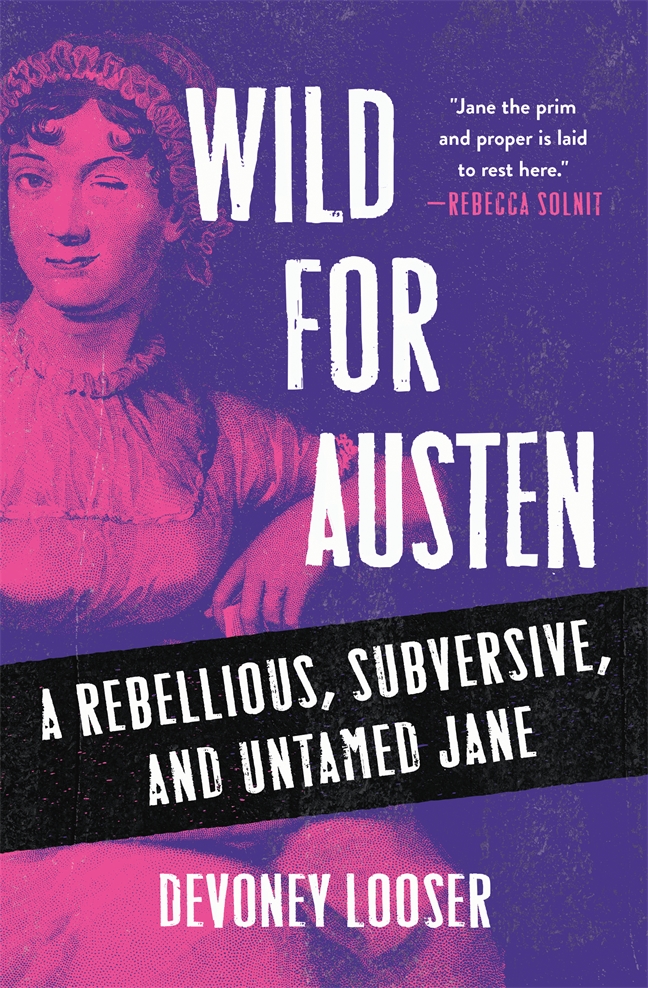
Wild for Austen by Devoney Looser seeks to undermine stereotypes about Austen.

Wild for Austen: A Rebellious, Subversive, and Untamed Jane, by Devoney Looser

Devoney (DEV-uh-nee) Looser takes pride in being rather ‘wild’ herself. She dedicates this book to people in “the international roller derby community,” saying: “You got me rolling, knocked me down, and lifted me up, not only as Stone Cold Jane Austen [Looser’s roller derby name] but as a stronger and more joyful teacher-scholar.”

Devoney’s goal is to demolish the “myth of Jane Austen as a quiet, bland spinster.” She finds ‘wildness’ in Austen’s novels, in the lives of Austen’s connections, and in Austen’s ‘afterlives.’

Looser says ‘wild’ is ‘a linchpin word in Austen’s fiction.’ In the Oxford English Dictionary (OED), we find examples from Jane Austen for the earliest uses of ‘wild’ to mean ‘passionately or excitedly desirous to do something’ (Mrs. Palmer is ‘wild to buy all’ in S&S; Elizabeth is ‘wild to be at home’ in P&P; the Musgrove girls are ‘wild for dancing’ in Persuasion). ‘Wild’ can also mean ‘elated, enthusiastic, raving’ (“The men are all wild after Miss Elliot.”). The OED also defines ‘wild’ as ‘artless, free, unconventional, fanciful, or romantic in style,’ which Looser says characterizes Austen’s novels.

Looser also argues against the myth of “Austen’s fiction having been largely forgotten until 1870. It wasn’t.” Austen’s novels were apparently widely read and familiar throughout the 1800s. Looser gives examples, from the years following Jane’s death, of the novels mentioned in magazines, poems, and a court case. Here’s an example I like: “Mansfield Park was said to be the secretly chosen favorite (on private slips of paper) of seven distinguished literary gentlemen in 1862.” Looser has also found clear imitations of Austen in other stories published in the 1800s.

Chapters in Wild for Austen

Part I: Wild Writings
  1. Introduction: Austen Gone Wild
  2. Fierce, Wild, and Ruthless: Austen’s Juvenilia
  3. The Controversial Case of Sophia Sentiment (a letter in her brothers’ periodical The Loiterer, possibly Jane’s first published work)
  4. Running Wild: The Winning Immorality of Lady Susan
  5. Wildest: Sense and Sensibility (1811)
  6. Almost Wild: Pride and Prejudice (1813)
  7. Bewildering Mansfield Park (1814)
  8. Wild Speculation: Emma (1816)
  9. Wild to Know: Northanger Abbey (1818)
  10. The Young People Were All Wild: Persuasion (1818)
  11. Wild-Goose Chase: Unfinished Sanditon (111)
  12. Oh, Subjects Rebellious: The Watsons and Last Words
Part II: Fierce Family Ties (explores unexpected people and events among Austen’s family and acquaintances)
  1. Jane, the Wild Beast, and the Progressive Burdetts
  2. Cousin Eliza’s Statesman, Singer, and Spy (a lurid murder of Austen’s acquaintances)
  3. The Leighs as Learned Literary Ladies (authors among Austen’s relatives)
  4. The Sensational Shoplifting Trial of Aunt Jane Leigh Perrot
  5. Three Austen Brothers and the Abolition of Slavery (new evidence about Frank, Charles, and Henry)
  6. The Austen Family Legacy, Suffrage, and Anti-Suffrage (Austen descendants for and against the vote for women)
Part III: Shambolic Afterlives (how people have seen and adapted Austen since her death. ‘Shambolic’ means ‘chaotic.’)
  1. Seeing Jane Austen’s Ghost
  2. Sense and Sensibility Goes to Court (Quotes from S&S were used as evidence in an 1825 breach of promise suit, to support the idea that a woman would not fall in love with a much older man; counsel had obviously not read the whole book! Austen’s novels have also been cited in much more recent court cases.)
  3. Jane’s Imaginary Lover in Switzerland (Fake news in 1886 went viral.)
  4. Almost Pride and Prejudice: The Wild Films That Never Were
  5. Wild and Wanton: The Rise of Austen Erotica
  6. Loving (and Hating) Jane Austen
  7. Coda: Austen After 250
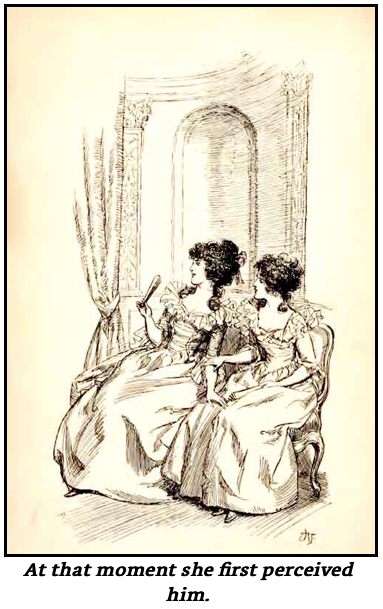
Marianne sees Willoughby and is about to approach him with the “wildest anxiety.”

Personally, I found the first two sections the most interesting. I’m still not convinced that Austen’s novels are what I would call ‘wild,’ though the Juvenilia and Lady Susan certainly are! But Looser brought out many intriguing insights about each novel, looking at the use of ‘wild’ in the books.

For example, she shows Sense and Sensibility defying expectations of romance novels: “the doublings and triplings, twists and turns, and backstories and backstabbings keep readers constantly on their toes” (46). Marianne is the “wildest,” speaking to Willoughby in “the wildest anxiety.” But the point of the story, recognized by early readers, is that both men and women should have a balance of both sense and sensibility; they need “both finely tuned minds and warm, rebellious feelings.” The best books should also “embody the best of both qualities” (57).

Mansfield Park has the least ‘wild’ heroine of the six novels. However, in my own humble opinion, it has the largest cast of other ‘wild’ characters—Henry Crawford, who commits arguably the worst action of the villains by eloping with a married woman, breaking up Maria’s marriage with no intention of marrying her; Mary Crawford, who makes a dirty joke and considers adultery ‘folly’; and Maria, who marries a man she hates and leaves him for a man she has already seen to be trifling and insincere. Julia, of course, elopes, which was also considered ‘wild.’ Tom Bertram not only convinces his household to put on a morally questionable play, but is so wild he drinks himself almost to death. Looser says Mansfield Park may have been “a jarring reading experience” for 1814 readers. She considers the wildest thing about it to be “its prompting of lively, difficult arguments and rousing debates” (76).

Wild for Austen, by Devoney Looser, may help you see Austen, her writings, and her connections in a new light. Or give you fodder for lively arguments. Enjoy Austen’s ‘wildness’! (UK link)


Brenda S. Cox is the author of Fashionable Goodness: Christianity in Jane Austen’s England. She also blogs at Faith, Science, Joy, and Jane Austen.

Share with others:

  • Email a link to a friend (Opens in new window) Email
  • Print (Opens in new window) Print
  • Share on Facebook (Opens in new window) Facebook
  • Share on Reddit (Opens in new window) Reddit
  • Share on X (Opens in new window) X
  • Share on Pinterest (Opens in new window) Pinterest
  • Share on Tumblr (Opens in new window) Tumblr
  • Share on LinkedIn (Opens in new window) LinkedIn
Like Loading...

Related

Posted in Book review, Jane Austen's World | Tagged Austen experts, Devoney Looser, Wild for Austen | 4 Comments

4 Responses

  1. on January 26, 2026 at 03:53 dholcomb1's avatar dholcomb1

    I’ve heard wonderful things about this book. ~denise


  2. on January 26, 2026 at 11:13 trc's avatar trc

    The Alton Chamber of Commerce map of places in town Jane Austen visited says, of the French Inn: “In Austen’s time this was a beer house run by John French. She would have known of it, but not stopped here.” Or maybe her visits there were described in the letters Cassandra destroyed.


  3. on January 26, 2026 at 11:39 Rachel Dodge's avatar Rachel Dodge

    Wonderful review, Brenda! I’ve been wondering about this book, unsure of its premise. I do think Austen was a bit “wild” for her day, but you make wonderful points that she valued, above all else, a steady character and demeanor. That, in fact, seems to be the point of much of her writing. I think Austen frowned on the wildness we see in Lydia Bennet, but she enjoyed the clever humor and astute insights of Elizabeth Bennet. Perhaps it was “wild” to have such strong heroines at that time, who did not follow the cultural current but stood for their values and beliefs, even if it meant turning down a perfectly good marriage proposal. I think Austen’s letters show a bit more of her “wild” side, but again, she always comes back to common sense in the end. Well done!


    • on January 29, 2026 at 21:45 Brenda S Cox's avatar Brenda S Cox

      Thanks, Rachel! Devoney is great at giving us new perspectives on Austen, new ways to look at her writing. I love that.


Comments are closed.

  • Enter your email address to subscribe to this blog and receive notifications of new posts by email.

    Join 7,225 other subscribers
  • 2025 AGM in Baltimore

  • Items of Interest

  • Blog Stats

    • 18,517,369 hits
  • Follow Jane Austen's World on WordPress.com
  • RECOMMENDED BOOKS AND RESOURCES

  • Fashionable Goodness: Christianity in Jane Austen's England is now available! By JAW contributor Brenda S. Cox. See Review. Available from Amazon and Jane Austen Books.
  • We also recommend JAW contributor Rachel Dodge's devotionals based on Jane Austen's prayers and classic literature. Reviews:
    Praying With Jane: 31 Days Through the Prayers of Jane Austen
    The Anne of Green Gables DevotionalThe Little Women Devotional
    The Secret Garden Devotional
  • The Tour of Doctor Syntax. Edited by Ben Wiebracht. Read the review of the book at this link. Click to order the book on Amazon US or Amazon UK or Jane Austen Books
  • FREE Student Membership to JASNA

    Available through December 31st, 2025. Click on image for details, and share this poster with other teachers and students!

  • The Obituary of Charlotte Collins by Andrew Capes

    Click on image to read the story.

  • Comments

    “My idea of good company…is the company of clever, well-informed people, who have a great deal of conversation.” – Jane Austen, Persuasion


    Gentle readers: Please feel free to post your comments and continue the conversation! Due to SPAM, we will no longer accept comments on posts after 30 days of publication. In some instances, links will be removed from comments as well.

  • Administrators and Contributors

    Vic Sanborn, founder of this blog, is supported by a team of talented and knowledgeable writers about Jane Austen and the Regency era. They are:

    • Brenda Cox
    • Rachel Dodge and
    • Tony Grant, who now contributes his photos from London and England

    Click on their names to enter their own blogs.

    In addition, we thank the many experts and authors who frequently contribute their posts and opinions, and who continue to do so freely or at our request.

  • Pin It!

    Follow Me on Pinterest
  • Top Posts

    • Highclere Castle Floor Plan: The Real Downton Abbey
      Highclere Castle Floor Plan: The Real Downton Abbey
    • Regency Fashion: Men's Breeches, Pantaloons, and Trousers
      Regency Fashion: Men's Breeches, Pantaloons, and Trousers
    • Regency Hygiene: The Bourdaloue
      Regency Hygiene: The Bourdaloue
    • Men's hair styles at the turn of the 19th century
      Men's hair styles at the turn of the 19th century
    • Regency “Privy” Matters: Feminine Hygiene, Bodily Functions, and Childbirth
      Regency “Privy” Matters: Feminine Hygiene, Bodily Functions, and Childbirth
    • The Servant's Quarters in 19th Century Country Houses Like Downton Abbey
      The Servant's Quarters in 19th Century Country Houses Like Downton Abbey
    • Social Customs During the Regency
      Social Customs During the Regency
    • The Bathing Dress: Fashion in the Georgian Era
      The Bathing Dress: Fashion in the Georgian Era
    • Jane Austen’s Regency Women: A Day in the Life, Part 1
      Jane Austen’s Regency Women: A Day in the Life, Part 1
    • Ladies Underdrawers in Regency Times: Regency Underwear
      Ladies Underdrawers in Regency Times: Regency Underwear
  • Recent Posts

    • Elizabeth Bennet’s Travels: Oxford, Blenheim, Warwick, Kenilworth, Birmingham
    • The Church at Godmersham: St. Lawrence the Martyr
    • Godmersham: Inspiration for Pemberley?
    • Wild Jane Austen?
    • Jane Austen, Bright and Dark?
  • Links to Jane Austen Blogs

    Click here to enter the page. Topics include Regency fashion, historic foods, Jane Austen societies, British sites, related topics. Click on image.

  • May we suggest?

  • Unknown's avatarHello, my name is Vic and I live in Maryland, USA. I have adored Jane Austen almost all of my life. I am a proud lifetime member of the Jane Austen Society of North America. This blog is a personal blog written and edited by me and my team. We do not accept any form of cash advertising, sponsorship, or paid topic insertions. However, we do accept and keep books and CDs to review.

    If you would like to share a new site, or point out an error, please email us. (Yes, we are fallible. We'll own up to our mistakes and will make the corrections with a polite smile on our faces.) Write us at

    gmailbw

    Thank you for visiting this blog. Your comments and suggestions are most welcome.

  • Project Gutenberg: eBook of Stage-coach and Mail in Days of Yore, Volume 2 (of 2), by Charles G. Harper

    STAGE-COACH AND MAIL IN DAYS OF YORE: A PICTURESQUE HISTORY
    OF THE COACHING AGE, VOL. II, By CHARLES G. HARPER. 1903. Click on this link.


  • Top Posts & Pages

    • Highclere Castle Floor Plan: The Real Downton Abbey
    • Regency Fashion: Men's Breeches, Pantaloons, and Trousers
    • Regency Hygiene: The Bourdaloue
    • Men's hair styles at the turn of the 19th century
    • Regency “Privy” Matters: Feminine Hygiene, Bodily Functions, and Childbirth
    • The Servant's Quarters in 19th Century Country Houses Like Downton Abbey
    • Social Customs During the Regency
    • The Bathing Dress: Fashion in the Georgian Era
    • Jane Austen’s Regency Women: A Day in the Life, Part 1
    • Ladies Underdrawers in Regency Times: Regency Underwear
  • Tour Chawton Cottage on YouTube

  • Disclaimer: Our team makes no profit from this blog. We may receive books (physical or digitized) for review purposes.

  • Copyright Statement: © Jane Austen's World blog, 2009-2024. Unauthorized use and/or duplication of this material without express and written permission from this blog’s author and/or owners is strictly prohibited. Excerpts and links may be used, provided that full and clear credit is given to Jane Austen's World with appropriate and specific direction to the original content.

Blog at WordPress.com.

WPThemes.


  • Reblog
  • Subscribe Subscribed
    • Jane Austen's World
    • Join 7,225 other subscribers
    • Already have a WordPress.com account? Log in now.
    • Jane Austen's World
    • Subscribe Subscribed
    • Sign up
    • Log in
    • Copy shortlink
    • Report this content
    • View post in Reader
    • Manage subscriptions
    • Collapse this bar
 

Loading Comments...
 

    %d