Feeds:
Posts
Comments

Archive for the ‘Jane Austen’s World’ Category

Our month-by-month exploration of Jane Austen’s life, letters, and novels continues now as we take a look at August in Jane Austen’s world. If you’re new to the “A Year in Jane Austen’s World” series, you can find previous articles here: JanuaryFebruaryMarchAprilMay, June, and July.

During the lovely summer months in the Hampshire countryside, we know Jane loved to walk and write and visit with friends and family. Sometimes the days are hot, but most of the time, it’s sunny and warm–usually with a chance of showers, which is what helps keep things so pretty and green. If you visit Chawton House Gardens or Jane Austen’s House this time of year, there is plenty to see!

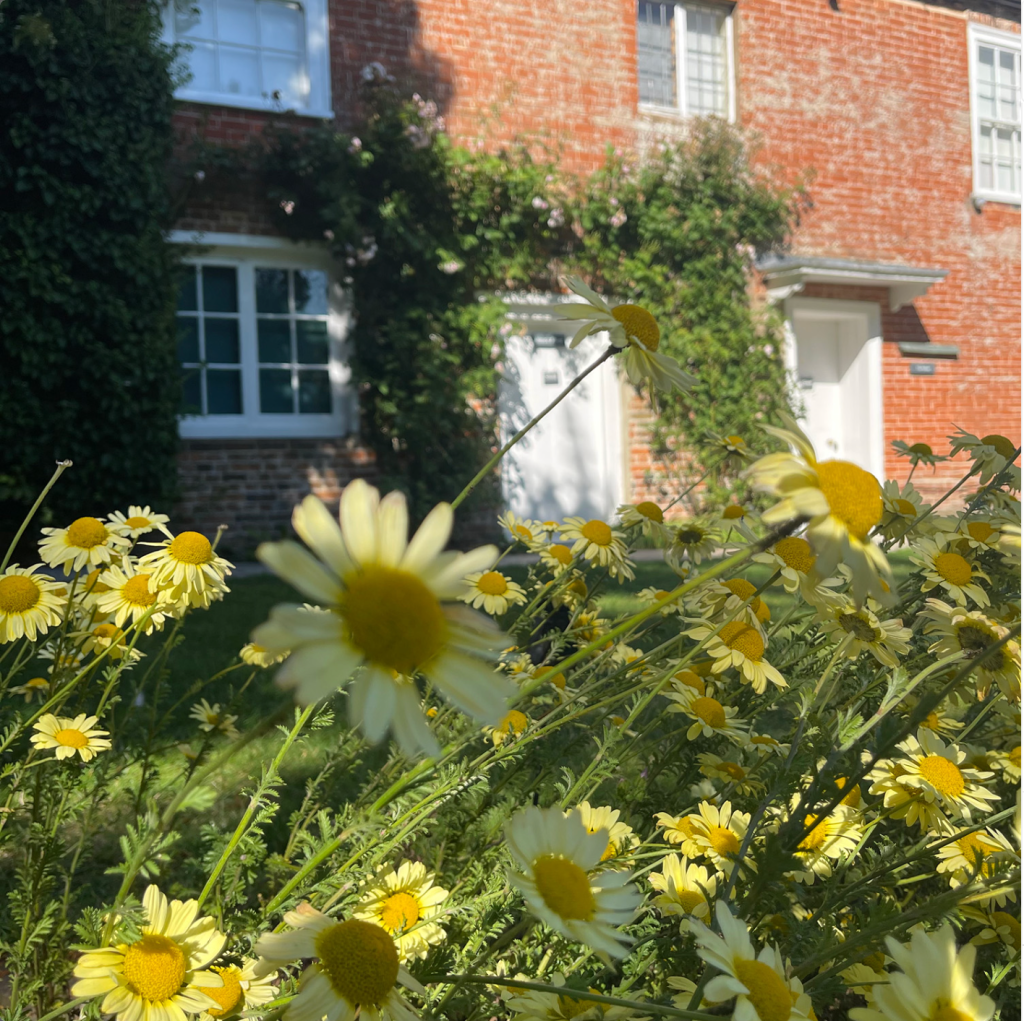
Chawton House in August: Photo @ChawtonHouse.
Jane Austen’s House in August, Photo: @JaneAustensHouse.

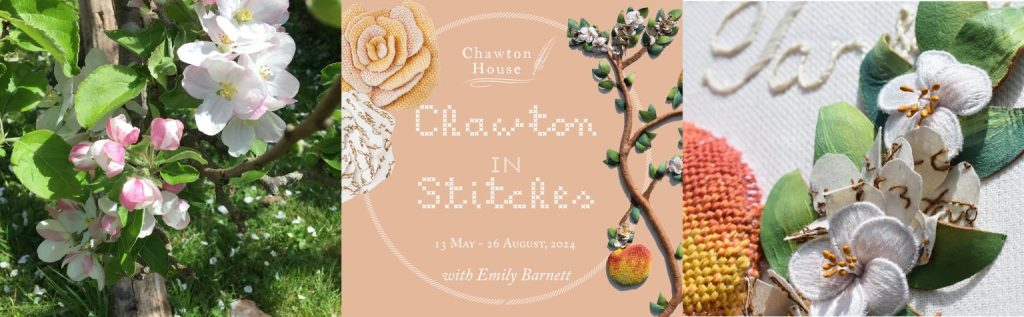
Austen in Stitches

This summer, Chawton House Museum is hosting the “Chawton in Stitches” exhibit, which showcases “the work of award-winning graduate of the Royal School of Needlework Emily Barnett, whose degree project took inspiration from the gardens and collection at Chawton House. Her final showstopping piece comprises three beautifully embroidered panels, focusing on the Orchard and the Knight family cookbook, the Rose Garden and Elizabeth Blackwell’s Curious Herbal, and the Library Terrace and the women’s writing collection.”

You can read more about it HERE.
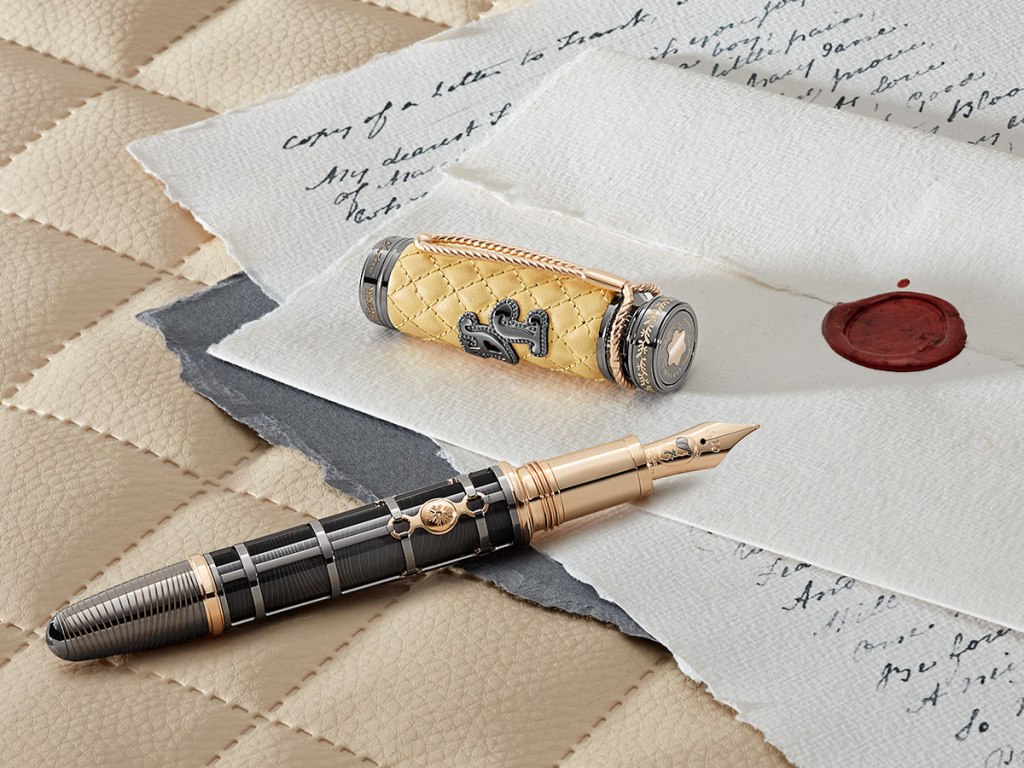
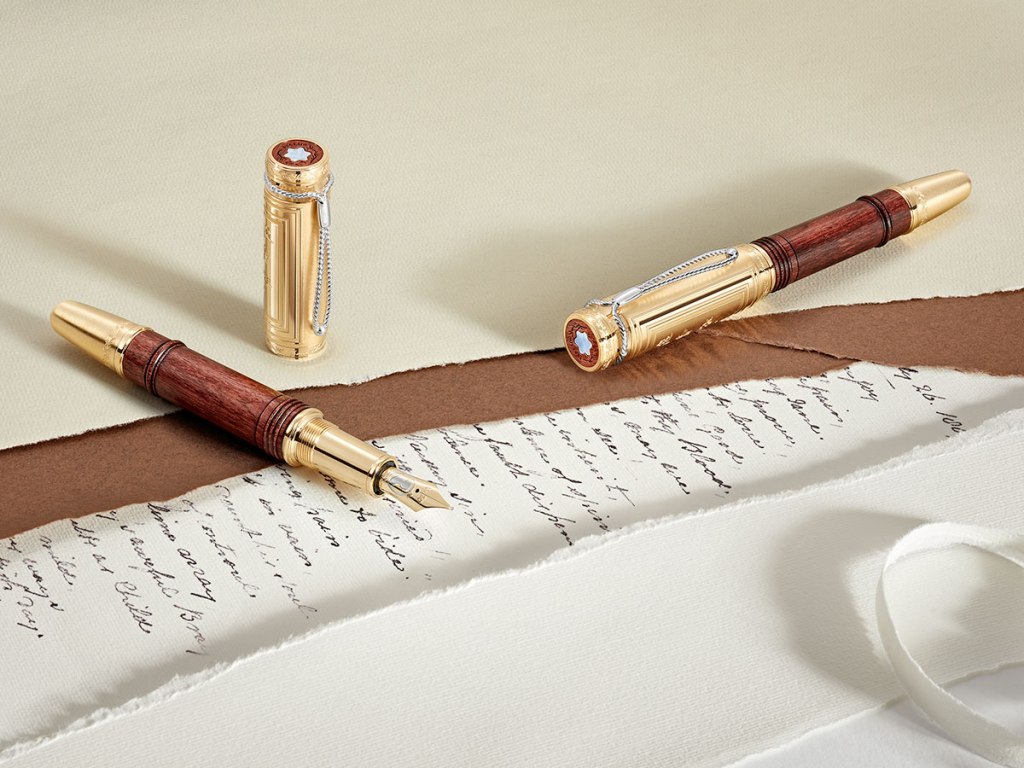
Austen Fountain Pens

The Jane Austen House Museum is proud to announce a beautiful new set of pens from Montblanc: “Historic luxury pen manufacturer Montblanc releases four exquisite limited edition writing instruments, celebrating Jane Austen and inspired by Jane Austen’s House.”

“The Montblanc Writers Edition Homage to Jane Austen pays tribute to Jane Austen as one of Britain’s most celebrated novelists with four limited edition pens. Each writing instrument in the collection represents a passion in Jane Austen’s life, including the countryside, this very House, travel and the ball, illustrating the many facets of her life and works. Details in the craftsmanship of each pen seamlessly reflect aspects of Jane Austen’s life and writing.”
August in Jane Austen’s Letters

Jane tends to write about the weather at some point in her letters, and her August letters are no different:

Cork Street, August 1796
“We reached Staines yesterday, I do not (know) when, without suffering so much from the heat as I had hoped to do. We set off again this morning at seven o’clock, and had a very pleasant drive, as the morning was cloudy and perfectly cool. I came all the way in the chaise from Hertford Bridge.”

She also writes about Henry’s lovely new home in Hans Place, about her own room, the gardens, and the downstairs room that seems to be where she writes in the morning.

23 Hans Place, August 1814
It is a delightful place,—more than answers my expectation. Having got rid of my unreasonable ideas, I find more space and comfort in the rooms than I had supposed, and the garden is quite a love. I am in the front attic, which is the bedchamber to be preferred.”

“I live in [Henry’s] room downstairs; it is particularly pleasant from opening upon the garden. I go and refresh myself every now and then, and then come back to solitary coolness.”

Now I have breakfasted and have the room to myself again. It is likely to be a fine day. How do you all do?”

From Vic: “In 1814, Henry moved from his rooms above his bank to a house he purchased in Hans Place in Knightsbridge. The area was situated near his old quarters on Sloane Street.” You can read more about Hans Place in Vic’s detailed article, “Jane Austen’s Visits to London.”
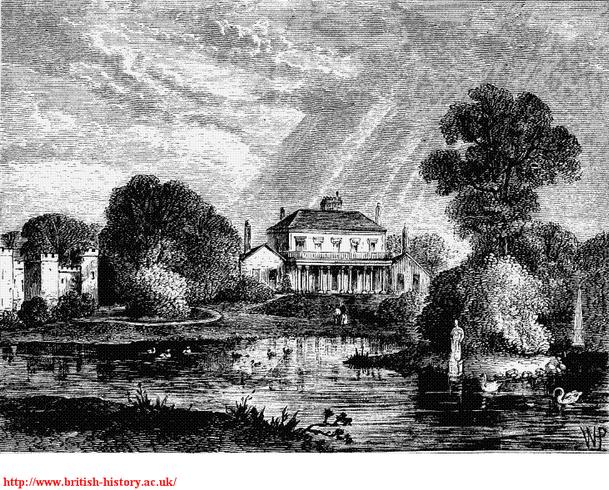
Hans Place, The Pavillion, 1812. Image @British History Online

August in Jane Austen’s Novels

Pride and Prejudice

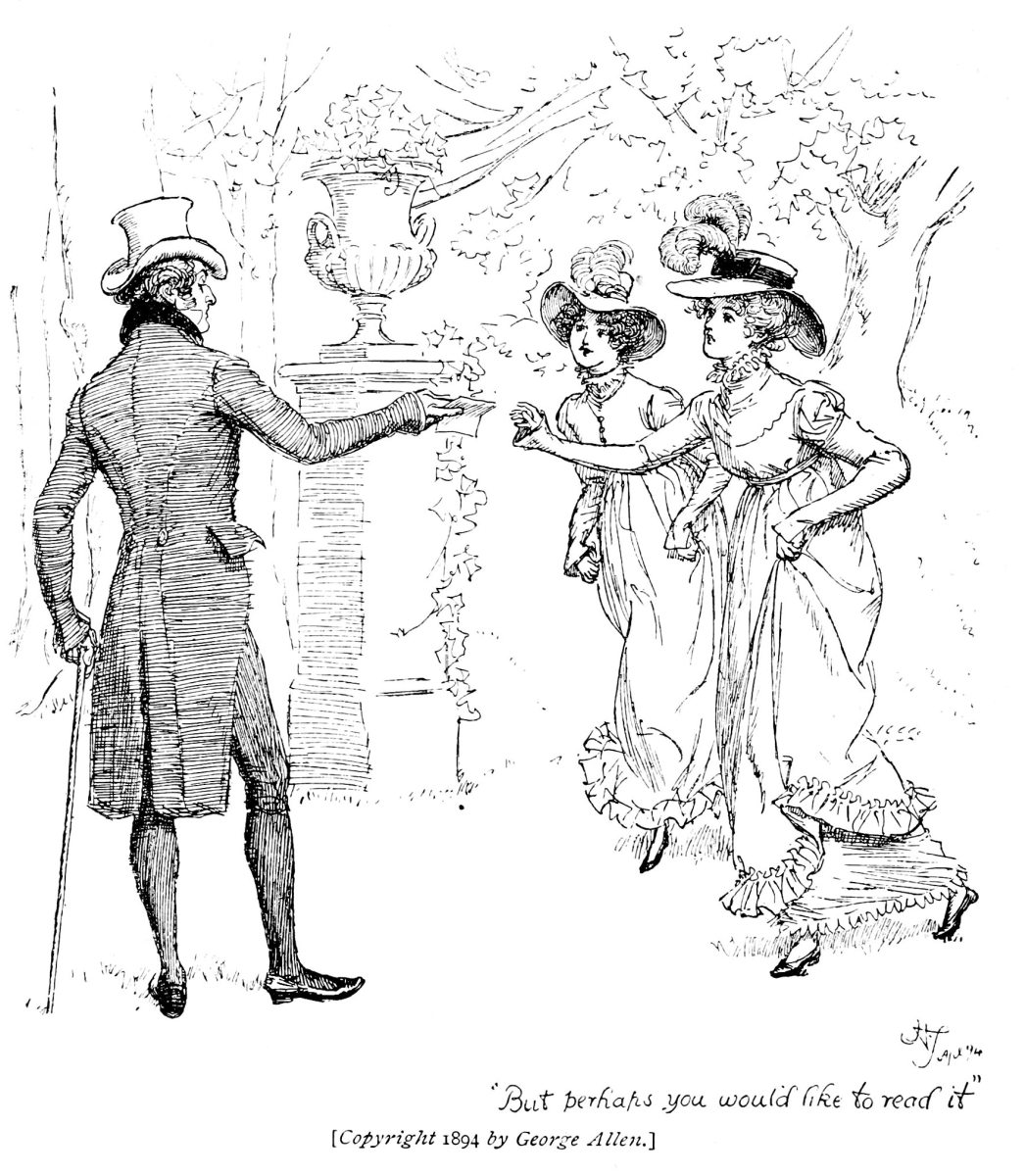
  • Mr. Gardiner writes to Mr. Bennet in August (Gracechurch Street, Monday, August 2). Elizabeth reads the letter:

    “My dear Brother, At last I am able to send you some tidings of my niece, and such as, upon the whole, I hope will give you satisfaction. Soon after you left me on Saturday, I was fortunate enough to find out in what part of London they were. The particulars I reserve till we meet. It is enough to know they are discovered: I have seen them both——”

    “Then it is as I always hoped,” cried Jane: “they are married!”

    Elizabeth reads on: “I have seen them both. They are not married, nor can I find there was any intention of being so; but if you are willing to perform the engagements which I have ventured to make on your side, I hope it will not be long before they are. All that is required of you is, to assure to your daughter, by settlement, her equal share of the five thousand pounds, secured among your children after the decease of yourself and my sister; and, moreover, to enter into an engagement of allowing her, during your life, one hundred pounds per annum…”
Mansfield Park

  • Tom Bertram arrives home: “Sir Thomas was to return in November, and his eldest son had duties to call him earlier home. The approach of September brought tidings of Mr. Bertram, first in a letter to the gamekeeper and then in a letter to Edmund; and by the end of August he arrived himself, to be gay, agreeable, and gallant again as occasion served, or Miss Crawford demanded; to tell of races and Weymouth, and parties and friends, to which she might have listened six weeks before with some interest, and altogether to give her the fullest conviction, by the power of actual comparison, of her preferring his younger brother.”
  • Sir Thomas arrives home earlier than expected: “Julia, appearing at it, with a face all aghast, exclaimed, ‘My father is come! He is in the hall at this moment.’ How is the consternation of the party to be described? To the greater number it was a moment of absolute horror. Sir Thomas in the house! All felt the instantaneous conviction. Not a hope of imposition or mistake was harboured anywhere. Julia’s looks were an evidence of the fact that made it indisputable; and after the first starts and exclamations, not a word was spoken for half a minute: each with an altered countenance was looking at some other, and almost each was feeling it a stroke the most unwelcome, most ill-timed, most appalling! Mr. Yates might consider it only as a vexatious interruption for the evening, and Mr. Rushworth might imagine it a blessing; but every other heart was sinking under some degree of self-condemnation or undefined alarm, every other heart was suggesting, ‘What will become of us? what is to be done now?’ It was a terrible pause; and terrible to every ear were the corroborating sounds of opening doors and passing footsteps.”

Emma

  • August is when Jane Fairfax will leave Highbury: “Jane Fairfax was still at her grandmother’s; and as the return of the Campbells from Ireland was again delayed, and August, instead of Midsummer, fixed for it, she was likely to remain there full two months longer, provided at least she were able to defeat Mrs. Elton’s activity in her service, and save herself from being hurried into a delightful situation against her will.”
  • Emma’s sisters Isabella plans to visit in August (and will keep Harriet with them until then): “Mr. and Mrs. John Knightley were to come down in August, and she was invited to remain till they could bring her back.”
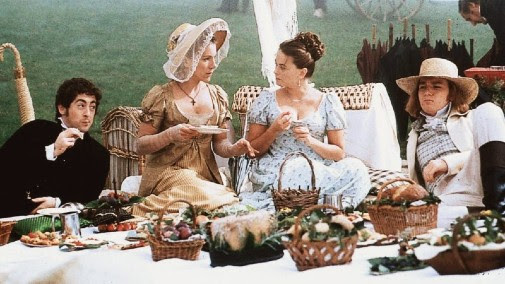
Box Hill Picnic

Persuasion

  • Anne Elliot’s birthday: Anne, born August 9, 1787.
  • Captain Wentworth goes to stay with Captain Benwick in August in order to break the news of Fanny Harville’s (his fiancée’s) death: “Not till the first week of August, when he came home from the Cape, just made into the Grappler. I was at Plymouth dreading to hear of him; he sent in letters, but the Grappler was under orders for Portsmouth. There the news must follow him, but who was to tell it? not I. I would as soon have been run up to the yard-arm. Nobody could do it, but that good fellow (pointing to Captain Wentworth). The Laconia had come into Plymouth the week before; no danger of her being sent to sea again. He stood his chance for the rest; wrote up for leave of absence, but without waiting the return, travelled night and day till he got to Portsmouth, rowed off to the Grappler that instant, and never left the poor fellow for a week. That’s what he did, and nobody else could have saved poor James. You may think, Miss Elliot, whether he is dear to us!”
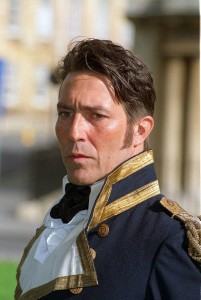
Ciarán Hinds as Captain Frederick Wentworth in Persuasion, 1995.

August Dates of Importance

This brings us now to several important August dates that relate to Jane and her family:

Family News:
26 August 1766: George Austen (Jane’s brother) born at Deane.
July-August 1768: Austen family moves to Steventon, Hampshire.

Historic Dates:
1 August 1798: Horatio Nelson’s victory over Napoleon’s fleet at the Battle of the Nile.

Writing:
August 1797: Austen finishes “First Impressions.”
8 August 1815: Austen begins Persuasion.
August 1816: Persuasion revised and finished.

Sorrows:
9 August 1798: Lady Williams (Jane Cooper, one of Austen’s lifelong friends), dies in a tragic carriage accident on the Isle of Wight at the age of 27.
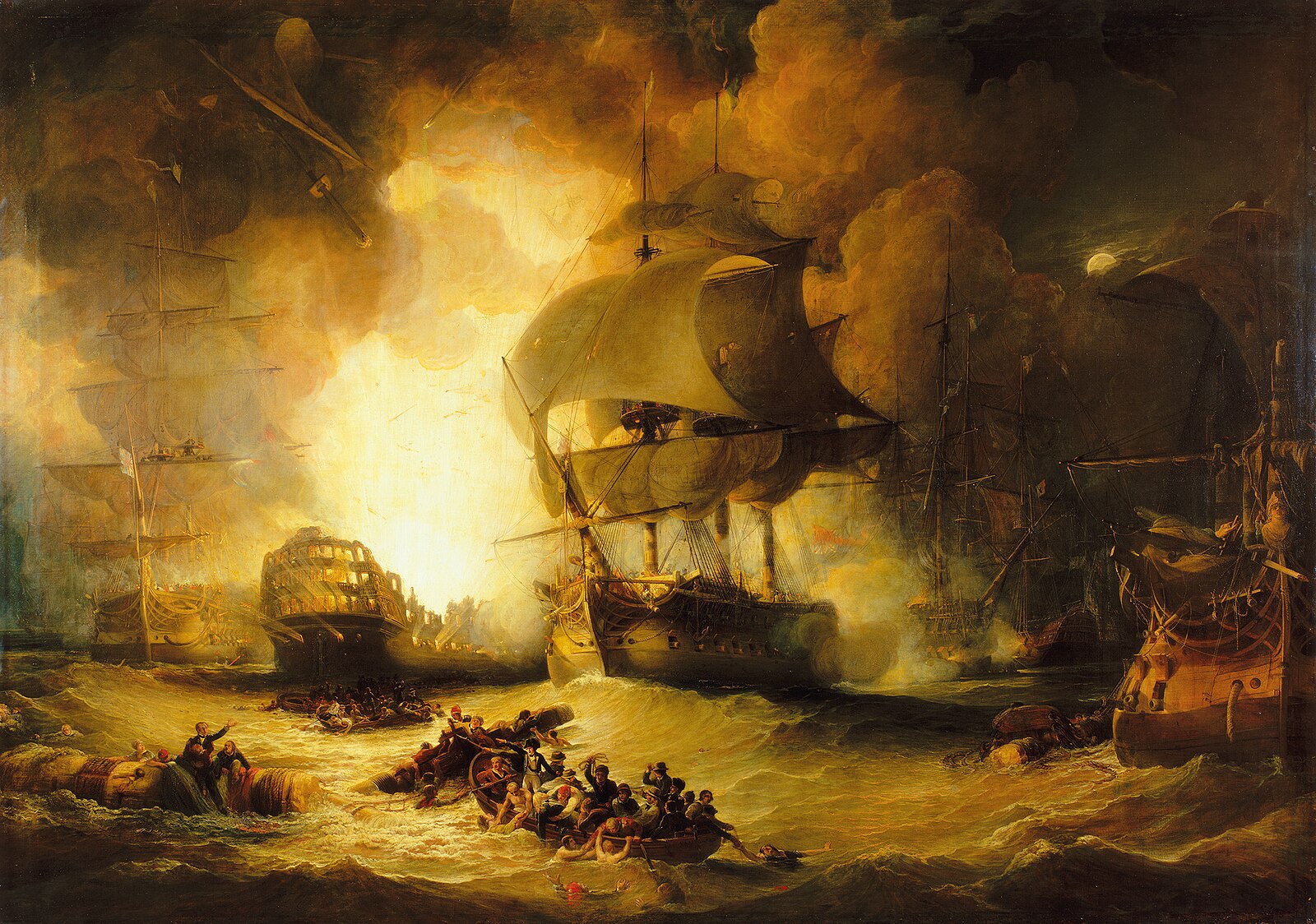
The Destruction of ‘L’Orient’ at the Battle of the Nile, George Arnald.
1 August 1798. (Wikimedia Commons.)

Summer Wanes

As the summer heat slowly diminishes in Jane Austen’s England, we can look forward to the first breaths of autumn next month when we return to examine September in Jane Austen’s World. Until then, I hope you’ve enjoyed exploring August and all it has to offer!


RACHEL DODGE teaches college English classes, gives talks at libraries, teas, and book clubs, and writes for Jane Austen’s World blog. She is the bestselling author of The Little Women DevotionalThe Anne of Green Gables Devotional and Praying with Jane: 31 Days Through the Prayers of Jane Austen. Now Available: The Secret Garden Devotional! You can visit Rachel online at www.RachelDodge.com.

Read Full Post »

Inquiring readers,

Earlier this year, I met author Sarah Emsley online, after she made an observation about something I’d written on Jane Austen’s World blog: she then revealed that she visited this site often. I was thrilled, and during our ensuing online discussions I agreed to write an article for her “Summer Party for Sense and Sensibility.” My article, published August 2nd, is entitled “Mrs. Dashwood’s Journey of Growth in Sense and Sensibility.

Knowing that so much has been researched, discussed and written about Austen’s first published novel, I honed in on one of her lesser characters, Mrs. Dashwood, who is well known by Austen’s readers. She plays a pivotal role, but remains largely a side character to her two eldest daughters, She is not written as a one-dimensional character. Nevertheless, she practically disappears from the novel’s plot in the last third of the novel, until events necessitate her return to help move the plot to its conclusion.

Image copyright Sarah Emsley

A Summer Party for Sense an Sensibility can be found at this link. Guest authors include: Maggie Arnold, Finola Austin, Elaine Bander, Deb Barnum, Sandra Barry, Cheryl Bell, Matthew Berry, Diana Birchall, L. Bao Bui, Kathy Cawsey, Lori Mulligan Davis, Lizzie Dunford, Susan Allen Ford, Paul Gordon, Heidi L.M. Jacobs, Natalie Jenner, Hazel Jones, George Justice, Theresa Kenney, Deborah Knuth Klenck, Shawna Lemay, Emily Midorikawa, Jessica Richard, S.K. Rizzolo, Peter Sabor, Vic Sanborn, Marilyn Smulders, Jacqueline Stevens, Emma Claire Sweeney, Joyce Tarpley, Janet Todd, and Deborah Yaffe, along with two teenagers, Gail and Ria, who are reading S&S for the first time.

New contributions are published every Friday and Tuesday, and will continue through the end of summer. Sarah refreshes the page (see the above link) with each new article, and encourages people to leave comments for the author.

The other series she’s featured in past years can be found on her site. They are:

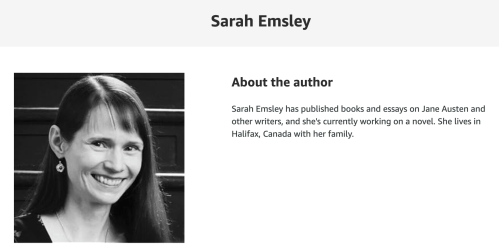
About Sarah Emsley 

Screenshot from Ms.Elmsley’s page on Amazon.com

Sarah’s request: Please share the tour with others. Better yet, she’d love for you to write comments to the various contributors. Enjoy!

Read Full Post »

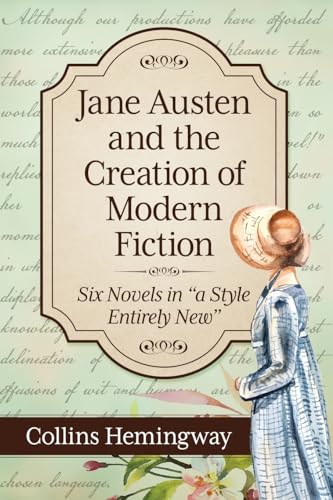
Jane Austen and the Creation of Modern Fiction: Six Novels in “a Style Entirely New,” explores Jane Austen’s development as a fiction writer.

by Brenda S. Cox

A few days ago I reviewed Collins Hemingway’s fascinating new book on the development of Austen’s writing techniques, Jane Austen and the Creation of Modern Fiction: Six Novels in “a Style Entirely New.”  Today we meet with the author to get his perspectives on the book.

Collins Hemingway began his analysis of Jane Austen’s writing techniques as he wrote a fiction trilogy speculating on the “lost years” of Austen’s life, The Marriage of Miss Jane Austen.

I asked Collins Hemingway to tell us more about Jane Austen and the Creation of Modern Fiction.

JAW: What led you to write this book, Collins?

Collins: I’ve read Austen all my life, but I did not read much commentary during my 25-year high-tech career. When I came back to Austen fulltime, I read a ton of Austen scholarship from the last 20 years. I noticed that there wasn’t much about her writing, as writing. Scholars would mention a technique and use it as a launch point for broader criticism. With rare exceptions, they would not analyze the technique itself or how it affected the reader. I saw this as an area in which I could add something new.

JAW: You have, of course, written a fiction series, The Marriage of Miss Jane Austen. How did your experiences writing fiction about Austen feed into your development of Jane Austen and the Creation of Modern Fiction?

Collins: Writing the novels led directly to this book, though it took several years of hard reading, notetaking, and writing to flesh out the meat over the bones. I have shared that story on my blog.

JAW: The book is full of great insights. For you, what was one of the most helpful, something that helped you see Austen’s novels in a new way?

Collins: After completing the fiction trilogy, I went a step further, going through each of Austen’s six novels line by line, noting everything of interest to a writer. I ended up with 20 to 30 pages of handwritten notes on each one. Then I began to consolidate various topics. For instance, I ended up with five pages of notes just on description, collated from all her books, including the juvenilia. Then I examined the patterns in different aspects of writing and tried to understand how the patterns fit within and between each book.

As the patterns began to organize themselves, I realized that there was a distinct trend from early to late. In each book, Austen learned something, then applied it in the succeeding books. Like Virginia Woolf examining the early works and the unfinished works, I began to see the internal structures of each book. (As my wife would caution—in my opinion.) I could see how Austen was feeling her way along in the early works, then painting like a master in the later ones.

JAW: You’ve pointed out the strengths and weaknesses of each of Austen’s novels. It appears that you see Emma as the most “perfect” novel, as other commentators do. But for you personally, which novel do you tend to enjoy re-reading the most, and why?

Collins: Depends on my mood. P&P for its sheer energy, and for Liz bowing to no one, ever. Emma for its magnificence, page by page. Persuasion for the depth of Anne’s feeling. MP, though it is in no way my favorite, when I just want to admire the structural purity and the work she put into it.

JAW: You talk about many techniques of modern fiction that Jane Austen helped to develop and show how they developed in her novels over time. Could you briefly list for us some of those techniques, so readers can see some of the treats they have in store?

Collins: She was a master of dialogue probably from the day she first picked up a quill pen. Description. Behavior. Character motivation and interaction. Complex plots (without castles, brigands, or shipwrecks.) Ever deeper and subtler ways to get into her characters’ minds.

JAW: What is one takeaway that you want readers to have when they finish reading your book?

Collins: What Austen accomplished would make any author proud. But the fact that she learned all that she did on her own, away from other writers, pulling the best from a small number of others (such as Richardson, in a very specific way), building on a few good things from tradition, figuring out the rest on her own—it’s astonishing. And she did it in her too short 41.5 years of life!

JAW: What was the most fun part of the book to write?

Collins: My breakthrough in really understanding the internals came through descriptions. They unlocked the issues in NA and S&S, showed how radically different P&P was from the earlier two, and became miraculously mature in MP. This was the most fun. Especially when I realized the difference in the way Austen treated Lady Russell and Anne as they entered Bath in Persuasion. It took my breath away to see what Austen had done.


You may want to read my review if you missed it earlier. This is a fascinating book if you want to better understand Jane Austen’s modern writing techniques and how she developed them herself. Jane Austen and the Creation of Modern Fiction is available from Amazon and from Jane Austen Books. Jane Austen Books is currently offering it at a substantial discount.


Brenda S. Cox is the author of Fashionable Goodness: Christianity in Jane Austen’s England. She also blogs at Faith, Science, Joy, and Jane Austen.

Read Full Post »

By Brenda S. Cox

I thoroughly enjoyed Jane Austen and the Creation of Modern Fiction: Six Novels in “a Style Entirely New,” by Collins Hemingway. As a fiction writer himself, Hemingway examines Austen’s novels, in the order she wrote them, to analyze the techniques she pioneered. He observes her abilities growing from novel to novel, as she experiments and succeeds in creating the worlds and characters we so love.

Collins Hemingway’s new book, Jane Austen and the Creation of Modern Fiction: Six Novels in “a Style Entirely New, gives fascinating insights into Austen’s development of modern techniques of fiction writing.

A New Style?

Did Jane Austen develop a new style of novel-writing? Her contemporary reviewers thought so. They felt compelled to give long contrasts between the previous style of novel-writing, full of intensity and improbability, with Jane Austen’s new realistic style. Sir Walter Scott in his 1815 review of Emma said Austen “draws the characters and incidents introduced more immediately from the current of everyday life.” Rev. Richard Whately wrote in his 1821 review of Northanger Abbey and Persuasion, “A new style of novel has arisen. . . . The substitute for these excitements [of unlikely adventures] . . . was the art of copying from nature as she really exists in the common walks of life.” Both these reviews are worth reading (follow the links above) to see how Austen’s contemporaries struggled to describe what she was, and wasn’t, doing in her novels.

The third volume of Austen’s Juvenilia includes a penciled note inside the front cover, “Effusions of Fancy by a very Young Lady consisting of Tales in a Style entirely new.” Peter Sabor says this inscription is written in Jane’s father’s handwriting, though others have speculated that it may have been written by Cassandra or even by Jane herself, tongue-in-cheek.

Author Collins Hemingway told me, “The epigram seems most likely to me to be from her father. . . . To me, the quotation is Mr. Austen enjoying and encouraging Jane’s raw power and comedy, her sheer audacity in sending up the pulp fiction of the day with her various teenage writings. I saw a strong parallel to her adult fiction. Her juvenilia showed that she understood that traditional fiction didn’t cut it. Her adult fiction shows that she learned how to write good novels—something new at the time.”

Jane Austen Learning (or Inventing) the Craft of Writing Fiction

Jane Austen and the Creation of Modern Fiction starts out with a preface for more academic readers (feel free to skip it if that’s not you), then an introduction for us all, which begins:

“I wrote this book so that people can read Jane Austen with fresh eyes. I wanted booklovers to view her not as a literary or cultural icon but as a writer, someone who puts words to paper to try to touch another person’s heart. I wanted people to see her as a human being who struggled to master her craft as anyone in any field, regardless of talent, must do. . . . As both a student of literature and a writer, I wanted to know how Austen affects readers. I wanted to know how she created remarkably  real people interacting in remarkably realistic situations. This is what writers care about, and what readers respond to.”

Yes.

Hemingway starts with an exploration of the context of Austen’s writing, how she “straddled the old and new literary order, ultimately pivoting the novel from improbable adventures to deep penetration of the minds of her heroines.” (These early chapters are necessarily a bit more difficult, as they compare Austen with her contemporaries, who most of us have not read—and here we can see why Austen is so much more accessible than other writers of her time!)

Then he brings us deep into our beloved Austen–following her development of description in her earliest novels, Northanger Abbey and Sense and Sensibility. In Pride and Prejudice, she continues to develop “pocket descriptions,” which are “pithy, telling details.” For example, Elizabeth Bennet’s jumping over stiles and puddles and arriving at Netherfield with “weary ancles” and “dirty stockings” is a pocket description that shows us a lot about Elizabeth.

Sense and Sensibility was originally written in the popular “epistolary” form, as a series of letters. Letters give a sense of distance, as the character is writing about events that have already happened, rather than the author drawing readers directly into events. A chapter analyzes how Austen made the transition from letters into narrative. For example, Edward Ferrars is a “blurry” presence in the early chapters, which are closer to the letter format. By the end of the novel, though, Austen has added vivid, immediate scenes. So, in the final proposal scene, we see Edward as “the very real and anguished presence of a human being.”

My favorite chapter is the one on “The Marvelous Complexity of Mansfield Park.” Hemingway’s discussion helps readers appreciate its elaborate scenes, complex characters, and interconnected plotlines. He particularly explores the depths of Fanny Price’s thoughts and feelings.

Fanny’s “responses, which for the most part only the reader observes, show her to be by far the most complex individual Austen ever creates. Outwardly, she is a saint. Inwardly, she is as confused and angry as any person who is regularly embarrassed or put down. Her raw feelings sometimes overpower her Christian charity and patience.” Austen even uses the furnishings of Fanny’s room to show her interior life. Fanny constantly examines her own motives, trying to find the right path.

Every chapter includes new insights into Austen’s novels, her writing techniques, and her development as an author.

Persuasion

One area of the book that Janeites might find a little uncomfortable is the section on Persuasion. Collins Hemingway discusses the revision process—authors generally rewrite their books multiple times. He points out several areas in Persuasion that could be considered imperfect. For example, Mrs. Smith is not quite consistent. Why does she encourage Anne to marry Mr. Elliot, then reveal how horrible he is? And why does Lady Russell mostly disappear from the second half of the book?

Austen might have fixed these issues with a major rewrite. (I suggest she also might have changed Charles Hayter’s name, so we wouldn’t have two adult characters named Charles, besides Charles Musgrove’s son Little Charles.) But Hemingway suggests that perhaps her health was failing already, and she did not have the time and energy for major revision. She had already replaced the original ending with the beautiful one we know and love. And, in “the quiet passion of Anne Elliot,” she had already given readers “a depth of character never seen before.”

If Austen had begun another revision to fix smaller structural issues, she might not have had a publishable version available when she died. So, Hemingway persuades us that Austen wrapped up the work, as it stood, to give the world another work of art and to help provide for her mother and sister after her death. As Hemingway states, “Like Emma, Jane is faultless despite her faults.”

Any lover of Austen will learn a lot from Jane Austen and the Creation of Modern Fiction. I particularly recommend it to writers (like myself), who will enjoy seeing Austen’s techniques and their development. Any of you who love digging deeper into Austen’s novels will find new delights here.

On Monday, we’ll interview the author to get his perspectives on the book.

Jane Austen and the Creation of Modern Fiction is available from Amazon and from Jane Austen Books. Jane Austen Books is currently offering it at a substantial discount.

Gentle readers, what aspect of Austen’s writing do you most admire? Her settings, characters, plots, style, humor, or something else?

Brenda S. Cox is the author of Fashionable Goodness: Christianity in Jane Austen’s England. She also blogs at Faith, Science, Joy, and Jane Austen.

Read Full Post »

As the summer months continue in our month-by-month exploration of Jane Austen’s life, letters, and novels, we turn our attention to July in Jane Austen’s world. If you’re new to the “A Year in Jane Austen’s World” series, you can find previous articles here: JanuaryFebruaryMarchApril, May, and June.

Last month, we enjoyed the June roses at Chawton House Gardens. Let’s take a look at our monthly view for July! Can you imagine exploring the walled gardens on a warm summer day? I know two kids who did explore the gardens and the apple orchard (with permission) at Chawton House a few years ago!

Chawton House in July: Photo @ChawtonHouse.

July in Hampshire

July in Hampshire brings sporadic heat waves, overcast days, sunny days, and frequent rain showers. The Austen women moved to Chawton in July 1809:

“On this day (7 July) in 1809 Jane Austen moved to Chawton to live in this house. It was here, in this inspiring cottage, that Jane’s genius flourished and where she wrote, revised, and had published all six of her globally beloved novels.” (Jane Austen’s House Museum)

Jane Austen’s House in July, Photo: @JaneAustensHouse.

July in Jane Austen’s Letters

We don’t have as many of Jane’s letters from the month of July on record, though there is one funny aside that caught my attention as I searched through her letters. After complaining earlier to Cassandra about a few days of “cold disagreeable weather,” “fires every day,” and use of her “kerseymere spencer” for evening walks, Jane wrote the following on 1 July 1808: “The weather is mended, which I attribute to my writing about it…”

The fact is, however, that two of the most important letters we have from the month of July are not from Jane herself but from her sister Cassandra. And those, as many of you well know, are the letters Cassandra wrote to her niece Fanny Knight after Jane’s passing in July 1817.

Cassandra’s Letters

Cassandra’s letters, which many of you have read, are some of the most beautiful letters we have on record. Jane was Cassandra’s younger sister, but she was also her lifelong companion and best friend. Cassandra’s sorrow at losing one so dear is obvious in her writings.

In her first letter (18 July 1817), Cassandra tells Fanny about Jane’s last days and hours with delicacy, reverence, and love:

I have lost a treasure, such a sister, such a friend as never can have been surpassed. She was the sun of my life, the gilder of every pleasure, the soother of every sorrow; I had not a thought concealed from her, and it is as if I had lost a part of myself. I loved her only too well,—not better than she deserved, but I am conscious that my affection for her made me sometimes unjust to and negligent of others; and I can acknowledge, more than as a general principle, the justice of the Hand which has struck this blow.

You know me too well to be at all afraid that I should suffer materially from my feelings; I am perfectly conscious of the extent of my irreparable loss, but I am not at all overpowered and very little indisposed,—nothing but what a short time, with rest and change of air, will remove. I thank God that I was enabled to attend her to the last, and amongst my many causes of self-reproach I have not to add any wilful neglect of her comfort.

In her second letter (29 July 1817), Cassandra expresses to Fanny that she often thinks of Jane in Heaven and hopes she will one day be reunited with her there:

If I think of her less as on earth, God grant that I may never cease to reflect on her as inhabiting heaven, and never cease my humble endeavors (when it shall please God) to join her there.

As a lifelong lover of Jane Austen, I treasure Cassandra’s letters deeply, as I’m sure many of you do too. If you have not read her letters in a while, or if you wish to read them for the first time, you can find them HERE.

July in Jane Austen’s Novels

Pride and Prejudice

  • July is when Elizabeth travels with Mr. and Mrs. Gardiner: “The time fixed for the beginning of their northern tour was now fast approaching; and a fortnight only was wanting of it, when a letter arrived from Mrs. Gardiner, which at once delayed its commencement and curtailed its extent. Mr. Gardiner would be prevented by business from setting out till a fortnight later in July, and must be in London again within a month; and as that left too short a period for them to go so far, and see so much as they had proposed, or at least to see it with the leisure and comfort they had built on, they were obliged to give up the Lakes, and substitute a more contracted tour; and, according to the present plan, were to go no farther northward than Derbyshire. In that county there was enough to be seen to occupy the chief of their three weeks; and to Mrs. Gardiner it had a peculiarly strong attraction. The town where she had formerly passed some years of her life, and where they were now to spend a few days, was probably as great an object of her curiosity as all the celebrated beauties of Matlock, Chatsworth, Dovedale, or the Peak.”
Elizabeth and Mr. Darcy, Mr. and Mrs. Gardiner

Mansfield Park

  • Mr. and Miss Crawford come on the scene: “Such was the state of affairs in the month of July; and Fanny had just reached her eighteenth year, when the society of the village received an addition in the brother and sister of Mrs. Grant, a Mr. and Miss Crawford, the children of her mother by a second marriage. They were young people of fortune. The son had a good estate in Norfolk, the daughter twenty thousand pounds.”

Emma

  • The night before Mr. Knightley returns from London, Emma spends a miserable evening wondering what will come of Harriet’s feelings (and her own feelings) toward Mr. Knightley: “The evening of this day was very long, and melancholy, at Hartfield. The weather added what it could of gloom. A cold stormy rain set in, and nothing of July appeared but in the trees and shrubs, which the wind was despoiling, and the length of the day, which only made such cruel sights the longer visible.”
  • Emma’s thoughts that evening regarding the loss of Mr. Knightley, if he were to marry Harriet: “All that were good would be withdrawn; and if to these losses, the loss of Donwell were to be added, what would remain of cheerful or of rational society within their reach? Mr. Knightley to be no longer coming there for his evening comfort!—No longer walking in at all hours, as if ever willing to change his own home for theirs!—How was it to be endured?”
Gwyneth Paltrow in Emma, 1997.

Persuasion

  • Sir Walter Elliot’s wedding day: “Walter Elliot, born March 1, 1760, married, July 15, 1784, Elizabeth, daughter of James Stevenson, Esq. of South Park, in the county of Gloucester, by which lady (who died 1800) he has issue Elizabeth, born June 1, 1785; Anne, born August 9, 1787; a still-born son, November 5, 1789; Mary, born November 20, 1791.”
  • The letter Mrs. Smith produces from Mr. Elliot, written to “Charles Smith, Esq. Tunbridge Wells,” dated July 1803, reads as follows:

“Dear Smith,

“I have received yours. Your kindness almost overpowers me. I wish nature had made such hearts as yours more common, but I have lived three-and-twenty years in the world, and have seen none like it. At present, believe me, I have no need of your services, being in cash again. Give me joy: I have got rid of Sir Walter and Miss. They are gone back to Kellynch, and almost made me swear to visit them this summer; but my first visit to Kellynch will be with a surveyor, to tell me how to bring it with best advantage to the hammer. The baronet, nevertheless, is not unlikely to marry again; he is quite fool enough. If he does, however, they will leave me in peace, which may be a decent equivalent for the reversion. He is worse than last year.

“I wish I had any name but Elliot. I am sick of it. The name of Walter I can drop, thank God! and I desire you will never insult me with my second W. again, meaning, for the rest of my life, to be only yours truly,

“WM. ELLIOT.”

Samuel West at Mr. Elliot in Persuasion, 1995.

July Dates of Importance

This brings us now to several important July dates that relate to Jane and her family:

Family News:

July–August 1768: The Austen family moves to Steventon, Hampshire.

3 July 1779: James Austen matriculates at St. John’s College, Oxford (BA 1783, MA 1788).

1 July 1788: Henry Austen matriculates at St. John’s College, Oxford (BA 1792, MA 1796).

2 July 1806: Mrs. Austen and her daughters leave Bath.

24 July 1806: Francis Austen marries Mary Gibson.

7 July 1809: Austen women and Martha Lloyd move to Chawton Cottage.

Historic Dates:

14 July 1789: Storming of the Bastille in Paris.

July 1793: Beginning of the Reign of Terror in France.

Writing:

July 1813: Austen (most likely) finishes Mansfield Park.

18 July 1816: Austen completes first draft of Persuasion.

Sorrows:

18 July 1817: Jane Austen dies, early in the morning, attended by her sister Cassandra.

24 July 1817: Jane Austen is buried in Winchester Cathedral.

Helen LeFroy at a private JASNA ceremony at Jane Austen’s grave, Winchester Cathedral, 2007. Image @ Rachel Dodge.
Jane Austen’s Grave.

July Beginnings and Endings

It’s interesting to note that Jane Austen moved to Chawton in July 1809 and passed away (in Winchester) in July 1817. Her years at Chawton Cottage are some of the most fruitful of all her writing career. From Jane Austen’s House Museum:

1811: Sense and Sensibility published.
1813: Pride and Prejudice published.
1814: Mansfield Park published.
1816: Emma published (December 1815).
1815 – 1816: Jane writes The Elliots (later published as Persuasion).
January 1817: Jane begins The Brothers (later published as Sanditon), but she only completes the first twelve chapters.

Though we wish Austen could have lived much longer, enjoyed her wonderful family, and written many more novels, it’s incredible to think that she was able to accomplish so much in just a few short years. I’m thankful that Austen enjoyed a season of joy and creativity at Chawton Cottage. She wrote happily there in the beloved Hampshire countryside of her youth.

See you next month for August in Jane Austen’s World!


RACHEL DODGE teaches college English classes, gives talks at libraries, teas, and book clubs, and writes for Jane Austen’s World blog. She is the bestselling author of The Little Women DevotionalThe Anne of Green Gables Devotional and Praying with Jane: 31 Days Through the Prayers of Jane Austen. Now Available: The Secret Garden Devotional! You can visit Rachel online at www.RachelDodge.com.
Read Full Post »

« Newer Posts - Older Posts »