Feeds:
Posts
Comments

Archive for the ‘Movie review’ Category

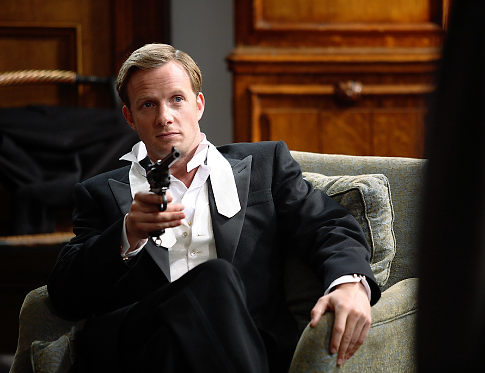
Rupert Penry-Jones in The 39 Steps

John Buchan wrote The 39 Steps in 1915, creating the genre of the espionage thriller, particularly that subset involving the upper-class gentleman spy. In the book, Richard Hannay, had recently returned to London after years of living in Africa, serving in the Boer War and then working as a mining engineer. It is late spring of 1914; he is bored blind by his present life, and ready for some action. He gets his wish when his neighbor, Scudder, entrusts a mysterious notebook and story of spies about to destroy the British Navy to Hannay and gets killed by German spies in his flat. Naturally, Hannay is assumed guilty of the murder, and, with both spies and police searching for him, he goes to Scotland to unravel the story and thus be found innocent. Like all stories of intricate and slightly implausible plot, the tale unfolds at breakneck speed. Buchan’s book is filled with chance encounters, plot twists, double crosses, chases across the Scottish moors, once with an airplane tracing his movements, and ends with Hannay back in England, uncovering the traitor and foiling the German plot. The book was a huge success.

In 1935, Alfred Hitchcock undertook the challenge of making The 39 Steps into a movie. It was a challenge because of the intricate details and large cast in the book, so Hitchcock developed a very different version: he kept Hannay’s name, the murder of the agent in Hannay’s apartment, and the trip to Scotland to discover whatever he could. But Hitchcock updated the time of the action to the mid-30s, made Hannay Canadian and the spies vaguer in nationality, incorporated a music hall performer named Mr. Memory, and changed the 39 steps from a physical location to a conjuring trick. He also brought in a woman to provide the requisite cinema love interest; they meet cute and dash across the moors of Scotland, handcuffed together for some of the time. Robert Donat played the hapless Canadian Hannay; he was the best part of the movie.

The 39 Steps, as broadcast by PBS Sunday night, is much truer to the original. Rupert Penry-Jones, who has the jaded upper class part down cold, plays Hannay, once again the bored Brit. He is aloof when Scudder barrels into his apartment, disbelieving of the story, until the milkman breaks in and Scudder is murdered. Penry-Jones, who previously appeared as Captain Wentworth in Masterpiece’s broadcast of Persuasion, plays a somewhat understated hero. He is quick off the mark, and, in the manner of such heroes, good looking in face and form. Lizzie Mickery, who adapted the novel for this screenplay, also added female interest: Victoria Sinclair, played with spirit by Lydia Leonard, is a suffragist and also a British agent. Again, there are a number of runs across the moors displaying some really splendid scenery. And once again, Hannay is chased by an airplane; although in a clear homage to Hitchcock, the folks in the plane don’t simply spot him, they shoot at him a la North by Northwest – another great Hitchcock spy caper.

Rupert Penry-Jones (Richard Hannay), Lydia Leonard (Victoria Sinclair)

Captain Maynard, my trustee co-viewer, was delighted to note that the cars and guns were all authentic to the 1914 date. He loves the wonderful Masterpiece productions for this reason. And in my fashion, I liked the accuracy of the costumes, both men and women. The story starts very quickly and tautly, and unwinds without a moment wasted; we were both drawn into it immediately.

We enjoyed the Hitchcock version of the movie, although I thought the addition of the music hall unnecessary, even while recognizing that this was a favorite Hitchcock device. (See also, The Man Who Knew Too Much.) And I could see no purpose to have Donat be Canadian; things were already difficult enough. Hitchcock also likes his hero to be pretty clueless, bumbling from one near-disaster to the next, until he finally adds up the pieces and solves the riddle. Over all, I like my hero to have a little more on the ball, and in this 2008 update, Penry-Jones is quick-witted and in charge; he solves the cipher, recognizes his foes, and works through the puzzle ahead of the Secret Service. He is a nice combination of James Bond and Lord Peter Wimsey: not so over the top or predatory as Bond, a little more physical than Wimsey. The love story is believable, not the comic relief of the Hitchcock version. Victoria is also sharp, has a photographic memory, runs without falling down in a swoon, and altogether plays an effective sidekick. One thing did strike a false note: Victoria calls herself a suffragette rather than suffragist, the less derisive term used always by those indomitable women. The story plays out against the beginning of World War I, building both tension and reality for the spy plot. The last scene shows Hannay, now an officer in the British Army, at St. Pancras station setting off for France. The tantalizing hope is that he and Victoria will have a future after the war. And at this point, Co-viewer and I have changed our allegiance: truer to the book, while building in a female character, this remake is by far the better 39 Steps.

Gentle Readers: My good friend, Lady Anne, an avid fan of Alfred Hitchcock’s The 39 Steps, wrote this review for my blog. I am, as always, ever so grateful for her learned insights. Watch The 39 Steps online at PBS until March 30. 2010.

Read Full Post »

PBS Masterpiece Classic will show an encore presentation of Persuasion 2007 tonight. If you missed this 90-minute film the first time, you will have a chance to see it at 9 PM EST. (Check your local listing).

Sally Hawkins as Anne Elliot in Persuasion, 2007

Vic’s posts about Persuasion 2007:

Other blogger views of the Film

Rupert Penry Jones as Captain Wentworth and Sally Hawkins as Anne Elliot, Persuasion

Posts on this blog about Persuasion

The Elliots of Kellynch Hall, Persuasion 2007

Read Full Post »


Two years ago PBS offered Northanger Abbey during Jane Austen Season. Tonight we are having an encore presentation. Such fun! For information about this series, click on this PBS link.

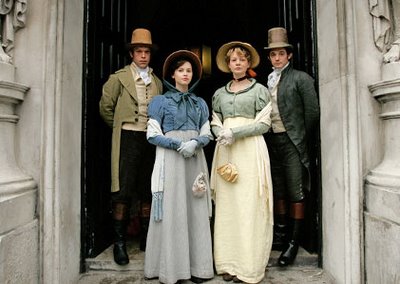
John Thorpe, Catherine Morland, Isabella Thorpe, and James Morland

For my original review and others, click on the links below!

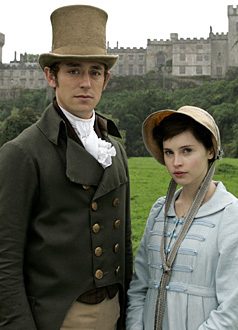
Henry Tilney and Catherine Morland

Read Full Post »

Jane Austen had a few ideas about what would happen to some of her characters in the future. Emma’s Mr. Woodhouse would live for two more years after his daughter’s marriage to Mr. Knightley, and the letters from Frank Churchill that Jane Fairfax placed before her contained the word “pardon.” These little tidbits of information help to make the books and movie adaptations so much more enjoyable to read and watch.

In my previous observations of the film adaptation of Emma 2009, I mentioned several times that I disliked Romola Garai’s interpretation of the role, but I have now seen the film four times AND rewatched other Emma films, including Clueless, which remains my favorite. I have also been listening to the full book version of Emma on my iPod. My mama sagely told me, “you CAN teach an old dog new tricks”, and after the second episode of Emma aired on PBS last week and after viewing the Kate Beckinsale version of Emma (1996) with a friend, this crotchety old dog has come to the rather astonishing realization that she likes Romola as Emma after all.

Romola’s quick moving, restless Emma captures her immaturity and boredom. Highbury is a town that is much too confining for such a talented, rich and lively young lady, and with so little to do, this self-indulgent and coddled girl can’t help but create mischief. If only Emma could apply herself long enough to become proficient at something, she might have been able to keep her nose out of other peoples’ lives. But she keeps making lists, with every intention of reading the books. As Mr. Knightley observed to Mrs Weston:

Emma reads two pages of Milton

Emma has been meaning to read more ever since she was twelve years old. I have seen a great many lists of her drawing up at various times of books that she meant to read regularly through—and very good lists they were—very well chosen, and very neatly arranged—sometimes alphabetically, and sometimes by some other rule. The list she drew up when only fourteen—I remember thinking it did her judgment so much credit, that I preserved it some time; and I dare say she may have made out a very good list now. But I have done with expecting any course of steady reading from Emma. She will never submit to any thing requiring industry and patience, and a subjection of the fancy to the understanding.

Emma also paints, but, as her portfolio (and pale painting of Harriet Smith) demonstrates, she is hard pressed to finish these projects.

Emma's very pale painting of Harriet Smith

Emma wished to go to work directly, and therefore produced the portfolio containing her various attempts at portraits, for not one of them had ever been finished, that they might decide together on the best size for Harriet. Her many beginnings were displayed. Miniatures, half-lengths, whole-lengths, pencil, crayon, and water-colours had been all tried in turn. She had always wanted to do everything, and had made more progress both in drawing and music than many might have done with so little labour as she would ever submit to.”

Emma can play the pianoforte prettily enough, but not as well as Jane Fairfax, which bothers her:

Emma is invited to play first at the Coles' party

She did unfeignedly and unequivocally regret the inferiority of her own playing and singing. She did most heartily grieve over the idleness of her childhood–and sat down and practised vigorously an hour and a half.

She was then interrupted by Harriet’s coming in; and if Harriet’s praise could have satisfied her, she might soon have been comforted.

“Oh! if I could but play as well as you and Miss Fairfax!”

“Don’t class us together, Harriet. My playing is no more like her’s, than a lamp is like sunshine.” – Emma, Volume 2, Chapter 9

Sandy Welch, scriptwriter of this Emma adaptation, observed that Cher, the Emma character in Clueless, was bossy but sweet and well-meaning. In her script, Ms. Welch wanted to show that the coddled young Emma had an attitude of “well-meaning snobbishness” and that in all her meddling, she sincerely thought:  “doesn’t everyone think like this?”


And so in my fourth viewing of Romola’s performance as Jane Austen’s wealthiest and most entitled heroine, I have finally come to admire this heroine. My change of heart was especially helped when I reviewed previous Emma adaptations during the last snow storm, and realized just how thoroughly this new production fit in with our modern sensibilities.  I (and a few of my Janeite friends) still think that Romola’s  facial grimaces and wide eyed interpretation of a very young Emma in the first half of the series were overly exaggerated, but she toned down her performance as Emma matured and grew in understanding.

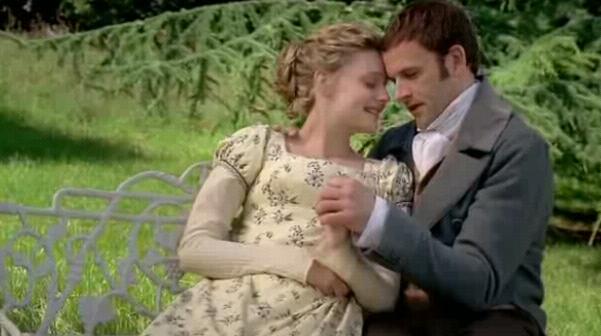
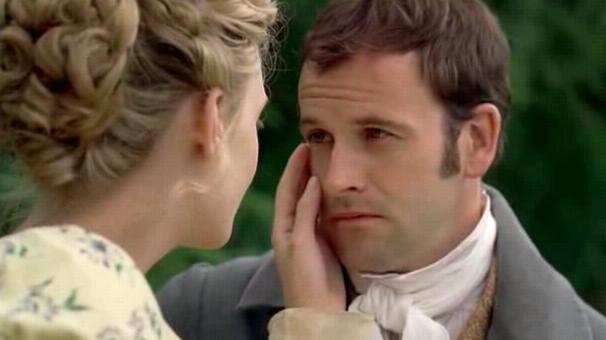
Her scenes with Jonny Lee Miller during his proposal were tender and touching and gave a fitting ending to the series. I shall miss these Sunday evenings watching Emma. Thankfully, PBS will be showing reruns of Persuasion and Northanger Abbey, which were originally shown during Jane Austen Season two years ago. Jane Austen fans can take heart that our time with the bonnet series is not yet over.

Now that you have seen all the episodes of Emma, what did you think?

More Links:

Read Full Post »

Four recently released books about Jane Austen or the Regency period are in my review queue. The weather man forecasts snow, so I can’t think of a better way of spending the weekend than to curl up in front of a cheery fire and read these new additions to my library shelves:

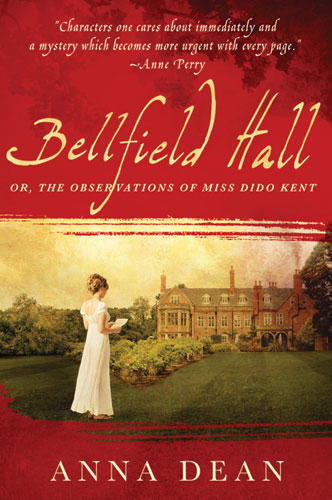
Bellfield Hall: A Dido Kent Mystery by Anna Dean ( released on February 2nd).

It is 1805, and Miss Kent is summoned to her niece’s country manor to comfort her afte her fiance, Richard Montague, disappears.  Worse, the body of an unnown young woman is found on the grounds. As Dido works to resolve the mystery, she falls in love. With observations like these, who cannot like Dido Kent or look forward to reading the book?:

Mr. William Lomax …has a very fine profile. He has also the very great recommendation of being a widower. And, all in all, I am rather sorry that I gave up the business of falling in love some years ago.

The Misses Harris are too much engaged in being accomplished to take a great deal of exercise and their mother must save all her breath to gossip with.

About the author: Anna Dean set about crafting stories at the age of five under the impression that everyone was taught to write in order to pen books. By the time she discovered her mistake, the habit was too deeply ingrained to give up. She resides in the Lake District of England.

You may order the book directly from the publisher. For the time being I am boycotting Amazon.com, and I highly recommend that you also eschew this bombastic pricing bully.

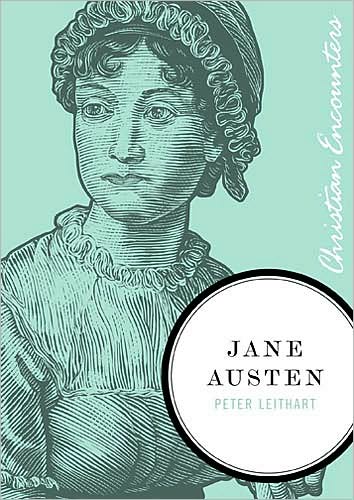
Jane Austen: Christian Encounters by Peter Leithart (to be released on March 2nd, 2010).

Some may know Jane Austen simply as the English novelist whose books are required reading in high school and college. Perhaps it wasn’t until the BBC’s extremely successful TV miniseries of Pride and Prejudice or Emma Thompson’s film Sense and Sensibility that many became entranced. Now younger readers are flocking to Austen with a unique twist in the bestselling Pride and Prejudice and Zombies: The Classic Regency Romance, by Seth Grahame-Smith. In this Christian Encounters biography, fans of Jane Austen will discover the Christian faith that was in the weft and weave of her character and how it influenced her writing and her life.

Order the book from the publisher, Thomas Nelson.

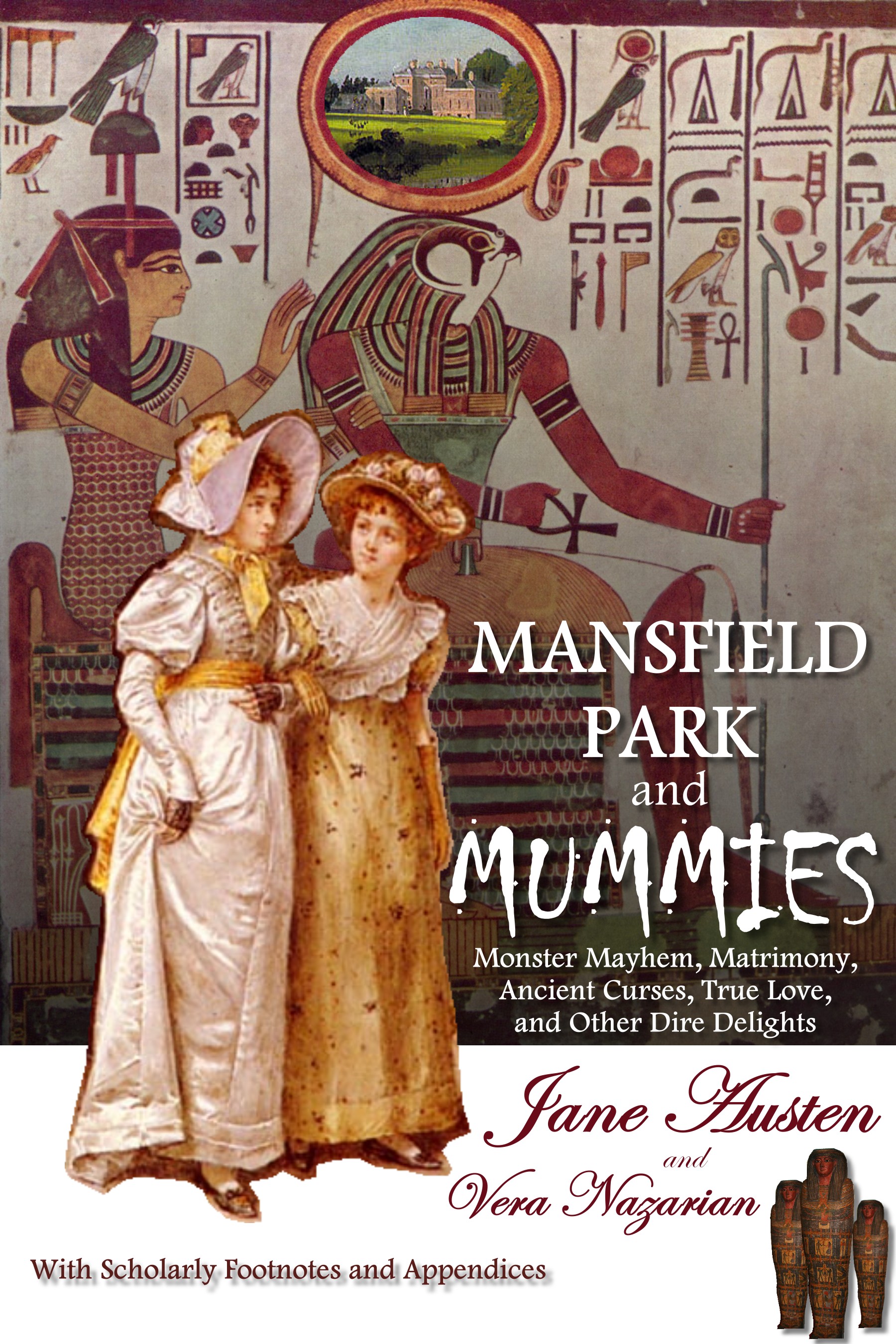
Mansfield Park and Mummies by Jane Austen and Vera Nazarian

Oh, yes, another Jane Austen mashup. But with writing like this, how can one resist a look-see?:

In the morning the ball was over, the mummies nowhere in sight, and much of the cleanup still to come And the breakfast was soon over too. All throughout, everyone ate in due solemnity, Sir Thomas decidedly troubled and deep in thought. Mr. Crawford impeccable, Edmund grim and absentminded, and only William darting quick happy looks at Fanny and whispering repeatedly, “Best ….ball….ever!”

The website for this book says it all: Spinsterhood or Mummification!
Ancient Egypt infiltrates Regency England in this elegant, hilarious, witty, insane, and unexpectedly romantic monster parody of Jane Austen’s classic novel.

Our gentle yet indomitable heroine Fanny Price must hold steadfast not only against the seductive charms of Henry Crawford but also an Ancient Egyptian Pharaoh!

Meanwhile, the indubitably handsome and kind hero Edmund attempts Exorcisms… Miss Crawford vamps out… Aunt Norris channels her inner werewolf… The Mummy-mesmerized Lady Bertram collects Egyptian artifacts…

Order the book from the publisher, Norilana Books

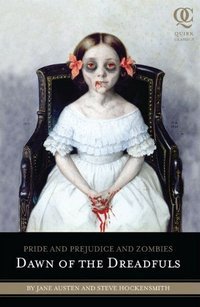
Last but not least is the prequel to Pride and Prejudice and Zombies published by Quirk Books. Dawn of the Dreadfuls by Steve Hockensmith ( coming out in March!)

The story opens with the Bennets attending a funeral for a local shopkeeper, who — before the burial — suddenly sits up in his coffin. Everyone in the crowd is shocked except Mr. Bennet, who has some knowledge of zombie incursions in other parts of England. Realizing that the scourge has come to their village, he decides to protect his daughters by having them schooled in the martial arts — nunchuks, katana swords, and the like…

Look for a special promotion of the book on March 3.

Order the book from the publisher, Quirk Books

More reviews on this blog:

Read Full Post »

« Newer Posts - Older Posts »