
I got a nine out of ten on this quiz about the Regency Period. Darn. I was certain I would get a ten! The average score is a 6.
Posted in Popular culture |

Children in the early 19th century lived in vastly different worlds according to their incomes and circumstances
While the rich could afford to educate their children during the Georgian and Regency periods, the children of the working classes knew no such luxuries since there were no free state-run schools at the time.
Many children from lower income families were expected to work, often in textile mills and factories. In 1788, two-thirds of the individuals working in factories were children who worked 13 hours a day, six days per week. In fact, women and children were often the preferred laborer since they earned lower wages. Children, being quite small, were employed to repair machinery or keep them in order, often while the machines were still running. This practice resulted in many accidents or fatalities. One apprentice in a mill described his accident:
There was a great deal of cotton in the machine, one of the wheels caught my finger and tore it off, it was the forefinger of my left hand. I was attended by the surgeon of the factory Mr Holland and in about six weeks I recovered.
Children’s books became popular during the end of the 18th century and early 19th century, entertaining those privileged children who could read. At the same time, funding for the local parishes that took care of pauper children, orphans, and poor families began to decrease or dry up.
 Mill owners took up some of the slack, taking care of the children that parishes could no longer support. Samuel Greg of Quarry Bank Mill, an owner with a sense of fairness, insisted that: each child he took on came to him with a new set of clothing, in return he promised the Parish that he would give ‘sufficient Meat, Drink, Apparel [clothing], Lodging, Washing, and other Things necessary and fit for an Apprentice.’
 By the early 19th century, a series of factory acts were passed to restrict the hours that children were allowed to work, and to improve safety. (Wikipedia).
Learn more about children during this period in the following links:
Book image from the Republic of Pemberley, Ingres portrait from the Louvre
Posted in Uncategorized | Tagged Working class |
 Rev. George Austen was by all accounts a handsome man. Anna LeFroy, Jane’s niece wrote, “I have always understood that he was considered extremely handsome, and it was a beauty which stood by him all his life. At the time when I have the most perfect recollection of him he must have been hard upon seventy, but his hair in its milk-whiteness might have belonged to a much older man. It was very beautiful, with short curls about the ears. His eyes were not large, but of a peculiar and bright hazel. My aunt Jane’s were something like them, but none of the children had precisely the same excepting my uncle Henry.”
George Austen was born in 1731. His mother died in childbirth and his father died a year after marrying a new wife, who did not want the responsibility of taking care of the young lad. George then lived with an aunt in Tonbridge and earned a Fellowship to study at St. John’s. He received a Bachelor of Arts, a Master of Arts, and a Bachelor of Divinity degree at Oxford. Called “the handsome proctor”, he worked as an assistant chaplain, dean of arts, Greek lecturer while going to school.
He first met Cassandra Leigh in Oxford when she was visiting her uncle Theophilus. After they married, George became rector in several country parishes. The family grew by leaps and bounds, and eventually he and Cassandra Leigh had six sons and two daughters. Shortly after Jane was born, her father said: “She is to be Jenny, and seems to me as if she would be as like Henry, as Cassy is to Neddy.”
By all accounts George and Cassandra Austen had a happy marriage. His annual income from the combined tithes of Steventon and the neighboring village of Deane was around 210 pounds. The sales of his farm produce also supplemented his income. With so many mouths to feed, the family was not wealthy, to say the least. To augment his income even more, Rev. George Austen opened a boarding school at Steventon Rectory for the sons of local gentlemen.
 Rev. Austen encouraged Cassandra and Jane to read from his extensive library. For entertainment, the family read to each other, played games, and produced plays. George Austen must have been proud of his daughter’s accomplishments. He tried to get Pride and Prejudice published. The “Memoir” by Edward Austen-Leigh contains a letter from George Austen to Mr. Cadell, the publisher, dated November 1797, in which he describes the work as a “manuscript novel comprising three volumes, about the length of Miss Burney’s ‘Evelina'” and asks Mr. Cadell if he would like to see the work with a view to entering into some arrangement for its publication, “either at the author’s risk or otherwise.” Unfortunately, nothing came of this query, but P&P became hugely popular among the friends and family who read it before it was published in a much shorter form. The original 3-part manuscript no longer exists. Regardless, countless readers have delighted in the much shorter version for 200 years.
 The Rev. George Austen died January 21, 1805, where the Austen family had moved after living in Steventon for over 30 years. (The silhouettes above are of George and Cassandra). On the 2nd. January 1805, Jane Austen wrote sorrowfully to her brother, Frank: “We have lost an excellent Father. An illness of only eight and forty hours carried him off yesterday morning between ten and eleven. His tenderness as a father, who can do justice to?”
The inscription on Rev. George Austen’s grave reads:
“Under this stone rests the remains of
the Revd. George Austen
Rector of Steventon and Deane in Hampshire
who departed this life
the 1st. of January 1805
aged 75 years.”
Double click on this grave marker to read the words. (From: Find a Grave Memorial)

Read about Jane’s mother, Cassandra Austen nee Leigh on this site. Click here.
Posted in Biography, jane austen, Jane Austen's life | Tagged George Austen, Jane Austen's Father, Reverend George Austen |

Ah, England. One of the chilliest periods I ever spent in my life was April in London.
Be that as it may, when I saw this scene in Persuasion 2007, I realized how much the settings added to the drama in this film adaptation. The Cob seemed cold and forbidding, and the waves were ominous. Considering the state of Captain Wentworth’s and Anne’s feelings, and their anxiety (or fearfulness) of being rejected by the other, this scene was quite apropos.

Posted in Visited | 1 Comment »
Updated March 2019
Watch Persuasion 2007 Part 1 here.
and Part 2 here
Critique: The 2007 version of Persuasion is quite serious and somber. The scenery is lush and gorgeous, and I find the costumes more authentic in this production than in other cinematic depictions of Jane’s work. Rupert Penry-Jones is the perfect Jane Austen hero and his handsome Captain Wentworth is quite to my liking. However, this production is not as rich in interpretation as the 1995 version of Persuasion, and I preferred Amanda Root as Anne Elliot over Sally Hawkins.
Posted in Film adaptation | 5 Comments »
-
Join 7,218 other subscribers
-
2025 AGM in Baltimore
-

-
Items of Interest
Blog Stats
- 18,541,600 hits
- Follow Jane Austen's World on WordPress.com
-
RECOMMENDED BOOKS AND RESOURCES
-
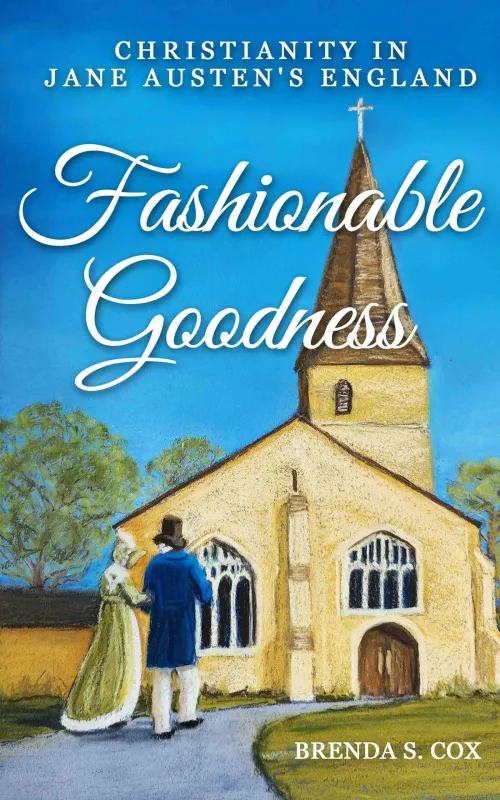
Fashionable Goodness: Christianity in Jane Austen's England is now available! By JAW contributor Brenda S. Cox. See Review. Available from Amazon and Jane Austen Books. 
We also recommend JAW contributor Rachel Dodge's devotionals based on Jane Austen's prayers and classic literature. Reviews:
Praying With Jane: 31 Days Through the Prayers of Jane Austen
The Anne of Green Gables DevotionalThe Little Women Devotional
The Secret Garden Devotional
The Tour of Doctor Syntax. Edited by Ben Wiebracht. Read the review of the book at this link. Click to order the book on Amazon US or Amazon UK or Jane Austen Books FREE Student Membership to JASNA
Available through December 31st, 2025. Click on image for details, and share this poster with other teachers and students!

The Obituary of Charlotte Collins by Andrew Capes

Click on image to read the story.
Comments
“My idea of good company…is the company of clever, well-informed people, who have a great deal of conversation.” – Jane Austen, Persuasion

Gentle readers: Please feel free to post your comments and continue the conversation! Due to SPAM, we will no longer accept comments on posts after 30 days of publication. In some instances, links will be removed from comments as well.
Administrators and Contributors
Pin It!

Top Posts
-
Recent Posts
Links to Jane Austen Blogs
May we suggest?
Hello, my name is Vic and I live in Maryland, USA. I have adored Jane Austen almost all of my life. I am a proud lifetime member of the Jane Austen Society of North America. This blog is a personal blog written and edited by me and my team. We do not accept any form of cash advertising, sponsorship, or paid topic insertions. However, we do accept and keep books and CDs to review.
If you would like to share a new site, or point out an error, please email us. (Yes, we are fallible. We'll own up to our mistakes and will make the corrections with a polite smile on our faces.) Write us at

Thank you for visiting this blog. Your comments and suggestions are most welcome.
Project Gutenberg: eBook of Stage-coach and Mail in Days of Yore, Volume 2 (of 2), by Charles G. Harper
STAGE-COACH AND MAIL IN DAYS OF YORE: A PICTURESQUE HISTORY
OF THE COACHING AGE, VOL. II, By CHARLES G. HARPER. 1903. Click on this link.
Top Posts & Pages
- Regency Fashion: Men's Breeches, Pantaloons, and Trousers
- Men's hair styles at the turn of the 19th century
- Regency Hygiene: The Bourdaloue
- Pictorial History of Regency Hairstyles
- Highclere Castle Floor Plan: The Real Downton Abbey
- Regency “Privy” Matters: Feminine Hygiene, Bodily Functions, and Childbirth
- Cheapside, The Gardiners, and Pride and Prejudice
- Social Customs During the Regency
- Jane Austen’s Regency Women: A Day in the Life, Part 1
- The Servant's Quarters in 19th Century Country Houses Like Downton Abbey
Tour Chawton Cottage on YouTube
-
Disclaimer: Our team makes no profit from this blog. We may receive books (physical or digitized) for review purposes.
-
Copyright Statement: © Jane Austen's World blog, 2009-2024. Unauthorized use and/or duplication of this material without express and written permission from this blog’s author and/or owners is strictly prohibited. Excerpts and links may be used, provided that full and clear credit is given to Jane Austen's World with appropriate and specific direction to the original content.




 Jane Austen's World