• Home
  • Audio/Podcasts
  • Austensites
  • AV/E-Texts
  • History
  • JA Novels & Bio
  • Links
  • Original Sources/19th C. Texts
  • Social Customs During the Regency
  • Teacher/Student
  • Writer/Literature Resources

Jane Austen's World

This Jane Austen blog brings Jane Austen, her novels, and the Regency Period alive through food, dress, social customs, and other 19th C. historical details related to this topic.

Feeds:
Posts
Comments

Goodnestone and Holy Cross Church (Jane Austen’s Family Churches)

March 23, 2026 by Brenda S Cox

By Brenda S. Cox

“We dined at Goodnestone, and in the evening danced two country dances and the Boulangeries. I opened the ball with Edward Bridges . . . We supped there, and walked home at night under the shade of two umbrellas.”—Jsane Austen, Sept. 5, 1796.

More than thirty times in her letters, Jane Austen mentions Goodnestone (pronounced “GOOD-nuh-stun” or “gunston.”) The original name was Godwynestone, after the Anglo-Saxon family who lived in the area from before the Norman Conquest until the reign of King Henry VIII. The founder of the family, Earl Godwyn (or Godwin), was the father of King Harold II, killed in the Norman Conquest.

The estates of the area passed through a few other families. They were eventually acquired by Brook Bridges, Esq. in the early 1700s. He built Goodnestone Park. His son became a baronet, like Sir Thomas Bertram and Sir Walter Elliot in Austen’s novels. He passed that title down to his descendants, a Brook Bridges in each generation.

Jane Austen visited Goodnestone several times, and often refers to the comings and goings of her friends and relations there. What was her connection to this place?

Goodnestone Park and Farm and Rowlings

Last month on this site we “visited” Godmersham, home of the Knight family who adopted Jane Austen’s brother Edward. Edward Austen married Elizabeth Bridges, daughter of Sir Brook William Bridges, owner of the nearby estate of Goodnestone. When Edward and Elizabeth were first married, they lived at Rowling, about a mile from Goodnestone. Their first four children were born there. Jane Austen visited them there, socializing with Elizabeth’s family at Goodnestone Park. (See “A Walk in Kent” for photos of Rowling.)

Goodnestone Park, where Austen danced with Edward Bridges.
Photo by Nick Smith / Goodnestone House, 2007, CC BY-SA 2.0
Goodnestone Park in the 1770s
Public domain via wikimedia

“The Mrs. Finches were afraid you would find Goodnestone very dull; I wished when I heard them say so that they could have heard Mr. E. Bridges’ solicitude on the subject, and have known all the amusements that were planned to prevent it.”—Aug. 24, 1805, from Jane Austen at Godmersham Park to Cassandra Austen at Goodnestone Farm, Wingham

Edward and his wife inherited Godmersham and moved there at the end of 1797. Jane and Cassandra continued to visit other Bridges family members at Goodnestone Farm. Her nephew described Goodnestone Farm as “a comfortable house very near the great house, which has generally been inhabited as a dower house or by some younger member of the Bridges family, to whom it belongs.”

Jane’s friend Harriot (or Harriot-Mary), one of her sister-in-law Elizabeth’s younger sisters, insisted Jane stay longer on a visit in 1805. In the following year, Harriot married Rev. George Moore. He was the son of an archbishop and held four church livings. One of Elizabeth’s younger brothers, Rev. Brook-Edward, was perpetual curate of Goodnestone from 1802-9, as well as holding five other church livings at various times. His older brother, Rev. Brook-Henry, held two church livings. (They did like hyphenated names.) The Bridges family apparently had “considerable patronage in the church,” like the Darcys of Pemberley, or at least they had close connections with families who had patronage (the right to assign church livings).

The dower house at Goodnestone, where Jane Austen stayed on later visits to the Bridges family.

Holy Cross Goodnestone church

On  her visits, Austen must have attended the local church, Holy Cross Goodnestone. This is now considered an “Austen Family Church,” like others we have visited in this series. Jane’s brother Edward married his wife Elizabeth in this church in 1791.

Holy Cross Goodnestone church
Faced flints (chipped or “knapped” to make them flat) cover the south wall of the Goodnestone church, giving it a unique appearance.
Path between yew trees at Goodnestone church. See Yew trees in churchyards. The path was recently renovated for easier access to the church. JASNA’s churches fund helped finance the renovation. Photo ©Sue Kittle, 2026
View of the Goodnestone church tower from one of the many beautiful gardens. Once used as a beaon tower and fortress, it is still a bell tower, with four bells, one of which was made in 1628. The church now has six “Ringers” who ring the bells on special occasions. A single bell is rung for church services. Photo by Adam Hincks, CC BY-SA 2.0
On one face of the Goodnestone church tower, a sundial, shown here, was inscribed “Every hour shortens life,” though the markings are very worn now. On another face is a Victorian clock, which has to be manually wound every eight days.
Detail of photo by Adam Hincks, CC BY-SA 2.0

Holy Cross Goodnestone church interior

The interior of the church was remodeled in the Gothic Revival style in 1841, so it looks different now than it did in Austen’s time.

An inscription over this arch commemorates Sir Brook William Bridges (Edward Austen’s father-in-law) who rebuilt the nave and chancel of the church in 1841.
Monuments on the church walls, and flagstones on the floor, still commemorate influential families. This is a monument to Sir Edward Engeham, who purchased the estate from the de Godwynstones, and his family. He died in 1636, age 65, a year after his wife’s death at age 52.
In Austen’s time, the nicer pews would have been rented or owned by wealthy families. These Goodnestone church pews are Victorian, and the organ dates from 1904, restored and augmented in 2014.
The Goodnestone organ also has wooden pipes, for the pedals.
Jane Austen may well have read these engravings on the wall, similar to those in many English country churches. The left side displays the Lord’s Prayer, the right side lists the Ten Commandments.

“We have walked to Rowling on each of the two last days after dinner, and very great was my pleasure in going over the house and grounds. We have also found time to visit all the principal walks of this place, except the walk round the top of the park, which we shall accomplish probably to-day.”—Jane Austen at Goodnestone Farm writing to Cassandra at Godmersham, August 30, 1805. 

Church and Community

A congregation of about twenty people gather for Sunday services at the church (fewer when their excellent choir is not singing). But they may have 100 to 120 participants at services for holidays and weddings.

Like many country churches, the Goodnestone church is also used for various community services. Concerts are held there regularly, and the choir is excellent. They have sung Evensong in cathedrals as well. Schoolchildren come to the church once a week from the Church of England primary school in the village. The church even serves as a post office, open two mornings a week.

News article about the post office being opened in the Goodnestone church.

Goodnestone is part of the Canonry Benefice, which includes seven churches in East Kent. The vicar and other clergy for the benefice serve all the churches, at services alternating between the churches. For example, during the upcoming Holy Week, from Palm Sunday to Easter Sunday, fifteen church services will be held at the various churches (at least one per day). Three of them will be at Holy Cross, Goodnestone.

The church is well worth seeing if you visit the area. It is generally open during daylight hours. You can contact the church if you have questions. Jane Austen enjoyed the gardens and walks in the area, and you can also walk through the lovely gardens and the “Serpentine Walk.” See Visitor Information. Goodnestone Park is now used as a wedding venue.

Brenda S. Cox is the author of Fashionable Goodness: Christianity in Jane Austen’s England. She also blogs at Faith, Science, Joy, and Jane Austen.

All photos in this post, unless otherwise marked, ©Brenda S. Cox, 2023

For Further Exploration

Holy Cross, Goodnestone

Goodnestone, Godmersham, and Canterbury

Rowling and Rowling House

Edward Austen Knight

Detailed History of Goodnestone and Church, written in 1902

More photos of Holy Cross, Goodnestone

Old Photographs of Goodnestone

History of Goodnestone Park with paintings

Goodnestone Park Grade II* listing (Grade II* means a “particularly important building of more than special interest.” Listed buildings require special permissions before any significant changes can be made.)

Church of the Holy Cross Grade I listing with photos (Grade I means “of exceptional interest.”)

Other Austen Family Churches

Steventon

Chawton

Deane

Hamstall Ridware and Austen’s First Cousin, Edward Cooper

Adlestrop and the Leigh Family

Stoneleigh Abbey Chapel and Mansfield Park

Great Bookham and Austen’s Godfather, Rev. Samuel Cooke

Ashe and the Lefroy Family

St. Paul’s Covent Garden (with links to other churches mentioned in Austen’s writings)

St. Swithin’s Walcot (Bath)

Godmersham

Share with others:

  • Email a link to a friend (Opens in new window) Email
  • Print (Opens in new window) Print
  • Share on Facebook (Opens in new window) Facebook
  • Share on Reddit (Opens in new window) Reddit
  • Share on X (Opens in new window) X
  • Share on Pinterest (Opens in new window) Pinterest
  • Share on Tumblr (Opens in new window) Tumblr
  • Share on LinkedIn (Opens in new window) LinkedIn

Like this:

Like Loading...

Related

Posted in Anglican Church, Churches of the Austen family | 1 Comment

One Response

  1. on March 23, 2026 at 03:40 dholcomb1's avatar dholcomb1

    Thank you for the history and the tour. ~ denise

    Loading...


Comments are closed.

  • Email Subscription

    Enter your email address to subscribe to this blog and receive notifications of new posts by email.

    Join 7,161 other subscribers
  • 2025 AGM in Baltimore

  • Items of Interest

  • Blog Stats

    • 18,199,503 hits
  • RECOMMENDED BOOKS AND RESOURCES

  • Fashionable Goodness: Christianity in Jane Austen's England is now available! By JAW contributor Brenda S. Cox. See Review. Available from Amazon and Jane Austen Books.
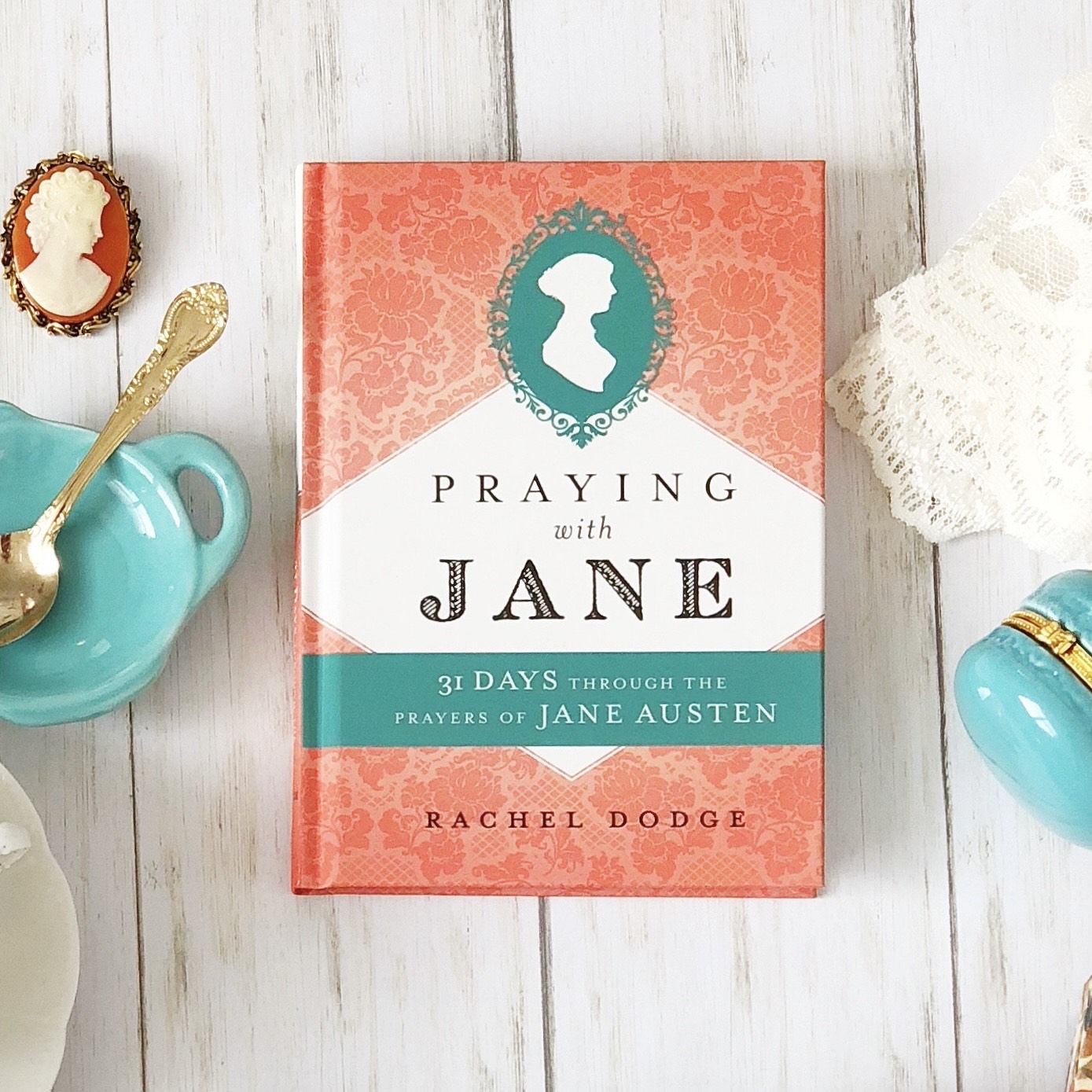
  • We also recommend JAW contributor Rachel Dodge's devotionals based on Jane Austen's prayers and classic literature. Reviews:
    Praying With Jane: 31 Days Through the Prayers of Jane Austen
    The Anne of Green Gables DevotionalThe Little Women Devotional
    The Secret Garden Devotional
  • The Tour of Doctor Syntax. Edited by Ben Wiebracht. Read the review of the book at this link. Click to order the book on Amazon US or Amazon UK or Jane Austen Books
  • FREE Student Membership to JASNA

    Available through December 31st, 2025. Click on image for details, and share this poster with other teachers and students!

  • The Obituary of Charlotte Collins by Andrew Capes

    Click on image to read the story.

  • Comments

    “My idea of good company…is the company of clever, well-informed people, who have a great deal of conversation.” – Jane Austen, Persuasion


    Gentle readers: Please feel free to post your comments and continue the conversation! Due to SPAM, we will no longer accept comments on posts after 30 days of publication. In some instances, links will be removed from comments as well.

  • Administrators and Contributors

    Vic Sanborn, founder of this blog, is supported by a team of talented and knowledgeable writers about Jane Austen and the Regency era. They are:

    • Brenda Cox
    • Rachel Dodge and
    • Tony Grant, who now contributes his photos from London and England

    Click on their names to enter their own blogs.

    In addition, we thank the many experts and authors who frequently contribute their posts and opinions, and who continue to do so freely or at our request.

  • Pin It!

    Follow Me on Pinterest
  • Top Posts

    • Regency Fashion: Men's Breeches, Pantaloons, and Trousers
      Regency Fashion: Men's Breeches, Pantaloons, and Trousers
    • Men's hair styles at the turn of the 19th century
      Men's hair styles at the turn of the 19th century
    • Regency Hygiene: The Bourdaloue
      Regency Hygiene: The Bourdaloue
    • Pictorial History of Regency Hairstyles
      Pictorial History of Regency Hairstyles
    • Cassandra Writes About Jane Austen's Death, July 18, 1817
      Cassandra Writes About Jane Austen's Death, July 18, 1817
    • Regency “Privy” Matters: Feminine Hygiene, Bodily Functions, and Childbirth
      Regency “Privy” Matters: Feminine Hygiene, Bodily Functions, and Childbirth
    • Dancing at the Netherfield Ball: Pride and Prejudice
      Dancing at the Netherfield Ball: Pride and Prejudice
    • Social Customs During the Regency
      Social Customs During the Regency
    • The Servant's Quarters in 19th Century Country Houses Like Downton Abbey
      The Servant's Quarters in 19th Century Country Houses Like Downton Abbey
    • Elizabeth Bennet’s Travels (Part 2): Derbyshire, Matlock, and Dovedale
      Elizabeth Bennet’s Travels (Part 2): Derbyshire, Matlock, and Dovedale
  • Recent Posts

    • Elizabeth Bennet’s Travels (Part 2): Derbyshire, Matlock, and Dovedale
    • Goodnestone and Holy Cross Church (Jane Austen’s Family Churches)
    • Elizabeth Bennet’s Travels (Part 1): Oxford, Blenheim, Warwick, Kenilworth, Birmingham
    • The Church at Godmersham: St. Lawrence the Martyr
    • Godmersham: Inspiration for Pemberley?
  • Links to Jane Austen Blogs

    Click here to enter the page. Topics include Regency fashion, historic foods, Jane Austen societies, British sites, related topics. Click on image.

  • May we suggest?

  • Unknown's avatarHello, my name is Vic and I live in Maryland, USA. I have adored Jane Austen almost all of my life. I am a proud lifetime member of the Jane Austen Society of North America. This blog is a personal blog written and edited by me and my team. We do not accept any form of cash advertising, sponsorship, or paid topic insertions. However, we do accept and keep books and CDs to review.

    If you would like to share a new site, or point out an error, please email us. (Yes, we are fallible. We'll own up to our mistakes and will make the corrections with a polite smile on our faces.) Write us at

    gmailbw

    Thank you for visiting this blog. Your comments and suggestions are most welcome.

  • Project Gutenberg: eBook of Stage-coach and Mail in Days of Yore, Volume 2 (of 2), by Charles G. Harper

    STAGE-COACH AND MAIL IN DAYS OF YORE: A PICTURESQUE HISTORY
    OF THE COACHING AGE, VOL. II, By CHARLES G. HARPER. 1903. Click on this link.


  • Top Posts & Pages

    • Regency Fashion: Men's Breeches, Pantaloons, and Trousers
    • Men's hair styles at the turn of the 19th century
    • Regency Hygiene: The Bourdaloue
    • Pictorial History of Regency Hairstyles
    • Cassandra Writes About Jane Austen's Death, July 18, 1817
    • Regency “Privy” Matters: Feminine Hygiene, Bodily Functions, and Childbirth
    • Dancing at the Netherfield Ball: Pride and Prejudice
    • Social Customs During the Regency
    • The Servant's Quarters in 19th Century Country Houses Like Downton Abbey
    • Elizabeth Bennet’s Travels (Part 2): Derbyshire, Matlock, and Dovedale
  • Tour Chawton Cottage on YouTube

  • Disclaimer: Our team makes no profit from this blog. We may receive books (physical or digitized) for review purposes.

  • Copyright Statement: © Jane Austen's World blog, 2009-2024. Unauthorized use and/or duplication of this material without express and written permission from this blog’s author and/or owners is strictly prohibited. Excerpts and links may be used, provided that full and clear credit is given to Jane Austen's World with appropriate and specific direction to the original content.

Powered by WordPress.com.

WPThemes.


Discover more from Jane Austen's World

Subscribe now to keep reading and get access to the full archive.

Continue reading


Loading Comments...
 

    %d