Feeds:
Posts
Comments

Posts Tagged ‘Bath’

Inquiring Readers, Tony Grant has been contributing articles to Jane Austen Today for several months. Recently, Tony and his family traveled to Bath and the West Country. This is one of many posts he has written about his journey. Tony also has published several posts about his trip on this blog: Going to Bath With Jane Austen and The Servant’s Entrance to Regency Townhouses, for which he supplied the photographs. He has already contributed a post about Milsom Street for Jane Austen Today. This post about his tour through Bath was first published on Jane Austen Today, but the images caused the sidebar to be pushed out of sight, so I placed it here.

Bath Thoroughfare
Jane Austen knew Bath extremely well. Throughout Persuasion and Northanger Abbey she houses her characters in real streets and in real buildings, although she does avoid giving us the number of the house in such and such a street. The real owners and occupants might not have liked the notoriety. And today they might not like the notoriety as well. Was there such a thing as litigation in the 18th century? I’m sure there was.

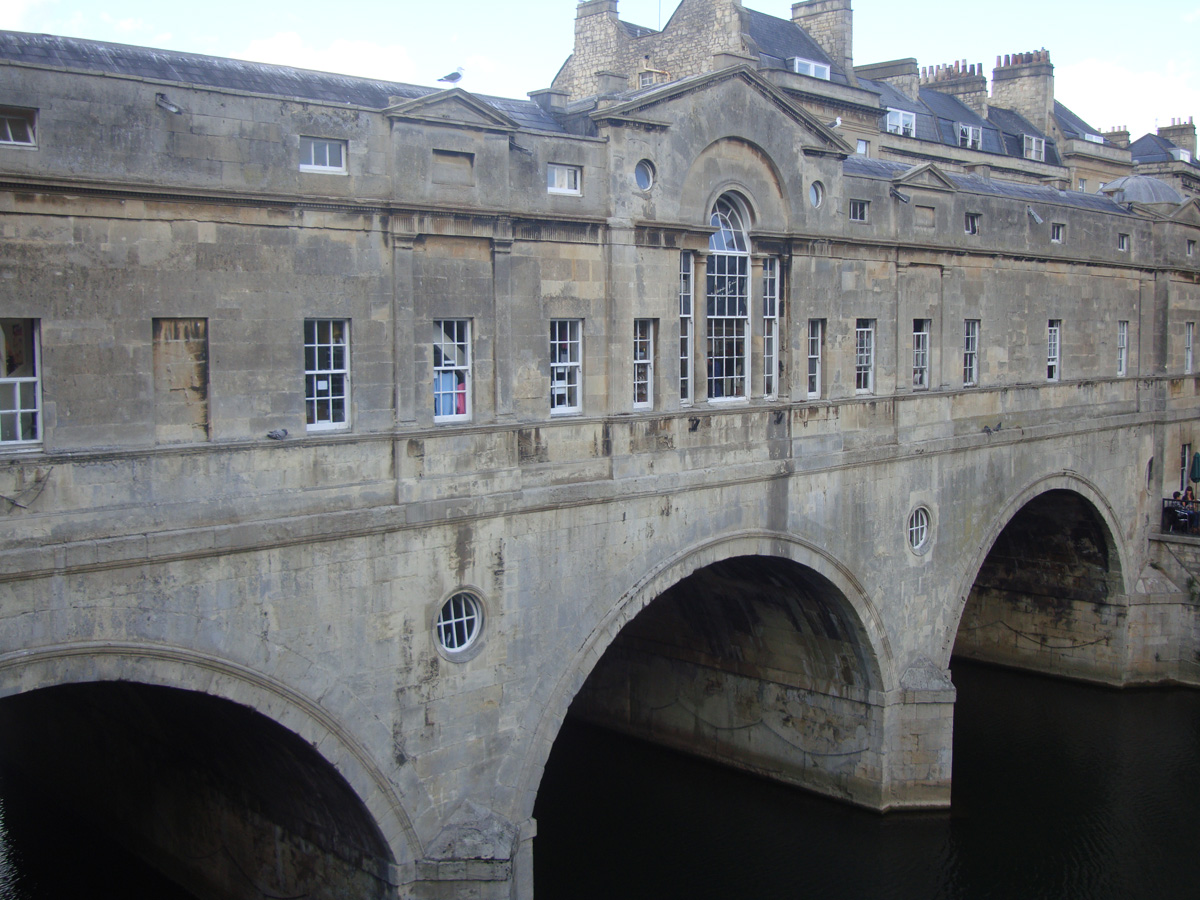
Pultney Bridge

Here are some of the places that Janes characters lived in and when you go to Bath you can see them for yourself.

  • Anne Elliot and her father lived in Camden Place up the hill at the top of the town.
  • Lady Russel lived in Rivers Street just north of The Circus.
  • Rich, Mrs Wallis lived in Marlborough Gardens on the hill leading down from the north end of The Royal Crescent.
  • Catherine Moreland lived in Pultney Street, which is now called Great Pultney Street, very close to Sydney Street. I wonder if Jane saw somebody in Pultney Street that she thought, “ah, that’s Catherine Moreland.”
  • The Dowager Viscountess Dalrymple lived in Laura Place at the end of Great Pultney Street and at the start of Pultney Bridge.

The meeting places and places central to both novels are Milsom Street where everybody shops. Shopping, the bain of my life. My wife and three daughters love shopping. Shopping could be their lives. In Jane’s time tooapparently. It makes me come out in a cold sweat thinking about it. The amount of standing in shops and outside of shops I’ve done.
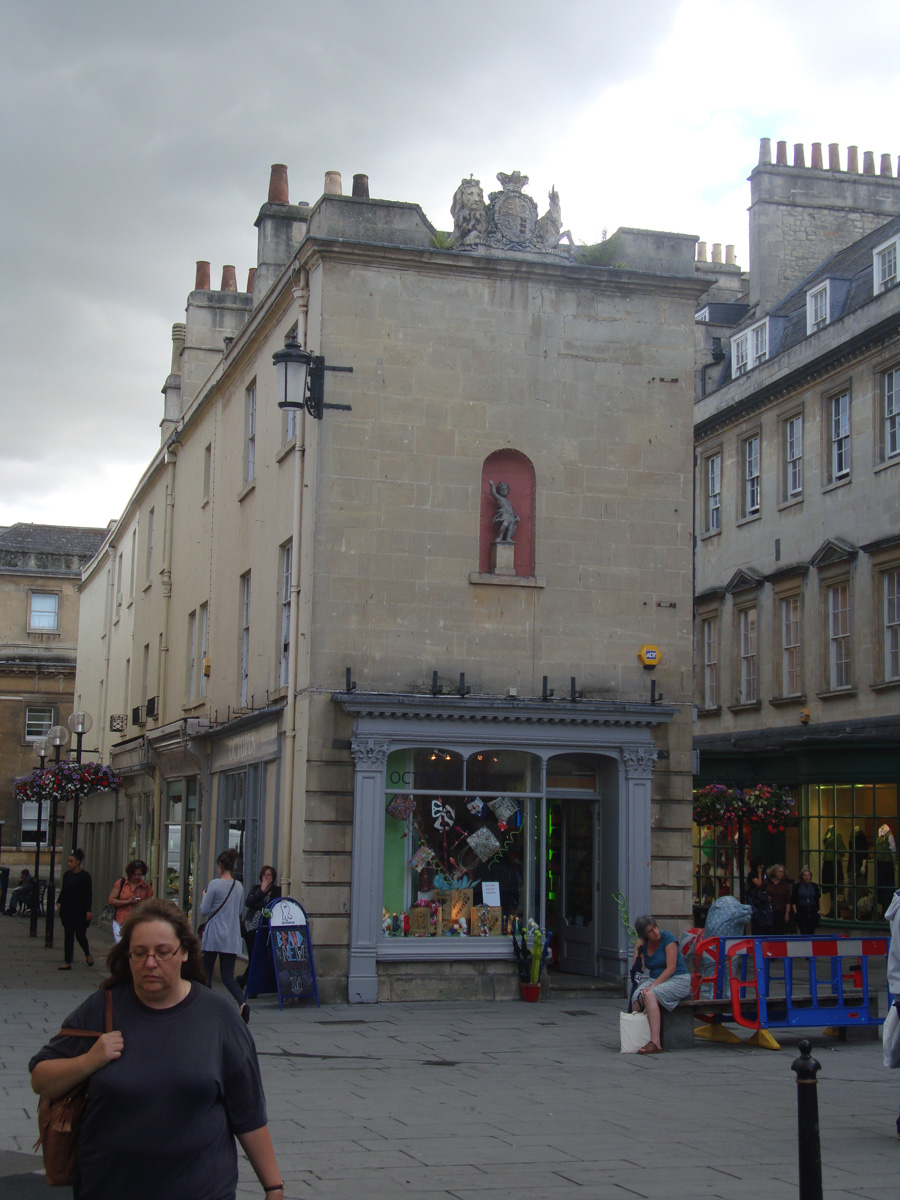
God, I’ve suffered for shopping over the years.

Ah, that’s better. I needed that rant.
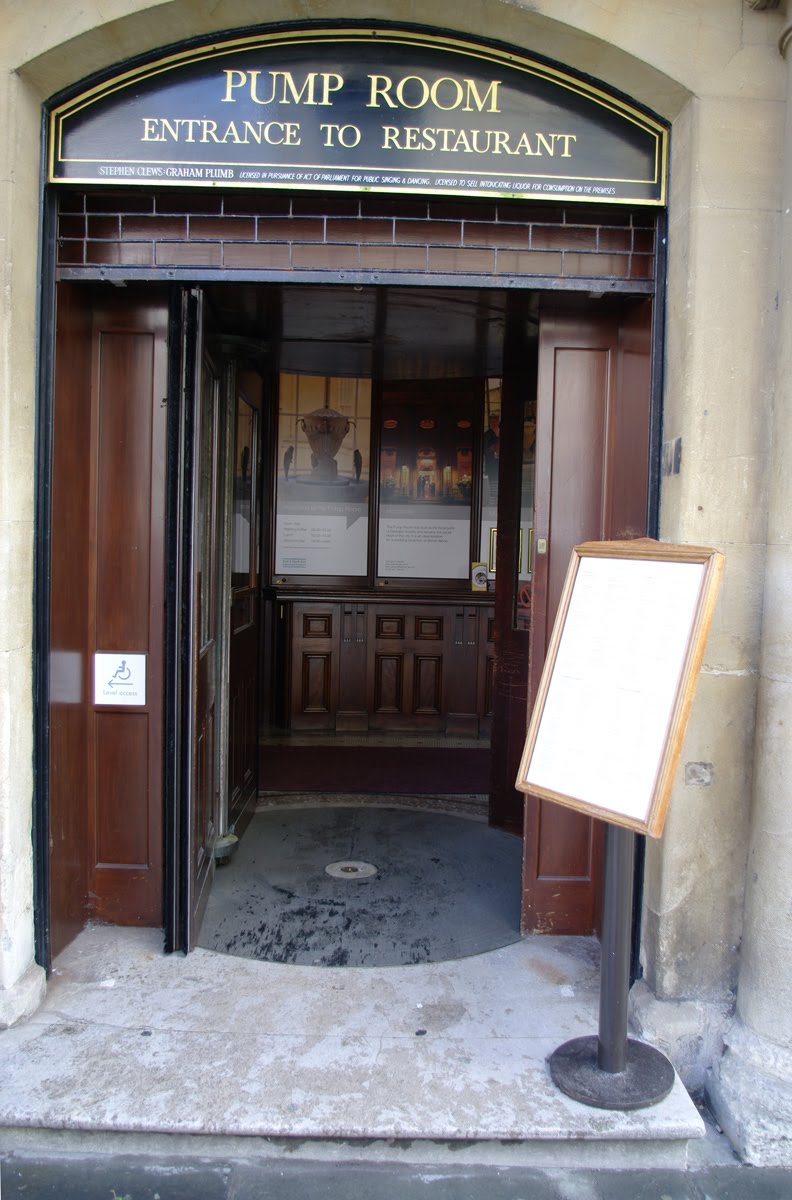
Also the Pump room. What a glorious place it is. I felt a tingle down my spine as I my wife, Abigail and myself were shown to our seats by the headwaiter and we were graciously handed the menus. A trio of musicians, cello, pianist and violinist, played sedately at one end of the room. People lined up at the water pump to imbibe Baths greatest commodity, water from the spring and we ordered tea and cakes.
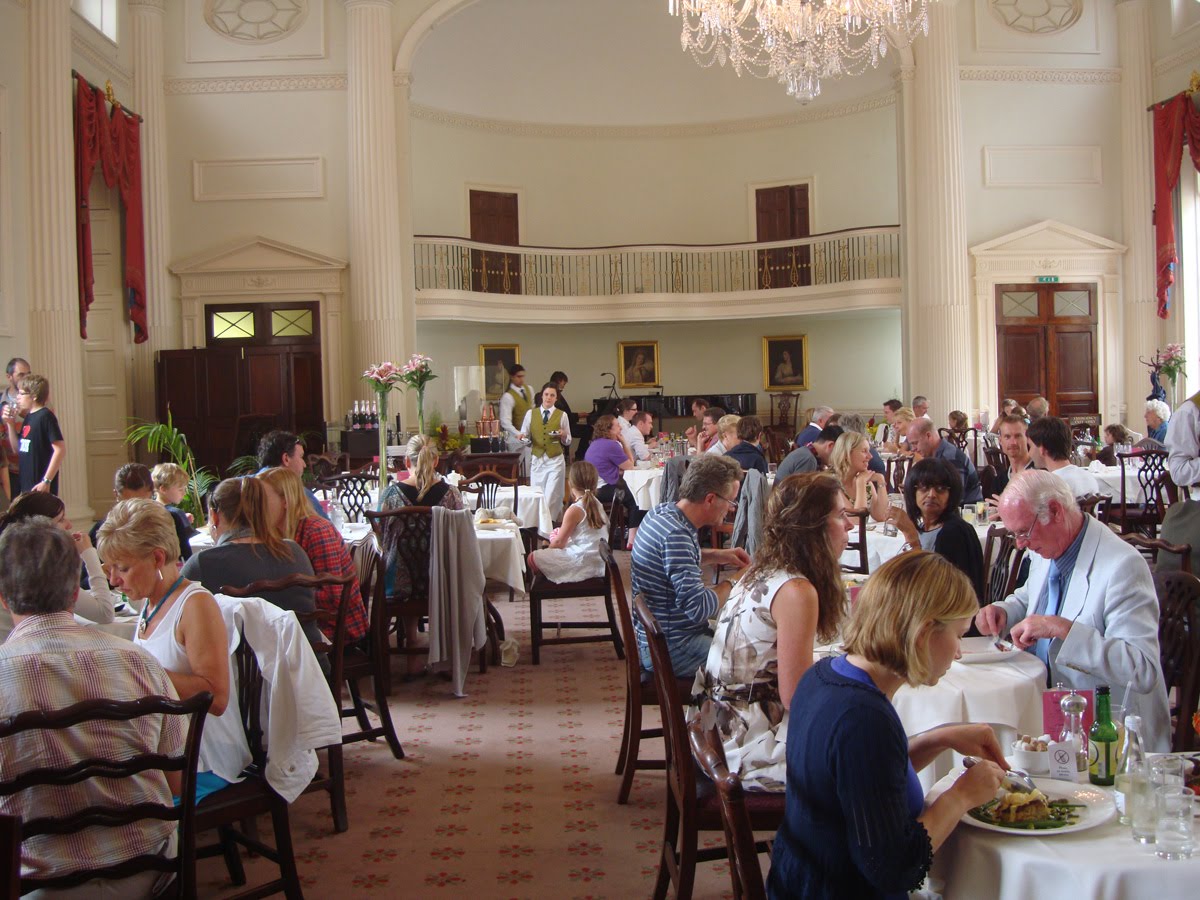
Pump room window
The “pump room blend” of tea is as close as you can get to the blend of tea that Jane Austen, Catherine Morland and Anne Elliot would have drunk. The scones with clotted cream and fresh strawberry jam were exquisite. The tea was delicious and there I was with my family, in THE PUMP ROOM!!!!!!

The Pump Room

I could almost see Catherine Morland pop in to see if she could find Henry Tilney and of course take a few turns of the room to see and be seen. I knew nobody in The Pump Room just as Catherine knew nobody.
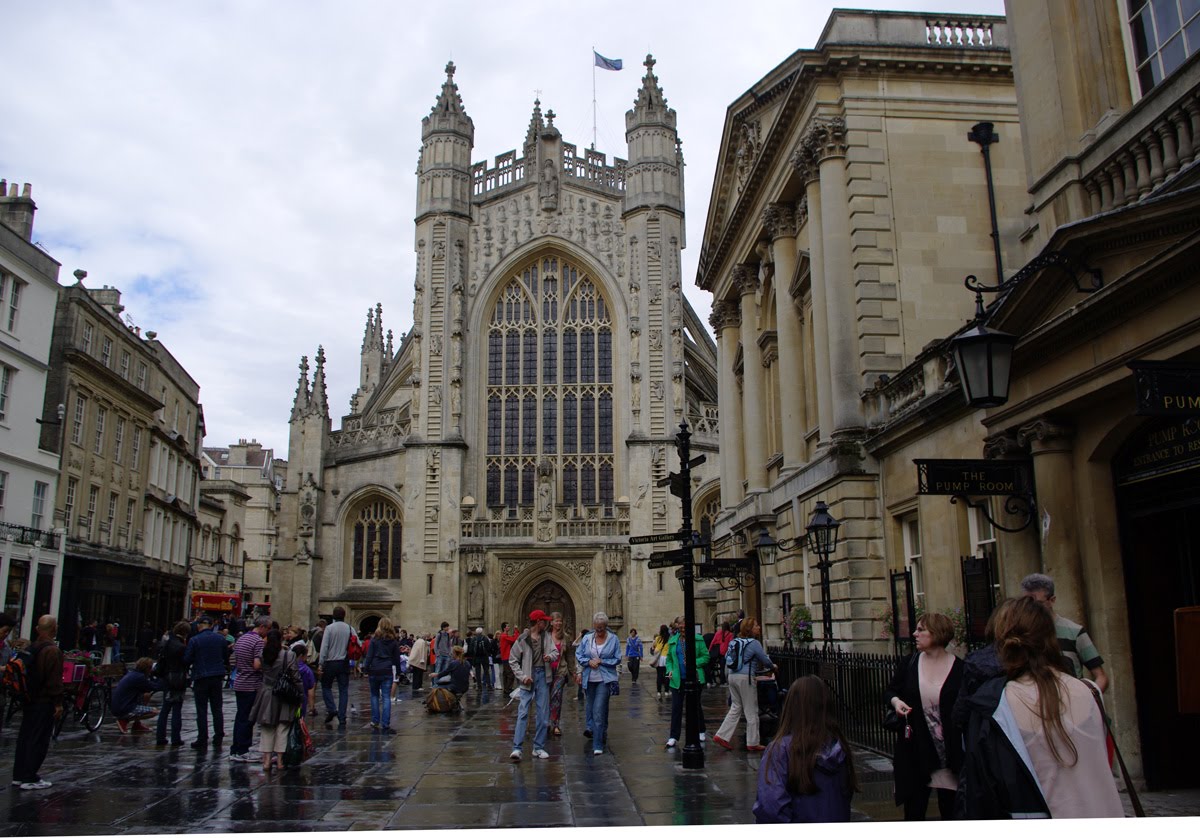
Bath Abbey


Then we had a look inside Bath Abbey. Jane seems to have not attended services at the abbey. She preferred The Octagon. This was a newly built chapel in Jane’s day. She seems to have preferred churches where the incumbent vicar had new and fresh ideas to deliver in his sermons.
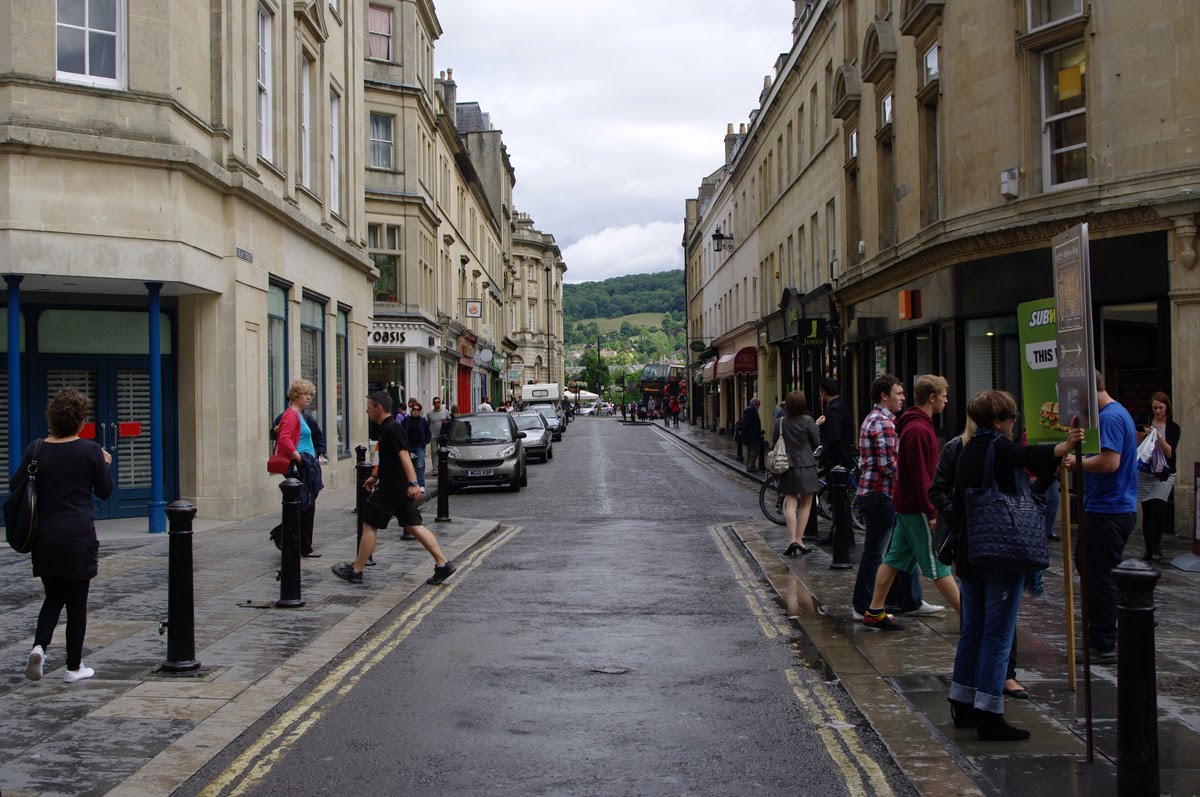
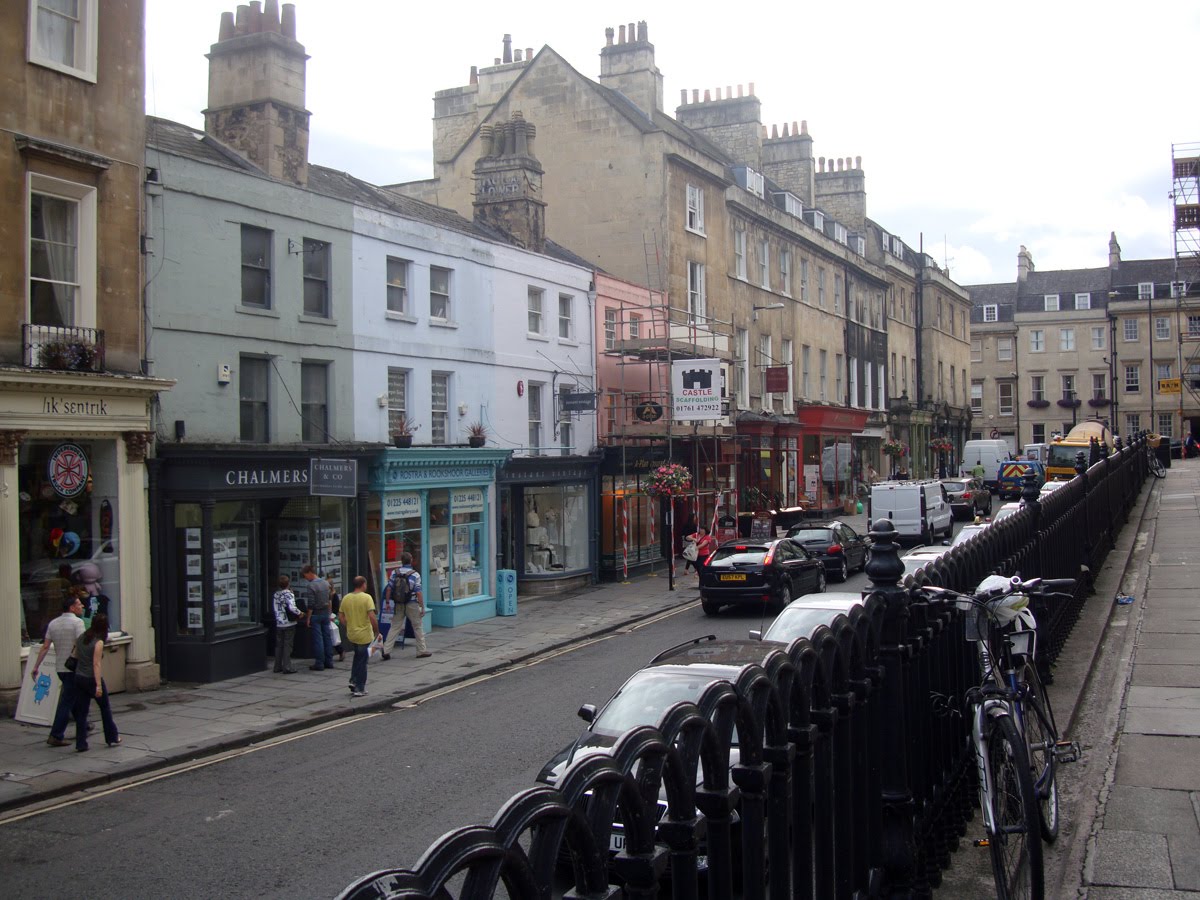
Cheap Street
After Bath Abbey we walked through the passageway that leads from the churchyard opposite The Pump Rooms, called Union Passage and into Cheap Street. It is the very passage that Catherine Moreland walked through with Miss Thorpe and suddenly sees a carriage with her brother and coincidently Miss Thorpe’s brother too, the awful John Thorpe. It is their first fateful meeting.

George Street outside Edgar Buildings

We walked on up Milson Street to George Street where Edgar Buildings are situated. Edgar Buildings are where the Thorpes stayed.
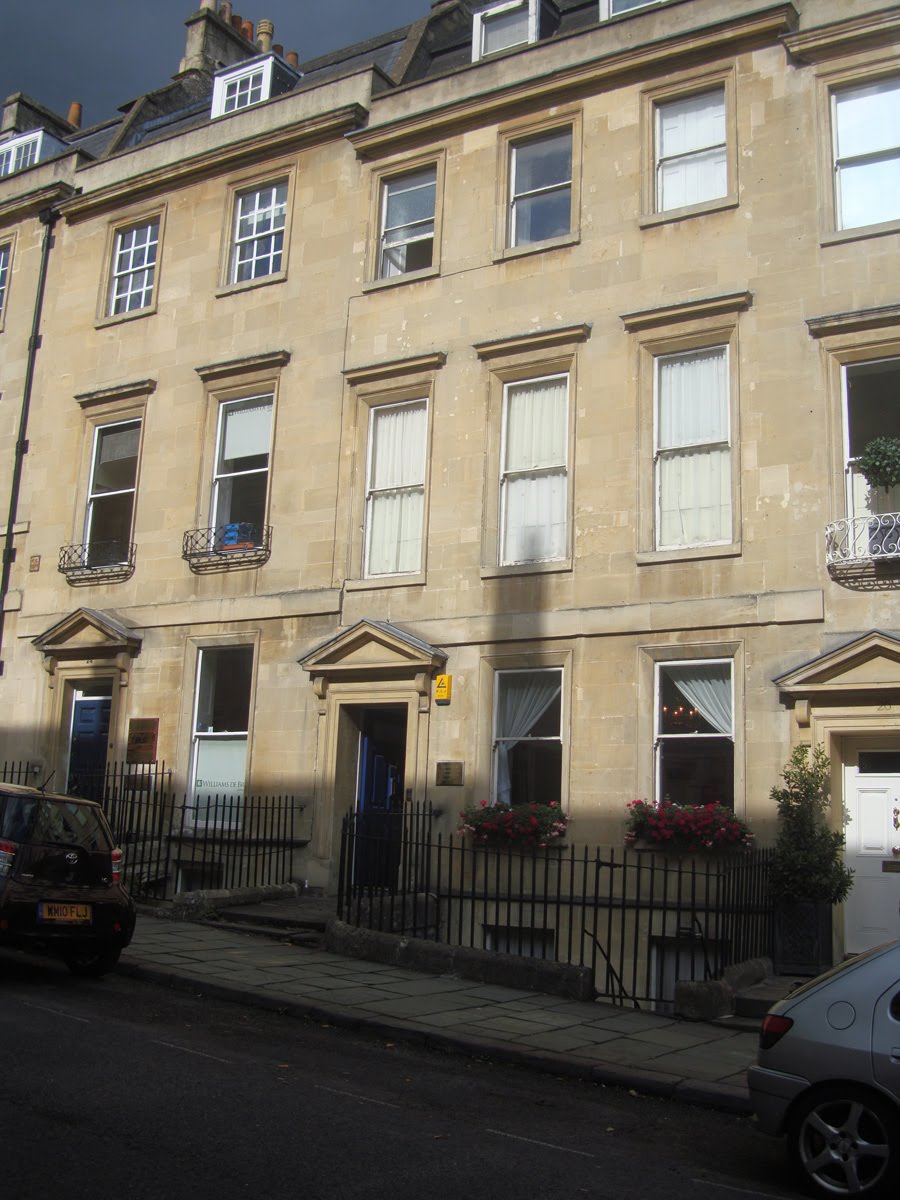
25 Gay Street

From George Street we went into Gay Street and walked past number 25 where the Austens stayed for a while.
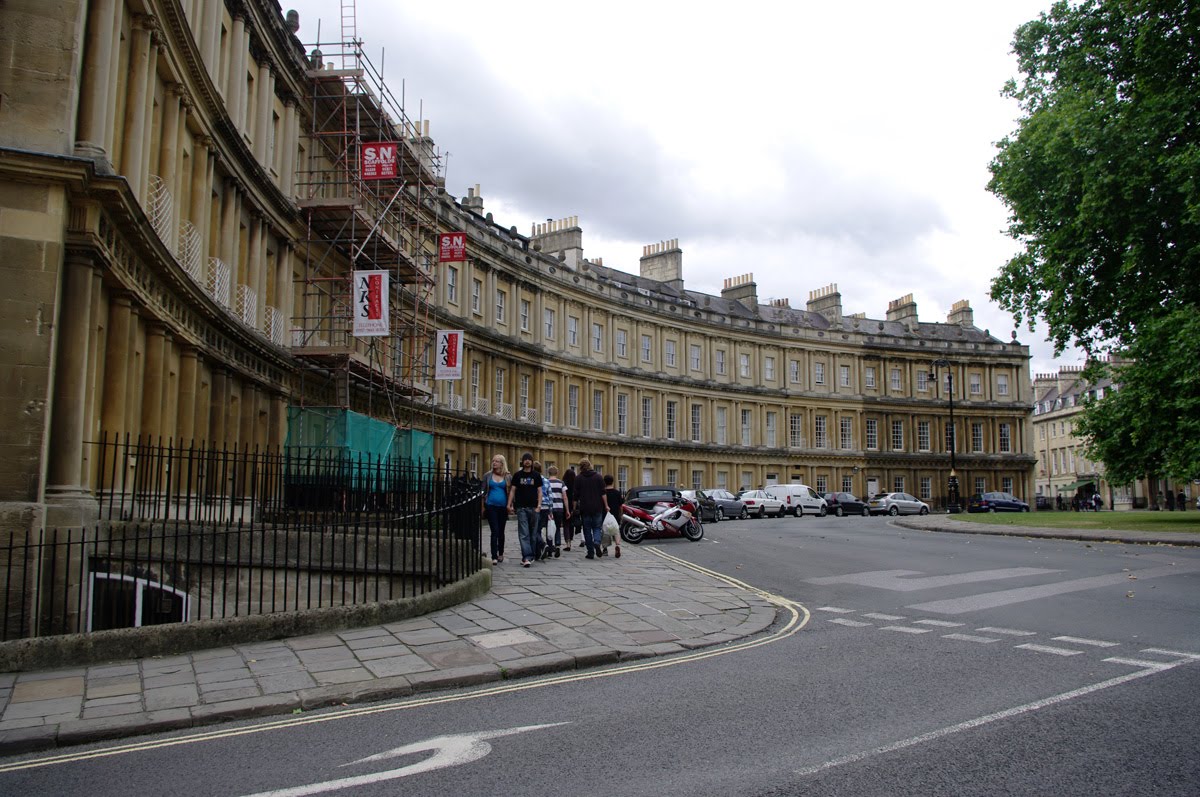
At the top of Gay Street is the magnificent, The Circus. This is a circle of the most magnificent Georgian Houses. There is a small green park in the centre of the circle in which grow four gigantic London Plains trees. They must be four or five hundred years old. Jane knew them. The portrait artist Gainsborough lived in one of these houses in The Circus for a while. Bath would have provided many opportunities to gain commissions and make money.

The Royal Crescent

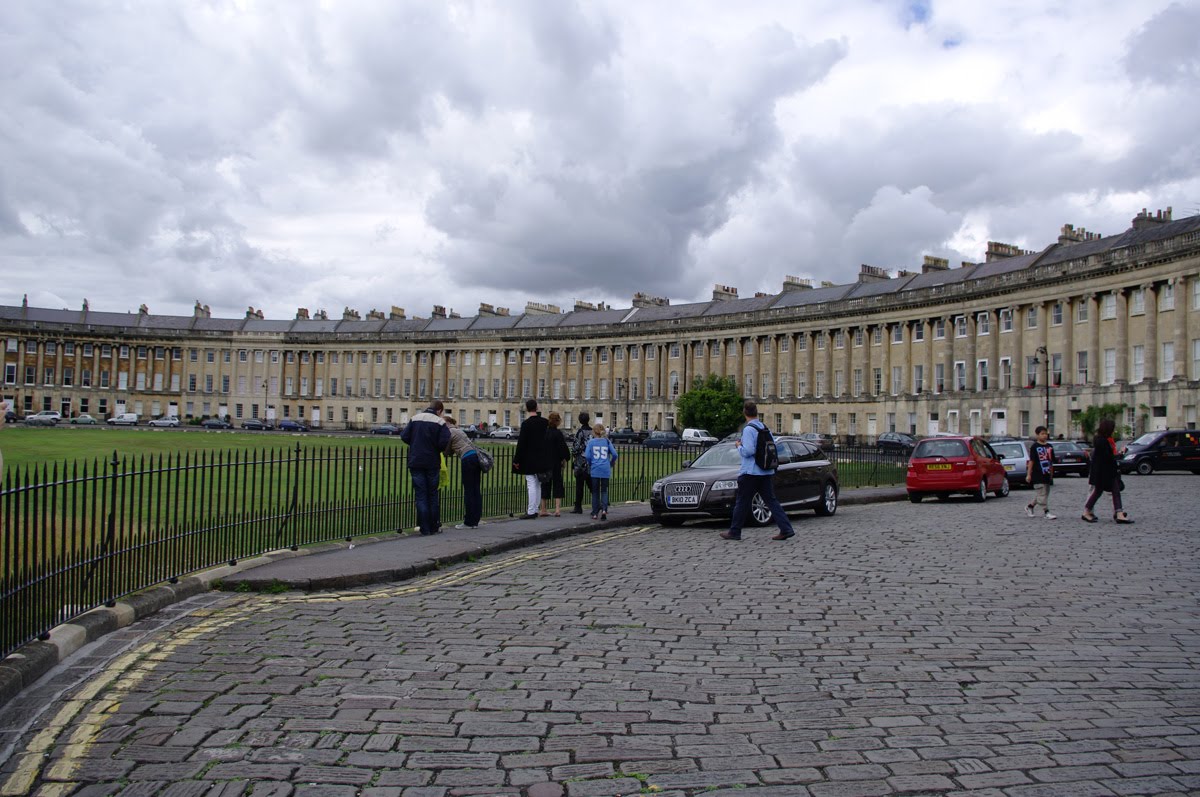
From The Circus we turned down Brock Street and arrived at The Crescent at the top of the hill.
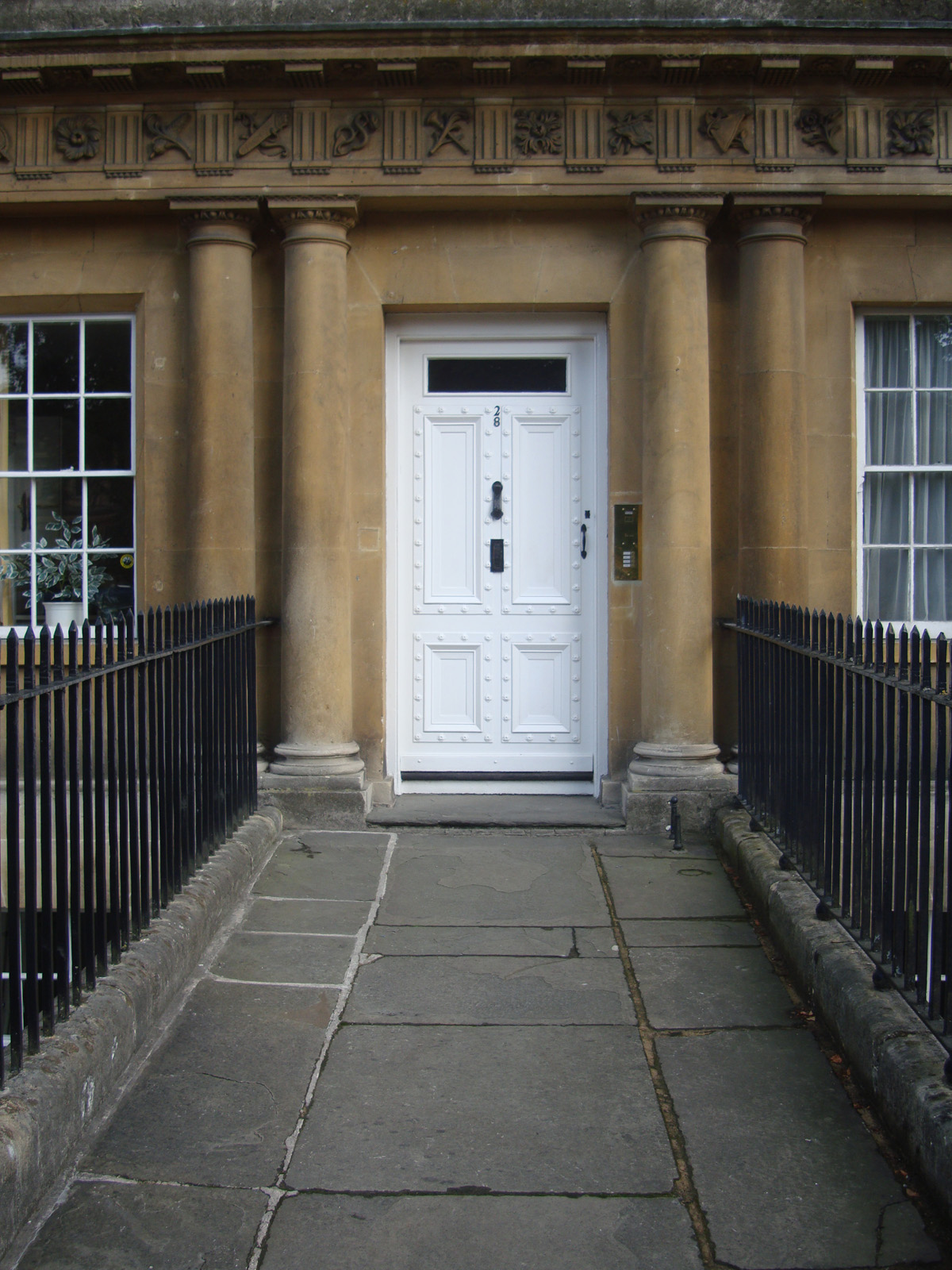
A front door at the Royal Crescent


This was the place where the elite lived. These were the largest and most expensive houses. Lords, Dukes and the very wealthy lived up here. It was also a good place to walk to get fresh air.
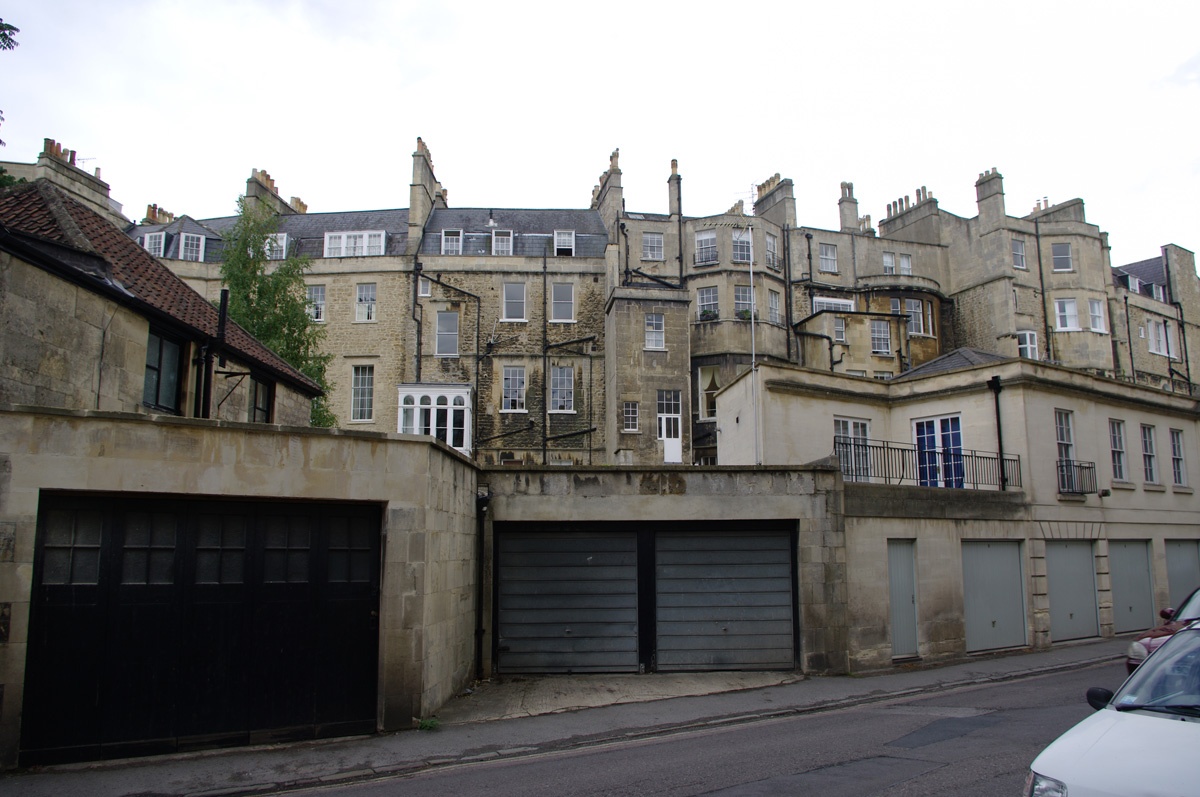
The back of the Crescent, each house is different
Jane mentions in her letters taking walks up to The Crescent and walking in the park and enjoying the views. Catherine Morland and Anne Elliot also walked there. There is a very good reason why Jane and her characters might want to walk here, the fresh air. If you look back over Bath you can see the beautiful city with its creamy yellow stonework In Jane’s time it would have been black. You will also notice the myriads of chimneys, which no longer spout black sooty smoke from thousands of coal fires. Coal is no longer burnt. We have clean air towns and cities nowadays. In Jane’s time the air was far from clean and the beautiful Cotswold stone became black. You can see today a building or two that have not had their surface cleaned since the clean air act was passed through parliament.

The Assembly Rooms

The Assembly Rooms, just north of The Circus, are what Jane and her characters knew as The Upper Assembly Rooms and also included the Octagon tearoom. This is where Catherine Morland met with the Thorpes.

The Lower Assembly Rooms, the original assembly rooms in Bath, where Beau Nash officiated , were situated near the abbey. They no longer exist. It was in the Lower Assembly Rooms that Catherine met Henry Tilney for the first time and fell in love.
Just to conclude, a couple of stories about Bath.

Sheridan eloped with Elizabeth from this house

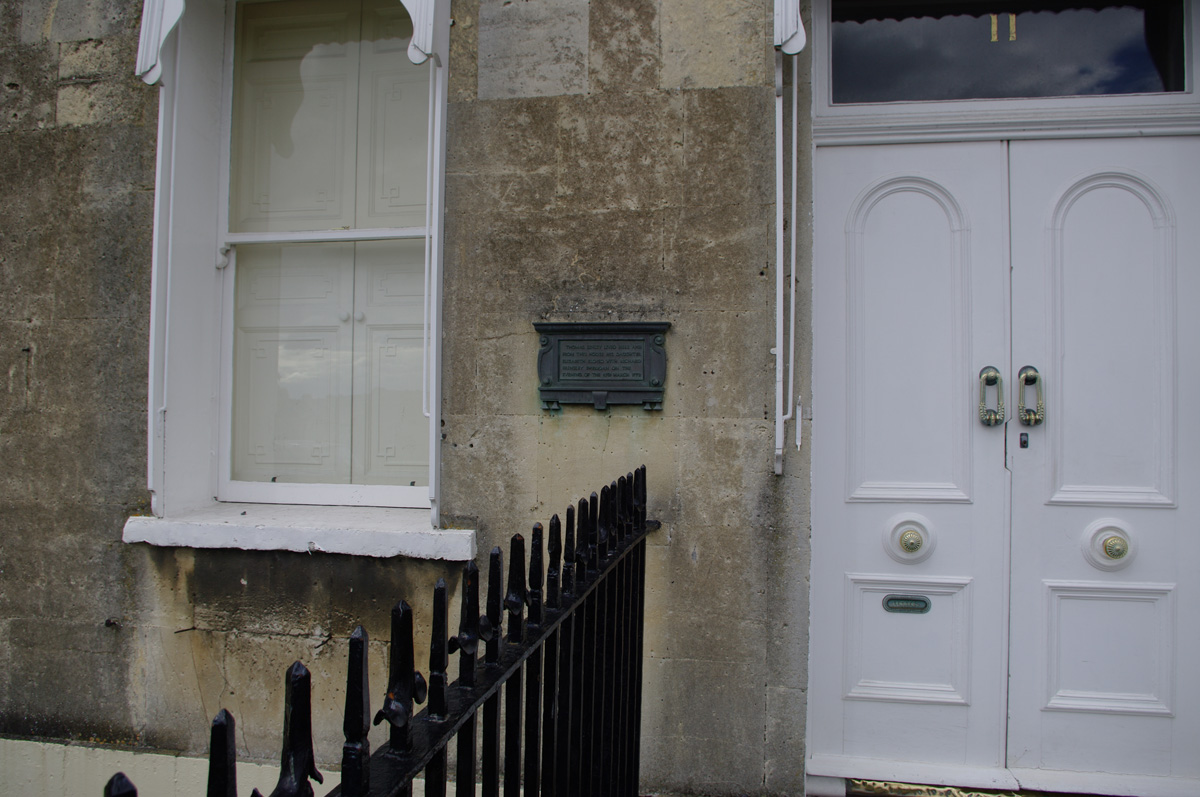
In the Crescent , about half way round, is a house with plaque that relates a very dramatic story. In 1755 Richard Brinsley Sheridan, who was a great playwright in the 18th century and wrote The Rivals and School for Scandal and who was also the owner of the Covent Garden Theatre, absconded with a young lady from the house. Her father chased them all over Europe. When they were found the father made Sheridan marry his daughter. However soon after Richard Brinsley left her in the lurch. The chase was the thing. The excitement of the chase had gone. What a cad and bounder!!!!!
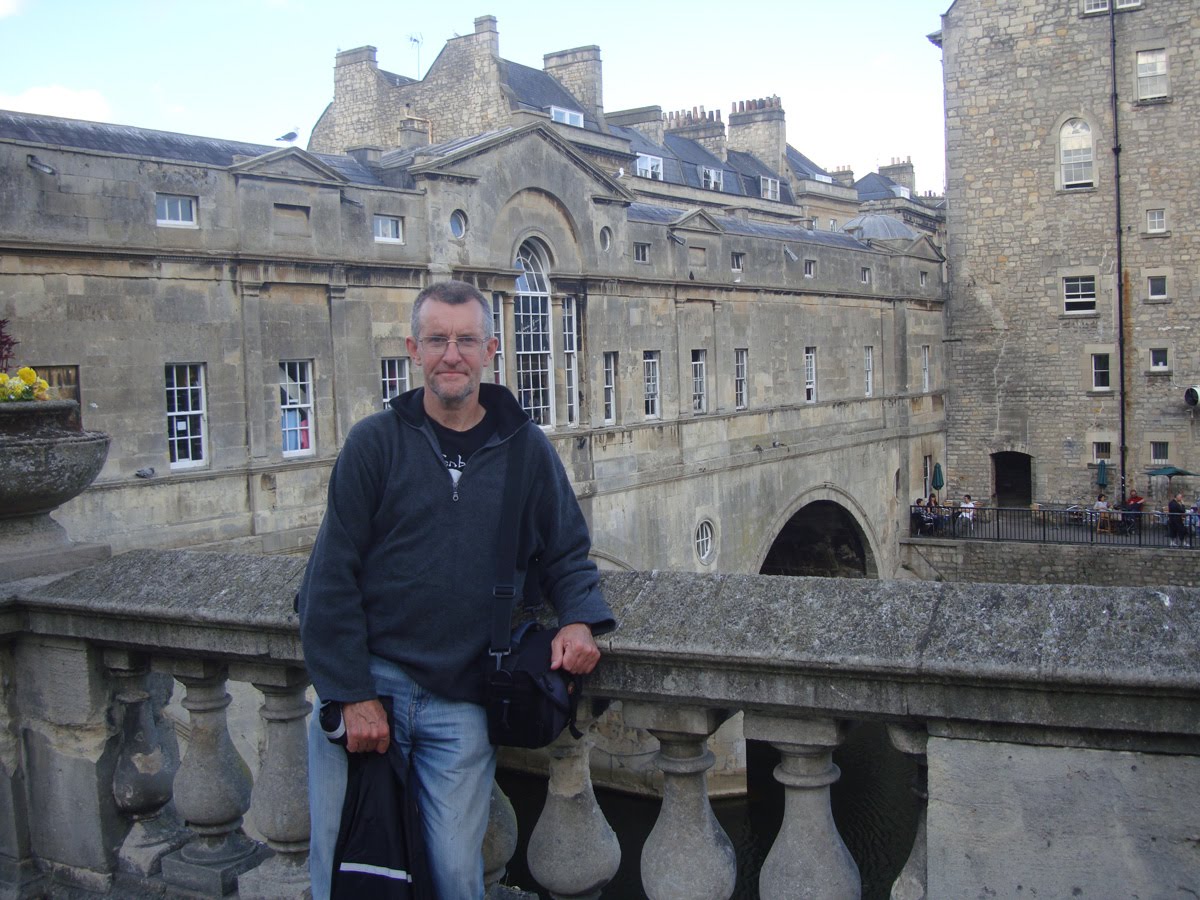
Tony at Pultney Bridge

Now, a story about myself. As we walked up Gay Street towards The Circus we obviously stopped outside number 25 to look at it and photograph ourselves outside. An irate and very upset looking lady marched out of the front door next to number 25 with a bowl full of water and threw it all over my legs. I must add this does not normally happen to me. The circumstances were, that some juvenile idiot had drawn rude graffiti over the side of her white van parked outside. She was trying to clean the words off. She was obviously upset and came out to wash the side of her vehicle. Unfortunately for me, she missed. She was SO sorry. Luckily it was a warm day and my trousers dried quickly in the walk up the hill.
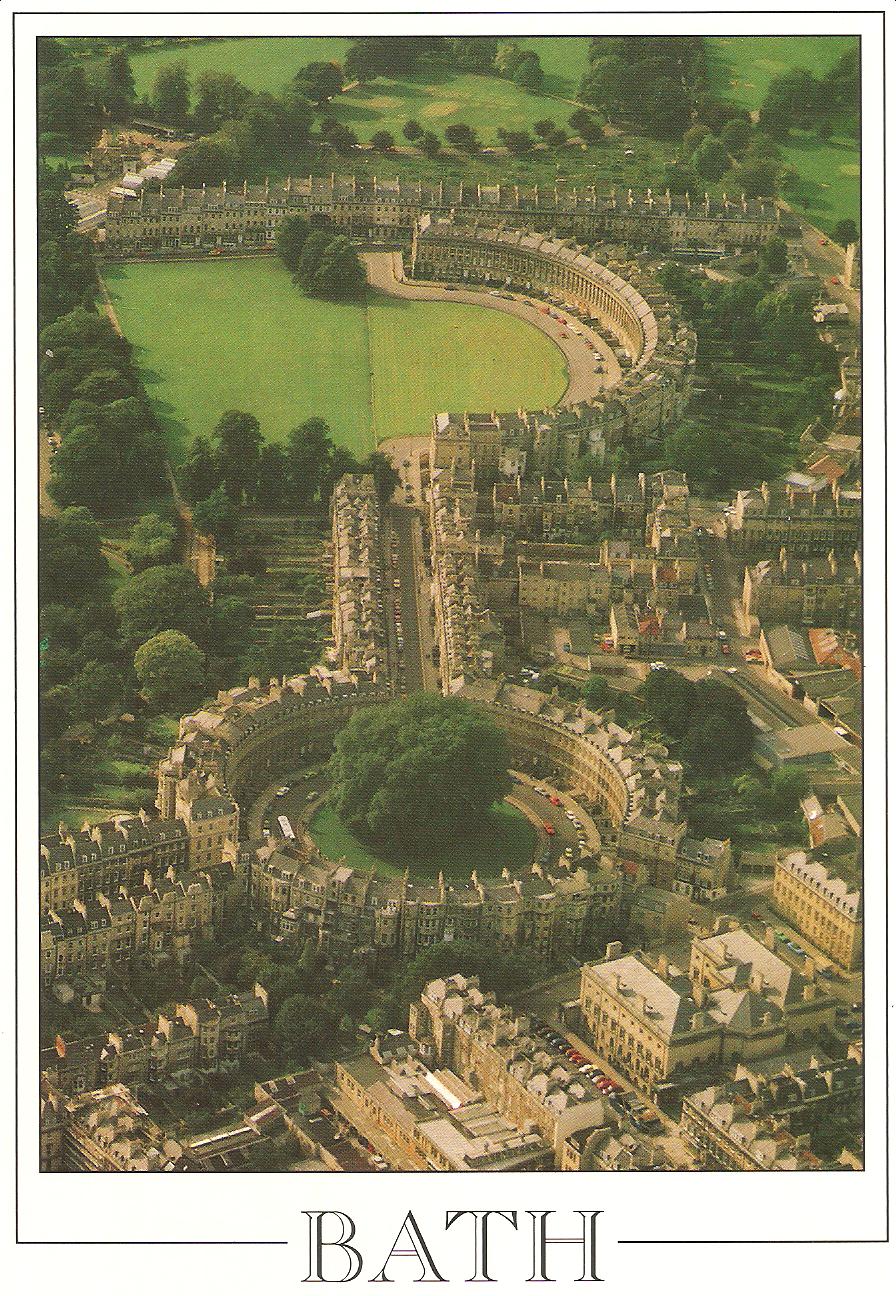
The Royal Crescent (top) and the Circus (Bottom with trees at center.)

One fact before I finish. Did you know that the houses in The Crescent and in The Circus are all different? They all look the same because they are the same on the outside. The builder built the fronts and sold just the fronts. The new owners had to build their own backs to their houses. Hence, if you go round behind the houses in The Crescent they all look different.

Posted by Tony Grant, London Calling

Read Full Post »

This link to the BBC site will lead you to a video of a walk with Amanda Parr through Bath. You will need a Real Player.

Other posts about Bath on this site:

The Comforts of Bath: Thomas Rowlandson

The Viscount and the Toll Keeper’s Daughter: How Thomas Thynne Never Became the Marquess of  Bath

Saving Georgian Bath

Read Full Post »

There is to be a grand gala on Tuesday evening in Sydney Gardens, a concert, with illuminations and fireworks. To the latter Elizabeth and I look forward with pleasure, and even the concert will have more than its usual charm for me, as the gardens are large enough for me to get pretty well beyond the reach of its sound. In the morning Lady Willoughby is to present the colours to some corps, or Yeomanry, or other, in the Crescent, and that such festivities may have a proper commencement, we think of going to . . .- Jane Austen to Cassandra, June 2, 1799 on a visit to Bath

A Fair, Sydney Gardens, circa 1830 (Note how supper boxes flanking the hotel are used as stalls)

Last night we were in Sydney Gardens again, as there was a repetition of the gala which went off so ill on the 4th. We did not go till nine, and then were in very good time for the fireworks, which were really beautiful, and surpassing my expectation; the illuminations, too, were very, pretty. The weather was as favourable as it was otherwise a fortnight ago. – Jane to Cassandra, June 11, 1799 on a visit to Bath

Foot bridge, Sydney Gardens

There was a very long list of arrivals here in the newspaper yesterday, so that we need not immediately dread absolute solitude; and there is a public breakfast in Sydney Gardens every morning, so that we shall not be wholly starved. – Jane Austen to Cassandra, May 17, 1799 on a visit to Bath


Rear View of the Sydney Hotel in Sydney Gardens. The hotel was designed and built by Charles Harcourt Masters in 1795-6. Note the music stands in the first floor semi-circular balcony. The central space below it was reserved for firework displays Rows of supper boxes are arranged on either side of the building. Inside the three-story hotel are rooms for drinking tea and coffee and playing cards, as well as a ballroom. Refreshments were available throughout the day.

Two years after Jane wrote the above quote, in the summer of 1801, the Austen family moved to No. 4 Sydney Place in one of fourteen identical houses at the far end of Pulteney Street. Before leaving Steventon, Jane wrote, “It would be very pleasant to be near the Sydney Gardens. We could go into the labyrinth every day.”

Drawing Room in 4 Sydney Place

It was not a particularly fine house, but it had graceful Georgian proportions, large enough to contain a double drawing-room on the first floor, a dining-room and study below and bedrooms above. The house was redecorated for them while they went on holiday, and refurnished to suit their taste and income, which was about £600, or £35,000 in today’s money. They could afford three servants and an annual holiday by the sea. Nigel Nicholson, Jane Austen in Bath, The Spectator, 2003

Canal in Sydney Gardens, the second biggest pleasure gardens in England

Read Full Post »

Audio Walking Tour of Jane Austen’s Bath

“Are you altogether pleased with Bath?”
“Yes, I like it very well.”
Conversation between Henry Tilney and Catherine Morland, Northanger Abbey


Jane Austen’s Bath, a website created by Bath Tourism Plus, offers an audio walking tour of Bath that you can download from the site. The tour of Bath takes 1 1/2 hours. You can listen to these audio casts in your MP3 player as you walk through Bath, or at home, as I have. Professionally produced, each segment takes 2-7 minutes. A colorful walking guide (see graphic above) is available as well on this fabulous site.

Although this audio guide was meant to serve as a walking tour, I am finding it a pleasure to listen to these podcasts in the comfort of my home, reliving my visit to Bath, and learning interesting details that flesh out my knowledge of Jane Austen’s world.

Before you can download these free files, you are asked to fill out an extremely short form that will take about a minute. You will be asked to do this only once. Also, keep in mind that each audio file must be downloaded separately.

Audio files are divided into the following chapters:

  1. Introduction and Abbey Church Yard
  2. Thermae Bath Spa
  3. Sally Lunn House
  4. The Lower Rooms
  5. The River Avon and Pulteney Bridge
  6. Laura Place and Great Pulteney Street
  7. The Royal Mineral Water Hospital
  8. Beau Nash’s House and the Theatre Royal
  9. Queen Square
  10. Gravel Walk
  11. The Royal Crescent
  12. The Circus
  13. The Assembly Rooms
  14. The Paragon
  15. Milsom Street

I have placed a permanent link to this site in my sidebar under audio and visual media.

Facade of the Pump Room

Read Full Post »

Bath Daily Photo

One of my favorite sites has closed shop for now. James Russiello of the Bath Daily Photo took me down memory lane every time I entered the blog. The good news is that his archived posts will remain on the blogosphere for us to view. The bad news is that he’s moving to Ireland.
I enjoyed James’s frequent trips to my blog and the comments he left. Mostly, I appreciated his talent for showing Bath in a glowing light. James, whose commentary is as informative as his photos, promises to return to this site in a few months to update it. I hope so.

Good luck, my Internet friend. May you find success and happiness in your new position. Meanwhile, here are some of James’ photos of Pulteney Bridge, such as this one taken at night. The one above is taken on the bridge itself, facing the shops. One can imagine Jane Austen walking past this scene and finding it comfortably familiar.

Plan of Pulteney Bridge by Robert Adam, Ison Walter, The Georgian Buildings of Bath 1700 – 1830.

Correction, the previous image sitting earlier on this post was of the Rialto Bridge in Venice. My trigger finger uploaded the wrong image. My apologies.

Read Full Post »

« Newer Posts - Older Posts »