Book Review by Brenda S. Cox
“I had a letter from him [Henry], in which he desired to hear from me very soon—His to me was most affectionate and kind, as well as entertaining;—but there is no merit in that, he cannot help being amusing.”—Jane to Cassandra, April 8, 1805
“Henry at White’s! Oh, what a Henry!”—Jane to Cassandra, June 23, 1814 (when Henry attended an exclusive high class gathering celebrating Napoleon’s defeat)

What a Henry
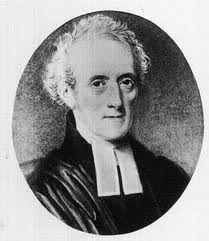
Henry Austen was apparently a lot of fun, and Jane loved her brother dearly. He was also quite versatile. At various times he was:
- an Oxford student who produced a periodical called The Loiterer with his brother James,
- paymaster and adjutant in the Oxford Militia,
- army agent,
- banker (of a bank that eventually failed),
- receiver general of taxes,
- Jane Austen’s own literary agent,
- clergyman of several parishes,
- chaplain of the British Embassy in Berlin, and
- husband of Eliza de Feuillide and later of Eleanor Jackson (niece of Rev. Papillon of Chawton).
Christopher Herbert, in his fascinating new book, Jane Austen’s Favourite Brother, Henry, explores Henry Austen’s life through all these changes.
Culture and Current Events
I loved that Herbert gives lots of cultural details in going through Henry’s life. For example, in the chapter on Henry’s birth, we learn about childbirth practices at the time. During pregnancy, his mother Cassandra Austen, rather than buying special maternity clothes as we do today, would have widened her stomacher, used aprons to cover gaps in clothing, and loosened side lacings. A “churching” service would celebrate her survival of the very dangerous process of giving birth. Philadelphia Hancock, her sister-in-law, may have been there to help the mother before, during, and after the delivery.
The author speculates on what the children growing up in the the rectory may have read, who taught them to read and write, and where they obtained their books.
Current events and ideas are woven in alongside stories of Henry and Jane growing up. The balloon ascent of 1784 is described by quoting a magazine article of the time. We hear about battles, steam power, improvements and enclosures, and the Wesleyan revival which began at Oxford. We see how the ideas of contemporary writers such as John Locke, focusing on reason in understanding God and society, may have affected Jane Austen’s ideas of church and clergy in Mansfield Park, as well as her prayers.
Work and Money
An in-depth discussion explains Henry’s various jobs and what they involved. We see how his bank throve, launching Henry into upper ranks of society, and then failed. The author obviously did quite extensive research to dig this all up, and it was interesting to learn, for example, what exactly an army agent was. (For me, there was a little too much detail, since I’m not interested in finance; however, other readers may find this the most illuminating part!) It seems Henry had some financial dealings which were at least ill-advised, and possibly questionable.
Henry as Clergyman
After his bank failed, Henry reverted to earlier plans and was ordained as a clergyman. In Henry’s one extant sermon, he attacks pride and prejudices. Herbert says Henry is encouraging his congregation toward giving Catholics political rights, a major issue of that time. (See also “Sermons by Jane Austen’s Family.”) Herbert explores what Henry may have believed, also drawing from statements in Mansfield Park.
He also points out that Henry’s pastoral workload was much greater than that of Mr. Elton or other Austen clergymen. In one year, Henry performed 149 christenings, 34 weddings, and 105 funerals! All for very little income. He also had to deal with a new workhouse and other issues related to the poor of his parishes. Henry’s journey as a clergyman, his income and how he spent it, are further explored, as well as his anti-slavery work.
Jane Austen’s Novels
The author skillfully connects concepts to passages in Austen’s novels. He also explains Henry’s role in getting her novels published. He concludes that there are still some questions about Henry’s life. But we do know that:
“without Henry’s determined and passionate commitment in getting Jane’s novels published, our lives, and the life of the world, would be so much the poorer.”
Amen!
On Thursday I will post an interview with the author, who is uniquely qualified to write this book. He is a former bishop of the Church of England, now living in Farnham where Henry Austen served as perpetual curate in the parish church. Farnham Palace, where the Right Revd. Dr. Herbert is a patron, was a home of the Bishops of Winchester.
I recommend this book to anyone who wants to learn more about Austen’s family and her world.
Jane Austen’s Favourite Brother, Henry, by Christopher Herbert, is now available from the publisher, Pen & Sword, and from Amazon in the US and in the UK in hardcover. The Kindle version will be released September 30, 2025.
Brenda S. Cox is the author of Fashionable Goodness: Christianity in Jane Austen’s England. She also blogs at Faith, Science, Joy, and Jane Austen.







 Jane Austen's World