Feeds:
Posts
Comments

Posts Tagged ‘PBS Movie Adaptation’

I had never heard of the book Small Island or author Andrea Levy until PBS scheduled the film as the last presentation for Masterpiece Classic this season. The story follows two couples, one from London, England and the other from Jamaica, whose lives intersect at crucial moments. Against the backdrop of World War II and post war England, we learn about the dreams and ambitions of Queenie, Bernard, Hortense, and Gilbert.
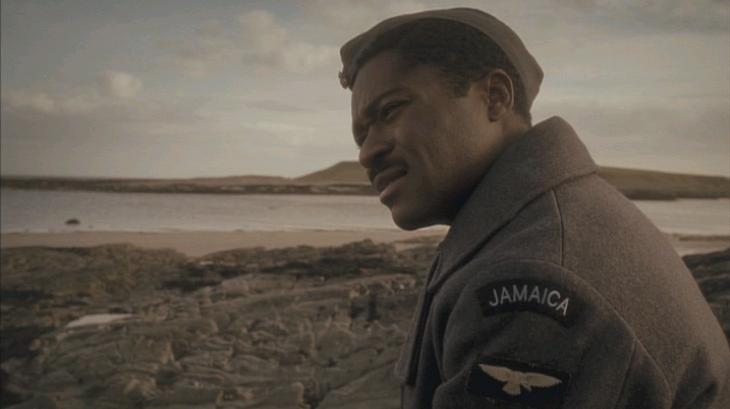
David Oyelowo as Gilbert Joseph

The story is about the reaction of the British to the 492 men from the British Colonies who bought passage on the Empire Windrush in 1948 and emigrated to England. Prior to that event, 6,000 West Indian men had volunteered for the RAF during World War II. After the war, they wanted a better life and sought it in the motherland.
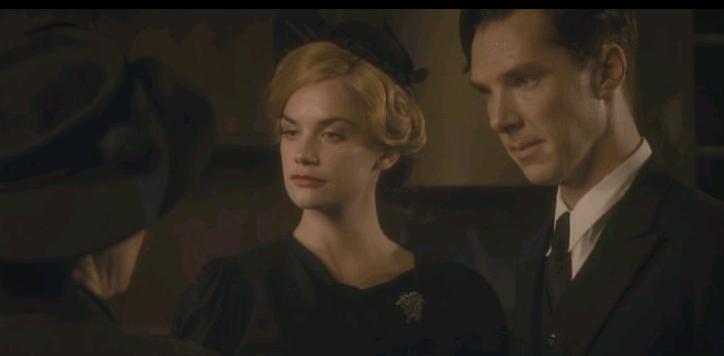
Queenie (Ruth Wilson) and Bernard (Benedict Cumberbatch)

As the story unfolded I was struck by the Jamaican islander’s view of their mother country. Their attitude towards England was  loving, deferential, and loyal. While the Jamaicans learned everything they could about English customs and history, the British knew or cared very little about the people they had exploited. Reality sunk in for the young Jamaican men who had signed up to fight alongside the British in WWII. They dreamed of fighting as pilots, but were assigned menial jobs, some not even at the front. Worse, they encountered racism designed to squash their pride and put them in their place.
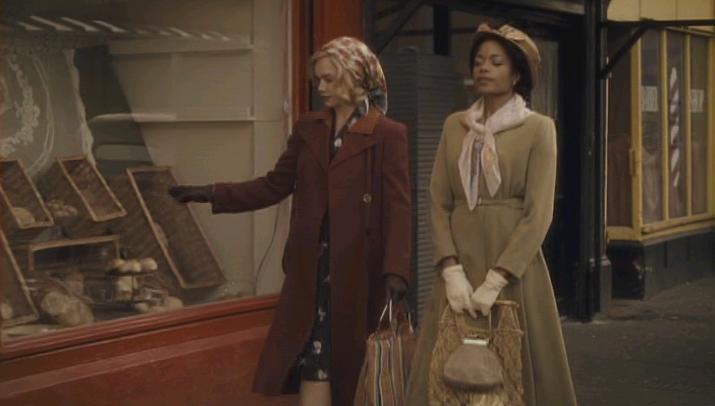
Hortense (Naomi Harris) goes out shopping properly dressed

David Oyelowo plays Gilbert Joseph, a wonderfully optimistic and cheerful man, who aims to find a better life in the motherland. His dream was to become a lawyer, but in reality he became a postman for the Royal Mail. His scene on the park bench after being humiliated by other postal workers broke my heart. I think I fell a little in love with Mr. Oyelowo then.
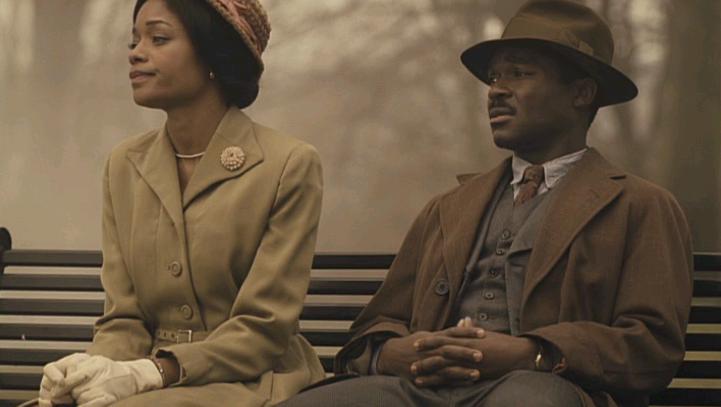
Hortense and Gilbert

Hortense (Naomi Harris) dreams of becoming a school teacher in London. An orphan, she pursues her teaching degree in a Jamaican school and learns how to conduct herself properly. Her ambition prompts her to betray a friend and finagle her way into a marriage of convenience with Gilbert, whose passage on the Empire Windrush she finances. Their deal is that he will send for her as soon as he finds a nice place for them to live in London.
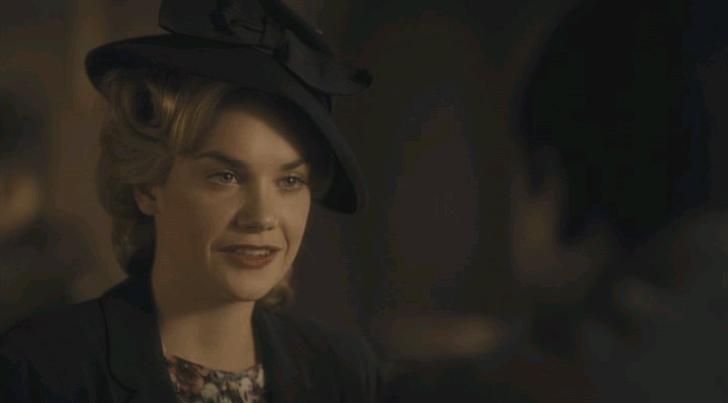
Ruth Wilson as Queenie

Queenie (Ruth Wilson)dreams of a more exciting life than on the pig farm that her parents own. We first meet her with her aunt in London, practicing elocution lessons – “the rain in Spain stays mainly in the plain”. Queenie’s dreams are squashed when she makes a compromise after her aunt’s death and marries the dull colorless young man who has fallen in love with her. Her existence becomes lackluster and uneventful, and she chafes under her boring routine. Benedict Cumberbatch plays Bernard in the unsympathetic part of Queenie’s husband. Sadly, Bernard has already realized his dream, which was to marry Queenie, who does not love him. He must confront his disillusionment and resistance to change if he is to hold on to his marriage to Queenie.
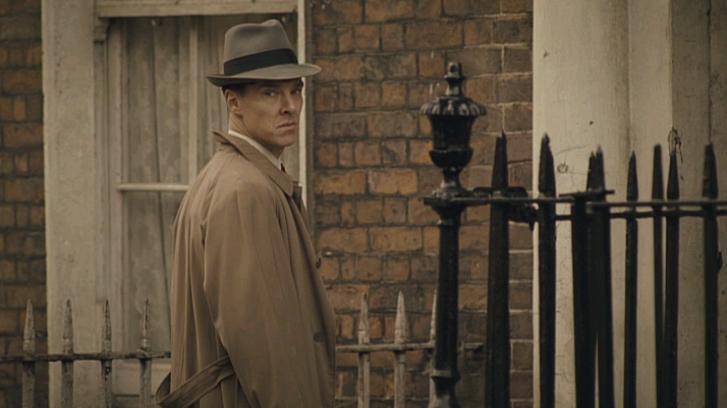
Bernard (Benedict Cumberbatch)

Then the war begins and suddenly life changes for Queenie, whose path crosses with Gilbert and Hortense, and a mysterious man named Michael, who (coincidentally) Hortense has loved all her life. Rather than spoil the plot, I encourage you to read a lovely synopsis at this PBS link along with an interview with the author, which I recommend highly.
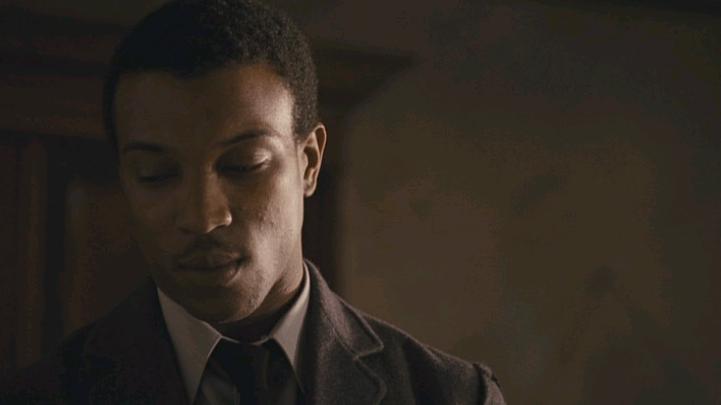
Ashley Walters as Michael

These days we do not often encounter black ladies of the old school. Do you remember them? Their postures were ramrod straight. Their neat clothes did not allow for a single crease. Their hats were proper and decorous, and their purses were held just so in their gloved hands. Their language was grammatically correct, old-fashioned and Victorian, as if they had been taught from a 19th-century grammar book. I volunteered with such a lady, Miss Edna, who had been a school teacher since the 1930’s and who volunteered as a tutor well into her 90’s. Hortense reminded me of Miss Edna. I thought that Naomi Harris captured every aspect of Miss Edna, including her unassailable dignity.
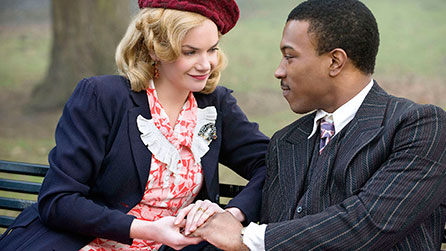
Queenie and Michael

To my mind, Queenie, is the tragic character of this tale. As Andrea Levy said “She is a warmhearted person, a kind person, an open person.” Yet she is not perfect. None of the characters are. The author explains, “With all my characters, I never want them to be perfect, they have faults, just like us all.” Despite her imperfections, Queenie is the heroine who, when faced with a King Solomon decision, does not flinch from choosing the right course.

The acting is superb. There were scenes that caused me to hold my breath, they were that good, and there were times when I literally ached for the characters. When I cried, it was from sympathy, not from a contrived plot. Like real life, this drama is sprinkled with humor, which cuts the tension. At the end of the film, I wanted to see more. Rarely does this happen. PBS will air the first part of Small Island tonight, April 18th at 9 p.m., and the second part on April 25th. I highly recommend that you see it.
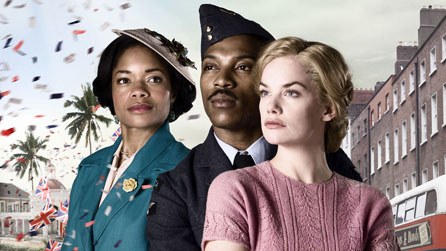
Hortense, Michael, and Queenie

If you have missed the first part, you can watch it online at this link starting April 19th through the 25th.
Read Full Post »

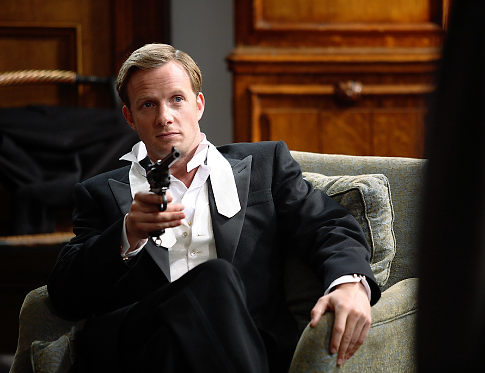
Rupert Penry-Jones in The 39 Steps

John Buchan wrote The 39 Steps in 1915, creating the genre of the espionage thriller, particularly that subset involving the upper-class gentleman spy. In the book, Richard Hannay, had recently returned to London after years of living in Africa, serving in the Boer War and then working as a mining engineer. It is late spring of 1914; he is bored blind by his present life, and ready for some action. He gets his wish when his neighbor, Scudder, entrusts a mysterious notebook and story of spies about to destroy the British Navy to Hannay and gets killed by German spies in his flat. Naturally, Hannay is assumed guilty of the murder, and, with both spies and police searching for him, he goes to Scotland to unravel the story and thus be found innocent. Like all stories of intricate and slightly implausible plot, the tale unfolds at breakneck speed. Buchan’s book is filled with chance encounters, plot twists, double crosses, chases across the Scottish moors, once with an airplane tracing his movements, and ends with Hannay back in England, uncovering the traitor and foiling the German plot. The book was a huge success.

In 1935, Alfred Hitchcock undertook the challenge of making The 39 Steps into a movie. It was a challenge because of the intricate details and large cast in the book, so Hitchcock developed a very different version: he kept Hannay’s name, the murder of the agent in Hannay’s apartment, and the trip to Scotland to discover whatever he could. But Hitchcock updated the time of the action to the mid-30s, made Hannay Canadian and the spies vaguer in nationality, incorporated a music hall performer named Mr. Memory, and changed the 39 steps from a physical location to a conjuring trick. He also brought in a woman to provide the requisite cinema love interest; they meet cute and dash across the moors of Scotland, handcuffed together for some of the time. Robert Donat played the hapless Canadian Hannay; he was the best part of the movie.

The 39 Steps, as broadcast by PBS Sunday night, is much truer to the original. Rupert Penry-Jones, who has the jaded upper class part down cold, plays Hannay, once again the bored Brit. He is aloof when Scudder barrels into his apartment, disbelieving of the story, until the milkman breaks in and Scudder is murdered. Penry-Jones, who previously appeared as Captain Wentworth in Masterpiece’s broadcast of Persuasion, plays a somewhat understated hero. He is quick off the mark, and, in the manner of such heroes, good looking in face and form. Lizzie Mickery, who adapted the novel for this screenplay, also added female interest: Victoria Sinclair, played with spirit by Lydia Leonard, is a suffragist and also a British agent. Again, there are a number of runs across the moors displaying some really splendid scenery. And once again, Hannay is chased by an airplane; although in a clear homage to Hitchcock, the folks in the plane don’t simply spot him, they shoot at him a la North by Northwest – another great Hitchcock spy caper.

Rupert Penry-Jones (Richard Hannay), Lydia Leonard (Victoria Sinclair)

Captain Maynard, my trustee co-viewer, was delighted to note that the cars and guns were all authentic to the 1914 date. He loves the wonderful Masterpiece productions for this reason. And in my fashion, I liked the accuracy of the costumes, both men and women. The story starts very quickly and tautly, and unwinds without a moment wasted; we were both drawn into it immediately.

We enjoyed the Hitchcock version of the movie, although I thought the addition of the music hall unnecessary, even while recognizing that this was a favorite Hitchcock device. (See also, The Man Who Knew Too Much.) And I could see no purpose to have Donat be Canadian; things were already difficult enough. Hitchcock also likes his hero to be pretty clueless, bumbling from one near-disaster to the next, until he finally adds up the pieces and solves the riddle. Over all, I like my hero to have a little more on the ball, and in this 2008 update, Penry-Jones is quick-witted and in charge; he solves the cipher, recognizes his foes, and works through the puzzle ahead of the Secret Service. He is a nice combination of James Bond and Lord Peter Wimsey: not so over the top or predatory as Bond, a little more physical than Wimsey. The love story is believable, not the comic relief of the Hitchcock version. Victoria is also sharp, has a photographic memory, runs without falling down in a swoon, and altogether plays an effective sidekick. One thing did strike a false note: Victoria calls herself a suffragette rather than suffragist, the less derisive term used always by those indomitable women. The story plays out against the beginning of World War I, building both tension and reality for the spy plot. The last scene shows Hannay, now an officer in the British Army, at St. Pancras station setting off for France. The tantalizing hope is that he and Victoria will have a future after the war. And at this point, Co-viewer and I have changed our allegiance: truer to the book, while building in a female character, this remake is by far the better 39 Steps.

Gentle Readers: My good friend, Lady Anne, an avid fan of Alfred Hitchcock’s The 39 Steps, wrote this review for my blog. I am, as always, ever so grateful for her learned insights. Watch The 39 Steps online at PBS until March 30. 2010.

Read Full Post »


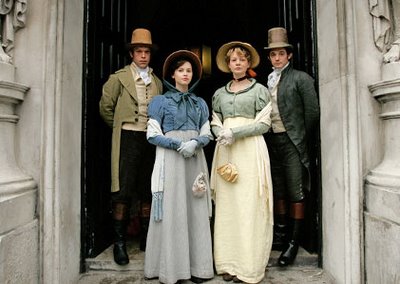
Two years ago PBS offered Northanger Abbey during Jane Austen Season. Tonight we are having an encore presentation. Such fun! For information about this series, click on this PBS link.

John Thorpe, Catherine Morland, Isabella Thorpe, and James Morland

For my original review and others, click on the links below!

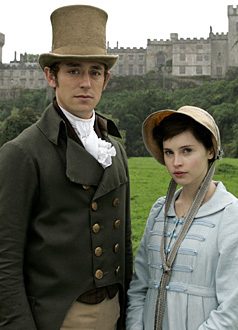
Henry Tilney and Catherine Morland

Read Full Post »

Jane Austen had a few ideas about what would happen to some of her characters in the future. Emma’s Mr. Woodhouse would live for two more years after his daughter’s marriage to Mr. Knightley, and the letters from Frank Churchill that Jane Fairfax placed before her contained the word “pardon.” These little tidbits of information help to make the books and movie adaptations so much more enjoyable to read and watch.

In my previous observations of the film adaptation of Emma 2009, I mentioned several times that I disliked Romola Garai’s interpretation of the role, but I have now seen the film four times AND rewatched other Emma films, including Clueless, which remains my favorite. I have also been listening to the full book version of Emma on my iPod. My mama sagely told me, “you CAN teach an old dog new tricks”, and after the second episode of Emma aired on PBS last week and after viewing the Kate Beckinsale version of Emma (1996) with a friend, this crotchety old dog has come to the rather astonishing realization that she likes Romola as Emma after all.

Romola’s quick moving, restless Emma captures her immaturity and boredom. Highbury is a town that is much too confining for such a talented, rich and lively young lady, and with so little to do, this self-indulgent and coddled girl can’t help but create mischief. If only Emma could apply herself long enough to become proficient at something, she might have been able to keep her nose out of other peoples’ lives. But she keeps making lists, with every intention of reading the books. As Mr. Knightley observed to Mrs Weston:

Emma reads two pages of Milton

Emma has been meaning to read more ever since she was twelve years old. I have seen a great many lists of her drawing up at various times of books that she meant to read regularly through—and very good lists they were—very well chosen, and very neatly arranged—sometimes alphabetically, and sometimes by some other rule. The list she drew up when only fourteen—I remember thinking it did her judgment so much credit, that I preserved it some time; and I dare say she may have made out a very good list now. But I have done with expecting any course of steady reading from Emma. She will never submit to any thing requiring industry and patience, and a subjection of the fancy to the understanding.

Emma also paints, but, as her portfolio (and pale painting of Harriet Smith) demonstrates, she is hard pressed to finish these projects.

Emma's very pale painting of Harriet Smith

Emma wished to go to work directly, and therefore produced the portfolio containing her various attempts at portraits, for not one of them had ever been finished, that they might decide together on the best size for Harriet. Her many beginnings were displayed. Miniatures, half-lengths, whole-lengths, pencil, crayon, and water-colours had been all tried in turn. She had always wanted to do everything, and had made more progress both in drawing and music than many might have done with so little labour as she would ever submit to.”

Emma can play the pianoforte prettily enough, but not as well as Jane Fairfax, which bothers her:

Emma is invited to play first at the Coles' party

She did unfeignedly and unequivocally regret the inferiority of her own playing and singing. She did most heartily grieve over the idleness of her childhood–and sat down and practised vigorously an hour and a half.

She was then interrupted by Harriet’s coming in; and if Harriet’s praise could have satisfied her, she might soon have been comforted.

“Oh! if I could but play as well as you and Miss Fairfax!”

“Don’t class us together, Harriet. My playing is no more like her’s, than a lamp is like sunshine.” – Emma, Volume 2, Chapter 9

Sandy Welch, scriptwriter of this Emma adaptation, observed that Cher, the Emma character in Clueless, was bossy but sweet and well-meaning. In her script, Ms. Welch wanted to show that the coddled young Emma had an attitude of “well-meaning snobbishness” and that in all her meddling, she sincerely thought:  “doesn’t everyone think like this?”


And so in my fourth viewing of Romola’s performance as Jane Austen’s wealthiest and most entitled heroine, I have finally come to admire this heroine. My change of heart was especially helped when I reviewed previous Emma adaptations during the last snow storm, and realized just how thoroughly this new production fit in with our modern sensibilities.  I (and a few of my Janeite friends) still think that Romola’s  facial grimaces and wide eyed interpretation of a very young Emma in the first half of the series were overly exaggerated, but she toned down her performance as Emma matured and grew in understanding.

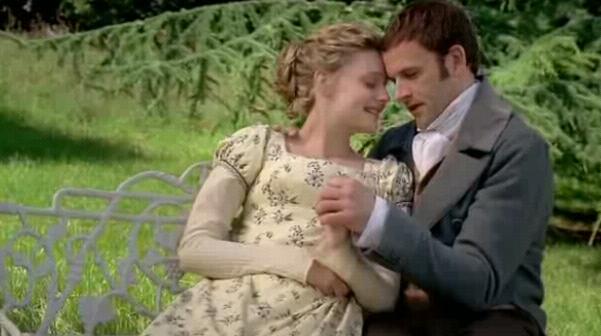
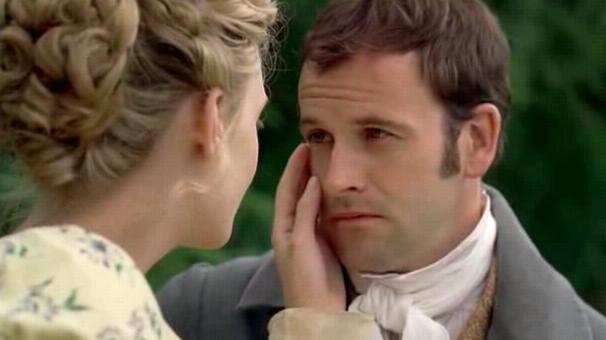
Her scenes with Jonny Lee Miller during his proposal were tender and touching and gave a fitting ending to the series. I shall miss these Sunday evenings watching Emma. Thankfully, PBS will be showing reruns of Persuasion and Northanger Abbey, which were originally shown during Jane Austen Season two years ago. Jane Austen fans can take heart that our time with the bonnet series is not yet over.

Now that you have seen all the episodes of Emma, what did you think?

More Links:

Read Full Post »

Romola Garai as Emma

Once again PBS will host a Twitter Party during the second installment of Emma 2009. Come join me and Laurel Ann from Austenprose for a chat from 9-11 PM EST. PBS has also arranged for a Twitter Fest for those who live on the west coast. That Twitter Chat will begin at 9 PM PT and last until 11 PM. Click here for the details. Don’t forget to use the hash tag #emma_pbs! See you there.

Read Full Post »

« Newer Posts - Older Posts »