Feeds:
Posts
Comments

Posts Tagged ‘Working class’

Street Pie Men

Whenever Jane Austen came to visit London, her ears would have been assaulted by the din of London street noise. This would include the distinctive cries in the evening from street vendors such as the pie men shouting, “Pies all ‘ot! eel, beef, or mutton pies! Penny pies, all ‘ot–all ‘ot!”

In 1851, Henry Mayhew published London Labor and the London Poor, Vol 1. This social history described the venerable but humble occupation of the ‘street pie men’ and ‘the street-sellers of pea-soup and hot eels.’ These pie men sold their hot food to poor working class families at an affordable price. At one time, over 600 pie men roamed London to sell meat, eel or fruit pies in streets, taverns, summer fairs and at the races. By the time of Henry Mayhew’s history, only about 50 remained, selling their pies from 6 (in the evening, I presume) and staying out all night. The best time for selling pies was between 10 p.m. and 1 a.m.

Cornish Pastry

Eel sellers, however, largely sold their wares from stalls. Around the mid-19th century, these two trades went into a decline when penny-pie shops were established. Some street pie men did not seal off their pies properly, whereas the new shops sold food that was generally safe. Instead of selling pre-made pies, they sold live eels or food with good nutritional value for families to take home and cook. Within a few years the street sellers had almost disappeared.

Read more about this topic in the following links, especially Henry Mayhew’s. He interviewed actual working pie men and wrote down their observations:

Read Full Post »

The English Class System

The British Class system during the Regency Period was fixed and defined among the nobility, gentry, working class people, servant class, and the poor. Read more about these distinctions in the following links.

Read Full Post »

Two Worlds: Children During the Regency Period


Children in the early 19th century lived in vastly different worlds according to their incomes and circumstances

While the rich could afford to educate their children during the Georgian and Regency periods, the children of the working classes knew no such luxuries since there were no free state-run schools at the time.

Many children from lower income families were expected to work, often in textile mills and factories. In 1788, two-thirds of the individuals working in factories were children who worked 13 hours a day, six days per week. In fact, women and children were often the preferred laborer since they earned lower wages. Children, being quite small, were employed to repair machinery or keep them in order, often while the machines were still running. This practice resulted in many accidents or fatalities. One apprentice in a mill described his accident:

There was a great deal of cotton in the machine, one of the wheels caught my finger and tore it off, it was the forefinger of my left hand. I was attended by the surgeon of the factory Mr Holland and in about six weeks I recovered.

Children’s books became popular during the end of the 18th century and early 19th century, entertaining those privileged children who could read. At the same time, funding for the local parishes that took care of pauper children, orphans, and poor families began to decrease or dry up.

Mill owners took up some of the slack, taking care of the children that parishes could no longer support. Samuel Greg of Quarry Bank Mill, an owner with a sense of fairness, insisted that: each child he took on came to him with a new set of clothing, in return he promised the Parish that he would give ‘sufficient Meat, Drink, Apparel [clothing], Lodging, Washing, and other Things necessary and fit for an Apprentice.’
By the early 19th century, a series of factory acts were passed to restrict the hours that children were allowed to work, and to improve safety. (Wikipedia).

Learn more about children during this period in the following links:

Book image from the Republic of Pemberley, Ingres portrait from the Louvre

Read Full Post »

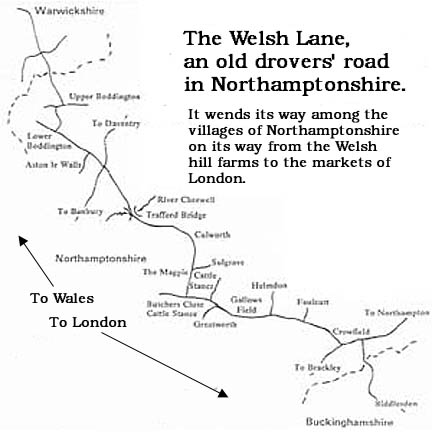
The Border Collie Museum provides a history of droving better than I can relate.

“As the populations of the cities grew, there became a great demand for wool for clothing, beef as food, and skins and hides for shoes, boots, and many other items. With that demand, the number of sheep and cattle raised in the less populated areas and then driven to market, also inclined. The easiest way to transport meat, skins and hides is on the hoof–driving the animals to markets and abattoirs closer to the populated areas.”

Over the centuries, countless drovers, dogs, and livestock wended their way to London. The sights, smells, and sounds must have been truly unique and at times overpowering.

1. Find a history of Smithfield Market where cattle have been driven for over 800 years.

2. The Droving Tradition in the Upper Eden Valley is described in vivid detail here.

3. Wikepedia offers a detailed explanation of drovers and the important role they played in feeding populations in cities

4. At the site of this Inn, The Royal Standard of England, find a recounting of the highwaymen and rakes that haunted the roads to accost unsuspecting (or suspecting) travellers.

With the Industrial Revolution, came The Passing of the Drovers.

The peace, after the battle of Waterloo in 1815 finished the Napoleonic wars, meant the shrinking navy needed less beef but other changes were even more important. The first half of the nineteenth century saw a revolution in agriculture. Enclosed systems of fields replaced open common grazing and large, fatter cattle were bred and raised ready for market. More importantly, by the 1830s, faster steamships were being built and farmers in the lowlands and elsewhere started to ship cattle directly to the southern markets instead of by the long arduous overland droves. Then, once railways were established by the 1880, this provided an even swifter and more reliable means of transporting cattle and other agricultural products to market. The trade died steadily. “

Read Full Post »

« Newer Posts