Feeds:
Posts
Comments

Archive for 2006


The London Season began with the sitting of Parliament after Christmas and ended in mid-June, when the Ton deserted London in droves for their country estates in order to escape the summer’s stifling heat and the city’s pungent smells.

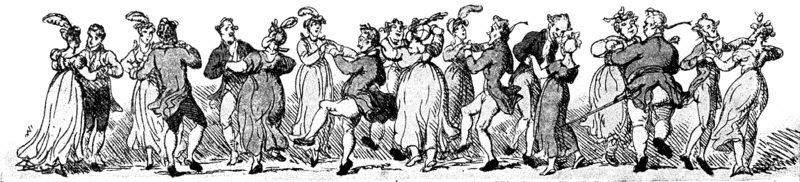
During the height of the social whirl, attendance at parties, balls, routs, and the theatre shot up as proud Papas and Mamas strutted their white-gowned, virginal daughters in front of a host of eligible men, some longer in the tooth than others.

“We have already seen that as early as the 1730’s and 40’s many of the residents in the principal streets of the Grosvenor estate, and of course many more in other correspondingly fashionable parts of London, only spent part of each year in town, their seasonal movements being prescribed by those of the Court and by the dates of the parliamentary sessions. In the eighteenth century the number of people participating in this fashionable minuet between town and country cannot be even approximately calculated, but in the nineteenth century detailed information about the London Season was published for many years in The Morning Post, and this has been analysed for the year 1841.”

From: ‘The Social Character of the Estate: The London Season in 1841’, Survey of London: volume 39: The Grosvenor Estate in Mayfair, Part 1 (General History) (1977), pp. 89-93. URL: http://www.british-history.ac.uk/report.asp?compid=41842. Date accessed: 30 August 2006.

Wikipedia adds more insights about The Season.

Read Full Post »

Beeton’s Book of Household Management


The full title of this book is: The Book of Household Management: Comprising Information for the Mistress, Housekeeper, Cook, Kitchen-maid, Butler, Footman, Coachman, Valet, Upper and under house-maids, Lady’s-maid, Maid-of-all-work, Laundry-maid, Nurse and nurse-maid, Monthly, wet, and sick nurses, etc. etc. also, sanitary, medical, & legal memoranda;with a history of the origin, properties, and uses of all things connected with home life and comfort.

Yes, this original source, available for free online, was written during the Victorian era, but the gems of knowledge contained within its pages help to illuminate the daily tasks and duties of the British wife and hostess. Written by Mrs. Isabella Beeton and originally published by her husband, S. O. Beeton (in 24 monthly parts, 1859–1861) this book provides matchless insights, such as those contained in the following excerpt:

“AFTER-DINNER INVITATIONS MAY BE GIVEN; by which we wish to be understood, invitations for the evening. The time of the arrival of these visitors will vary according to their engagements, or sometimes will be varied in obedience to the caprices of fashion. Guests invited for the evening are, however, generally considered at liberty to arrive whenever it will best suit themselves,—usually between nine and twelve, unless earlier hours are specifically named. By this arrangement, many fashionable people and others, who have numerous engagements to fulfil, often contrive to make their appearance at two or three parties in the course of one evening.”

Learn more about this book and Mrs. Beeton, who died at 30 after giving birth to her 4th child, in Wikipedia.

Read Full Post »

The Science and Society Picture Library is filled with magnificent illustrations and photographs of interest to historians. This link leads to these images, including carriages, cabriolets, phaotons, landaus, and more. Type the name of the vehicle you are searching for in the search bar, such as landeau or phaeton or barouche. Corresponding images will pop up.

Read Full Post »


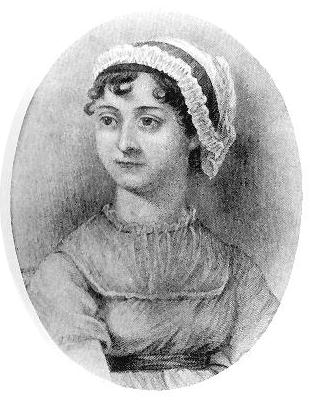
Janeites have one thing in common: a love for Jane Austen. I found this online definition of a Janeite:
Janeite
A Jane Austen enthusiast. The word Janean is also used, though primarily as an adjective. Austenian, now much rarer, seems to have been more common in the past. FWIW, in 1927 the TLS recommended a new edition of JEAL’s Memoir (for editor Robert Chapman’s enumeration of JA’s letters and manuscripts) as “mak[ing] it necessary to the complete Austenian….”

Web links to Jane sites:

  1. The Jane Austen Center in Bath, which one of the best sites I have seen thus far.
  2. The Jane Austen Society of North America offers Persuasions, an online journal.
  3. Austen.com provides a good starting point for people interested in Jane Austen
  4. Jane Austen House and Museum
  5. The Jane Austen Society of Australia provides a rich resource of links.
  6. Jane Austen, biography and links on Brandeis University website.

Links to Blogs or discussion groups about Jane:

  1. Jane Austen by Alicia M on Squidoo.
  2. Austensorium created by Justine Renton from Washington (state?).
  3. Jane in Color describes her blog as one black woman’s fascination with all things Austen.
  4. AustenBlog created by a group of Janeites who are influenced by movies and television series of Jane’s work, books about Jane, and books and stories by Jane Writer-Wannabees.
  5. Risky Regencies created by a group of authors who chat about Regency romances, the English Regency period, other Regency-set novels, Jane Austen books and movies, the craft of writing novels, and more.
  6. Here’s a blog post by Maude Newton about Jane.
  7. Cult of the Janeites is a discussion forum.

Jane Austen Merchandise and Other Oddities that Might Have Amused Her (Not!):

As you can observe from the Jane Austen action figure to our right, the world marketplace bristles with enterprising entrepeneurs, none of whom seem to have taken lessons in manners and deportment. Speaking of manners, don’t forget to tell your friends: “I saw them here first!”

1. Jane Austen Action Figure. Oh, my.

2. Jane Austen mugs and t-shirts, and Darcy magnets, and bumper stickers, and, well, go see for yourself.

3. Jane Austen gifts from Shakespeare’s Den are not to be believed. Honest.

4. Austen Attitude and The Pemberley Collection

5. Jane Austen’s Little Advice Book

Read Full Post »


Found on the Internet, an abstract of the following article:

The Clubs of St. James’s: places of public patriarchy – exclusivity, domesticity and secrecy, Jane Rendell

The male clubs of St. James’s, specifically the four at the top of St. James’s Street; Boodle’s, Brooks’s, Crockford’s and White’s, were frequented by men of the same class who used their control of space to assert social and political allegiances and rivalries between men. The exclusivity of the first floor gambling room, a place of secrecy and privacy, is contrasted with the ground floor bow window, a site of public display and exclusivity. Male leisure pastimes, such as drinking, sporting, gambling, are explored as social and spatial practices which, by establishing shared codes of consumption, display and exchange, represent public masculinities.”

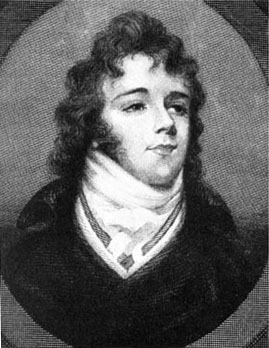
During the period of his greatest popularity and influence, Beau Brummell (depicted above) held court in the Bow Window at White’s in full view of the public. White’s was founded in 1693 as a Chocolate House. By the end of the 18th Century, the popularity of chocolate houses declined, and many of the exclusive chocolate houses became Gentleman’s Clubs.

Find more information about Gentlemens Clubs in the following:

Read Full Post »

« Newer Posts - Older Posts »