Feeds:
Posts
Comments

Archive for 2006

Attire of the Regency Dandy

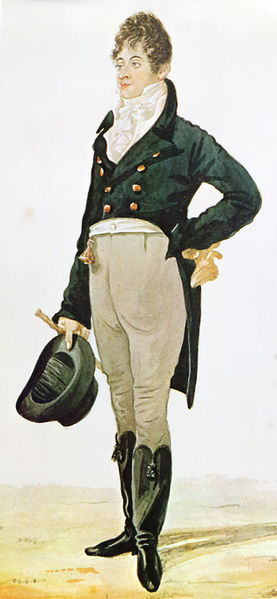
In The Corinthian, Georgette Heyer describes Sir Richard in her inimitable fashion:

“He was a very notable Corinthian. From his Wind-swept hair (most difficult of all styles to achieve), to the toes of his gleaming Hessians, he might have posed as an advertisement for the Man of Fashion. His fine shoulders set off a coat of superfine cloth to perfection; his cravat, which had excited George’s admiration, had been arranged by the hands of a master; his waistcoat was chosen with a nice eye; his biscuit-coloured pantaloons showed not one crease; and his Hessians with their jaunty gold tassels, had not only been made for him by Hoby, but were polished, George suspected, with a blacking mixed with champagne. A quizzing-glass on a black ribbon hung around his neck; a fob at his waist; and in one hand he carried a Sevres snuff-box. His air proclaimed unutterable boredom, but no tailoring, no amount of studied nonchalance, could conceal the muscle in his thighs, or the strength of his shoulders. Above the starched points of his shirt-collar, a weary, handsome face showed its owner’s disillusionment.”

In High Society: A Social History of the Regency Period, 1788-1830, Venetia Murray writes:

“…admirers of dandyism have taken the view that it is a sociological phenomenon, the result of a society in a state of transition or revolt. Barbey d’Aurevilly, one of the leading French dandies at the end of the nineteenth century, explained: Some have imagined that dandyism is primarily a specialisation in the art of dressing oneself with daring and elegance. It is that, but much else as well. It is a state of mind made up of many shades, a state of mind produced in old and civilised societies where gaiety has become infrequent or where conventions rule at the price of their subject’s boredom…it is the direct result of the endless warfare between respectability and boredom.


In Regency London dandyism was a revolt against a different kind of tradition, an expression of distaste for the extravagance and ostentation of the previous generation, and of sympathy with the new mood of democracy.



Also view:

Gentlemen’s Clothing of the Regency Era

Men’s Fashion from the Jane Austen Centre

Fashionable Gentleman prints

A biography of George Brummel
Menswear from 1790 to 1830

Read Full Post »

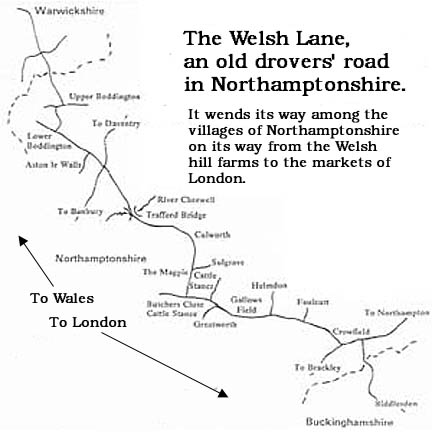
The Border Collie Museum provides a history of droving better than I can relate.

“As the populations of the cities grew, there became a great demand for wool for clothing, beef as food, and skins and hides for shoes, boots, and many other items. With that demand, the number of sheep and cattle raised in the less populated areas and then driven to market, also inclined. The easiest way to transport meat, skins and hides is on the hoof–driving the animals to markets and abattoirs closer to the populated areas.”

Over the centuries, countless drovers, dogs, and livestock wended their way to London. The sights, smells, and sounds must have been truly unique and at times overpowering.

1. Find a history of Smithfield Market where cattle have been driven for over 800 years.

2. The Droving Tradition in the Upper Eden Valley is described in vivid detail here.

3. Wikepedia offers a detailed explanation of drovers and the important role they played in feeding populations in cities

4. At the site of this Inn, The Royal Standard of England, find a recounting of the highwaymen and rakes that haunted the roads to accost unsuspecting (or suspecting) travellers.

With the Industrial Revolution, came The Passing of the Drovers.

The peace, after the battle of Waterloo in 1815 finished the Napoleonic wars, meant the shrinking navy needed less beef but other changes were even more important. The first half of the nineteenth century saw a revolution in agriculture. Enclosed systems of fields replaced open common grazing and large, fatter cattle were bred and raised ready for market. More importantly, by the 1830s, faster steamships were being built and farmers in the lowlands and elsewhere started to ship cattle directly to the southern markets instead of by the long arduous overland droves. Then, once railways were established by the 1880, this provided an even swifter and more reliable means of transporting cattle and other agricultural products to market. The trade died steadily. “

Read Full Post »

Regency Fashions, Manners, and Style

Find the most fabulous links on this Women in World History site: Turbans, portraits, the Marriage of Princess Charlotte, Regency Styles Year by Year, Regency Outerwear, and more. This is a review of the “personal website of Catherine Decker, author of scholarly work in several fields, including 18th-century gender and literature.”

Women in World History is a project of the Center for History and New Media, George Mason University, in our glorious Commonwealth of Virginia!

To use 21st century American parlance, “I am verklempt” by the sheer variety and magnitude of information covered on this site.

Other links of interest and noteworthiness (we seem all to be beating about the same mulberry bush, don’t we?):

  1. The Georgian Index
  2. The Regency Ring
  3. A Regency Repository

Read Full Post »

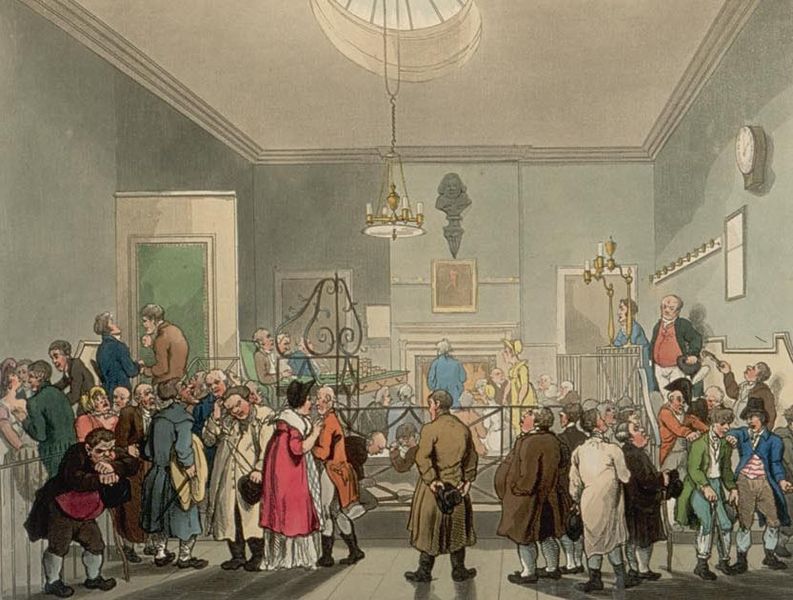
Bow Street Runners

According to The Proceedings of the Old Bailey,

In order to encourage victims to report crimes, magistrates in both the City of London and Middlesex established “rotation offices” in the 1730s where Londoners could be certain of finding a magistrate present at fixed hours. One of these was set up in Bow Street, near Covent Garden, by Sir Thomas De Veil in 1739. ”

In 1748, Henry and John Fieldings introduced a new practice of capturing thieves by

“employing thief-takers as “runners” who, when a crime was reported, could be sent out by the magistrates to detect and apprehend the culprit. Thief-takers, such as William Pentlow, made a living out of the fees they charged for their services and the rewards they obtained from victims for identifying suspects and from the state for successful convictions.”

Click here for The Proceedings of the Old Bailey. This impressive website is a”fully searchable online edition of the largest body of texts detailing the lives of non-elite people ever published, containing accounts of over 100,000 criminal trials held at London’s central criminal court.”

Find more on Bow Street Runners here.

Read Full Post »

Almack’s Assembly Rooms


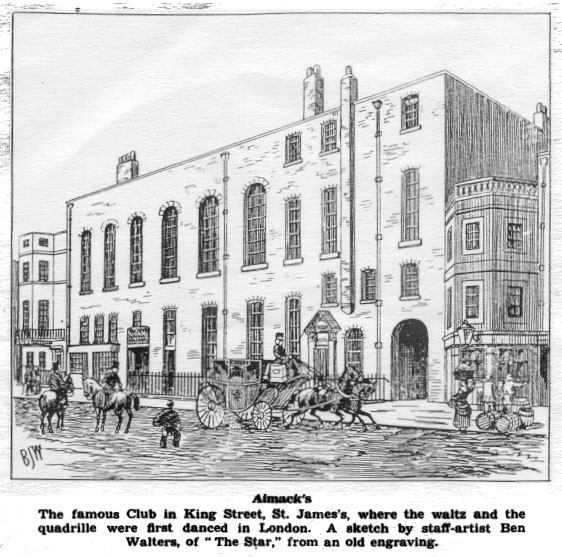
The patronesses of Almack’s Assembly Rooms on King Street near St. James’s Park could make or break one socially, although the food they served left something to be desired.

The Great Metropolis was written in 1837 by James Grant, a member of Almack’s. In a chapter in his book, he discusses Almack’s origin and impact on Society.

Find another description of Almack’s here.

And more information on Wikipedia.

Find a detailed, if dry, description of Almack’s on King Street on this British History Online site.

Finally, want to have some fun? Find a detailed, erudite description of the history of Almack’s on Almack’s Online Gaming Club. You can even join the club and play bridge or backgammon! There are privileged rates for hereditary peers. (You must live in an area where gaming is allowed.)

Read Full Post »

« Newer Posts - Older Posts »