Gentle readers, frequent contributor Tony Grant has recently returned from visiting the Lake Country with his friend, Clive. (Visit his blog, London Calling, where he shares his experiences and wonderful images.) While there he was reminded of Wordsworth’s poem about Tintern Abbey and sent in his thoughts. Thank you, Tony, for making poetry come alive!
“Lines composed a few miles above Tintern Abbey, on Revisiting the Banks of the Wye during a Tour, July 13, : 1798”

Wye Valley
This rather ungainly title is the precursor to a poem by William Wordsworth written in 1798, as the title shows, which lays out his philosophy about his understanding of the world and the effect it has on him.
First of all the title tells us about a revisiting of the Wye Valley. Wordsworth may well have been using the guide book written by William Gilpin about the Wye and Tintern Abbey. Gilpin was a fellow lover of nature, who was also born in Cumberland and The Lakes. In this poem Wordsworth is revisiting, recalling, adjusting his memory of a place and adding to the strength of its power over him.
Once again
Do I behold these steep and lofty cliffs,
That on a wild secluded scene impress
Thoughts of more deep seclusion; and connect
The landscape with the quiet of the sky.”
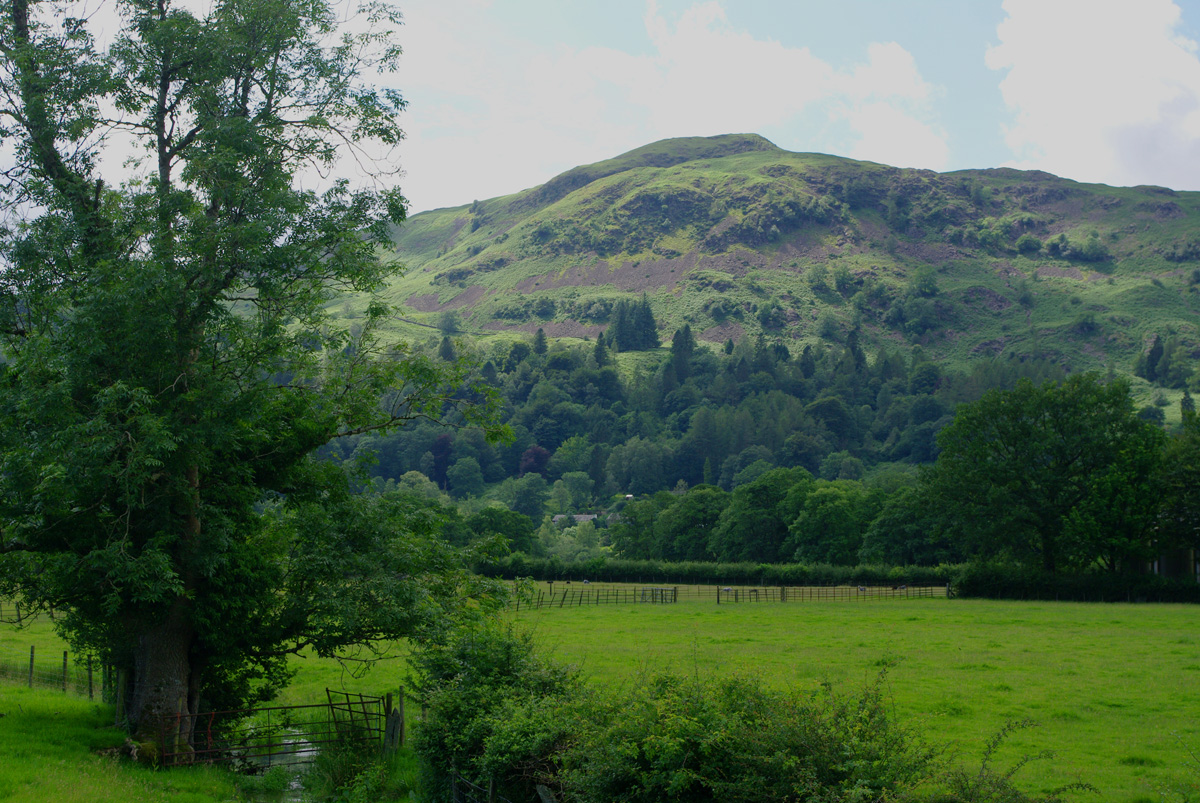
The Lakes. Image @Tony Grant
Wordsworth emphasises seclusion such as a hermit might experience.. This aloneness is an important aspect of this poem. When we meditate we find a secluded tranquil spot to be alone in.
The use of his senses is paramount to this process.
again I hear
These waters, rolling from their mountain-springs
With a soft inland murmur.”
And also,
Once again I see
These hedgerows, hardly hedgerows, little lines
Of sportive wood run wild; these pastoral farms,
Green to the very door; and wreaths of smoke
Sent up,”
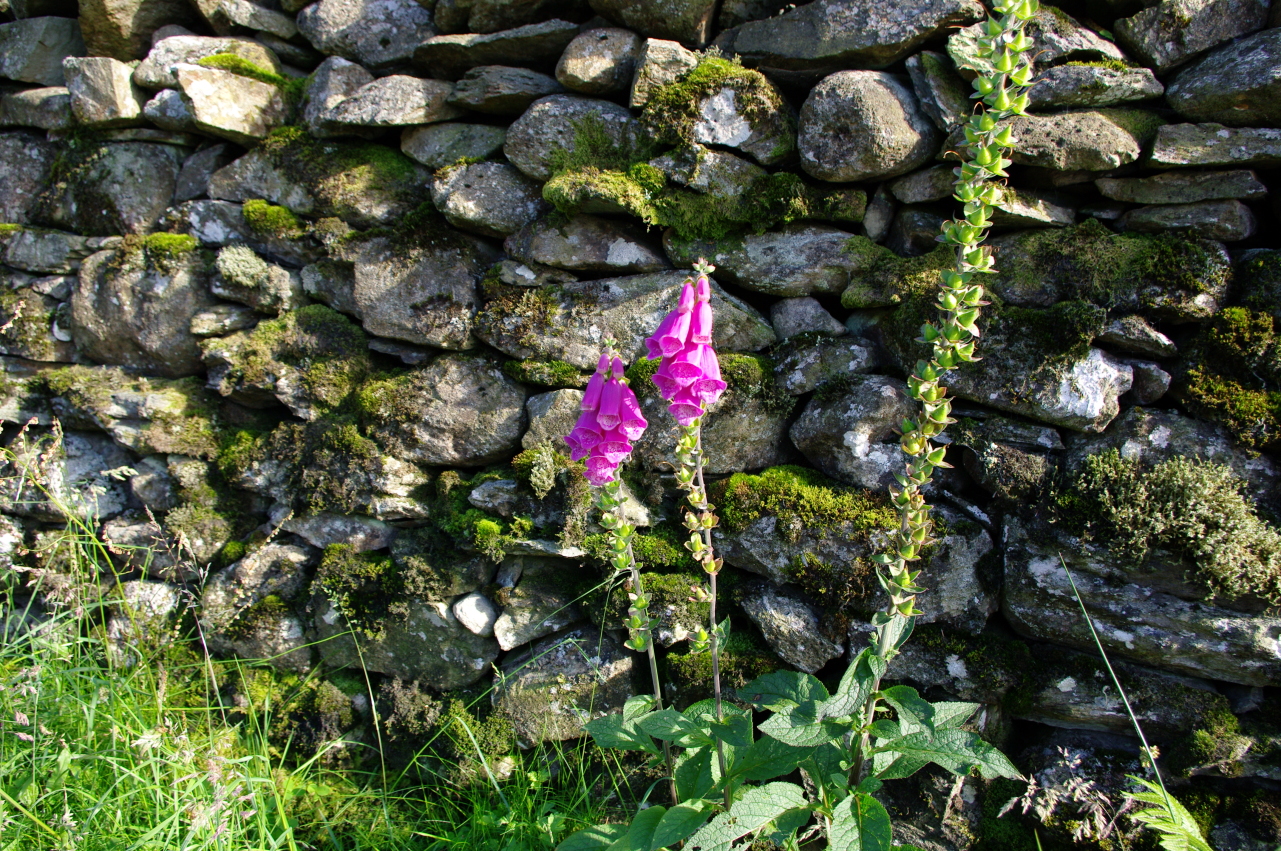
Foxgloves and dry stone wall. Image @Tony Grant.
Sound and sight come together to make an impression on his mind and feelings. But these are not short lived impressions. They have a deep and profound effect.
“oft, in lonely rooms, and ‘mid the din
Of towns and cities, I have owed to them,
In hours of weariness, sensations sweet,
Felt in the blood, and felt along the heart;
And passing even into my purer mind,
With tranquil restoration: -feelings too
Of unremembered pleasure; such, perhaps,
As have no slight or trivial influence.”
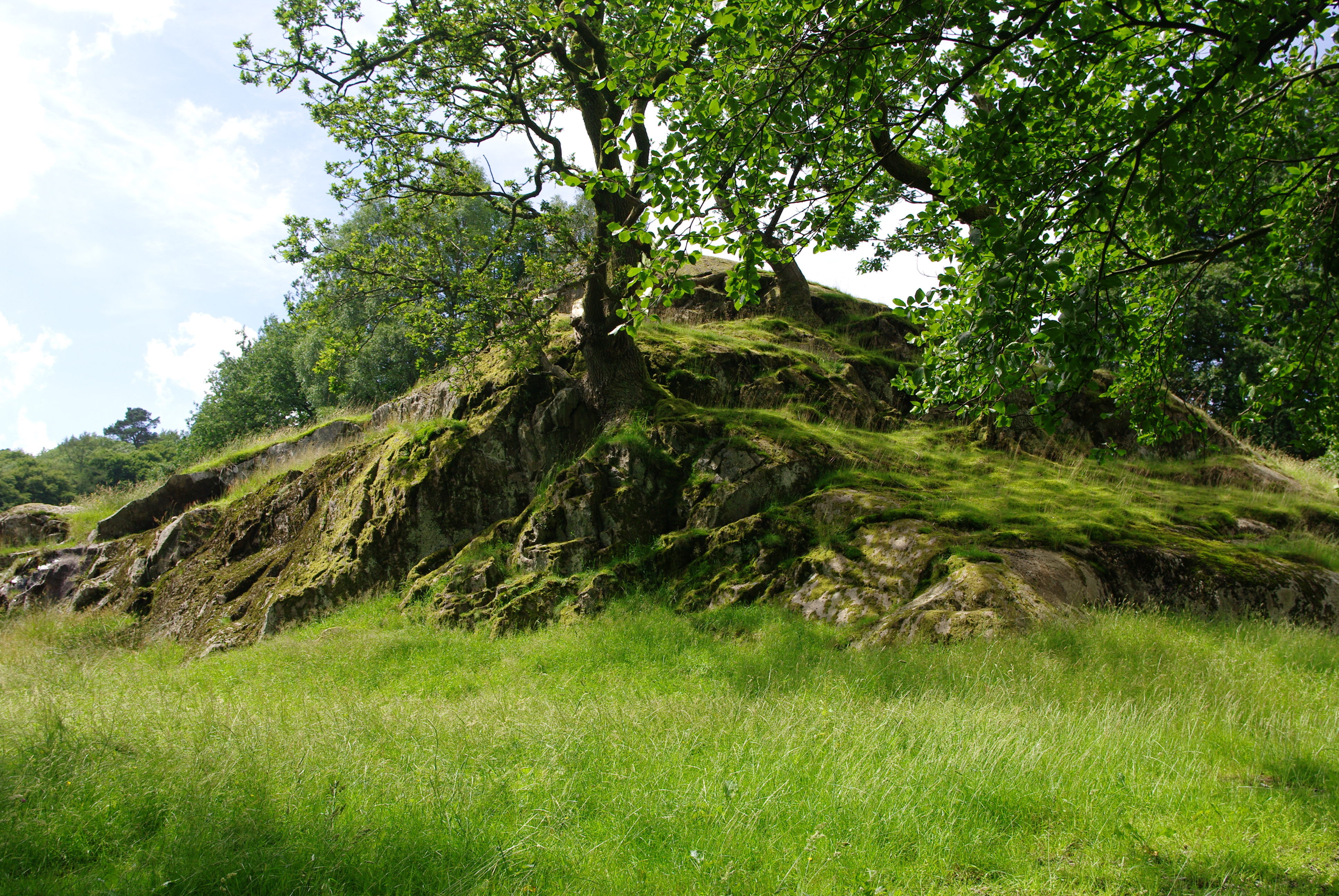
Rocky outcrop, image @Tony Grant
Wordsworth is saying that remembering the sensations that nature has had on him can be recalled, relived at other times and in other places and help him overcome things such as weariness and other detrimental sensations.
how oft –
In darkness and amid the many shapes
Of joyless daylight; when the fretful stir
Unprofitable, and the fever of the world,
Have hung upon the beatings of my heart –
How oft, in spirit, have I turned to thee,
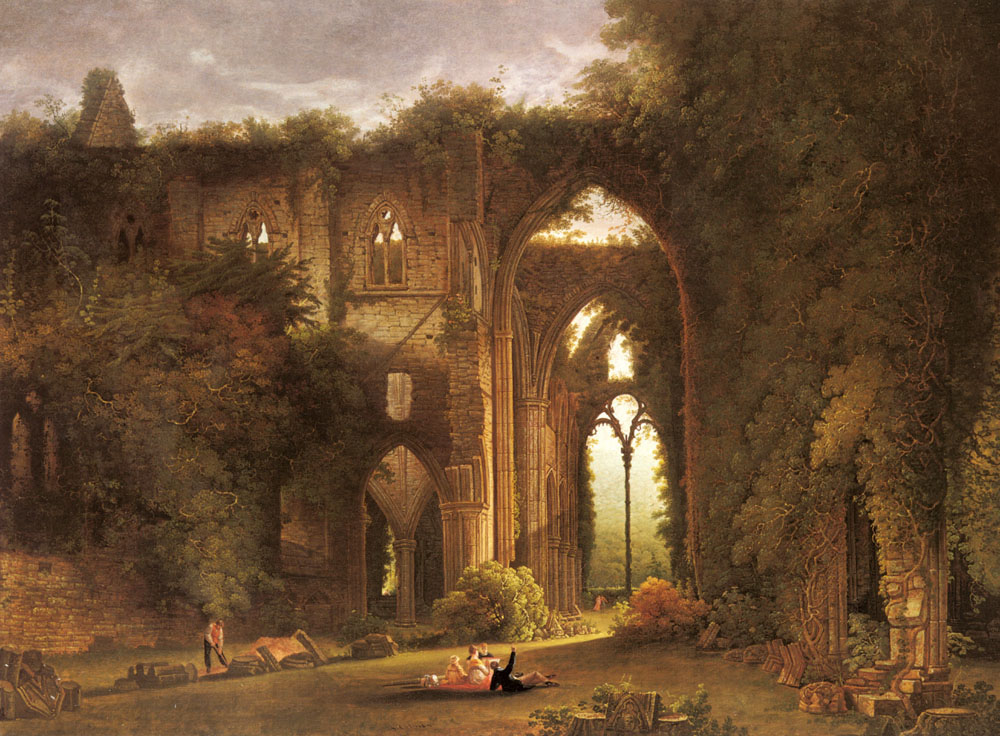
Tintern Abbey
Memory, imagination, recalling good sensations, becomes a sort of force that Wordsworth can use. He describes it as being “felt in the blood” and “along the heart. “ These sound strange phrases to us. We might describe these experiences as affecting us deeply or having a psychological influence or even providing a spiritual experience.
Methods of meditation use memory and imagination in this way. Athletes and sportspeople use this method too. We are experiencing the Olympics at this moment. Athletes have described how they use imagination to help them perform to the best of their ability. A white water canoeist was interviewed yesterday morning and asked how she prepares for such a hazardous descent and how is she able to get the timing of her turns just right. She answered that she imagines the descent through the rough and tumbling waters again and again, living in her imagination every move, paddle stroke and turn she is going to make.
Wordsworth gives even more importance to the powers of nature when he says these experiences have an effect ,
On the best portion of a good man’s life,
His little, nameless, unremembered, acts
Of kindness and of love.”
He is saying our experience of nature has an actual effect on the way behave.

The chancel crossingot Tintern Abbey looking towards the east window, JWM Turner, 17942
Wordsworth takes his ideas to an even higher almost mystical religious level when he says,
that blessed mood,
In which the burthen of the mystery,
In which the heavy and the weary weight
Of all this unintelligible world,
Is lightened: -that serene and blessed mood,
In which the affections gently lead us on –
Until, the breath of this corporeal frame
And even the motion of our human blood
Almost suspended, we are laid asleep
In body, and become a living soul;”
The effects last into the afterlife and affect our experience of heaven. This is serious stuff. Wordsworth is completely taken with this concept.

Banks of the Wye
Towards the end of the poem it becomes a letter, almost a love letter, to his sister Dorothy, who he sees as his soul mate. He includes her in his understanding of what he experiences,
all which we behold
Is full of blessings.”
What is interesting to consider is that in this poem Wordsworth describes how he uses his experience of nature through his senses to lighten and bring joy and spiritual pleasure to himself at other times. This revisit to the Wye Valley five years after his first visit appears to be an attempt to strengthen his experiences of nature and to replenish and strengthen his memories so he can use a stronger dose, so to speak, of his experiences in future. This begs the question , does Wordsworths poem, help the reader of the poem along this path of spiritual experience in anyway or is he just telling the reader, you must go and experience nature yourself to gain these effects?
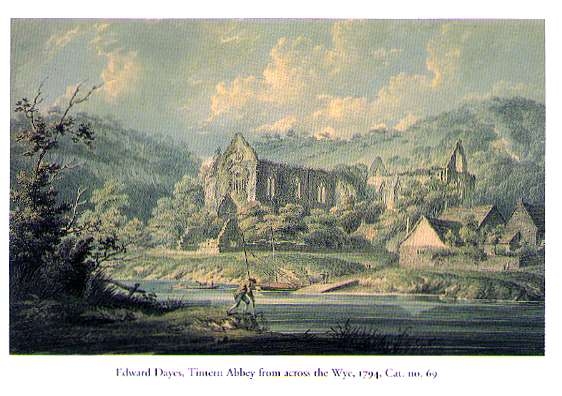
Edward Dayes, Tintern Abbey from across the Wye 1795.
What the poem does for me is help me recall my own experiences of places that gave me pleasurable experiences through my senses. Wordsworth in his poem is triggering our memory of good things too. He suggests we find a secluded place ourselves, remember, imagine and discover our own benefits. Nature can provide a healing process,
when thy mind
Shall be a mansion for all lovely forms,
Thy memory be as a dwelling place
For all sweet sounds and harmonies; oh! then,
If solitude, or fear, or pain, or grief,
Should be thy portion, with what healing thoughts
Of tender joy wilt thou remember me,”
There is something ageless in Wordsworth’s theory which is the theory of Romanticism. It makes me think of Karma and the Buddhist approach to meditation.
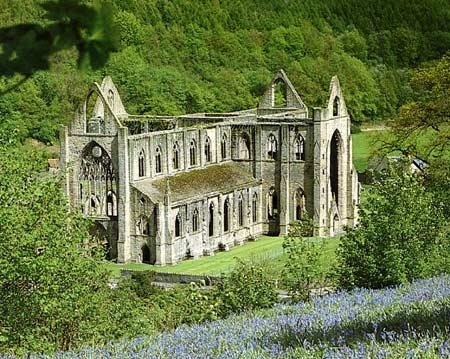
Tintern Abbey. Postcard photo courtesy of Paradoxplace.com.
As an addenda to the William Gilpin (1724-1804) reference above: Wordsworth may have used Gilpin’s guide book in the Wye Valley. Gilpin also was an advocate of experiencing nature and drawing benefits from it , it’s hues and colours and it’s natural arrangement He wasn’t averse, however, to making suggestions about its arrangement. He might suggest in his writing the removal or addition of a tree or even the roughing up and creation of a more crumbling effect of Tintern Abbey to create a better aesthetic affect. It is suggested that Jane Austen made fun of this in Northanger Abbey.
More on the topic:







 Jane Austen's World
Oh what this poem brings up for me…. its a bit hard to explain… How Wordsworth feels about Tintern is how I feel about England and my time there. Feeling the pull and serenity in my blood, just as he did. While Wordsworth pulls in a spiritual aspect, I feel a connection to this poem and the similarities of his thoughts and feelings about Tintern to how I long to be back in England.
What a fantastic post!! This post literally bought tears to my eyes :)
Thank you Patricia. I enjoyed being in The Lakes very much indeed.
Tony
Lovely post and I agree with Patricia, I feel that strong pull back to England that never lets up and is so fresh in my thoughts every day. I stood on those banks and visited Tintern in 2000. Beautiful.
Your post really conveys the beauty of the location and the poem, Tony. I’ve visited Tintern a few times and its an idyllic spot surrounded by inspiring scenery. The Abbey has been preserved now, which is good. Yet looking at the paintings above, I can’t help thinking that it looked more romantic and appealing when it was overgrown and fused with nature.
Thank you for this Tony – one of my favorite poems, one of my favorite places [I visited it for the first time in 2003 – but many times before that in my imagination!] – now feel the pull to return… your photographs are lovely!
Deb
Thanks, Laurie, Deb and unpub.
The rain we are experiencing at the moment will make the above scenery even greener.
All the best,
Tony
Lovely, lovely, lovely….
That was just lovely, Tony, thank you very much. I’ve never been to England, but am a life-long Anglophile. This just makes me want to see it more. Thank you, too, Vic.