• Home
  • Audio/Podcasts
  • Austensites
  • AV/E-Texts
  • History
  • JA Novels & Bio
  • Links
  • Original Sources/19th C. Texts
  • Social Customs During the Regency
  • Teacher/Student
  • Writer/Literature Resources

Jane Austen's World

This Jane Austen blog brings Jane Austen, her novels, and the Regency Period alive through food, dress, social customs, and other 19th C. historical details related to this topic.

Feeds:
Posts
Comments
« Miss Jane Austen’s Guide to Modern Life’s Dilemmas by Rebecca Smith: A Review
Jane Austen – A New Zealand Connection, by Susannah Fullerton »

Workhouses in 19th Century Great Britain

December 10, 2012 by Vic

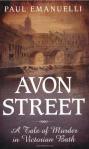
Inquiring readers: Paul Emanuelli, author of Avon Street (click here to view the book and order it), has contributed posts for this blog before about the City of Bath as a Character ,  Law & Order and Jane Austen’s Aunt,  Walking in Austen’s Footsteps, and Food – To Die For: Food Preparation in the Georgian Era. He has graciously sent in an article about crime and an incident involving Jane Austen’s aunt, Mrs James Leigh-Perrot. Paul writes about Bath in his own blog, unpublishedwriterblog. It is well worth a visit!

Workhouses are thought to date back as far as the fourteenth century and the aftermath of the “Black Death.” The plague was merciless in Britain and outbreaks recurred at intervals throughout the fourteenth and fifteenth centuries. As a result, the working population was decimated and the shortage of labour pushed up wages. To try and halt this, several Acts of Parliament were passed aimed at forcing all able-bodied men to work and to keep wages at their old levels, but their main effect was to create itinerant labourers who travelled around the country looking for areas where they could earn more.
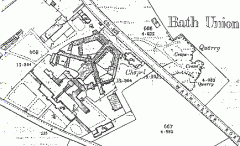
bathmap1902-2500

Layout of Bath Workhouse in 1848

The Poor Law Act of 1388 tried to stop this by introducing regulations restricting the movements of all labourers and itinerant beggars. No one could leave their own parish to seek work elsewhere without the written permission of the local Justice of the Peace, and the poor were prohibited from begging and could only receive help from the Parish in which they were born. Alms houses were built for the destitute but the earliest known reference to the term “Workhouse” dates back to 1631, when the mayor of Abingdon (near Oxford) records:-

“wee haue erected wthn our borough, a workehouse to sett poore people to worke”

A further Poor Law Act in 1597 governed the care of the destitute right up until the 19th Century. This law required the local justices of the peace to appoint, annually, “Overseers of the Poor” to find work for those in need, to apprentice children, and to provide,

“the necessary relief of the lame, impotent, old, blind and such other being poor and not able to work”.

This Poor Law required poor rates to be charged as a local tax, replacing voluntary charitable funding. The rate of charge and arrangements for distribution were to be decided by the Overseers. Though most parishes had houses set aside for the old, infirm and destitute these were more like alms-houses than workhouses and most support was given in the form of subsistence payments known as “out relief.”

bath1

Aerial photo of Former Bath Workhouse taken in early 20th Century

The real growth in workhouses took place in the nineteenth century, following the end of the Napoleonic Wars. Hundreds of thousands of troops returned home to find there was no work for them. Most had been agricultural workers before the war and the new technology in farming had reduced the need for labour. At the same time a series of poor harvests had pushed up food prices and the Importation Act of 1815 had prohibited the importation of cheaper cereals from abroad. For most people, bread was the main part of their diet and yet they could no longer even afford bread. So many had become destitute and were starving by the early 1830s that the system could not support them. The Government sought a cheaper alternative to “out relief.”

Read the rest of Paul’s fascinating post and the workhouse in Bath at this link:

Click Here

In keeping with December, Charles Dickens’ anniversary, and a Christmas Carol, Paul sent this message:

 In “A Christmas Carol” the Spirit of Christmas Present reveals two children hidden under his robes. Scrooge asks him if they are his children and the Spirit replies that they are the children of Man – “This boy is Ignorance. This girl is Want. Beware them both, and all of their degree, but most of all beware this boy, for on his brow I see that written which is Doom, unless the writing be erased.’

‘Have they no refuge or resource.‘ asks Scrooge.

‘Are there no prisons.‘ said the Spirit, turning on him for the last time with his own words. ‘Are there no workhouses.‘”

OliverTwistOliver Twist

Oliver Twist Workhouse image

The well known passage from Oliver Twist:

“Child as he was, he was desperate with hunger, and reckless with misery. He rose from the table; and advancing to the master, basin and spoon in hand, said: somewhat alarmed at his own temerity:

‘Please, sir, I want some more.’

The master was a fat, healthy man; but he turned very pale. He gazed in stupified astonishment on the small rebel for some seconds, and then clung for support to the copper. The assistants were paralysed with wonder; the boys with fear.

‘What!’ said the master at length, in a faint voice.

‘Please, sir,’ replied Oliver, ‘I want some more.’

More about Avon Street: Order the book
  • Amazon UK

  • Amazon US

  • Paperback: 320 pages
  • Publisher: The History Press (March 28, 2012)
  • Language: English
  • ISBN-10: 0752465546
  • ISBN-13: 978-0752465548

Share with others:

  • Click to email a link to a friend (Opens in new window) Email
  • Click to print (Opens in new window) Print
  • Click to share on Facebook (Opens in new window) Facebook
  • Click to share on Reddit (Opens in new window) Reddit
  • Click to share on X (Opens in new window) X
  • Click to share on Pinterest (Opens in new window) Pinterest
  • Click to share on Tumblr (Opens in new window) Tumblr
  • Click to share on LinkedIn (Opens in new window) LinkedIn
Like Loading...

Related

Posted in 19th C. Poor, 19th Century England, Jane Austen's World, Victorian Era | Tagged Avon Street, Charles Dickens, Paul Emanuelli, Workshouses | 5 Comments

5 Responses

  1. on December 10, 2012 at 11:51 Catherine Wolffe's avatar Catherine Wolffe

    I very much enjoyed your post. Thanks for sharing.


  2. on December 10, 2012 at 12:56 euhemerus's avatar euhemerus

    Let’s hear about workhouses in Ireland during the Great Hunger, falsely called “Famine”. From an upper floor the starved bodies, who had had to sign over any property to HM authorities, were propelled to mass graves. Which still dot Ireland’s country side..


    • on December 10, 2012 at 14:16 unpub's avatar unpub

      There is a piece on my Blog entitled “Coffin Ships and Angel Meadows” which is about the Great Hunger in Ireland. “Avon Street” (my novel) also focusses on the Irish Community in Bath who fled the Great Hunger and tries to explain (at least in part) what happened.The burial pits (with no names recorded) are in the book.
      I hope you will forgive me for referring to it as the “famine” (in Blog piece and book) – But I do know what you mean.
      It’s not possible to capture the sheer scale of suffering in a short piece on a Blog, or in a work of fiction, but I have tried.


  3. on December 11, 2012 at 11:19 ellaquinnauthor's avatar ellaquinnauthor

    Fabulous post.


  4. on December 11, 2012 at 11:51 ellaquinnauthor's avatar ellaquinnauthor

    Reblogged this on Ella Quinn ~ Author and commented:
    I can’t not reblog this. Please also look at the links.


Comments are closed.

  • Enter your email address to subscribe to this blog and receive notifications of new posts by email.

    Join 7,248 other subscribers
  • 2025 AGM in Baltimore

  • Items of Interest

  • Blog Stats

    • 18,364,031 hits
  • Follow Jane Austen's World on WordPress.com
  • RECOMMENDED BOOKS AND RESOURCES

  • Fashionable Goodness: Christianity in Jane Austen's England is now available! By JAW contributor Brenda S. Cox. See Review. Available from Amazon and Jane Austen Books.
  • We also recommend JAW contributor Rachel Dodge's devotionals based on Jane Austen's prayers and classic literature. Reviews:
    Praying With Jane: 31 Days Through the Prayers of Jane Austen
    The Anne of Green Gables DevotionalThe Little Women Devotional
    The Secret Garden Devotional
  • The Tour of Doctor Syntax. Edited by Ben Wiebracht. Read the review of the book at this link. Click to order the book on Amazon US or Amazon UK or Jane Austen Books
  • FREE Student Membership to JASNA

    Available through December 31st, 2025. Click on image for details, and share this poster with other teachers and students!

  • The Obituary of Charlotte Collins by Andrew Capes

    Click on image to read the story.

  • Comments

    “My idea of good company…is the company of clever, well-informed people, who have a great deal of conversation.” – Jane Austen, Persuasion


    Gentle readers: Please feel free to post your comments and continue the conversation! Due to SPAM, we will no longer accept comments on posts after 30 days of publication. In some instances, links will be removed from comments as well.

  • Administrators and Contributors

    Vic Sanborn, founder of this blog, is supported by a team of talented and knowledgeable writers about Jane Austen and the Regency era. They are:

    • Brenda Cox
    • Rachel Dodge and
    • Tony Grant, who now contributes his photos from London and England

    Click on their names to enter their own blogs.

    In addition, we thank the many experts and authors who frequently contribute their posts and opinions, and who continue to do so freely or at our request.

  • Pin It!

    Follow Me on Pinterest
  • Top Posts

    • Regency Fashion: Men's Breeches, Pantaloons, and Trousers
      Regency Fashion: Men's Breeches, Pantaloons, and Trousers
    • Emma 2010 on PBS Masterpiece Classic: A Review
      Emma 2010 on PBS Masterpiece Classic: A Review
    • Highclere Castle Floor Plan: The Real Downton Abbey
      Highclere Castle Floor Plan: The Real Downton Abbey
    • Men's hair styles at the turn of the 19th century
      Men's hair styles at the turn of the 19th century
    •  A Triple Tragedy: How Princess Charlotte's Death in 1817 Changed Obstetrics
      A Triple Tragedy: How Princess Charlotte's Death in 1817 Changed Obstetrics
    • Cassandra Writes About Jane Austen's Death, July 18, 1817
      Cassandra Writes About Jane Austen's Death, July 18, 1817
    • Regency Hygiene: The Bourdaloue
      Regency Hygiene: The Bourdaloue
    • Pride and Prejudice 1995: 20 years Later
      Pride and Prejudice 1995: 20 years Later
    • Dressing for the Netherfield Ball in Pride and Prejudice: Regency Fashion
      Dressing for the Netherfield Ball in Pride and Prejudice: Regency Fashion
    • Characteristics of the Georgian Town House
      Characteristics of the Georgian Town House
  • Recent Posts

    • Coming Soon: Birthday Tales for Jane Austen’s 250th
    • Book Review: The Austens, by Sarah Emsley
    • Praying with Jane Audiobook with Amanda Root
    • Book Review: The Worlds of Jane Austen: The Influences and Inspiration Behind the Novels
    • Books Purchased at the 2025 AGM in Baltimore
  • Links to Jane Austen Blogs

    Click here to enter the page. Topics include Regency fashion, historic foods, Jane Austen societies, British sites, related topics. Click on image.

  • May we suggest?

  • Unknown's avatarHello, my name is Vic and I live in Maryland, USA. I have adored Jane Austen almost all of my life. I am a proud lifetime member of the Jane Austen Society of North America. This blog is a personal blog written and edited by me and my team. We do not accept any form of cash advertising, sponsorship, or paid topic insertions. However, we do accept and keep books and CDs to review.

    If you would like to share a new site, or point out an error, please email us. (Yes, we are fallible. We'll own up to our mistakes and will make the corrections with a polite smile on our faces.) Write us at

    gmailbw

    Thank you for visiting this blog. Your comments and suggestions are most welcome.

  • Project Gutenberg: eBook of Stage-coach and Mail in Days of Yore, Volume 2 (of 2), by Charles G. Harper

    STAGE-COACH AND MAIL IN DAYS OF YORE: A PICTURESQUE HISTORY
    OF THE COACHING AGE, VOL. II, By CHARLES G. HARPER. 1903. Click on this link.


  • Top Posts & Pages

    • Regency Fashion: Men's Breeches, Pantaloons, and Trousers
    • Emma 2010 on PBS Masterpiece Classic: A Review
    • Highclere Castle Floor Plan: The Real Downton Abbey
    • Men's hair styles at the turn of the 19th century
    • A Triple Tragedy: How Princess Charlotte's Death in 1817 Changed Obstetrics
    • Cassandra Writes About Jane Austen's Death, July 18, 1817
    • Regency Hygiene: The Bourdaloue
    • Pride and Prejudice 1995: 20 years Later
    • Dressing for the Netherfield Ball in Pride and Prejudice: Regency Fashion
    • Characteristics of the Georgian Town House
  • Tour Chawton Cottage on YouTube

  • Disclaimer: Our team makes no profit from this blog. We may receive books (physical or digitized) for review purposes.

  • Copyright Statement: © Jane Austen's World blog, 2009-2024. Unauthorized use and/or duplication of this material without express and written permission from this blog’s author and/or owners is strictly prohibited. Excerpts and links may be used, provided that full and clear credit is given to Jane Austen's World with appropriate and specific direction to the original content.

Blog at WordPress.com.

WPThemes.


  • Reblog
  • Subscribe Subscribed
    • Jane Austen's World
    • Join 7,248 other subscribers
    • Already have a WordPress.com account? Log in now.
    • Jane Austen's World
    • Subscribe Subscribed
    • Sign up
    • Log in
    • Copy shortlink
    • Report this content
    • View post in Reader
    • Manage subscriptions
    • Collapse this bar
 

Loading Comments...
 

    %d

