Feeds:
Posts
Comments

Archive for the ‘History’ Category


The Cooks and Confectioners Dictionary, Or, The Accomplish’d Housewifes Companion, By John Nott, Published by Printed for C. Rivington at the Bible and Crown, in St. Paul’s Church-yard, 1723

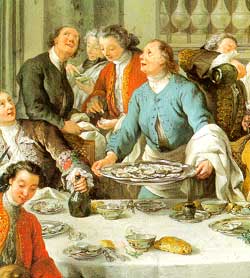
food-18thJohn Nott, the chef for the Duke of Bolton, who resided in St. Jamess’s Street, wrote this charming introduction to his cookbook, which was published in 1723 and is now in the public domain. A learned man, Nott’s French inspired recipes show that vegetables, such as carrots and new varieties of asparagus and spinach, which were brought from overseas, were becoming more plentiful on tables. He also makes frequent mention of marmalades, blanc-manges, creams, biscuits, and sweet cakes.* The cookbook includes two peacock recipes and a collection of 13 red currant recipes.

He seems to have been a fairly-read and intelligent man, and cites, in the course of his work, many celebrated names and receipts. Thus we have:—To brew ale Sir Jonas Moore’s way; to make Dr. Butler’s purging ale; ale of health and strength, by the Viscount St. Albans; almond butter the Cambridge way; to dress a leg of mutton à la Dauphine; to dress mutton the Turkish way; to stew a pike the City way. Dr. Twin’s, Dr. Blacksmith’s, and Dr. Atkin’s almond butter; an amber pudding, according to the Lord Conway’s receipt; the Countess of Rutland’s Banbury cake; to make Oxford cake; to make Portugal cakes; and so on.- Old Cookery Books, W. Carew Hazlitt, 1902

In regard to the cookbook’s title, it is interesting to note that an extravagant use of sugar in recipes was a sign of the wealth and status, as sugar remained a luxury item for most people until well into the 19th century.** Nott told hostesses who served desserts (there should be as many dishes of dessert as courses offered) to make the table arrangement perfectly symmetrical in design and color, and provided an illustration of the ideal dessert “pyramid”.

Nott included bills of fare for every month of the year. Below is the one he created for January. Note the absence of vegetables.


The Cooks and Confectioners Dictionary, Or, The Accomplish’d Housewifes Companion By John Nott, cook John Nott

Nott’s 18th Century Recipe for Hot Milk Chocolate (said to be rich and delicious):

1 quart milk
4 ounces chocolate without sugar
1/8 ounce fine sugar
1/8 ounce flour or starch
Salt to taste

Mix, dissolve and bring to a boil before serving hot.

Nott’s recipe for a posset, the 18th century version of a nightcap:

“To make a posset: set a quart of milk on the fire; as soon as it boils, take it off, and set it to cool a little; then, having put four spoonfuls of sack [sherry] and eight of ale into a basin with a sufficient quantity of sugar, pour your milk to it; then set it before the fire and let it stand till you eat it.”

More links:

  • Find a recipe at this Historic Foods link for Nott’s lamb pasty and pasty crust. In this 1720’s recipe, the design for the crust was created by Edward Kidder.

*Old Cookery Books and Ancient Cuisine By William Carew Hazlitt, p 49

**Savoring the Past, Shax Riegler

Read Full Post »

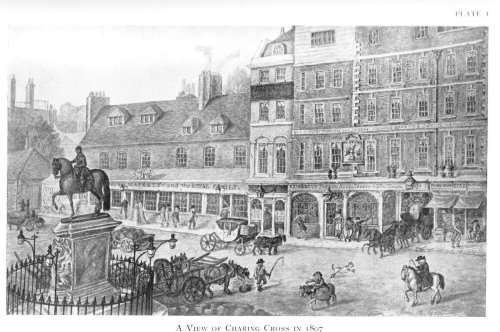
Charing Cross 1807

Charing Cross 1807

The site, The Story of London: A History of England’s Capital, features articles and links on the history of that great city. Featured articles include Mayhew’s London Prostitutes and Crime and Punishment. Pepys in 1663 is another featured column on the sidebar. Registered users receive special privileges (registration is free.)

Read Full Post »

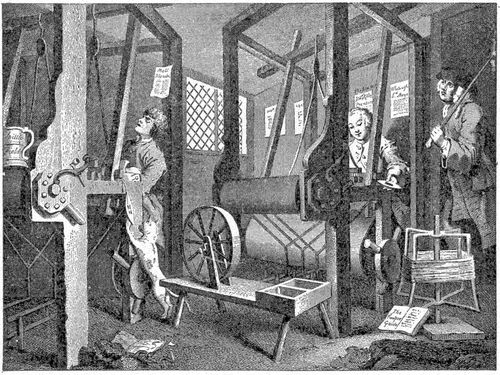
The diet of the handloom weavers would have been augmented in Ribchester by the nearby agricultural areas which encroached well into the village. Early maps show most homes had gardens, substantial areas of meadow, orchards and open spaces. Around 90% of the agriculture in the parish was permanent grass for rearing cattle, sheep etc and only a very small acreage was arable land, suggesting a good ready supply of meat and dairy produce. Gardens would provide vegetables, fruit and would

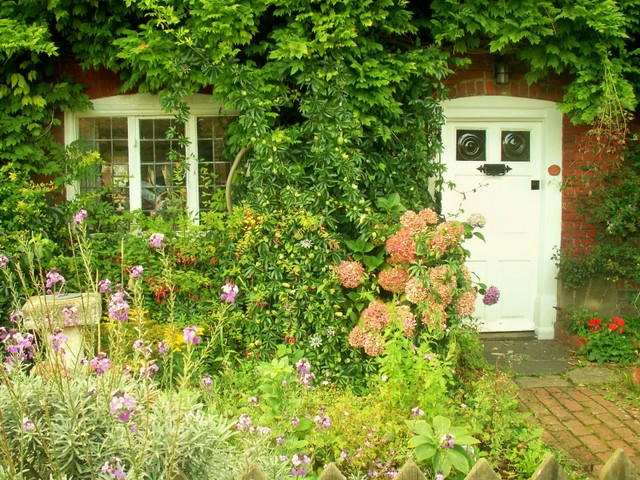
19th-century walled kitchen

19th-century walled kitchen garden.

certainly allow for the keeping of poultry and pigs. Game was available legally or illegally, and possibly similarly fish. The traders in the village would provide dry goods, spices etc., or these could have been brought by itinerant traders. In the early 1800’s there was a carrier 3 times a week to Blackburn and twice a week to Preston. From – Ribchester Local History

The above website describes how Ribchester was considered a poor village until the early 19th century, when handloom weaving became the primary activity in the township.
Hand Loom Weaving

Read Full Post »

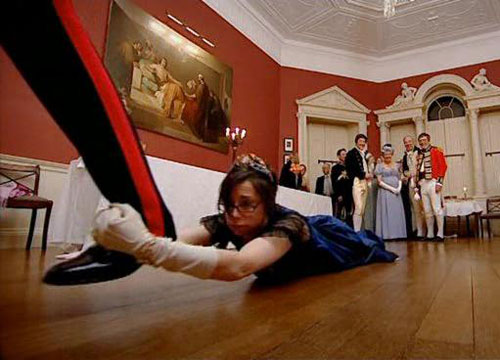
Ah, BBC. It seems that this august station has been running a series of historical food shows called The Supersizers Go. Giles Coren stars with Sue Perkins in this funny, and informative BBC Two show, which ran for six weeks in Britain starting May 20. Click here to see the first YouTube video, which will lead you to the others. Giles wrote the following in a recent Times Online article:

The Regency

Ah, the era of Jane Austen, of balls and dresses and, ah, balls and, um, dresses. They don’t really eat in the books, do they? That’s why they all look so good in frock coats and riding breeches. And I make a pretty awesome Mr Darcy, too. Sue can hardly keep her hands off.

I spend much of the time wearing a corset (as Beau Brummel often did, and no doubt Mr Darcy too, the old queen) and so cannot really force down much of the food – which in this period is a combination of patriotic roast beef eaten in defiance of the perfidious French and, conversely, poncy, heavily sauced French food, of the kind cooked for aristocrats by top chefs fleeing France as their noble patrons were beheaded.

I visit a Dr Petty in Harley Street, who predicts great digestive discomfort and an attack of gout from the purine in all the port I’ll be drinking: during the Napoleonic wars claret was not available, so we got stinko on the sticky stuff instead, imported from our old allies, Portugal.

But I have the time of my life. Determined to keep looking rakishly handsome in my fine clothes, I burn up thousands of calories stalking my estate with a blunderbuss, firing at poachers robbing my rabbits in defiance of the Enclosures Act.

Breakfast having just been invented, I make that my main meal. But it is so recently invented that it comprises only bread, so I don’t eat much of it.

Pineapples are newly available too but, you know, who gives?

As for lunch, that doesn’t seem to have been invented either. But they do have a thing called “nuncheon”, which is most often cheese served deliberately with the maggots who live in it. I dine only on the occasional sandwich at the casino tables

(invented by the Earl of Sandwich for that very purpose) and so go to bed reasonably hungry – a good way to stay slim.

At the end of this immersion I do, in fact, have dangerously high uric acid, indicating the imminence of an outbreak of gout. But I am in terrific shape on the surface.

One Times Oline critic wasn’t all that crazy about Giles’ antics with his costar, but he did concede the the show was full of interesting historical tidbits, such as the following:

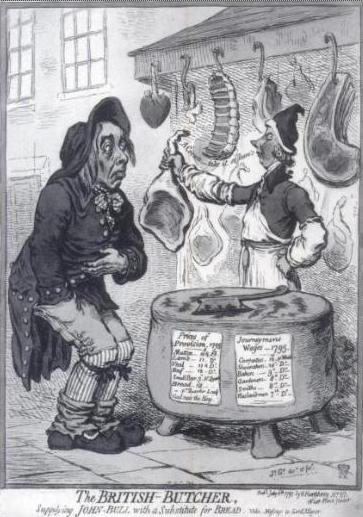
Wartime Britain went hungry between 1789 and 1821 but it was also the age of excess. The average weight of an ox went from 370lb to 800lb (186kg to 363kg) and the Army swelled from a force of 39,000 in 1793 to 264,000 by 1815. The cartoonists who used the Regent’s corpulence as a metaphor for his kingdom’s corruption clearly got it right.

A detailed review of the Regency Supersizers Go show sits on Just Hungry, a great site which had the good taste to feature this blog. In its post find a detailed description of the meal. For more information about the gastronomic delights of the era, click on the links below:

Read Full Post »

From: Everyday Life in Regency and Victorian England: From 1811-1901, Kristine Hughes, Ohio, 1998, p 122, ISBN 0-89879-812-4

For more questions and answers about British social classes, click here.

Please note: If you wish to use this image, please give proper credit. The information came from Kristine Hughes; the image was made by me. Thank you.

Read Full Post »

« Newer Posts - Older Posts »