Feeds:
Posts
Comments

Archive for the ‘Jane Austen Novels’ Category

This year I’ve embarked on a new series, “A Year in Jane Austen’s World,” that focuses on important details that happened in Jane Austen’s novels, letters, and lifetime during each month of the year. Each month, I share with you my findings as I scour her letters, novels, and personal and family history.

Thus far, we’ve covered January and February and learned a lot about the “Season” in London and Bath during the winter months during the Regency Era, as well as the garden the Austen women planned for their Southampton home during their first winter there.

Next, we turn to March in Austen’s novels. While January and February were still quite wintry, March in the south of England is a mix of weather and season. As always happens, this type of research is a “follow your nose”-type study – let’s see where March will take us!

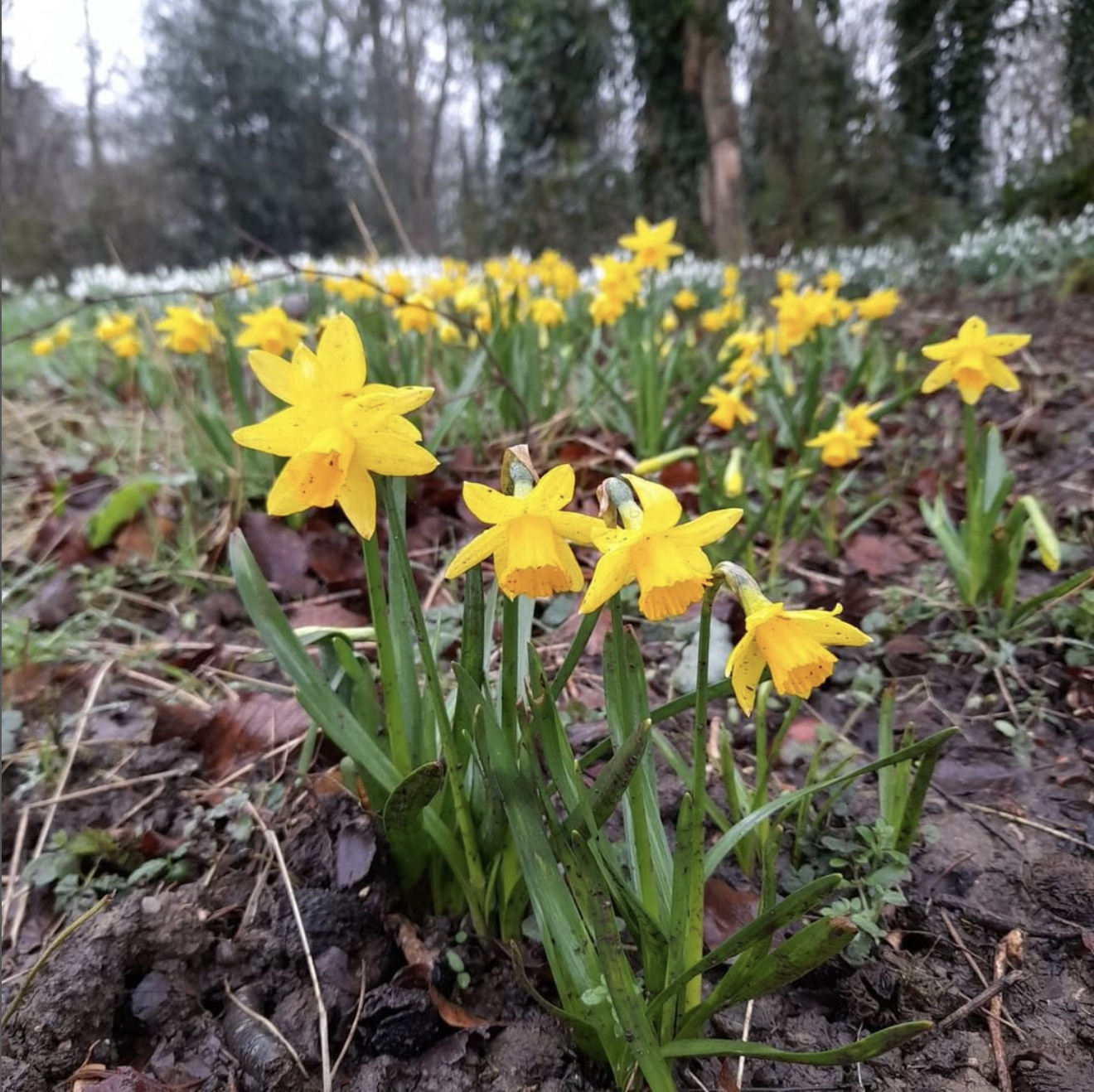
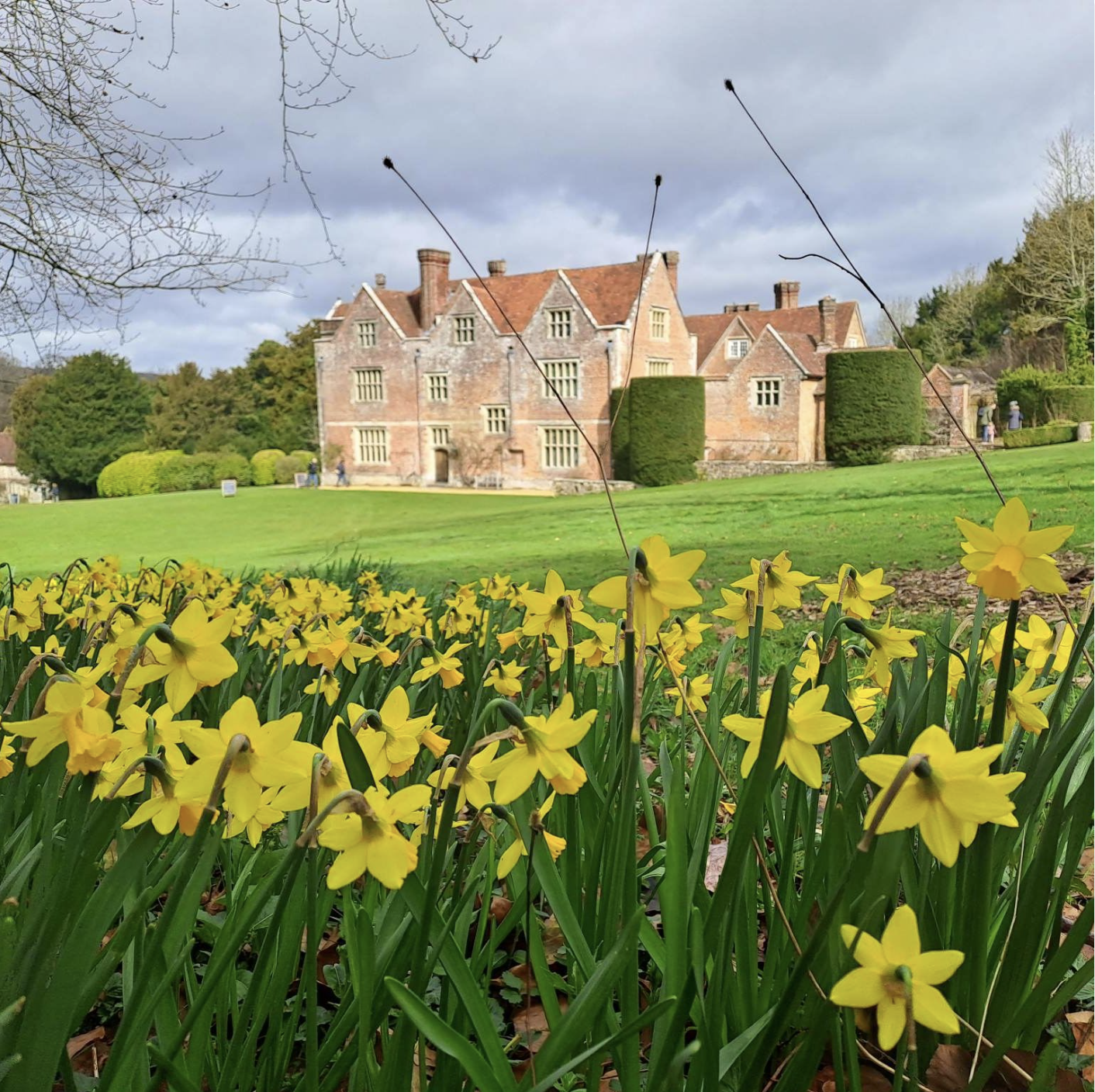
Daffodils at Chawton House in March, @ChawtonHouse.

March in Hampshire

The daffodils like to put on a good show at Jane Austen’s House Museum and Chawton House this time of year. The yellow pops of color are good for the soul and prove to be a hopeful sign that spring is on its way, to those who visit the grounds this time of year.

The daffodils in my yard are glorious right now and it makes my heart happy. I planted 250 bulbs last fall, which meant a lot of work … without anything to show for it at the time. But now that it’s spring, I’m seeing the fruit of my labors!

Daffodils and the like are a wonderful reminder that many worthwhile projects and tasks take work and time before we see fruit. In Austen’s life, before she was published, only her family and close friends enjoyed her work. But later, there was an abundance of fruit from her labors–and it continues to this day!

Jane Austen’s House in March, Photo: @JaneAustensHouse.

March in Jane Austen’s Letters

Several of Austen’s surviving letters were written in March or about March. Here are some interesting highlights:

1814: We have several letters from Jane to Cassandra from March 1814, when Austen visited her brother Henry at his house in Henrietta Street in Covent Garden (you can read more here).

These letters give us a glimpse into Jane’s mind about London, the weather that winter, shopping for herself and the other women in her family, her brother Henry’s thoughts on Mansfield Park, and the plays they attended (several that she liked and others she did not).

Wednesday, 2 March (Henrietta Street):

  • Henry’s thoughts on MP: “We did not begin reading till Bentley Green. Henry’s approbation is hitherto even equal to my wishes. He says it is different from the other two, but does not appear to think it at all inferior. He has only married Mrs. R. (Rushworth). I am afraid he has gone through the most entertaining part. He took to Lady B. (Bertram) and Mrs. N. (Norris) most kindly, and gives great praise to the drawing of the characters. He understands them all, likes Fanny, and, I think, foresees how it will all be.”
  • More on that topic: “Henry is going on with ‘Mansfield Park.’ He admires H. Crawford: I mean properly, as a clever, pleasant man.”
  • Austen’s thoughts on reading The Heroine: “We have drank tea, and I have torn through the third vol. of the ‘Heroine.’ I do not think it falls off. It is a delightful burlesque, particularly on the Radcliffe style.” (The Heroine; Or Adventures of Cherubina is a novel by Eaton Stannard Barrett, 1813).
Henrietta Street today, GuideLondon.org.

Saturday, 5 March (Henrietta Street):

In this letter, Austen provides short accounts from several different days in one week. She provides news each day for Saturday, Sunday, Monday, and Tuesday:

  • The weather seems quite uncomfortable: “Do not be angry with me for beginning another letter to you. I have read the ‘Corsair’ (Byron), mended my petticoat, and have nothing else to do. Getting out is impossible. It is a nasty day for everybody. Edward’s spirits will be wanting sunshine, and here is nothing but thickness and sleet; and though these two rooms are delightfully warm, I fancy it is very cold abroad.”
  • She attends several plays at the Theatre Royal in Drury Lane, London. On Saturday, March 5, 1814, she sees Edmund Kean as Shylock in William Shakespeare’s The Merchant of Venice and provides her thoughts: “We were quite satisfied with Kean. I cannot imagine better acting, but the part was too short; and, excepting him and Miss Smith, and she did not quite answer my expectation, the parts were ill filled and the play heavy. We were too much tired to stay for the whole of “Illusion” (“Nour-jahad”), which has three acts; there is a great deal of finery and dancing in it, but I think little merit. Elliston was “Nour-jahad,” but it is a solemn sort of part, not at all calculated for his powers. There was nothing of the best Elliston about him. I might not have known him but for his voice.”
  • Later, she continues with this: “I shall like to see Kean again excessively, and to see him with you too. It appeared to me as if there were no fault in him anywhere; and in his scene with “Tubal” there was exquisite acting.”
  • She writes more about Henry’s assessment of Mansfield Park: “Henry has this moment said that he likes my M. P. better and better; he is in the third volume. I believe now he has changed his mind as to foreseeing the end; he said yesterday, at least, that he defied anybody to say whether H. C. [Henry Crawford] would be reformed, or would forget Fanny in a fortnight.”
  • Her thoughts on the increase in the price of tea: “A cold day, but bright and clear. I am afraid your planting can hardly have begun. I am sorry to hear that there has been a rise in tea. I do not mean to pay Twining till later in the day, when we may order a fresh supply.”
Edward Kean as Shylock (Wiki Commons).
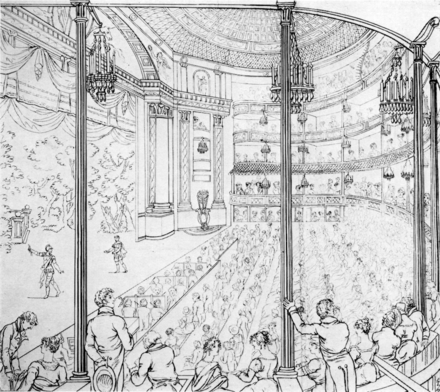
Theatre Royal in Drury Lane, sketched when it was newly built, in 1813 (Wiki Commons).

Wednesday, 9 March (Henrietta Street):

  • Jane Austen and her mother and Martha Lloyd all have winter colds: “I have a cold, too, as well as my mother and Martha. Let it be a generous emulation between us which can get rid of it first.” And later: “We are home in such good time that I can finish my letter to-night, which will be better than getting up to do it to-morrow, especially as, on account of my cold, which has been very heavy in my head this evening, I rather think of lying in bed later than usual. I would not but be well enough to go to Hertford St. on any account.”
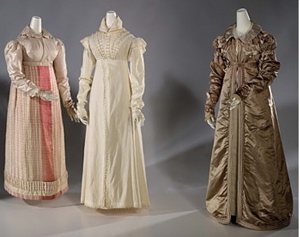
  • Austen’s dress: “I wear my gauze gown to-day, long sleeves and all. I shall see how they succeed, but as yet I have no reason to suppose long sleeves are allowable. I have lowered the bosom, especially at the corners, and plaited black satin ribbon round the top. Such will be my costume of vine-leaves and paste.” And later: “Mrs. Tilson had long sleeves, too, and she assured me that they are worn in the evening by many. I was glad to hear this.”
  • And Henry’s final thoughts on Mansfield Park: “Henry has finished ‘Mansfield Park,’ and his approbation has not lessened. He found the last half of the last volume extremely interesting.”
Long-sleeved Regency gowns.

1816: Letters to Fanny Knight

Thursday, 13 March (Chawton):

  • Austen’s romantic advice: “To you I shall say, as I have often said before, Do not be in a hurry, the right man will come at last; you will in the course of the next two or three years meet with somebody more generally unexceptionable than anyone you have yet known, who will love you as warmly as possible, and who will so completely attach you that you will feel you never really loved before.”
  • Notes on writing: “I will answer your kind questions more than you expect. “Miss Catherine” (Northanger Abbey) is put upon the shelf for the present, and I do not know that she will ever come out; but I have a something ready for publication (Persuasion), which may, perhaps, appear about a twelvemonth hence. It is short — about the length of ‘Catherine.’ This is for yourself alone. Neither Mr. Salusbury nor Mr. Wildman is to know of it.”
  • Illness: “I am got tolerably well again, quite equal to walking about and enjoying the air, and by sitting down and resting a good while between my walks, I get exercise enough. I have a scheme, however, for accomplishing more, as the weather grows spring-like. I mean to take to riding the donkey; it will be more independent and less troublesome than the use of the carriage, and I shall be able to go about with Aunt Cassandra in her walks to Alton and Wyards.”

Sunday, 23 March (Chawton):

In this letter, Austen speaks of many other topics, but the state of her health seems to be the most important topic in this letter:

  • “Many thanks for your kind care for my health; I certainly have not been well for many weeks, and about a week ago I was very poorly. I have had a good deal of fever at times, and indifferent nights; but I am considerably better now and am recovering my looks a little, which have been bad enough — black and white, and every wrong colour. I must not depend upon being ever very blooming again. Sickness is a dangerous indulgence at my time of life. Thank you for everything you tell me. I do not feel worthy of it by anything that I can say in return, but I assure you my pleasure in your letters is quite as great as ever, and I am interested and amused just as you could wish me.”
  • Evening: “I was languid and dull and very bad company when I wrote the above; I am better now, to my own feelings at least, and wish I may be more agreeable. We are going to have rain, and after that very pleasant genial weather, which will exactly do for me, as my saddle will then be completed, and air and exercise is what I want. Indeed, I shall be very glad when the event at Scarlets is over, the expectation of it keeps us in a worry, your grandmamma especially; she sits brooding over evils which cannot be remedied, and conduct impossible to be understood.”
  • “I took my first ride yesterday, and liked it very much. I went up Mounter’s Lane and round by where the new cottages are to be, and found the exercise and everything very pleasant; and I had the advantage of agreeable companions, as At. Cass. and Edward walked by my side. At. Cass. is such an excellent nurse, so assiduous and unwearied! But you know all that already.”

March in Jane Austen’s Novels

The following are a collection of interesting little tidbits and important moments from Austen’s novels:

Sense and Sensibility

  • “The third day … was so fine, so beautiful a Sunday as to draw many to Kensington Gardens, though it was only the second week in March. Mrs. Jennings and Elinor were of the number; but Marianne, who knew that the Willoughbys were again in town, and had a constant dread of meeting them, chose rather to stay at home, than venture into so public a place.” While walking, Elinor meets Miss Steele (Anne) who says Edward tried to persuade Lucy to give up their engagement, but that Lucy has said she never will.
  • In that same chapter, a letter arrives: “The next morning brought Elinor a letter by the two-penny post from Lucy herself” (from Bartlett’s Building). In this letter, Lucy claims that she tried to persuade Edward to give her up, but “he would not hear of [their] parting.”
  • In the next chapter, we read this: “The Palmers were to remove to Cleveland about the end of March, for the Easter holidays; and Mrs. Jennings, with both her friends, received a very warm invitation from Charlotte to go with them.” Elinor and Marianne, both for different reasons, don’t want to go, but they are persuaded to go because going to Cleveland will mean they are only “a long day’s journey” from Barton and can soon go home.
Promenade in Kensington Gardens, 1804.

Pride and Prejudice

  • March was to take Elizabeth to Hunsford. She had not at first thought very seriously of going thither; but Charlotte, she soon found, was depending on the plan,{190} and she gradually learned to consider it herself with greater pleasure as well as greater certainty. Absence had increased her desire of seeing Charlotte again, and weakened her disgust of Mr. Collins. There was novelty in the scheme; and as, with such a mother and such uncompanionable sisters, home could not be faultless, a little change was not unwelcome for its own sake. The journey would, moreover, give her a peep at Jane; and, in short, as the time drew near, she would have been very sorry for any delay. Everything, however, went on smoothly, and was finally settled according to Charlotte’s first sketch. She was to accompany Sir William and his second daughter. The improvement of spending a night in London was added in time, and the plan became as perfect as plan could be.”

Mansfield Park

  • It’s in March that Mr. Crawford visits Fanny in Portsmouth. First, they go to church: “The Prices were just setting off for church the next day when Mr. Crawford appeared again. He came, not to stop, but to join them; he was asked to go with them to the Garrison chapel, which was exactly what he had intended, and they all walked thither together.”
  • Then, on a walk: “The day was uncommonly lovely. It was really March; but it was April in its mild air, brisk soft wind, and bright sun, occasionally clouded for a minute; and everything looked so beautiful under the influence of such a sky, the effects of the shadows pursuing each other on the ships at Spithead and the island beyond, with the ever-varying hues of the sea, now at high water, dancing in its glee and dashing against the ramparts with so fine a sound, produced altogether such a combination of charms for Fanny, as made her gradually almost careless of the circumstances under which she felt them.”
  • Later, we read these poignant thoughts from Anne on missing spring in the countryside: “It was sad to Fanny to lose all the pleasures of spring. She had not known before what pleasures she had to lose in passing March and April in a town. She had not known before how much the beginnings and progress of vegetation had delighted her. What animation, both of body and mind, she had derived from watching the advance of that season which cannot, in spite of its capriciousness, be unlovely, and seeing its increasing beauties from the earliest flowers in the warmest divisions of her aunt’s garden, to the opening of leaves of her uncle’s plantations, and the glory of his woods. To be losing such pleasures was no trifle; to be losing them, because she was in the midst of closeness and noise, to have confinement, bad air, bad smells, substituted for liberty, freshness, fragrance, and verdure, was infinitely worse: but even these incitements to regret were feeble, compared with what arose from the conviction of being missed by her best friends, and the longing to be useful to those who were wanting her!”
Fanny Price in Portsmouth, Mansfield Park, Folio Society, illustrated by Joan Hassall.

Persuasion

  • According to the Baronetage in Persuasion, a very important man (in his own estimation) was born in March: “ELLIOT OF KELLYNCH HALL: Walter Elliot, born March 1, 1760…”

Northanger Abbey

  • “[Catherine] was struck, however, beyond her expectation, by the grandeur of the abbey, as she saw it for the first time from the lawn. The whole building enclosed a large court; and two sides of the quadrangle, rich in Gothic ornaments, stood forward for admiration. The remainder was shut off by knolls of old trees, or luxuriant plantations, and the steep woody hills rising behind, to give it shelter, were beautiful even in the leafless month of March. Catherine had seen nothing to compare with it; and her feelings of delight were so strong, that without waiting for any better authority, she boldly burst forth in wonder and praise. The general listened with assenting gratitude; and it seemed as if his own estimation of Northanger had waited unfixed till that hour.”
Lismore Castle was used for the 2007 Northanger Abbey film adaptation.

March Dates of Importance

This brings us now to several dates that would have been important to Austen personally and to the Austen family as a whole:

Family News:

23 March 1773: Rev. Austen becomes rector of Deane parish (in addition to Steventon).

27 March 1792: James Austen marries Anne Mathew (they move into the parsonage in Deane).

25 March 1805: Mrs. Austen and her daughters move to 25 Gay Street, Bath.

Historic Dates:

11 March 1793: Civil war erupts in France.

Writing:

March 1811: Austen corrects proofs of Sense and Sensibility.

29 March 1815: Emma finished.

Sorrows:

January-March 1816: Austen begins work on Sanditon.

Spring 1816: Jane Austen begins to feel ill.

18 March 1816: Austen ceases work on Sanditon.

Cassandra’s handwritten copy of Sanditon, JaneAusten’s.House.

March in the Life of Austen

I hope you enjoyed this month’s overview of March in Jane Austen’s World. As always, there is so much more to explore! These are merely highlights and snippets. In some instances, the information I found was a tad contradictory, so I did my best to find the most accurate research available. If you have more information on any topic, feel free to share in the comments. Next up: April in Jane Austen’s World!


RACHEL DODGE teaches college English classes, gives talks at libraries, teas, and book clubs, and writes for Jane Austen’s World blog. She is the bestselling author of The Little Women DevotionalThe Anne of Green Gables Devotional and Praying with Jane: 31 Days Through the Prayers of Jane Austen. Now Available: The Secret Garden Devotional! You can visit Rachel online at www.RachelDodge.com.
Read Full Post »

This Saturday, December 16th, we wish Jane Austen a very happy birthday! Austen fans and groups around the globe will unite this weekend to celebrate our favorite author, her incredible life, and the novels she wrote.

Here are a few ways you can join in the fun!

Design: Rachel Dodge; Image: James Edward Austen-Leigh, Memoir of Jane Austen, London 1870, Wikimedia Commons.

Schedule a Jane-a-Thon

When is the last time you took a full day off to read Jane Austen’s beloved novels? I can’t imagine a better way to honor her life and celebrate her birthday!

My daughter schedules 24-hour read-alongs with her best friend whenever she has a break from school. I could never handle 24 hours of reading without falling asleep (ah, to be young!), but when I watch them gather their snacks, make their reading schedule, and read around the clock together for a full 24 hours, I always find it inspiring. Don’t you?

Schedules permitting, perhaps you might block off a day or half a day and devote yourself to a Jane-a-thon! Can you imagine spending the whole day with your nose in a Jane Austen novel (or two)?

You might also take a tour of her novels: You could read your favorite portions of each novel, read all the opening chapters and compare Austen’s style in each, or read all of the final chapters and see which one is most satisfying.

Photo: Rachel Dodge

Watch the Films

Another favorite way to celebrate Austen is to have a movie marathon. You can do this alone or with a friend (or a group of friends)! If you want to do a true marathon, you can try to cover all six novels in a day or pick one novel and watch several versions to compare them.

I personally love to turn on the 6-hour, BBC version of Pride and Prejudice (1995) and get some of my Christmas projects done! It’s the prefect movie to watch while you wrap gifts, stuff Christmas cards, bake cookies, or work on other projects.

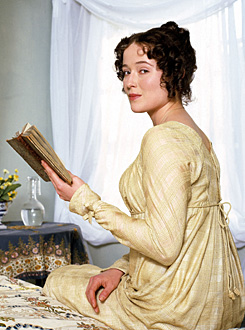
Jennifer Ehle as Elizabeth Bennet, Pride and Prejudice (1995).

Eat Good Food!

Whether you’re reading Austen’s novels, watching the movie adaptations, or honoring Jane in other creative ways, you must buy or make a few treats to eat in honor of Jane. A traditional English tea can be prepared with homemade or store bought cakes, scones, sandwiches, or other tasty treats.

Truly adventurous bakers might try their hand at traditional Regency baked goods. There are many recipes online, in the many Jane Austen cookbooks that have been published over the years, and in several tea time books devoted to Jane Austen. Here is one of my favorites!

Photo: Rachel Dodge; Tea with Jane Austen, Kim Wilson

You might even try your hand at making a sponge cake in honor of Jane!

You know how interesting the purchase of a sponge-cake is to me.

Jane Austen, Godmersham: Wednesday (June 15), Letter to Cassandra
A delightful Sponge-cake (Bite From the Past)

This recipe from Bite From the Past looks lovely. Angela Hursh provides helpful step-by-step instructions for making the recipe for Jane Austen’s Sponge Cake from Cooking with Jane Austen and Friends by Laura Boyle (now out of print).

Join the Party!

If you really want to go all-out, Jane Austen’s Virtual Birthday Party, hosted by Jane Austen’s House Museum, is a much-loved annual tradition. If you’ve never joined the party online, there is room for everyone! Jane’s birthday falls on Saturday this year, so reserve your spot and set your alarm (depending on your time zone).

Party guests will enjoy fabulous music, fascinating talks, beautiful readings, and all sorts of fun and games in the spirit of Jane Austen and her family.

Description from JAHM: “We’ll be joined by some very special guests! Enjoy a mini keynote by fabulous historian and broadcaster Lucinda Hawksley, a quick dive into Georgian prints by historian Alice Loxton, a dramatic reading by actor Rebecca Tanwen, a sneak peak into the making of the Jane Austen collection at Moorcroft Pottery, a reading by Jessica Bull from her debut novel Miss Austen Investigates, and beautiful music by pianist Laura Klein!”

Regency attire strongly encouraged!

Party Details:

Date: Saturday 16 December
Time: 8pm – 9pm (GMT)
Location: This event takes place online. Join in from the comfort of your own home!
Tickets: £10

Note: This event will be recorded so ticket holders can enjoy it at a later date if needed!

Give a Gift

Finally, one tangible way to celebrate Jane Austen’s birthday is to consider giving a gift in her honor to Jane Austen’s House Museum. Chawton Cottage is lovely, secluded, and historic. I’ve visited the house several times, and it is an absolute treasure for Jane Austen fans. This is one simple way we can all play a part in preserving Jane Austen’s legacy both now and in the future.

The House Museum’s current Courtyard Restoration Appeal is designed to help raise funds toward repairing and restoring the roofs of the courtyard buildings, including the Bakehouse, cellars, offices, store rooms, and privy! You can find out more here.

Photo: Courtesy of Jane Austen’s House Museum

Happy Birthday, Jane Austen!

Wherever your plans take you this weekend, I hope you’ll join me and everyone here at Jane Austen’s World in honoring and celebrating our Jane on her birthday. She has given us so much, and we all love her tremendously.


RACHEL DODGE teaches college English classes, gives talks at libraries, teas, and book clubs, and writes for Jane Austen’s World blog. She is the bestselling author of The Little Women DevotionalThe Anne of Green Gables Devotional and Praying with Jane: 31 Days Through the Prayers of Jane Austen. Now Available: The Secret Garden Devotional! You can visit Rachel online at www.RachelDodge.com.

Read Full Post »

As we continue our investigation into Jane Austen’s irresistible romantic themes and plots, we now come to one of my favorite Austen novels, Persuasion.

In this series, we’ve looked at “Enemies to Lovers” in Pride and Prejudice, the “Slow Burn” Romance in Emma, and “Best Friends to Lovers” in Mansfield Park.

Now we turn our attention to the love story that many Austen fans love as much as (or more than) Pride and Prejudice. It’s the story of Anne Elliot and Captain Wentworth and the one that got away.

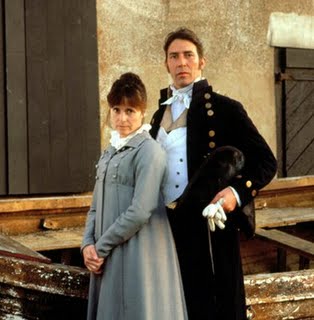
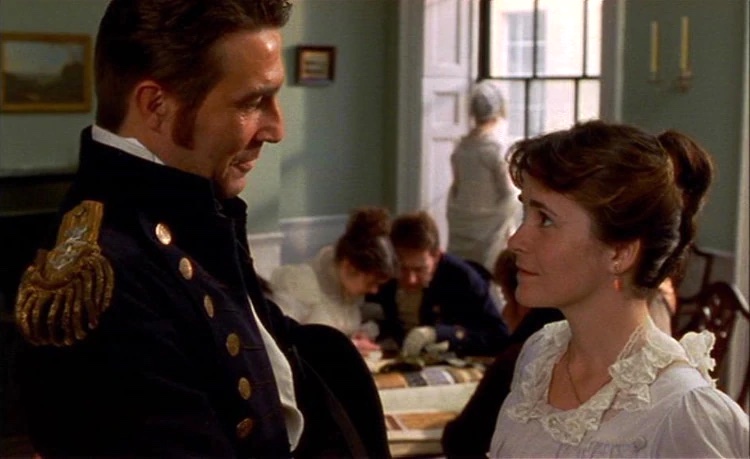
The 1995 film adaptation of Persuasion with Amanda Root and Ciaran Hinds.

Second-Chance Love

Persuasion is a second-chance story because Anne Elliot receives another chance at love with Captain Wentworth and another chance at living her own life and choosing her own happiness.

When the story opens, she’s somewhat of a faded, wilted flower:

A few years before, Anne Elliot had been a very pretty girl, but her bloom had vanished early; and as even in its height, her father had found little to admire in her, (so totally different were her delicate features and mild dark eyes from his own), there could be nothing in them, now that she was faded and thin, to excite his esteem.

Persuasion

However, her true beauty and worth go far beyond her exterior, and Captain Wentworth quickly notices that she’s still the same Anne:

She was looking remarkably well; her very regular, very pretty features, having the bloom and freshness of youth restored by the fine wind which had been blowing on her complexion, and by the animation of eye which it had also produced. It was evident that the gentleman . . . admired her exceedingly. Captain Wentworth looked round at her instantly in a way which shewed his noticing of it. He gave her a momentary glance, a glance of brightness, which seemed to say, ‘That man is struck with you, and even I, at this moment, see something like Anne Elliot again.’

Persuasion

The One That Got Away

Beyond a second chance at love, Persuasion is a picture-perfect model of “The One That Got Away” (or “Long-Lost Love”) romantic theme that has become so popular in romantic movies and books. Austen knew what she was doing when she created a storyline about passionate, young love; years of separation, heartache, and regret; and a long, drawn-out rekindling of a long-lost love that has only grown deeper and more mature with time.

But one of the reasons Persuasion is so intriguing is that Austen doesn’t instantly rekindle the relationship when Anne and Wentworth meet again. Instead, Austen builds a storyline that creates questions, heartache, and angst for Anne (and Austen’s readers).

While Anne never stopped pining for Wentworth, it seems as though he has moved on completely and has not forgiven Anne. There is no quick thrill, instant reignite, or swift rekindle. He acts almost as though they’ve never met.

Anne’s only recourse is to patiently, achingly watch the love of her life search for a wife, flirt with other women, and essentially ignore her (or so she thinks). She remains humble, quiet, and ever-patient, though each day brings fresh torture.

Forced Proximity

One romantic device Austen uses expertly in Persuasion (and in most of her novels) is what we now term “forced proximity.” This is when an author places two characters in a situation where they are forced to spend extra time together in close quarters. It might be a stalled elevator, a shared school or work project, a single bed in a hotel room, or a small car on a long road trip.

In Persuasion, Austen brings Wentworth right into Anne’s neighborhood, places him among the families she and her family socialize with, and even has them travel in the same group to Lyme. Austen also creates situations where Anne and Wentworth are even in close physical proximity:

They were actually on the same sofa, for Mrs Musgrove had most readily made room for him; they were divided only by Mrs Musgrove.

Persuasion

In another moment, however, she found herself in the state of being released from him; some one was taking him from her, though he had bent down her head so much, that his little sturdy hands were unfastened from around her neck, and he was resolutely borne away, before she knew that Captain Wentworth had done it. Her sensations on the discovery made her perfectly speechless.

Persuasion

In Bath, there are more opportunities for the two of them to cross paths, including the day when Wentworth overhears Anne’s conversation with Captain Harville and writes her his letter.

Love Stories Like Persuasion

Many popular romantic movies make use of these similar themes, such as The Notebook, Serendipity, The Princess Bride, Sweet Home Alabama, Before Sunset, 13 Going on 30, The Best of Me, The Parent Trap, Grosse Pointe Blank, Ticket to Paradise, Pearl Harbor, Love Actually, The Story of Us, Crazy, Stupid Love, When Harry Met Sally, and An Affair to Remember.

Television shows such as Friends (Ross Geller and Rachel Green) and As Time Goes By (Jean Pargetter and Lionel Hardcastle) also utilize the rekindled love or long-lost love theme.

Geoffrey Palmer and Judi Dench in As Time Goes By

Stories We Love

I’m sure you can add other books, shows, or movies to this list with similar themes. I personally think that many of us can relate to Anne Elliot and a desired second chance, whether it’s in love or some other passion or pursuit. Though none of these popular rom coms hold a candle to Jane Austen’s masterpiece, it’s clear that the themes she employed have stood the test of time.


RACHEL DODGE teaches college English classes, gives talks at libraries, teas, and book clubs, and writes for Jane Austen’s World blog. She is the bestselling author of The Little Women DevotionalThe Anne of Green Gables Devotional and Praying with Jane: 31 Days Through the Prayers of Jane Austen. Now Available: The Secret Garden Devotional! You can visit Rachel online at www.RachelDodge.com.

Read Full Post »

By Brenda S. Cox

“Mr. Murray’s Letter is come; he is a Rogue of course, but a civil one. He offers £450-but wants to have the Copyright of MP. & S&S included. It will end in my publishing for myself I dare say.–He sends more praise however than I expected.”–Jane Austen to Cassandra, Oct. 17, 1815, about her new publisher, John Murray, wanting to buy the copyrights of Emma, Mansfield Park, and Sense and Sensibility. She self-published instead.

Publishing Choices Today

Having recently published my own book, I’m very aware of the choices authors have today. We might publish through a traditional publisher, who pays all the costs of publishing, gives the author a percent of the profits (perhaps 5-18%, usually on the lower end), and possibly an advance against those profits.

Or we might self-publish, paying all the expenses ourselves, and getting most of the profits. A range of variations fall between those options.

“Hybrid” authors do some of both, selling some of their books through traditional publishers and self-publishing others.

The author generally keeps the copyright, while assigning certain rights to the publisher, though in some situations, like work-for-hire, the author may agree to sell the copyright to the publisher.

Publishing Choices in Austen’s England

In Jane Austen’s England, authors also had essentially two options. They could sell their copyright to a publisher for a lump sum. The publisher would then bear all the expenses and take all the profits.

Or, the author would publish the book on commission, which was more similar to self-publishing today. The publisher would publish the book, paying the expenses of publishing and distribution. However, the author had to repay the publisher those costs out of the income from the book, plus a commission of about 10% of sales. If the book did not make enough money to cover the costs, then the author had to pay the publisher the rest of the costs out of his or her own pocket.

Jane Austen was what we might today call a “hybrid” author, taking both options. She sold the copyright of two of her books to publishers. The others she published on commission, essentially self-publishing them.

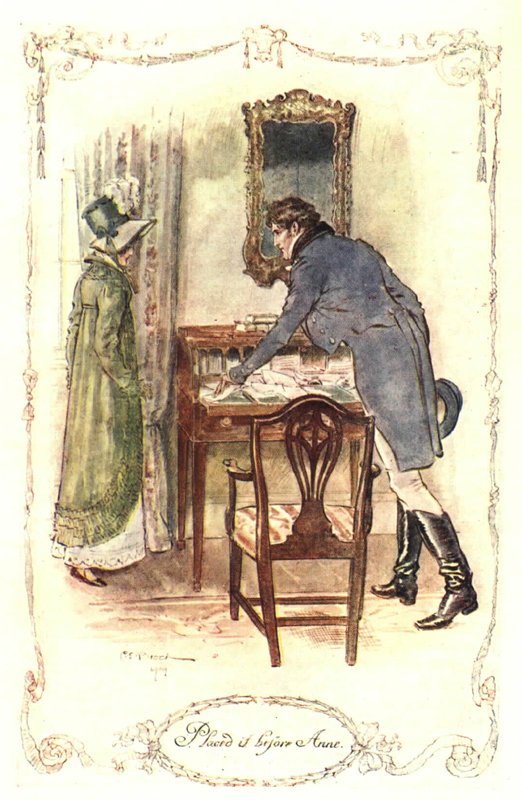
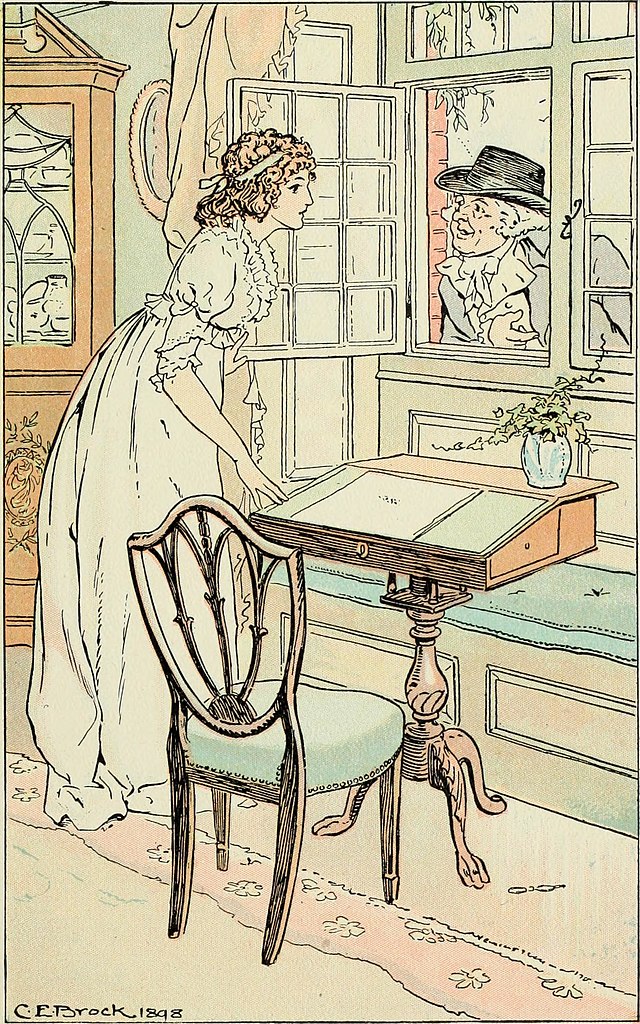
Jane Austen wrote her manuscripts with quill and ink at a desk similar to this, from a C.E. Brock illustration for Sense and Sensibility.

How Jane Austen Chose to Publish Her Books

Hybrid Publishing

The first book Jane Austen sold to a publisher was Susan, which was later published as Northanger Abbey. Like today, agents helped to place books with publishers. Jane’s brother Henry usually acted as her agent. But for this first book, Henry’s lawyer, William Seymour, was the agent who sold the copyright to publisher Benjamin Crosby on Jane’s behalf, in 1803 for £10. Crosby advertised the book once, but never published it. In 1809, Jane attempted to get the manuscript back from Crosby, in a letter in which she signed herself as M.A.D. (Mrs. Ashton Dennis). Crosby threatened to take legal action if she tried to publish the book herself, and he demanded the £10 back. Jane didn’t have that money, which would have been half her annual allowance.

Finally, in the spring of 1816, Henry, acting as her agent himself, bought it back on her behalf for the £10. Austen revised it and changed the name, since a novel called Susan had come out in the years in between. (Modern authors still have to watch for novels with the same name as theirs.) She added a preface apologizing for its being out of date. It was not published until after her death, when Henry got it published on commission.

Publishing on Commission (similar to today’s Self-Publishing)

Austen’s second book to be accepted for publication, and the first that was actually published, was Sense and Sensibility. Her brother Henry, acting as her agent, got the publisher Thomas Egerton to publish it. Out of the profits, Jane had to pay for the production, advertising, and commission. Fortunately it did well. If it had not, she might have had to pay as much as £180, which she certainly could not afford. She had faith in this “baby,” though. In a letter in 1811 (April 25), when she was correcting the proofs of Sense and Sensibility, she wrote to Cassandra, “I am never too busy to think of S&S. I can no more forget it than a mother can forget her sucking child.”

Egerton printed 750 copies in October, 1811, a large print run for a first-time author. Two positive reviews launched it well, and by July, 1813, the copies were sold out and Jane had earned £140 pounds in profits. A second edition was published in October, which continued to give Jane income until 1817.

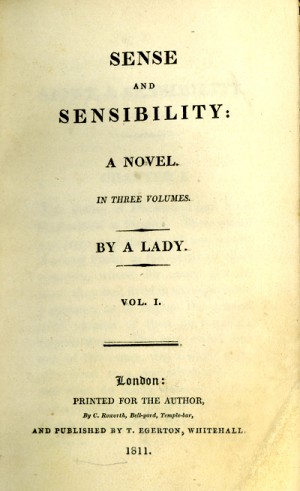
Sense and Sensibility was published on commission, with the author responsible for costs, in 1811.

Selling the Copyright (more like modern, traditional publishing)

Unfortunately Jane Austen did not make such a good choice for her second published novel, Pride and Prejudice. Perhaps she had been discouraged because her father had previously offered it to a publisher, who chose not to look at it. (Though I must say, her father wrote possibly the worst query letter ever! All it told the publisher was that the novel was about the length of Burney’s Evelina, with no further information. They declined to see it.)

In any case, rather than again risking money she didn’t have, she sold the copyright of Pride and Prejudice to Thomas Egerton. Based on the success of Sense and Sensibility, they paid her £110. Then they paid all the costs of publishing and took all the profits. Egerton published the first edtiion in January of 1813, a second edition that fall, and a third edition in 1817. They made much more money than Jane did on Pride and Prejudice, which of course was quite popular.

Novels were normally published in three volumes. (This made it easier for circulating libraries to lend them out.) This third volume of Pride and Prejudice, published in 1813, begins with Elizabeth and the Gardiners approaching Pemberley.

Back to On Commission (which Austen calls publishing for herself)

For the rest of her books, Jane went back to taking the risk of publishing on commission, where she was responsible for the costs.

Mansfield Park was published on commission in May of 1814. The first edition sold out in six months. She made somewhere between £310 and £340 on it.

Emma was published in December 1815 (dated 1816). Austen turned to a more prominent London publisher, John Murray, to publish Emma. This may have been because Egerton did not want to do a second edition of Mansfield Park, or possibly because Murray was more prestigious. (Egerton was basically a military publisher; Henry apparently had connections there.) Murray offered to buy the copyrights for Emma, Sense and Sensibility, and Mansfield Park, for £450 total. Austen thought this was too low. She wrote to her sister telling her of Murray’s offer, saying he was “a Rogue of course, but a civil one” (Oct. 17, 1815).

So Jane Austen published Emma and a second edition of Mansfield Park on commission, paying the costs herself. She and the publisher decided to print 2,000 initial copies of Emma, Austen’s largest initial print run. Unfortunately, Mansfield Park did not sell well this time, and only about three-quarters of the copies of Emma had sold by February, 1817. At that point, after taking out the costs for publishing both books, Austen received only £38.18.

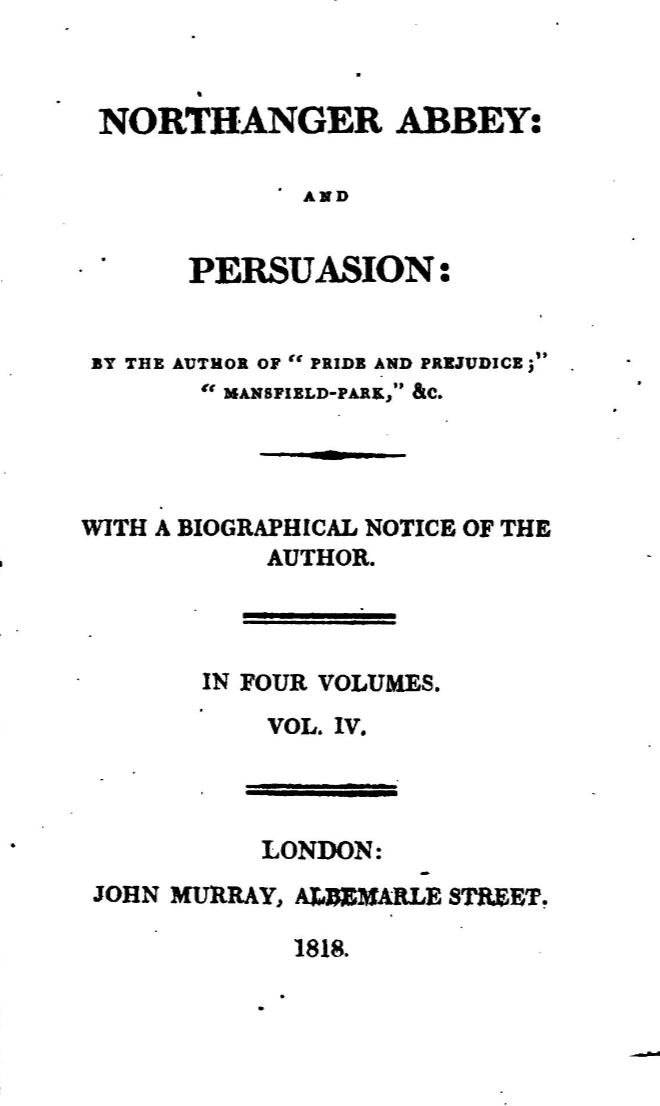
Northanger Abbey and Persuasion: When Jane Austen died in 1817, she left her manuscripts and copyrights to her sister Cassandra. Cassandra and Henry negotiated with John Murray to publish her last two complete novels, Northanger Abbey and Persuasion, in a four-volume edition at the end of 1817 (the books were dated 1818). This included a biographical notice of the author, written by Henry. He publicly revealed for the first time that Jane Austen was the author of all six novels. (The others were identified as “by a Lady” or “by the author  of . . .” the previous books.) Further income from the books went to Cassandra.

As two shorter novels, Northanger Abbey and Persuasion were published together in four volumes, with Henry’s “biographical notice” revealing his sister’s identity as author.

So, Jane Austen essentially self-published her novels, in terms of the expenses. The notable exception was Pride and Prejudice, for which she sold the copyright, taking less risk but substantially reducing her profits. Her first foray into selling a copyright was even more unsuccessful, since the publisher didn’t even publish Northanger Abbey. However, they were no doubt chastised when Henry, after buying back the manuscript, gleefully informed them that it was by the author of Sense and Sensibility and Pride and Prejudice!

Risks and benefits were as hard to gauge back then as they are now.

A professor writing for the British Bank has estimated that Jane Austen’s lifetime income from her books was around £631 before tax, or £575 after tax. That’s just a little more than the average yearly salary for a country clergyman. It’s hard to make clear comparisons to today, but one estimate claims it is equivalent to over £45,000 in today’s money, or about $56,000.

Not too bad for an obscure clergyman’s daughter from the countryside. She would have been glad to know that continued profits from her books helped support her beloved sister.

Jane Austen’s Published Books

Title

Written/Revised

Published

Publisher

How?

Income during Austen’s lifetime

Sense and Sensibility (originally Elinor and Marianne)

1795 as letters, 1797 as narrative/1809-10

Oct. 1811; 1813

Egerton

commission

£140 + income from second edition

Pride and Prejudice (originally First Impressions)

1796-7/1811-12

Jan., 1813; fall, 1813; 1817

Egerton

Sold copyright

£110

Mansfield Park

1811-13

May, 1814; 1816

Egerton; Murray

commission

£310 – £340 on first edition

Emma

1814-15

Dec. 1815 (title page says 1816)

Murray

commission

£38.18, after paying for losses on second edition of MP

Northanger Abbey (originally Susan)

1798-9 /1803/1816

Dec. 1817, title page dated 1818

Murray

Sold copyright to Crosby, 1803, £10; bought back in 1816

Posthumous publication, benefited Cassandra

Persuasion

1815-16

Dec. 1817, title page dated 1818

Murray

On commission with Northanger Abbey

As above

Do you want to know how the books were made and circulated? This series by historian Kathryn Kane, beginning with “The Making of Regency Books,” answers that question. It was a huge job to produce a book, with most of the work done by hand. And books were very expensive. Most people could only afford to get them from circulating libraries, if at all. So the discussions of the libraries of Netherfield and Pemberley emphasize the wealth of the Bingleys and Darcys. Novels were published in three volumes, at an average of seven shillings per volume. The equivalent price today for one three-volume novel would be $90!  For about the same price, readers could join a circulating library and read as many novels as they wished, a volume at a time.

Kane finishes with a deep dive into Sense and Sensibility’s writing and publication. 

Most importantly, in the long run, Austen’s books were published. The manuscripts were not left to moulder somewhere due to lack of money or publishers. Because Jane got them published, they were republished, again and again through the centuries, and give us much joy today!

Sources

Jane Austen’s Works 

Jane Austen’s Income 

Jane Austen Statistics 

Brenda S. Cox is the author of Fashionable Goodness: Christianity in Jane Austen’s England

Read Full Post »

As we continue to analyze Jane Austen’s novels and identify the best romantic tropes used in each one, we’re well on our way to proving that Austen not only used romantic themes ingeniously but also played an important role in developing several key plot devices that are regularly used in modern filmmaking today.

Last month, I wrote about Rom Coms and Emma. This month, I’m delving into Mansfield Park and finding the romantic themes found in the novel that are commonly found in romantic movies today.

Mansfield Park, 1st Edition, 1814, Swann Auction Galleries

Romantic Themes in Mansfield Park

In Mansfield Park, there are several themes that ring true as romantic tropes we’re familiar with today:

The Ugly Duckling-Turned-Swan (aka the “Make-over”)

Following this train of thought, we see Fanny Price blossom and come into her own in MP. Her transformation isn’t necessarily outward. She doesn’t exactly go to the mall and get a makeover, but she does come out of her shell and begin to stand on her own two feet.

The “makeover” in this novel is actually a bit inverted because while Fanny later gains some of her own agency and confidence, the real change that occurs is that the people around her finally see her for who she really is and start to value her!

The Diamond-in-the-Rough

Adjacent to the “ugly duckling” theme, many rom coms play with the idea that the main character is wonderful just as she is, but she is overlooked, shy, or overshadowed by other characters. There’s usually an “a-ha” moment where one or more characters finally see the main character in a new way.

In MP, Edmund and his family members finally wake up and see Fanny for her true worth. Miss Crawford is the shiny object that distracts Edmund from much of the novel from seeing Fanny’s quieter brilliance.

Mansfield Park (1983)

Red Herring (aka, the Shiny Object)

Similar to the chemistry and relationship between Emma and Mr. Knightley (and the Frank Churchill distraction), there’s a red herring (or several) in Mansfield Park as well.

In The Take’s “The Rom Com Explained,” we find this explanation of the red herring theme: “Rom-com leads often start out with a red herring love interest who seems very appealing but turns out to be all wrong. Meanwhile, as the protagonist spends time with someone they aren’t actively trying to impress, they can be their unfiltered self and get to know the other person in a real way. This long-developing chemistry leads to a moment of epiphany, where the character suddenly realizes the feelings that have been crystal-clear to the viewer all along.”

In Mansfield Park, the arrival of Henry and Mary Crawford (siblings) is the pebble thrown into the pond at Mansfield. This disrupts the regular rhythm of life for Fanny and Edmund and the rest of the Bertram family and sets the plot spinning.

Henry throws a wrench into several plot lines, while Mary comes between Fanny and Edmund. Edmund, dazzled by Mary’s beauty, is blinded by Mary and only sees her through rose-colored glasses. Fanny waits in the wings, heart aching, as he falls for Mary.

Mary, similar to Wickham, Willoughby, and others, is the “shiny object” that keeps Edmund distracted and causes havoc for Fanny. Fanny cannot prove what she thinks is wrong with either of the Crawfords. She has no other recourse but to wait patiently until Mary and Henry both show their true colors.

Mansfield Park (2007)

Best Friends-to-Lovers

Of all the themes in rom coms used today, Best Friends-to-Lovers is one of the most popular and it fits Mansfield Park beautifully. While Emma and Mr. Knightley have a bit of this vibe, much of their chemistry comes from their sparring matches (like Elizabeth and Darcy). But with Fanny and Edmund, they are incredibly close friends who share many of the same interests, qualities, and values. Edmund is the first person to take an interest in Fanny when she comes to live at Mansfield.

If you think of MP as a new school, Fanny is the new kid and the popular kids won’t talk to her or play with her. Edmund is different. Edmund helps Fanny when she is sad and lonely. At first, she looks up to him, but as they grow up, mutual respect and affection grows. Later, at least for Fanny, love begins to bud.

The Love Triangle

As in most Austen novels, there’s a love triangle, which is probably the most popular trope in most romantic comedies today.

In Mansfield Park, there are multiple love triangles, but we don’t see all of them at first. The one we focus on most is the Fanny-Edmund-Mary triangle. While Fanny hides lovelorn feelings for Edmund, Edmund doesn’t see Fanny as more than a friend/cousin he grew up with. Miss Crawford comes to town at exactly the wrong moment and steals the show.

Until Edmund sees Miss Crawford for her true self, he is blinded by her alluring personality and beauty and cannot see Fanny standing right in front of him.

Love Triangles similar to Mansfield Park

When I started looking for modern movies with similar themes (Best Friends-Turned-Lovers, Ugly Duckling-Turned Swan, Unrequited Love), I posted questions on my Instagram account (@KindredSpiritBooks) and on the Jane Austen Fan Club on Facebook. I received dozens and dozens of answers to this intriguing question!

If you’ve ever wanted to know what themes come up most often in movies, take a look at this list; it’s the longest list I’ve had yet in this series. There’s no denying that movie-goers respond well to love triangles—especially when the triangle involves two close friends finally realizing their love for one another!

The Holiday, 10 Things I Hate About You, 13 Going On 30, A Cinderella Story, A Walk to Remember, Always Be My Maybe, America’s Sweethearts, Can’t Buy Me Love, FRIENDS (Chandler and Monica), Crossing Delancey , Drive Me Crazy, Easy A, Ever After, Get Over It, Grease, He’s Just Not That into You, Love and Basketball, Love, Rosie , Made of Honour, Maid in Manhattan, Miss Congeniality, Moonstruck, Never Been Kissed, Pretty in Pink, Pygmalion (My Fair Lady), Sabrina, She’s all That, She’s the Man, Sixteen Candles, Some Kind of Wonderful, Something Borrowed, Superman, The Duff, The Office (Jim and Pam), The Perfect Man, The Princess Diaries, The Summer I Turned Pretty, The Truth About Cats & Dogs, Trojan War, Whatever It Takes, While You Were Sleeping, Wild Hearts Can’t Be Broken, Win a Date with Todd Hamilton, Yesterday, Your Place or Mine.

Always Be My Maybe
Jim, Pam, and Roy from The Office

When asked what themes they saw in Mansfield Park that are common in romantic films today, several fans quipped, “The Cousins-to-Lovers” theme? Which made me laugh out loud. Yes, cousins did marry cousins during Austen’s time, but it’s still a funny remark.

I’m sure you can add others to this list! In each of these movies, there is some element of MP present.

Fanny Price

When I took these polls, the one thing everyone agreed on was this: We like Fanny Price because she doesn’t change her morals, her convictions, or her personality just to gain acceptance or love. She does blossom, but she doesn’t change. She is the same through-and-through, which makes her a very admirable heroine. Edmund finally wakes up and begins to see her in a new light, but she doesn’t become more like Mary Crawford; she remains steady, true Fanny.

Fanny has a lot to lose in terms of a future when she refuses to give in to Henry Crawford’s proposal and her uncle’s pressure. Without an inheritance of her own, her only options are to continue living with her aunt and uncle Bertram as long as they will have her or find work as a governess. And yet, though she’s timid and easily intimidated, she does not yield.

Mansfield Park (2007)

Have you seen any of the film versions of Mansfield Park? If so, which one do you think remains most faithful to the original text? (I’ve yet to find one that I enjoyed as much as the novel, but I’m open to suggestions!)

Are there any other books or movies in this genre that allow the heroine to stay true to herself as she wait patiently for her dreams to come true?


RACHEL DODGE teaches college English classes, gives talks at libraries, teas, and book clubs, and writes for Jane Austen’s World blog. She is the bestselling author of The Little Women DevotionalThe Anne of Green Gables Devotional and Praying with Jane: 31 Days Through the Prayers of Jane Austen. Now Available: The Secret Garden Devotional! You can visit Rachel online at www.RachelDodge.com.

Read Full Post »

« Newer Posts - Older Posts »