With The Old Curiosity Shop, Masterpiece Classic aired its last special for the 2009 season last night. Which film was your favorite? Curious minds want to know.
Archive for the ‘jane austen’ Category
Poll: Favorite Masterpiece Classic
Posted in jane austen, PBS Movie Adaptation, tagged Charles Dickens, Little Dorrit, Masterpiece Classic, Movie Poll, Old Curiosity Shop, PBS Masterpiece Classic, Sense and Sensibility, Wuthering Heights on May 4, 2009| 5 Comments »

Seen Over the Ether: Box Hill Revisited
Posted in Emma, jane austen, Jane Austen Novels, Jane Austen's World, Regency Life, Regency Period, Regency style, Regency World, tagged Box Hill, Picnic at Box Hill on April 30, 2009| 1 Comment »
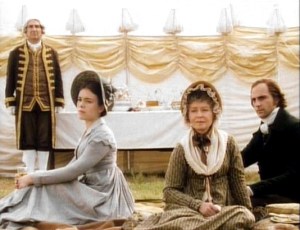
The wretchedness of a scheme to Box Hill was in Emma’s thoughts all the evening. How it might be considered by the rest of the party, she could not tell. They, in their different homes, and their different ways, might be looking back on it with pleasure; but in her view it was a morning more completely misspent, more totally bare of rational satisfaction at the time, and more to be abhorred in recollection, than any she had ever passed. – Emma, Jane Austen, Chapter 44
- Re-reading Box Hill: Reading the Practice of Reading Everyday Life offers five articles on the topic of Box Hill. How astounding. Click here to enter the site.
Little Dorrit and Bankruptcy: PBS Masterpiece Classic
Posted in jane austen, Masterpiece Classic, Movie review, PBS Movie Adaptation, Regency World, Victorian Era, tagged Anton Lesser, Arthur Clennam, Bernard Madoff, Charles Dickens, Claire Foy, investment schemes, Little Dorrit, Marshalsea Debtor's Prison, Matthew Mcfadyen, Mr. Merdle, Victorian Era on April 26, 2009| 20 Comments »
Society was aware of Mr and Mrs Merdle. Society had said ‘Let us license them; let us know them.

The Merdles and Sparkler
Mr Merdle was immensely rich; a man of prodigious enterprise; a Midas without the ears, who turned all he touched to gold. He was in everything good, from banking to building. He was in Parliament, of course. He was in the City, necessarily. He was Chairman of this, Trustee of that, President of the other. The weightiest of men had said to projectors, ‘Now, what name have you got? Have you got Merdle?’ And, the reply being in the negative, had said, ‘Then I won’t look at you.’
This great and fortunate man had provided that extensive bosom which required so much room to be unfeeling enough in, with a nest of crimson and gold some fifteen years before. It was not a bosom to repose upon, but it was a capital bosom to hang jewels upon. Mr Merdle wanted something to hang jewels upon, and he bought it for the purpose. Storr and Mortimer might have married on the same speculation.
Like all his other speculations, it was sound and successful. The jewels showed to the richest advantage. The bosom moving in Society with the jewels displayed upon it, attracted general admiration. Society approving, Mr Merdle was satisfied. He was the most disinterested of men,–did everything for Society, and got as little for himself out of all his gain and care, as a man might. – Charles Dickens, Book the First: Poverty, Chapter 21: Mr Merdle’s Complaint

Mr. Merdle kisses Fanny's hand
For those who have not read the book or seen the last installment, spoilers ahead:
The Merdles take front and center stage at the start of the last installment of PBS Masterpiece Classic’s Little Dorrit, fulfilling the promises that this film’s theme of bankruptcy and fallen fortunes is a relevant one in today’s world. Mr. Merdle, played by Anton Lesser, was the Man of the Age. He made money for his investors seemingly out of thin air and they loved him for it. Yet Mr. Merdle (the last name is a play on the French word Merde, meaning shit) seemed to be chronically unhappy, despite his showy wife, elegant house, and sterling reputation. The viewer soon learns what had been keeping him preoccupied: he was stealing from one fund to pay for another (shades of Bernard Madoff), and issuing shares without collatoral. His house of cards tumbled down, and along with it, all his investors. Instead of facing the consequences, Merdle committed suicide with a pen knife he has borrowed from his daughter-in-law Fanny. To deaden the pain of stabbing his jugular vein with a blunt knive, he drank laudanum, leaving others to literally clean up his messes. Merdle’s demise affected a score of people, but except for the money they lost and their uncertain financial future, his wife, daughter-in-law and stepson did not seem greatly affected by his suicide. Fanny wondered when her pen knife would be returned and the butler took off soon after learning that the family was bankrupt, leaving his post without notice. With a few deft touches, Charles Dickens showed how quickly the mighty can fall and that the world really doesn’t give a shit except in the instance where it is affected.
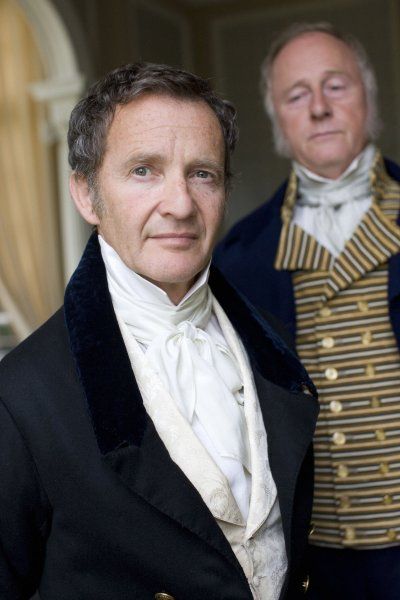
Anton Lesser and Nick Jones as Mr. Merdle and his butler
Most people could and still can lose other people’s money without much conscience, but during this and the Regency era debt was considered to be a matter of honor (would that it was today). Social historian Eric Hobsbawm argued that “Bankruptcy was, according to economic theory, the penalty of inefficient businessmen, and its spectre haunts the novels of Victorian England.” (Victorian Web) Mounting debts affected people in different ways. George Brummel fled to France in 1817 rather than face debtor’s prison when he fell out of favor with the Prince Regent and could not repay his creditors. He was not the only gentleman to flee to the continent due to insolvency. The cost of gambling, bad investments, horses, carriages, fine food and a decent wardrobe could tip a modest – even a great – fortune over the edge. Other individuals, like William Dorrit and Arthur Clennam, were sent to debtor’s prison. Some chose suicide, like Mr. Merdle, leaving their families to face the consequences.
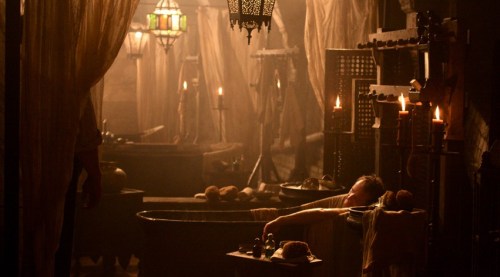
Bath house where Merdle committed suicide
The tale of Little Dorrit is not only based on Dicken’s personal experience of watching his father incarcerated in the Marshalsea, but the novel is also set against the backdrop of real bank failures:
Little Dorrit was originally published between 1855 and 1857 (many of Dickens’ works first appeared in serial form) at a time when the collapse of the Royal British Bank was receiving much publicity. The collapse was a result of the bank having channelled most of its capital into Welsh gold mines in the vain hope the Wales would prove to be the next California. (The discoveries which sparked the California Gold Rush had been made in 1848). After the bank’s collapse it was discovered that the directors had made secret loans to themselves and their friends.
Dickens used the preface to Little Dorrit to defend what he called “that extravagant conception, Mr. Merdle, by alluding to “a certain Irish bank” – the Tipperary Bank which failed in 1857 – and he also mentioned “the curious coincidence” that the public examination of the former directors of the Royal British Bank took place when he was finishing the book. – The Financial Fiction Genre

Arthur and Amy on their wedding day
After losing his and his partner’s investments in Merdle’s schemes, Arthur Clennam (Matthew Mcfadyen) went willingly to the Marshalsea instead of escaping his obligations. After his debts were paid he settled for a “modest life of usefulness and happiness” by marrying Amy Dorrit (Claire Foy).
More links:
- Read my other Little Dorrit reviews, starting with Little Dorrit and the Grand Tour
- Read more on the topic at these links:
Missed an episode? Watch episodes online at this link through May 3rd.
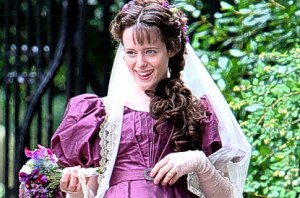
A happy ending after all
Jane Austen Illustrator: Joan Hassall’s Wood Engravings
Posted in jane austen, Jane Austen Novels, Jane Austen's World, tagged Jane Austen illustrators, Joan Hassall, wood engraving on April 25, 2009| 4 Comments »
Inquiring Readers,
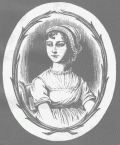
Joan Hassall's portrait of Jane Austen
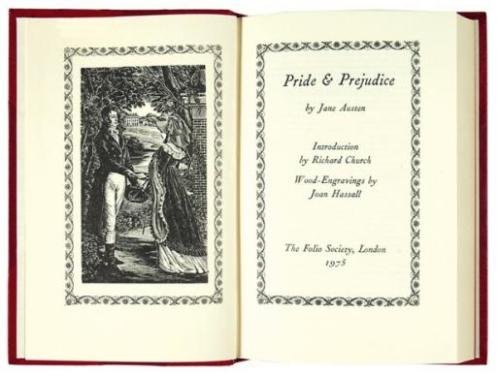
Every once in a while I contribute a small amount of information to Wikipedia, and only when I think I can add to the general pool of knowledge. When I consulted Wikipedia’s entry on Joan Hassall, the exquisitely talented wood engraver, I found it woefully lacking and added what little I knew. The best online information about her life (1906-1988) sits at this site: Joan Hassall Wood Engraver: Textualities. Between 1957 and 1962, Joan was commissioned to create wood engravings for the Folio Society editions of Jane Austen’s novels, which is her main association with the author. These editions have been frequently reprinted, but the first folio editions of Austen’s works are now quite scarce.
Joan was known for carving detailed illustrations using an exacting medium that allowed for few mistakes. One wrong move with an engraving tool and a wood block could be ruined. She also had to plan backwards, for dark areas on the wood block printed light and light areas filled up with ink and came out as lines or shadows. Printed on paper, the image came out in reverse. The wood had to have just the right firmness and even texture. The grain could not present resistance to cutting, yet it had to be hard enough to withstand wear and permit a sharp edge to the line. Fruitwoods, such as pear or cherry were ideal candidates for this medium, whereas American oak or walnut were considered much too hard. – Technique for the Color Woodcut: Cutting
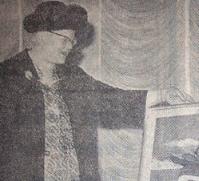
Joan Hassall
C. E. Brock and Hugh Thomson are better known illustrators of Jane Austen’s novels, however I find it interesting that Joan Hassell, who resembled a matronly British lady, created more forceful images than these two famous men. Brock’s and Thomson’s works are delicate and airy, while Hassall’s are stark and masculine. Her style was defined by her medium – the wood block. Hassall generally worked in black and white, scraping out thin and thick lines with engraving tools, and adding stippled variations in between, yet she attained an astonishing amount of detail with an unerring hand. One of the reasons why I like her image of Fanny Price in Portsmouth is not only because of the robustness of the scene, but because I can practically smell the sea air. She managed to evoke waves dashing against the shore, children playing, clouds scudding by, and a stiff breeze blowing against the ribbons and short capes of the strollers. In less capable hands, this scene would have been nearly impossible to attempt in such a small area. She also moves from light to shadow effortlessly. Witness how the ships’ masts are outlined against the white cloud bank and how the legs of the little boy on the right, who stands in dark shadows, are limned by a single light line. Masterful.
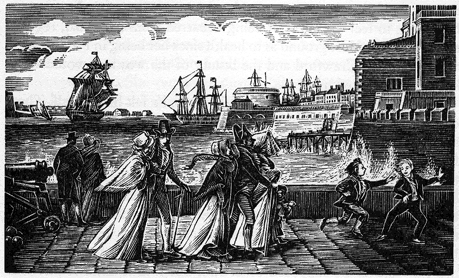
Fanny Price in Portsmouth, Mansfield Park, Folio Society, illustrated by Joan Hassall
Hassall’s talents as a wood engraver did not mean that she did not possess a delicate hand, as this exquisite watercolor invitation for the Queen’s coronation in 1953 demonstrates. The queen commissioned Joan to create an invitation especially for Prince Charles, who was only five years old at the time. It is still proudly displayed in the royal collection.

Imagine the young Prince Charles’s delight when he saw these whimsical details:
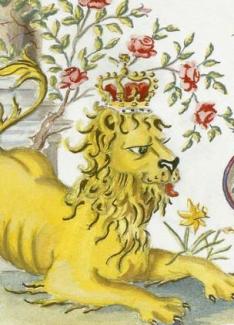
Lion detail, Prince Charles's Invitation
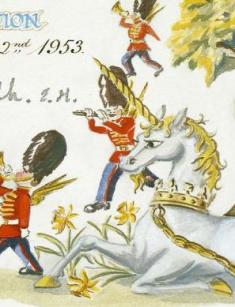
Unicorn detail, Invitation to the royal coronation
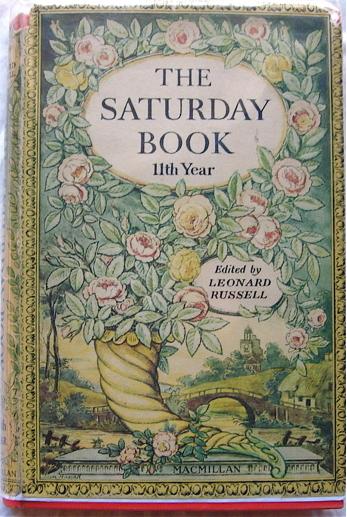
The Saturday Book, Joan Hassall dust jacket, 1951
This 1951 dust jacket for The Saturday Book shows how expertly Joan can handle a brush as well as an engraver’s tool.

Joan’s themes also ran to nature, and she was so well known for her natural studies that people like Flora Thompson, the author of Lark Rise to Candleford, collected her individual prints. In a 1989 JASNA article (Illustrating Jane Austen), Keiko Parker discusses Hassall’s ability to add interesting details in this wood engraving of Lady Catherine de Bourgh and Elizabeth Bennet as they take a turn in the “prettyish kind of a little wilderness on one side of your lawn.” The print demonstrates Joan’s ability to add exquisite details. You can even see the leaves between the scrollwork of the bench. One errant slip, and the back of the bench would have been ruined. Her handling of the leaves, grass, and dirt path are reminiscent of her nature studies; and she even manages to create a vista, leading one’s eye to the waiting carriage and the road that will take Lady Catherine back to her home.
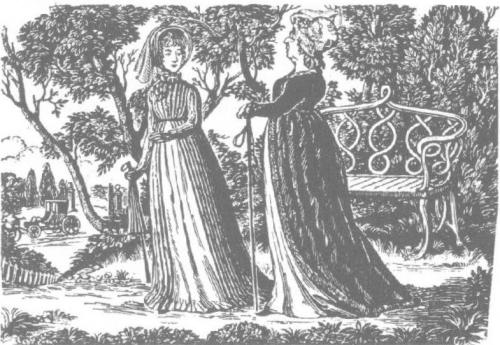
Lady Catherine de Bourgh and Elizabeth Bennet
Hassall’s talents as a carver were recognized by her peers and she was the first woman to be elected as a master member to the Art Workers Guild (1964). In 1950 she designed an edition of Robert Burns poems and created a series of illustration that are among her most delightful small prints, especially the one of a tiny mouse rolling in the grass.


The Old Tree, 1950
Joan’s family members led lives that were as interesting and creative as hers. Her father was John Hassall, an illustrator of posters and childrens books, whose most famous work of art, a 1908 poster of The Jolly Fisherman, still promotes Skegness as a seaside resort today. Joan’s brother, Christopher Hassall, was a poet, actor, and librettist famous for his collaborations with composer Ivor Novello. Modern audiences have heard I Can Give You the Starlight, sung by Jeremy Northam in Gosford Park. The words by Christopher and Ivor’s melody evoke “Britishness” in the 1930’s to a tee.
Learn more about Joan Hassall at these links:
-

Joan's first commissioned engraving was for her brother Christopher's poetry book. She painted his portrait in 1936
- Joan Hassall’s Jane Austen Engravings: Scroll down
- Find Joan Hassall wood engravings on this site; unfortunately you must hunt and peck for them.
La Belle Assemblée 1807: Kensington Garden Dresses
Posted in jane austen, Jane Austen's World, Regency Life, Regency Period, Regency style, Regency World, tagged La Belle Assemblee 1807, regency dress, Regency Fashion on April 22, 2009| 1 Comment »
Inquiring readers,
This fashion plate and accompanying description come from La Belle Assemblée Or, Bell’s Court Fashionable Magazine, August 1807, Volume III edition. The descriptions about dress are directly from the magazine. The publication featured quality engravings and advice about women’s fashions that became an essential part of the magazine, and also offered a special supplement of advertisements in the back that became a permanent record of commerce and fashion of the time. – A Magazine of Her Own, Margaret Beetham, p. 32. By the 1830’s, La Belle Assemblee, which had been such a force during the mid-18th to early 19th centuries, had merged with Lady’s Magazine before quietly dropping out of sight.

La Belle Assemblée Or, Bell’s Court and Fashionable Magazine
We scarcely ever witnessed a period when taste and fashion were more perfectly in unison, nor any season when elegance and grace shone with such unrivalled fascination. Not only amidst the ranks of assemblies and opulence, but in those simple unobtrusive adornments appropriated to the intermediate station — in those chaste habits becoming such as move in a more domesticated sphere, have our fair country women exhibited testimonies of their advancement in taste and the graces of life.
The era is long since past when the daughters of our Isle condescended to turn copyists; and the females of a neighbouring kingdom are now happy to aid their exhausted inventions by adopting the correct graces of English style.
Frocks of coloured muslin or Italian crape with a painted border of shells in Mosaic worn over white sarsnet slip, are a new and elegant article; and French veils of coloured gauze forming at once the head dress and drapery are considered as most graceful ornaments. They are usually worn with a plain white sarsnet or muslin gown, with flowers or wreaths in front of the hair, placed towards the left side so as nearly obscure the eyebrow. La Belle Assemblée Or, Bell’s Court and Fashionable Magazine, 1807

Fronticepiece of the magazine
-
Join 7,126 other subscribers
-
2025 AGM in Baltimore
-

-
Items of Interest
Blog Stats
- 18,546,375 hits
- Follow Jane Austen's World on WordPress.com
-
RECOMMENDED BOOKS AND RESOURCES
-
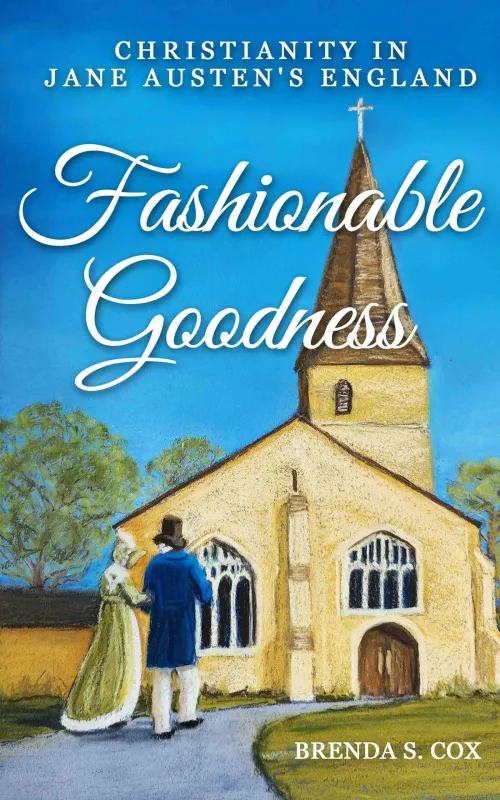
Fashionable Goodness: Christianity in Jane Austen's England is now available! By JAW contributor Brenda S. Cox. See Review. Available from Amazon and Jane Austen Books. 
We also recommend JAW contributor Rachel Dodge's devotionals based on Jane Austen's prayers and classic literature. Reviews:
Praying With Jane: 31 Days Through the Prayers of Jane Austen
The Anne of Green Gables DevotionalThe Little Women Devotional
The Secret Garden Devotional
The Tour of Doctor Syntax. Edited by Ben Wiebracht. Read the review of the book at this link. Click to order the book on Amazon US or Amazon UK or Jane Austen Books FREE Student Membership to JASNA
Available through December 31st, 2025. Click on image for details, and share this poster with other teachers and students!

The Obituary of Charlotte Collins by Andrew Capes

Click on image to read the story.
Comments
“My idea of good company…is the company of clever, well-informed people, who have a great deal of conversation.” – Jane Austen, Persuasion

Gentle readers: Please feel free to post your comments and continue the conversation! Due to SPAM, we will no longer accept comments on posts after 30 days of publication. In some instances, links will be removed from comments as well.
Administrators and Contributors
Pin It!

Top Posts
-
Recent Posts
Links to Jane Austen Blogs
May we suggest?
Hello, my name is Vic and I live in Maryland, USA. I have adored Jane Austen almost all of my life. I am a proud lifetime member of the Jane Austen Society of North America. This blog is a personal blog written and edited by me and my team. We do not accept any form of cash advertising, sponsorship, or paid topic insertions. However, we do accept and keep books and CDs to review.
If you would like to share a new site, or point out an error, please email us. (Yes, we are fallible. We'll own up to our mistakes and will make the corrections with a polite smile on our faces.) Write us at

Thank you for visiting this blog. Your comments and suggestions are most welcome.
Project Gutenberg: eBook of Stage-coach and Mail in Days of Yore, Volume 2 (of 2), by Charles G. Harper
STAGE-COACH AND MAIL IN DAYS OF YORE: A PICTURESQUE HISTORY
OF THE COACHING AGE, VOL. II, By CHARLES G. HARPER. 1903. Click on this link.
Top Posts & Pages
- Regency Fashion: Men's Breeches, Pantaloons, and Trousers
- Men's hair styles at the turn of the 19th century
- Jane Austen’s Regency Women: A Day in the Life, Part 1
- Highclere Castle Floor Plan: The Real Downton Abbey
- Regency Hygiene: The Bourdaloue
- Pictorial History of Regency Hairstyles
- Social Customs During the Regency
- Cassandra Writes About Jane Austen's Death, July 18, 1817
- Dancing at the Netherfield Ball: Pride and Prejudice
- Pride and Prejudice 1995: 20 years Later
Tour Chawton Cottage on YouTube
-
Disclaimer: Our team makes no profit from this blog. We may receive books (physical or digitized) for review purposes.
-
Copyright Statement: © Jane Austen's World blog, 2009-2024. Unauthorized use and/or duplication of this material without express and written permission from this blog’s author and/or owners is strictly prohibited. Excerpts and links may be used, provided that full and clear credit is given to Jane Austen's World with appropriate and specific direction to the original content.




 Jane Austen's World
