Feeds:
Posts
Comments

Archive for the ‘jane austen’ Category

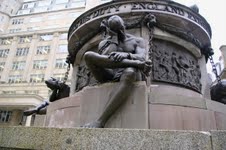
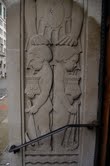
Nelson Memorial. A slave in chains. Image courtesy @Tony Grant

Nelson Memorial. A slave in chains. Image courtesy @Tony Grant

Inquiring readers, this rather serious topic of British slave ownership plays a role in Jane Austen’s world and her novels. She addressed the issue in an indirect way in Mansfield Park and Emma, with the Bertram fortune resting on slave trade and Mrs. Elton’s merchant father situated in Bristol, one of three major slave-trading centers in Britain. I am sure that her two sailor brothers related vivid tales of their travels in their letters and when they returned home for a visit. Jane, who was well-read and participated in family conversations, was keenly aware of human trafficking and exploitation. Ironically, a few years after her death, Charles actively patrolled the seas against the slave trade. In this post, Tony Grant addresses the legacies of British slave ownership. The British, godbless’em, abolished slavery decades before the U.S. and in a more civilized and peaceful manner. (Tony Grant, who lives in Wimbledon, is a frequent contributor to Jane Austen’s World. Visit his other blogs at London Calling and The Novels of Virginia Woolf. He traces his ancestry to the slave trade. As for me, I was born a Dutch citizen. The shameful actions of the Dutch in transporting slaves from Africa and their role in the slave trade is well documented.)

Image @University of York

Catherine Hall, Image @University of York

(Researched at UCL (University College London) by Catherine Hall Professor of Modern British Social and Cultural History and her project team.)

The above title is an umbrella title which has been given to two projects, one called, “Tracing the impact of slave ownership on modern Britain,” and the other, “Legacies of British Slave Ownership.” These will lead to a further project entitled, “Structure and significance of British Caribbean slave ownership 1763 -1833.”
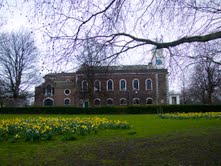
Clapham Church, Holy Trinity. Image @Tony Grant

Clapham Church, Holy Trinity. Image @Tony Grant

In 1974, I was in my second year of teacher training. I was doing a three year teacher training course at Gypsy Hill teachers training college situated on Kingston Hill, about a mile from the centre of Kingston upon Thames. The college was eventually amalgamated with Kingston University. The new university education department did not retain it’s rather romantic sounding epithet, Gypsy Hill, unfortunately. My teaching practice during that second year was to spend six weeks teaching English at Henry Thornton’s Secondary School situated on the south side of Clapham Common. It was a tough place to go as a young teacher. Although Clapham is not quite classed as inner city the area was home to lot of disadvantaged families some of them ethnic minorities and many of them West Indian in origin. Henry Thornton would have been pleased about the ethnic mix in the school. My first English lesson, reading and discussing, Cider With Rosy,by Laurie Lee, was to be with a class of fifteen-year-olds. As soon as I walked into the classroom a large powerfully built West Indian lad, swaying back in his chair staring at me, trying to stare me out, nonchalantly raised his right fist and smashed it through the pain of glass in the window next to him overlooking the corridor. I think the blood must have drained rather quickly from my face and I asked another pupil to get the head of year who came rushing to my help immediately. Coming from Southampton, on the south coast, this was my first experience of Clapham.
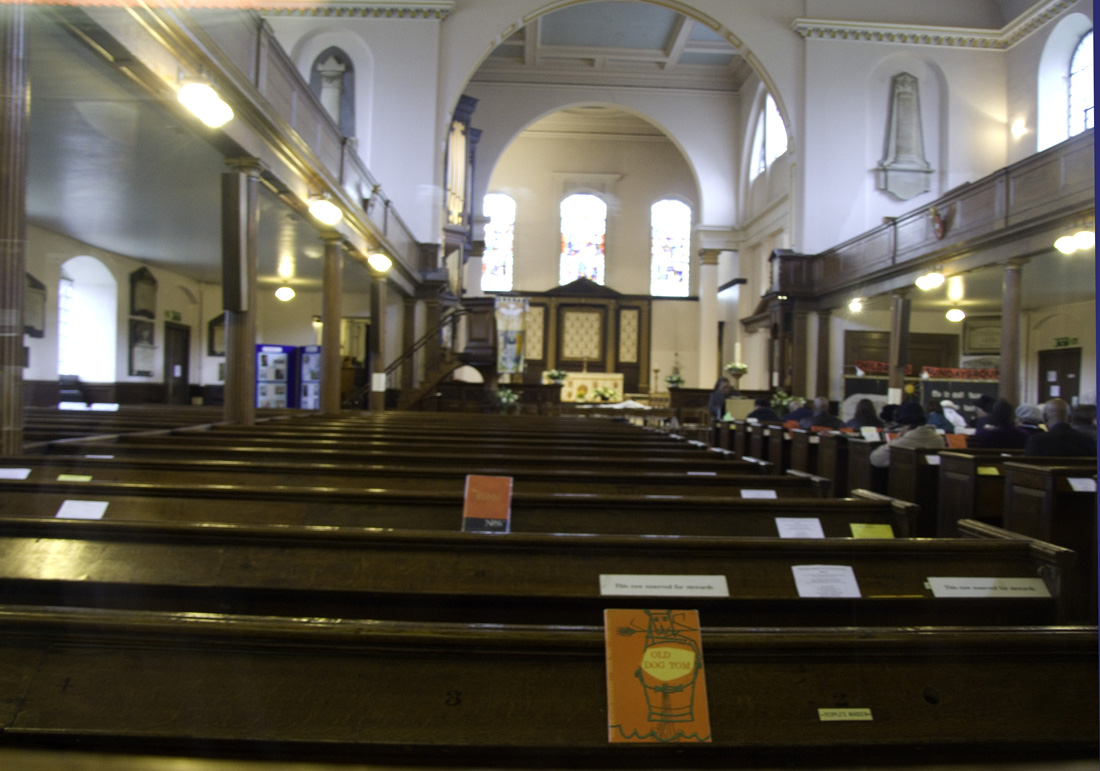
Interior of Clapham Holy Trinity Church, image @ Tony Grant

Interior of Clapham Holy Trinity Church, image @ Tony Grant

However that experience has many connections with Britain’s past history in the slave trade and with what I am going to write about in this essay. Henry Thornton, was born in Clapham on the 10th March 1760. His father had been one of the early founders of the Evangelical movement in Britain. His father and his cousins were bankers. In fact his brother Samuel Thornton became The Governor of the Bank of England. Henry himself was a very successful banker. The bank – Down, Thornton and Free – became the most successful bank in London. Henry Thornton is credited with being the father of the modern central banking system. He was a great theorist and wrote books about banking.
Henry Thornton

Henry Thornton

Henry became the Member of Parliament for Southwark, which is situated just across London Bridge from The City. However, he was unlike other bankers of the time. Britain’s wealth was closely tied up with the slave trade, but Henry Thornton was an abolitionist. Henry Thornton was one of the founders of the Clapham Sect of evangelical reformers, who incidentally met and worshiped together at Holy Trinity Church, which nowadays is directly opposite Henry Thornton’s school where I had my momentous teaching experience. He was foremost a campaigner for the abolition of the slave trade. His close friend and cousin was William Wilberforce. The two men lived together with their families at Battersea Rise on the opposite side of Clapham Common to the church and where the school that uses his name is situated. Henry was the financier behind the Clapham Sect in their many campaigns.
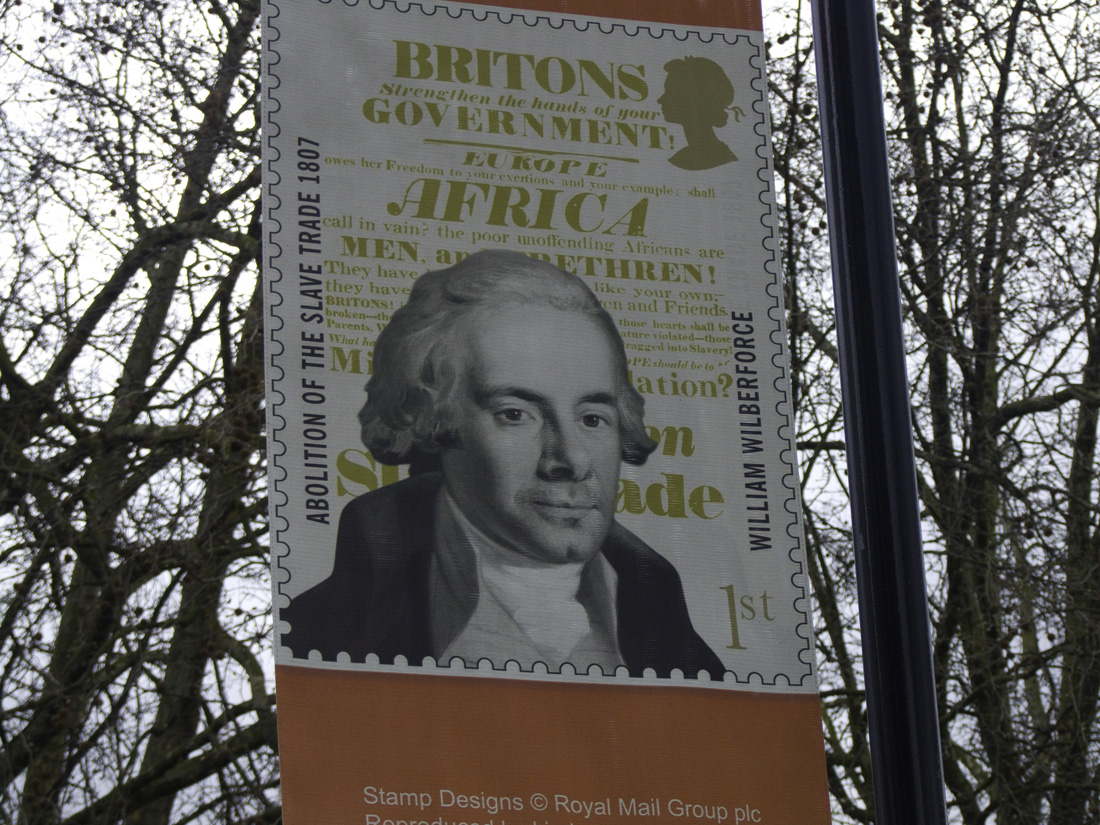
William Wilbeforce. Image @Tony Grant

William Wilbeforce. Image @Tony Grant

Catherine Hall and her project team are endeavouring to understand the extent and the limits of slavery’s role in shaping the history of Britain and its lasting legacy. They are focussing on various aspects such as commerce, culture, history, the Empire, physical attributes, such as the great houses and estates financed by slavery and also political aspects. How was slavery was involved in national and local politics? In Henry Thornton we see many of these aspects even if his actions and beliefs were contrary to the slave trade. He was a member of parliament who campaigned against slavery. He used his wealth to counteract slavery. I wonder if the West Indian lad who broke the window in my lesson realised that his destiny and the generations of his family before him were connected with the man whose name was on the school he was attending?

There is rather a surprising link and revelation about Henry Thornton in the research and data the UCL team has gathered. Kate Donnington, one of the PHD researchers on the team, has written a thesis about George Hibbert, one of the most influential characters and one of the major figures amongst West Indian merchants.
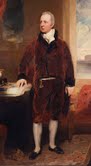
George Hibbett

George Hibbett

George Hibbert was a leading member of the pro slavery lobby and so one of the main adversaries of Henry Thornton over the slavery bill. However, Hibbert was a philanthropist and did many good works for charities. In 1824 he helped set up the National Institution for the Preservation of Life from Shipwreck. Nowadays that has become the RNLI, the Royal National Lifeboat Institution, which saves the lives of many around our coasts to this day. He was also involved in creating The Royal Institute. The running and creation of the Royal institute for the arts and science also involved, Henry Thornton and his brother John. It seems that individuals could be absolutely opposed to each other over slavery but work together in other aspects of the nation’s life.

This project by UCL is of national and international importance, but it also has a very personal meaning. Another of the researchers in the project team, James Dawkins, is studying the slave owning presence of his own family, the Dawkins, through the data collected. This inspired me to look up my surname, Grant, to see who amongst the Grant clan from North East Scotland around the Spey Valley, was connected with slavery. I didn’t have any hopes for direct ancestors to myself being involved in slavery unless were crew on the slave ships; we were labourers in the fields and workers in the whisky distilleries. We owned no land as such and certainly had no wealth.
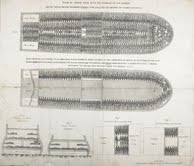
Slave Ship. Image @Liverpool Museum

Slave Ship. Image @Liverpool Museum

I discovered there were many Grants involved in the slave trade and plantation ownership though. There were various Alexander Grants, not all the same person I am sure. Alexander, must have been a popular name amongst the Grants. In fact my son, Samuel, has Alexander as his second name. There is an Alice Grant, one of my daughters is called Alice, a Betty, and various Anne Grants. It quickly becomes evident that many women, perhaps through inheritances, were investors in and owners of slaves. The list of Grants goes on.There are one hundred and eighty five Grants listed. I have an uncle, John Grant. There are many John Grants in the list and my father is Robert and yes there are many Roberts in the list. My own family’s Christian names are amongst the most prevalent Christian names associated with Grants in the survey. But my surname Grant is one Scottish surname amongst hundreds. If my families name is mirrored in the survey by all the other Scottish clan names there must be an inordinate number of Scottish families connected with the slave trade.
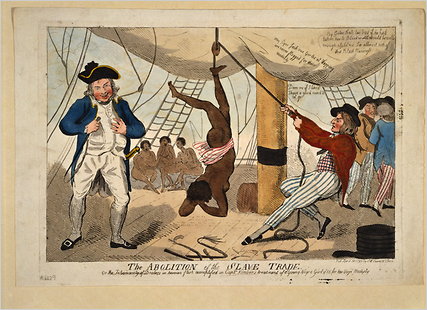
"The abolition of the slave trade Or the inhumanity of dealers in human flesh exemplified in Captn. Kimber's treatment of a young Negro girl of 15 for her virjen (sic) modesty."Shows an incident of an enslaved African girl whipped to death for refusing to dance naked on the deck of the slave ship Recovery, a slaver owned by Bristol merchants. Captain John Kimber was denounced before the House of Commons by William Wilberforce over the incident. In response to outrage by abolitionists, Captain Kimber was brought up on charges before the High Court of Admiralty in June 1792, but acquitted of all charges. Image @Wikimedia

“The abolition of the slave trade Or the inhumanity of dealers in human flesh exemplified in Captn. Kimber’s treatment of a young Negro girl of 15 for her virjen (sic) modesty.”
Shows an incident of an enslaved African girl whipped to death for refusing to dance naked on the deck of the slave ship Recovery, a slaver owned by Bristol merchants. Captain John Kimber was denounced before the House of Commons by William Wilberforce over the incident. In response to outrage by abolitionists, Captain Kimber was brought up on charges before the High Court of Admiralty in June 1792, but acquitted of all charges. Image @Wikimedia

I took one Grant to look at more specifically. Alexander Grant , the survey does not show when he was born but he was born at Abelour, Banffshire. He died on the 7th may 1854 He was a slave owner, planter and merchant on the island of Jamaica. He had Abelour House built for him in 1838. The house still exists today. His will left £300,000. His estates in Jamaica and Scotland were inherited by his niece, Margaret Gordon McPherson Grant.
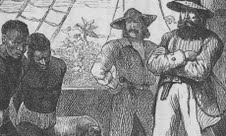
Slaves in transit, Liverpool

Slaves in transit, Liverpool

An interesting character I discovered on the UCL website was Ann Katherine Storer (née Hill, 1785-1854) She was born in Jamaica, where she married Anthony Gilbert Storer. She inherited her husband’s estates after his death, which not only included his Jamaican estates but also Purley Park in Berkshire, England. Anthony Gilbert Storer died in June 1818 and Ann Katherine returned to Purley Park with her five surviving children. There were problems with large debts and disputes over recompense. A rather strange and disturbing story is related about Ann Katherine Storer. When she returned to England she brought some slaves with her to work at Purley House.
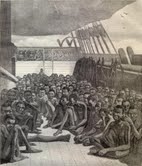
Slave ship

Slave ship

“In 1824, Ann Katherine Storer was accused of the maltreatment of Philip Thompson, a black servant who was bought as a slave in Jamaica and brought to England by the Storers. According to Philip Thompson’s testimony, “flogging was the usual punishment for any misdemeanour and he was often ill treated… One day in July 1824 Mrs Storer was already up when Philip rose at 6 am. Finding that he had not been up in time to clean the lobby she ordered him to be taken to the “whipping place”. After removing his coat, waistcoat and shirt, he then received about a dozen lashes from a hunting whip wielded by the butler so that the blood ran down his back… Mrs Storer was said to have been present and said [to Robert Stewart, the butler], “Well done, Robert, give him more”…
African slaves in Liverpool

African slaves in Liverpool

There is an element of sadism in this. She almost seems to take pleasure in the ill treatment of Philip. Ann was born and brought up on a slave plantation and was obviously used to dealing with slaves. This story made me wonder if this was a usual sort of treatment that was commonplace.

I mentioned above that the project team are focusing on aspects such as commerce, culture, history, the Empire, physical attributes such as the great houses and estates financed by slavery and also political aspects. Money from slavery was used to build Abelour House in Scotland as one example and the estate still exist today. George Hibbet was a philanthropist as well as a slave owner and he did many charitable works including setting up the forerunner to the RNLI as well as the London Institution, which was for the diffusion of useful knowledge in the arts and sciences. He acted as both its president and vice president between 1805 and 1830. He was a member of a number of learned societies and clubs including the Freemasons, the Linnean society and the Royal Society and the Society of Antiquaries. Hibbet collected books, prints and art. He also inherited a house with its estate called Munden in Hertfordshire. I am taking George Hibbet as an example, but the point is that this sort of philanthropy and range of interests in the arts, literature, science, charities and so on is replicated throughout the four thousand individuals of wealth and property identified by this research.

Slavery and it’s proceeds were and are bound up with the whole of society, good and bad, and we must still be benefiting from it today. Eric Williams, the historian who wrote, “Capitalism and Slavery,” believes that the slave trade and slavery, “provided not only essential demand for manufactures and supply of raw materials but also vital capital for the early phases of industrialisation. This has been partially substantiated through the histories of particular family firms.”
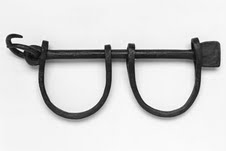
Shackles

Shackles

In 1807 the slave trade was abolished in Britain and it’s Empire. In 1833 slavery was abolished by the British Parliament in the British Caribbean, Mauritius and The Cape. These people in the survey have been identified as the recipients of compensation for the loss of wealth when slavery came to an end. However it is important to note that what replaced it was not much better. The great sugar, tea. cotton and coffee plantations were still there. The slaves got their freedom but were then signed up to what was called an apprentice scheme. This meant that they signed up for work on the estate for a minimum number of years. Life did not materially or actually change for them. In many ways, it is interesting to think about what slavery is and means. Slavery is obviously the worst sort of work contract but we all have to work. We all have no choice once we have signed a contract. The conditions of work are very favourable on the whole for us but there are legal and social requirements we have to fulfill. The jobs we have can in no way be compared to the plight of a slave but there are degrees. Is working for someone else and being contracted to work a type of benign slavery?

The research Catherine Hall and her team are doing is fantastic but it has had its critics. There have been concerns both in the United Kingdom and in the Caribbean that the project team is white. One argument in defence is that white people as well as black people were all part of the slave trade. By putting the emphasis in the study on individual slave owners there is a fear that the case for reparations to be made by the state could be weakened. There is also a concern for banks and legal firms founded in the 17th century or before who have continued to this day and who have inherited the benefits derived from slavery in the past. The UCL group has said they are prepared to share their empirical data with these firms but also the contextualisation of that evidence.

Triangular slave trade. Liverpool

Triangular slave trade. Liverpool

Professor Hall and her colleagues suggest that there are some key questions and problems that remain to be addressed:

  • “What proportion of Britain’s nineteenth-century wealth was linked to slavery?
  • How significant was this injection of capital into the burgeoning industrial economy of the 1830s?
  • Was investment in other parts of the empire seen as desirable?
  • How did this capital contribute to consumer spending – on houses, gardens, books or paintings?
  • Did philanthropic institutions significantly benefit?
  • We have also been exploring the political activities of the slave owners – to follow them in parliament, to see what positions they took on domestic and imperial matters, how active they were in local politics or what contributions they made to cultural institutions.
  • We have also investigated the ways in which their writings represented the slave trade and slavery.”

The UCL website: http://www.ucl.ac.uk/lbs/

Read Full Post »

Inquiring Readers: This post combines two of my passions: Jane Austen and the Regency Era and Project Runway. Emilio Sosa’s (Esosa’s) beautiful fashions earned him the runner up position in Project Runway Season 7. Two of his sketches  for the costumes of Sense and Sensibility the Musical are included below.

CASTING ANNOUNCED FOR

WORLD PREMIERE OF

“SENSE & SENSIBILITY THE MUSICAL”

Image used with permission, @Carla Befera & Co.

Image used with permission, @Carla Befera & Co.


The Denver Center Theatre Company’s (DCTC) world premiere production of SENSE & SENSIBILITY THE MUSICAL,with book and lyrics by Jeffrey Haddow and music by Neal Hampton, will receive its world premiere production April 5 – May 26, 2013 in The Stage Theatre at the Denver Center for Performing Arts at 14th and Champa.

Starring in the pivotal Dashwood sister roles will be Stephanie Rothenberg as Elinor and Mary Michael Patterson as Marianne. Ms. Rothenberg made her Broadway debut last season as Rosemary opposite Nick Jonas in How to Succeed in Business Without Really Trying and then starred as Princess Anne in the Guthrie Theater’s world premiere musical, Roman Holiday. Ms. Patterson had her Broadway debut in the Roundabout Theatre Company’s Tony-winning revival of Anything Goes.

The sisters’ romantic entanglements will be portrayed by three of Broadway’s leading men. Nick Verina, seen as Young Ben in the recent Broadway revival of Follies with Bernadette Peters, will take on the role of Edward; Jeremiah James, who starred as Billy Bigelow in the West End revival of Carousel and as Curly in the first national tour of Oklahoma!, will portray Willoughby; and Robert Petkoff, Broadway’s recent Lord Evelyn Oakleigh opposite Sutton Foster in Anything Goes, will be the upstanding Colonel Brandon.

Additional Broadway talent joining the cast includes Ed Dixon (Anything Goes, Sunday in the Park with George, Mary Poppins, How the Grinch Stole Christmas) as Sir John; Ruth Gottschall (Mary Poppins, The Music Man, Funny Thing…Forum) as Mrs. Jennings, and Joanna Glushak (Sunday in the Park with George, Urinetown, Les Misérables) as Mrs. Dashwood/Mrs. Ferrars.

Logo used with permission, courtesy @Carla Befera & Co.

Logo used with permission, courtesy @Carla Befera & Co.

The production boasts a formidable production team, including Set Designer Allen Moyer, Tony nominee for Grey Gardens; Costume Designer ESosa,2012 Tony nominee for The Gershwin’s Porgy and Bess and “Project Runway” finalist; acclaimed Lighting Designer James F. Ingalls; Sound Design byCraig Breitenbach (world premiere of The Laramie Project); Music Supervisor David Loud, whose recent Broadway productions include The Gershwin’sPorgy and Bess and The Scottsboro Boys; Music Director and Conductor Paul Masse, whose Broadway credits include The Scottsboro Boys, as well asCurtainsChicagoAvenue Q42nd Street, and Gypsy, and Orchestrations are by Kim Scharnberg and Neal Hampton.

Producing Artistic Director Kent Thompson selected SENSE & SENSIBILITY THE MUSICAL after it became a runaway hit at the 2012 Colorado New Play Summit.

Esosa was one of the contestants in Project Runway 7, and won runner up. Image Credit: Lifetime Television

Esosa was one of the contestants in Project Runway 7, and won runner up. Image Credit: Lifetime Television

About ESosa, the Costume Designer

ESosa, costume designer for Sense & Sensibility The Musical, based on Jane Austen’s much loved first novel, moves effortlessly between the fashion world and the theatre world. This rising fashion star, better known as Emilio to his Project Runway fans, is also widely admired for finishing second in Season 7 as well as in the most recent Project Runway All-Stars. Yet ESosa has supported himself for much of his career by designing costumes for more than 75 productions regionally and on Broadway.

Today he sees himself as a fashion designer first: “I’ve had a wonderful career in theatre and I’m very blessed, but when I look in the mirror, I always see a fashion designer first and a theatre designer second. I use elements of both, because my fashion informs my theatre and my theatre informs my fashion. They go hand in hand.”

So when conceiving the costumes for Sense & Sensibility, he approached it as a time-travelling fashion designer working in 1810: “I start by designing clothing, and then I worry about theatricalizing the garments later.”  The Regency period of Austen’s novels, recognized most of all for the signature Empire waistline of the ladies’ dresses, provided an abundance of elements to work with: stripes which allow for the creation of chevrons and diamonds, but also florals, polka dots, brocades, lace, jewelry, chiffon. “What was big in this period was transparency. It was a very sexy period for women and men. Bosoms were big, and bosoms don’t go out of style.”

And of course color. On Project Runway ESosa became known for his bold use of color. Will any of that be on display?

“Oh yes, we’ll be playing with bolder colors. You have some characters that call for it, like Lucy. She’s more of a free spirit. For me color is an indication of personality.” The two Dashwood sisters will be dressed in blues (Elinor) and pinks (Marianne). One can only imagine the color palette he’ll come up with for Mrs. [Jennings], the boisterous and comic busybody.

How will this production differ from fastidiously researched film and TV versions of Austen’s oeuvre that periodically come to us from across the pond?

“We’re going to be true to the period,” says ESosa, “but we’re going to experiment with color and pattern and make it visually exciting.” Marcia Milgrom Dodge, director of the musical, wanted to bring his “fearless fashion sensibility” to the refined, stately Regency fashions. “The world of Jane Austen is often depicted in film and television with slavish authenticity,” she explains. “I wanted someone who would honor the period but also be bold and find modern gestures that will illuminate character and help the audience identify with them in a very immediate way.  With his keen fabric choices, witty accessories and smart use of color, ESosa is exactly that designer to bring these beloved characters to vivid life.”

As far as the men are concerned, the designer says he’ll be staying very true to the period’s silhouette—tailcoats and top hats—again taking some liberties with color and fabric selections: “Where I have my freedom is in the color combinations, the details that we add, the shaping. We will tweak it a little. My goal is always to make my actors feel and look good and able to tell the story.”

Oddly enough, ESosa says he is more often recognized as a former Project Runway contestant by theatre people than by people from the fashion industry. Perhaps more theatre people watch the show than those who do fashion for a living? But the show has helped raise his profile in both worlds. He believes a series like Project Runway can do a lot of good: “It’s a great platform for American fashion, and I’m a great proponent of Made in America. I think as a country we need to support our homegrown artists, especially in fashion.”

Mrs. Ferrars costume sketch
Born in the Dominican Republic and brought to the United States at age 3, ESosa was raised in Fort Apache, a tough area of the South Bronx. His interest in art and fashion eventually took him out of the Bronx, first to Manhattan’s High School of Art and Design and then to the Pratt Institute in Brooklyn. One of his early professional jobs was as a personal dresser for Judith Jameson and as an apprentice costume-maker for the Alvin Ailey American Dance Theatre.

The story about how he landed his first Broadway production, Suzan-Lori Parks’ Topdog/Underdog, shows the moxie underlying ESosa’s low-key demeanor. Running into Public Theater artistic director George C. Wolfe in the streets of New York, he summoned his courage and went up to him, announcing “Mr. Wolfe, I’m the best costume designer you’ve never worked with.”

“George likes that kind of bravado,” the designer explained. “He was interested. …They brought me in and I had a great, great meeting with him.” Needless to say he got the job and even went on to design Suzan Lori Park’s wedding dress.

ESosa’s two-track career continues full steam ahead. The fashion designer recently launched his own clothing line and has shown collections in New York, Miami and Paris. The costume designer won a Lucile Lortel award for Lynn Nottage’s By the Way, Meet Vera Stark and was nominated for a Tony Award for his work on Porgy and Bess. He feels that his burgeoning fashion fame will not pull him away from the theatre: “I will always have a presence in the theatre. It’s just a matter of finding the balance. It’s part of my life. It’s part of my DNA.”

More About ESosa

More About Sense & Sensibility The Musical

April 5 – May 26 • Stage Theatre
Producing Partners: The Anschutz Foundation, Joy S. Burns, Daniel L. Ritchie, June Travis
Sponsored by The Ritz-Carlton, Denver and U.S. Bank
Signed & Audio Described • May 19, 1:30pm

SENSE & SENSIBILITY THE MUSICAL is based on the novel by Jane Austen. Book and lyrics by Jeffrey Haddow, Music by Neal Hampton. Directed and choreographed by Marcia Milgrom Dodge. 


Performance Schedule

Tuesday, Wednesday, and Thursday performances at 6:30pm

Friday and Saturday evening performances at 7:30pm

Saturday and Sunday matinees at 1:30pm

No children under four admitted.


Tickets and Subscriptions

Tickets ($55 – $65) are available now by calling 303.893.4100 or 800.641.1222 (TTY 303.893.9582). Subscribers enjoy free ticket exchanges, payment plans, priority offers to Broadway shows, discounted extra tickets, a dedicated VIP hotline, free events including talkbacks and receptions, and the best seats at the best prices, guaranteed.

SENSE & SENSIBILITY THE MUSICAL is presented by special arrangement with Betty Ann Besch Solinger and Alice Chebba Walsh. This production of SENSE & SENSIBILITY THE MUSICAL, generously sponsored by U.S. Bank and The Ritz-Carlton, is part of the Denver Center Theatre Companyand Denver Center Attractions (DCA) 2012/13 seasons. SENSE & SENSIBILITY THE MUSICAL Producing Partners: The Anschutz Foundation, Joy S. Burns, Daniel L. Ritchie, June Travis. DCTC is generously supported by Larimer Square, The Steinberg Charitable Trust and Wells Fargo Advisors. DCA is generously supported by United Airlines and Vectra Bank. Media sponsors are The Denver Post and CBS4.  The Denver Center for the Performing Arts is supported in part by the Scientific and Cultural Facilities District.  Please visit our website at www.denvercenter.org

**Please be advised that The Denver Center for the Performing Arts – denvercenter.org – is the ONLY authorized online seller of tickets for Denver Center Attractions (the Broadway touring productions) and the Denver Center Theatre Company (the resident theatre company productions). Currently there are scalpers, also known as ‘second party vendors,’ selling tickets online at a rate more than double the standard price – and up. Tickets bought through these vendors MAY NOT BE VALID. You could not only be refused admission, but also lose your entire investment.

Read Full Post »

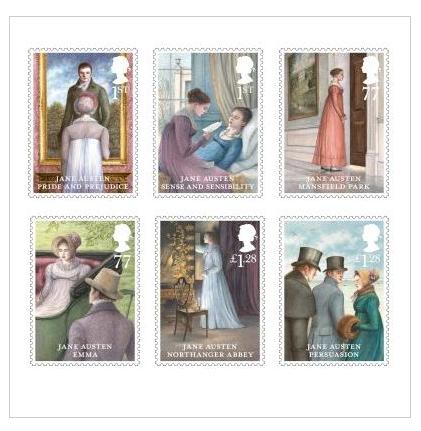
Aren’t these stamps representing Jane Austen’s six novels lovely? You can order them from the Royal Mail at this site: https://shop.royalmail.com/issue-by-issue/jane-austen/icat/janeausten/

Jane Austen stamps

The stamps were designed by illustrator and artist Angela Barrett. Born in Essex, UK, she was awarded an MA at the Royal College of Art where she was taught by Quentin Blake. Her illustrations have appeared in the Sunday Times Magazine, The Observer Magazine and House and Garden.

Read Full Post »

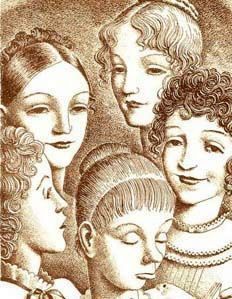
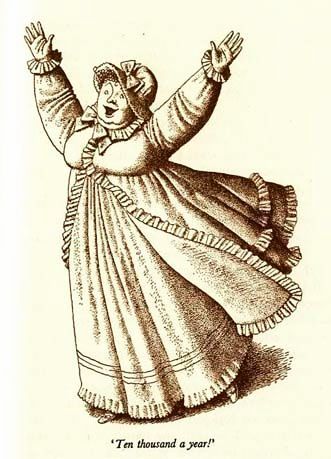
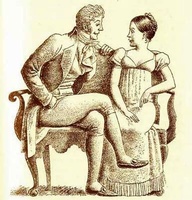
Sewell, The Bennet sisters

Sewell, The Bennet sisters. The photos do not capture the detail of each image.

This year we celebrate all things Pride and Prejudice in honor of the novel’s 200 year anniversary. Just recently, Ruby Lane sold a rare, out of print, limited 1940 edition of Pride and Prejudice, illustrated by Helen Sewell, an illustrator of mainly children’s books. People today still recognize the original drawings she created for the Laura Ingalls Wilder Little House books.

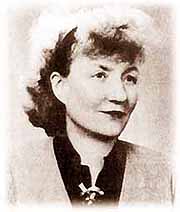
Helen Sewell

Helen Sewell

About Helen Sewell

Sewell was born June 27, 1896 at Mare Island Navy Yard, California. Her family moved to Guam shortly afterward, where her father, William Elbridge Sewell, served as Governor.

Education

Sewell wanted to be an artist since the age of eight. At 12 years old, she began attending Pratt Institute’s Saturday classes and by 16 years of age was enrolled there full time. This was in place of completing high school. At Pratt, she studied classes with Alexander Archipenko, who was the underlying influence for her broken-cylinder figures.

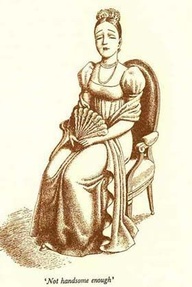
"Not handsome enough"

“Not handsome enough”

mrs bennet

Mrs. Bennet

Sewell began her long career working on Christmas and greeting cards; her first illustrated publication was in 1923. She primarily illustrated children’s books by Laura Ingalls Wilder, Elizabeth Coatsworth, Eleanor Farjeon, and Frances Clarke Sayer. As with Pride and Prejudice and a 1957 edition of Sense and Sensibility, Sewell also created drawings for a small number of adult publications

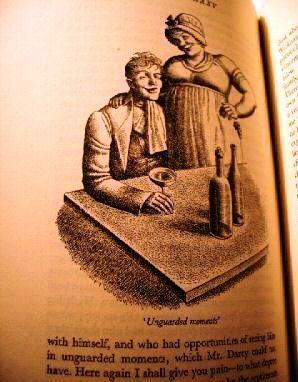
Unguarded moments shows the full page illustration

Unguarded moments shows the full page illustration

Sewell’s style included a simple use of color, which at times eliminated black all together, and her use of the white paper.  Her line drawings were in imitation of 19th century steel engravings. She died in 1957 at the age of 61.

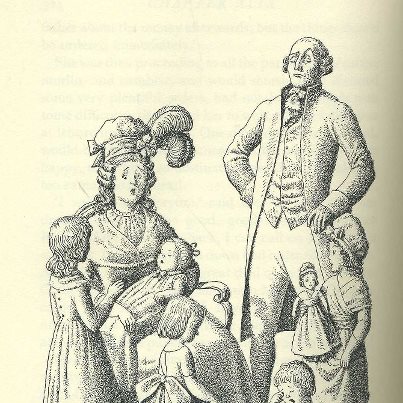
Illustration of the Gardiners on page 324

Illustration of the Gardiners on page 324

About the Limited 1940 edition of Pride and Prejudice

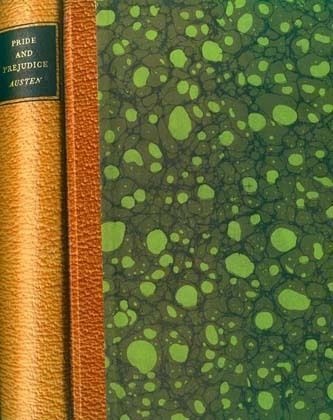
coverThe image at right is of a hardcover, green marbled slipcase. Quarter binding, green marbled board cover, with  brown faux leather spine. Heritage edition illustrations are signed by the illustrator. (The commercial issue would have fewer illustrations for the ordinary book buyer.) It is said that photographic images do the drawings no justice, for they are quite detailed when seen in person.


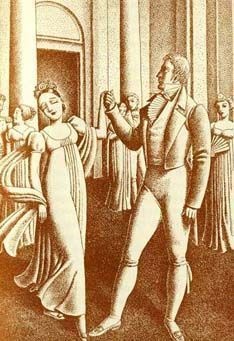
darcy and elizabeth

Darcy and Elizabeth dancing

sewell illustration

This limited edition book sold for $74 at Ruby Lane. I would gladly have paid more. Other limited edition books are selling for as much as $900 per copy. (Click on images for a larger view.)

Read Full Post »

Gentle readers, If you live near the Baltimore area, this exhibit might interest you.

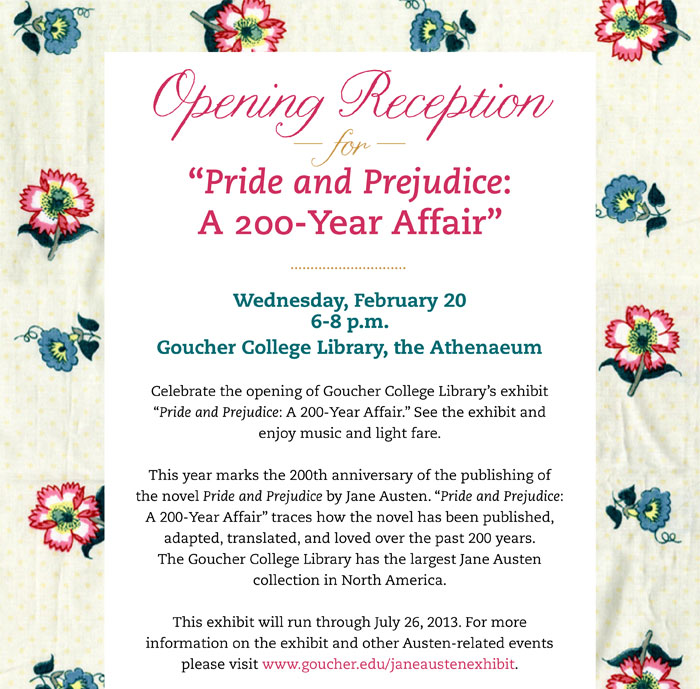
Pride and Prejudice Goucher

Since it was first published in 1813, Pride and Prejudice by Jane Austen has charmed generation after generation. The exhibition Pride and Prejudice: a 200 Year Affair celebrates one of the most popular and beloved novels of our time. A colorful visual history reflects how Pride and Prejudice has been published, adapted, translated, and loved over the last 200 years. It features the first edition published on January 28, 1813 as well as, rare and illustrated editions, and collectibles. Goucher College has the largest collection on Jane Austen and her times in North America.

The Goucher College Special Collections and Archives is home to our Jane Austen collection, but also collections spanning the early printing age to the Modern era. Our closed stacks house rows of first edition books, rare publications, and historical ephemera. We are open to the public Monday-Friday from 10 a.m. to 4 p.m. While we generally accommodate the needs of our student body and faculty in their research, we also have visitors from around the world for academic research as well as recreational visits.

For more interesting information about the exhibit, click on this Goucher College link: http://gouchercollegejaneausten.wordpress.com/

Read Full Post »

« Newer Posts - Older Posts »