Feeds:
Posts
Comments

Archive for the ‘jane austen’ Category

Christmas with Jane Austen

Many Austen fans enjoy thinking about how Jane and her family celebrated Christmas. They wonder, did she give gifts, “deck” the halls, or have a Christmas tree? As most Austen fans know, many of the Christmas traditions we might picture actually became popular during the Victorian Era. However, there are plenty of Regency Christmas traditions that are still familiar today and others that can add to our enjoyment of the holiday season.

Christmas Celebrations in Jane Austen’s Novels

In each of Austen’s novels, Christmas is mentioned. It was, as it is today, a time for festive dances, parties, and dinners. As Mr. Elton says in Emma, “This is quite the season indeed for friendly meetings. At Christmas every body invites their friends about them…” (E 115). In Pride and Prejudice, Caroline Bingley writes to Jane, saying, “I sincerely hope your Christmas in Hertfordshire may abound in the gaieties which that season generally brings” (PP 117).

Just as we do today, the people of Austen’s time enjoyed seasonal foods, drinks, and decorations. In Persuasion, Austen paints a festive Christmas scene:

“On one side was a table occupied by some chattering girls, cutting up silk and gold paper; and on the other were tressels and trays, bending under the weight of brawn and cold pies, where riotous boys were holding high revel; the whole completed by a roaring Christmas fire, which seemed determined to be heard, in spite of all the noise of the others. […] Charles and Mary also came in, of course, during their visit, and Mr Musgrove made a point of paying his respects to Lady Russell, and sat down close to her for ten minutes, talking with a very raised voice, but from the clamour of the children on his knees, generally in vain. It was a fine family-piece.” (P 134)

Most of us have witnessed a similar scene at a large Christmas party or family gathering, where children are playing and laughing, great quantities of food are set out, and people are talking so loudly it’s hard to keep up a conversation.
Christmas was also a time for families to gather together. Children away at school came home for the holidays. Extended family traveled to visit one another. Emma personally looks forward to Christmas because it means her sister Isabella’s family will visit for a week: “many a long October and November evening must be struggled through at Hartfield, before Christmas brought the next visit from Isabella and her husband, and their little children, to fill the house, and give her pleasant society again” (E 7).

In Pride and Prejudice, Mr. and Mrs. Gardiner come to Longbourn with their children to visit: “On the following Monday, Mrs. Bennet had the pleasure of receiving her brother and his wife, who came as usual to spend the Christmas at Longbourn” (PP 139). At the end of Pride and Prejudice, Elizabeth writes to her aunt Gardiner and says, “You are all to come to Pemberley at Christmas” (383). Thus, a new family tradition begins.

And for a young girl like Catherine Morland, Christmas increased the likelihood of getting cornered by an older relative. In Northanger Abbey, Catherine worries about what “gown and what head-dress she should wear” because “her great aunt had read her a lecture on the subject only the Christmas before” (NA 73). The main message of that lecture: “Dress is at all times a frivolous distinction, and excessive solicitude about it often destroys its own aim” (73).

Regency Christmas Traditions

Rachel Dodge Book Photo

A Jane Austen Christmas by Maria Grace. Photo by Rachel Dodge  

In her book A Jane Austen Christmas: Regency Christmas Traditions, Maria Grace shares details about the Christmas traditions that Jane would have experienced. She explains that the Christmas season itself started “a week before Advent […] and extended all the way through Twelfth Night in January” (Grace 1). She covers the types of foods and sweets they ate—including a delightful history and explanation of plum pudding—and provides descriptions of holiday drinks, quaint parlor games, and seasonal dinner parties, card parties, and balls. She also talks about the charitable traditions of the time, like St. Thomas Day and Boxing Day, as well as the Christmas carols Jane might have known, such as The First Noel and God Rest Ye Merry, Gentlemen (31).

Gift giving, according to Grace, became more popular toward the end of the Regency period, when ads began to run “in periodicals suggesting novel ideas for gifts” (43). However, people did give gifts during Austen’s lifetime on St. Nicholas Day, Christmas Day, and Twelfth Night, typically from “those lower in status to those above them” (42) and between social equals “like friends and family” (43).

Church attendance was a focal point for most Regency families on Christmas Day. In Kirsten Olsen’s All Things Austen, she says, “At church, a special sermon was delivered, and communion was offered” (203). In Austen’s family, that meant that her father Reverend Austen would preach and her family would all go to church on Christmas Day.

Though Regency families didn’t decorate their homes to the extent that we do today, Olsen notes that “[h]ouses were decorated with holly and other green foliage” (Olsen 203). As for Christmas trees, they didn’t become prevalent in England until later: “Christmas trees only became popular after The Illustrated London News published a picture of Victoria and Albert with a family Christmas tree in 1848” (Grace 33).

First_Christmas_Tree_in_Britain_1846_Illustrated_London_News

Illustration Caption: “Lithograph in The Illustrated London News in the winter of 1848,” Wikimedia Commons.

If you’d like to add a new Regency tradition to your holiday season or throw an Austen-inspired Christmas party, books such as A Jane Austen Christmas: Regency Christmas Traditions by Maria Grace are full of wonderful details. I picked up my copy at this year’s JASNA AGM, but it’s available on Amazon as well.

Christmas in Hampshire

In Chawton, Jane Austen’s House Museum has its own special tradition this time of year. The museum celebrates the Christmas season and Jane’s birthday at their “Annual Open day” on December 16. The museum offers free admission and mince pies for all visitors. This year, visitors can also create free Christmas crafts inspired by the Austen family coverlet currently on display at the museum.

Works Cited

  • Austen, Jane. The Oxford Illustrated Jane Austen. Edited by R. W. Chapman. Oxford: Oxford University Press, 1988.
  • Grace, Maria. A Jane Austen Christmas; Regency Christmas Traditions. White Soup Press, 2014.
  • Olsen, Kirstin. All Things Austen: A Concise Encyclopedia of Austen’s World. Oxford, Greenwood World, 2008.

Other blog posts on this site citing Regency Christmas traditions: Click on this link for a variety of traditions and foods during this era
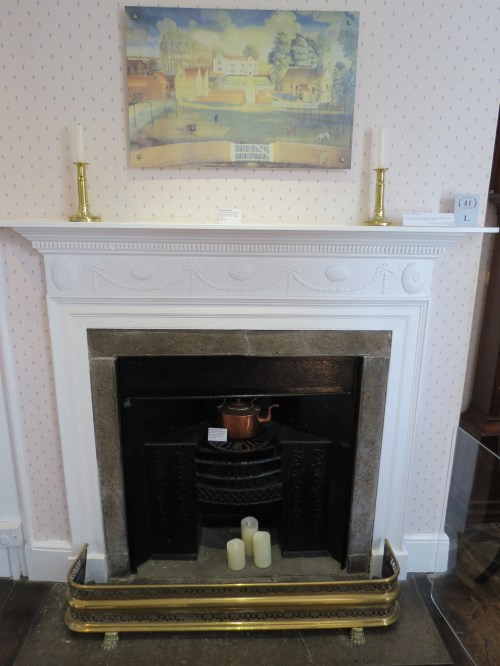
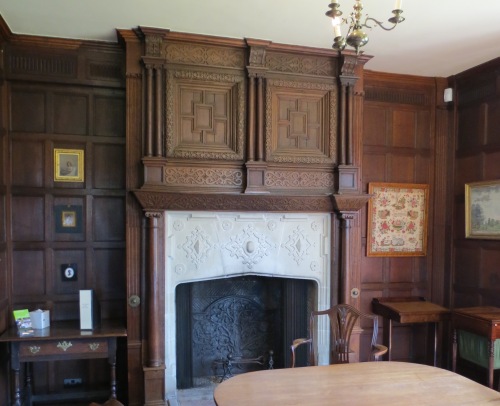
Read Full Post »

At the heart of every household in Jane Austen’s time, a fire burned. Fires provided a fixed source of heat and light, around which people gathered and moved, cooked and cleaned, lived and socialized. And while it’s lovely to imagine that families in Austen’s day gathered together in the evening simply because they enjoyed one another’s company, drawing near the fire on cold, damp days and evenings was a necessity. In a letter to Cassandra in October, Austen says, “It is cold enough now for us to prefer dining upstairs to dining below without a fire” (Letters 151). A warm fire provided heat, comfort, and community; at it, cold feet were thawed, conversations were held, prayers were said, books were read, and tea was made.

Chawton Cottage Fireplace

Chawton Cottage fireplace. Image Rachel Dodge

In her novels, Austen uses fires—and the heat and light that emanate from them—as a centerpiece for household and social activity, and she spins her characters and plots into motion around them in unique and surprising ways. Austen’s ingenious use of fires is fascinating to consider. In many scenes, she uses fires as clever props. However, fires also signify something deeper about the physical, mental, and emotional state of several key characters.

Fires as Clever Props

Let’s first consider the creative way Austen uses fires and fireplaces to move her characters in and out of rooms, group them together, and provide insight into their personalities. Many of these examples are quite humorous:

  • Edmund Bertram goes to the fire on numerous occasions when he is upset and sits down to “stir the fire in thoughtful vexation” (MP 128),
  • Meddlesome Mrs. Norris is, of course, found “fresh arranging and injuring the noble fire which the butler had prepared” (MP 273),
  • Reserved Edward Ferrars finds a safe place to talk and read in the small family circle “drawn round the fire” after dinner with the Dashwood women (SS 90),
  • Just the “slight remains” of a fire on a warm day are enough to push an over-heated, hot-and-bothered Frank Churchill over the edge (E 364),
  • In Emma, they have “nothing else to do” and form “a sort of half-circle round the fire,” discussing the fire itself “till other subjects [are] started” (E 320),
  • Fickle Collins changes his mind from Jane to Elizabeth in the matter of a few moments—in the time it takes Mrs. Bennet to stir the fire (PP 71), and
  • When Captain Wentworth wants to cross the room to sit by Anne, he goes first to the fire-place, “probably for the sake of walking away from it soon afterwards” before he goes to sit “with less bare-faced design, by Anne” (P 255).

Fires as Subtle Clues: Marianne Dashwood, Mr. Woodhouse, and Fanny Price

Austen also uses fire to provide significant clues as to the physical, mental, and emotional well-being of her characters. During Austen’s lifetime, the spot nearest the fire was reserved for the elderly or infirm, as is seen throughout her novels. Furthermore, giving someone the chair closest to the fire indicated care and concern for their well-being. In the case of Marianne Dashwood, the distracted way she walks to and from the fire signals to Elinor that her mind and heart are in turmoil over Willoughby: “Marianne, too restless for employment, too anxious for conversation, walked from one window to the other, or sat down by the fire in melancholy meditation” (SS 172). In response to Marianne’s visible unhappiness, Mrs. Jennings treats her “with all the indulgent fondness of a parent,” tempting her with delicate foods and giving her the “best place by the fire” (193). However, when the usually healthy and active Marianne later spends a whole day “sitting shivering over the fire with a book in her hand…or in lying, weary and languid, on a sofa,” it’s clear she is suffering from more than emotional distress (307). Elinor hopes that a good night’s sleep will revive Marianne, but Colonel Brandon suspects the danger of something more serious. After a “very restless and feverish night,” the apothecary is sent for and Marianne sinks lower (307).

For Mr. Woodhouse, the very presence or lack of a fire has the power to give him comfort or cause him alarm. In “Mr. Woodhouse is not a Hypochondriac!,” Ted Bader argues that Mr. Woodhouse is aging, frail, and perhaps even suffering from “hypothyroidism” based on his diet, physical state, and behavior (Bader). In this case, Mr. Woodhouse’s concern for a fire is actually another clue toward the state of his health. Austen tells us that “Mr. Woodhouse’s tender habits required” a fire “almost every evening throughout the year” (E 351). He talks of fires repeatedly and can only be coaxed to leave his fireside when he is assured of a good fire elsewhere. On the day of the Donwell Abbey outing (on a sunny June day), the concern given to assure Mr. Woodhouse’s comfort and happiness is most touching: “Mr. Woodhouse was safely conveyed in his carriage, with one window down, to partake of this al-fresco party” (357). Emma and their friends wish to include him in the day’s activities, and so, “in one of the most comfortable rooms in the Abbey, especially prepared for him by a fire all the morning, he was happily placed, quite at his ease, ready to talk with pleasure of what had been achieved” (357). This kind of special care is given to someone in delicate health.

In Mansfield Park, a fire for Fanny denotes admittance into the family circle. Fanny finds great comfort in her “little white attic” at Mansfield; however, Mrs. Norris has cruelly “stipulated for there never being a fire” in Fanny’s room (MP 151). This signals to the reader both Mrs. Norris’s true character and Fanny’s station in the Bertram family circle. As Fanny lives there, not quite a family member, not quite a servant, she has no sense of belonging and feels keenly the lack of warmth from the Bertrams. Similarly, when she visits her family in Portsmouth, she again finds herself outside the family circle. In the very place she hopes to find solace, she is again (literally) left in the cold. She finds refuge “sitting together upstairs…quietly employed” with Susan, away from the family and “without a fire” (398). In both homes, she is an outsider. When she is given the luxury of a fire in her room at Mansfield, it reveals the change occurring at Mansfield: “She was struck, quite struck, when, on returning from her walk and going into the East room again, the first thing which caught her eye was a fire lighted and burning. A fire!” (322). This new “indulgence” coincides with her gradual movement into the heart of the family there. As the Bertram sisters continually disappoint Sir Thomas, and Fanny steadily wins his favor, Fanny takes her rightful place as a true member of the family and is treated as such.

Chawton Great House Fireplace

Chawton House fireplace. Image Rachel Dodge.

Fuel Sources in Austen’s England

So what kind of fire did Edmund “stir…in thoughtful vexation” at Mansfield (MP 128)? Many of the examples in Austen’s novels appear to be wood fires, but the “coal fog” of London that lasted well into Queen Elizabeth II’s reign was already present during the Regency period. In All Things Austen, Kirsten Olsen says coal was quickly replacing wood during Austen’s lifetime, due to the “rate at which the English were consuming their natural resources” (Olsen 135). However, Deirdre Le Faye notes in Jane Austen: The World of Her Novels that in country houses, the open fireplaces were very large and burnt mostly wood because coal was transported by water, making it “a scared and very expensive fuel” (Le Faye 145).

The question of coal versus wood fires in Austen’s novels can most likely be answered by looking at the size and location of the houses featured, as well as the easiest and most economic fuel available to each. When Mr. Bingley spends a half hour “piling up the fire, lest [Jane] should suffer from the change of room” and suggests that she move “further from the door,” it’s clear he’s piling up wood (PP 54). Catherine Morland’s “spirits” are “immediately assisted by the cheerful blaze of a wood fire” in her room on her first night at the Abbey (NA 167), and the “roaring Christmas fire” in Persuasion must be wood (135). In Mansfield Park, however, the Price family has a coal fire (MP 379). At the Price home, coal was most likely burned because they lived in Portsmouth, a port city, but on the larger estates, away in the quiet countryside, wood was more commonly burned. Matthew White explains that the “growing demand for coal after 1750 revealed serious problems with Britain’s transport system.” A network of canals was build to cut down on the price of coal and by 1815 “over 2,000 miles of canals were in use in Britain” (White). By the time of Austen’s death, coal had become increasingly available even to the country homes of England.

You can follow Rachel Dodge at www.racheldodge.com or on Twitter (twitter.com/RachelEDodge), Instagram (@kindredspiritbooks), and Facebook (facebook.com/racheldodgebooks).

Works Cited

Austen, Jane, and R. W. Chapman. The Oxford Illustrated Jane Austen. Oxford UP, 1988.

Austen, Jane. Jane Austen’s Letters. Edited by Deirdre Le Faye, 4th ed., Oxford UP, 2011.

Bader, Ted. “Mr. Woodhouse is not a Hypochondriac!” Persuasions On-Line, vol. 21, no. 2, 2000 http://www.jasna.org/persuasions/on-line/vol21no2/bader.html. Accessed 1 September 2017.

Le Faye, Deirdre. Jane Austen: The World of Her Novels. London: Frances Lincoln, 2002.

Olsen, Kirstin. All Things Austen: A Concise Encyclopedia of Austen’s World. Oxford, Greenwood World, 2008.

White, Matthew. “The Industrial Revolution.” British Library, bl.uk, 14 October 2009, https://www.bl.uk/georgian-britain/articles/the-industrial-revolution. Accessed 1 September 2017.


For additional articles related to this topic:

Read more about keeping warm in Regency England here: https://janeaustensworld.wordpress.com/2009/01/21/keeping-warm-in-the-regency-era-part-one/

Learn more about coal in Regency England here:
Kane, Kathryn. “Coal: Heat Source or Gemstone?” The Regency Redingote, 3 June 2011, https://regencyredingote.wordpress.com/2011/06/03/coal-heat-source-or-gemstone/.

Enjoy these entertaining directions to servants on the proper care and lighting of a coal fire:
Boyle, Laura. “Directions how to make a fire with Lehigh coal.” JaneAusten.co.uk, 20 June 2011, https://www.janeausten.co.uk/directions-how-to-make-a-fire-with-lehigh-coal/.

Find out more about London’s air quality during Jane Austen’s time here:
Sanna, Antonio. “Jane Austen’s London.” Journal of Medical Humanities, 16 April 2017, pp. 1-10. Research Gate, https://www.researchgate.net/publication/316156566_Jane_Austen%27s_London.

Read Full Post »

“Ah! there is nothing like staying at home, for real comfort.” This line from Mrs. Elton in Emma is quite humorous, but the quote itself holds an eternal truth for most of us. There really is no place like one’s own home.

For Jane Austen, “home” was in Hampshire, a lush, green county in the south of England. She seems to have been happiest there, and it’s no wonder. When I visited there in June, it was as lovely as ever. The narrow country roads wind slowly through gentle hills and are lined with tall trees and thick bushes. Large, green fields stretch out for miles beyond. Here and there, there are houses set far back from the road. The storybook villages that pop up every few miles are complete with thatched roofs, wood and brick buildings, and picket fences around the gardens.

The air is still and quiet there. But for the cars that pass by every so often, it’s like stepping back in time.

STEVENTON

Austen’s home for the first 25 years of her life was at the Rectory in Steventon, and it surely brought comfort to her in many ways. She grew up there, was educated there, and spent many happy years with her family there.

Image 1 Rectory Site (1)

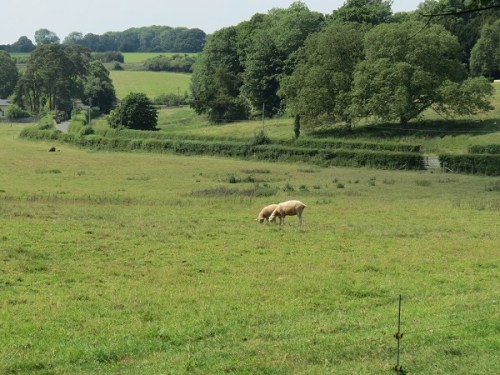
Rectory site today. Image Rachel Dodge

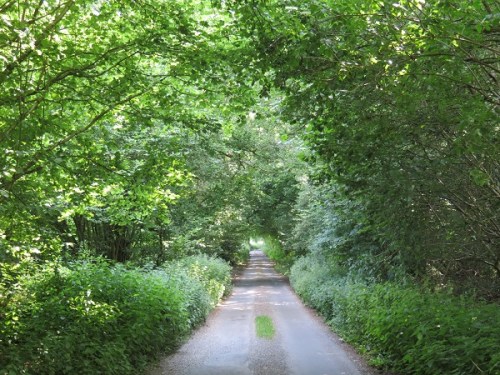
The lanes become more and more narrow as you near Steventon. Queen Anne’s Lace grows in profusion and the undergrowth presses close to the road. Trees grow up over the roads to form deep green tunnels of dappled light. Though the Rectory was torn down long ago, one can see the place where it once stood. Today, it is a large green field dotted with white sheep.

Image 2 Steventon Walk to Church

Road to St. Nicholas Church, Steventon. Photo Rachel Dodge.

Driving further up the lane to St. Nicholas Church, where her father Reverend George Austen was the rector, one enters a tunnel of trees that stretches around a bend and out of sight. It’s not hard to imagine Jane and Cassandra walking that beautiful lane on a fair Sunday morning to attend services at the church.

Image 3 Exterior Steventon Church

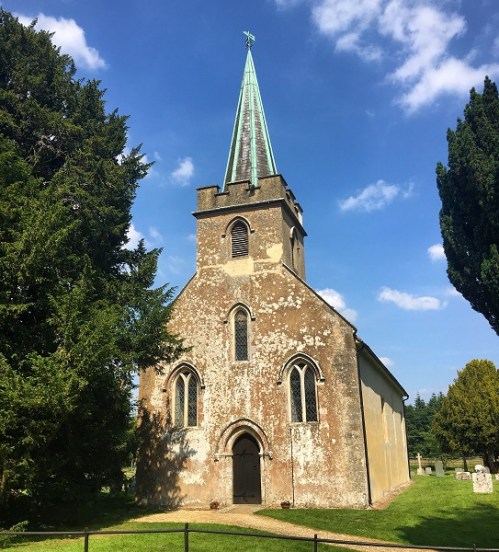
Exterior of St. Nicholas Church, Steventon. Image Rachel Dodge

The church itself is still in use today and looks the same as it would have in Jane’s time, making it quite unique. It is a small, simple church, built around 1200 by the Normans. In the heat of summer, its thick stone walls provide a cool, quiet place to sit and look, ponder, or pray. People from the neighborhood are known to stop by to visit and pray.

Image 4 Interior Steventon Church (1)

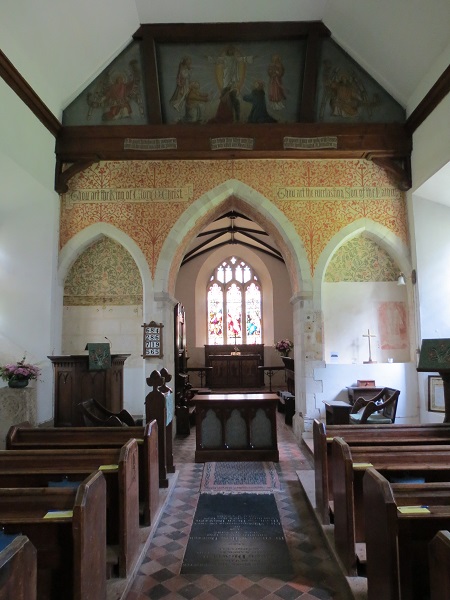
Interior, St. Nicholas Church, Steventon. Photo Rachel Dodge

Highlight: When we were there, one of the locals showed us how to open the door, which is kept unlocked for any who wish to visit and rest. The church is a place of stillness and beauty with its soft, rose colored-light from the mosaics and stained-glass windows.

Image 5 Wheatsheaf

Wheatsheaf Hotel, Basingstoke. Image Rachel Dodge

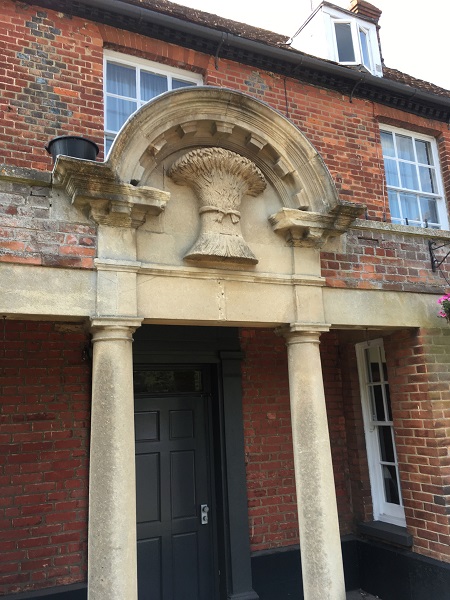
Up the road three miles is the Wheatsheaf Hotel in Basingstoke (known as the Wheatsheaf Inn during Austen’s life), where Austen walked to post letters and collect the family mail. Though it has since been expanded and updated, and now houses a lovely hotel and pub, the original building is still visible.

CHAWTON

The Austen family left Hampshire in 1801 when her father retired from his position as rector, and by all accounts, Jane Austen did not find that same home-comfort she had known at Steventon until she came back to Hampshire again years later. In 1809, several years after her father’s death, she moved with her mother and Cassandra into “the cottage” at her brother Edward’s estate in Chawton, Hampshire. Though Austen traveled frequently to visit family and friends during her adult years, Chawton Cottage and its surrounding areas once again became her true home.

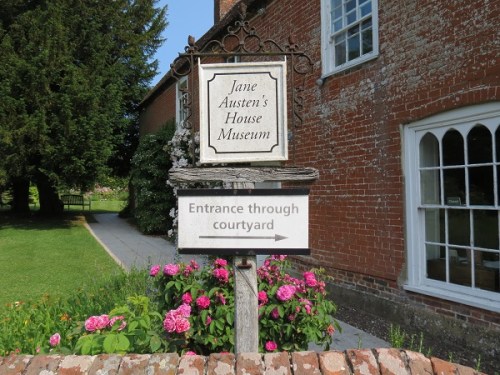
Image 6 Jane's House Sign

Chawton Cottage, Jane Austen’s house sign. Image Rachel Dodge

Jane Austen’s House Museum, or Chawton Cottage, is where Jane lived until she moved to Winchester to seek medical attention toward the end of her life. The lanes, the village, the church, and the areas surrounding Chawton became the happy backdrop for the most prolific period of writing in Austen’s life.

Image 7 Jane's House Front

Front of Chawton Cottage. Image Rachel Dodge

Jane Austen’s House is open for tours daily and is surrounded by beautiful flower gardens. Baskets of books by Austen sit on benches in the shade for any guest who wants to sit and read. In the kitchen, there is a station set up for making lavender sachets and another where visitors can practice writing with a quill. There are also straw bonnets and dresses for guests to borrow if they wish to enjoy a more authentic experience!

Image 8 Roses Entrance

Entrance to Chawton Cottage with rose bower. Image Rachel Dodge

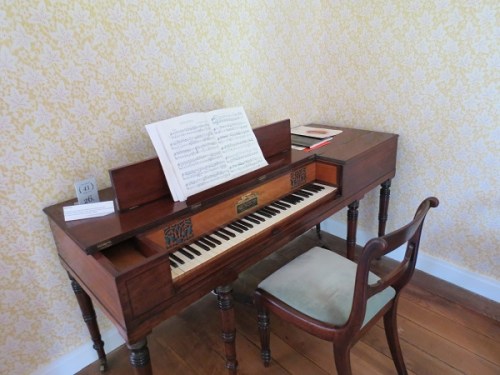
Inside the home, there are many items that are original heirlooms belonging to the family or are similar to what Jane would have known. I sat and played the piano (left image), which they allow visitors to do if they are pianists. In the dining room, one can see the Knight family’s Wedgwood dinner service, the tea things Jane would have used to make tea, and Jane’s writing desk (right image). Upstairs, guests can view the bedrooms and read more about the history of the family.

Image 9 Piano

Piano, Chawton Cottage. Image Rachel Dodge

Image 10 desk

Jane Austen’s writing desk. Image Rachel Dodge.

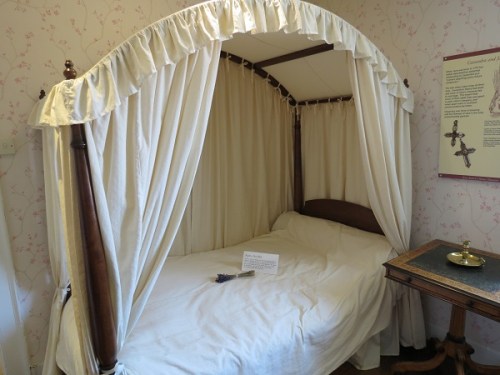
Highlight: At Jane Austen’s House, I met and spoke with a descendant of Austen’s, Jeremy Knight. He grew up at Chawton House (or the “Great House”), as did his daughter Caroline. When I visited, he was standing in the bedroom of Chawton Cottage, where Jane and Cassandra once shared a room, happily sharing Jane Austen’s history with visitors. What a treat! For further information about Chawton Cottage, you can read more here: https://www.jane-austens-house-museum.org.uk/

Image 11 Bed

Bed inside the room that Jane Austen and her sister, Cassandra, shared. Image Rachel Dodge.

St. Nicholas Church, Chawton is larger and more grand than the church at Steventon. Though it does not look as it did in Austen’s day, one can see the evidence of years of history inside and out. Like the church at Steventon, the church at Chawton is still a working parish church today.

Image 12 Chawton Church Exterior

Exterior, St. Nicholas, Chawton. Image Rachel Dodge

Image 13 Chawton Church Int

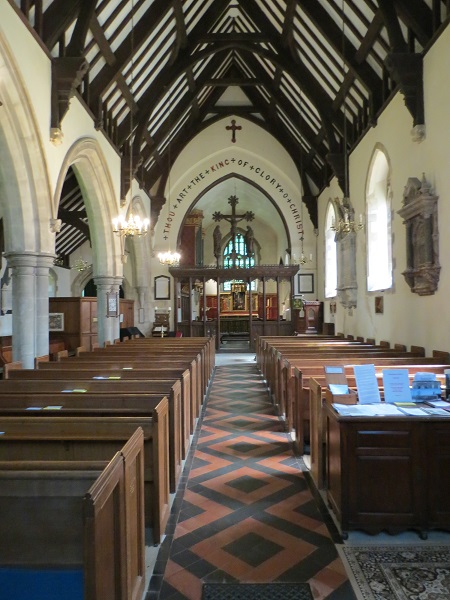
Interior, St. Nicholas Church, Chawton. Image Rachel Dodge

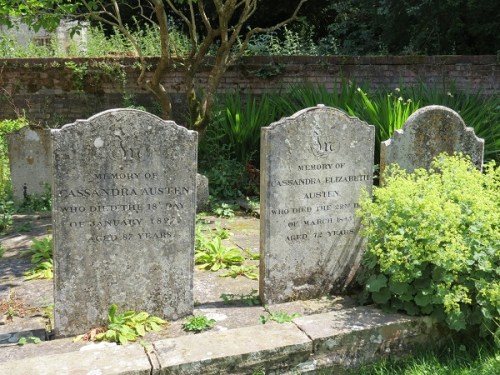
Highlight: If you walk around the back of the church, you can see the graves of Jane Austen’s mother and sister there. (Austen’s grave and memorial are found at Winchester Cathedral in Winchester.) Both women lived long, full lives, unlike our dear Jane.

Image 14 Graves at Chawton

Gravestones of Jane Austen’s mother and sister. Image Rachel Dodge

Chawton House and its gardens are open for public tours today. The Elizabethan era house, originally owned by Jane’s brother Edward Austen Knight, is now a library and study center devoted to women writers. There is also a tea shop inside the house.

Image 15 Chawton Great House Ext

Chawton House interior. Image Rachel Dodge

Image 16 Chawton House Int

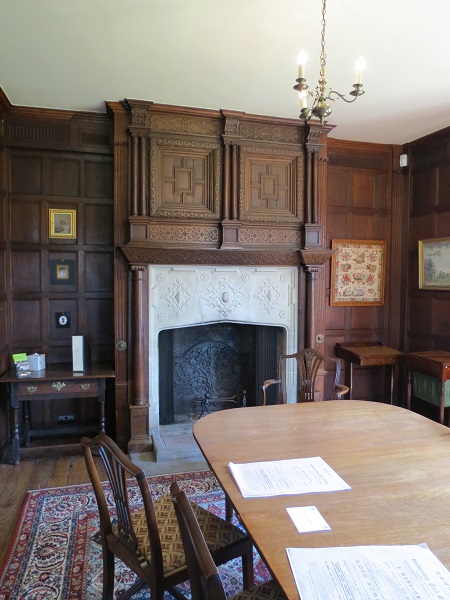
Chawton House interior. Image Rachel Dodge

Highlight: Caroline Jane Knight, daughter of Jeremy Knight and 5th great-niece to Jane, released a book in June called Jane & Me: My Austen Heritage. It tells her personal story of growing up at Chawton House, the family’s Christmas traditions, baking with her Granny, and helping in the tea room. She is the last Austen descendent to have grown up in the house (before it was sold and later became the Chawton House Library).

Caroline has also formed the Jane Austen Literacy Foundation, a non-profit organization devoted to helping support literacy in communities in need worldwide. https://janeaustenlf.org/

For more on the history of Chawton House, you can read more here: https://chawtonhouse.org/about-us/our-story/

CELEBRATING 200 YEARS

In honor of the 200th anniversary of Jane Austen’s death later this month, there are many special events all around Hampshire this summer and throughout the year. The people there are proud of their Austen heritage.

As part of the 200th year celebration, Jane Austen’s House Museum has a special exhibit called “41 Objects.” The number 41 marks the number of years that Jane graced this earth, and the objects can be found in and around the museum. Read here for more: https://www.jane-austens-house-museum.org.uk/41-objects

Image 17 41 Objects Plaque

Chawton Cottage plaque. Image Rachel Dodge


Image 18 41 Objects Wedgwood

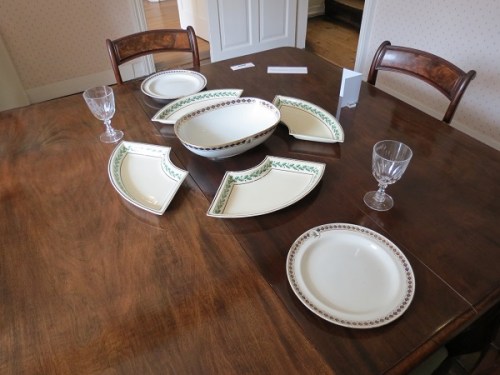
Wedgwood china, Chawton. Image Rachel Dodge

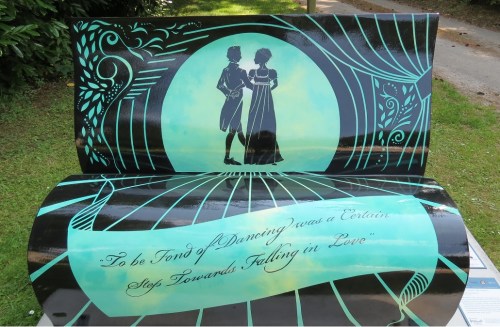
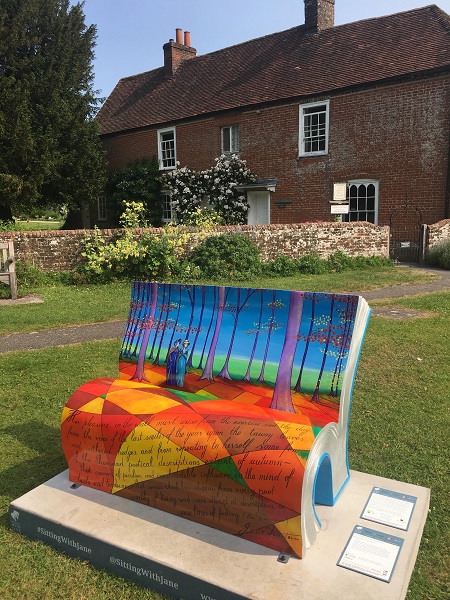
One highlight for those visiting Hampshire during the “Jane Austen 200: A Life in Hampshire” celebration is the “Sitting with Jane” park benches. These “Book Benches” are scattered throughout the Hampshire area and are part of a public book trail. Each of the 24 benches focuses on a Jane Austen theme as interpreted by a professional artist. Fans can take photos sitting on the benches and post them to Instagram or Twitter with the hashtag #SittingWithJane. Visit http://www.sittingwithjane.com/ or search @SittingWithJane on Twitter to see the benches or learn more.


Image 19 Steventon Bench

Sitting with Jane bench. Image Rachel Dodge

Image 20 Chawton Bench

Sitting with Jane bench. Image Rachel Dodge

For a full list of the events and exhibits scheduled for this year, you can read more here: http://janeausten200.co.uk/

If you have the chance to travel to England, visiting Jane’s beautiful Hampshire countryside is a must. Hampshire has all of the charm and beauty of modern British culture alongside a long, rich, and vibrant history of the past.

Other posts about Steventon, Chawton Cottage, and Chawton on this blog – Click here to see posts.

Read Full Post »

Last week a colleague at work, who lives in one of the prettier areas of rural Virginia, brought a dozen duck eggs to work. She had purchased them from a local farmer. Several of us pounced on these exotic avian gifts, since most of us obtain eggs from the lowly chicken from local grocers. Curiosity prompted me to compare the duck eggs to the two varieties of chicken eggs in my refrigerator. I only purchase large brown organic, cage-free chicken eggs. In the U.S. egg categories do not necessarily hold true, however. Both the eggs in the center and to the left of center are sold as large eggs. The definition of large seems not to be standard. However, capitalism is alive and well in the Commonwealth.  A dozen eggs on the left sell for $3.99 USD for a dozen, whereas the middle eggs sells for $6.99 USD per carton.
egg sizes

The differences in their sizes are astounding. The duck egg on the right is huge by comparison.

3 eggs

The duck egg made me think of Jane Austen, her mother and her sister. We know that the three women struggled for a number of years after Reverend Austen’s death, moving from house to house, city to city, before settling in Chawton Cottage. As the rector’s wife in Steventon Cottage, during Jane’s childhood, she oversaw a poultry yard with ducks, turkeys, chicken, guinea fowls. The move from city life to Chawton Cottage provided the Austen women with access to a substantial garden once more.

chawton-cottage-garden

Image of the garden at Chawton Cottage by Tony Grant.


Studying my duck egg, I wondered how similar it was to the kind Mrs. Austen (or her maid of all work) would have gathered. Apparently, Aylesbury ducks were popular in the UK during the late 18th through 19th centuries. These free ranging ducks ate grubs and any protein of interest, giving their meat and eggs a unique, strong flavor.

_wikimedia

Aylesbury ducks figured prominently in Beatrix Potter drawings. Image from Wikimedia Commons.

My duck egg tasted delicious – not much different from my free-ranging chicken egg, except that one egg took the place of two! I looked at some of my favorite 18th century cookbooks to see how duck eggs were used in recipes. The recipe below is typical of the era, in that few or no measurements were provided. One could assume is that “egg” is the food that the cook happened to have on hand, be it pigeon, quail, grouse, chicken, or duck!! I have one duck egg left and intend to fry it as round as balls!


To fry Eggs as round as Balls.

Having a deep frying-pan, and three pints of clarified butter, heat it as hot as for frit­ters, and stir it with a stick, till it runs round like a whirlpool; then break an egg into the middle, and turn it round with your stick, till it be as hard a poached egg; the whirl­ing round of the butter will make it as round as a ball, then take it up with a slice, and put it in a dish before the fire; they will keep hot half an hour, and yet be soft; so you may do as many as you please. You may poach them in boiling water in the same manner.

The Frugal Housewife, Or, Experienced Cook: Wherein the Art of Dressing All Sorts of Viands with Cleanliness, Decency, and Elegance is Explained in Five Hundred Approved Receipts … p. 42, Susannah Carter January 1, 1822, University of Oxford, downloaded at: http://tei.it.ox.ac.uk/tcp/Texts-HTML/free/N09/N09703.html


More about ducks:

Ducks a Potted History: https://britishfoodhistory.wordpress.com/2011/10/12/ducks-a-potted-history/

Soup Through the Ages: A Culinary History with Period Recipes, Victoria Rumble, foreword by Sandra Oliver, McFarland & Company, Inc. Publishers, 2009, p. 61, https://goo.gl/QhfJ35

duck eggs from great british chefs

Duck egg recipes from Great British Chefs. Perhaps I should try boiled egg and soldiers!

Read Full Post »

Inquiring readers,

In celebration of the 200 year anniversary of the publication of Jane Austen’s Emma, frequent contributor, Tony Grant, visited Chawton House to view a special exhibit. Read his post about the exhibit on Jane Austen in Vermont in this link. Tony reserved a slew of photos for this blog and added his commentary. I inserted some observations by Constance Hill and Jane’s grand niece to round out this post. Enjoy!
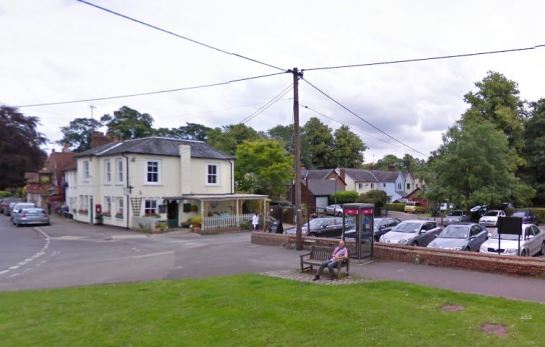
Chawton is a Hampshire village and civil parish. It lies within the area of the South Downs National Park. The 2000 census shows that 380 people live in Chawton.

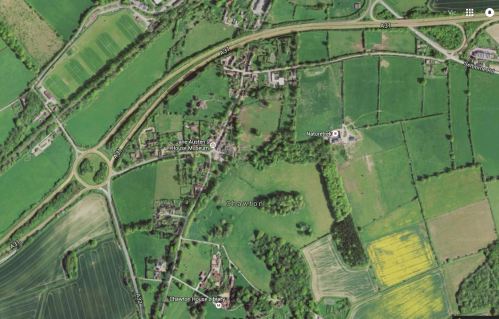
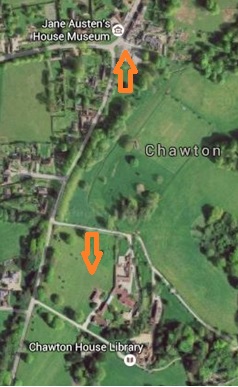
Google map

Google map of Chawton, and Chawton Cottage and Chawton House in relation to each other.

Chawton village is first mentioned in 1086 in the Domesday Book which was administered from Winchester, the first capital of England, under William the Conqueror,after 1066. The fact that the village lies on a main route from London to Portsmouth by way of Winchester suggests that because of its important position there must have been a Saxon settlement there before 1066 and possibly going back to Iron Age times. The Normans did instigate the creation of new villages such as at West Meon a few miles south of Chawton but most settlements were continued from previous ages. Its location shows it as perhaps a stopping place on a major route but its prime importance would have been farming.

Farming must have been its main importance right up to and after the second world war. Chawton House and its estate has sheep and horses on it to this day. There are still many farms in the area. However the population today is not what it would have been in the past. In previous centuries there would have been representatives of the whole range of the class system.

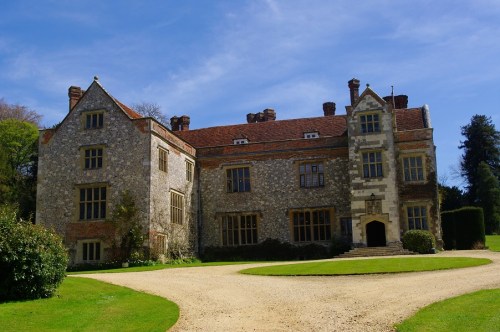
The Great House

The great house at Chawton owned by the Knight family, image by Tony Grant

The Knight family owned the great house and estate and most famously from the early nineteenth century, Edward Knight, Jane Austen’s brother. The middle classes would have been represented by Jane Austen and her family and perhaps the local vicar of the parish of St Nicholas and some minor landowners and farmers. Probably the working class and farm labourer class predominated though. There are plenty of small Victorian cottages, Georgian cottages and cottages dating back to the 16th century and before in Chawton and surrounding areas. These would have been accommodation for farm workers. Nowadays though these cottages surrounded by idealistic country gardens, climbing roses and wisteria, looking picture postcard perfect, are owned by wealthy people who work in the City and use them as weekend homes.

There are examples of large Georgian and Victorian mansions in the village. They can only be owned by company directors or wealthy bankers and other people of that ilk. Looking at estate agent web sites for Chawton, a mansion such as the one you can see at the start of the long driveway that leads to Chawton House, is priced at £2,000,000. The small picture postcard cottages start at about £350,000. The prices of the two properties I have quoted are the top and bottom of the range.

The ordinary, everyday worker is excluded. I am sure there are no farm labourers are living in Chawton these days.This is a shame because local customs are lost. The rich diverse local customs formed over time by families living there for their whole lives, generation after generation, is lost and although Chawton looks lovely today it has lost to a certain extent, its heart. It has lost its soul.

car park

Chawton Car Park, Image Google earth

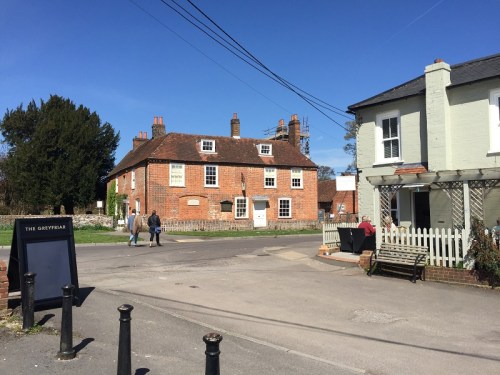
All is not lost. The other day I walked from the car park, opposite Jane Austen’s cottage next to the Greyfriar pub, along the road to Chawton House Library. On my left, through the trees and across the children’s playground a gentleman was sitting astride a motor mower cutting the grass on the village cricket pitch. I could see that the sight screens were in place for a match and the cricket club flag was flying from the club house flagpole.

Sight screen on the cricket pitch

Sight of village cricket pitch. Image by Tony Grant

As I approached the Great House I passed Chawton Village Junior School on my right. Put in mind that this was midweek, a Wednesday, and the time was 12.30. The school was in the middle of its lunch break and a whole mass of children were playing in the playground on climbing frames and ladders. They were yelling and whooping and having the time of their lives. I always feel heart warmed at the sound of children. I have spent my whole working life as a teacher teaching them after all. So really there are three things.

Chawton has a great pub, The Greyfriars, it has a wonderful vibrant school and the village a cricket team. A new heart has been created perhaps? Yes, not all is lost.

junction

Jane Austen’s Chawton Cottage is straight ahead. To the right is Cassandra’s Cup, a tea house attached to The Greyfriar pub.

Chawton Cottage, a former steward’s cottage, was previously home to local farmers. Between 1781 and 1787, the house was briefly a public house called The New Inn. This pub was the site of two murders. After the second murder, the house was let by Edward Austen Knight to a Bailiff Bridger Seward. (Wikipedia)

Edward then allowed his mother and sisters to move permanently into the residence. Jane lived there with her mother and sister, Cassandra, and long time family friend Martha Lloyd, from 1809 until May 1817, when she moved to Winchester to be near her physician before her death in June of that year. (Wikipedia

Through the window

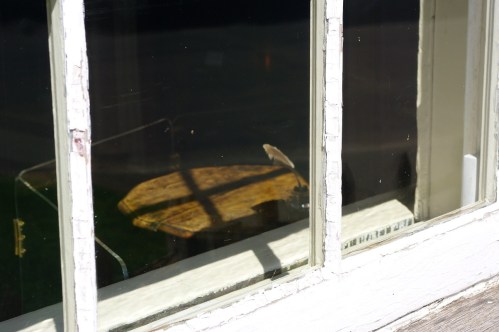
View of Jane Austen’s writing desk from the cottage window. Image Tony Grant

Later in the 18th century, Jane Austen’s brother Edward Austen Knight (who had been adopted by the Knights) succeeded, and in 1809 was able to move his mother and sisters to a cottage in the village. Jane would spend among the most contented, productive years of her life here.


trees

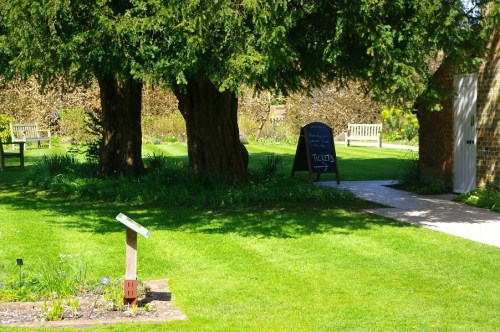
A glimpse of the cottage’s garden.

“I remember the garden well,” writes Miss Lefroy [a grand-daughter of the Rev. James Austen]. “A very high thick hedge divided it from the (Winchester) road, and road it was a pleasant shrubbery walk, with a rough bench or two where no doubt Mrs. Austen and Cassandra and Jane spent many a summer afternoon.”

Miss Lefroy recalls her mother’s happy memories with her Aunt Jane, Aunt Cassandra, and grandmother in Chawton.

“As may be supposed a great deal of intercourse was kept up between Steventon and Chawton. Our grandfather was a most attentive son, and one of the pleasures of my mother’s youth was sometimes riding with him to see her grandmother and aunts through the pretty cross roads and rough lanes, inaccessible to wheels, which lay between the two places . . . In her Aunt Jane, who was the object of her most enthusiastic admiration, she found a sympathy and a companionship which was the delight of her girlhood, and of which she always retained the most grateful remembrance . . . But I will copy my mother’s own account.

‘”The two years before my marriage and the three afterwards, during which we lived near Chawton, were the years in which my great intimacy with her was formed; when the original seventeen years between us seemed reduced to seven or none at all. It was my amusement during part of a summer visit to the cottage to procure novels from the circulating library at Alton, and after running them over to narrate and turn into ridicule their stories to Aunt Jane, much to her amusement, as she sat over some needlework which was nearly always for the poor. We both enjoyed the fun, as did Aunt Cassandra in her quiet way though, as one piece of nonsense led to another, she would exclaim at our folly, and beg us not to make her laugh so much.'” – Constance Hill, Jane Austen: her homes & her friends, 1902.

view from chawton cottage

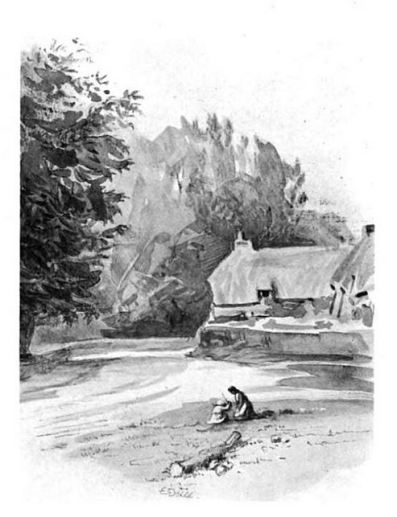
View from Chawton Cottage in the early 19th century painted by Ellen Hill


The village of Chawton lies in a specially beautiful part of Hampshire, about five miles from Gilbert White’s own Selborne, and, like it, famed for its hop fields and its graceful ‘hangers.'”

Chawton Cottage stands at the further end of the village, being the last house on the right-hand side of the way just where the Winchester road branches off from that to Gosport, and where a space of grass and a small pond lie in the fork of those roads.”


Chawton has a single church, St Nicholas. A church has stood on the site in Chawton since at least 1270 when it was mentioned in a diocesan document. The church suffered a disastrous fire in 1871 which destroyed all but the chancel. The rebuilt church was designed by Sir Arthuer Blomfield and is now listed Grade 2.” – (Wikipedia)

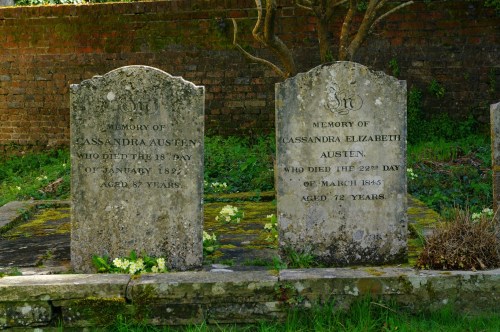
The two Cassandras

The Knight family is buried in the churchyard. Jane Austen’s mother and sister are buried there also.

“The ‘Great House’ and the cottage lie within a few hundred yards of each other, the gates of the park opening upon the Gosport road. The house, a fine old Elizabethan mansion, with its Tudor porch, and its heavy mullioned windows, may be seen by the passer-by, standing on rising ground; while a little below it, in a gentle hollow, lies the old church of Chawton–a small grey stone edifice embowered in trees.”- Constance Hill

chawtoncottage_chawtonhouse

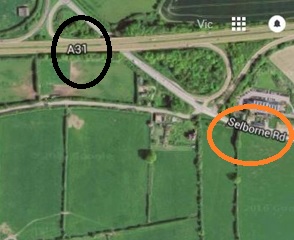
Chawton has only two road exits, one leading to a roundabout connected to the A31 and the A32, and the other to the A339/B3006 Selborne Road.

The village of Chawton lies in a specially beautiful part of Hampshire, about five miles from Gilbert White’s own Selborne, and, like it, famed for its hop field and graceful “hangers”; while within easy reach is the cheerful little town of Alton.” – Hill


Selborne Rd

Read Full Post »

« Newer Posts - Older Posts »