Feeds:
Posts
Comments

Archive for the ‘jane austen’ Category

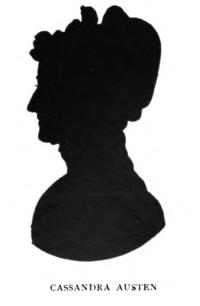
Cassandra Austen in later life

Gentle readers, I am often asked questions by readers, some of which I answer and some of which go unrecognized. Be assured that if you are a student looking for me to do your research when all you have to do is poke into my pages, I shall remain silent. But if your question is intriguing enough, I might be stirred to action. Such is the case with Craig Piercey’s recent question, which goes like this:

Hi Vic

I was rummaging through the Census of 1841 when I came across something interesting. It lists Cassandra Austen of Chawton as 65 however, she died in 1845 aged 72 years. So, something is not right somewhere, either the census is wrong, there were two Cassandra Austen’s in Chawton (unlikely) or her age is wrong on her Grave Stone.

I enclose the census ledger – its on page 8 half way down. It has her listed as being of independent means.

Let me know your thoughts.

Cheers

Craig.
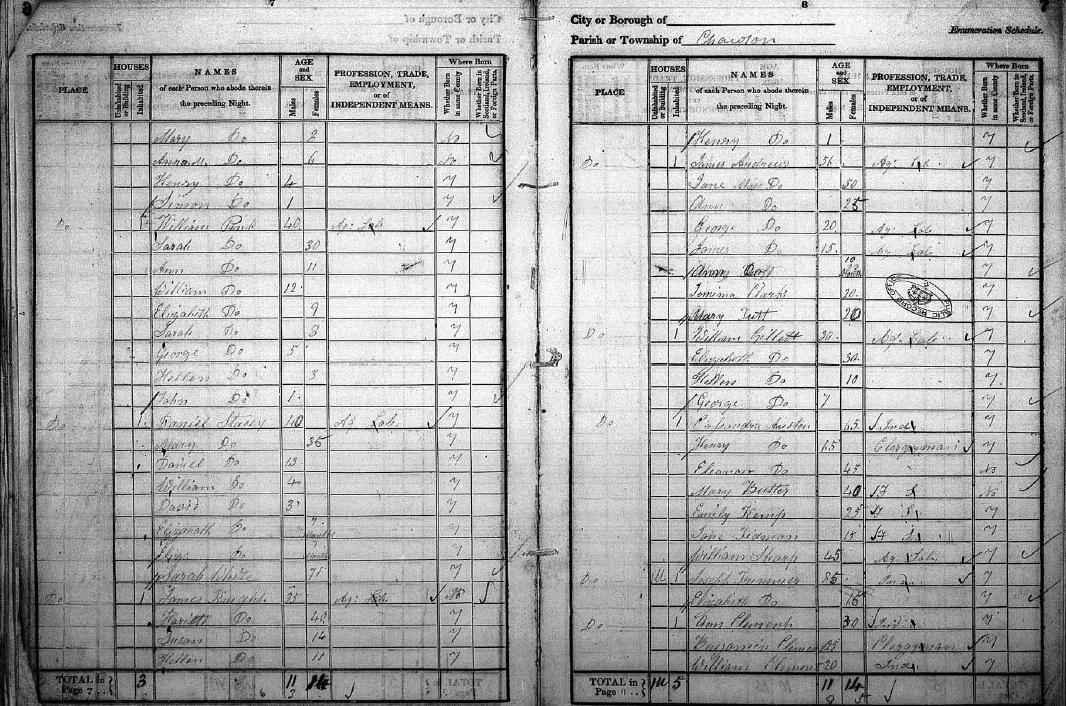
Ledger of the Chawton census, 1841

I could not give Craig an intelligent answer, for the first thought that came to me was that vanity had caused her to give the census taker a wrong age, but then I reasoned that perhaps an honest mistake had been made. I next thought of Tony Grant, who writes for both my blogs. Tony, a retired teacher, arranges customized tour packages for small groups of tourists. His resources are varied, and because he lives in England, he has quick access to historical registers and individuals who can help him. I asked Craig if I could share the question with Tony.

Hi Vic

Please feel free.

What confuses me is, somebody would have had to go round the houses in the village as it looks like the ledger was done by hand – no forms here… So, I’m guessing the nominated person must have actually met her and asked her her age. This would make the age on the Census probable but of course, not completely reliable. I seem to recall somewhere that it was originally clergymen who filled in the Census forms making her age being wrong even more unlikely as the clergyman at the time was her Nephew I think…

As for her grave stone… Well, I have never been to the church or the Great House, although I have been to her house and what I can say is that I have seen pictures of Cassandra’s grave and it look like it may have been moved as there was a fire in the late eighteen hundreds which gutted the original church and maybe the grave stones as well… Who knows, the age on the stones could be wrong… But, unlikely as there would have been family alive that would have known her intimately and surely would have noticed.

I would be interested to know the findings from this, maybe I’m just being stupid and have missed something obvious but, I think not.

Hope you are well, always a pleasure.

Craig.

After Tony returned from yet another of his tour excurions, I put the question to him. Still logy from his trip, he responded off the cuff:

Hi Vic

There were two Cassandras. Mrs Austen was also called Cassandra. This is off the top of my head…

Here’s a picture  of the Chawton Church yard. Tell me if this answers the question.

No it doesn’t. Just checked Craig’s message. Need to look at this further.
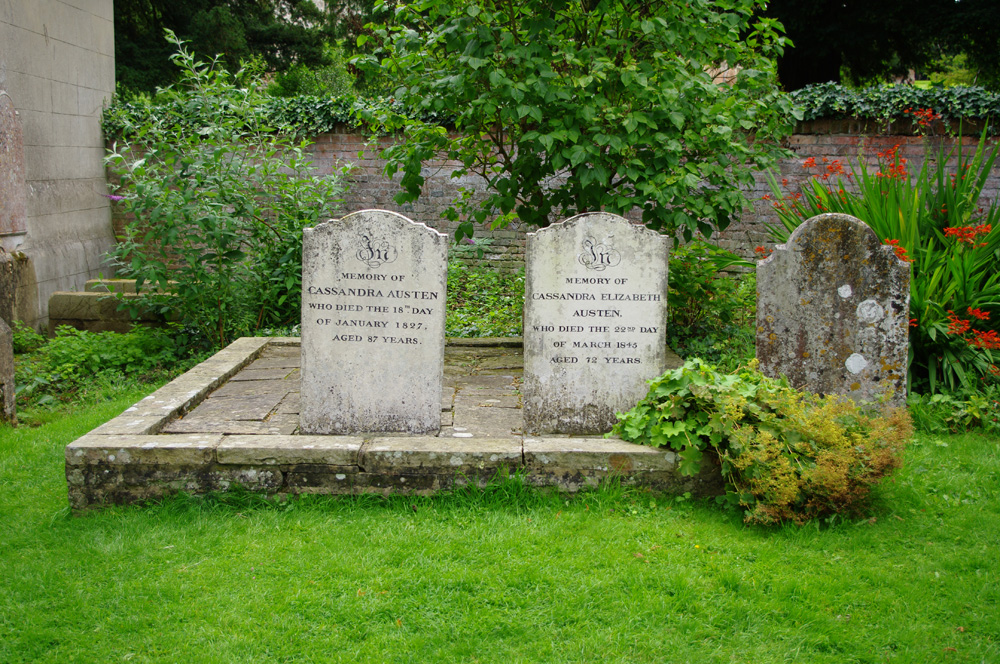
Gravesite, Cassandra and Cassandra Austen

Tony then got in touch with the Hampshire records office in Winchester, and “asked them about the discrepancy between the census of 1841 and the inscription on Cassandra’s grave stone.” The answer came almost immediately.

Hi Vic,

Hampshire archives are on the ball today. They got back to me. Here is what they said:

Dear Mr. Grant,

Thank you for your enquiry.

Indeed Cassandra Austen was 72 at the time of her death, her birth being in 1773. I checked the 1841 census and I must admit Cassandra’s age does appear to be 65 on the census return. Her Brother, Henry, born in 1771, is correctly recorded as being 65 and Cassandra should, depending on the date of the census, be recorded as being 68. Either, the census enumerator recorded her age incorrectly at the time of the cenus or there could be a possibility that the number 65 is badly faded and the five was originally an 8 as the original copy of the census return is quite badly faded. Apart from this it is a mystery why she would record her age as 65.

I hope this is of some assistance to you.

Yours Sincerely
Steve Jones

Steve Jones, Archives and Local Studies Assistant

Tony still wasn’t finished.
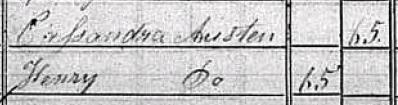
Closeup of the 1841 Census at Chawton

Hi Vic,

Just had a close look at the copy of the 1841 census you attached. There is no way that 5 was an 8. Somebody made a mistake in recording her age.They probably recorded Henry’s first,correctly as 65 and then got overawed by the domineering presence of Cassandra and either didn’t ask her her age or misheard out of confusion and recorded the same age as her brother.

You can just imagine the scene.

ANOTHER little dramatic episode one of our ,”writers,” could use.

All the best,
Tony

And there you have it, readers. Sometimes even the simplest question involves a great deal of thinking and searching. I am not sure we will ever solve the mystery, but I believe Tony and the Hampshire Records Office got as close to solving the mystery as anyone.

Update: But wait! The plot thickens. Who is the Henry below Cassandra Austen? If Henry Austen was born in 1771, he would have been 70 at the time of the census. Could the census taker have gotten the ages of both siblings wrong, or is this another Henry listed below Cassandra? I find it curious that his last name is not listed as Austen. The case becomes curiouser and curiouser.

Update #2: Laurel Ann pointed me to the site of the 1841 Census, which states,

Age and sex of each person:
Ages up to 15 are listed exactly as reported/recorded but ages over 15 were rounded to the nearest 5 years
(i.e. a person aged 53 would be listed on
the census as age 50 years).

If that is the case, what about Henry, who is already 70? His age would then be listed wrong, not Cassandra’s.

Thank you Craig and Tony for providing the content of this most enlivening and enlightening post! Vic

Update #3: Sarah Parry and Ray Moseley from Chawton House discussed the 1841 Census, as did Laurel Ann from Austenprose, which I featured on this post. Along with the comments below, we have a fairly comprehensive answer to the question. Thank you all for participating.

More about Tony Grant:

Read Full Post »

Dr. Patricia Meyer Spacks

Inquiring Reader: This interview is with Patricia Meyer Spacks, the editor of Pride and Prejudice: An Annotated Edition. Dr. Spacks, the Edgar F. Shannon Professor of English at the University of Virginia, has written a number of books, including ”The Adolescent Idea,” ”The Female Imagination,” “Desire and Truth: Functions of Plot in Eighteenth-Century English Novels,” “Reading Eighteenth-Century Poetry (Blackwell Reading Poetry),” “The female imagination,” and various studies of 18th-century literature. Her most recent undertaking, the annotation of Jane Austen’s most beloved and popular novel, resulted in a beautiful and elucidative book. I know that Jane Austen lovers will find this illustrated volume a useful and informative addition to their book collection.

How old were you when you first read Jane Austen and which book was it? Were you instantly taken by her writing, or did you develop an appreciation for her over time? Why?

I was probably ten or eleven years old when I first read Pride and Prejudice. I wish I remembered what I saw in it then; I’ve often had the same wondering about college students of mine who read the book early, because now it and the rest of Austen’s novels seem to me very much books intended for grown-ups. For some reason, though–perhaps because of its plot’s resemblance to those of familiar fairy tales–I loved P and P on first reading and read it several times more before ever studying it. As for “develop[ing] an appreciation”: one of the wonderful things about Austen (and other great writers) is that you can appreciate her novels in different ways over time and develop gradually wider areas of appreciation. This is one reason, I think, why many people frequently reread Austen, even as often as every year. Like many others, I have appreciated her for different reasons as I keep rereading her novels.

Image in the book: Carlton House, Blue Velvet Room, Charles Wild, 1816. From the Royal Collection*

How did you come up with the idea of writing this book? What were some of the challenges in researching the information?

The book wasn’t my idea. John Kulka, who became my editor at Harvard University Press, came up with the idea and persuaded me to execute it. That indeed took some persuasion, because I was engrossed with another project at the time he proposed it, but I finally agreed because I had read the novel probably 40 or 50 times; had taught it to college freshmen, sophomores, juniors, seniors, and graduate students, as well as one faculty seminar; and thought I could pretty much annotate it out of my head. Big mistake! I learned a great deal in the course of annotating it, but I don’t recall any particular challenges. Every time I decided that something needed annotating, I had no difficulty finding the information I needed.

I am curious how you decided which sections of Pride and Prejudice required annotation, and how much explanation a term or concept needed. Also, how did you decide on which images to include?

As I said earlier, I’ve taught Pride and Prejudice many times; therefore I had a good idea what words were likely to cause students difficulty. So I started there, annotating language, with special attention to words that we still use but that meant something different in Austen’s time. Beyond that, it was just a matter of paying attention to the text and of thinking about how Austen’s knowledge and assumptions differed from our own. Sometimes one thing led to another. For example, I started wondering why the novel specified Brighton as the place where the militia were stationed. I read a book on eighteenth-century Brighton and learned that because of the nature of the harbor, that was the locale thought the most likely for invasion from France. That made me think about the Napoleonic Wars, which Austen is thought to have ignored, and I was able to discover and annotate a number of references to war that it’s easy to miss.

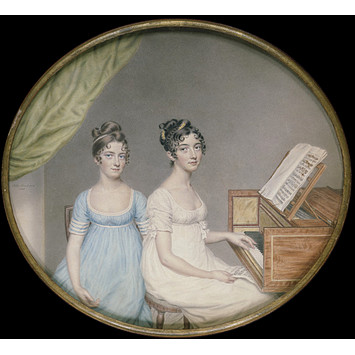
One of the images in the book: Miss Harriet and Miss Elizabeth Binney, by John Smart. Image from V&A Collection.**

In this kind of book, though, it’s not always a matter of how much explanation is “needed.” I had plenty of room to annotate whenever I thought of something about the text that struck me as interesting, and room to include quotations from other critics that suggested points of view different from my own. Many of the notes suggest connections between Pride and Prejudice and other works of Austen, including her letters.

About the images: John Kulka, my wonderful editor, found most of them. I came across some in my own reading. For instance, in establishing a text I used a first edition of Pride and Prejudice in the Houghton Library at Harvard. The books–the novel was in three volumes–had belonged to Amy Lowell and contained her bookplate. Moreover, they originally belonged to a circulating library and had the original wrappers, specifying the fees for different levels of borrowing and the rules of the establishment. I very much wanted images of the cover, the bookplate, and the text—and they’re in my book. As with the notes, necessity didn’t govern the choices: we looked for images that were beautiful in themselves and that illuminated some aspect of Austen’s period.

What were some of your favorite sources for information and where or how did you access them? Which of them do you think a serious Janeite should absolutely have in her library collection?

I used the internet, the Harvard University libraries, and my personal library as sources. The only “favorite” source I can think of is the OED, the Oxford English Dictionary, which was indispensable–and I suppose I think it’s indispensable for any serious student of any literature from the past. It’s available on line now, and the on line edition is both more flexible and more up-to-date than the printed one. Otherwise, I used many many different sources, and I can’t think of any that I think Janeites MUST have.

Which author/s among Jane Austen’s contemporaries do you think exerted the most influence on her while she was writing First Impressions/Pride and Prejudice?

Maria Edgeworth, Austen’s contemporary, and Frances Burney, her predecessor. Pride and Prejudice contains some apparent allusions to Burney’s novel, Evelina, and the title itself may come from Burney’s second novel, Cecilia. Austen praises Edgeworth in her letters, and although Pride and Prejudice doesn’t directly allude to any Edgeworth novel, it takes up some of the issues that interested Edgeworth.

Thank you so much for your illuminating thoughts, and good luck with the book!

Additional links for this post:

*Carlton House Blue Velvet Room – Royal Collection

**Victoria and Albert Collection: Miss Harriet and Miss Elizabeth Binney

Read Full Post »

Punctuation Personified, 1760 version of A Pretty Little Pocket Book. Image from the British Library

This post about Jane Austen’s experiences in boarding school at a young age was written by Tony Grant, who is a frequent contributor. Tony also writes for his own blog, London Calling.

In 1782 at the age of 7 Jane Austen went to school for the first time. Theories go that she wanted to go to school because her elder sister Cassandra was being sent to Mrs Cawley’s school in Oxford to accompany their cousin Jane Cooper who was being sent there. Cassandra was to go as a companion for Jane Cooper. Jane did not like to be separated from Cassandra and Mrs Austen in later years suggested that Jane was insistent that she accompany Cassandra. However this may have been defensive reasoning by Mrs Autsen because of the near disaster that befell the girls whilst in the care of Mrs Cawley. So the real reasoning for sending Jane to this school at the age of seven is obscure.

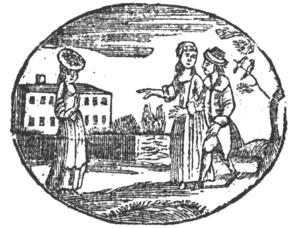
Behavior at the School, from A Pretty Little Pocketbook, 1744

Mrs Cawley moved the school to Southampton because a measles outbreak had occurred in Oxford. However in 1783 troops, returning to the port of Southampton brought an infectious disease with them and Jane, Cassandra and their cousin Jane Cooper caught it. The three of them became very ill. It was only a letter from Jane Cooper to her mother and father in Bath that alerted the Austens to the predicament. Mrs Austen and Mrs Cooper both went to Southampton to collect their daughters. Mrs Austen had to nurse Jane back to health. Mrs Cooper caught the disease and later that year,died from it.

Reading Abbey, 1783, public domain image

One wonders what sort of education the girls actually got under the direction of Mrs Cawley. Sewing and French were taught, they read a lot and I presume they were able to write letters.

The adult Jane Austen wrote scathingly of girls schools. She found it hard to see schools as anything more than places of torment.

In1784 Jane was still at home after this first experience of school. She had free run of her fathers extensive library. After a year at home with the now motherless Jane Cooper the girls were sent off to school again. This time to A Mrs La Tournelles in Reading. Madame La Tournelle, she was not French by the way and spoke no French , was really called Sarah Hackit. She used the French name to impress prospective parents. She enjoyed telling stories about actors and actresses. She involved children in drama productions. They learned spelling, needlework and did get some French from one of the other teachers. Jane might have also learned to play the piano there.

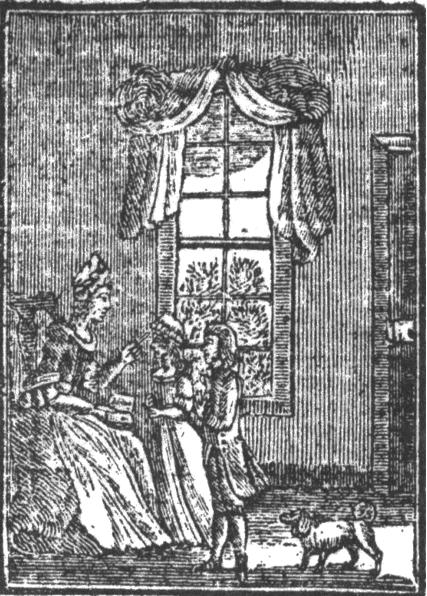
Instruction with delight, from A Pretty Little Pocketbook, 1744

In 1786 a Gloucestershire cousin of Mr Austen, the reverend Thomas Lea of Adlestrop, visited the girls while passing through Reading. Later that year The Reverend Austen removed Jane and Cassandra from the school. Maybe Thomas Lea gave a poor report of the school and Jane’s father thought he was wasting his money. Jane never had any formal education again.

From their experience of school we can gather that Jane and Cassandra had perhaps learned some social skills, had had the opportunity to read, take part in plays, learn some French and learn the piano. These were things that were all available at home anyway.

B is for Bull, from an old alphabet book

So what makes for a fantastic, brilliant, inspiring, life changing, learning experience and how did Jane Austen actually learn?

With all those intelligent older brothers Jane had some great roll models. The vitally active and mentally agile and alert Jane must have passionately absorbed and lapped up what her brothers were doing, saying and experiencing. She must have had this inner drive and force to want what they had mentally and imaginatively. Inspiration is a great motivator. An inner need and hunger for something can’t be beaten when we want to learn. Jane must have had this in spades.

Cruikshank, Alphabet book

James Austen passionately loved the theatre and plays. He organised and directed dramas in their barn at Steventon. So Jane had acting and playwriting modelled for her to copy and use as her own skill. She began to write some juvenile works.

The there was her fathers library. She had a whole range of books covering many subjests to read and peruse. Somebody with Jane’s brain and need to know and explore would have been asking questions and finding answers that created more questions and so more reading and more asking. You can imagine an explosion of questions, ideas and exploration going on in that mind of hers.

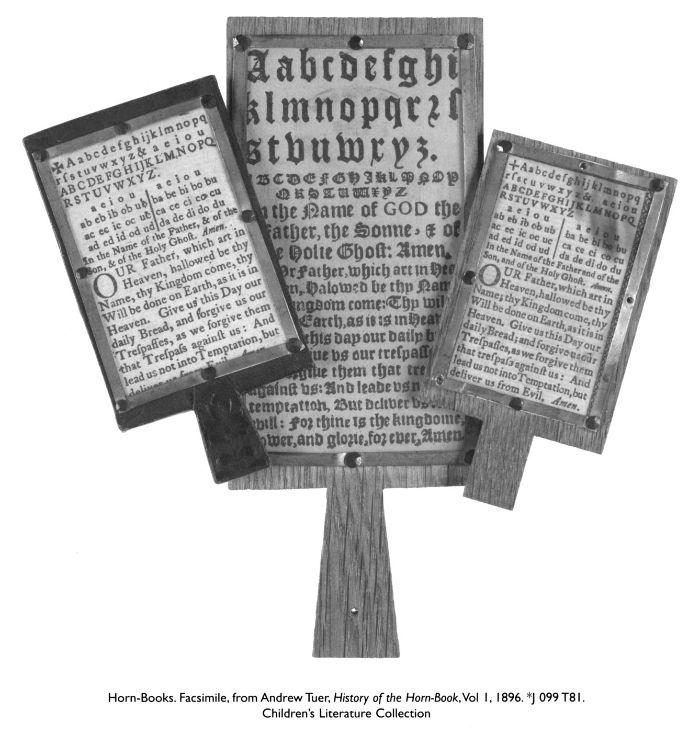
Children's horn books

From the point of view of a teacher what I aspire to do for my pupils is to make them independent, passionate learners, for life. But what gets them started? What gets that spark going? What ignites it all? I, as a teacher, have to try and provide experiences, I have to be a roll model, I have to demonstrate and model all sorts of different skills , I have to break things down into manageable learning experiences that have a progression. As an example of what I mean, here is how a might get a class to write a poem. On a fine sunny day I could take a group of children outside of the classroom to lie on the grass and look at the sky. We could talk about the clouds, the blue sky in-between, we could talk about the shapes they see, their feelings and all the while I would be coaxing them along by introducing new vocabulary, asking them, What? Why? How? What if? When? to get them to think in new ways and see and feel and think about things differently. Talking together is so important for the children. Teachers should talk less by the way.

Most of the lessons were given in a building next to the Gateway. Image from Austenized.

Then we could go back into the classroom. I would gather some vocabulary and ideas from the children and I would model the structure of a poem and maybe write a couple of lines of my own for them to see. The children now ready with words, a structure, ideas, concepts, similes and metaphors, some support materials for those who need it and with all this churning around in their heads, can write their poem.

The next time I wanted to write poem I would give them a little more independence. I would get them to tell me the process we did last time and they could use this. Those who needed my help would get more focussed support.

A little boy and girl reading, A Pretty Little Pocket Book, 1744

I can see this learning process in the story of our Jane. The way humans learn hasn’t changed, ever; it’s just that teachers through the centuries have gone against the natural process of learning. Nowadays we are far more enlightened and are actually trying to find out how our pupils can learn in the classroom and out of it. All those great learning experiences were there for Jane. Her mind was open to learning. She craved it. Children who tell me they hate school I always think is because nobody has tuned into their learning style, found out what inspires them, found out what WOWS!!! them. It’s all about close relationships really. A teacher should be able to get into the minds and feelings of their children, get under their skin.

Thank God Jane’s experiences, relationships and the world around her became her , “school,” and using the experiences and world around her, ignited her genius mind.

The idea of education in the 18th century was all about enforcing ideas and behaviours. Jane set free from that, was released into her real learning environment.

Read Full Post »

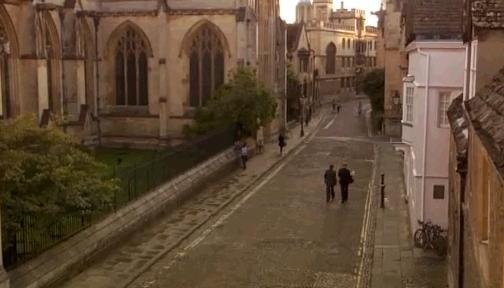
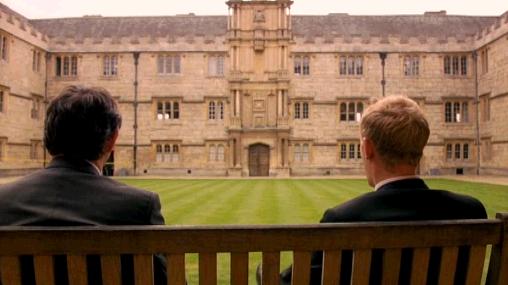
Oxford University's campus is strangely empty in Your Sudden Death Question

The fourth installment of Inspector Lewis, Season III, starts off with an August Bank Holiday that has emptied Oxford University of professors, students and all but a handful of staff. A small group is assembling for a Bank Holiday Quizaholic Weekend.

Marcus Richards (Alan Davies) the quiz master

The members of the group introduce themselves in teams, including Ethan Croft, an obnoxious, boozing primary school teacher, whose once promising career as a linguist at Oxford U. was derailed by a sex scandal.

Nicholas Farrell and Timothy West play two Oxford professors on the Grey Guardian team

The teams include two older Oxford academics, two students, two young mothers, soldiers, and lawyers.

Alfie Wilkinson( Jack Fox) and Ava Taylor (Tabitha Wady) compete on Team "Toxic Debt"

The cash prize for winning the Quiz is £5,000 lbs, but before the first round even gets under way, Mr. Croft is found floating face down in an ornamental fountain. Lewis and Hathaway interview Jean Croft, the dead man’s stunned widow. She confesses to wanting to kill him for his infidelities. The viewer quickly eliminates her as a suspect, as do Lewis and Hathaway.

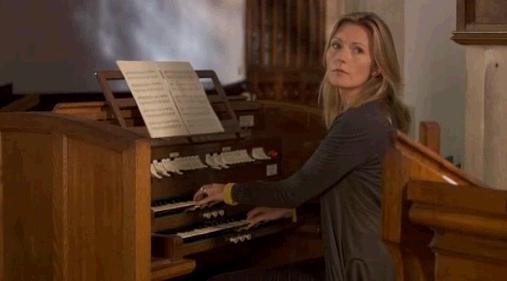
Susannah Doyle plays Jean Croft, grieving widow

They mull over the situation a bit more. Was the murder a crime of passion?

Pondering the murder suspects

Ethan’s old flame, Robyn, appeared at the event with her friend, Eve Rigby (Sally Bretton). Ethan is instantly smitten with Eve, and hardly gives Robyn a glance. Robyn realizes that he does not recall their relationship, when she was 14 to his 16. Later she appears to be angry. Could she have killed Ethan out of  jealous rage?

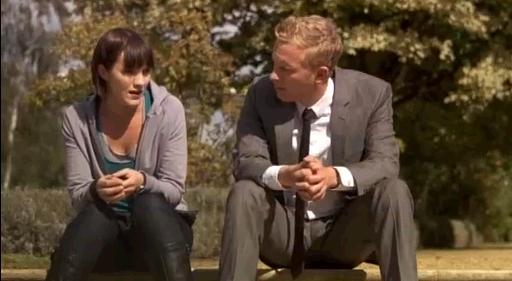
Could Robyn Strong (Ruth Gemmel), a lonely single mother, have killed the victim out of jealousy and passion?

Then Eve is killed, and Hathaway and Lewis must deal with a second body. They are convinced that the two murders are somehow connected. Could the two soldiers, British Army Lieutenant Diane Baxter and Color Sergeant Brian Kaye, have killed the victims on behalf of the government.

Diane Baxter makes an important admission.

As Lewis and Hathaway find out more about a secret project that Croft was involved with, it would not be out of line to suspect the soldiers of killing him on behalf of the Government.

Lewis informs the assembled suspects that they cannot leave until the murder is solved

Professor Milner’s young wife had the affair with Croft, which ended his career at Oxford.

Could Gwen Milner (Helen Grace) have a reason for murdering Croft?

As they wait for Hathaway and Lewis to solve the murders, the teams are allowed to compete in the Quiz game.

Sebastian Anderson (Alastair Mackenzie) and Jessica Neil (Emma Cleasby) are stuck on campus until the mystery is solved.

Different possibilities present themselves, including the Quiz organizer whose shady business practices might have been uncovered by Croft. Or was the mysterious project that he was working on as a linguist responsible for his death?

Lewis and Hathaway go over the clues.

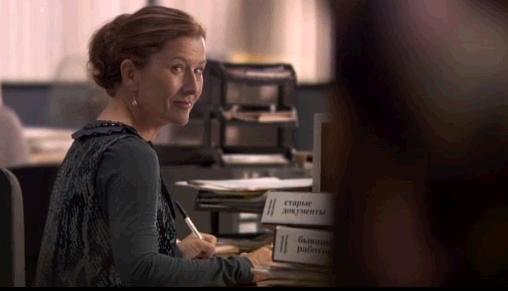
A translator is enlisted to read Croft's foreign language documents.

One by one, the clues tumble into place and before the 90 minutes are up, Lewis and Hathaway have solved the murders and the quiz contestants can go home – all save the killer.

Spoiler Alert!:

I loved this episode for the continued deepening of the relationship between Lewis and Dr. Laura Hobson, and Lewis and Hathaway. Their personal back stories are revealed slowly, like peeling the layers of an onion one story at a time.

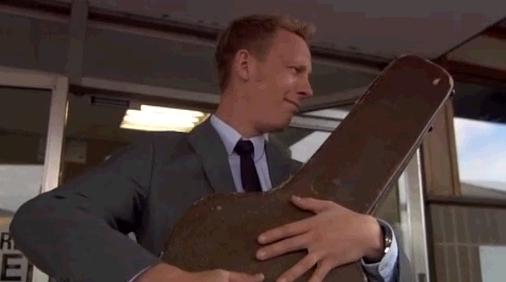
Hathaway retrieves his lovely guitar with the aid of Lewis.

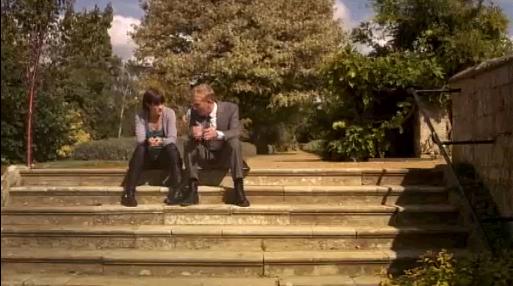
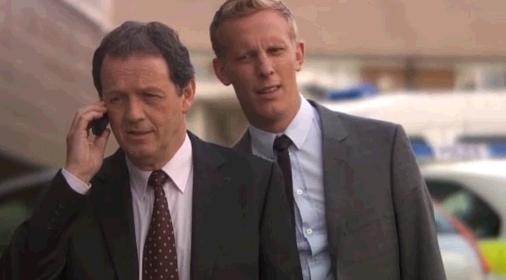
Hathaway eavesdrops as Lewis calls Laura Hobson.

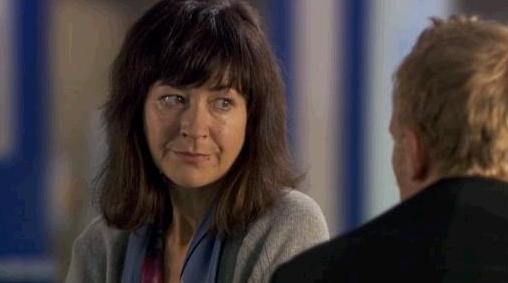
Dr. Laura Hobson (Clare Holman) understands loneliness every bit as well as Lewis.

The mystery of Your Sudden Death Question was splendid, and this time around I did not solve the murder until the end. I give this episode of Inspector Lewis, written by Alan Plater, three out of three Regency fans! You can watch the episode online at this link from Monday, September 20 to October 19, 2010.

Inspector Lewis, Season III

Read Full Post »

Inquiring readers, Adriana Zardini from the Jane Austen Society of Brazil, wrote this post for her blog and sent it on to me! Do visit Adriana’s lovely site, which comes with a translator!

A new version of Sense and Sensibility? Take a look on IDMB page.
I discovered today a new movie being filmed there in the United States with the title: Scents and Sensibility. Because there is a summary and not even a line about Jane Austen, the only thing that links this production to Austen’s Sense and Sensibility is the fact that some of characters in the film have the same names as characters in the book.

Director: Brian Brough

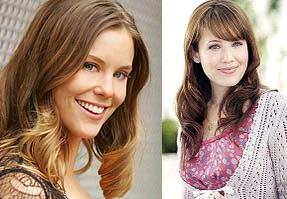
Actors: Marla Sokoloff and Ashley Williams (already appeared in various TV series). Slated to do  Elinor and Marianne.

Nick Zano (Brandon) – is currently in the series Cougar Town

Brad Johnson (Edward Farris) probably a typo, right?

Danielle Chuchran (Margarett Dashwood)

Jason Celaya (John Willoughby)

Adriana’s other contributions to this blog:

Read Full Post »

« Newer Posts - Older Posts »