Gentle Reader: This is Christine Stewart’s fifth post for this blog. Christine has embarked on a year-long journey on a Sense and Sensibility inspired project that she chronicles on Embarking on a Course of Study. Herewith are her impressions of Country Dancing, her interview with Rebecca Smith, writer in residence at the Jane Austen House Museum, and her chat with Juliette Wells, the Burke-Austen Scholar-in-Residence at Goucher College
I’m officially six months in to this project and, lately, many things have happened to move me forward, as well as set me back due to my own occasional tendency towards doubt that got the best of me!
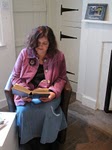 The most exciting was a correspondence with Rebecca Smith, writer-in-residence at the Jane Austen House Museum. Ms. Smith is the great, great, great, great, great niece of Jane Austen and is installed there for six months (until May 2010) working on a novel (she has already written two, which can be found on Amazon).
In response to my question, “How has being in Jane Austen’s house affected your writing and your feelings about yourself as a writer?” Ms. Smith writes:
“Well, I think the first thing I have noticed is how 200 years now seems to be such a short time, and I think this has changed the way I feel about everything.
If 200 years isn’t so long, the past and its people are more present, and less seems to be lost. I find this comforting. One of the odd and lovely things about being here is that some of the objects in the Museum are things that were once owned by my great aunts. For instance, a box that was carved by Jane’s brother, Francis, was, until not that long ago, something that my Aunt Diana kept cereal box and cracker toys in for the amusement of visiting children; and some of the smaller portraits I recognize as having once hung on their walls. I only had vague ideas of who these various Austens were when I was growing up – I probably wasn’t paying attention – but here they are now. It is as though I am following them round and we have all ended up where we should be. I do have this feeling – probably quite misplaced – of coming home. And this is ridiculous – why should I pay more attention to this branch of my family tree than any others? I have some really interesting Scottish ancestors too, including a captain who was shipwrecked on an island and was rescued to tell the tale. I had an Indian grandmother who died when my father was tiny – we know close to nothing about her. These stories are what I’m interested in writing about at the moment. It will be fiction, but the novel I’m trying to finish follows the story of five generations of a family from Hampshire to Canada and India and back again. I’m only going as far back as the Edwardians and the novel isn’t to do with Jane Austen.
I’m interested in ideas about home and belonging (and not belonging). But I can see that it is rather convenient of me to feel the pull of Jane Austen’s cottage in Chawton, which happens to be gorgeous and only 27 miles from where I live, rather than the houses in Scotland or India or Canada or the north of England where other ancestors dwelt.”
The title of the novel she is working on is tentatively called The Home Museum, which sounds welcoming and intriguing all at the same time. I can only imagine how thrilling it must be to write in the same house in which one’s ancestor wrote so brilliantly. There’s a longer answer to other questions on my website.
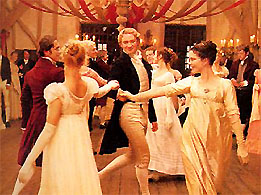
I also hosted an English Country Dancing lesson that took place at the end of January in the ballroom of the Baltimore Hostel, a renovated 19th Century home in downtown Baltimore. There are pictures on my website of the room and the dance in progress. We had a wonderful professional, English, caller, Mr. Michael Barrelclough, who taught us five dances. We had eighteen people and by the end of the second dance, I could look down the set and see everyone becoming more comfortable and familiar with the style of English Country Dancing and the steps.

English Country Dancing, Emma with Kate Beckinsale
We still stumbled and Michael led us through some sections several times until we got it, and we laughed and laughed. It was one of the happiest evenings, and I felt so much more confident about my ability to remember steps and understand the calls. I worried less about messing up and just had a marvelous time. There’s something about these dances that is both down-to-earth and elegant and you feel both giddy and graceful at the same time. Everyone wants to have another dance so, we shall!
I’d like to say I’ve made progress on the dating ‘the Jane Austen way,’ but I have not. December – February is my busiest time of year at the arts council and I’m barely keeping my head above water – or should I say snow? The back-to-back snowstorms in the last few weeks set me back quite a bit and rescheduling meetings and Poetry Out Loud competitions completely took over.
There’s also the cost. I’m a state employee and due to our mess of a budget, state employees are required to take 8 furlough days, which is shredding my paycheck. I can’t afford a $30 or more fee for online dating services every month. Maybe in a few months, once the fiscal year ends and we, hopefully, have a balanced budget (or I have a decent tax return!).
In the meantime, I will do what practicing I can at any events I attend, of which there are many when one works in the arts!
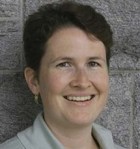 Most recently I sat down with Juliette Wells, the Burke-Austen Scholar-in-Residence at Goucher College this year. Dr. Wells teaches at Manhattanville College in New York and was here for a week to give a talk, meet with faculty and students, and do research in Goucher’s Austen collection, donated in 1975 by alum Alberta Hirshheimer Burke (1928) at the time of her death. This nationally-recognized collection consists of Austen first editions, rare period publications related to the life and landscape of rural England, and Alberta Burke’s own notebooks of Austen-related memorabilia and correspondence with Austen collectors and scholars. The Burkes also donated letters to The Morgan Library in New York, where the current Austen exhbit is taking place.
A little trivia: apparently, her husband, Henry Burke, cofounded JASNA with Joan Austen-Leigh and J. David Gray just a few years later in 1979, so the first 25 years of JASNA’s archives are also housed at Goucher.
Dr. Wells was interested in, and supportive of, the project, and I’ll be posting more info about our meeting soon, along with a picture and a podcast of her talk at Goucher. She is writing a book called Everybody’s Jane: Austen in the Popular Imagination, and is exploring how Austen has been appropriated and absorbed by popular culture through film, television, and books. She completed a fellowship at the Chawton House Library last summer.
You can read one of her articles in Persuasion at this link.
and find a link to an interview on Penguin Classics On Air at my website. She was the editor of the recent electronic version of Pride and Prejudice published by Penguin Classics, that includes all sorts of wonderful extras about fashion, architecture, dancing, and etiquette.
You can also read about the mini-crisis I had about this project, mostly because people began asking me about whether or not I wanted a book deal and if so, what was the purpose of the project, and I realized I didn’t have a thesis and did I want a book deal like Lori Smith was angling for when she had her blog that turned into A Walk With Jane Austen ?!?!?!
Deep breath!
So then I became very overwhelmed and lost sight of the joys and the basics of what I was doing. I realized I did need to figure out the purpose of the project for myself, and let the rest fall where it may.
This led me to an examination of character through the unlikely source of Pamela Aidan’s trilogy Fitzwilliam Darcy, A Gentleman which was the only reading I could manage during the storms. It’s both cozy and anxiety-provoking to be caught in snowstorms, knowing you’re missing all your commitments and how much catch up there will be….Plus I had a dead battery and every day I left the car at the dealership they seemed to find something else wrong with the it!
But back to my crisis. Did I figure out that darned purpose? I did, with Dr. Wells’ indirect help.
Next weekend I’m off to NYC to visit The Morgan Library’s Jane Austen exhibit, “A Woman’s Wit.” Some friends are going and we’re taking a video camera, so watch out!
 // More on the Topic
Read Full Post »













 Jane Austen's World