Feeds:
Posts
Comments

Archive for the ‘Popular culture’ Category

Mr Darcy, Colin Firth, astride a white horse

Mr Darcy, Colin Firth, astride a white horse

Is chivalry alive and well? Good question. I venture to guess that a large number of Jane Austen’s readers subscribe to the traditional hero as embodied in Mr. Darcy, Mr. Knightley, Colonel Brandon, and Captain Wentworth, all admirable men, who despite some flaws, are wont to treat a lady with respect and come to her rescue out of a sense of duty, or from good breeding or a besotted heart.

Just in time for Valentine’s day comes Queendom.com’s tudy on gender roles in courtship behavior, which reveals that while most courtship conventions have changed, some age-old romance rituals are still going strong. Pulling up on a white horse isn’t necessary for the modern woman, but some chivalry is still a heart-melting must. (Inquiring readers, I have ventured to put my own spin (in blue) on this contribution from lona Jerabek, Ph.D.)

Some men hurtled, on horseback, with a giant stick in their hands. Emperor Shah Jahan built The Taj Mahal as a final resting place for his most beloved wife. Both Cleopatra and Juliet refused to live in a world where they couldn’t be with the one they loved. Thankfully, courtship conventions and romantic gestures need not be this extreme. According to Queendom’s data, most men and women take a modern approach to dating, but a little chivalry can still go a long way.

Jane Austen’s rules of courtship vs modern times

Collecting data from 950 men and 1621 women, Queendom’s research on gender roles and courtship reveals that:

  • 77% of men and 70% of women feel that a date can be initiated by either gender. In fact, 65% of the women have either asked a man out on a date, or would be willing to do so. (This would be a big faux pas in Jane Austen’s book, for a gently bred lady would NEVER make the first move, lest she be thought forward. There were those who had powers of persuasion through beauty and words, like May Crawford, or who took advantage of a man during a moment of weakness and, like that rat terrier, Lucy Steele, never let go. Others, like Marianne Dashwood, ignored society’s strictures, but all in all, a young lady of good breeding would hesitate to step out of the bounds of propriety and bring shame upon her family by acting upon her impulses and brazenly ask a man to pay court. Her actions would be much more subtle than that.)
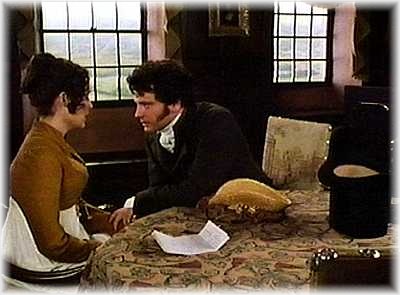
Mr. Darcy listens to Elizabeth about Lydia's predicament, then quietly goes about rectifying the situation and helping Lydia out of a scrape. A true romantic hero.

Mr. Darcy listens to Elizabeth about Lydia’s predicament, then quietly goes about rectifying the situation and helping Lydia out of a scrape. A true romantic hero.

  • 67% of men and 60% of women believe that chivalry is important (e.g. opening doors, pulling out chair, etc.). (This number would have been 100% in Jane’s day. A man who failed to follow the rules of propriety, like John Thorpe, would instantly be regarded as deplorable and wouldn’t stand a chance.)
  • 60% of women still like to be wined and dined, at least in the initial stages of dating. (Courtship was much more constrained, with the virginal girl guarded like hawks by her chaperons and family. After her coming out, a woman would NEVER be seen alone in her swain’s company. The only time they could touch or talk at length was during the set of a dance. They could never dine alone in an inn, for instance, without damaging her reputation. As for drinking wine, a gently bred girl might be given a glass of watered down elderberry or orange wine, but nothing that would make her tipsy and lose control.)
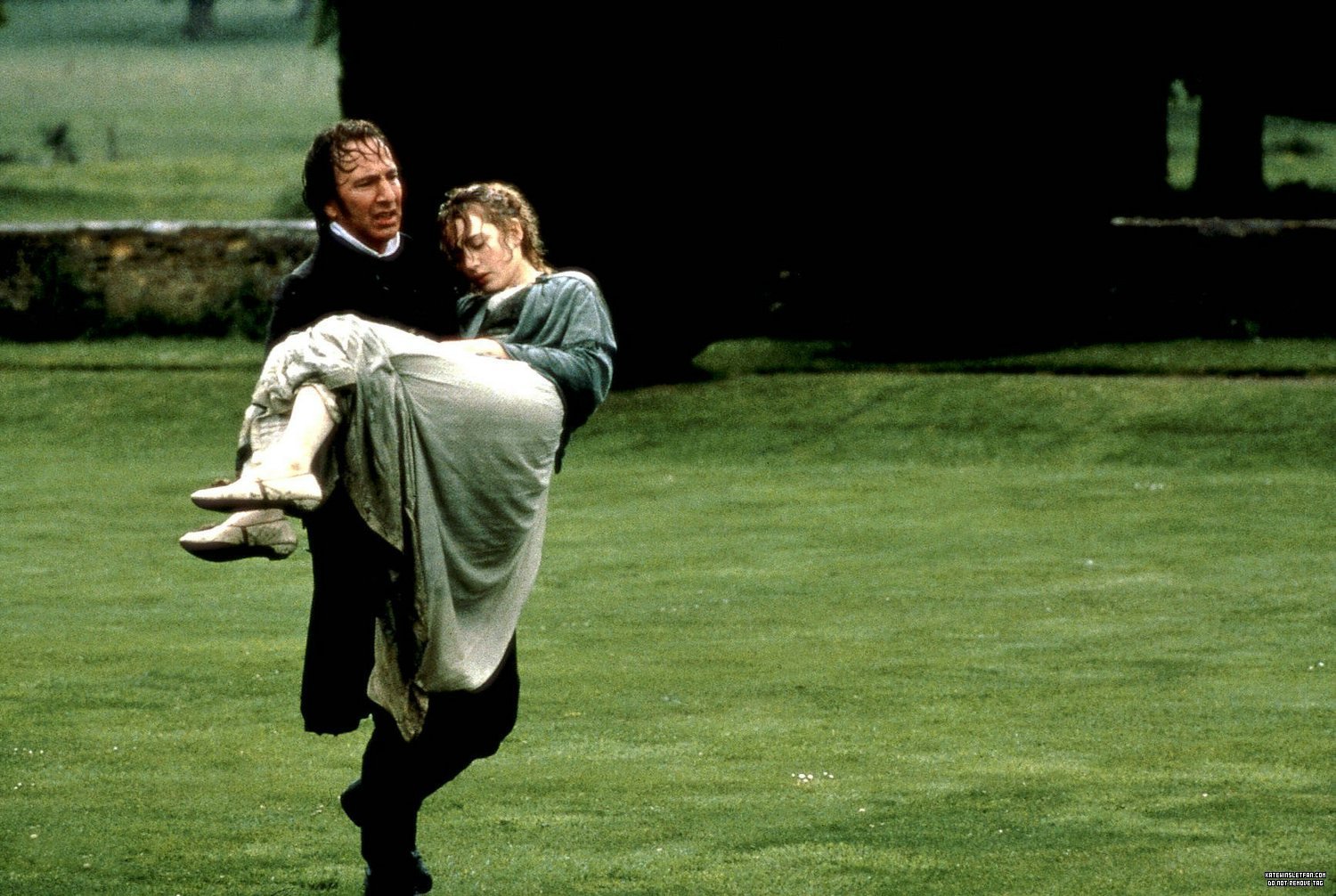
At first blush it is Willoughby who seems heroic, but it is the quieter Colonel Brandon who rescues Marianne from her untidy tendencies.

At first blush it is Willoughby who seems heroic, but it is the quieter Colonel Brandon who rescues Marianne from her untidy tendencies.

  • 26% of men want to be the one who controls how the relationship plays out (i.e. how many dates they should have, how fast the relationship moves, when to meet each other’s family). 39% of men would prefer to let the woman control the direction of the relationship, 35% prefer it to be a mutual decision. For women, 27% want to be in full control, 31% prefer to let men decide; 43% prefer it to be mutual. (Back in the Regency era a wily woman could manipulate the situation behind the scenes, like Charlotte Lucas, in order to snare her man, but most, like Jane Bennet, were passive and took their cues from their suitor’s actions or family’s wishes. A Regency miss who takes control of her courtship or acts in a hasty and willful manner was regarded a hoyden, as with Lydia Bennet and Maria Rushworth,  two stupid girls who were the instruments of their own undoing.)
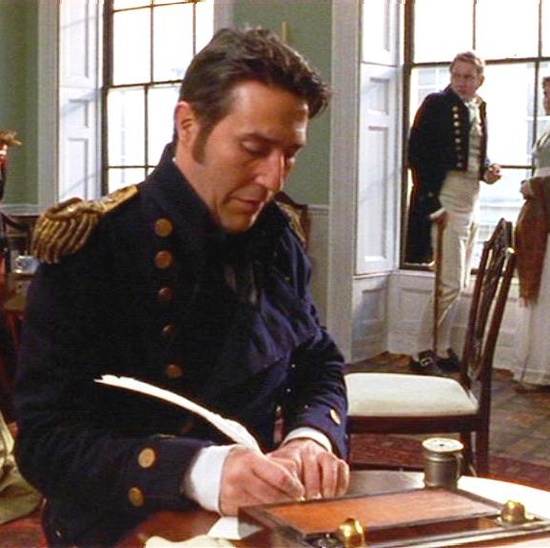
Anne yearned. Anne desired. But it wasn't until Captain Wentworth penned his letter that he opened up the way to their blissful romantic reunion.

Anne yearned. Anne desired. But she could do nothing. It wasn’t until Captain Wentworth took pen in hand and wrote his swoon-worthy letter that he opened up the way to their blissful romantic reunion.

  • When it comes to popping the question, 66% of men and 65% of women think it’s fine for the woman to do the asking. (Not in Jane Austen’s day, when men were obligated to do the asking. A women’s sole power, that of choice, was exercised before marriage. It was up to her instinct and good  judgment to refuse a cad or accept a good man for a husband. Heaven forbid if love clouded her good sense. Unless she was an aristocrat, the family would accede to her wishes, for once she married, she would have no rights and lose control of her money, land, and children. Thus a young woman (girls in many instances) had to be smart about her choice of mate or rely on wise council. Unfortunately for Miss Anne Elliot, her wise council, Mrs. Russel, turned out to be wrong and poor Anne had to wait eight long years before she could marry Captain Wentworth and find happiness in his arms.)
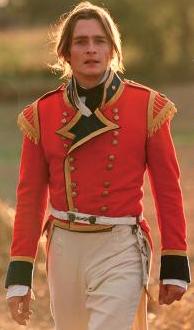
Wickham, a handsome fortune hunter

Wickham, a handsome fortune hunter

  • In terms of who pays for the first date (a long-standing debate), 47% of men feel that the man should pay; 24% feel that the bill should be split; 29% stated that whoever initiated the date should pay. On the women’s side, 31% feel the man should pay, another 31% feel that the bill should be split, and 38% indicated that whoever initiated the date should pay. (Now this is a tricky one, for in Regency times many a fortune hunter was able to inveigle an invitation to dinner or a party for which others paid, including his intended’s family. There were some bachelors who traveled from house to house and, aside from their personal expenses, never parted with a penny. The woman might not literally dig into her reticule to pay for the cad’s board and food, but in the instance of a fortune hunter, he most likely did not foot the bill either, except for a trinket or two with which to woo his heiress.)
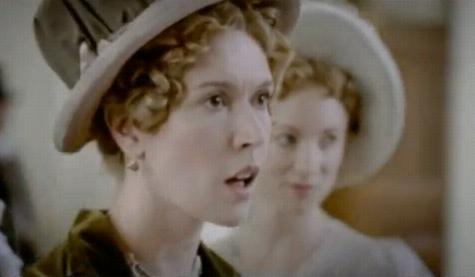
Snooty Elizabeth Elliot lost her chance to snare a man

Snooty Elizabeth Elliot lost her chance to bag a man

  • And that old “play-hard-to-get” theory? Still just a theory. Only 19% of men and 28% of women believe that a woman should be mysterious and play hard to get for the first few dates. (Elizabeth Elliot played hard to get and where did that get her? At 29 she’s staring spinsterhood in the face. Good old Charlotte Lucas took the horse by the reigns and saddled her man, albeit a fairly defective one. Mr. Collins had a house and a job, which was all that Charlotte wanted or needed. She encouraged him to garden, while spending her days alone in her private parlor.)

“Women no longer need to play the more submissive, demure role – and it’s nice to see that both genders support this progress,” states Dr. Ilona Jerabek, president of PsychTests. “This doesn’t mean that men are off the hook and don’t need to put an effort into romance anymore. The modern woman still likes romance, but it’s now a shared endeavor, with both genders putting an effort into the relationship. What fascinated us most about this study was that younger men and women had somewhat more traditional courtship views than older age groups.” (It is obvious from the following statistics that attitudes towards chivalry and courtship have changed drastically in 200 years. Imagine a young and spirited woman like Elizabeth Bennet adopting any of the following modern attitudes!:)

Age differences in courtship perceptions: surprising results

Queendom’s age comparisons reveal several interesting differences:

  • 28% of men under 30 and 22% of men over 30 feel that the man should plan most of the dates.
  • 60% of men under 30 and 76% of men over 30 feel that a woman should be able to propose to a man.
  • 20% of men under 30 and 13% of men over 30 said that they would feel threatened by a woman who took control of what they did on the first date.
  • 26% of men under 30 and 14% of men over 30 believe that it should be the man who asks the woman out, not vice versa.
  • 51% of men under 30 and 39% of men over 30 believe stated that the man should pay for the first date.
  • 66% of women under 30 and 71% of women over 30 have either asked a man out or would consider doing it.
  • 64% of women under 30 and 72% of women over 30 think it’s ok to be the one to ask a man to marry them.

The modern way vs Jane Austen’s way of beguiling your beloved

  • Forget the dozen roses. Buy one, wrapped with a ribbon. (200 years ago: Give her a posy of fresh wild flowers that you picked in a field.)
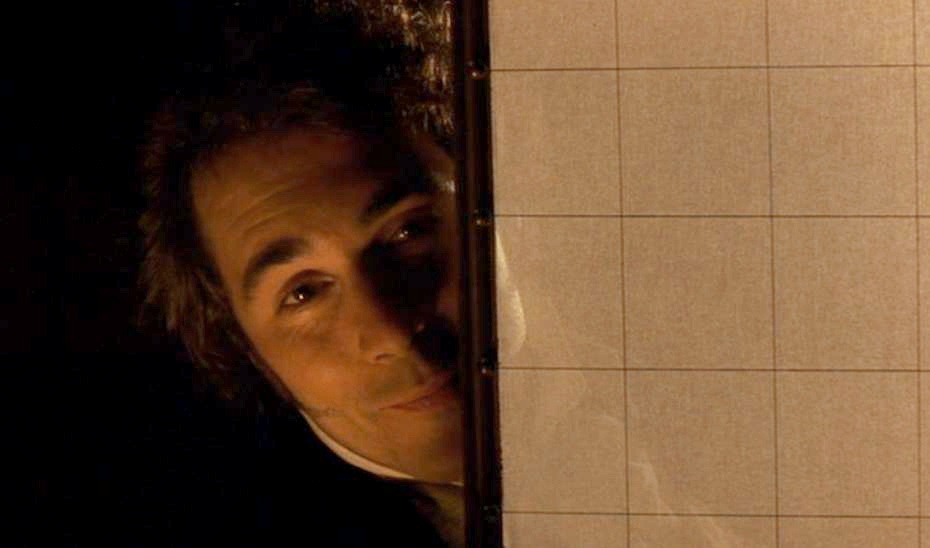
Marianne draws Willoughby's silhouette

Marianne draws Willoughby’s silhouette in the drawing room

  • Show up at your partner’s workplace and whisk him or her away for lunch. (200 years ago: Sit in the drawing room with your intended and let her wind her wool skein over your hands or suggest that you draw his silhouette.)
  • Place a love note in your partner’s lunch bag or on the bathroom mirror. (200 years ago: sing a duet at the pianoforte and make sure that the bench is a tad small.)
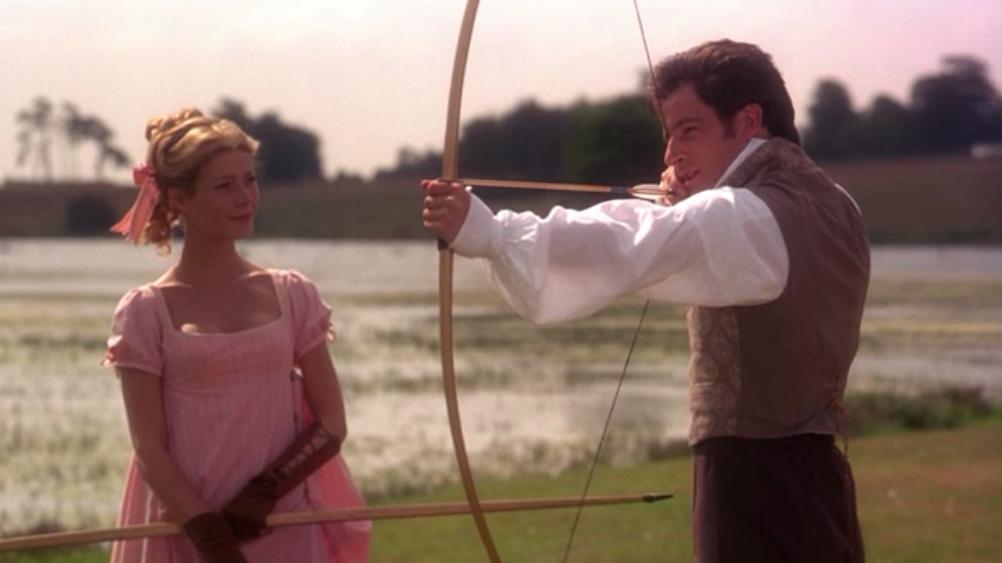
Archery as sport

Archery as sport and a means of courtship

  • Grab a blanket, a bottle of wine, and drive out to a place where you can see the stars. (200 years ago: arrange a walking party with your sisters and cousins and ask him to tag along. Have the servants grab the blankets and wine, and drive you to your location.)
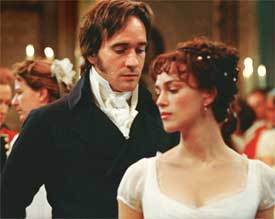
Darcy and Elizabeth

Darcy and Elizabeth

  • Slow dance in your living room. (200 years ago: Make sure to solicit her hand for the supper dance, wherein you shall spend another pleasurable hour in her company.)
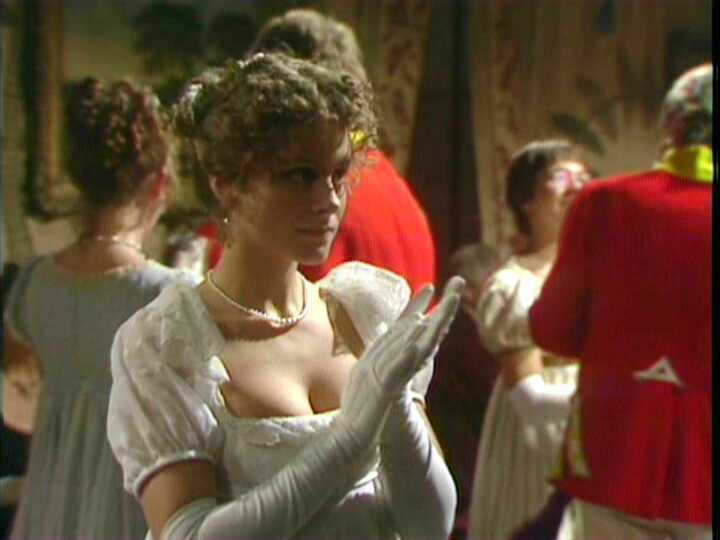
Elizabeth Bennet, 1980

Elizabeth Bennet, 1980

  • Avoid embarrassing lingerie no-nos. Take him to a lingerie store and show him all the naughty things you like. (200 years ago: drop your handkerchief near your exposed ankle for him to retrieve, or make sure that your loveliest eye-catching locket nestles snugly between your well-exposed breasts. )
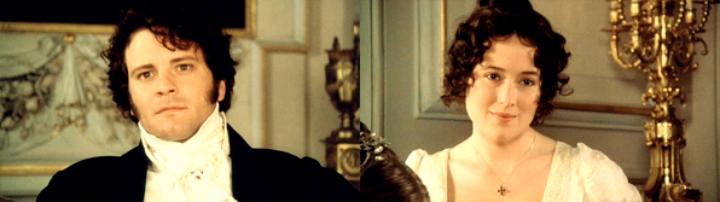
Darcy and Elizabeth make goo goo eyes at each other across the room

Darcy and Elizabeth make goo goo eyes at each other across the room

  • Meet at a local hang-out and pretend you’re two strangers flirting with each other. (200 years ago: make goo goo eyes at each other in the drawing room while others play a musical instrument, or pretend that you don’t like each other and trade bantering insults.)
  • Build a little bonfire in your backyard and make chocolate Smores. (200 years ago: engage in a game of archery and set out an al fresco tea.)
  • Get tango or salsa lessons together. (200 years ago: ask the music master to visit the village to teach the latest dances.)

As you can see, gentle readers, while the rules of romance have changed over the years, the game remains the same! What would Jane Austen have thought of today’s courtship rules, I wonder?

Queendom.com , a subsidiary of PsychTests AIM Inc. , is a site that creates an interactive venue for self-exploration with a healthy dose of fun.  PsychTests AIM Inc. originally appeared on the internet scene in 1996, providing psychological assessment products and services to human resource personnel, therapists, academics, researchers and a host of other professionals around the world.  

Read Full Post »

The Downton Abbey of seasons past is back, warts and all. Last night viewers were treated to a 120-minute episode of pure Downton Abbey-isms, with Violet spewing her wisdom left and right, character development galore, only an occasional plot twist that stretched the story line into unbelievable territory, Tom Branson as super hero, and even a glimmer of passion ‘tween the sheets twixt Mary and Matthew. So let’s dive in, shall we?

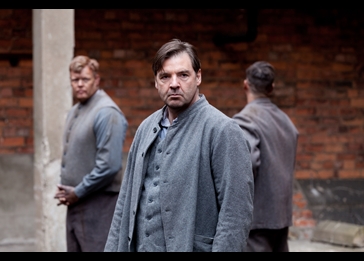
All bow down and hail Bates’s release from prison!

Thank you Julian Fellowes for putting an end to our misery. I had reached a point where I didn’t care if Bates rotted in prison for the rest of his life. This week we were treated to Bates and his Anna sitting side by side, walking side by side, and painting side by side. Their tepid kisses told me that they should stop taking lessons from Mary and Matthew and embark on another steamy honeymoon night.

Ethel and her miasmic scarlet letter washed clean

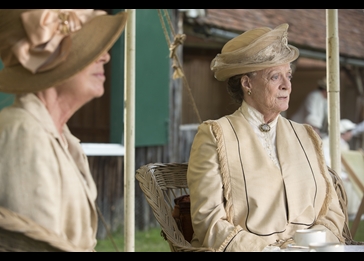
It’s becoming clear to Violet that: “Ethel is notorious in the village.”
“I don’t think so”, replies Isobel, who will counter her nemesis any time, any where, even at the price of being wrong. Violet always has the upper hand: “I know so. You have touched this house by a miasma of scandal … “

In this episode the two battle axes are at it in full force. Violet shows no quarter, even to the hapless Ethel, who ventures to brag after receiving a compliment about her cooking from Isobel: “These days a working woman must have a skill.”

To which Violet replies:  “But you seem to have so many.”

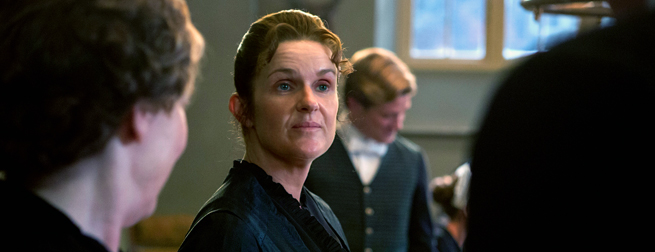
Our dowager does have a heart and even keener powers of observation. Noticing Ethel’s extreme unhappiness at her treatment in the village, she joins forces with Mrs. Hughes and Isobel to remove the fallen woman from her scene of social crime to another position in another village. Violet places an advertisement in Ethel’s name “to wash her clean.” But the only appealing offer comes from a Mrs. Watson near Cheadle, a village tantalizingly near her son, Charlie, and the Bryans. who are raising him. This is when Violet comes to the rescue!

She invites Mrs. Bryan, who, in defiance of her meany of a husband, encourages Ethel to accept the position, for she feels “uncomfortable keeping a mother separated from her son.” With Ethel working nearby, she can see how Charlie is getting on, and later, much later, reveal that she is his mother.

Lady Rose’s nubility vs the Downton nobility

Let’s see. Lady Rose’s mama is Violet’s niece and godchild. Lady Rose is 18. She is pretty. She is a flapper and a trendsetter, for her wardrobe is years ahead of its time. She is also a liar and a sneak and (blush) the girlfriend of a slimy married man with a house in Warwick Square. This minx’s sole reason for appearing on DA is to spice things up, and I must admit she is more interesting than that dishrag, Lavinia Swire. (Will she hook up with Branson, super man, in future episodes? Curious minds want to know.)

Before the nubile Rose is packed off to her family’s estate in Scotland in July, she will stay with Violet at the Dower House. When questioned if she was capable of keeping such a young girl gainfully occupied and interested, our stalwart dowager replied: “The thing is to keep smiling and never to look as if you disapprove.”

Somehow Rose finagles her great aunt into letting her go to London with Edith so that she can arrange a surprise for darling mummy. Matthew also needs to go there on some mysterious business, and so, like the lion, tin man and Dorothy, the three of them start off for Aunt Rosamund’s place.

Once there, Rose makes her escape in a taxi and disappears ’round the bend. The taxi driver, kind man that he is (and hoping for a fat tip), returns Rose’s scarf and relates the sordid tale of her escapade.

Gullible Rose is rescued at the Blue Dragon from the clutches of lying cad who has (if inferences can be read correctly) fornicated with the girl.

This story arc is so contrived that I felt myself getting mad, except for the fact that we see Matthew in heroic action and Aunt Rosamund look down her aristocratic nose at that dreadful two-timing Terrence.

Once Rose is safely deposited at her great aunt’s home, Violet, with a smile that could neutralize poison, announces that Rose will be trundled off to Scotland after the cricket match to stay alone with her Aunt Agatha.

The camera pans to Rose’s horrified face.

Do we really care? Except that this gives Julian Fellowes a perfect excuse for sending the whole troupe to Scotland for Episode Seven of this season. Stay tuned to find out what happens.

Edith, the not so invisible woman

Credit: Courtesy of © Giles Keyte/Carnival Film & Television Limited 2012 for MASTERPIECE

Credit: Courtesy of © Giles Keyte/Carnival Film & Television Limited 2012 for MASTERPIECE

Praise Saint Julian, for he has given Edith direction, a job, a nice wardrobe, and a splendid man. Although, let’s be realistic, life will never be perfect for our scrappy gal, who has learned to make do with her eldest sister’s cast offs. We first meet up with our heroine at her granny’s house for tea. Violet is aghast when she discovers that Edith actually means to accept the position of columnist for The Sketch. When Edith reminds granny that it was her idea that she find something useful to do, Violet retorts, “I meant running a local charity or paint watercolours or something!”

At dinner Edith announces that she accepted the job as journalist and her plans to “get the 10 o’clock” and meet her editor for tea. Violet seems quite supportive, saying “I don’t think a woman’s place is eventually in the home, but I see no harm in her having some fun before she gets there”, but then she turns her thoughts directly on Edith. “”Edith isn’t getting any younger, perhaps she isn’t cut out for domestic life.”

And so Edith goes off to London. Her first glimpse of Michael Gregson, the editor of The Sketch, is that of a smiling, strapping man who is looking for “a mature female voice” (and perhaps something else on the side).

They make a date for lunch next time she’s in town, and our Edie takes care to look especially pretty. As she talks of journalism and being jilted at the altar, she mentally rearranges Mr. Gregson’s clothes off his body.

Charmed as she is, our Edie wasn’t born yesterday! Back at the Abbey, this smart cookie checks her man out. And hies back to London blazing mad.
Donning a serious working hat, her best pearls, and killer lipstick, Edie rushes to Gregson’s office to QUIT her one opportunity to make something of herself.

I had the impression, SIR! that you were flirting with me and found me attractive! Only to find you are MARRIED!”

“Yes, uhm, well, let me explain.”

“I find the idea repugnant! No, I find YOU repugnant. I quit!!

“No don’t go yet. You haven’t had your clotted cream and fresh raspberries! You see, my wife is in an asylum. Lizzie was wonderful when she could cook and clean and sew, but she is gone. And I can’t divorce a lunatic. I’m tied, I tell you, TIED to a madwoman, but I’m MAD about you! Just seeing your feisty words in print lifts my spirits. Having lunch with you …”

“Do I look stupid? My cousin, who is MUCH younger and more nubile and prettier, bought that line off some toff on Warwick Square, but I’m not having any of your deceitful and hateful and untruthful lies.”

What if I said, “Love means never having to say you’re sorry?”

“Oh, well, then. If that’s the case, see you next week.”

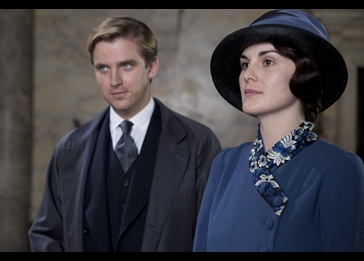
The Passion of Mary and Matthew

Credit: Courtesy of © Giles Keyte/Carnival Film & Television Limited 2012 for MASTERPIECE

Credit: Courtesy of © Giles Keyte/Carnival Film & Television Limited 2012 for MASTERPIECE

One more open-mouthed smooch and the passionate scenes between Mary and Matthew will receive an x-rating. We catch Mary saying such seductive things as, “You’ll make me untidy,” “We’re trying for a baby,” and “While we make our little prince.” I shudder at her passion.

Even the doctor is predicting an increasing amount of sexual activity, saying that Lady Mary will be pregnant by 6 months. Gasp. This is too much for me to bear. I am positively getting red in the face thinking about the lustful way in which these two are cavorting all over creation in order to follow their DUTY to God, country, house, and earldom.

Oh, what the heck. I’m a 21st-century girl. Go team Matthew and Mary. Bring that next heir on!

The sacking of Thomas, or how O’Brien tightens the noose

Credit: Courtesy of © Giles Keyte/Carnival Film & Television Limited 2012 for MASTERPIECE

Credit: Courtesy of © Giles Keyte/Carnival Film & Television Limited 2012 for MASTERPIECE

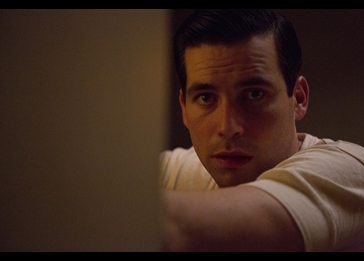
The long arm of forewarning and prophecy made it’s first appearance with this statement: “I expect you’ll find something to do, Mr. Barrow, now that Mr. Bates is back.” Viewers have wondered since the first episode when O’Brien would crank up her evil conspiracy against Thomas and it seems the time is at hand. Thomas is in a precarious situation and knows he’ll be given his notice as the earl’s temporary valet. If anyone was rooting for Bates to rot in prison, it was our erstwhile valet cum footman cum bad guy. But the earl promises Thomas that he won’t be left in the lurch. “We’ll sort things out.”

The fiendish O’Brien, divining the right moment, strikes up a friendly conversation with Thomas and makes this observation about James: “You make a cozy couple I must say. Alfred says [James is] always going on about you. Silly sloppy stuff.”

Thomas stops smoking long enough to retort: Youre quite wrong Miss O’Brien He’s a proper little ladies man.”

“Oh, if that’s how you want to play it.”
“What are you going on about?”
“There’s no need to bark. I only know what Alfred tells me.”
“Well, if he says Jimmy’s interested in me he’s lying.”
“Oh dear, was it supposed to be a secret?”

Lovely stuff, this dialogue. O’Brien and Thomas dance around each other like two vipers. One hungers to kill the other, while the second is distracted by a desire that overwhelms his sense of caution.

And so the inevitable happens, with Thomas making a move on a sleeping Jimmy. (Does this make sense? Would he not wake him to see if the young man was receptive?)

Suddenly awakened, Jimmy is, like, totally spooked.

Credit: Courtesy of © Joss Barratt/Carnival Film & Television Limited 2012 for MASTERPIECE

Credit: Courtesy of © Joss Barratt/Carnival Film & Television Limited 2012 for MASTERPIECE

This happened during an age when homosexuality was criminalized and gays were literally living in the closet. Poor Oscar Wilde was sent to prison and hard labor, only to emerge as a physically and spiritually broken man. Thomas was putting everything on the line by showing his affection to James.

After the truth comes out, Thomas and Carson engage in a conversation that represents the attitude of most gay and straight people at the time:

Thomas: “I was very drawn and got the impression he felt the same way. When you are like me, Mr. Carson, you have to read the signs as best you can, because no one dares to speak out.”

Carson: “I do not wish to take a tour of your revolting world. You have been twisted by nature into something foul.”

Here is where Thomas quietly defends himself, saying, “I am not foul, Mr. Carson.”

Bravo, Thomas.

Jimmy and Alfred are guided by the puppeteer O’Brien, who manipulates the situation in such a way that Thomas is let go without a reference after ten years of service, a disastrous consequence that will lead him straight to the poor house.

There are twists and turns, with the end of the story sorted out by Bates, who, while he feels revenge is sweet, is a decent man. For the first time since his return from prison, Bates has been given an important task by Julian Fellowes – as the instrument of redemption for Thomas. All he has to do is lure a self-satisfied O’Brien to his house for tea and whisper in her ear: “Her ladyship’s soap.”

O’Brien turns paler than Bates’s whitewashed walls and leaves, promising to set things right.

In the end, all turns out well, with Thomas retaining his position in the house as an underbutler. This job is usually held by a former first footman who steps in for the butler if he is unable to fulfill his duties due to an illness or absence. Thomas as underbutler bodes well for further plot developments, and I cannot wait to see him manipulate his new position to his advantage in future DA seasons!

Tom/Branson, superman

Tom Branson emerges as the super hero of this season, able to grieve with the best of them, dandle a baby, divine how to run a great estate simply from observing his granddaddy, order his boozy brother, Kieran, around, deftly sidestep tricky matters of protocol so that he even gains Carson’s grudging respect, and learn to play cricket in the blink of an eye.

These tricks disguise the fact that Tom/Branson plot line often makes no sense. Where is his revolutionary fervor? Buried in the grave with Sybil? While most of the family calls him Tom, Violet and the earl insist on calling him Branson, which is meant to put him in his place. This does set up a running comic dialogue, with Violet constantly being admonished by Cora and her granddaughters. Remarkably, Mary, whose nose is pointed so high in the air that it attracts snow clouds, fully embraces Tom’s entrance into the family, even though the only thing they have in common is baby Sybbie.

Good old Cora comes to Tom’s rescue repeatedly, saying that “He’s our responsibility, he and the baby.” Frankly, the Bryans’ attempts to take their grandson from Ethel makes more sense than this sentimental claptrap. The Crawleys have the wealth and means to get rid of the chauffeur while keeping their grandchild. But the viewers are invested in the Crawleys as decent people. We would balk and leave in droves if the earl and his extended family went off the deep end and used their social muscle to push Tom/Branson out of the picture in order to retain Sybil’s child.

Credit: Courtesy of © Giles Keyte/Carnival Film & Television Limited 2012 for MASTERPIECE

Credit: Courtesy of © Giles Keyte/Carnival Film & Television Limited 2012 for MASTERPIECE

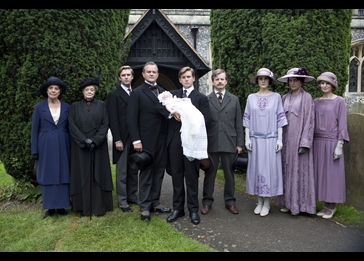
The Catholic christening is deftly glossed over, but provides some fun dialogue from the earl, who delights in poking fun at the clergy.

Recall that in episode 4 he suggested that Violet be placed next to a toffee-nosed prince of the church because she’d know how to handle him. The earl gets off another brilliant line at the dinner table, protesting that at a Catholic christening he…

And thus we come to the ridiculous situation in which forward thinking Matthew discovers that Tom’s granddaddy owned a teensy tiny Irish sheep farm, a fact that caused him to conclude that Branson must know how to handle the running of an enormous estate in Yorkshire.

Irish sheep farm. Image @kid's encyclopedia

Irish sheep farm. Image @kid’s encyclopedia

I was drinking wine during this scene and nearly choked with disbelief on that peculiar observation.

When Branson’s brother, Kieran, sensibly invites him to live in rooms above his garage in Liverpool, the upstairs gang just about keeled over from a collective heart attack.  Baby Sybbie in a garage? Over Violet’s dead body!

Kieran turns out to be a plot device upon which hangs our changing perception of Branson, whose super powers include diplomatic skills with which he convinces his brother to eat with the toffs, honors Cora, and impresses Carson. Branson lives in limbo, no longer able to socialize with the downstairs folks and unable to fit in comfortably upstairs. What’s a super hero to do?

Sweep out the old, bring in the new

My DA viewing party took the opportunity to take breaks any time Matthew, Tom, and Mary discussed farm improvements using a volume of Estate Farming and Stewardship for Dummies.

The earl and Jarvis are Downton Abbey’s benevolent overlords, using farming techniques that go back to the Norman Invasion. Murray, Matthew, and our super hero Branson, are forward thinking chaps who are unwilling to squander Swire’s fortune in the manner that Robert used to waste Cora’s inheritance.

It is telling that Robert now thinks of Downton as a dual monarchy, whereas Matthew looks upon his inheritance as an investment that must turn a profit.

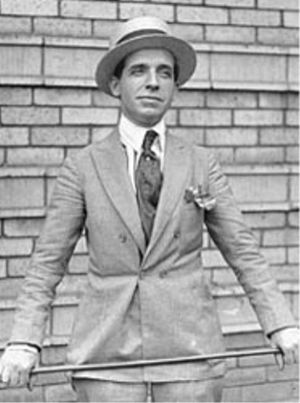
Ponzi circa 1920 (Photo credit: Wikipedia)

Ponzi circa 1920 (Photo credit: Wikipedia)

As the young whippersnapper is starting to make sense a desperate Robert brings up a marvelous new American financial invention: the Ponzi Scheme. “I hear that you get a great return on your investment in 90 days.”

Jarvis, seeing his cushy, easy job vanish into thin air, asks for a good reference and sweeps out of the room, old broom that he is. This plot development stepped over the line of common sense too many times, but I understand Fellowes’ need to provide baby Sybie’s daddy with a raison d’etre for remaining in town.

Violet, as usual, gets in the last word, telling her son: “Think of the child. You cannot want your only granddaughter to grow up in a garage with that drunken gorilla. We owe it to Sybil.” Besides, as she sensibly remarks, we could call him Branson again.

Dang right and experience be damned. And so at the end of Episode 6 the new estate manager is … Ta, Da! Drum roll, please – Sybil’s darling Tom, the grandson of an Irish sheep farmer.

The depths of Branson’s super powers have not been plumbed. When the earl, in a moment of self pity, declares “It’s time for me to take a back seat”, our hero comes to the fore with this observation, that Robert knows the people on his estate backwards and forwards and that this knowledge is priceless.

Hearing this, Robert’s face shines with delight and he declares in a Sally Field moment – “You like me, you really like me!”

Credit: Courtesy of © Giles Keyte/Carnival Film & Television Limited 2012 for MASTERPIECE

Credit: Courtesy of © Giles Keyte/Carnival Film & Television Limited 2012 for MASTERPIECE

It’s cricket time!

Credit: Courtesy of © Giles Keyte/Carnival Film & Television Limited 2012 for MASTERPIECE

Credit: Courtesy of © Giles Keyte/Carnival Film & Television Limited 2012 for MASTERPIECE

I almost thought I was watching a replay of the Ravens and 49ers when the villagers took on the folks at the Abbey in their yearly cricket match. The scenes were so action-packed and unbelievably tense that I missed quite a few details.

The village folk (including Dr. Carson) were up for a thrashing, having won too numerous times to count, and the earl and Moseley were just the right men to bring VICTORY to Downton Abbey. Of course their team was missing two men, mere bumps in an otherwise smooth landscape.

Matthew had to hurry up and get Branson up to speed and teach him cricket in like 30 seconds …

… and the earl had to find a way to keep Thomas, a talented cricketer, on. Fellowes, clever fellow that he is, solved all of Episode 6’s problems in a mere 10 minutes.

Branson will stay on with baby Sybbie at the mansion, which has Cora crowing with delight. Mary and Matthew continue their pornographic display of affection in plain view in the hope of conceiving a little replacement male Crawley. Edith basks in the thought of being loved by an honourable married man and having a paid position. Violet has been reassured time and again that she is perfect, which does not surprise her at all.

And then there’s Branson. He, who has NEVER played cricket before, catches the WINNING ball! Those of you who were not convinced of Branson’s super powers must now agree – the man is unstoppable!

And so, all is now well in Downton Abbey land. See you next week, gentle readers. Same time, same blog.

In leaving your thoughts, please NO PLOT SPOILERS about the last installment.

Images courtesy PBS Pressroom.

Read Full Post »

chronicles of downtonInquiring Readers: Thank you for leaving your comments for Downton Abbey Season 3, Episode 5. The winner of a free copy of The Chronicles of Downton Abbey is tinuviel, chosen by random number generator. Tinuviel, please send me your mailing address.

Thank you ALL for leaving your detailed reviews of Episode 5. I enjoyed reading all of your responses. My review of Episode 6 will be posted on Monday, February 11th. My review of Episode 5 is at this link.

Order the book for $19.99 at PBS.org

Read Full Post »

Inquiring readers: This event is a mere hour down the road from my humble abode. I am thinking of attending. Anyone else in the mid-Atlantic area thinking of going?

The next welcome and special program of the local Southeastern VA Regional Chapter of the Jane Austen Society of North America is on Saturday, March 2, 2013 at 2:30 p.m.  Williamsburg Regional Library, 515 Scotland St., Williamsburg, VA  23185.

The program (skits on familial relationships) will start at 3:30 p.m. to accommodate those members who are also attending the George Washington Ball rehearsal that afternoon.  Registration starts at 2:30 p.m., followed by a beginning dance and an information fashion parade.  Announcements will be made regarding membership and upcoming programs.  Raffle and door prizes will be awarded.

Admission is free for current members; $5 for non-members; $4 for costumed attendees.  CASH ONLY.


Call Virginia Lee for details (757) 221-6686.
Join JASNA, The Jane Austen Society of North America! You don’t
need to be an Austen expert ― just an Austen lover!
Please visit our web site at http://www.jasna.org for information.
Student dues available!

Read Full Post »

Rabid Downton Abbey fan: Do not continue reading this post if you have not seen the latest Downton Abbey installment (#5). In this post-traumatic stress episode, in which the viewer is still reeling from events that unfolded in Episode 4, Julian Fellowes is finally starting to concentrate on the characters again.

Credit: Courtesy of © Joss Barratt/Carnival Film & Television Limited 2012 for MASTERPIECE

Credit: Courtesy of © Joss Barratt/Carnival Film & Television Limited 2012 for MASTERPIECE

Daisy’s relationship with her papa-in-law is strengthening and promises to bode well for her financial future.

Isobel’s good heart is having a positive impact on Ethel.

Mrs Hughes and Mrs. Patmore are turning into the sort of servants one could easily imagine as friends.

And Maggie Smith simply shines as the grieving dowager who desperately wants to save her son’s marriage.

Credit: Courtesy of © Joss Barratt/Carnival Film & Television Limited 2012 for MASTERPIECE

Credit: Courtesy of © Joss Barratt/Carnival Film & Television Limited 2012 for MASTERPIECE

As for the prison story, it seems that Mr. Bates might finally frolic in some open meadow with his fair bride again.

Wonder of wonders, Matthew and Mary showed a spark of marital harmony in a very affecting bedroom scene.

There are a few problems, of course, for this season can still not compare to Season One. Those two Neanderthals – Robert and Carson – are becoming insufferable with their stubborn adherence to old customs.

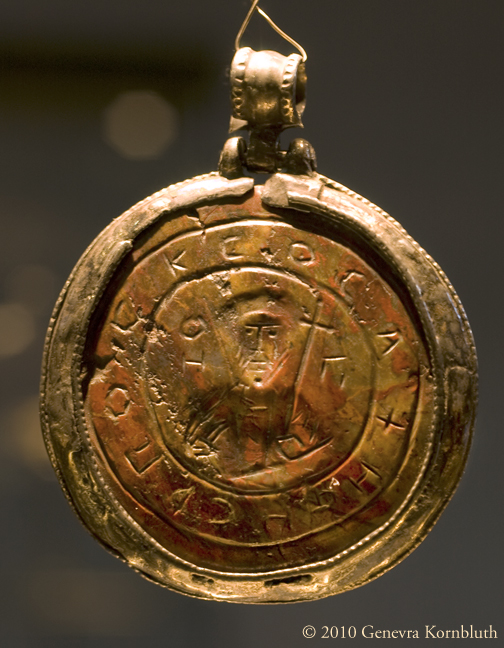
And the whole Catholic issue is somewhat tedious, but not unrealistic. There was a great deal of animosity and hostility towards Catholics from British Anglicans and American Protestants in the early 20th century. All the ceremonial hoopla of this relic-loving, reliquary-prone religion gave Protestants in the US and Anglicans in the UK the heebie jeebies, and so the Robert’s distaste is not all that surprising. (My father’s side of the family were staunch, conservative, Pope-fearing Catholics, which my mother’s side definitely was NOT. My maternal uncle quipped that if all St. Servaas’s bones were put together, scientists would discover that the man had been at least 12 feet tall.)

Seal of St. Servaas

Seal of St. Servaas

What is unrealistic is Robert’s SURPRISE that Tom Branson would want his daughter to be baptised in his faith.

Fellowes has made our earl look stupid on too many occasions.

Where I once admired our lord of the manor, I now find him irritating. Having said that, the final scene in which he and Cora hold on to each other in mutual grief had me grabbing for my hanky.

Which brings me to one final thought: Has anyone else noticed this strange phenomenon? – Robert’s dog, Isis, doesn’t seem to age. The series began in 1912 and is now covering events in 1920-21.

Isis should have aged 8 or 9 years. She would have a gray muzzle at the very least and the slow gait of an older dog. But she is as sprightly as ever! Go figure. (Ah, a reader wrote to say that Pharaoh preceded Isis, so that would make our lovely bitch only 3-4 years old. Continuity preserved!!)

chronicles of downtonNow for my book giveaway. You all must be salivating. (Unfortunately, only U.S. Viewers are eligible.) St. Martin’s Press has kindly sent me a copy to give away of their gorgeous new Downton Abbey companion book, The Chronicles of Downton Abbey: A New Era, written by Jessica Fellows and Matthew Sturgis. It is a lush volume, made of glossy paper and filled with color photographs. Included are details of all the main characters and glimpses of what went on behind the scenes from the perspective of the film’s director, executive director, and other members of the crew.

I particularly like the items that go with each character. For example, Thomas’s chapter showcases images of the accoutrements of his position, the brand of cigarettes he would have smoked, and the nature of his collars. The Earl and Countess’ possessions include images of their jewelry, picnic basket, newspapers, hat, and embroidery hoop. Mrs. Patmore’s and Daisy’s chapter includes images of various kitchen items. And so on, and so on. This book, in addition to the equally wonderful The World of Downton Abbey, given to me for Christmas by a dear friend, are the perfect coffee table adornments for those of us who are DA addicts.

Order the book from PBS for just $19.99

Contest Rules: For a chance to win a copy of this book, all you need to do is write about some aspect of Episode 5 that you liked or didn’t like – just as if you are the reviewer! The contest is open until February 10th, midnight. PLEASE NOTE: CONTEST is Closed. Tinuviel, you are the winner, chosen by random number generator!

Images courtesy PBS PRessroom.

I look forward to reading your comments! NO SPOILERS, PLEASE!!! 

Read Full Post »

« Newer Posts - Older Posts »