Feeds:
Posts
Comments

Archive for the ‘Pride and Prejudice’ Category

Gentle Readers: Jane Austen has inspired many people to comment on her novels, including comic artists. The recent Jane Austen/Monster Mash Ups provide a fertile field for visual satire. Jane Bites Back and other mash-ups are the inspiration for “Austen’s Revenge” by Liz Wong. (Click on images to enlarge them.)

A comic inspired by the recent Jane Austen Paranormal trend (Pride and Prejudice and Zombies, Sense and Sensibility and Sea Monters, Jane Bites Back, The Immortal Jane Austen, Mr. Darcy, Vampyre, Mr. Darcy’s Hunger… yes, these are all actual published books…).

This is Jane’s revenge for taking such liberties with her work.
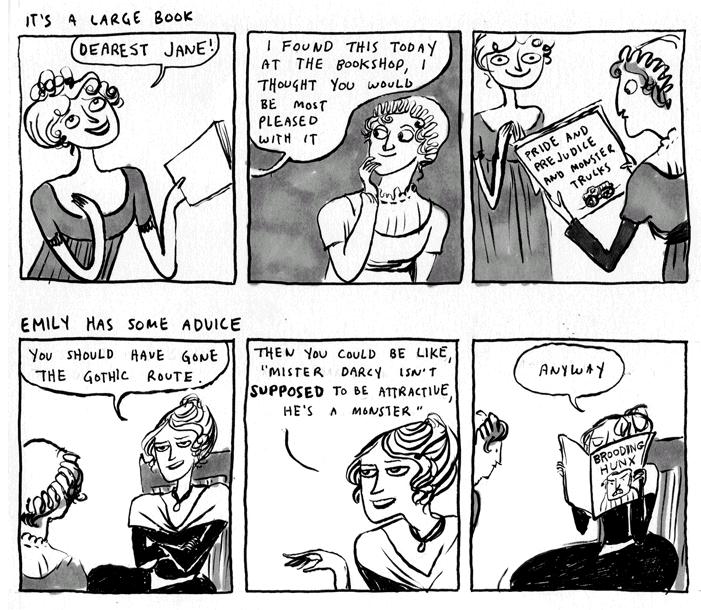
The ever popular Kate Beaton is well known for her historical satires, and I have showcased her work before. Most recently she jumped on the monster mash-up bandwagon! I must say that these are pretty funny.

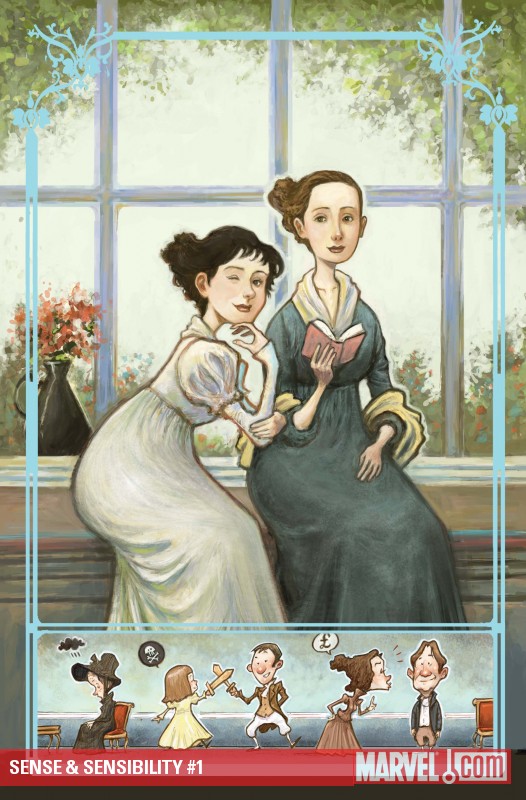
Don’t forget that a new Sense and Sensibility graphic novel will be released by Marvel Comics on May 26th! Sonny Liew drew the illustrations for this new graphic treatment of Marianne and Elinor Dashwood’s story.

Read an interview with Nancy Butler, the master mind behind this comic and Pride and Prejudice, which was published last year and became a huge hit.

Add to DeliciousAdd to DiggAdd to FaceBookAdd to Google BookmarkAdd to RedditAdd to StumbleUponAdd to TechnoratiAdd to Twitter

Read Full Post »

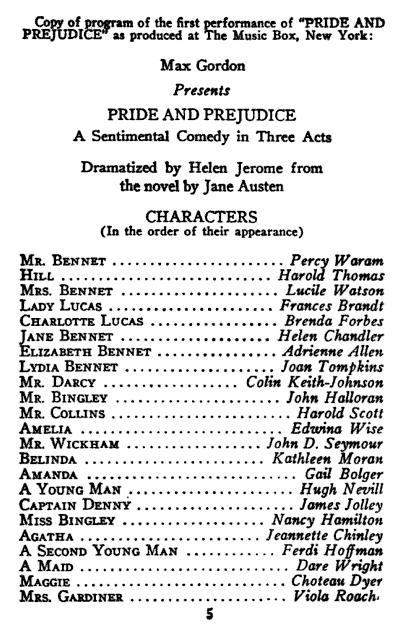
The 1935 production of Pride and Prejudice: A Sentimental Comedy Written in Three Acts, written by Helen Jerome and played on Broadway, featured Adrienne Allen, an English actress, as Elizabeth Bennet.

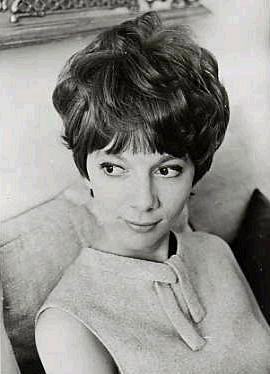
Miss Allen, a slender blonde, had been successful in London and Broadway stage productions, such as Private Lives with Noel Coward and Gertrude Lawrence, when she was signed to a contract by Paramount. She was married to actor Raymond Massey from 1929 to 1939 and is the mother of Daniel and Anna Massey.

Private Lives, 1930, Laurence Olivier, Adrienne Allen, Noel Coward, and Gertrude Lawrence

Best known for his portrayal of Abraham Lincoln, Canadian-born Massey also portrayed the character of “Jonathan Brewster” in the film version of Arsenic and Old Lace. He played Dr. Leonard Gillespie in Dr. Kildare during the 1960’s.  Raymond Massey Massey died in 1993.

Young Anna Massey’s career might have been decided as early as her christening, for her godfather was the film director John Ford.

Celia Johnson as Elizabeth Bennet in Helen Jerome's Pride and Prejudice

Anna made her stage debut at the age of 17 in the West End hit The Reluctant Debutante with Celia Johnson and Wilfred Hyde-White. Celia, coincidentally, also played Elizabeth Bennet in the Helen Jerome play of Pride and Prejudice (1936).

Janeites know Anna Massey best as Mrs Norris in the 1983 BBC mini-series of Mansfield Park.

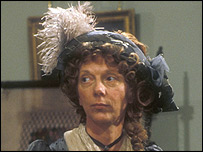
Anna Massey as Aunt Norris

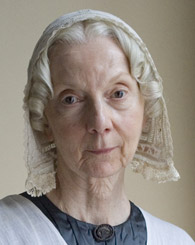
In recent years she has played Mrs. d’Urberville in Tess of the d’Urbervilles (left), and as Mrs. Bedwin in Oliver Twist (2008) right.

“If I’d had an education, I’m not sure that I would’ve been an actor,” she once said. “My education ended when I was 15 and it was assumed that I would go into the theatre and I did.” –  Anna Massey The Plain Girl’s Lament

More on the topic:

Read Full Post »

Mr. Bennet and his daughters

Mr. Bennet and his daughters

This 50-minute, 1999 documentary from Roundabout Productions about Jane Austen’s Pride and Prejudice, narrated by Donald Sutherland, who played Mr. Bennet in 2005’s Pride and prejudice, features authors and Jane Austen scholars discussing love and first impressions, Pride and Prejudice, and the author.  Film clips from the 1939 and 1980’s film adaptations are used in this special, which is based on the commentary of Nora Ephron (director and writer of When Harry Met Sally), Helen Fielding (author, “Bridget Jones’s Diary”), Fay Weldon (author, screenplay for “Pride and Prejudice” 1980), Roger Rosenblatt (Editor), Prof. Marcia Folsom (Wheelock College), Edith Lank (Collector and JASNA member), Thomas Carpenter (Trustee at Jane Austen’s House, Chawton) and Judith French (author/performer, “The Woman).

Click on the image below, which will lead you to all five videos.

Read Full Post »

libraryThe abstract of What Was Mr. Bennet Doing in His Library and What Does it Matter? by H.J. Jackson states:

In this article, Jackson uses the familiar example of the Bennet household in Pride and Prejudice to outline some of the practices associated with the establishment and maintenance of a library about 1800. Besides gathering clues from the novel itself and providing information about the resources likely to have been available in or near a market town like Meryton, this essay speculates that Mr. Bennet might have been writing in his books and surveys some of the ways of writing that would have been available to him.

This vastly interesting essay, part of a series of essays on Romantic Libraries, is filled with insights like these:

The possession of a library—of a dedicated space, as well as of a private collection of books—is a clear indicator of status in the novel, reflecting relatively recent social developments. The Bingleys, renting Netherfield, have a room but not many books; their new money will be put to use in this generation by the purchase of property and the beginning of a collection. Darcy has a fine library at Pemberley, “the work of many generations,” to which he is constantly adding. His idea of a “truly accomplished woman” is one who would put it to use, a goddess capable of improving “her mind by extensive reading”. “I cannot comprehend the neglect of a family library in such days as these,” he says. His is the standard to which all aspire. The Bennet library is one of the bonds between Elizabeth’s family and the one that she will marry into: “He is a gentleman; I am a gentleman’s daughter,” as she defiantly but rather disingenuously declares to Lady Catherine. They have the same social values.

Read Full Post »

Elizabeth, as they drove along, watched for the first appearance of Pemberley Woods with some perturbation; and when at length they turned in at the lodge, her spirits were in a high flutter.

The park was very large, and contained great variety of ground. They entered it in one of its lowest points, and drove for some time through a beautiful wood, stretching over a wide extent.

Elizabeth’s mind was too full for conversation, but she saw and admired every remarkable spot and point of view. They gradually ascended for half a mile, and then found themselves at the top of a considerable eminence, where the wood ceased, and the eye was instantly caught by Pemberley House, situated on the opposite side of a valley, into which the road, with some abruptness, wound…. Elizabeth was delighted. She had never seen a place for which nature had done more, or where natural beauty had been so little counteracted by an awkward taste. – Jane Austen, Pride and Prejudice

Chatsworth

Chatsworth

Waterfall from the top

Waterfall from the top

Chatsworth is said to be the model for Pemberley, Mr. Darcy’s home in Pride and Prejudice, and the great house served as Pemberley for the 2005 film adaptation. The home of the Dukes of Devonshire, Chatsworth dates from the Elizabethan era when Bess of Hardwick and William Cavendish, the treasurer of the Chamber to Henry VIII, acquired the land. The exterior was rebuilt in the early 1700’s by William, the 1st Duke of Devonshire (Bess’s son). He built it wing by wing until some of the Elizabethan structure was buried deep within its new walls.

The first duke also renovated the garden, making it a complement to the house and causing Daniel Defoe to call it “the most pleasant garden and the most beautiful palace in the world.”  In 1760 the 4th Duke widened the Derwent River. He also directed famed landscape architect Capability Brown to make neoclassical improvements to the land surrounding the house:

The cascade of the willow tree fountain is a dramatically splashing and rushing water feature, originally designed in the 1690s by Grillet, a pupil of Ande Le Norte. Several years later, this cascade was dug up and extended, and a temple pavilion designed by Thomas Archer was placed at the top of the cascade in 1703 to provide a dramatic vista from the east side of the house. Around 1830, Paxton supervised the rebuilding of more than half the water cascade to align it better with the house. A new water aqueduct filling the garden ponds, reservoirs, and pipework were built to supply it. Later in the 19th century, some criticized the cascade, which is rather unique for an English garden. Joshua Major, in his book on the theory and practice of landscape gardening, remarked on how the cascade combination of art and nature opposes the dictates of good taste. However, pushing the limits of water power and its effects interested Paxton, his innovative work on the cascade and other fountains, as well as his designs for the garden, still delights visitors today. The water cascades, a sheet of water flows over the series of elegant steps, down from the Baroque pavilion to disappear abruptly into a culvert at the bottom, and feed into yet another fountain, the Sea Horse Fountain on the South lawn close to the house. – The Fountains at Chatsworth

The cascade waterfall is old, beautiful, and unique

The cascade waterfall is old, beautiful, and unique

From that first period remain several formalist landscape designs including a spectacular cascade tumbling down stone steps in the hillside east of the house, which was designed by Grillet, a pupil of Le Notre. The little temple at the head of the steps is fitted out with pipes and spouts and becomes itself a fountain with water cascading down its dome.

The great parterres of this period were swept away by the vogue for the romantic or natural landscape as created by Lancelot (Capability) Brown for the fourth Duke. By the 1760’s, the gardens became lawns (Chatsworth boasts the oldest lawn in Britain under continuous care) and the hills were crested with oaks and elms seen today in their maturity. An unspoiled Capability Brown park is what Jane Austen was describing.- New York Times, 300 Years of Treasures At Chatsworth

The step waterfall attracts tourists and waders.

The step waterfall attracts tourists and waders.

Read Full Post »

« Newer Posts - Older Posts »