Feeds:
Posts
Comments

Archive for the ‘Regency society’ Category

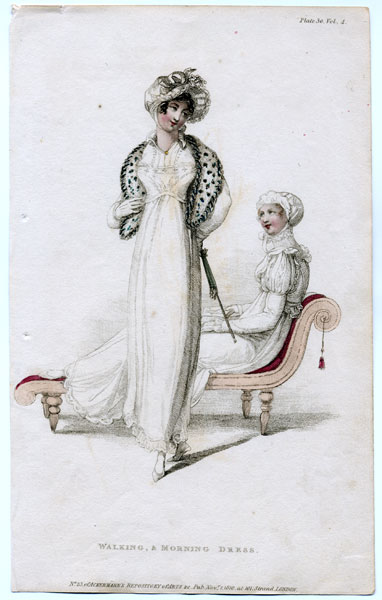
Copyright (c) Jane Austen’s World. A fine mist and cool air will  greet my dog and me on our morning walk. I intend to put on a thick short coat and scarf, and faux fur lined boots. How would my Regency counterpart have dressed in November, 1810, precisely 200 years ago?

More elegantly, I decided. While I putter on my computer in my jammies and robe, and sip coffee upon first rising, my Regency counterpart would have sipped hot chocolate from a delicate china cup and written letters, read from a book, or practiced on the pianoforte, as Jane Austen was wont to do in the early morning.

The maid would have started a fire in the morning room, but the house overall would have felt much cooler than it did even a month ago. A Rumford stove, which was becoming quite popular, would have retained  more heat, but as you can see, our Regency miss is swathed in a cap, long sleeved dress, and a high-necked chemisette. She wears gloves, stockings, and thin slippers. Layered as she is (for she probably wore a corseted petticoat underneath her ensemble and perhaps even a chemise), she would have felt comfortably warm. Had she still felt cold, she could opt to throw a thick shawl around her shoulders and a small throw over her lap.

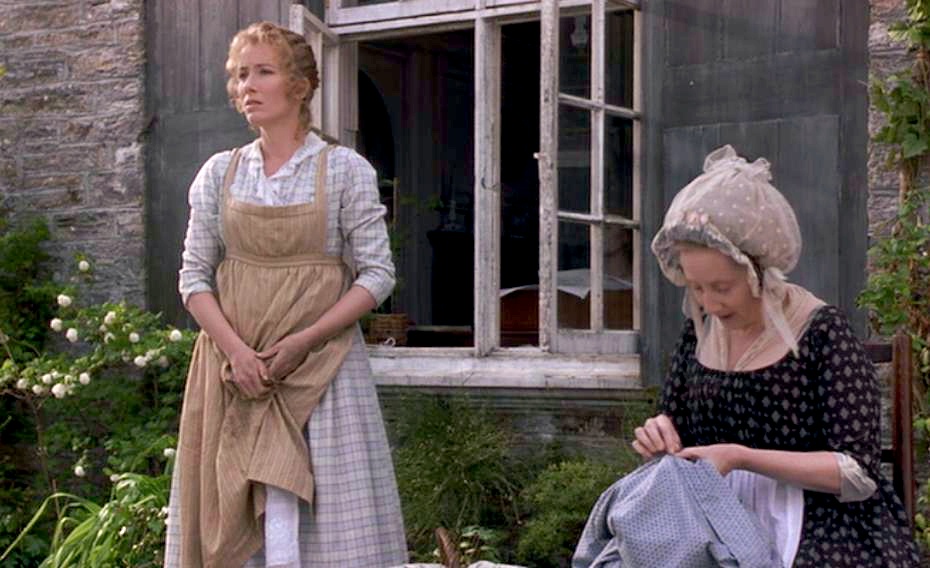
Morning dress, or undress, were dresses worn by ladies who expected to be seen only by close members of the family or guests in the home. They were never meant to be seen by visitors. Undress outfits, especially in more modest households where women worked alongside their servants, preparing vegetables or overseeing household duties, gardening and the like, were covered by aprons and pinafores.

In this image from Sense and Sensibility 1996, Elinor and Mrs. Dashwood are shown wearing undress. As soon as Edward Ferrars nears the house, the women tidy themselves, taking off their aprons, and making sure they look neat and presentable. They would not have had time to change into nicer outfits, nor would they have likely had many choices of dress to choose from.

Some Regency ladies who stayed at home all day would remain in a state of undress until dinner, when they changed into a gown suitable for the dinner table. Others would change their outfit much sooner, when they were ready to leave the house or if they had arranged to receive visitors. After I finish writing this post, I shall put on my half-dress, replacing my morning robe with a walking outfit consisting of a hooded sweatshirt, long-sleeved t-shirt, jeans a short coat and a scarf. I’ll exchange these outdoor exercise clothes with a more formal office look for work, which means that I will have worn three outfits by nine a.m.

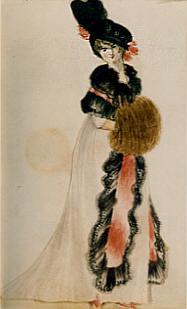
My Regency counterpart would also change her outfit. A lady of fashion would look vastly more elegant  in her walking outfit with its little fur tippet artfully arranged over a long-sleeved spencer jacket than me in my walking suit. If she was married or a spinster, she would place her  jaunty hat with its  soft capote crown over a cap, whose lace trim would peep out from beneath the hat’s brim. Sturdier leather slippers, leather gloves, a reticule and umbrella or parasol would complete the ensemble.

A middle class lady would look less modish than the idealized women depicted in Ackermann’s Repository, which was the Vogue magazine of its day. She would have fewer clothes to choose from, and most likely possessed only one walking outfit instead of a variety, and certainly not in the first stare of fashion.

Whatever her social background, our Regency lady was now ready to meet the world and visit friends, go shopping, or generally run errands outside of the house. The walking outfit in the Ackermann plate provided sufficient layers for a lady to stay warm during her walks and errands. Should the November day turn particularly windy and wet, she would most likely trade the tiny fur tippet for a more substantial shawl or cloak. The middle class Regency lady might trade her shawl for her only cloak, which she would keep for years until its usefulness was outworn.

More on the topic:

Read Full Post »

Watercolor by James Stanier Clarke. Thought to be of Jane Austen in 1815, when she visited Carlton House just months before the publication of Emma

Posted by: Tony Grant, London Calling

Jane Austen published Emma in December 1815, sixteen years after the French Revolution had ended but during a time when the women of that revolution were campaigning for women’s suffrage and especially for female education. It wasn’t a concept of education that had been considered before for women. Women were always thought unable to think like men. Their minds and brains worked differently on a much more superficial level, apparently. The grave subjects of philosophy, concepts about societies social needs, the study of History,mathematics,science, theology or Latin or Greek, were certainly not encouraged. It was a form of intellectual slavery. Women were kept childlike They were for marrying, procreating, looking after the home, bringing up children and being proficient in the finer arts of sewing, playing the pianoforte, singing, speaking French and being able to shop in a dress shop.

Rouseau and the Marquis de Condorcet (Marie Jean Caritat) in France and Mary Wollstonecroft here in England had different ideas for womens education.These ideas were infiltrating into the thoughts of Englishmen and women. They were the sort of ideas that would change society. I think Jane Austen introduced the character of Jane Fairfax to hint at such radical ideas. Jane Fairfax is an uncomfortable character within Emma. Emma Woodhouse can’t relate to her although they appear to be each others doppelganger, a mirror reflection of each other in many ways. But of course mirror reflections are opposites and you can’t actually become in contact with your reflection. There is a barrier, a layer of glass between you and your reflection. Jane and Emma, seem to exist in parallel worlds that cannot touch.

Marquis de Condorcet

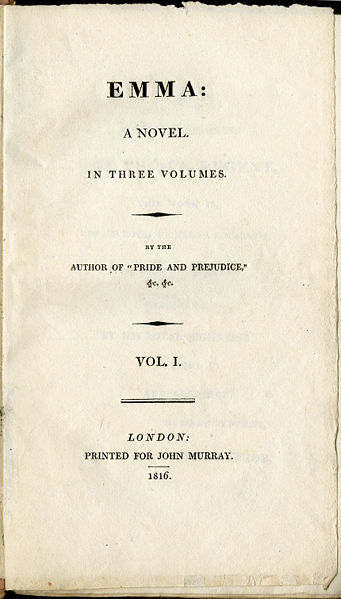
Jane Austen, herself was an authoress earning money from what she wrote, but she still remained within the bounds of decent society. Emma is introduced by, “the Author of Pride and Prejudice.” She did not use her name. She was careful enough to dedicate Emma to The Prince Regent when it was suggested she might like to. She followed her urges and her intelligence and her talents but she kept her head down. She herself was critical of the education offered to young ladies and she herself had a horror of the profession of teacher as a result of her own experiences. Towards the end of her life Jane was writing Sanditon. Her heroine, Charlotte Heywood, is perhaps the most radical of her characters, in her views and in her actions. Would Jane Austen have eventually, “come out?”

Jane Fairfax was the daughter of Lieutenant Fairfax, and her mother had been, before marriage, Miss Bates, the youngest daughter of Mrs Bates of Highbury.When her father was killed in action in a foreign country and her mother died soon after of consumption, Jane had returned to live with her grandmother and aunt, her mother’s elder sister in Highbury. However, Colonel Campbell, her fathers superior officer, offered to educate her and bring her up in his own small family to give her all the benefits of education and culture he could provide. Lieutenant Fairfax had been instrumental in saving his colonel’s life years before and being a dear officer and friend, Colonel Campbell felt it his duty to look after his friends daughter, Jane. Here is a passage from Emma describing Jane Fairfax’s education.

“ She had fallen into good hands, known nothing but kindness from the Campbells, and been given an excellent education. Living constantly with right minded and well informed people., her heart and understanding had received every advantage of discipline and culture; and Colonel Campbells residence, being in London, every lighter talent had been done justice to, by the attendance of first rate masters.”

It is interesting to note that Jane alludes to two sorts of education in relation to Jane Fairfax. First she says that she was, “given an excellent education,” and associated with well informed people and received every advantage of discipline and culture. The discipline bit is a little vague. It might refer to personal, behavioural discipline or it might refer to an intellectual discipline of the mind, inquisitive, challenging ideas, thinking. Maybe Jane Austen is being vague on purpose to allay the doubts and fears of the middle class reading masses. But what does Jane Austen mean by “an excellent education?” We know what she means by, “every lighter talent.”

It can only mean one thing. Jane Fairfax had been educated in cultural aspects that might include history, geography, mathematics, science and all the areas of learning usually kept for the great universities and the exclusive education of men.She had had the influence of right minded and well informed people too. Jane Austen herself had undoubtedly been immersed in and influenced by this sort of cultural education by way of her father’s library and erudite discussions with her intelligent and learned brothers.

Jean Jaques Rousseau

Jean Jaque Rouseau ( 28th June 1712 – 2 July 1778) was a philosopher and writer.
He thought;

“ The education of women should always be relative to that of men. To please, to be useful to us, to make us love and esteem them, to educate us when young, to take care of us when grown up.”

His idea of education being important to women was so that they could then, in turn, educate their sons. He was only a little on the way to realising the full possibilities and potential for women. He wasn’t for giving women total freedom.

Marie Jean Antoine Nicolas Caritat (1743 – 1794) the Marquis de Condorcet, wanted to go much further than Rouseau with women’s education and freedoms. He wanted universal education as did Adam Smith, Thomas Paine and Thomas Jeffereson. He thought that the advances in reason and science would automatically limit family sizes leaving women the freedoms to expand their talents and energies in other directions. He wanted women to be admitted to the rights of citizenship. A very modern gentlemen. He had to go into hiding for his beliefs.

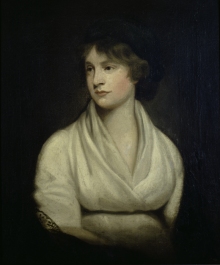
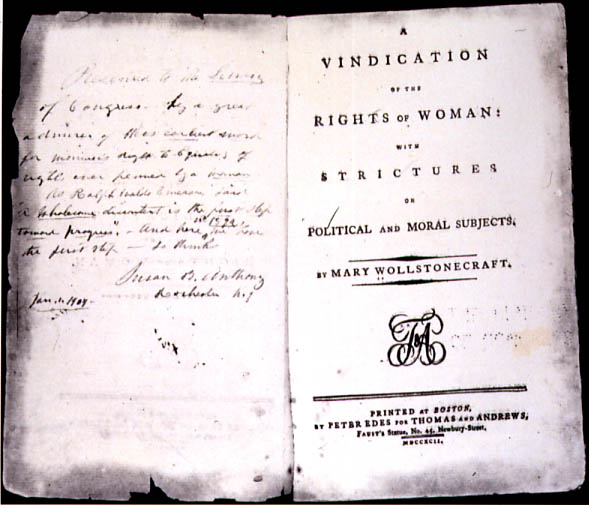
In England there was Mary Wollstonecroft. In the introduction to her “A Vindication of the Rights of Woman,” Mary Wollstonecroft writes,

“Contending for the rights of woman, my main argument is built on this simple principle, that if she be not prepared by education to become the companion of man, she will stop the progress of knowledge and virtue; for the truth must be common to all, or it will be inefficacious with respect to its influence on general practice. And how can woman expected to co operatre unless she knows why she ought to be virtuous? Unless freedom strengthens her reason till she comprehends her duty, and see in what manner it is connected with her real good. If children are to be educated to understand the true principle of patriotism, their mother must be a patriot; and the love of mankind, from which an orderly train of virtues spring, can only be produced by considering the moral and civil interest of mankind; but the education and situation of woman at present shuts her out from such investigations.”

Mary Wollstonecraft

What Mary Wollstonecroft is actually saying here is that men and women need to be equal for the good and progress of mankind and if women are to be the teachers of children they need an education which enables them to think and explore and understand ideas, otherwise she cannot teach those ideas. An argument which cannot be challenged surely. Teachers today have degrees and are expected to have a thorough knowledge of their subjects and to be able to think and be creative.

How does this bring us back to Jane Fairfax? Jane Fairfax has had an, “excellent education,” and she appears to be evasive. It might be more a case of her having to be evasive as a means to survival. Emma Woodhouse cannot form a close relationship with her. As the novel unfolds we learn Jane is breaking societies strongest taboos. She and Frank Churchill are a match made in the realms of a freedom not acceptable in the England of those times. They are of a different economic and class backgrounds. Frank Churchill’s guardian, Mrs Churchill, while alive, would never condone such a relationship. Jane and Frank keep it secret and have to resort to all manner of subterfuge. Emma Woodhouse, in all her plans and manoeuvrings, and imaginings is defeated. Jane Austen is delving into areas that are perhaps closer to her own heart than she may well want to admit out right. In her final novel Sanditon, I think the way the character of Charlotte Heywood develops Jane was becoming more outspoken in her views about hypocrisy and the role of women in society. If Jane had lived into old age, with societies changes becoming more rapid with the industrial revolution, she might have become a champion of womans rights herself.

Finally, Jane Austen resolves the dilemmas, in a sort of Midsummer Nights Dream way. Characters find their true loves and permission is given, after Mrs Churchill’s death, for Frank and Jane to marry. So we have a happy ending for everybody. In a way, because Jane rounds everything off too nicely, as modern readers used to the full force of rough reality in the modern classic novel, perhaps we itch for Jane Austen to have gone the full hog. But, written as it was in the Georgian period, it was brave enough to allude to these issues. Jane couldn’t resist her true beliefs, really.

Gentle Readers, Tony Grant, who lives in England and oversees the blog, London Calling, wrote this most timely post. At the turn of the 19th century, women were not allowed to vote. This post points out the harsh realities for our female ancestors just a few generations ago. Regardless of party affiliation, I urge every woman in the U.S. to go to the polls on November 2 and exercise their hard-won freedom to VOTE for the candidate of their choice. – Vic

Images: Wikimedia Commons

Read Full Post »

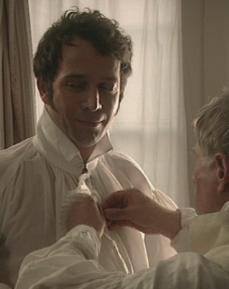
James Purefoy as Beau Brummel

Of course it became a fashion to exaggerate the Beau’s fastidiousness concerning his toilet. He is said to have employed at least two glovers to make his gloves — the first being entrusted exclusively with the making of the thumbs, the second with the fingers and the rest of the hand; to have made his blacking with champagne, to have had the ties of his cravats designed for him by an eminent portrait painter; to have engaged three hairdressers arrange his hair, one being entrusted with temples, one with the front, and the third his occiput [back of the head].

Quote from: Once a Week, by Eneas Sweetland Dallas, 1864,   p 242-243

Read Full Post »

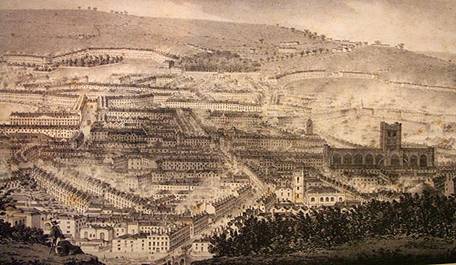
Panorama of Bath from Beechen Cliff, 1824, Harvey Wood

Inquiring Readers, Tony Grant, who lives in London, teaches, and acts as occasional tour guide, has been contributing articles to Jane Austen Today for several months. Recently, Tony and his family traveled to Bath and the West Country. This is one of many posts he has written about his journey. Tony also has his own blog, London Calling.

The Paragon from Travelpod

On Wednesday 6th May 1801 Jane wrote to Cassandra, from a house positioned on a hill half way up a road called, The Paragon, in Bath. It was her uncle and aunt’s, the Leigh Perrots, home. Her aunt was her mother’s sister. Jane and her mother and father had just arrived, just moved in and were getting settled into their rooms.

“ My dear Cassandra,

I have the pleasure of writing from my own room up two pairs of stairs, with everything very comfortable about me. Our journey here was perfectly free from accident or Event; we changed horses at the end of every stage, & paid almost at every turnpike;- we had charming weather, hardly any dust,& were exceedingly agreeable, as we did not speak above once in every three miles.- between Luggershall & Everley we made our grand meal…….”

Jane had arrived in Bath after a journey of about 50 miles from Steventon, her home.
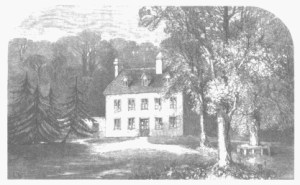
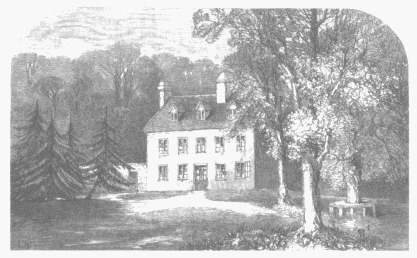
Wood engraving of Steventon Rectory

She sounds excited and thrilled by the new experience for instance she has ,” my own room.” But perhaps she was trying to put a brave face on it, be positive and put the negatives to the back of her mind.

Claire Tomlin reminds us,

“ The decision by Mr and Mrs Austen to leave their home of over thirty years, taking their children with them, came as a complete surprise to her; in effect, a twenty fifth birthday surprise, in December 1800. Not a word had been said to anyone in advance of the decision.”

Jane had spent all her life in Steventon a quiet country village near Basingstoke in Hampshire. She knew the families who lived in the great houses and many were her friends. She knew the villagers of Steventon very well. It was the source of her imagination and she had developed her own intimate writing habits there. Her world , in a sense was turned upside down and she was being wrenched from this intimate, close world that she was comfortable in, to that of a bustling town, but not just any town.
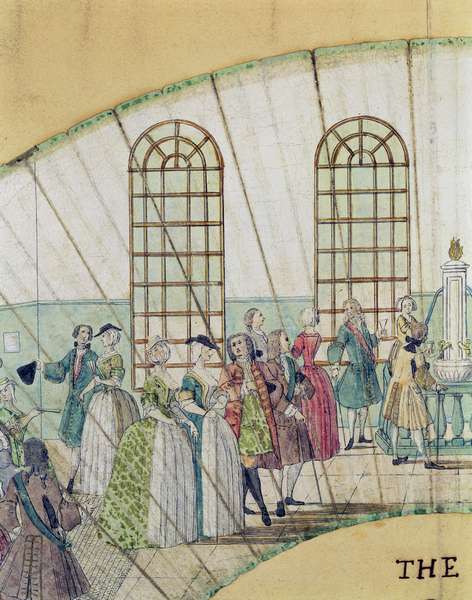
The Bath Medley, the Pump Room, detail on a fan, 1735

Bath was the centre of Georgian ,”FUN.” Here people came for the medicinal benefits of the waters, dancing, parading in the streets in their finest clothes, drinking tea, and taking rides and walks out into the nearby countryside. It was a place to rest, to be seen and to meet new people. Many families brought their unmarried daughters here to find eligible spouses.
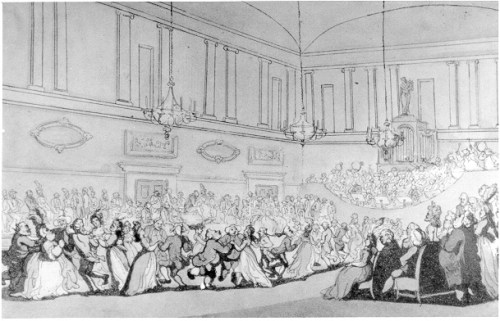
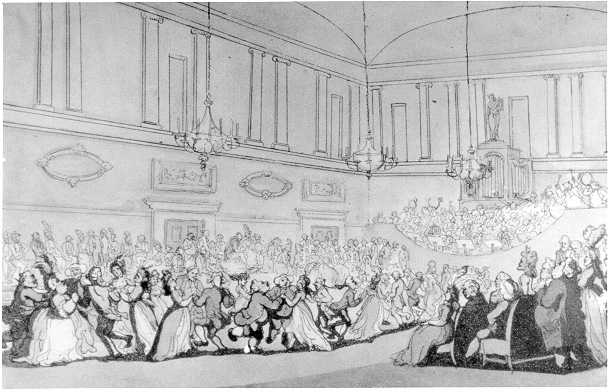
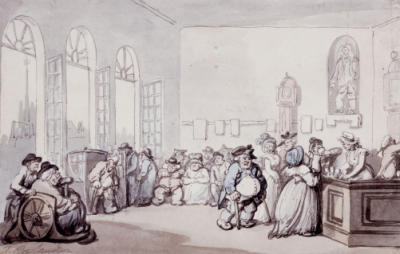
Dancing, Rowlandson, The Comforts of Bath

Bath was a magnet for the wealthy and comfortable middle classes who came and went with the season. It was a fluctuating population. Friendships could be brief. It was a hot house for relationships. Whether The Reverend George Austen had it in mind to find suitors for his two unmarried daughters, as part of his plan, is not certain. Jane however was definitely out of her comfort zone. She was a very astute judge of characters and she would not like much of the ostentatious show of Bath. People who went to Bath for the season behaved differently. Strangers were thrown together in a mix of fun and gaiety. Moral codes were loosened. You get a very strong sense of this in the description of Catherine Morelands first experiences of Bath in Northanger Abbey.

Comforts of Bath, The Pump Room, Rowlandson

To get to Bath from Steventon over the fifty mile journey, Jane took, she passed through many picturesque and beautiful villages and towns. Those places are still there today.

Overton, Andover, Weyhill, Ludgershall, Eveleigh, where the Austens stopped to take tea and rest, Upavon, crossing the River Avon at this point, Conock and Devizes where they probably rested again before the final stretch to Bath. Devizes is a bustling town today, traffic and shoppers, many small businesses, churches and chapels and still many magnificent Georgian buildings. Take away the cars, and dress the people differently and Devizes would still be very familiar to Jane. It still has very much of its Georgian character but it is a modern 21st century town too.Like modern day England, Devizes is a layer cake of history. There are bits from every era and it has and does thrive in all of them.
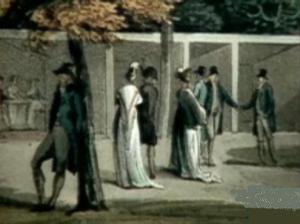
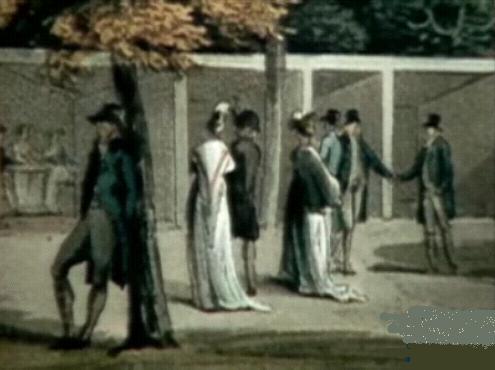
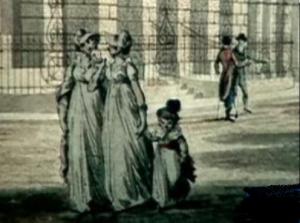
Strolling through Sydney Gardens

When I went to Bath this time I came in from a slightly different direction to Janes journey there in 1801. I came the south east, travelling from Stonehenge in Wiltshire. This road comes from high up in the hills to the south of Bath and the first sight of the city is from a steep, tree lined, Beckford Road which reaches Bath stretching along next to Sydney Gardens. It was a great pleasure and very exciting to come across, almost immediately on reaching Bath, number 4 Sydney Place, which was one of the houses Jane and her family rented.
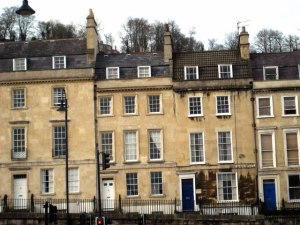
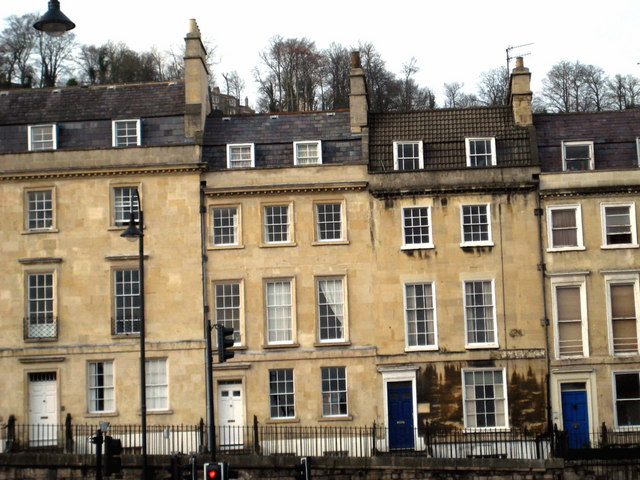
Georgian terraced houses along the London Road, Bath

Jane entered Bath by way of the London Road which sweeps in from the east and curves across the top of the bend in the River Avon which borders the southern part of the City of Bath.The London Road leads straight to The Paragon, the road in which her aunt and uncle, The Leigh Perrots, lived and where Jane and her mother and father were to live until they found their own residence. Bath has not expanded in modern times much south of the river partly because of the steep hills there.
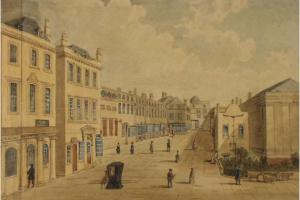
Old - Lower - Assembly Rooms

So there is an excited tone in Janes first letter from The Paragon. The excitement doesn’t last. Her aunt and uncle being residents in Bath, they at least know people to introduce Jane to. Unlike Catherine Moreland who meets nobody and knows no one at first. But what terrible people? Or is Jane just having a bout of sour grapes? Within weeks Jane is writing to Cassandra her comments about Bath acquaintances.
Wednesday 13th may 1801 writing to Cassandra

“I cannot anyhow continue to find people agreeable; I respect Mrs Chamberlayne for doing her hair well, but cannot feel a more tender sentiment.”

Mrs Chamberlayne is picked out for more effort. Jane tries to find something in common, tries to see if a new friendship can blossom.

Friday 22nd May 1801

“The friendship between Mrs Chamberlayne & me which you predicted has already taken place, for we shake hands whenever we meet Our grand walk to Weston was again fixed for yesterday & was accomplished in a very striking manner; Everyone of the party declined it under some pretence or other except our two selves, & we therefore had a tete a tete, but that we should equally have had after the first two yards, had half the inhabitants of Bath set off with us.- It would have amused you to see our progress;-we went up by Sion Hill, and returned across the fields,- in climbing a hill Mrs Chamberlayne is very capital; I could with diffuculty keep pace with her- yet would not flinch for the world.- On plain ground I was quite her equal- and so we posted away under a fine hot sun, She without any parasol or any shade to her hat, stopping for nothing ,& crossing the churchyard at Weston with as much expedition as if we were afraid of being buried alive.-After seeing what she is equal to, I cannot help feeling a regard for her.-As to agreeableness, she is much like other people.”

There is something final about this relationship as though it’s not going far, in two phrases, “The friendship between Mrs Chamberlayne & me which you predicted has already taken place,…..” and , “As to agreeableness, she is much like other people.”
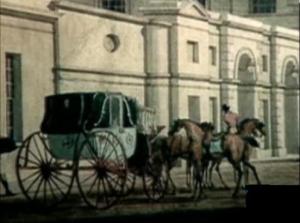
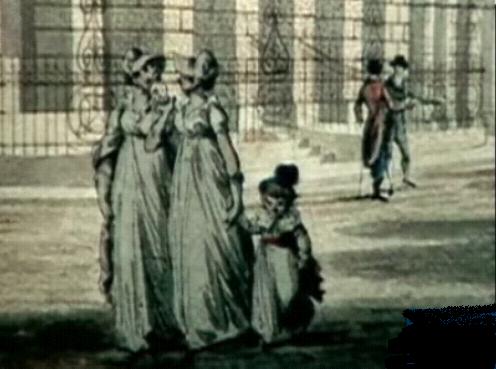
Regency Bath

Jane uses the past tense already about the relationship with Mrs Chamberlayne and she finally concludes that she is much like other people. Nothing is going to happen here. Jane was a very guarded person, certainly didn’t suffer fools gladly, gave people a chance and discarded them for their mediocrity. Jane obviously needed something else in a relationship. Already she wasn’t in the mood for Bath.
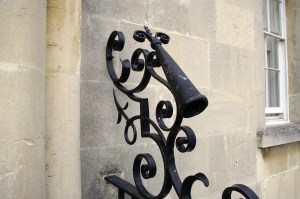
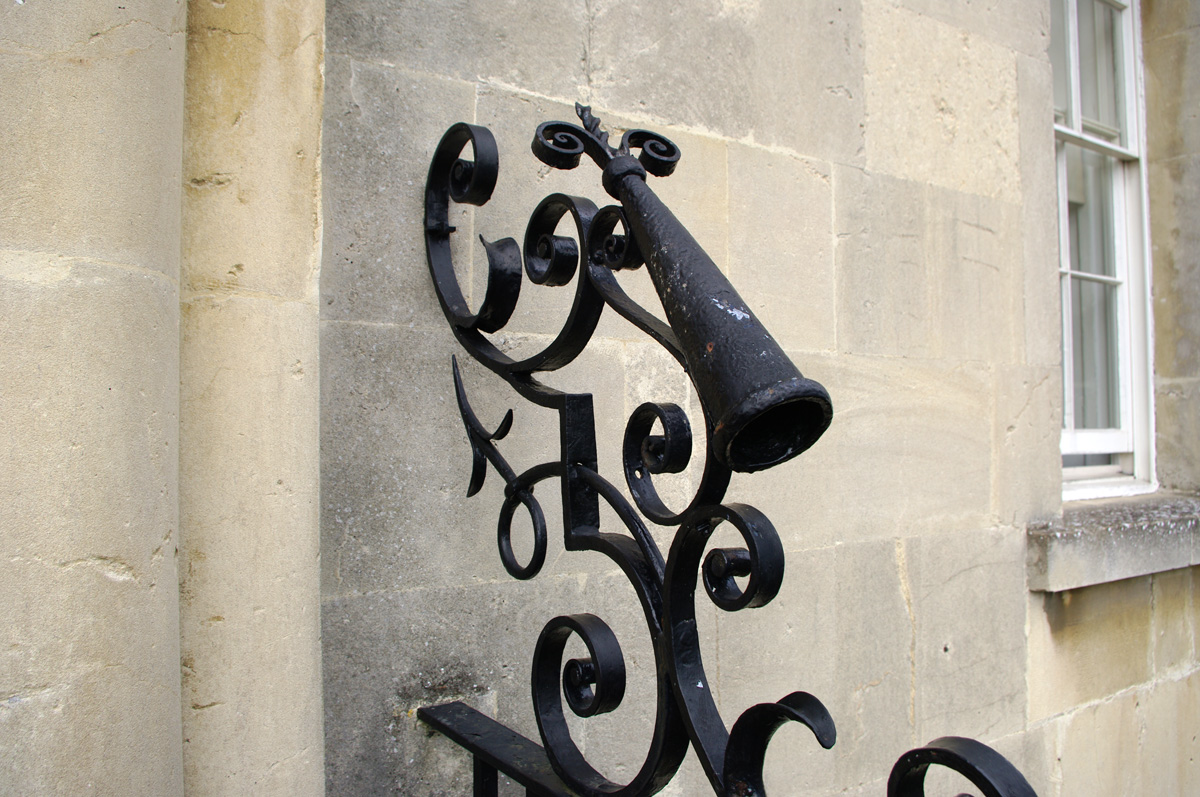
Candle Snuffer, image Tony Grant

In the same letter she mentions house hunting. They have been looking at houses amongst Green Park Buildings. Green Park Buildings are situated near the river at the bottom of the town. They were obviously prone to flooding.

“ our views on GP building seem all at an end; the observations of the damps still remaining the offices of an house which has only been vacated a week, with reports of discontented families& putrid fevers have given the coup de grace.”

Nowadays the river near Green Park Buildings has high banks to prevent flooding and has been canalised. One of the main car parks, where we actually parked is near there. Also Bath Railway Station and The University of Bath is situated nearby these days.

For all this dire and damning report the Austens did move into Green Park Buildings. It could not have been very pleasant. Perhaps they thought their stay in The Paragon was prolonged enough and anything had to be taken.

Much of Jane’s remaining letters from Bath have some discussion about finding accommodation. The contracts on these houses seem to have been short term. Maybe this was because Bath was a seasonal place. People generally came for short periods of time. If you really wanted to live there permanently you would have to buy. Perhaps the Austens could not afford to do that. It begs the question, did Mr and Mrs Austen really think through their move to Bath carefully enough?
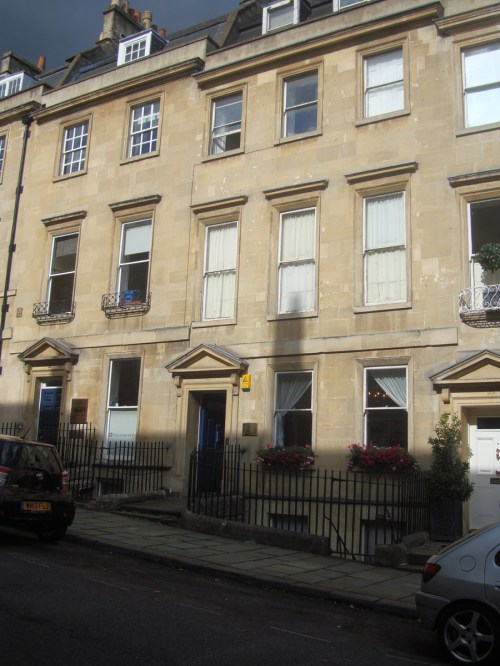
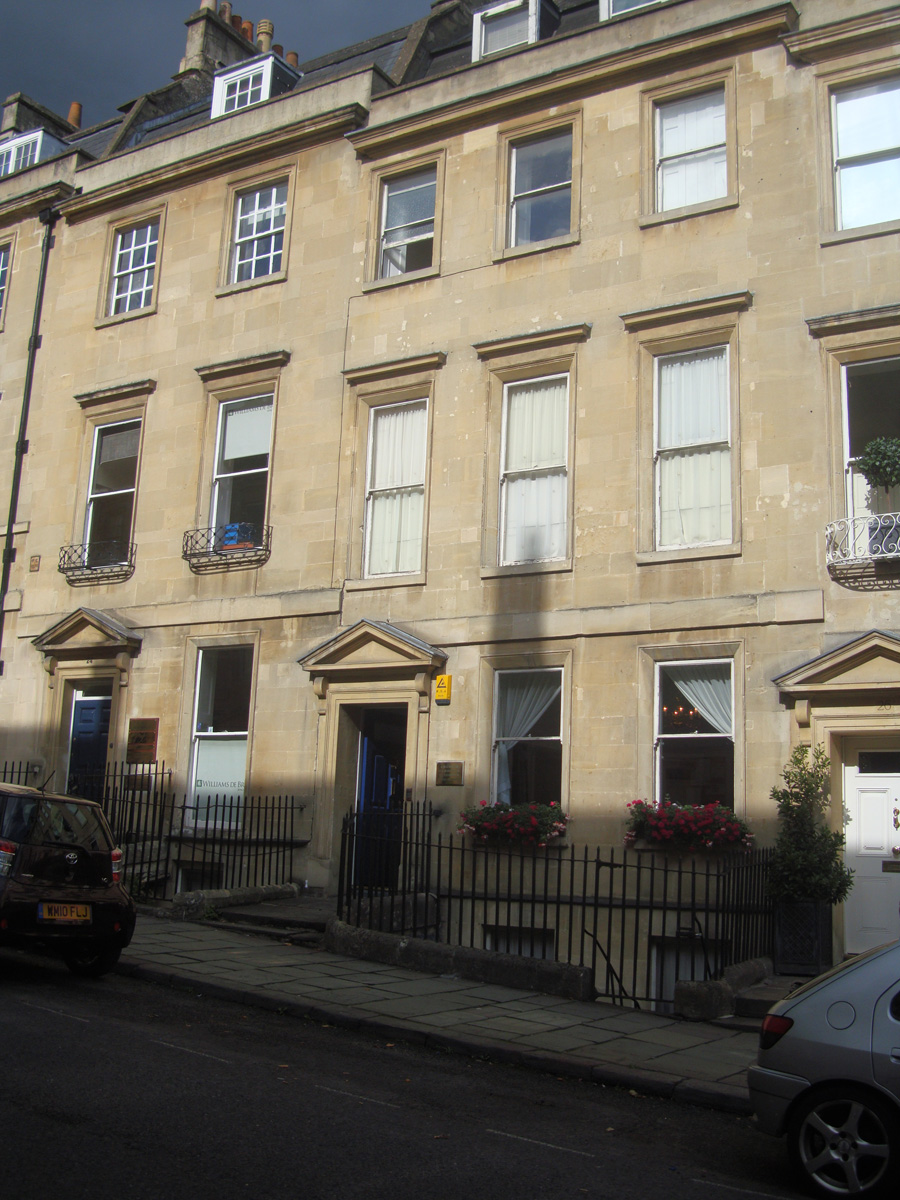
25 Gay Street, image Tony Grant

After Green Park Buildings the next set of letters come from number 25 Gay Street, just a few houses up the hill from The Jane Austen Centre. It is a dental practioners office today. The letters from Gay Street are the last from an address in Bath. However we also know that Jane lived at number 4 Sydney Street, a new house at the time overlooking a grand house which is now the Holburn Museum and its grounds, Sydney Park. This is by far one of the more pleasant situations Jane lived in.

Jane’s father died in a house in Trim Street not far from Queen Square and Gay Street. So another move had had to take place. In five years Jane had lived in at least five different house all providing differing qualities of living.
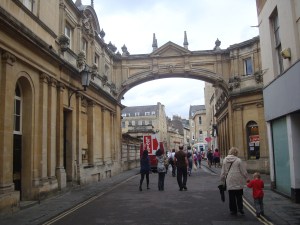
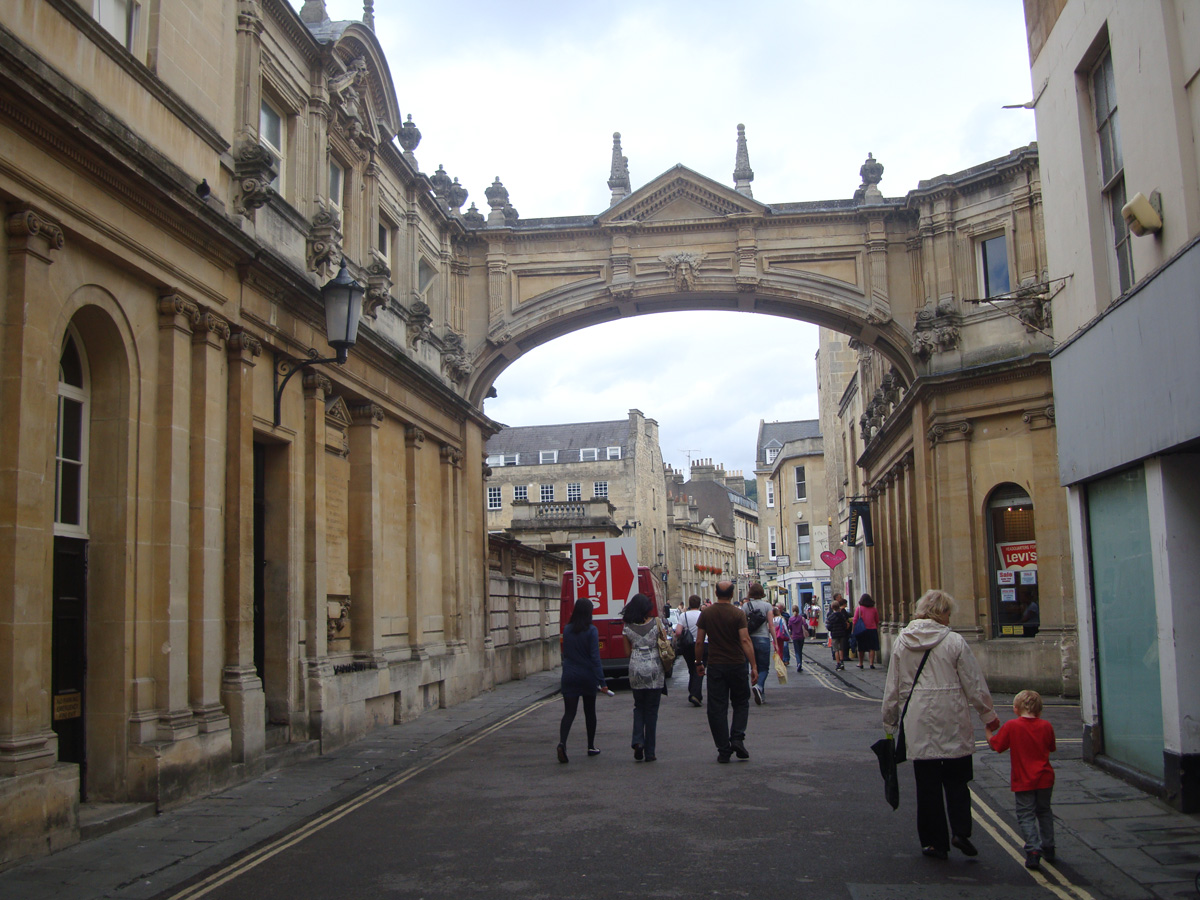
Side Street, Bath, image by Tony Grant

You can find this reflected in the two novels that concern themselves most with Bath, Persuasion and Northanger Abbey. In Persuasion Anne Elliot finds an old school friend, Mrs Smith, living in poor circumstances.

“Her accommodations were limited to a noisy parlour , and a dark bedroom behind, with no possibility of moving from one to the otherwithiout assistancewhich there was only one servant in the house to affordand she never quitted the house but to be conveyed into the warm bath.”

Mrs Smith’s accommodation was in Westgate Buildings not far from the Pump Room. Mrs Smith’s husband had died leaving her almost penniless but because of her health the warm bath treatment was seen as a cure. Her life was certainly not one of fun and frivolity. It seems, like in any city and town today, in the 18th century, the poor and destitute and the wealthy are not far from each other. Anne Elliot seems to prefer the company of Mrs Smith rather than the fripperies that Bath had to offer. She knows the right people and could have fun if she wanted to. Anne Elliot can see the two sides of Bath.
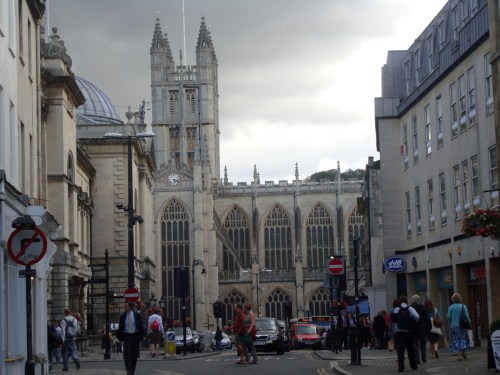
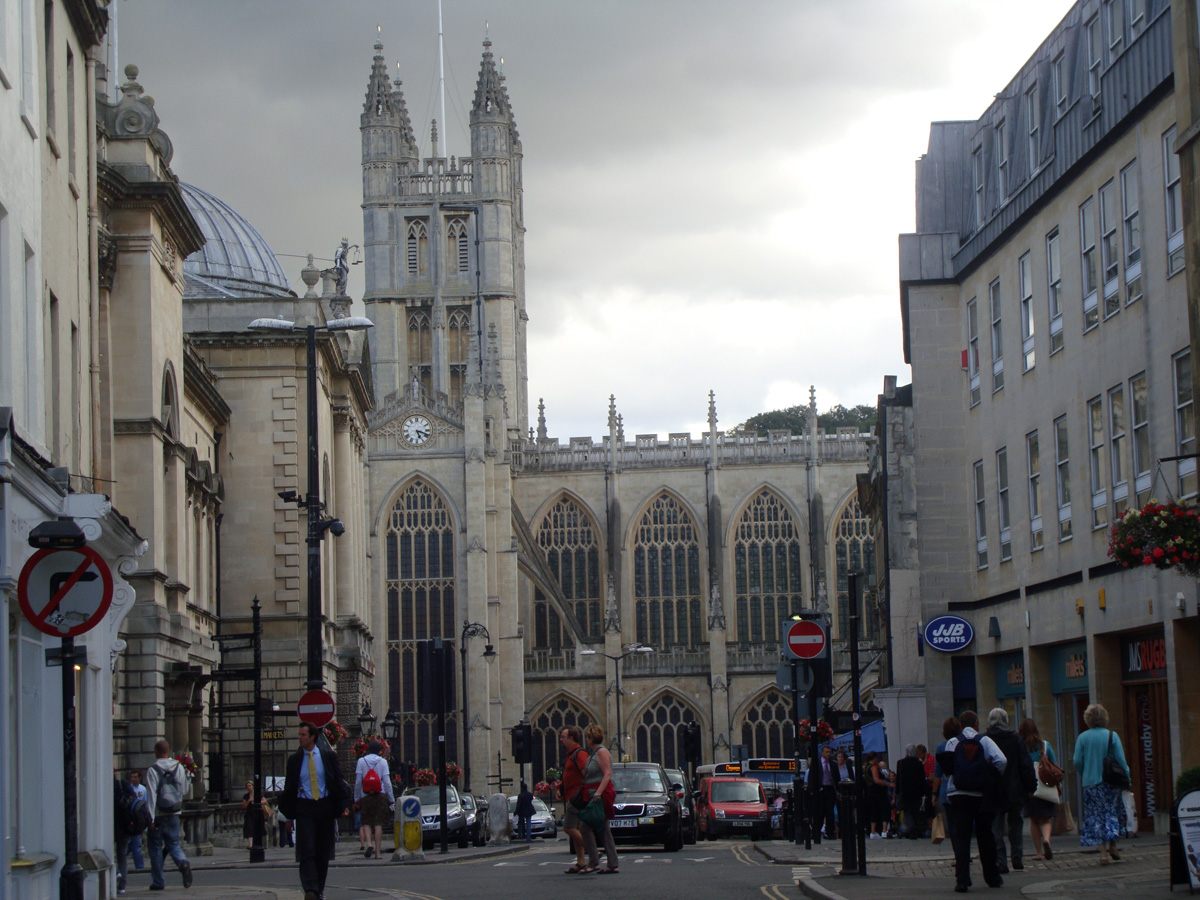
Side view of Bath Abbey, image Tony Grant

Jane Austen knew Bath extremely well. Throughout Persuasion and Northanger Abbey she houses her characters in real streets and in real buildings, although she does avoid giving us the number of the house in such and such a street. The real owners and occupants might not have liked the notoriety. And today they might not like the notoriety as well. Was there such a thing as litigation in the 18th century? I’m sure there was.

More About the Topic
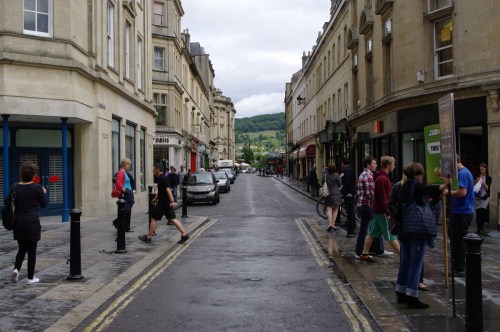
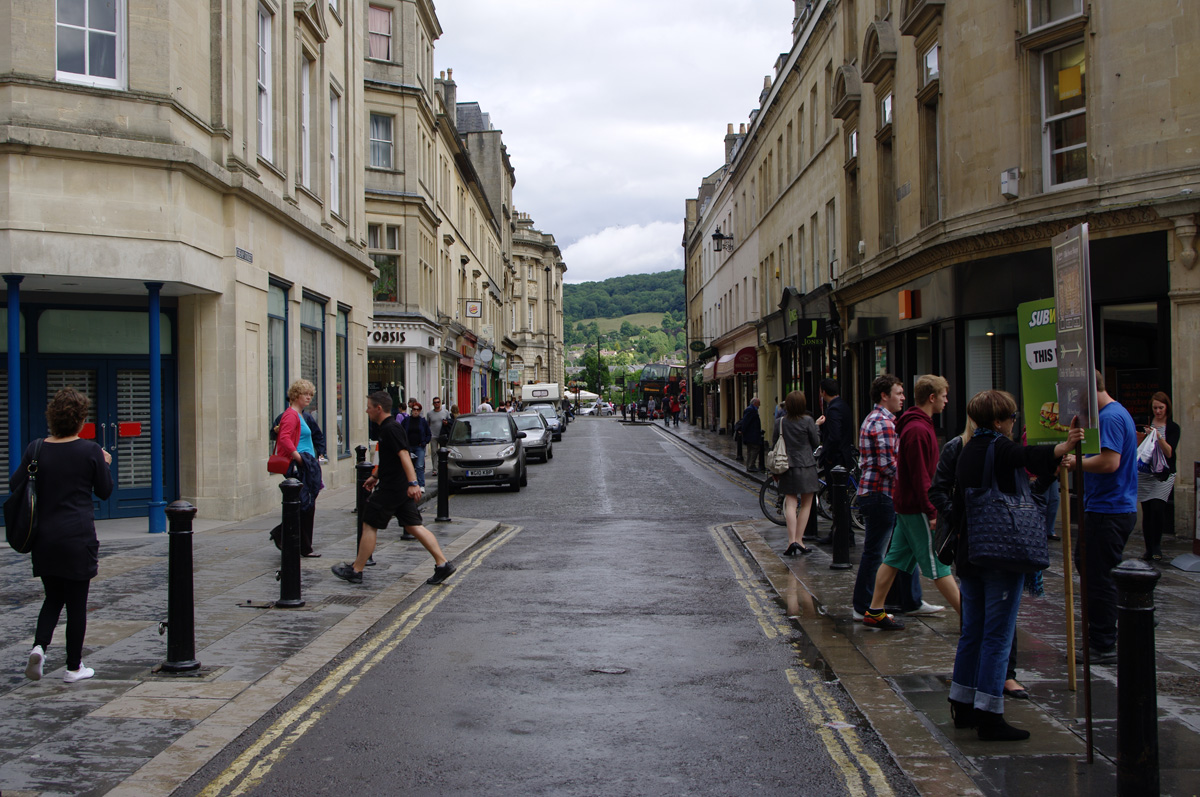
Cheap Street with hills in the distance, image from Tony Grant

Read Full Post »
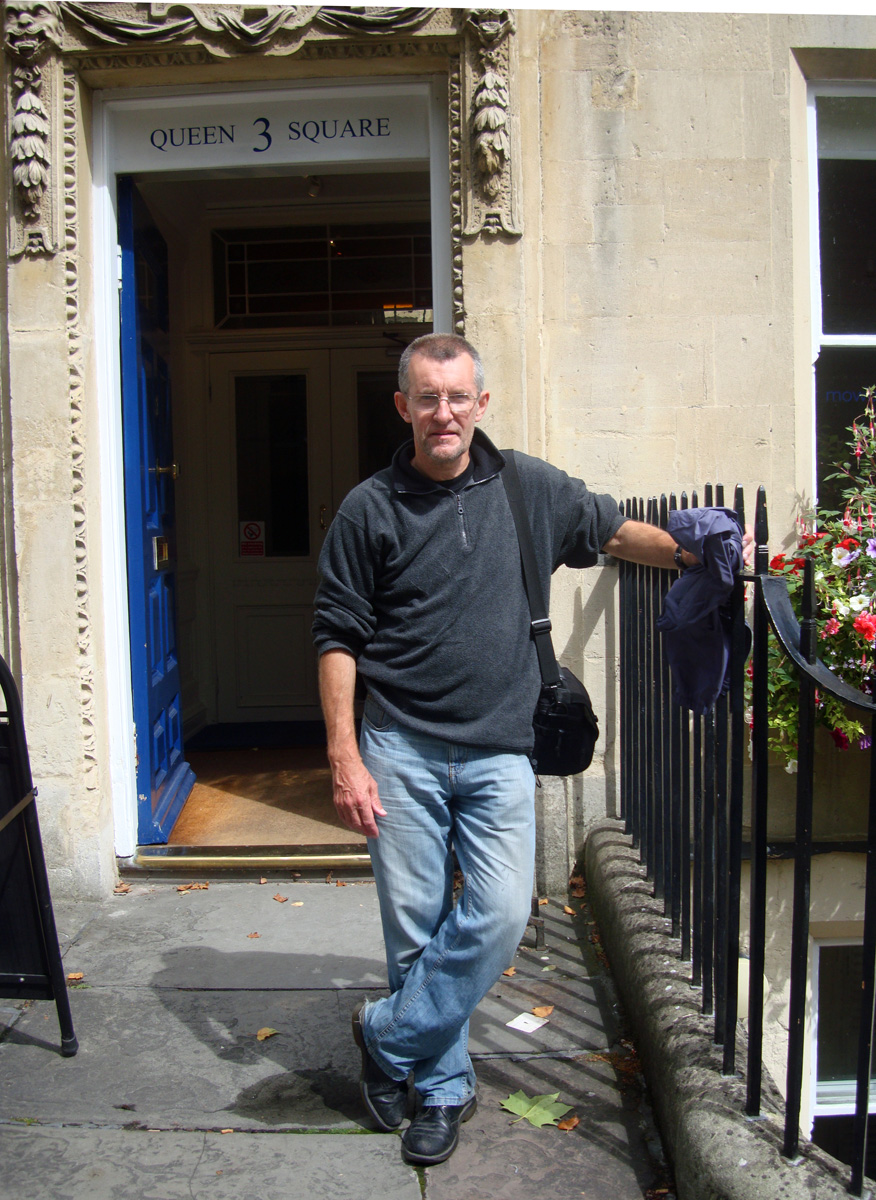
Tony Grant at 3 Queen Square, down the road from the Jane Austen Centre

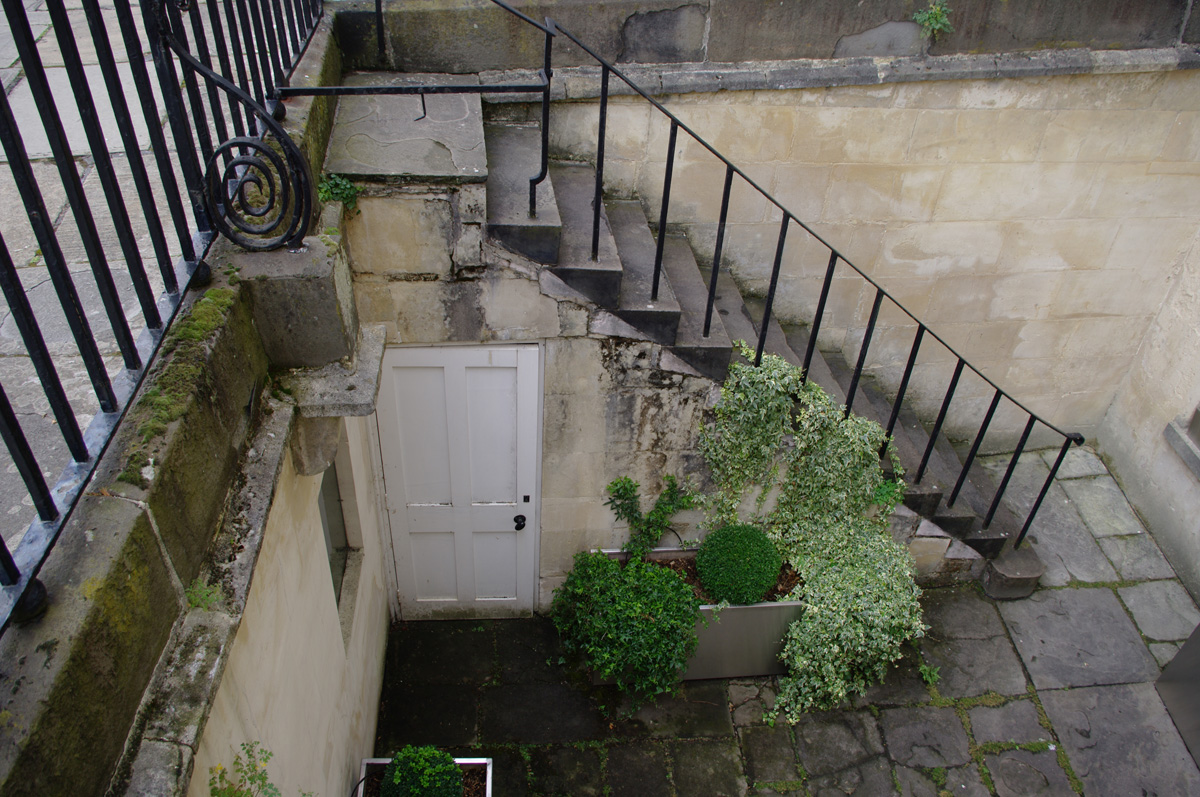
Tony Grant, who writes posts for Jane Austen Today and London Calling, stands above the “area”, the servants entrance that sits below ground and in front of town houses built during the Georgian and Regency eras. A wrough-iron fence separated the upper level from the lower basement level, which was sunk partly below the street. Windows in the work areas gave the servants a view of the people walking along the sidewalks.

Wherever these town houses were built, servants and delivery people used the lower entrance. The “area” also contained a coal vault used for storage.

The "area", or the way down to the servant's quarters

A collier unloaded coal from a cart directly into the coal vault. This practice prevented dirty coal sacks from being dragged through the house. Coal was dumped down a chute via a coal hole. The coal would then be used for fires or the kitchen stove. (Gaelen Foley)  The design of the coal hatch, which was locked from the inside, would vary from house to house. Coal holes were in use from the early 1800s to the middle 1900s, when the Clean Air Act made the burning of coal illegal. (Knowledge of London)

Coal hole, Bath, England

So much coal was burned in 19th century London (in 1800 over one million London residents were burning soft coal) that “winter fogs” became common.

An 1873 coal-smoke saturated fog, thicker and more persistent than natural fog, hovered over the city of days. As we now know from subsequent epidemiological findings, the fog caused 268 deaths from bronchitis. Another fog in 1879 lasted from November to March, four long months of sunshineless gloom. (London’s Historic “Pea Soupers”)

Read Full Post »

« Newer Posts - Older Posts »