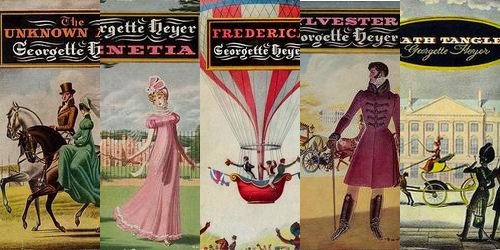
Inquiring readers: Austenprose has been featuring Georgette Heyer all this month. Today is her 108th birthday! Laurel Ann has graciously interviewed me about one of my favorite authors. My interview on her blog begins with this question:
Some critics write Georgette Heyer off as merely a romance novelist. Others praise her for her historical accuracy, witty dialogue and engaging plots. Looking back on her fifty plus novels, why do you think she is [still] so popular years after [her] first publication?
When she was a current bestselling author, Georgette Heyer’s Regency romances stood out from the pack. Her humorous but well-researched writing rose above a sea of earnestly written historical romances. In those days, Daphne du Maurier, Jean Plaidy (Victoria Holt), Mary Stewart, and Mills and Boon (Harlequin) authors reigned supreme. While these best-selling authors were popular, none came close to combining humor, history, and romance in Georgette’s inimitable way. Today, GH’s breezy style doesn’t stand out quite as vividly, because there are many other romance writers (Susan Elizabeth Phillips, Susan Andersen, Sandra Hill, Jane Ann Krentz) who publish funny and sassy romances, but back in the dark ages when I went to college, Georgette had the humorous romance field to herself.
Click here to read the rest of the interview on Austenprose.
In addition to the interview, I am featuring two of my reviews of GH novels: Lady of Quality and Friday’s Child. As a special treat for Georgette’s birthday, I am also including a link to one of her short stories: A Proposal to Cecily
Lady of Quality:
Miss Annis Wychwood, at twenty-nine, has long been on the shelf, but this bothers her not at all. She is rich and still beautiful and she enjoys living independently in Bath, except for the tiresome female cousin, who her very proper brother insists must live with her.

When Annis offers sanctuary to the very young runaway heiress Miss Lucilla Carleton, no one at all thinks this is a good idea. With the exception of Miss Carleton’s overbearing guardian, Mr. Oliver Carleton, whose reputation as the rudest man in London precedes him. Outrageous as he is, the charming Annis ends up finding him absolutely irresistible. – Sourcebooks blurb
I discovered Georgette Heyer just after I graduated from college. Having run out of new Jane Austen novels to read, I began to search for other regency stories set in similar settings. One day at the library, I stumbled across Charity Girl and Arabella, and my love affair with all things Georgette began.
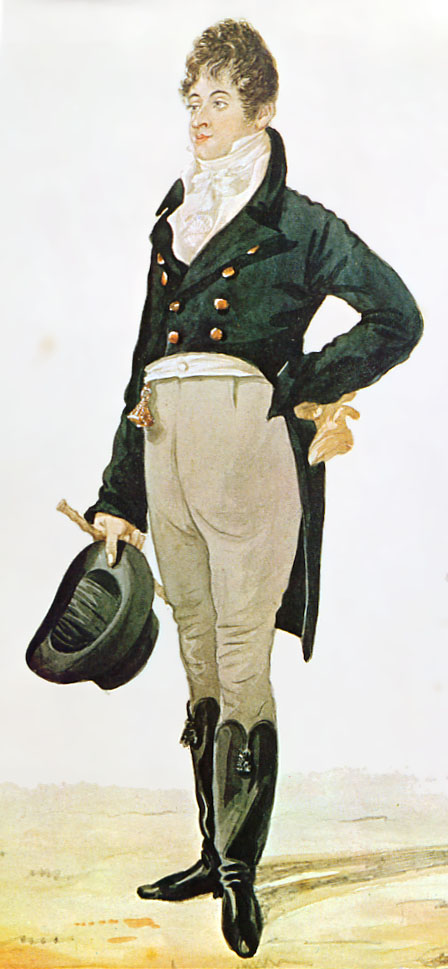
In those days I was barely older than the youngest of Heyer’s heroines, and could identify closely with The Grand Sophy. I reveled in Georgette’s world filled with bored aristocratic gentlemen who, usually as they traveled by coach or horse to a country inn or walked the streets in London in the middle of the night, stumbled across an innocent and disarming chit who needed rescuing. This plot device was a popular one with the author. Another one of Georgette’s plots was that of the “older” beautiful, rich, and independent spinster (almost on the shelf, but not quite) who is determined to live her life as she likes it and skirt convention when she can. Because she has independent means, she rules her roost and will brook no interference from any man. Invariably, these strong willed women meet their match in an even richer, stronger-willed man, usually a Duke or Earl, but not always as in a Lady of Quality.
Read the rest of the review at this link
Friday’s Child:
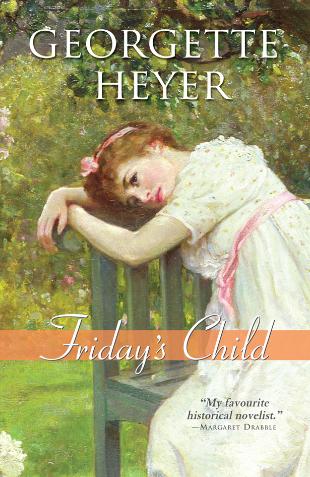 Headstrong, spoiled and impetuous, Lord Sheringham wants to be married. Not because he is in love, but because he wants control of his fortune, his father having left it so that he would be either 25 or married before he could rid himself of his trustees. He has some difficulties with debts, certainly, but the main reason he wishes to have that trust drawn up is that one of his trustees is plundering his estate.
The book opens with his proposal to the Incomparable, Isabella Milborne, a lifelong neighbor and friend. She refuses him because they don’t love each other, and he, furious at her level-headed thwarting of his plans, vows to marry the next lady he sees. This would be Hero Wantage, another lifelong neighborhood friend, just out of the schoolroom and unschooled in any of the ways of Society. Hero, who has adored her friend Sherry for years, is an orphan who has been under the care of her cousin, who never intended to provide a Season for her ward, but rather to prepare her for marriage to the local curate, or for life as a governess. At just seventeen and full of fun, Hero is not ready for either quelling prospect.
So the two decide that they will get married. Lord Sheringham’s cousins Gil and Ferdy and his friend George, Lord Wrotham, all of whom seem to travel in a pack, among them arrange for the marriage by special license. The young Lord and Lady Sheringham set up house, and Sherry and his friends seek to establish young Lady Sherry in London society, where they have been cutting a pretty wild and dashing swath. What follows is a madcap romp, as Hero falls in and out of scrapes as fast as she can. All through innocence, or from following her husband’s sayings. She is bright, educated, and has a mind of her own, and when she takes umbrage at her husband’s scolding her for something, she will say, “but you said…” To his credit, he hears his words and begins to reconsider his own way of life.
Read the rest of the review at this link
A Proposal to Cecily:
 Cicely hurled a cushion across the room. “Thats how I feel!” she said, & glared at her first cousin once removed, Richard Spalding.
“Good lord”, he remarked, with a proper amount of sympathy in his lazy voice.
“And you sit there – idling about in my room – laughing at me! I quite hate you, Richard!
“Oh, I say!” he expostulated, “I wasn’t laughing – honour bright!”
Cicely looked scornful. “I’m absolutely sick of it all. Dead sick of it.” Cecily nodded so vigorously that her brown, bobbed curls seemed to jump. “I never want to go to another dance as long as I live.”
“That’s bad,” said Spalding respectfully. “What’s brought on this sense of repletion?”
“Everything. I’ve been trotted round till I want to scream! I feel like doing something desperate!”
At that Spalding dragged himself upright and threw away his half-smoked cigarette.
“Oh, splendid, Cis! I hoped that if I waited long enough you’d melt. When shall it be? Be a sport, now, and -”
Cicely covered her ears with her hands.
“No, no, no! I don’t want to do anything as desperate as that!”
Richard sank back again.
“Thought it was too good to be true”. He pulled a leather diary from his waistcoat pocket and proceeded, gloomily, to make an entry.
“What’s that?” asked Cicely.
“Diary.”
“But what are you writing?”
“‘Friday. Proposed to Cicely. Refused.'”
In spite of herself Cicely giggled.
“Dicky, you are idiotic! When will you give it up?”
“When we’re married.”
“We’re not going to be!” Cicely’s chin went up defiantly.
Read the rest of the short story at this link
Reviews of Georgette Heyer’s novels on this site:
Read Full Post »
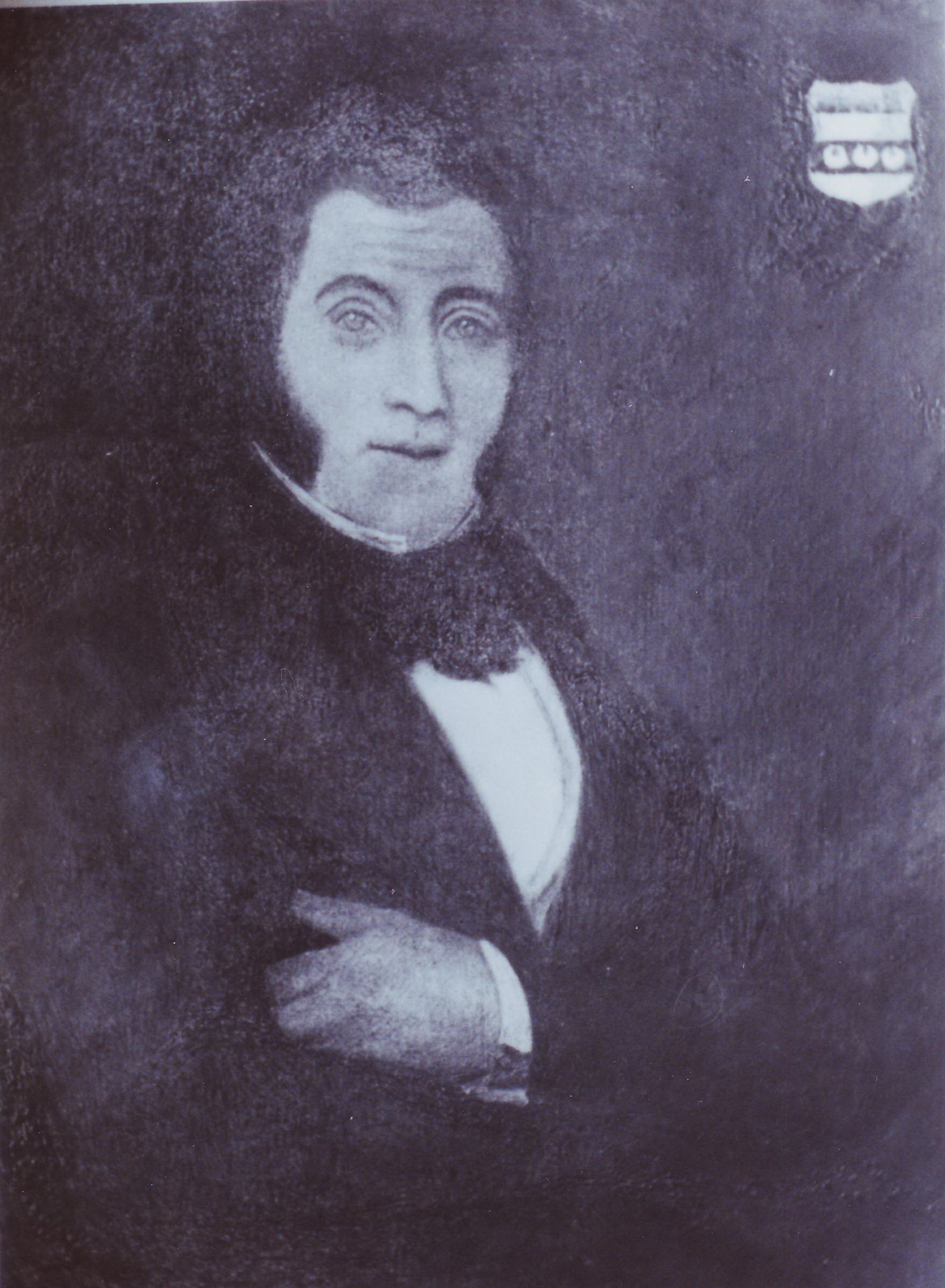
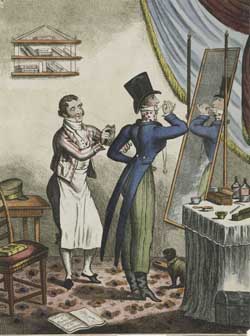
 Louis was the great-great-great-great-grandfather of Charles Bazalgette (r), who is writing his life story. The book contains a great deal of new material; as a foretaste, Charles has started a blog which can be accessed at this blog – http://chasbaz.posterous.com/












 Jane Austen's World