Feeds:
Posts
Comments

Archive for the ‘Regency style’ Category

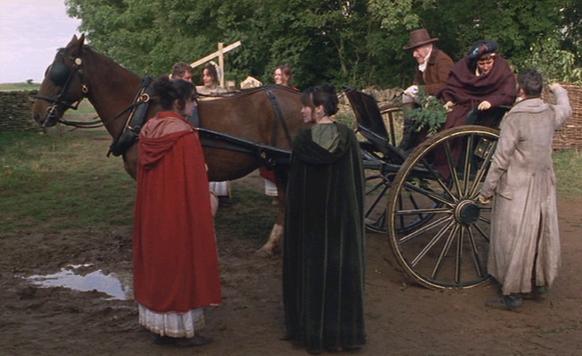
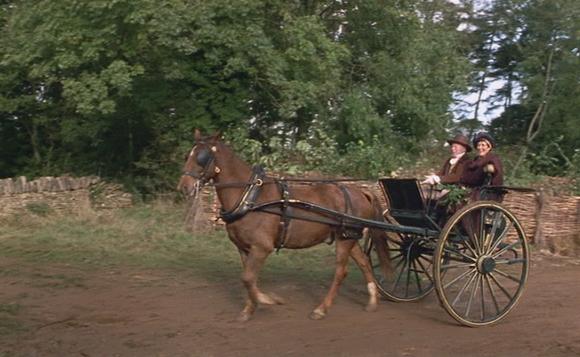
Crofts arrive in the gig, Persuasion 1995

In Persuasion, Jane Austen depicts the Crofts as the happiest couple imaginable. Sophy, who is also Captain Wentworth’s sister, follows her Admiral across the seas, sacrificing her looks in the process. She is only 38 years old, but her complexion is ruddy and has obviously been affected by the sun. Jane Austen writes about the couple in a realistic way, and like all happily married folks, these two exhibit their own idiosyncracies. Admiral Croft, it turns out, is a bad driver. Captain Wentworth says about his brother-in-law to Louisa:

“What glorious weather for the Admiral and my sister! They meant to take a long drive this morning; perhaps we may hail them from some of these hills. They talked of coming into this side of the country. I wonder whereabouts they will upset to-day. Oh! it does happen very often, I assure you–but my sister makes nothing of it–she would as lieve be tossed out as not.”

“Ah! You make the most of it, I know,” cried Louisa, “but if it were really so, I should do just the same in her place. If I loved a man, as she loves the Admiral, I would always be with him, nothing should ever separate us, and I would rather be overturned by him, than driven safely by anybody else.”

The party stops to talk to the Crofts

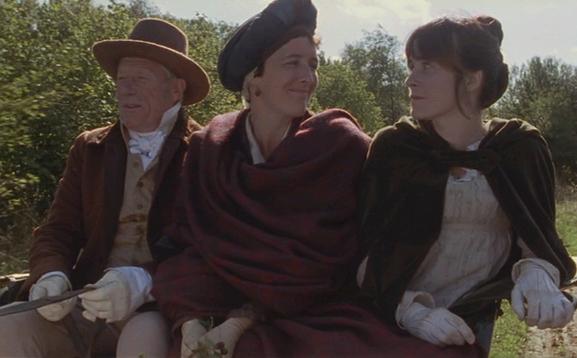
During their return walk from Winthrop, the party from Uppercross, which includes Anne Elliot and Captain Wentworth and a number of the Musgroves, encounter Admiral and Mrs. Croft in a gig. They offer a seat to one of the party. Everyone declines, except for Captain Wentworth, who has noticed Anne’s fatigue. He whispers something to his sister, then encourages Anne to join the Crofts in their two-seater for the rest of the way back to Uppercross (about one mile.) Anne is grateful for his thoughtfulness. But as she rides in the carriage, she hears Mrs. Croft warn her husband:

The Crofts and Anne Elliot crowded in a 2-man gig

My dear admiral, that post!–we shall certainly take that post.”

Jane Austen goes on to write:

But by coolly giving the reins a better direction herself, they happily passed the danger; and by once afterwards judiciously putting out her hand, they neither fell into a rut, nor ran foul of a dung-cart; and Anne, with some amusement at their style of driving, which she imagined no bad representation of the general guidance of their affairs, found herself safely deposited by them at the cottage.

The happy admiral is more than willing to allow his wife to steer the carriage alongside him, which many of us who have driven with “back-seat driving” spouses know is a rare attitude indeed!

In this famous scene by Jane Austen, the Crofts moved over to make room for Anne. Mary Musgrove would rather die from fatigue than be seen crowded in a humble gig, but Anne could only feel gratitude. She is beginning to understand that while Captain Wentworth is unable to forgive her for rejecting him, he is still a kind and decent man. He knows her well enough to see that she was tired and made arrangements for her. In these small observable progressions (as with taking the child Walter from her without comment), we see the Captain’s love for Anne come to the surface. It will take a little longer for his anger at her rejection to recede. See also Shopping and Milsom Street, Bath

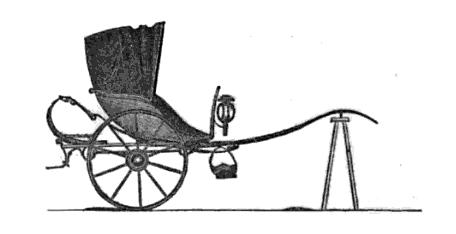
Light weight gig

About Gigs: Gigs were two-wheeled carriages equipped for one horse only. They were designed for two people, one of whom was the driver, and were considered carriages for the middle class, or for the “poorer” classes, who paid less duty on them. Because these carriages were light in weight and springy, they could be easily turned over, especially by a poor driver like Mr. Croft. Gigs were used by doctors, travelers, and people who made short journeys that would not fatigue the horse. Gigs evolved into cabriolets (early versions of cabs) Dennet, Stanhope, and Tilbury. The Stanhope was designed by Fitzroy Stanhope, the second son to the Third Earl Stanhope. This carriage became popular towards the mid-19th century for short trips between Town and the suburbs.

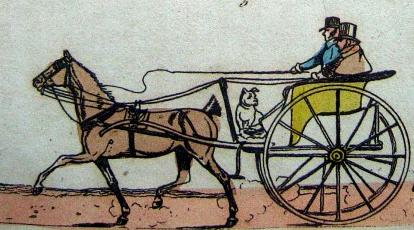
Road to a fight, detail by Henry Alken, 1821

The two men in this high perch phaeton show how precarious a light two-wheeled vehicle can be. One can see the difference between this “sporty” more expensive vehicle and the humble gig (above).

Read Full Post »

In mid April 1817 Jane Austen was so ill she took to her bed in Chawton. By the 27th April she had written her will. After a visit from her brother James and his wife Mary she agreed to go to Winchester to be close to her surgeon who would take care of her there.

Image courtesy © Tony Grant

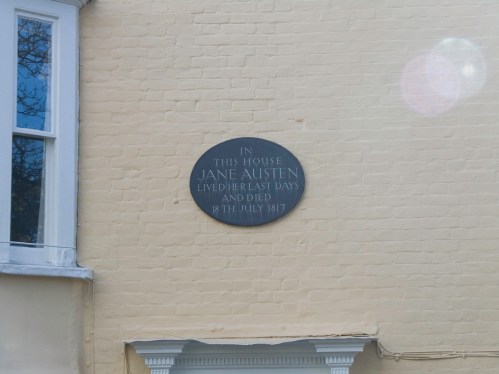
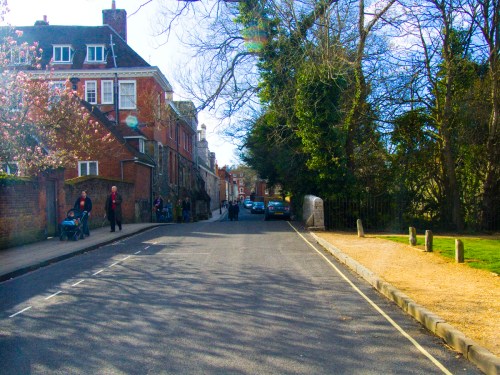
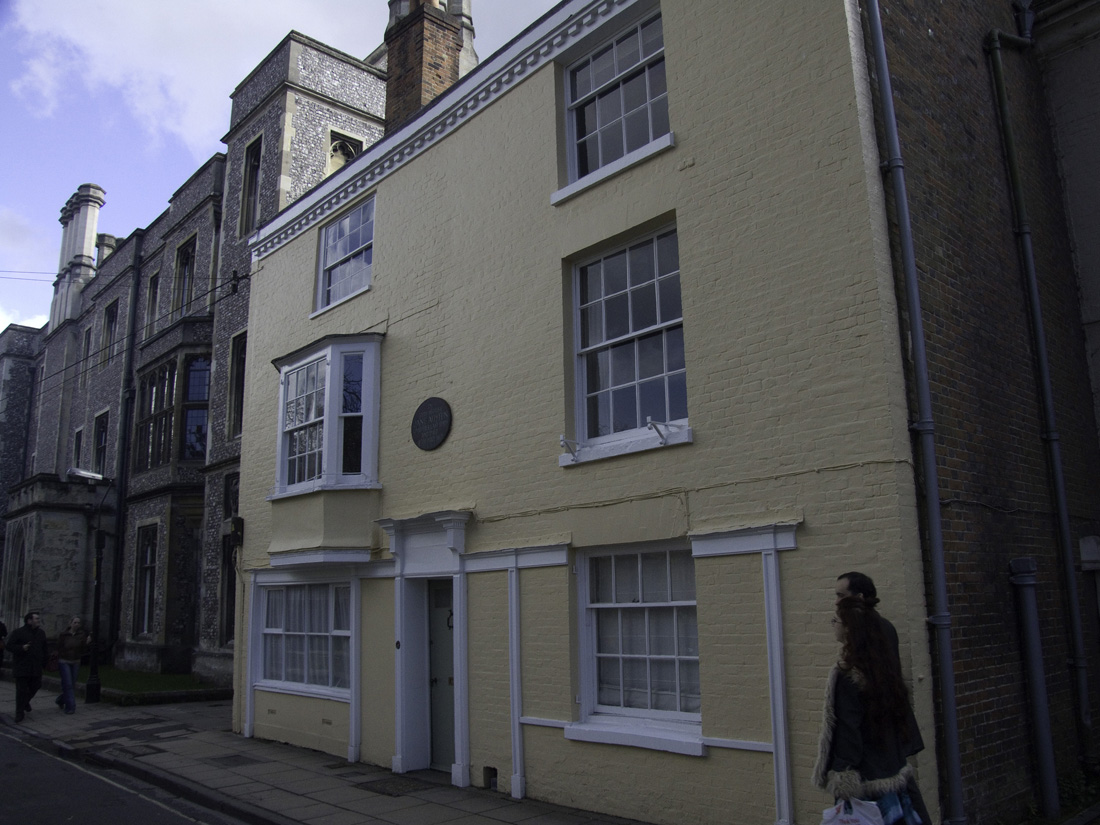
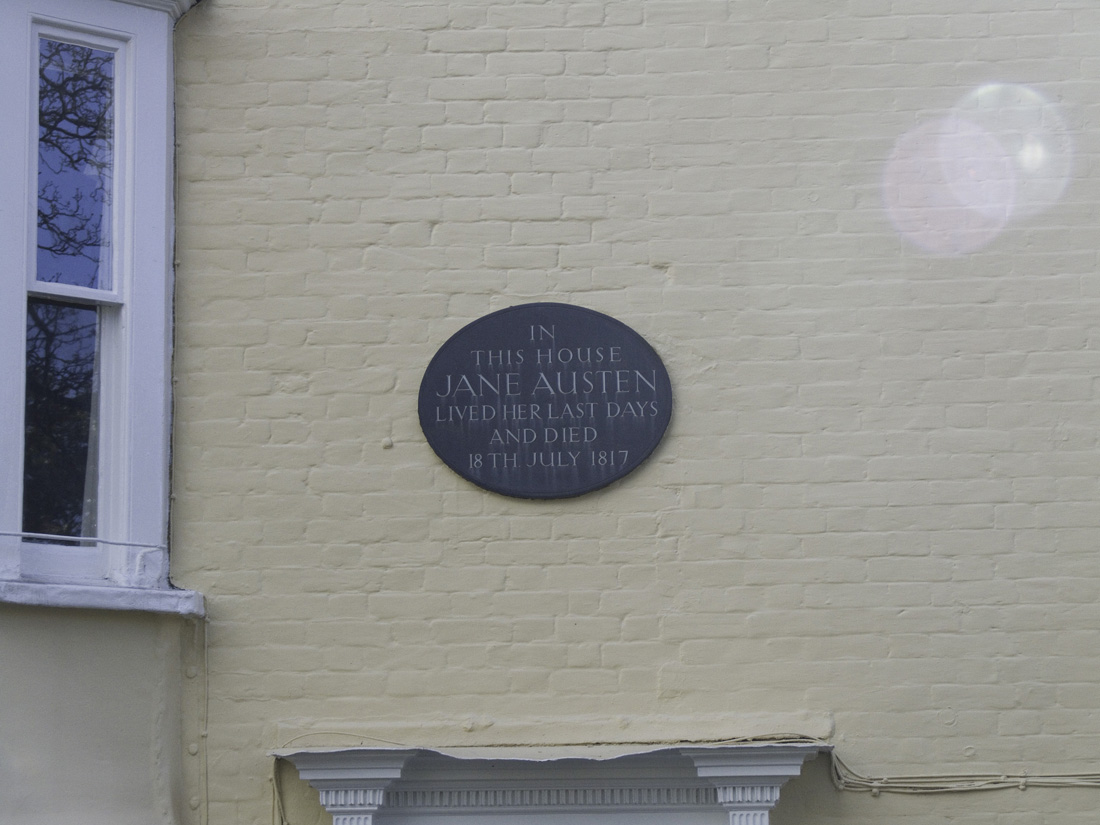
Lodgings were found in 8 College Street, Winchester, which backed on to the grounds of Winchester College and was close to the precincts of Winchester Cathedral.

View of College Street today. Image courtesy © Tony Grant

At first she was able to take trips from the house in College street in a sedan chair. This was an upright box about the size of a telephone kiosk, often with glazed windows to each side and furnished with a comfortable chair. Two long vertical poles secured, one to each side by iron retaining loops, were used to carry the sedan chair and its occupant.

Sedan Chair

As you can imagine only short journeys could be attempted in this way because the chair and occupant would be heavy. Winchester is a not a big city and the cathedral and its precinct, a picturesque and shaded walk along the River Itchen, which passes through the city, and the shops in the high Street, were only a short journey from the front door of 8 College Street.

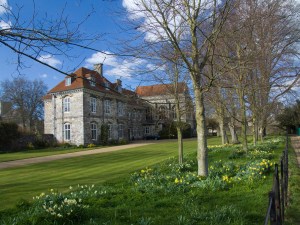
Bishop of Winchester Palace. Image courtesy © Tony Grant

Jane was also able to walk around the rooms inside the rented house. While Jane remained optimistic. Cassandra was far more fearful.

Jane’s house on College Street, Winchester. Image courtesy © Tony Grant

In early June of 1817 James Austen wrote to his son at Oxford, “I grieve to write what will grieve to read; but I must tell you that we can no longer flatter ourselves with the least hope of having your dear valuable Aunt Jane restored to us.”

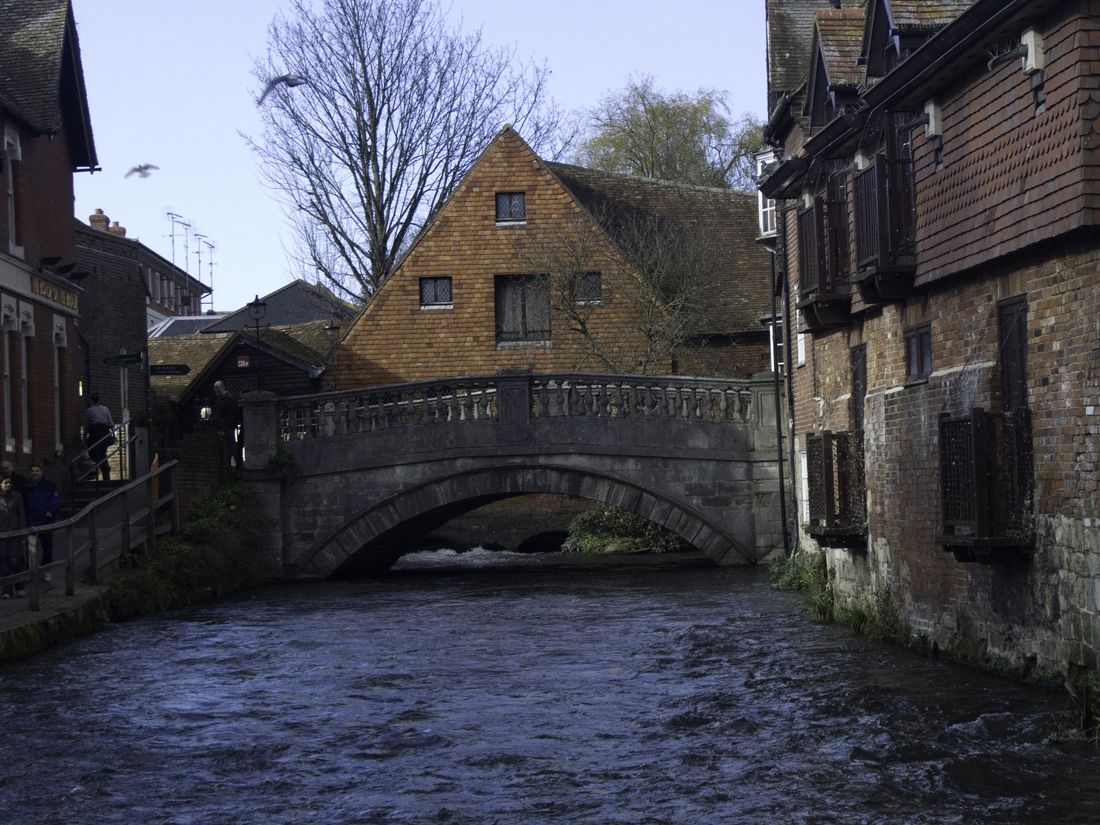
River Itchen, bridge and Town Mill. Image courtesy © Tony Grant

Later in the same letter James states that his sister is “….. well aware of her situation.” and also at another point he writes “…. an easy departure from this to a better world is all that we can pray for.”

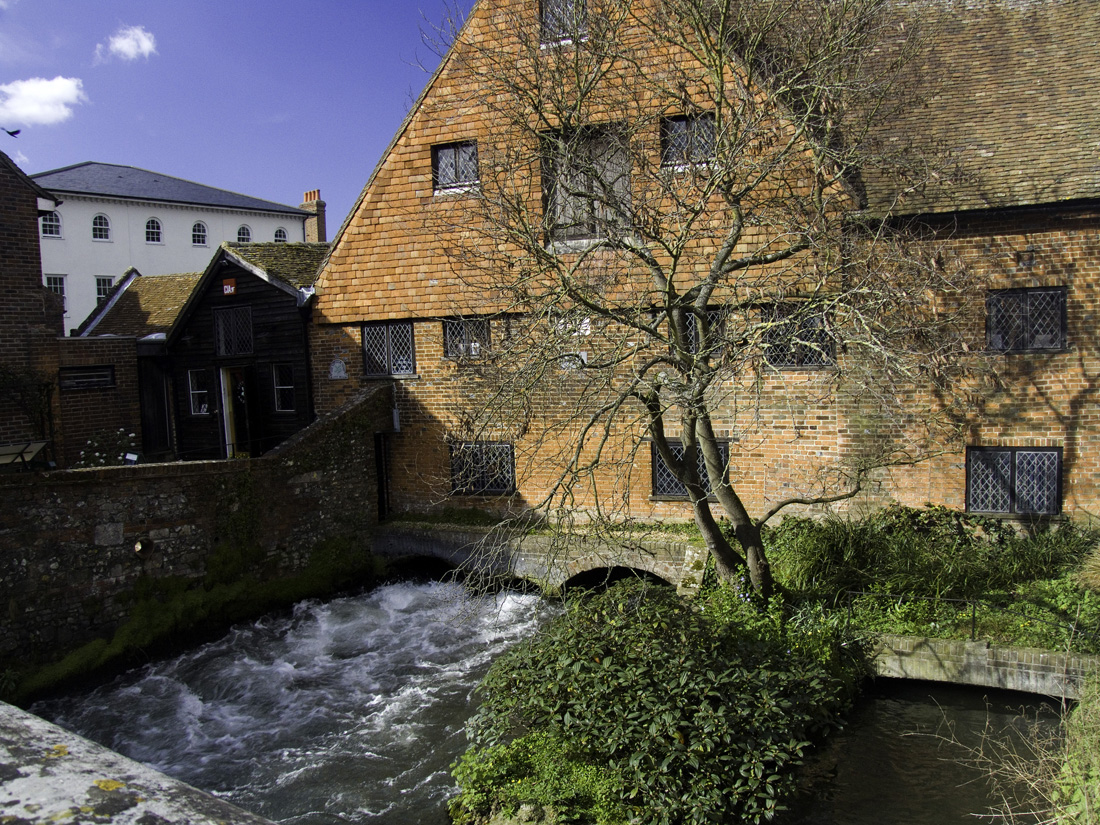
Winchester Water Mill. Image courtesy © Tony Grant

All this sounds very gloomy. However, Jane’s health seemed to improve for a while to the surprise of all.

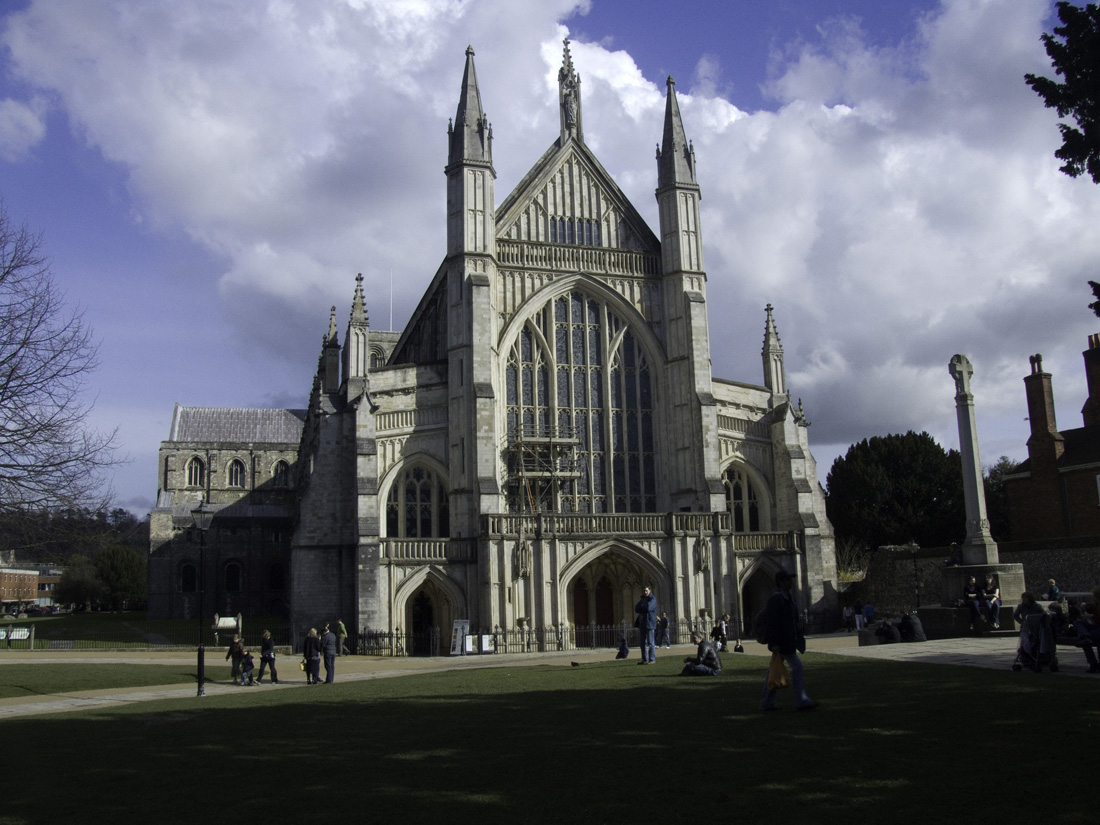
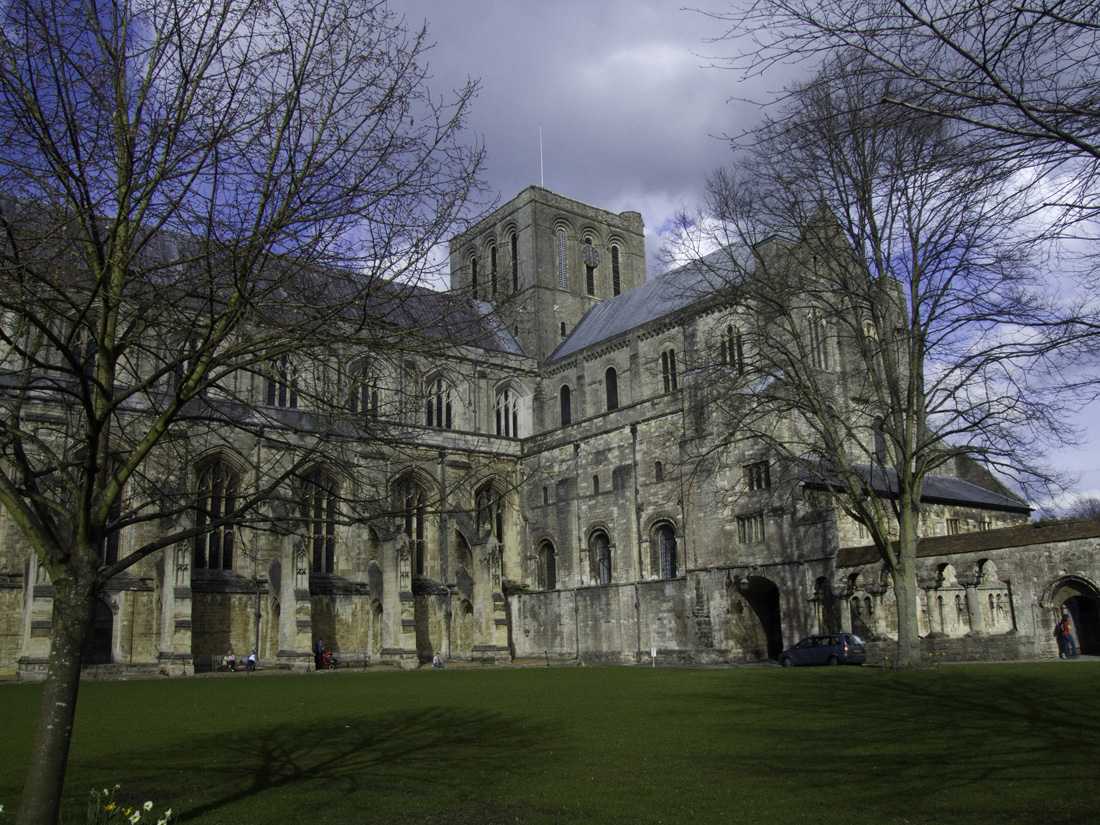
Winchester Cathedral, West Front. Image courtesy © Tony Grant

On the morning of the 15th July, St Swithins Day (Swithin, also Swithun) Jane dictated a humorous poem to Cassandra. She must have been mulling the words over in her head. It was called, Venta, an old fashioned name for Winchester.

“Oh subjects rebellious!
Oh Venta depraved
By vice you’re enslaved…..

Winchester Cathedral Flying Buttresses. Image courtesy © Tony Grant

St. Swithin was a Saxon saint who had lived in Winchester. He was buried in the Cathedral and his grave became a focus for pilgrims coming to pray for favours. Winchester was as famous as a place for pilgrimage because of St Swithin, as Canterbury became later because of Thomas a Beckets martyrdom near the high altar in Canterbury Cathedral. There is a famous rhyme associated with St Swithin:

‘St. Swithin’s day if thou dost rain
For forty days it will remain St. Swithin’s day if thou be fair For forty days ’twill rain nae mair.’

However the depraved and enslaved that Jane refers to was probably about some of the characters who frequented the yearly tradition of horse racing and betting on the races that took place on St Swithin’s day to celebrate the saint. I’m sure there was some depraved activities at these Winchester races.

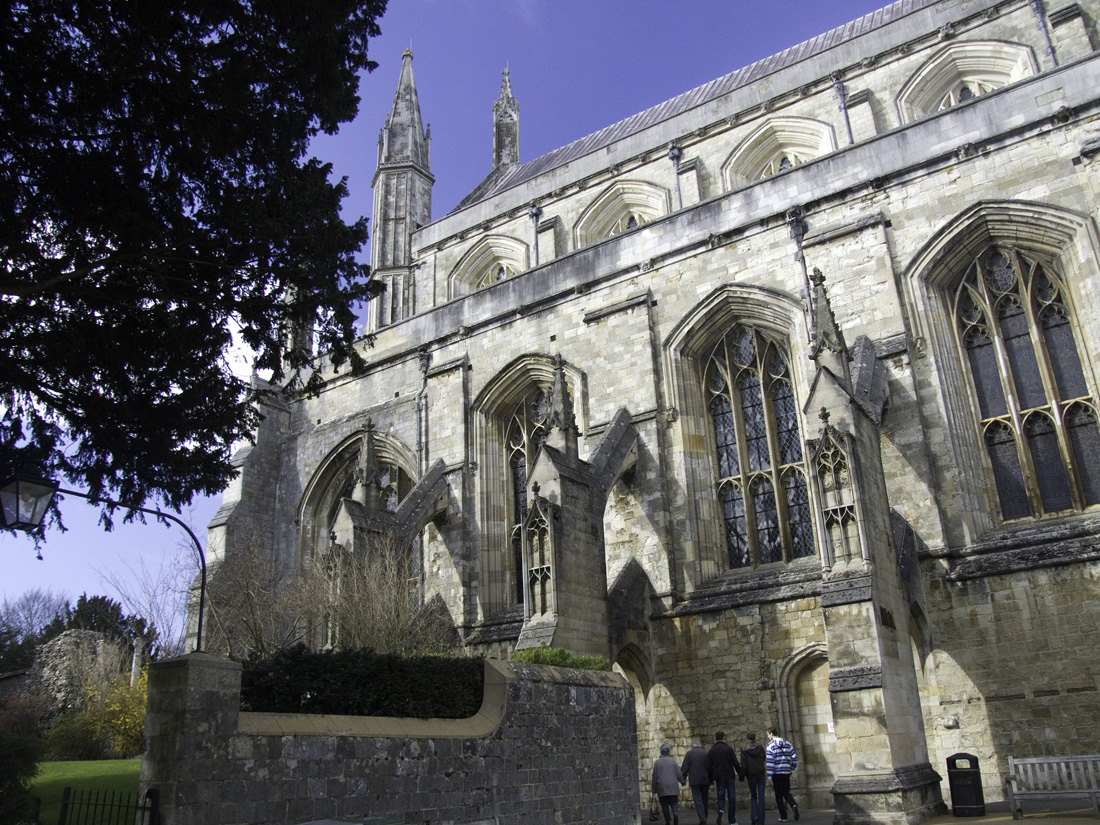
Winchester Cathedral, South Side. Image courtesy © Tony Grant

There is a line in the poem that is thought to have been edited by Cassandra herself as Jane dictaded the poem to her.

“When once we are buried you think we are gone.”

The poem is a rhyming poem and the last word of this line,
” gone,” does not rhyme with the final word of the next couplet which is the word, “said.” The word dead fits perfectly.

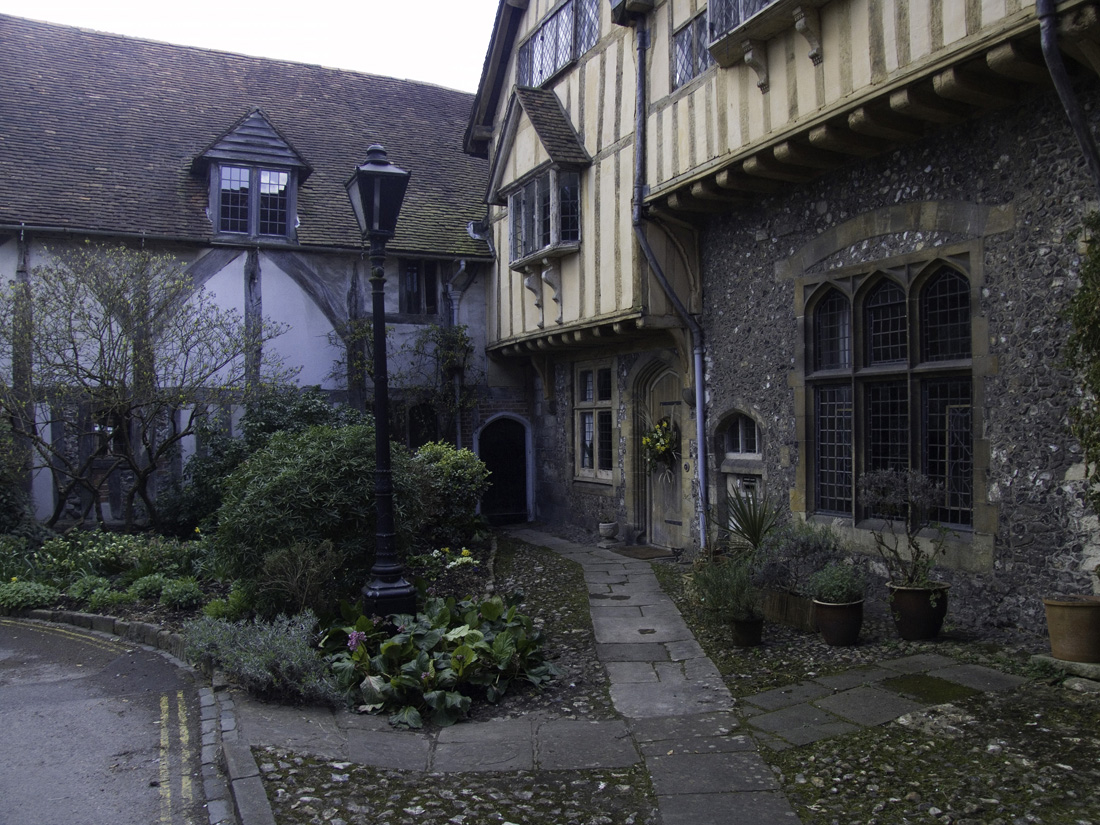
Winchester Cathedral Close Houses. Image courtesy © Tony Grant

Cassandra’s first tentative foray into editing her sister’s words. The letters came later.

On the 17th July the sun shone during the day and evening and rained at night time. Mary Austen, James’s wife ( Jane didn’t get on with her) wrote “ Jane Austen was taken for death about ½ past 5 in the evening” This was a seizure and Mr Lyford Jane’s doctor thought that a blood vessel had ruptured inside Jane’s head. Dr Lyford administered something, which Cassandra does not make clear in her letters afterwards. It was probably laudanum, a derivative of opium.

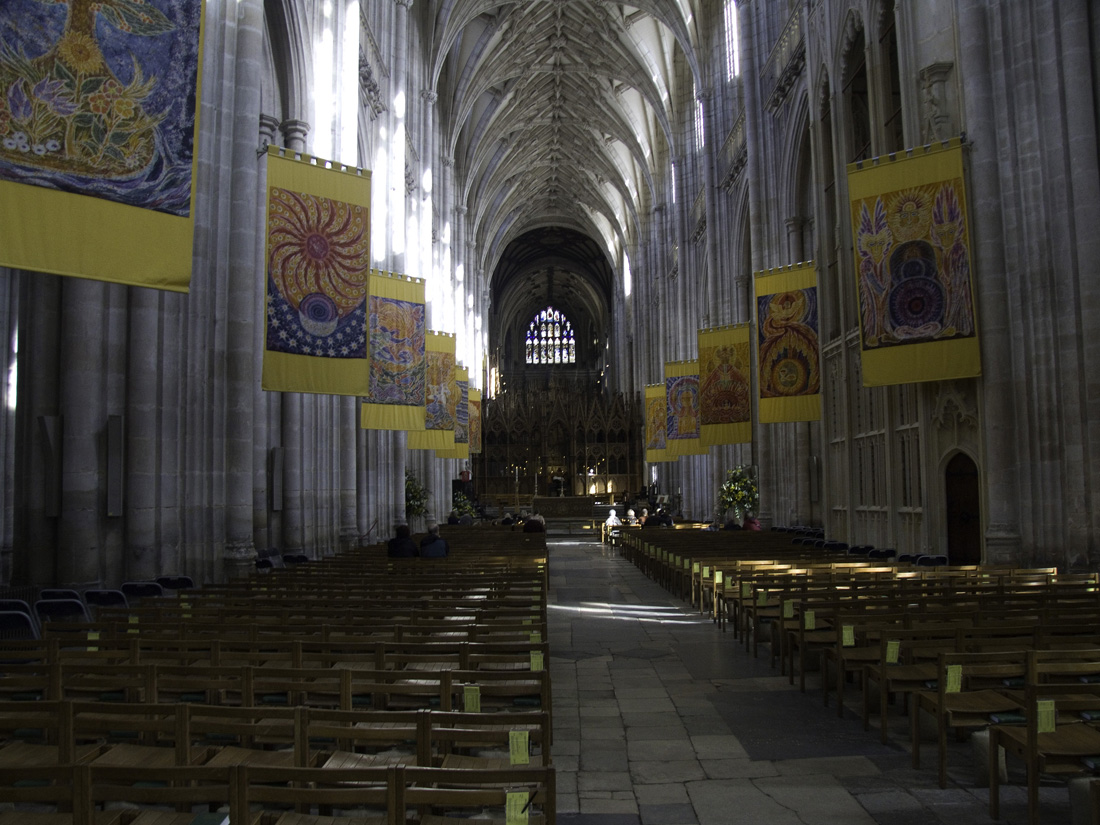
Winchester Cathedral Aisle. Image courtesy © Tony Grant

Some of the last recorded words of Jane’s are, “ God grant me patience, Pray for me oh Pray for me.” She had struggled somewhat during these last moments and had partly come off her bed. Cassandra got a stool and sat next to Jane resting her head in her lap. She sat like this for six hours before she had a rest and Mary Austen took over for the next two hours until 3am in the morning then Cassandra took over the position once again. An hour later Jane Austen breathed her last breath. She was pronounced dead at 4am. Cassandra closed Jane’s eyes.

A few days later the Salisbury and Winchester Journal wrote,

“On Friday 18th inst. Died, in this city, Miss Jane Austen, youngest daughter of the late Rev. George Austen, rector of Steventon , in the county and authoress of Emma, Mansfield park, pride and prejudice and sense and Sensibility.”

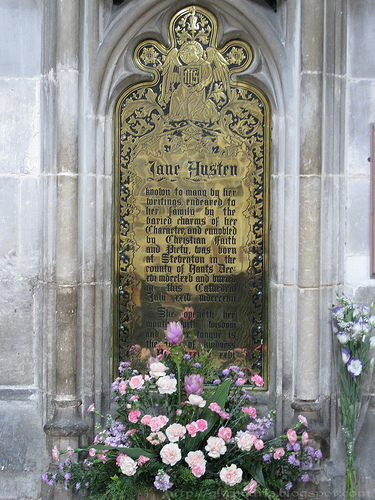
Henry, her beloved brother, wrote the words to be etched on her tomb in Winchester Cathedral. He failed to mention her literary achievements.

Cassandra was distraught at her sister’s death.

However she was able to write letters to friends and family and deal with many of the practical things needed to be done after Jane’s death. On Sunday 20th July, two days after Jane died, Cassandra wrote to fanny Knight and Cassandra expresses a lot of the emotion she must have felt.

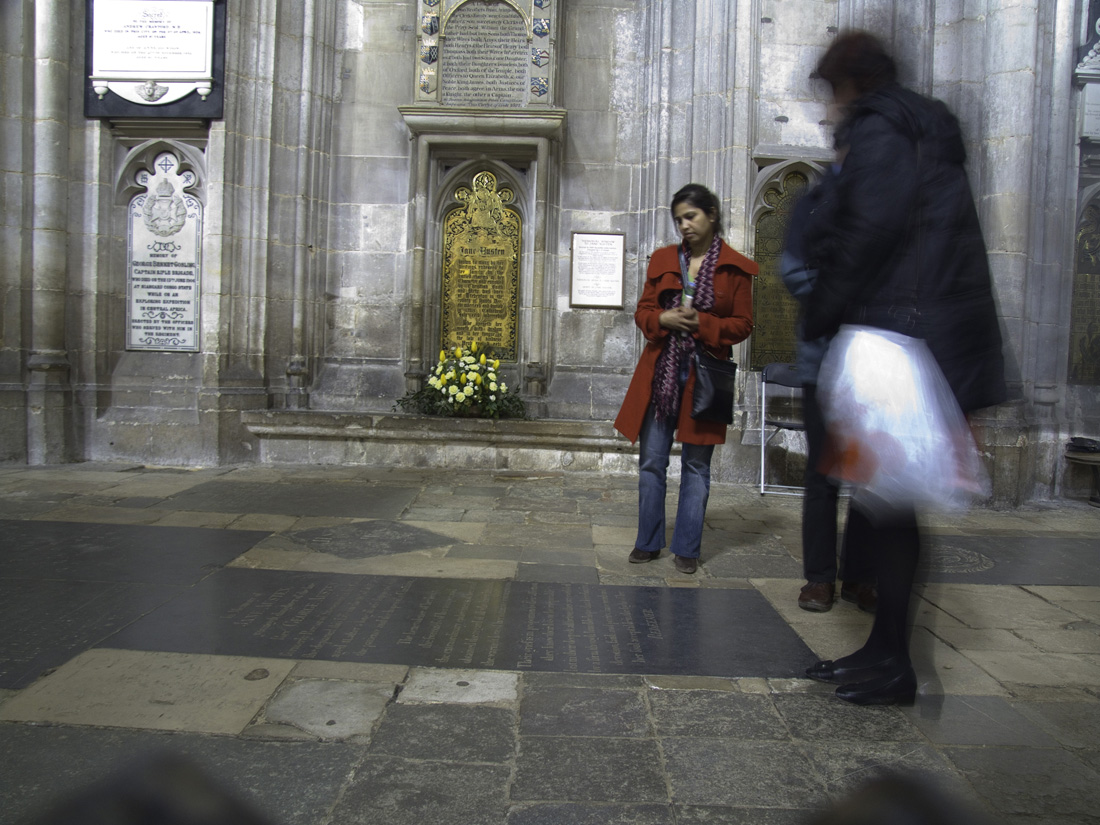
Jane Austen’s Grave. Image courtesy © Tony Grant

“ I have lost a treasure, such a sister, such a friend as never can be surpassed,-She was the sun of my life, the gilder of every pleasure, the soother of every sorrow, I had not a thought concealed from her, & it is if I had lost a part of myself.”

Four days later on the 24th July Jane was buried in the north aisle of Winchester cathedral. There has been some speculation as to how she was buried in such an honoured place. Her father was a local vicar, but that would not have been sufficient to get her a burial inside the cathedral. It might have been there was a friend of the family who was part of the diocesan hierarchy who got permission as a favour.

Jane Austen’s Grave, Image courtesy © Tony Grant

Four days after the internment on the 28th July Cassandra got down to the business of sorting out formalities. She wrote to Anne Sharp;

“ My dear Miss Sharp, I have great pleasure in sending you the lock of hair you wish for,& I add one pair of clasps which she sometimes wore & a small bodkin which she had had in use for more than twenty years.”

A certain austere efficiency has entered Cassandra’s actions.

So Jane Austen was dead. But, she lives on.

Posted by Tony Grant, the blog author of London Calling

About Tony Grant:

I am now partly retired from teaching. I do some supply teaching but I also work as a freelance tour guide for a Canadian company called Tours by Locals.

I lead tours of the South of England for family and friendship groups. Many of the tours are tailor made to peoples personal requirements.

I was born in Southampton. From an early age my grandmother made me aware of Jane Austen. It was my grandmother who showed me the site in Castle Square where Jane lived for two years. On visits to Winchester my grandmother also showed me the house where Jane died and her tomb in the north aisle of Winchester Cathedral.

I read my first Jane Austen novel, Mansfield Park, when I was doing my Batchelor of Arts degree in the early 1970’s. Having been born and brought up in Southampton, Hampshire, and now living in North Surrey, I have been able to visit, over the years many of the places Jane mentions in her letters and uses in her novels. I live very close to some of those places.

I have my own BLOG, London Calling, in which I discuss ideas and places to do with Jane. My BLOG also allows me to present one of my other passions photography. I have photographed many Jane Austen sites.

Also about this topic:

Read Full Post »

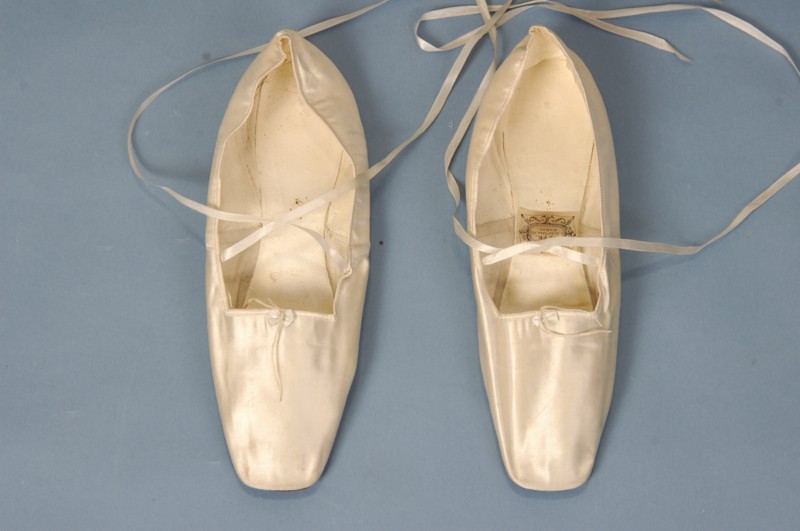
Once in a while I visit Trousseau just to see what items are available and salivate. Case in point, a lovely ball/wedding gown which has (unsurprisingly) sold. The shoes are in almost pristine condition, having been worn only once.

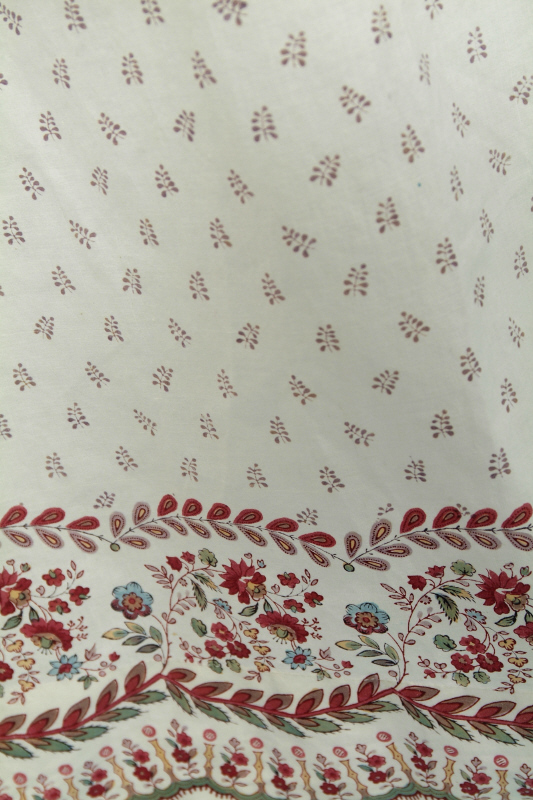
The resolution of the images are remarkable. This detail of a day gown (1808-1816) shows the beautiful roller print made with a fabric printing technique that became prevalent in the late 18th century:

Roller printing, a mechanical improvement on the copperplate technique, was developed in England in the late eighteenth century and was in use in the north of England by 1790. The copper roller gave manufacturers the ability to print larger quantities of fabrics at greater speeds, for lower prices, and the production of printed cotton increased dramatically in the nineteenth century. – Source: Textile Production in Europe: Printed, 1600–1800 | Thematic Essay | Heilbrunn Timeline of Art History | The Metropolitan Museum of Art

Read Full Post »

Inquiring Readers: This is the fourth and final post in honor of Pride and Prejudice Without Zombies, Austenprose’s in-depth reading of Pride and Prejudice, which is winding up this week.. My first post discussed Dressing for the Netherfield Ball, the second talked about the dances, and the third showcased the suppers that might have been served. This post discusses the music that was popular during Jane Austen’s era and that she personally liked. Some of her preferences are vastly different than those shown in film and tv productions.
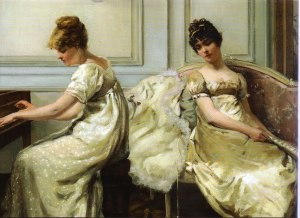
“Yes, yes, we will have a pianoforte, as good a one as can be got for 30 guineas, and I will practice country dances, that we may have some amusement for our nephews and nieces, when we have the pleasure of their company.” – Jane Austen to Cassandra, 1808
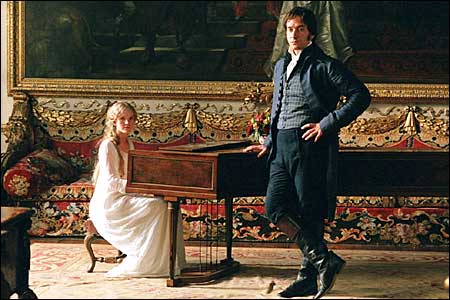
Georgiana Darcy at her pianoforte

Like many ladies of her era, Jane Austen was an accomplished musician. And so were her characters. In Pride and Prejudice, Mary Bennet, Elizabeth Bennet, the Bingley sisters and Georgiana Darcy could all play instruments with skill. Lady Catherine de Bourgh would have been a proficient, as would her daughter Anne, had she learned and practiced. Before the age of electricity and cable the world was largely silent musically speaking, save for the music played by family members, local musicians, or more famous musicians who were paid to play for the rich.

Street Music, 1789

Musicians wandered the land, and London streets offered a pandemonium of sounds, much of it derived from musical instruments. The only music available in the home was that which amateur or professional performers could produce on the spot, so that the ability to play music well was crucial for all walks of life. From childhood on, young ladies were expected to play a musical instrument and study with music masters. Gentlemen sang as well and formed impromptu amateur groups that entertained in taverns and men’s clubs.
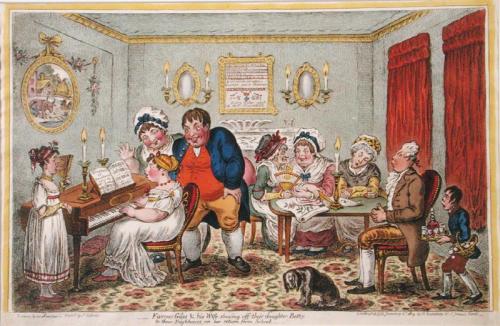
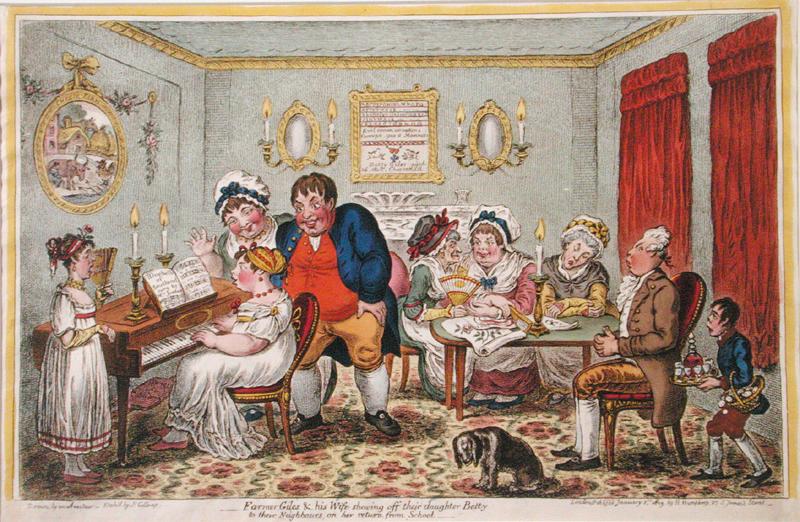
Farmer Giles and his wife showing off their daughter Betty to their neighbors on her return from school, Gillray, 1806

In Pride and Prejudice, Mary Bennet, while considered technically skilled, was pendantic compared to her sister Elizabeth, whose musical style was  more lively and who could sing with more expression. An evening in the Regency era might consist of a family gathered in the drawing room, with the women preoccupied with a household task like sewing, the men reading, or a group playing games, and someone playing a musical instrument or singing a popular song. For larger gatherings, small ensembles would form, prompting others to push furniture aside, roll up the carpet, and dance a jig or a reel, as I imagine Lydia Bennet and her friends might have done at Colonel Forster’s home. Sometimes professionals mixed with amateurs. In 1811, Jane Austen wrote about a get together at her brother Henry’s house in London:
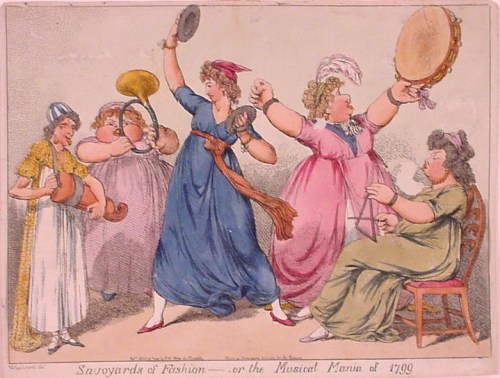
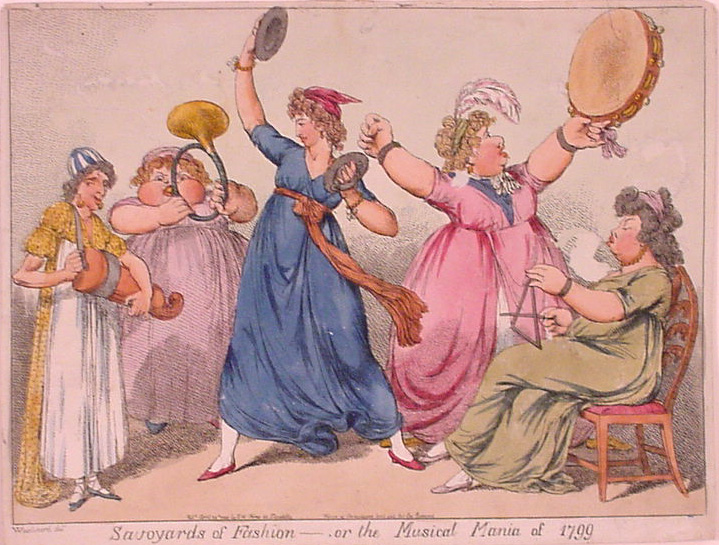
George Woodward. "Savoyards of Fashion -- or, the Musical Mania of 1799.

“Above 80 people are invited for next Tuesday evening, and there is to be some very good music — five professionals, three of them glee singers, besides amateurs. Fanny will listen to this. One of the hirelings is a Capital on the harp, from which I expect great pleasure.”
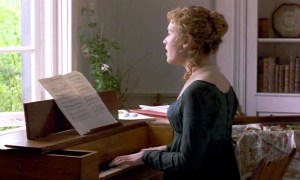
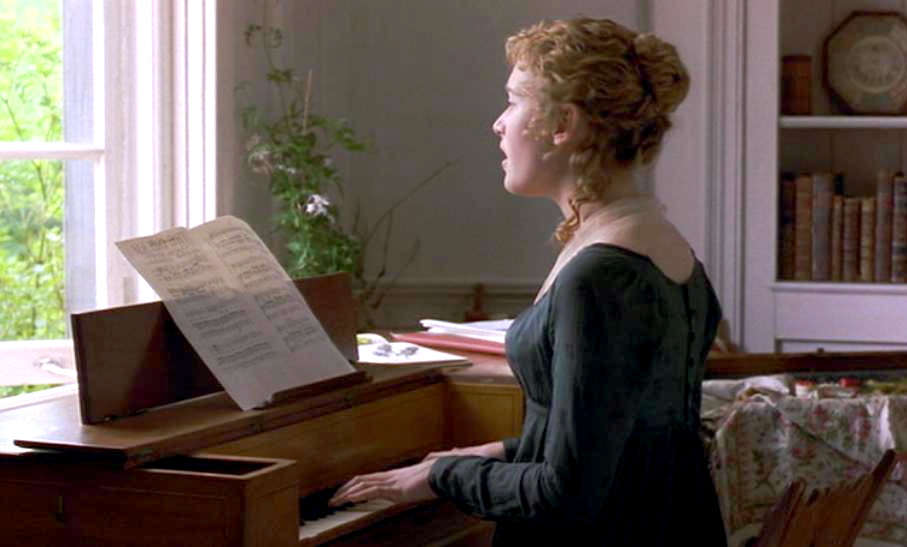
Marianne Dashwood sings and plays

Like Anne Elliot in Persuasion, Jane Austen frequently played the pianoforte for the enjoyment of her family. She practiced several hours every morning before others in her family began their day. Her niece Caroline recalled her aunt as having a natural taste in music. Natural or not, Jane studied for several years with Dr. Chard, an organist at Winchester Cathedral. It was said that her speaking voice was as sweet as her singing, and that she sang for her family only. A place in Chawton Cottage was reserved for the piano forte (Marianne Dashwood had her gift from Colonel Brandon placed in the drawing room in Barton Cottage), but some of the larger homes in the Regency era might have a room dedicated solely for music. Georgiana Darcy played so well that her brother had an entire room made over for her music. These rooms would contain a variety of instruments, including the harp, flute, violin and pianoforte.
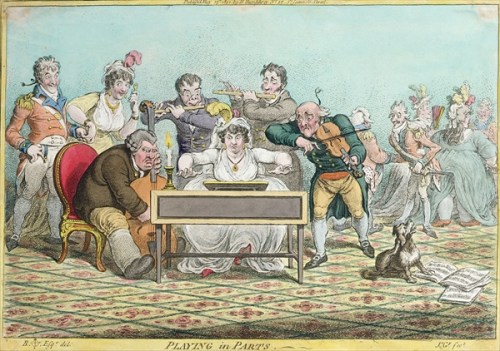
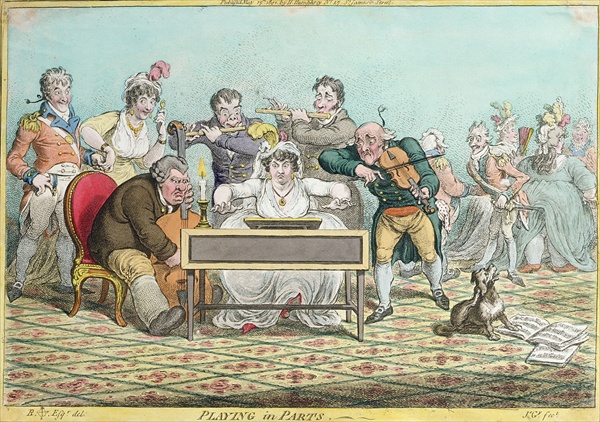
Playing in Parts, James Gillray

“Through most of the 19th century, the lines between ‘popular’ and classical music were much more blurred than they are today. A Regency musicale or parlor performance could include a traditional Irish air popularized by Thomas Moore, a piano sonata by Pleyel, a favorite song from a ballad opera, or a setting of a popular dance tune.” – Anthea Lawson

Jane’s musical preferences tended towards the songs and dances that were popular at the time. That some of yesteryear’s tunes have become today’s classical music (Haydn, Mozart, and Beethoven) happened purely by chance, for many of the composers whose music and songs Jane Austen preferred have faded into obscurity. Jane favored Ignaz Pleyel over Haydn, and had included in her musical collection 14 of his sonatinas. She played folk songs, Scotch and Irish airs (many arranged by Haydn and Beethoven), and songs from the popular stage by such composers as Dibdin, Arne and Shiled. She also collected works from Piccinni, Sterkel, and J.C. Bach, and owned Steibelt’s ‘Grand Concerto, Haydn’s English Conzonets, glees music of John Wall Callcott, and Che Faro from Gluck’s Orfeo ed Euridice. ( Music: What Was Popular When Jane Austen Was Writing?)
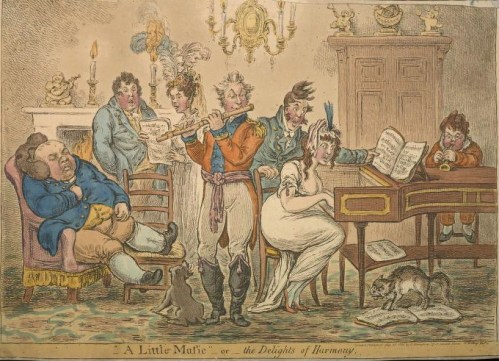
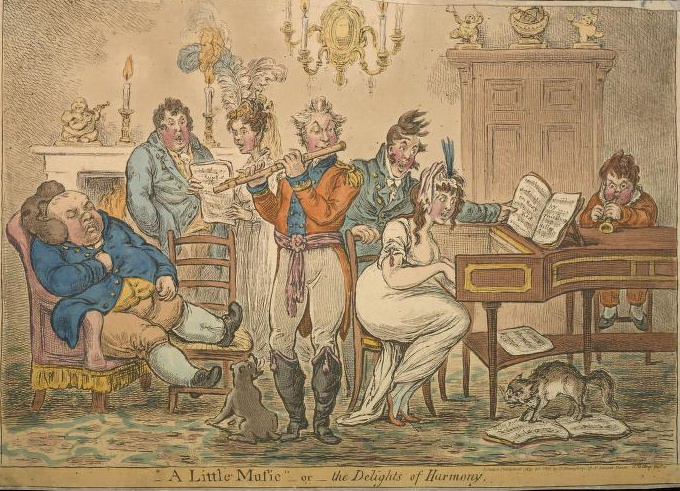
A Little Music, Gillray, 1810

In Pride and Prejudice, Mary Bennet played a selection of Scotch and Irish airs, which were quite popular at the time. Jane Fairfax in Emma played Robin Adair, a tune by G. Kiallmark that Jane Austen must also have played, for there were several variations of the song in her folio collection of music.
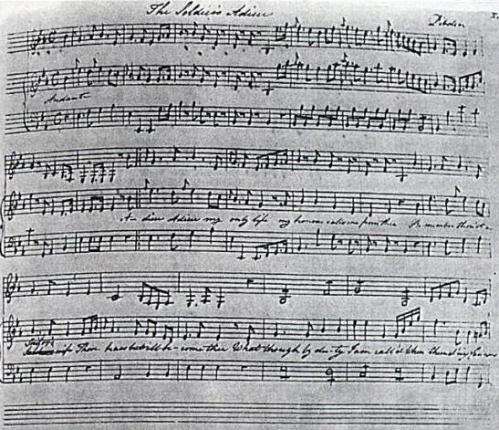
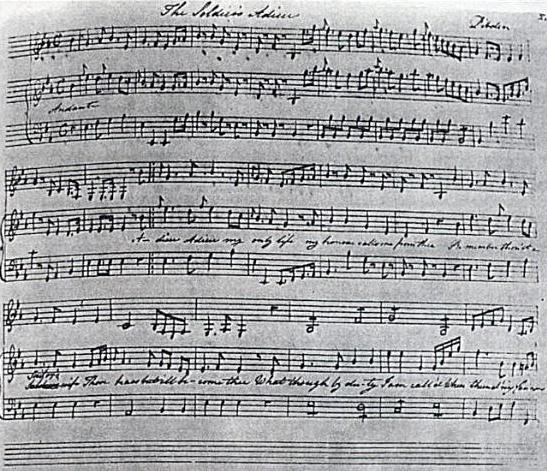
Jane Austen's copy of Dibdins "The Soldiers Adieu." She altered soldier to sailor.

Purchasing music sheets was expensive during the Regency era. People would loan sheet music to each other,which they would then copy into notebooks. While Austen did not write the lyrics she sang, she did choose which music she wanted to play. After borrowing a piece, she painstakingly copied it into a notebook with pre-ruled paper, or assembled the pieces she purchased into albums. Today, The Chawton House Trust owns eight volumes of Jane Austen’s collection of sheet music, two of which were largely written in Jane’s hand. A third volume was also copied by someone’s hand, and “five volumes contain printed music of songs, keyboard works, and chamber music from a variety of sources.” – (The Gift of Music )
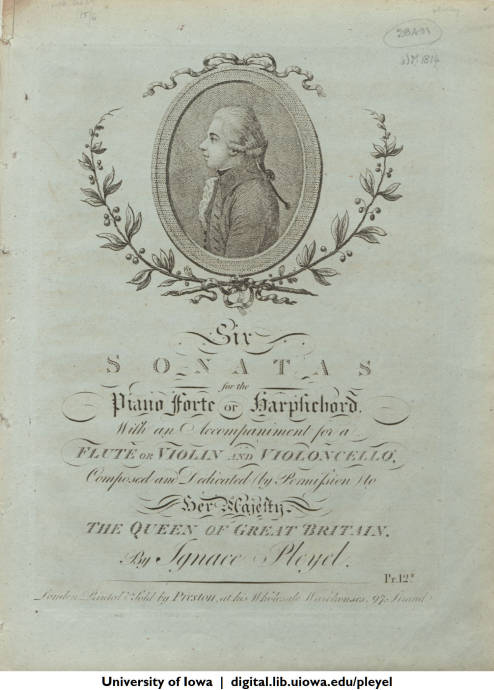
Pleyel sonatas for the pianoforte or harpsichord

About half of the music in Jane’s notebooks are for vocals, or folk songs that tell stories. A few are so comic and fun that it is logical that the author of Pride and Prejudice and The History of England would be attracted to them. Charles Dibdin a composer and performer much in the vein of Benny Hill, wrote “The Joys of the Country,” which Jane copied by hand. He also wrote more serious, sentimental, and patriotic songs, supporting the fact that Jane’s taste was eclectic. She copied out the Marseillaise as The Marseilles March, and owned 56 Scottish songs, like “O Waly Waly”. Jane compiled more than the eight music books that reside at the Chawton House Trust, but the additional books, once studied by scholars in the 1970s and 1980s, are no longer available for study. (- I burn with contempt for my foes – Jane Austen Music Collections .)
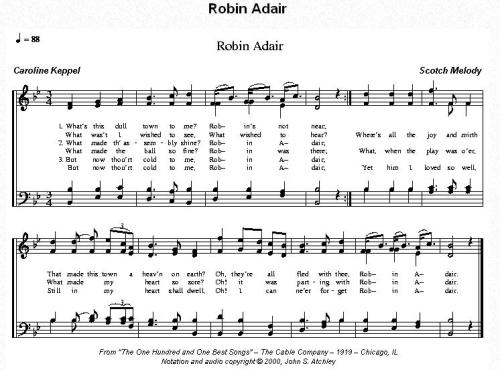
Robin Adair, Scots Melody, Caroline Keppel

“In the evening she would sometimes sing, to her own accompaniment, some simple old songs, the words and airs of which, now never heard, still linger in my memory.” (James Edward Austen Leigh Memoir 330)

Many of the songs that were popular during the Regency era were franker than the topics that ladies of the Regency were allowed to conduct in polite conversation. Scored for a soprano voice, these popular ditties spoke of love and pursuit, sexual invitation, and people declaring their love openly – “some sexually, some chastely, some sweetly, some comically, some sentimentally, some melodramatically–a wildly “forward” thing for ladies to do in speech but apparently not in song.” (- I burn with contempt for my foes – Jane Austen Music Collections .)   Unmarried ladies sang songs in accents or impersonating Scottish girls. These musicales allowed them a freedom of expression and role playing that Jane Austen could have included in her novels. Many a chaste lady sang a bawdy song with an accent or impersonated a Scottish girl, with no one thinking the worst of her.  (Jane Austen Music Collection.)
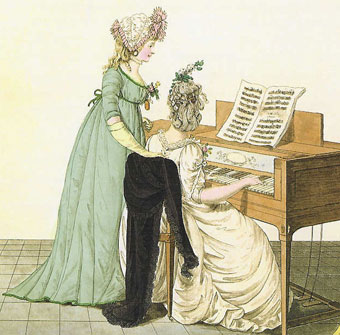
Ladies at the piano, early Regency period

The Turban’d Turk

“The London folks themselves beguile
And think they please in a capital stile
Yet let them ask as they cross the street
Of any young virgin they happen to meet
And I know she’ll say, from behind her Fan
That there’s none can love like an Irishman
Like an Irishman”

(The British Minstrel and National Melodist, p 265-266, Sherwood, Gilbert, and Piper, 1827)
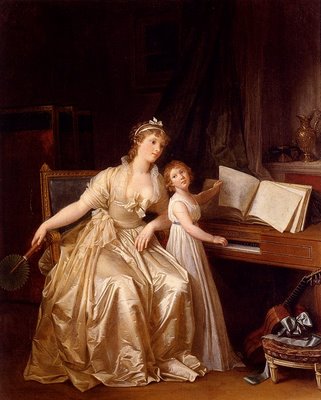
The Piano Lesson, Girard, 1810

Like record producers and composers today, music publishers issued thousands of new songs for vocal performance and music for dances per year. In 1790 Andrews and Birchall published sheet songs bearing their name. Besides these, the bulk of Andrews’s publications between 1804-1810 included a sseries of ” Five Favourite Dances,” folio, Numbers i to 39 (7, 8, and 9 dated 1805), and a small oblong volume for the flute ” The Gentleman’s Vade Mecum.”  William Campbell published principally minor books dances, and include a series “Campbell’s Country Dances and Reels,” in oblong quarto. This runs to twenty seven books, and was re-issued, and probably continued from the 22nd up to this number by Robert Birchall. Werner was a dancing master and master of the ceremonies at Almack’s and the Festino Rooms. He lived at 6, Lower St. James’ Street, Golden Square, in 1782 and died in1787. Campbell, Fentum, Birchall, and Andrews, and others published his yearly books. When Jane traveled to London to visit her brother Henry, she haunted the shops, no doubt in search of new music as well as new fabrics, books, and gifts for the family.
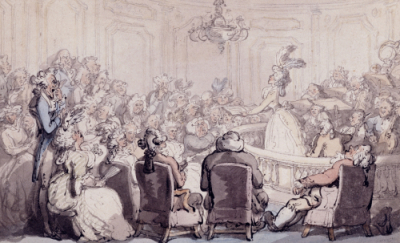
Rowlandson, The Concert, Bath

During the 1790s the London concert life changed. Amateur orchestras in city taverns or in gentlemen’s clubs competedwith the professional concerts that began to sprout up in public places. (- The Rage for Music, Simon McVeigh) Local musicians would be hired for assembly balls in small towns. Musicians with a more professional background would be enlisted to play at more stylish events, like the Netherfield Ball. The lady asked to lead a set would choose the music and the steps, and relay her request to the Master of Ceremonies. As mentioned in my post about the dances at the Netherfield Ball, the musicians would play contemporary and lively music requested by the lady. Most of the marriageable young girls (think of the exuberance of Lydia and Kitty Bennet) preferred their version of modern music to the tunes of their elders. This means that many of the tunes chosen for the ball scenes in the Jane Austen film adaptations are entirely wrong! The early nineteenth century teen would have balked at dancing to a staid Mr. Beveridge’s Maggot, no matter how much today’s viewers like the scenes in which this tune is featured.
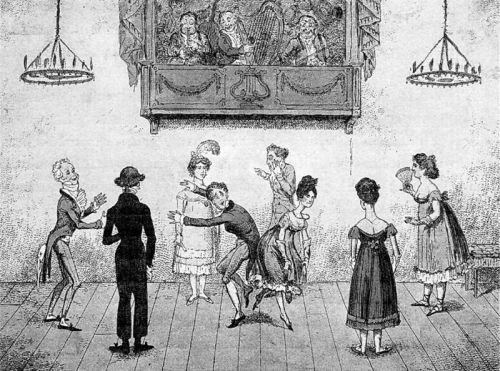
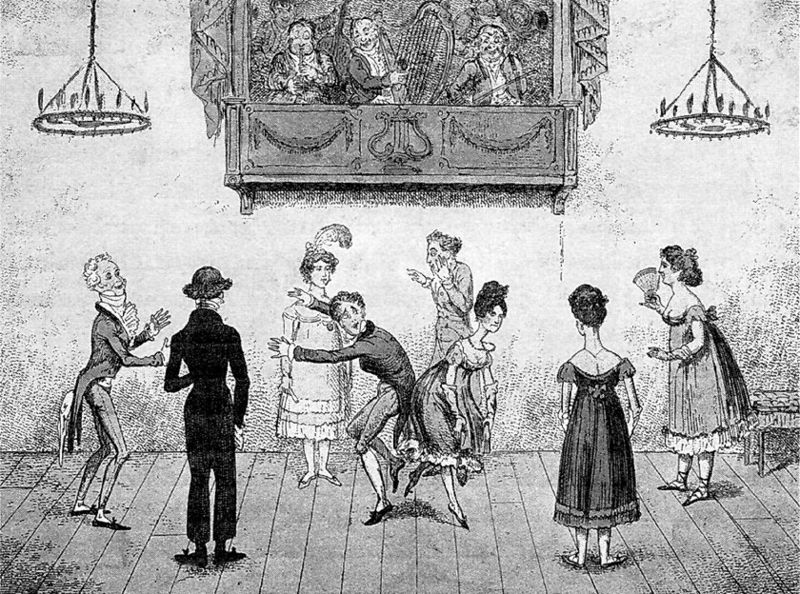
1817 Accidents in Quadrille Dancing

List of sources and examples:

Read Full Post »
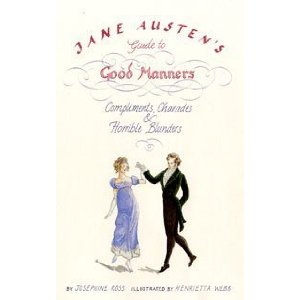
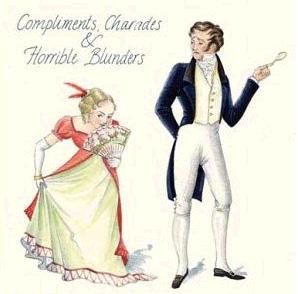
I’ve owned Jane Austen’s Guide to Good Manners: Compliments, Charades and Horrible Blunders by Josephine Ross for a number of years. It is a small book (133 pages), very pretty, and filled with charming illustrations like the one below painted by Henrietta Webb. The language is slightly old-fashioned, as if the book was written in the 19th century. The rules of etiquette and manners are lifted from Jane Austen’s novels, and thus we know they are authentic. The eight chapters are divided logically: Manners; Forms of Introduction; Calling and Conversation; Dancing and Dining; Dress and Taste; Matrimony; Family; and Servants.

Each chapter is divided into “rules”, which serve as guides to the rule of etiquette that will be discussed. For example, Rule 1. Do not be presumptuous in offering introduction. The example comes from the scene in Pride and Prejudice in which Lady Catherine de Bourgh charges angrily into the Bennet home and does not ask for an introduction to Mrs. Bennet, who, awkwardly, has not been granted permission to speak to that grand lady in her own house. Lady Catherine’s rudeness towards Elizabeth and her mother is exacerbated by her pointed cut and lack of manners!


The book would make a wonderful gift for a Jane Austen fan who would like more background into the Regency era. Someone like me, who owns several books of etiquette of the period, would find the lack of index irritating. It is hard to find the precise rules of etiquette quickly. If I must hunt and peck, I infinitely prefer consulting original sources: The Mirror of Graces (1811) by A Lady of Distinction and Lord Chesterfield’s letters to his son, for instance.

But for clarifying exactly what Jane intended in terms of behavior, this book is a tiny gem. Josephine Ross, the author of Jane Austen: A Companion, knows whereof she speaks.  I give Jane Austen Guide to Good Manners four correct rules out of five.

Read Full Post »

« Newer Posts - Older Posts »