Feeds:
Posts
Comments

Archive for the ‘Regency style’ Category

The exhibit, A Woman’s Wit: Jane Austen’s Life and Legacy, will be shown through March 14, 2010 at the Morgan Library in New York City. This week I had the distinct pleasure of seeing this unique presentation of Jane’s letters, the drafts of two of her novels (The Watsons and Lady Susan), several books, and images and cartoons of the Regency era.
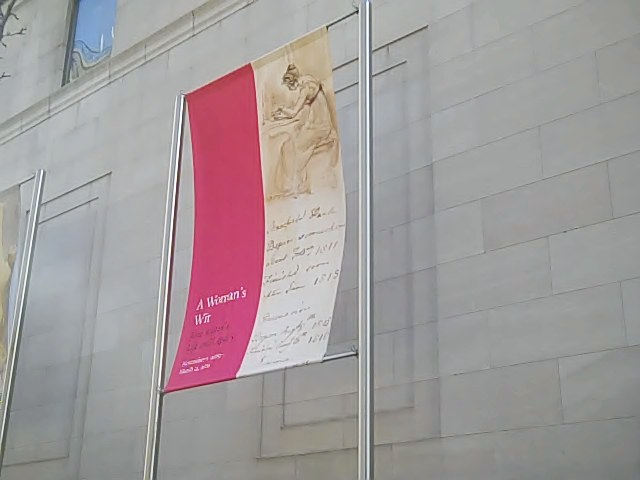
I had taken a number of shots with my flip camera before a museum guard advised me that I could not take pictures. (Since it was possible to take pictures to my heart’s delight in The Louvre, it did not cross my mind that I could not do so at the Morgan Library). Interestingly, I had already taken numerous shots in full view of everyone before the guard stopped me.

The room is small; the riches contained within it are immeasurable

The actual exhibition area is contained within a small room, but there are so many letters and items of interest that I could have spent the entire day inside that space. Jane’s Life and Legacy were divided into three sections – her life and personal letters, her works, and her legacy. Over the next few weeks I shall write about my impressions from that exhibit, tying in other links and posts.
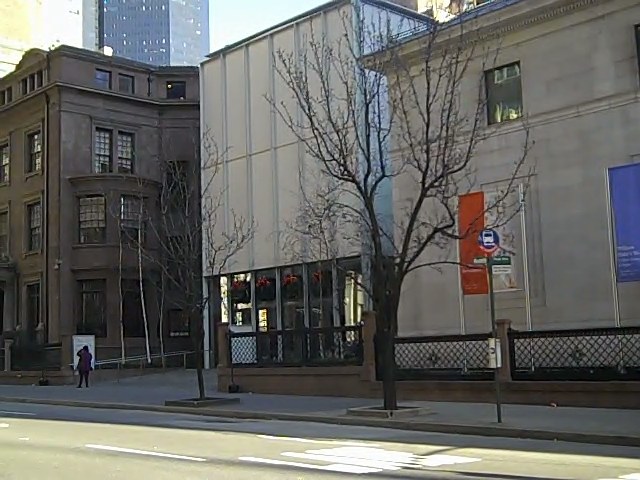
Entrance to new wing from Madison Ave

If you are not familiar with the Morgan Library and Museum, some information about its history might be of interest:
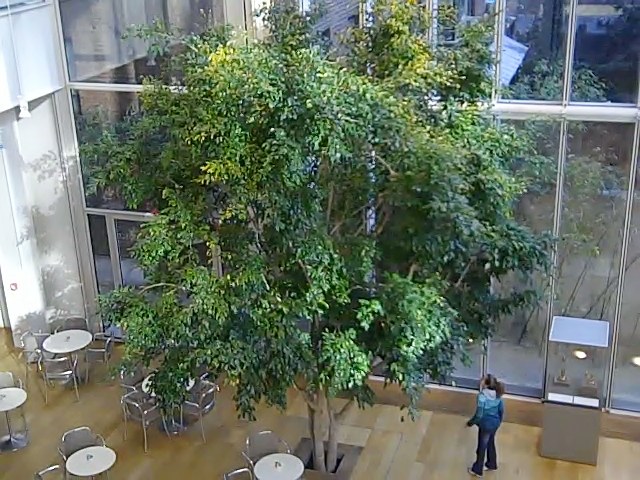
Interior of the new wing

A complex of buildings in the heart of New York City, The Morgan Library & Museum began as the private library of financier Pierpont Morgan, one of the preeminent collectors and cultural benefactors in the United States. Today it is a museum, independent research library, musical venue, architectural landmark, and historic site. More than a century after its founding, the Morgan maintains a unique position in the cultural life of New York City and is considered one of its greatest treasures. With the 2006 reopening of its newly renovated campus, designed by renowned architect Renzo Piano, the Morgan reaffirmed its role as an important repository for the history, art, and literature of Western civilization from 4000 B.C. to the twenty-first century. – Press Release information
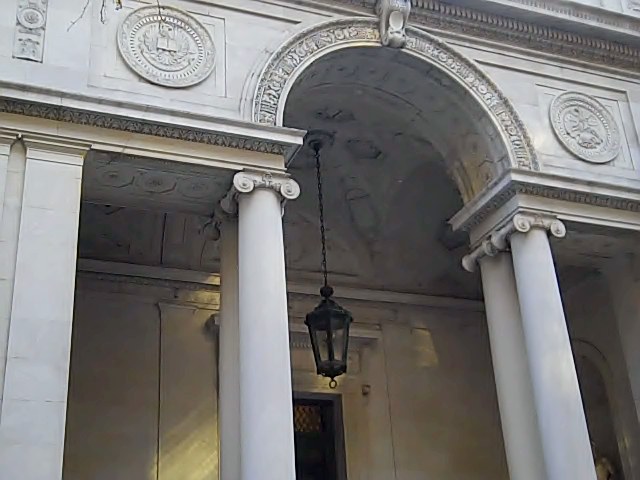
Original entrance

The following links might also interest you:


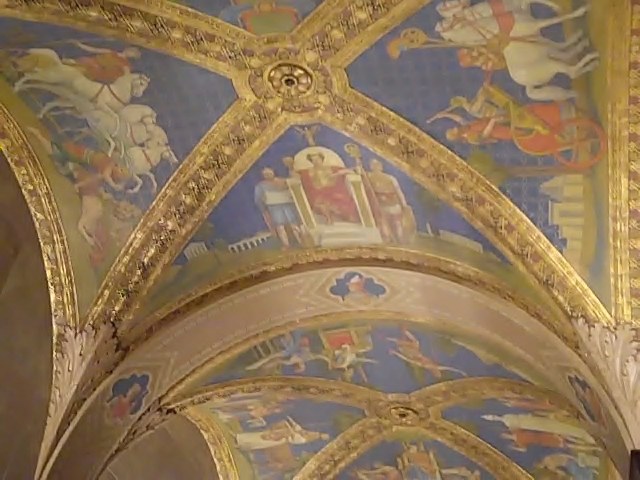
Vaulted Ceiling

Happy New Year, All!

Read Full Post »

Happy Christmas from Jane Austen’s World


Heap on more wood! — the wind is chill;
But let it whistle as it will,
We’ll keep our Christmas merry still.
Each age has deemed the new born year
The fittest time for festal cheer.
And well our Christian sires of old.
Loved when the year its course had rolled,
And brought blithe Christmas back again,
With all his hospitable train.
Domestic and religious rite
Gave honour to the holy night:
On Christmas eve the bells were rung;
On Christmas eve the mass was sung;
That only night, in all the year,
Saw the stoled priest the chalice rear.
The damsel donned her kirtle sheen;
The hail was dressed with holly green;
Forth to the wood did merry men go,
To gather in the mistletoe,
Then opened wide the baron’s hail
To vassal, tenant, serf, and all;
Power laid his rod of rule aside,
And ceremony doff’d his pride.
The heir, with roses in his shoes,
That night might village partner choose.
The lord, underogating, share
The vulgar game of “post and pair!”
All hailed with uncontroll’d delight
And general voice, the happy night
That to the cottage, as the crown,
Brought tidings of salvation down.
The fire with well dried logs supplied,
Went roaring up the chimney wide;
The huge hail table’s oaken face,
Scrubb’d till it shone, the day to grace,
Bore then upon: its massive board
No mark to part the squire and lord.
Then was brought in the lusty brawn,
By old, blue-coated serving-man;
Then the grim boar’s head frowned on high,
Crested with bays and rosemary.
Well can the green-garbed ranger tell,
How, when, and where, the monster fell;
What dogs before his death he tore,
And all the baiting of the boar.
The wassail round in good brown bowls,
Garnished with ribbon, blithely trowls.
There the huge sirloin reeked: hard by
Plum-porridge stood, and Christmas pie;
Nor failed old Scotland to produce
At such high tide her savoury goose.
Then came the merry masquers in,
And carols roar’d with blithesome din;
If unmelodious was the song,
It was a hearty note, and strong.
Who lists may in their mumming see
Traces of ancient mystery;
White shirts supplied the masquerade,
And smutted cheeks the visor made
But oh! what masquers, richly dight,
Can boast of bosoms half so light!
England was merry England when
Old Christmas brought his sports again.
’Twas Christmas broached the mightiest ale,
’Twas Christmas told the merriest tale;
A Christmas gambol oft would cheer
A poor man’s heart through half the year.

Sir Walter Scott, 1808, from Marmion

Read Full Post »

Inquiring readers: This is the third guest post by Christine Stewart, who has embarked on the year-long Sense and Sensibility inspired project on her blog, Embarking of a Course of Study.  Read her biography on Poets and Writers. Enjoy!

Let’s just say how much I am enjoying rereading Northanger Abbey. The first few times I read it, I think it was right after reading P&P or S&S and I was still steeped in all the (I was going to say romance, but Austen doesn’t really do romance) push and pull, hopes and dreams, of the characters’ road to marriage (let’s go with that), so I was frustrated with the satire and play and narrator’s voice in the book at times – because I wanted it to be another P&P or S&S or Persuasion.

Well, it’s a rollicking good time now and I can appreciate it for all its charms and cleverness. It’s the one book where Jane’s voice speaks to you directly and it’s a fun dialogue. Her wit is beyond compare! She really goes full force, no holds barred. Awesome.

It’s gotten me thinking how much of her characters’ character, and whether they take the high road or low and end up where they want to go, is tied to books. Books have power – whether read or written (women created some measure of independence – money – through writing) – and they make or break the character and her future. The wrong ones give you the wrong ideas and make you the wrong fit (and wrong-headed) for the partner who could have been right otherwise. I’ve mentioned this before, but I’ll say it again. The heroines who do well are the ones with self-command, self-awareness, and the power of self-examination. The ones that follow (to the greater degree) the rules of propriety, and who have a handle on their emotions, go the furthest.

This is something many women may not be taught today, as young girls. Yes, as children, we knew about behaving at the dinner table and in malls, etc., but I’m pretty sure my friends and I never heard word one about dealing with/managing our emotions (fears, worries, even joys), so they didn’t rule us. And self-examination? What??? Who heard of that as a teenager or young adult, when you needed it most?

With all the silly (ok – STUPID) magazines we read – Tiger Beat, Seventeen, Mademoiselle, Cosmo – that were all about dressing and making oneself up for a man and making him feel important, forgetting about what was inside us and making ourselves feel good first, we didn’t stand a chance. And then it became all about career – women ‘having it all.’ Always looking outside, not inside for ways to manage our lives. Media in general was not (and still isn’t) responsible in how it communicates with young women. And most of our parents didn’t know how to help themselves let alone us.

There’s been a big resurgence of self-help books, classes, and videos geared towards teaching women how to relate to men, how to get what they want from men, how to meet the right one and marry him. Think Bridget Jones’ Diary. But it’s even larger now. Being 43 and single, I get targeted for these kinds of ads/info on the Internet. There’s a huge industry with audio, video, books, teleconferences, soulmate kits, vedic astrology readings, and more. Who knew?

It’s really boomed since The Secret came out and the masses learned about The Law of Attraction on Oprah. It’s a new (and very commercial – because that’s what we Americans do best) version of the ‘how tos’ that Austen’s characters (the sensible ones) demonstrate for us.

And guess what? It’s all about self-examination, self-awareness, and self-command. That’s the good news. It’s still about reading the right books, which is still a minefield experience. That’s the bad.

Let me ‘share’ that about 13 years ago I had an anxiety disorder that lasted for several years (panic attacks and everything, good times), and that taught me those three skills. It forced me, more like, but I hadn’t known or seen their necessity in my life to that point, so that’s what it took for me to wake up, apparently! I’m grateful that it happened as it was a major turning point in my life and a constant reminder to keep up those practices. It’s not an experience you forget. Still, would have been easier to have had good examples in life and books instead….

So what do you think? How were you raised? Who were your examples/models of womanhood? Do you regularly take stock of your feelings and behavior and adjust where needed? Do you put yourself first (not thinking selfish here, there’s a difference), take care of yourself? Make hard choices/decisions? I’d love to hear.

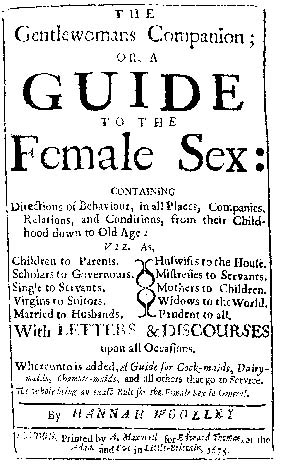
Stop by the website and comment, and check out a video of Jane Austen’s House (12/11 post), and a link to The Gentlewoman’s Companion, or A Guide to the Female Sex (11/30 post). Let’s read along together!

Enjoy Jane’s birthday!

Read Full Post »

Happy 234th Birthday, Jane Austen!

Let’s celebrate by making ratafia cakes

Take 8 fl oz:  apricot kernels, if they cannot be had bitter Almonds will do as well, blanch them & beat them very fine with a little Orange flower water, mix them with the whites of three eggs well beaten & sifted, work all together and it will be like a paste, then lay it in little round bits on tin plates flour’d, set them in an oven that is not very hot & they will puff up & be soon baked.

Makes 36-40

4 fl oz/ 110 g/ 1 cup ground almonds; 2 egg whites; 1 teaspoon orange-flower water or orange liqueur; 6 oz/ 175 g/ ¾ cup caster (superfine) sugar; rice paper

Today we know that bitter almonds may contain prussic acid, so it is wise to use ready-ground sweet almonds and a little orange liqueur for extra flavour instead. Set the oven to heat to 350 F/ 180 C/ Gas Mark 4.  Sieve or pound the almonds in a bowl to get rid of any lumps.  In a second bowl, whisk the egg whites with the orange-flower water or liqueur until stiff. Then mix the sugar into the almonds thoroughly and lastly fold in the whisked whites. Cover a baking-sheet with rice paper and place small teaspoonfuls of mixture on it, well spaced apart.  Bake for 10-12 minutes or until the cakes are just fawn; they must be soft underneath.  Cool them on the sheet, then keep in an airtight tin.  Enjoy them with after-dinner coffee.
(Black, Maggie and LeFaye, Deirdre,  The Jane Austen Cookbook, p. 125)

More on the Topic

Read Full Post »

Making traditional black butter

Inquiring readers: Reader Cora Harrison recently placed this comment on my blog: “In one letter, Jane [Austen] spoke of serving ‘black butter’ with wigeon and that she thought the butter was bad … Poor Jane, I thought. However, in reading a book called The Feast of Christmas I discovered that black butter was not butter at all, but what I would call a fruit cheese, made from equal quantities of apples, blackcurrants or blackberries and less sugar, and then boiled until it sets – and of course, the colour would be black!”

Her comment so intrigued me, that I decided to look up the topic. Jane wrote to her sister on December 27, 1808:

The first pot [of black butter] was opened when Frank and Mary were here, and proved not at all what it ought to be; it was neither solid nor entirely sweet, and on seeing it Eliza remembered that Miss Austen had said she did not think it had been boiled enough. It was made, you know, when we were absent. Such being the event of the first pot, I would not save the second, and we therefore ate it in unpretending privacy; and though not what it ought to be, part of it was very good.”

The recipe for making black butter, or apple butter as it is commonly known today, harkens back to medieval times. After the winter crop was picked, the preserve was made in huge quantities. In the 18th century, twenty percent of Jersey’s arable land was made up of orchards, and the tradition of producing ‘black butter’ or ‘Le Niere Buerre’ became an annual social  and festive occasion.  Jersey black butter was made from cider apples that were slowly boiled over a fire. Women would peel hundreds of pounds of apples, while the men and children would gather enough wood to keep the fire going for almost two days. After the cider was ‘reduced’ by half, apples, sugar, lemon, liquorice and spices were added. The Jersey tradition of making black butter included singing, dancing, and storytelling all through the night and until early morning. Jersey Island black butter is characterized by the addition of liquorice, which made the preserve quite dark. – RecipeZaar & BBC Jersey Black Butter.

According to Food Legends, black butter “contains no butter, the butter in the name being like the cheese in lemon cheese, more a description of the consistency and application of the product than anything else; and second, it is not really black, indeed a great deal of effort goes into avoiding the burning that would change the dark brown mass to black.” The following is likely Jane Austen’s recipe for Black Butter. Traditionally, the preserve is spread on bread, or it can be eaten by itself:

    Take 4 pounds of full ripe apples, and peel and core them. Meanwhile put into a pan 2 pints of sweet cider, and boil until it reduces by half. Put the apples, chopped small, to the cider. Cook slowly stirring frequently, until the fruit is tender, as you can crush beneath the back of a spoon. Then work the apple through a sieve, and return to the pan adding 1lb beaten (granulated) sugar and spices as following, 1 teaspoon clove well ground, 2 teaspoons cinnamon well ground, 1 saltspoon allspice well ground. Cook over low fire for about ¾ hour, stirring until mixture thickens and turns a rich brown. Pour the butter into into small clean jars, and cover with clarified butter when cold. Seal and keep for three months before using. By this time the butter will have turned almost black, and have a most delicious flavour. – Copyright Maria Hubert von Staufer March 1995

Black butter on bread

This recipe, which Cora must have at first thought Jane Austen was referring to, is a black butter that is generally served with fish, such as skate or salmon:

Black Butter: Put into a frying pan the necessary amount of butter, and cook it until it has a brown color and begins to smoke. At this moment add a large pinch of concassed parsley leaves and spread it immediately over the object to be treated. – Chest of Books

More on the topic:

Read Full Post »

« Newer Posts - Older Posts »