Feeds:
Posts
Comments

Archive for the ‘Sense and Sensibility’ Category

From Prada to Nada made $3.3 million at the box office, both foreign and domestic. I’m surprised to read that it was that much. I happened to watch the film on Netflix this past weekend when I had nothing better to do than wash clothes.

The notion of a remake of Jane Austen’s Sense and Sensibility and plucking Marianne and Elinor Dashwood from Barton Cottage and landing them in 21st Century L.A. intrigued me, for Emma Woodhouse’s move from tranquil Highbury to a Beverly Hills high school in Clueless was a resounding success with both critics and viewers. I also liked the idea of switching up cultures, for hadn’t Ang Lee’s hit, Eat Drink Man Woman, been successfully transformed into the delightful Tortilla Soup with its Mexican-American family substituting for the Japanese chef and his daughters? But I quickly came to the conclusion that  From Prada to Nada is to Jane Austen what a black velvet painting is to the Mona Lisa.

Here then is the story:

Mary, Papa, and Nora before his fatal heart attack

Once upon a time in Beverley Hills there lived two very pretty girls in a house called Bonita Casita. They had a Papa but no Mama.
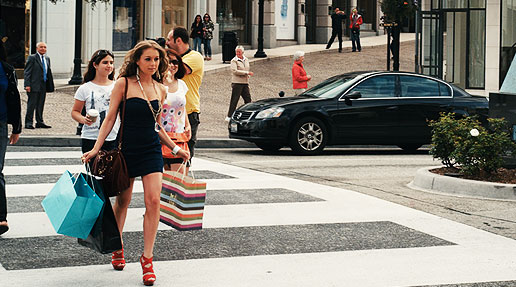
Mary (Alexa Vega) on Rodeo Drive.

One was short and ditzy, liked to shop, and wore party dresses morning, noon, and night. Her name was Mary Dominguez (MD = Marianne Dashwood).

Nora turned norange at Papa's funeral.

The other was a tall, practical, intellectual, wannabee lawyer named Nora (Elinor Dashwood).  While exotically beautiful, she suffered from a fatal Hollywood condition called orange skin. This viewer suspects it was to make her look more cliched Mexican, but should I really be so cynical? Mary had this condition to a lesser extent, and both girls swung from looking tanned to grossly ill, depending on lighting conditions.

I am happy to report that Nora (Camilla Belle) fully recovered from her skin malady shortly after filming.

Neither girl spoke Spanish, a fact that was mentioned often until it was pounded into the viewers’ brains.

While celebrating his birthday with his daughters, Papa falls flat on his face and dies, leaving the two bewildered girls penniless, for everything he seemingly owned belonged to the banks. The girls must move from their cozy environment in 90210 to a tacky neighborhood in East L.A., which is like asking a Swiss palace guard to work in a Columbian prison on short notice.
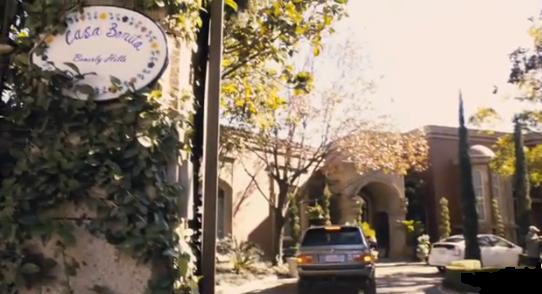
Casa Bonita in Beverly Hills

Before that indignity, they meet their half-brother, Gabriel, a  surprise from their papa’s past, who arrives for the funeral with his cheesy avaricious girlfriend, Olivia. It seems that bro and his tootsie want to renovate Papa’s mansion and sell it for a profit. In other words, bro flips houses for a living. Real class.

Q'eulle surprise! Half-brother Gabriel (Pablo Cruz) arrives at the funeral with his Tootsie, Olivia (April Bolwby), and she's mean, while he's a wuss

Without a living breathing mother to guide them, as Jane Austen had intended, Maria and Nora have nowhere to go but to their good-hearted aunt’s house all the way over to a neighborhood filled with barrios, gangstahs, and, worse, taco joints. There the girls encounter Bruno (Colonel Brandon) a handsome darkly Latino who obviously did not attend Beverly Hills High.

Bruno (Wilmer Valerrama) and Mary.

He’s friendly, but Mary snubs him, for she begins to suspect that he works for a living and that she  must share a bedroom with her sister. (Not that the two facts have anything to do with each other, but my sentence is no crazier than the plot of the film.)
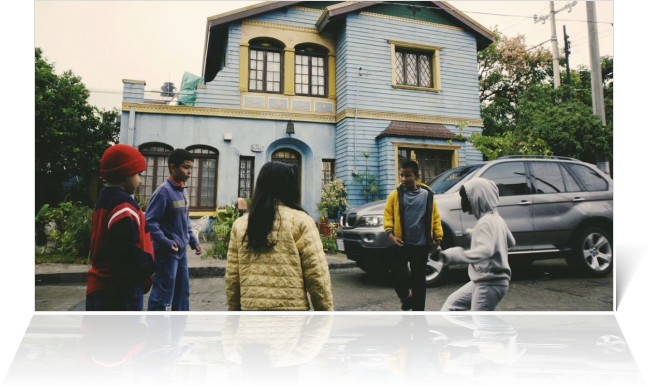
New house, new neighborhood

In rapid succession From Prada to Nada  throws at least one cliche per minute at the viewer, including a small sweat shop in Auntie’s living room, bad girls in the neighborhood, and clothes and interiors that could have been created by Agador (Armand and Albert’s gay Cuban houseboy in The Birdcage). How could this movie stand a chance with intelligent viewers when charactes are named Bad Guy #s 1-3, Comrade, Fiesta guest, and Chola (urban dictionary definition: the girl my brother gets pregnant)?

I imagine that people living in East L.A. were horrified to see Jane Austen’s fine tale mangled and twisted beyond recognition.
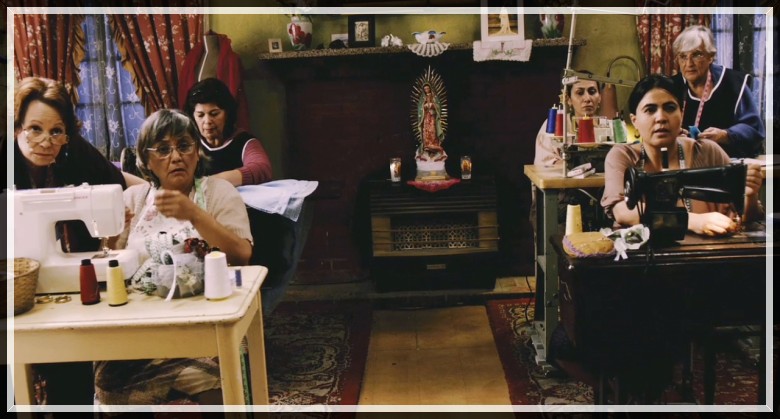
Sewing in Auntie's living room and prepared to hide the evidence at a moment's notice in case of an immigration raid.

The movie stumbles towards its inevitable cliched ending. Edward Ferris falls instantly for Nora and gives her a splendid job in his law firm. They part and then they come together for no reason that I can fathom, except that he is always coming around the house with a truck filled with big items.

Rodrigo (Kuno Becker) meets the aunties

Mary falls head over heels (instead of twisting her heel in the English countryside) for a tutor named Rodgrigo Fuentes, Willoughby’s stand in. He eventually visits Mexico then dumps her and purchases Papa’s hideously renovated mansion from her flipper bro.
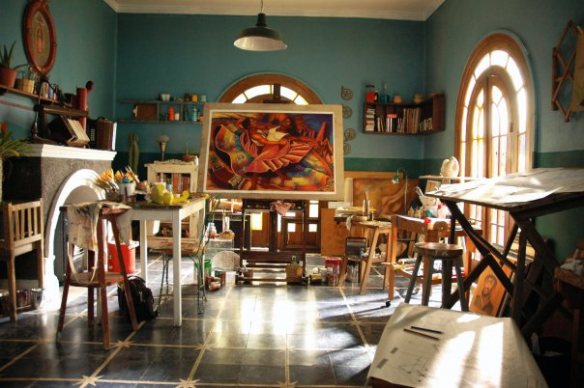
Bruno's amazing studio in his tiny house

Flipper bro turns out to be a nice guy, as does Bruno, who happens to be an immensely talented artist living in the body of a mechanic. For some reason, after her car accident Mary totally flips for the ever patient, long-suffering Bruno, who was able to see past her materialistic ways the moment he met her.

Bruno in his barrio uniform.

After I finished watching this movie, I realized I should have stayed in the basement with my laundry and read a good book as I waited for my washer and dryer to finish spinning. The producers of this clunker forgot one extremely important asset that no self respecting movie can do without: a well-written, intelligent script.

Not all the good intentions in the world of Latinizing Jane Austen, and thus making her more available to those who might otherwise be turned off by her English characters, can save a film so completely devoid of entertainment, originality and wit.
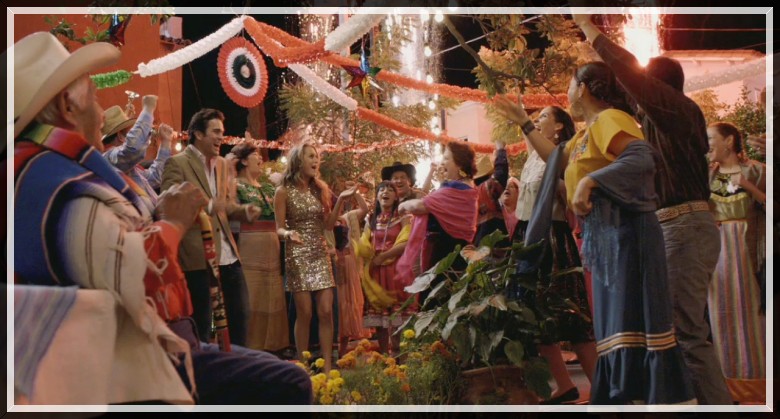
No Tex-Mex film is complete without a fiesta.

I imagine that Lady Catherine de Bourgh would have said of this film: “I take no leave of it. I send it no compliments. It deserve no such attention. I am most seriously displeased.” Amen to that.

Edward Ferris (Nicolas d'Agosto), the prince charming, comes bearing gifts, sweeping Nora off her feet.
Read Full Post »

Gentle Readers, This month I have joined the Sense and Sensibility Bicentenary Celebration on Maria Grazia’s My Jane Austen Book Club blog. Click on the banner on the sidebar to read the other articles posted each month in celebration of Jane Austen’s first published book. The first half of my post about Mr. Palmer’s observations of his fellow minor characters in the book sits here. The rest of the article sits on My Jane Austen Book Club.

I, Thomas Palmer, Esq., have been charged to analyze and discuss the traits of my fellow minor characters in Sense and Sensibility, the first of six novels by Jane Austen. I shall endeavor to do JUSTICE to that estimable author’s first published effort, which made its way to the public some 200 years ago and has never failed to be in print since.

I must first cast my thoughts upon Fanny and John Dashwood, whose miserliness oblidged the Dashwood women to leave their comfortable home at Norland to establish themselves in Barton Cottage and live a FRUGAL life in Devonshire amongst strangers. Miss Austen was a mere 20 years of age when she first conceived of this novel in epistolary form, first naming it Elinor and Marianne. That such a young author, whose knowledge of the world was CONFINED largely to books and the experiences of others, could create two such memorable characters as Fanny and John Dashwood portended her genius.

Fanny in particular is a character like no other in literature. Her manipulation of her weak husband in persuading him to abandon his PLEDGE to his father on that man’s deathbed is breathtaking in its audacity and avarice. The sequence of her skewed logic and her husband’s reaction to her CONTRIVANCE to preserve every pence of her darling son’s inheritance is matchless. Even I could not have conceived of a more cynical, darkly humorous dialog than young Miss Austen presented through these two minor characters, thereby setting the novel’s direction and tone. “People always live for ever when there is an annuity to be paid them.” One simply cannot add or take away a word to improve this utterance by Mrs. Dashwood.

The John Dashwoods represent, like so many minor characters, a FOIL – brilliantly conceived foils, to be sure – that are meant to contrast with other characters. Take my rather vulgar brother-in-law, Sir John Middleton, who is renowned for his generous impulses. Whilst the Dashwood ladies were figuratively shoved out of Norland by the John Dashwoods, Sir John, a distant relation, emerges from nowhere to offer them a hearth and home. The CONTRAST twixt the two Johns – one so weak and tight-fisted that he willing to break his vow to his dying father, the other so generous that he is forever inviting the entire neighborhood to sample the contents of his larder – cannot be ignored.

I next turn my gaze upon the Steele sisters, Lucy and Anne. Anne is a flat minor character who is doomed to learn nothing from life’s experiences, but who interjects a running COMIC gag over her obsession with Dr. Davies (he will never offer his hand in marriage). Her main purpose in the novel is to REVEAL the engagement of Lucy to Edward at a most awkward moment.

Her sister Lucy, a smarter, prettier version of Anne, is as mean, cunning and scheming a creature as I have ever come across. I had her measure from the start, I assure you. Lucy’s sole ambition is to ingratiate herself with her betters in order to take her place in SOCIETY. Knowing of Edward Ferrars’ attraction to Miss Dashwood, she makes a preemptive strike by CONFIDING her secrets to Elinor, forcing our hapless heroine to LISTEN to matters that, while they pain her deeply, she must keep to herself. Many minor characters play the role of confidante to a novel’s protagonist, but Lucy Steele turned the table on Elinor, forcing her to listen to matters that were most distasteful and hurtful. Our scheming Lucy more than turned the table on Edward, eloping with his younger brother Robert when it becomes apparent that the latter will INHERIT the Ferrars fortune of £1,000 per year. One can only cheer knowing that this feckless couple will always be dissatisfied with each other, always wanting more possessions.

To read the rest of the article, click here to enter My Jane Austen Book Club

Click here to read the other articles in this year long series:

1. January          Jennifer Becton    

Men, Marriage and Money in Sense and Sensibility

2. February      Alexa Adams         

Sense and Sensibility on Film

3. March            C. Allyn Pierson

Property and Inheritance Law in S &S 

4. April               Beth Pattillo

Lost in Sense and Sensibility

5. May                Jane Odiwe

Willoughby: a rogue on trial

6. June               Deb @JASNA Vermont

Secrets in Sense and Sensibility

7. July                Laurie Viera Rigler

Interview with Lucy Steele

8. August           Regina Jeffers       

Settling for the Compromise Marriage

9. September    Lynn Shepherd

The origins of S&S: Richardson, Jane Austen, Elinore & Marianne                                        

10. October       Meredith @Austenesque Reviews

Sense and Sensibility Fan Fiction

11. November   Vic @Jane Austen’s World  

Mr. Palmer Discusses His Fellow Minor characters in Sense and Sensibility

12. December    Laurel Ann @Austenprose

Marianne Dashwood: A passion for dead Leaves and other Sensibilities                 

Read Full Post »

Gentle Readers, With this article we once again benefit from Tony Grant’s expertise as a tour guide in England. He has written a lovely post about Steventon Rectory and its influence on Jane Austen’s description of Barton Cottage in Sense and Sensibility.

Does Barton Cottage, the cottage that Mrs Dashwood, Elinor and Marianne in Sense and Sensibility, retreat to and which is located in Devon, just north of Exeter, owe much to Steventon in Hampshire, Jane’s first home?

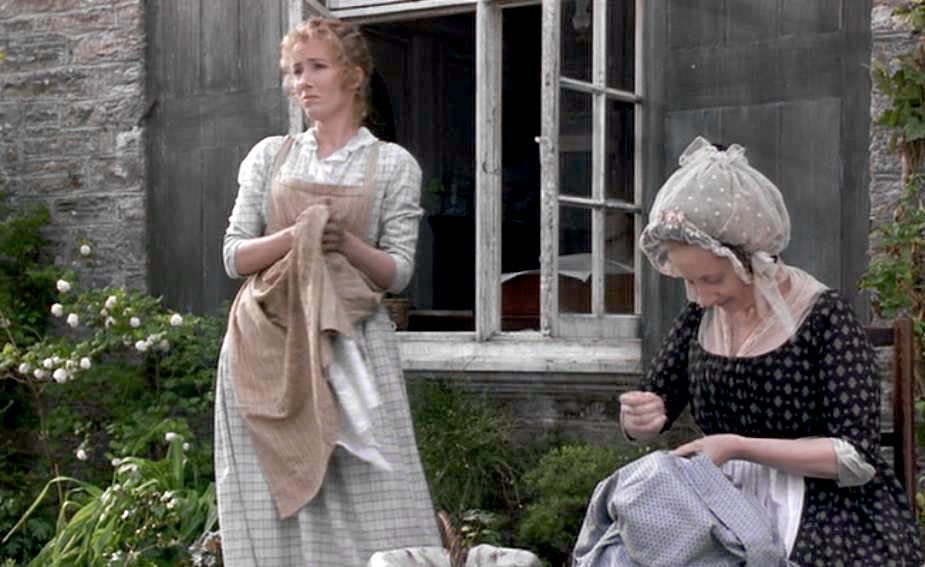
Elinor ( Emma Thompson) and Mrs. Dashwood (Gemma Jones) in front of Barton Cottage. Sense and Sensibility, 1995

I recently went to Steventon again, the birthplace of Jane Austen and where she spent her formative years until the age of twenty six. Steventon was where she thought she would spend the rest of her life. As soon as she was born she was sent to live with a family in the village. The mother of the household she was sent to became Jane’s wet nurse. Mrs Austen had nothing to do with her children as babies. This might provide an explanation for Jane’s aversion towards her mother as she grew older but it also explains that her attachment to Steventon was not just through her own family and the rectory but it was linked to the wider community and she had very close ties to some of the villagers.

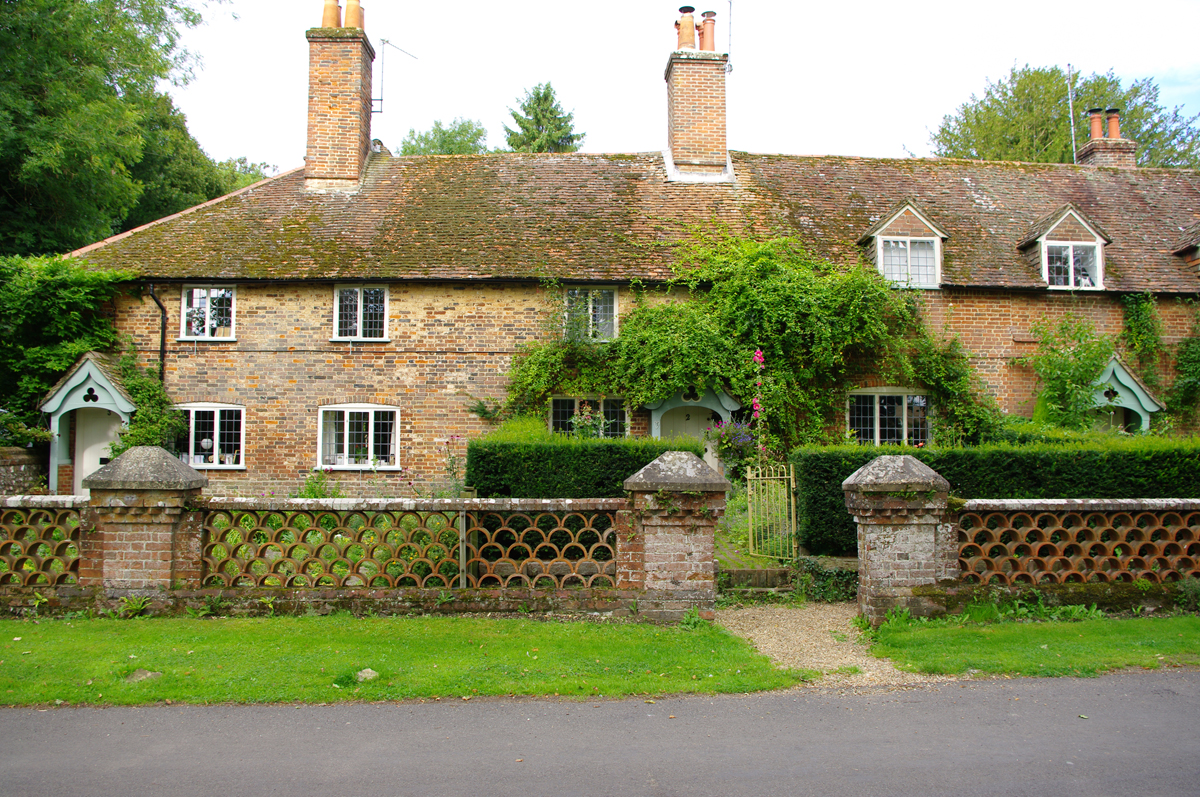
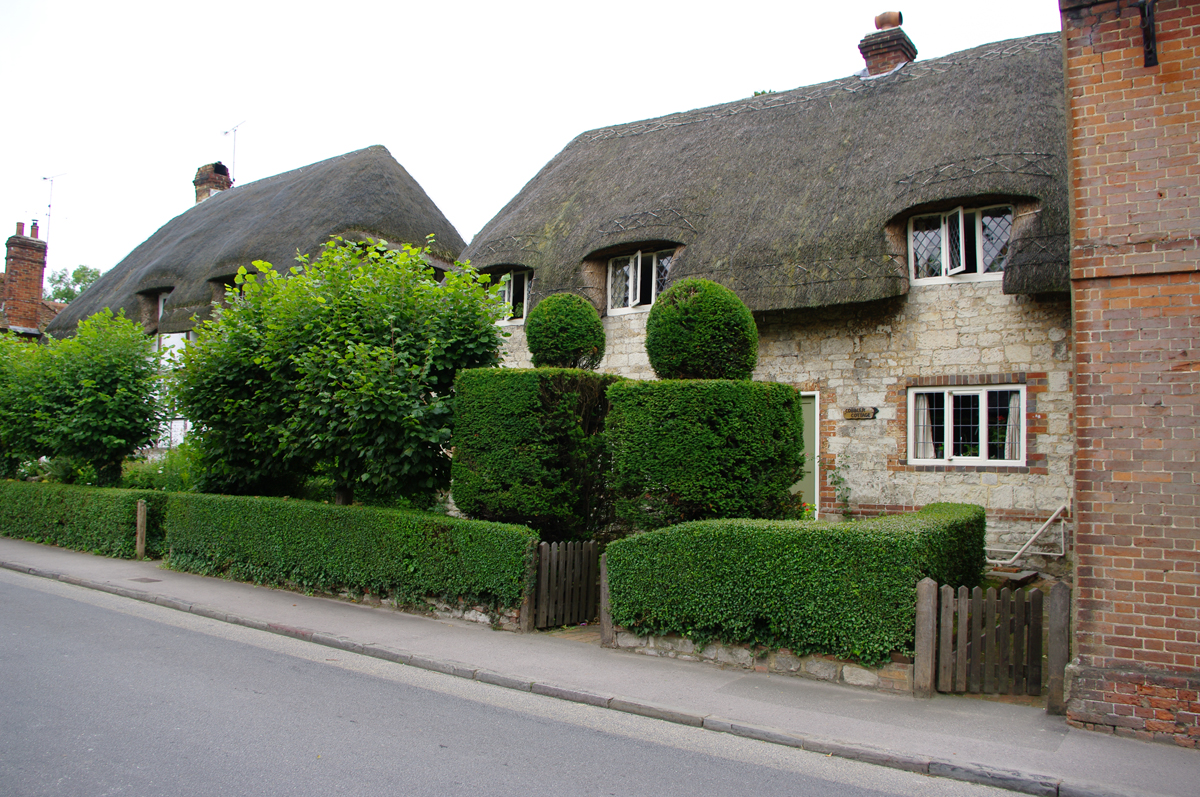
Row of cottages in Steventon. Image @Tony Grant

Steventon is set in a small Hampshire valley about five miles south west of Basingstoke, the nearest large town. When you visit Steventon today there are a few cottages and houses, not dissimilar in number to Jane’s days and a cross roads that has a cluster of old cottages, some of them terraced, set in a beautiful verdant landscape of fields and trees and gently rising downland.

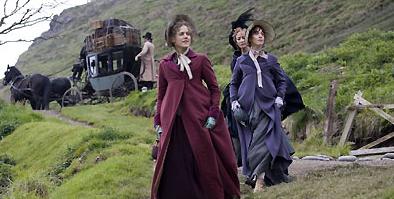
The Dashwood women see Barton Cottage for the first time. Sense and Sensibility, 2008.

“a view of Barton Valley as they entered it gave them cheerfulness. It was a pleasant fertile spot, well wooded and rich in pasture.”

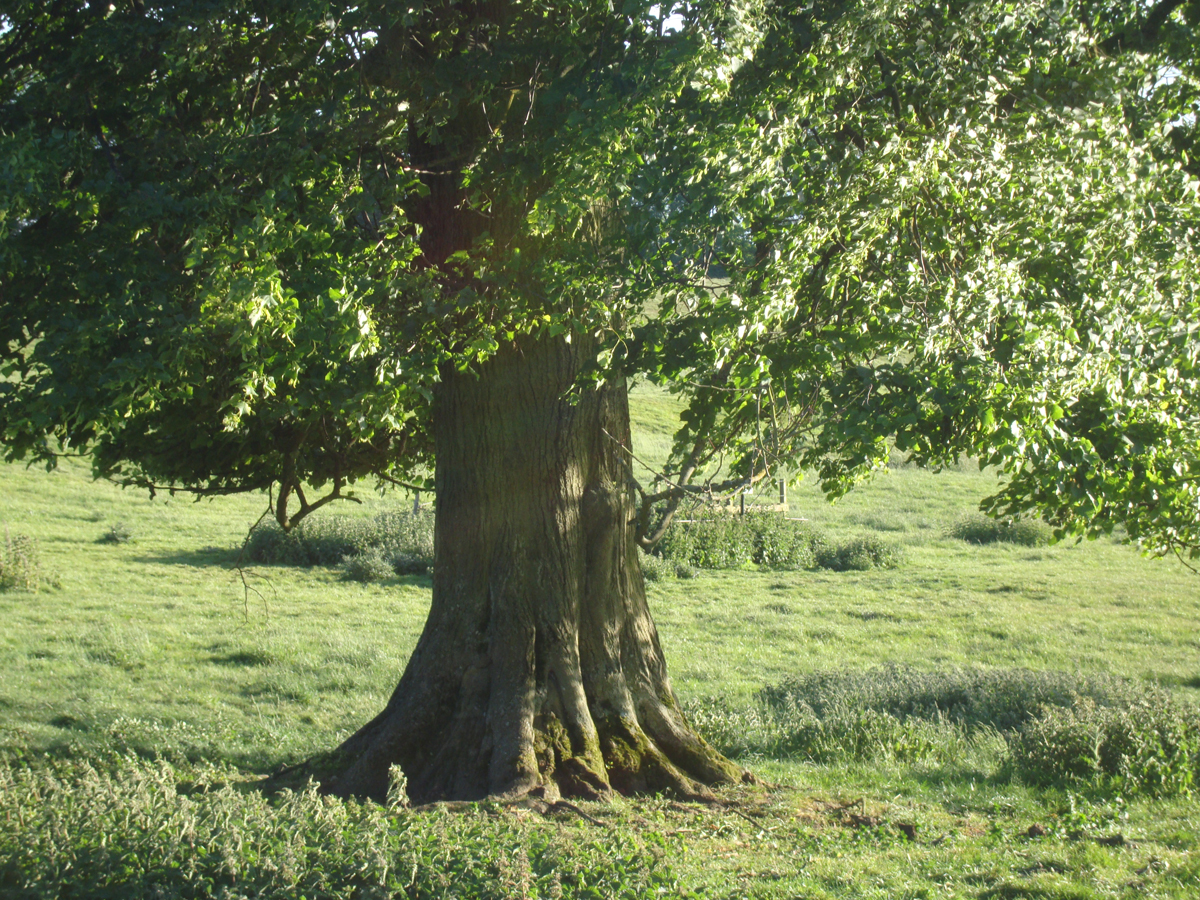
The site of the Rectory at Steventon. You can see the fence that surrounds the pump in back of the tree. Image @Tony Grant

Take the fork at the cross roads along the valley and within a few hundred yards you come to a lane that branches off to the right, almost hidden by bushes and trees. If you can stop at this corner and look into the field on the right, there are two or three tall mature trees , sycamore and ash, and next to one tree is a rustic wooden fenced area with an old water pump in the centre. This is the site of Steventon Rectory, Jane’s old home. The pump is presumed to be the pump the Austens had in their back yard. This rectory had become derelict, and was demolished by Edward Austen Knight when his son, William Knight, took over as vicar of Steventon.  When George Austen retired, he moved Jane, Cassandra and their mother to Bath. James Austen became the new vicar until his death in 1819, when Henry Austen stepped into the position.

The pump. Relic at Steventon Rectory. Illustration by Ellen G. Hill, 1923.

Edward had the new rectory built in the valley in fields on the opposite side of the road.  It still stands today, a fine white house on the sunny side of the valley facing south east.

Steventon House, built by Jane's brother Edward c. 1820-22. Image @Jane Austen Today

Behind the site of the original rectory where Jane lived there is a grassy meadow sloping steeply upwards for a quarter of mile to where her father’s church, St Nicholas, is situated next to a large house where the Digweeds lived. Jane, Cassandra and her brothers often scrambled up the hill behind their rectory to play with the Digweed children.They were some of their childhood friends. There are cultivated fields, meadows and woody areas all around, especially on the top of the hill near the Digweeds home behind the rectory site.

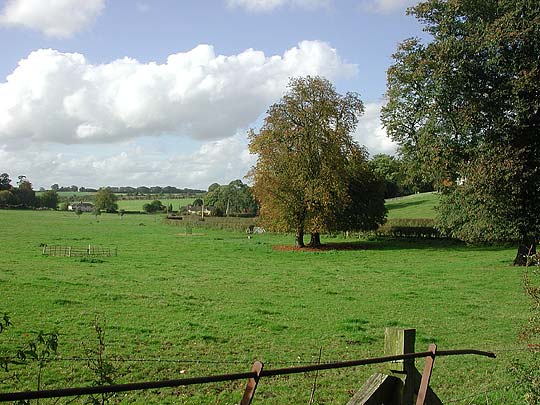
Site of the Steventon Rectory today. The fenced in pump is at left.

“The situation of the house was good. High hills rose immediately behind, and at no great distance on each side; some of which were open downs, the other cultivated and woody.”

The rectory Jane lived in would have been quite spacious because at least seven children lived there, five of her six brothers, herself and her sister Cassandra as well as her mother and father, a couple of servants and for much of the year, sons of some of the local gentry who sent their boys to the Reverend Austen for education and entry to Oxford or Cambridge. Oxford had been the Reverend Austen’s university. Her brother George did not live with the family however because of his disabilities. He was virtually adopted by another family who cared for him. Whether it was for financial gain I am not sure. So the rectory must have been spacious.

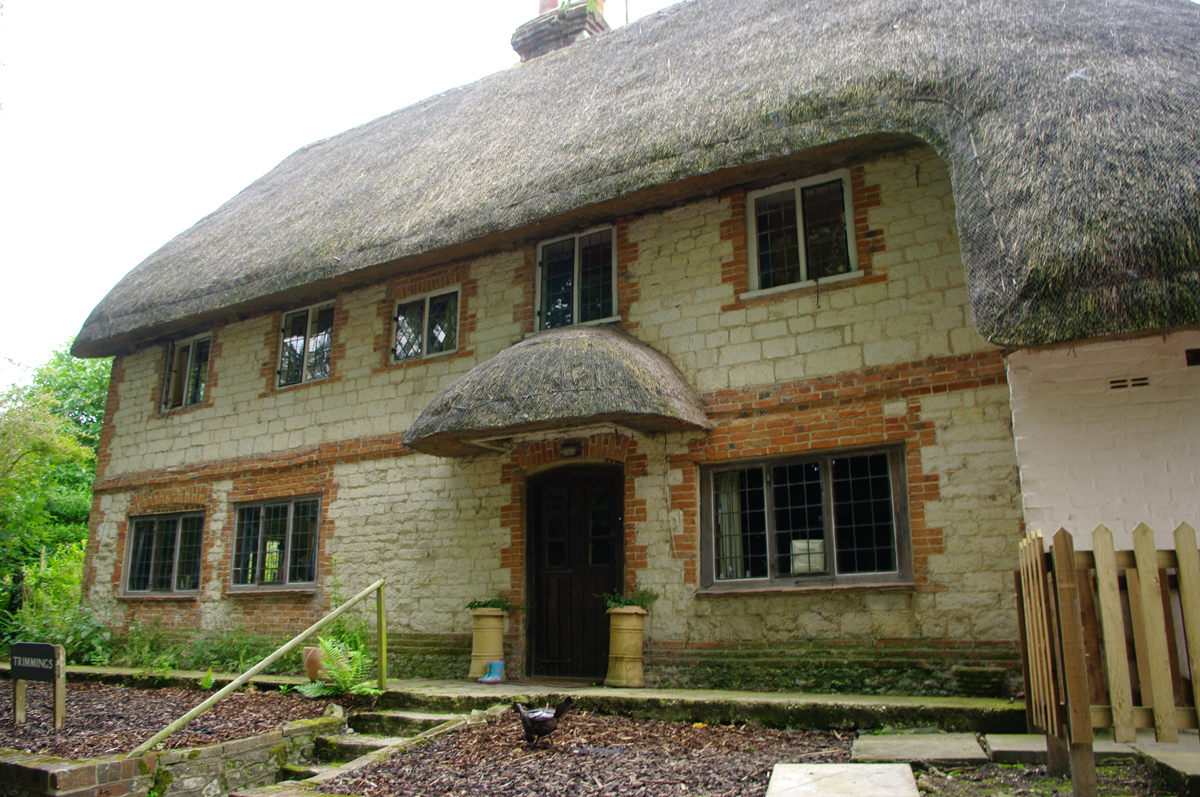
“Barton Cottage, though small, was comfortable and compact; but as a cottage it was defective, for the building was regular, the roof was tiled, the window shutters were not painted green, nor were the walls covered with honeysuckles. A narrow passage led directly through the house into the garden behind. On each side of the entrance was a sitting room about sixteen feet square; and beyond them were the offices and the stairs. Four bedrooms and two garrets formed the rest of the house.”

Cottage of local stone. Image @Tony Grant

Barton cottage doesn’t resemble the rectory from this description but Jane must have used her knowledge of cottages in the area of Steventon. Jane is very precise about the size of the two sitting rooms, sixteen feet square. The cottage is used in a special way within the novel. She describes it as being , “defective.” This is symbolic of the situation Elinor, Marianne and their mother are in. They are experiencing fractured times and are out of place financially, socially and the cottage they have come to, places them in a different strata of society than they are accustomed to. From the exact dimensions of the sitting rooms Jane Austen gives us, aren’t those rooms too small to socialise in the manner they are used to? It is a,”defective,” place on many levels and it’s not like other cottages.

Cottage without honeysuckle. Image @Tony Grant

Jane would have been very familiar with the traditional country cottage but she makes Barton Cottage different, almost an eye sore, bare of climbing honeysuckle and green painted windows. Mrs Dashwood has plans for it, to change it and develop it. But can these come to fruition? Can the cottage be developed and grow? Can the Dashwood sisters adapt, develop and grow ? Does Barton owe much to Steventon? I would say so. Steventon formed Jane’s knowledge and experience of cottages and she used that knowledge of how cottages are and the meaning in social class and wealth different cottages might portray to incorporate the cottage at Barton into the fabric and meaning of Sense and Sensibility.

Cottage. Image @Tony Grant

Hampshire cottages:
If you ever visit Hampshire and pass through the countryside you will see a variety of types and styles of cottage. Cottages have always been built with local materials readily at hand.

Clay tile roofs. Image @Tony Grant

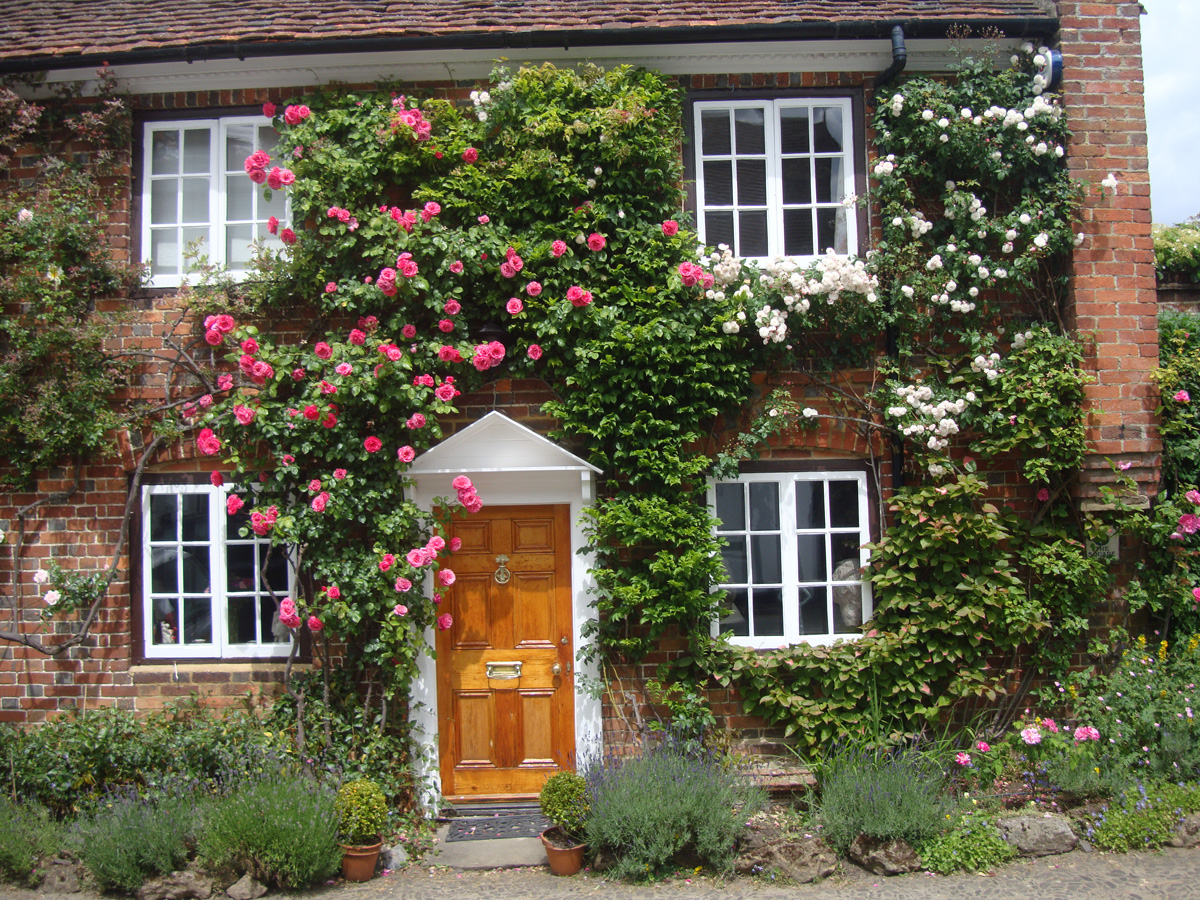
In the Cotswolds you will find most villages made from Cotswold stone and roofed with tiles sliced from the same stone. This is a creamy yellow colour. Climbing roses, wisteria, lichen and mosses have had plenty of time to insinuate themselves into and on these mellow warm coloured buildings.

Roses round the door. Image @Tony Grant

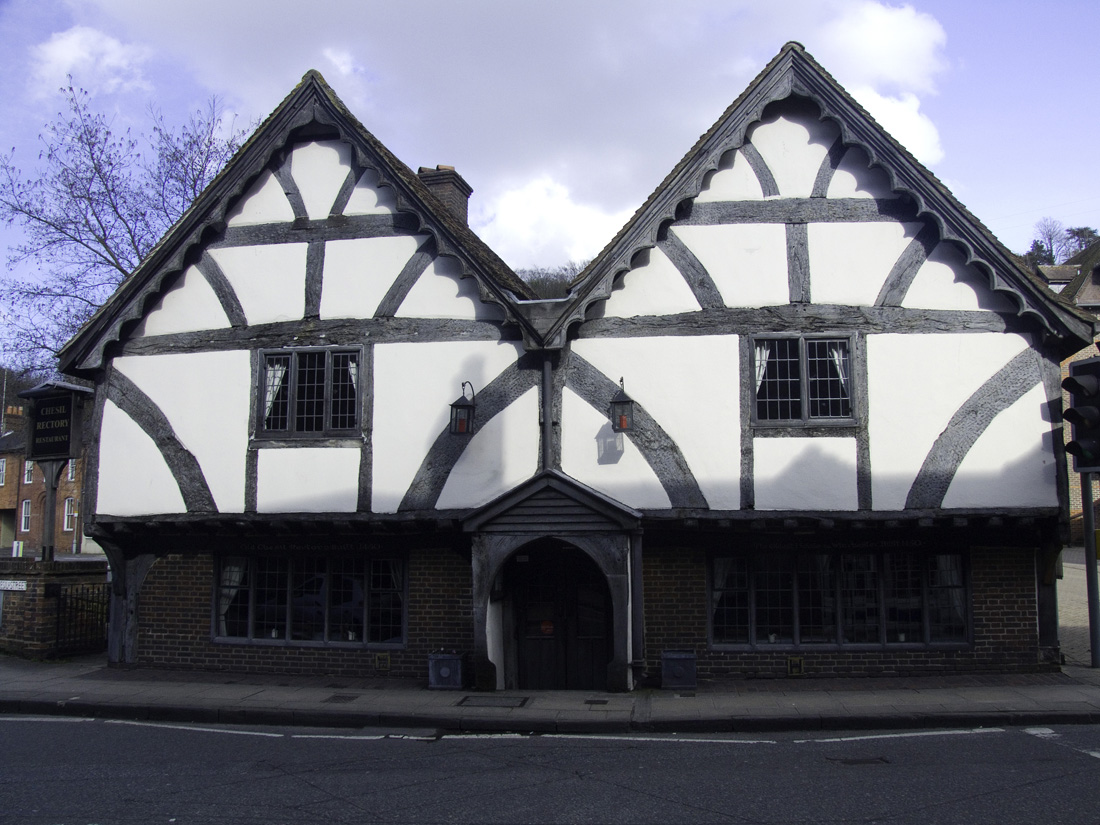
Hampshire, with its oak, elm and ash forests has many timber frame cottages. Great beams of wood cut from massive oaks have been merely incorporated into the frame and the spaces between the oak beamed framework filled with wattle and daub.

Cottage with wattle and daub. Image @Tony Grant

Wattle and daub being made from woven ash fencing and plastered with a mixture of cow dung, lime and straw. (Click here for a video.)

The oldest building in Winchester is made with wattle and daub. Image @Tony Grant

The roofs are thatched with reeds or wheat stalks. Some have clay tiles where local clay deposits provide the raw material and Hampshire brick works do the work of firing the tiles.

Thatched cottages. Image @Tony Grant

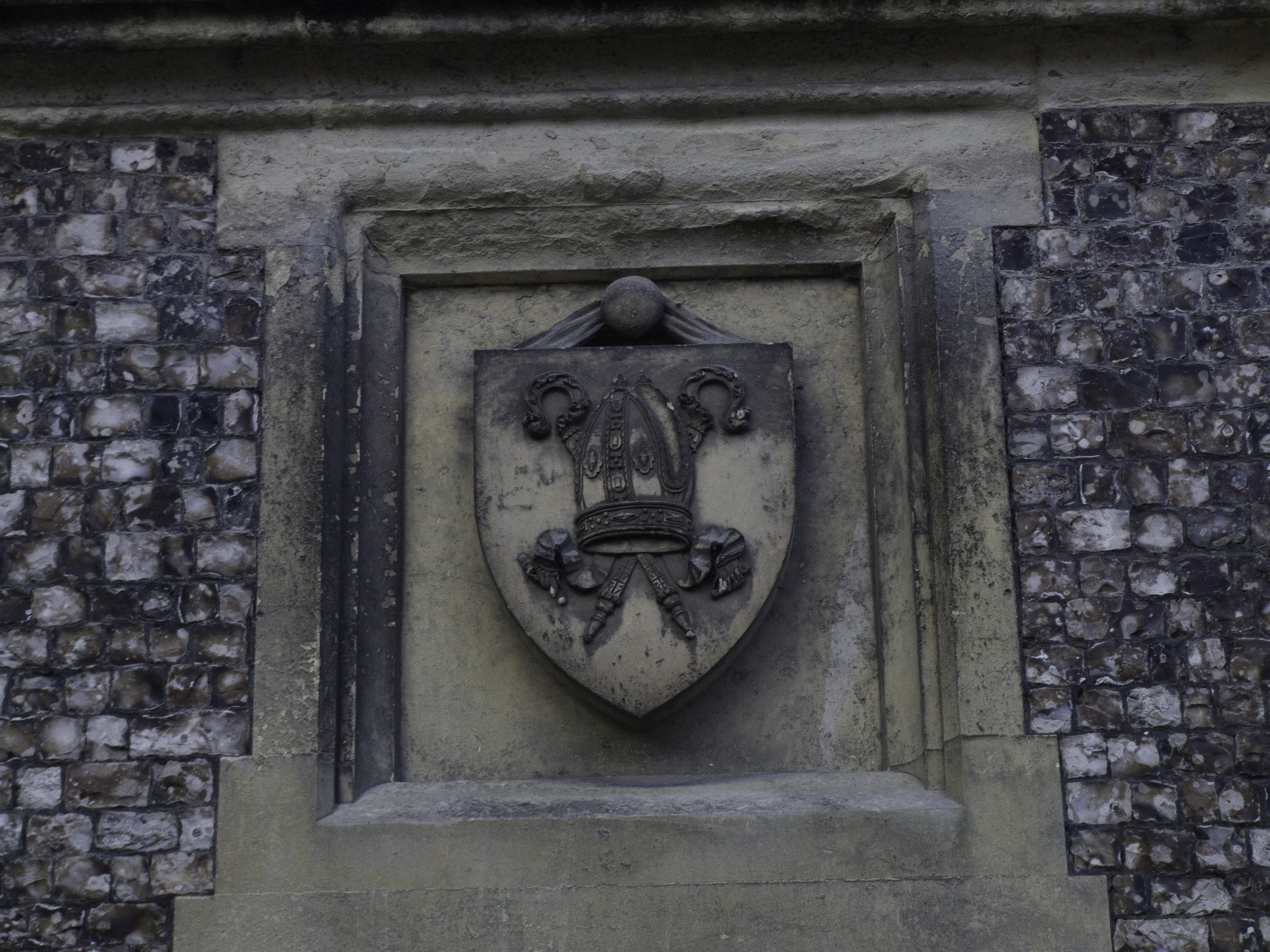
Many buildings are made of flint. Hampshire has large areas of chalk downland. Within the chalk are found nodules of flint.

Winchester College Shield erected on a wall made with flint building material. Click on photo for a larger image. Image @Tony Grant

Nobody is quite sure how flint is formed in the chalk but it is a very hard crystalline rock, glassy in substance. It has been one of the most versatile materials ever.

More thatched cottages. Image @Tony Grant

Stone age man used it for axes, arrow heads, scrapers and knives. It has been used and is still used to build strong walls. Flint lock muskets used tiny bits of flint fixed into their firing mechanism to create a spark which ignited the gunpowder to propel the musket ball down the barrel. Flint can be struck against flint or metal to create a spark to light a fire.

Chawton Cottage. Image @Tony Grant

More on the topic:

Read Full Post »

Gentle Readers, Laurel Anne from Austenprose and I were chatting the other day about this, that, and the other, for we are both a bit Jane Austen nutty (if you haven’t noticed.) As you continue reading, you will need to know only one thing:  we are just a wee bit longer in the tooth than Jane’s young heroines:

LA: Vic and I were chatting on the phone today. Over the course of our three plus year Austen-inspired friendship we have mostly emailed, so this was a treat. She has the most infectious laugh which made me laugh too. Of course we were talking about our favorite author and she remarked that Austen excelled at humor and the amazing secondary characters she developed. Somehow it just popped out and I boldly asked her what Jane Austen character she most identified with. Without hesitation she replied, Lady Russell from Persuasion. “Lady Russell?” I replied in surprise! “Well, yes.”

Jane Rus.., er, Mrs. Russell

She then revealed that she is often wrong about the advice she gives people. At work she gathers the young-uns around her and freely offers opinions, whether they are solicited or not. When she gives wrong counsel – which she admits is more often than not – she torpedos herself in a most spectacular fashion. “The error of my ways does not go unnoticed by this unforgiving crowd. Unlike Lady Russell, I will own up to a misteak, er, mistake or two, and apologize for having interfered, but I hold the line at groveling.”

Another reason why she identifies with this character is her independence. Lady Russell is a widow with a healthy income and she has no intention of remarrying and being subjugated by a man. “I am a divorced woman who has discovered the joys of living singly on my own terms and by my own schedule. Ah, what total, selfish bliss!”

Vic further admitted that at a party, or when she lets her hair loose, she starts to resemble Mrs. Jennings. You know the type: a bit vulgar, out for a good time, giggling at precisely the wrong moments, and making those with a more composed nature feel uncomfortable with crass jokes and loud language. “Like Mrs. Jennings, I have a good heart. But I can be out there and in your face too. I might seem unseemly to a quieter person like Elinor, and be totally disliked by the likes of a Marianne, but my friends and family get me, and that’s what counts.”

Oh Vic! You are such a card. Lady Russell and Mrs. Jennings? She then turned the tables on me. “Now, who do you identify with in Jane’s novels? Are you like me, a bossy and interfering carouser? Or are your a bit more sedate and ladylike?”

Harriet Smith (Tony Collette) patiently poses for Emma

Vic: “Sedate. A total Harriet Smith,” LA replied. Many years ago a dear Janeite friend tagged her as a Harriet to her Emma. “It seemed appropriate since I was often asking for advice and was very mailable to change.” In her view, Harriet was a bit of a ditz and gullible which she has been accused of too. The thing she liked about being a Harriet is that Austen gave her such a great ending. She is resilient, and after being tossed about in love no less than three times in a year, Harriet gets the man she wanted in the first place and proves Emma, with her self-important airs, was totally clueless about the human heart. “I like having the last laugh, and being right.” ;-)

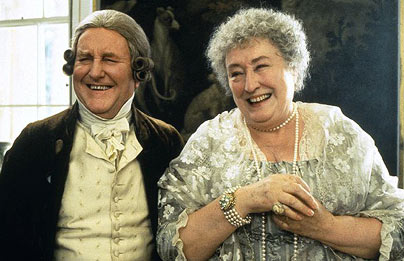
Sir John Middleton (Robert Hardy) and Mrs. Jennings (Elizabeth Spriggs)

Lately LA thinks she has evolved into Sir John Middleton from Sense and Sensibility. He was the Dashwood’s cousin and landlord of Barton Cottage. He is very gracious and likes to pop in and make sure his tenants are comfortable and entertained. He is a bit of a bore and talks too much about things that are not of interest to his young companions, but he likes dogs, has a good heart and loves to laugh. “As an enthusiastic bookseller, I like to inform customers of their choices and make suggestions. I am also a bit of an organizer and enjoy planning events on my blog, and orchestrating the 23 authors in my anthology. It is like herding cats, but I like being the boss of my own world!”

One man’s ways may be as good as another’s, but we all like our own best. Persuasion, Ch 13

Now our question. Which Jane Austen character do you, estimable viewer, most identify with, or which character are you afraid of becoming? Feel free to leave your comments!

Read Full Post »

“Now, Edward,” said [Marianne], calling his attention to the prospect, “here is Barton valley. Look up it, and be tranquil if you can. Look at those hills! Did you ever see their equals? To the left is Barton park, amongst those woods and plantations. You may see one end of the house. And there, beneath that farthest hill, which rises with such grandeur, is our cottage.”

“It is a beautiful country,” he replied; “but these bottoms must be dirty in winter.”

“How can you think of dirt, with such objects before you?”

“Because,” replied he, smiling, “among the rest of the objects before me, I see a very dirty lane.”

“How strange!” said Marianne to herself as she walked on.

“Have you an agreeable neighbourhood here? Are the Middletons pleasant people?”

“No, not at all,” answered Marianne, “we could not be more unfortunately situated.”

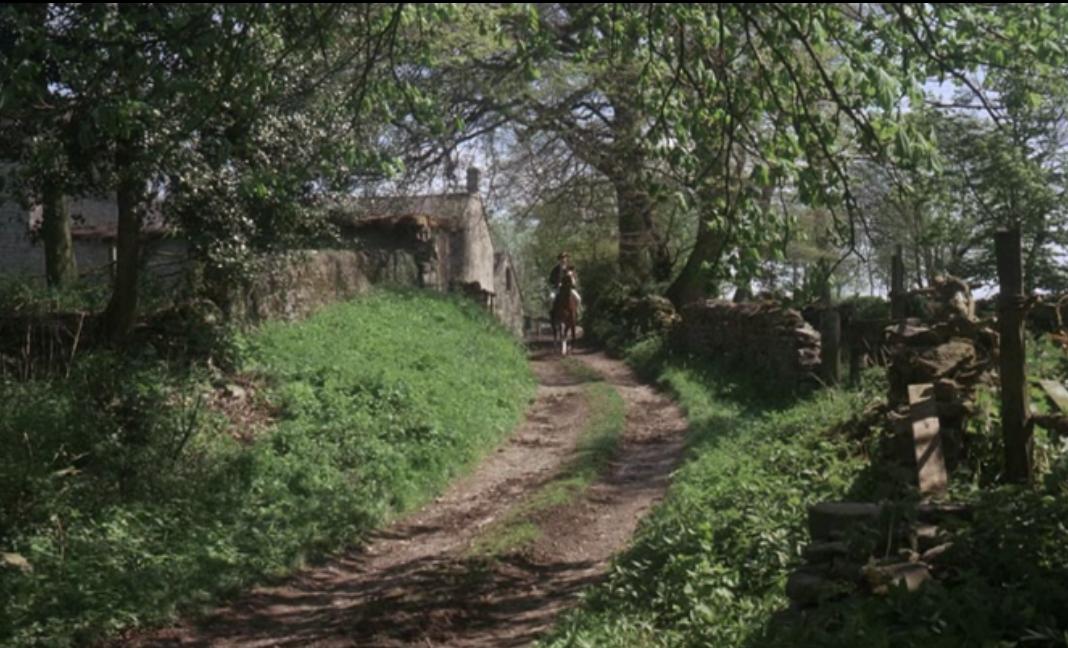
Country lane, Barry Lyndon

I had the leisure of viewing Stanley Kubrick’s Barry Lyndon the other day, I say leisure, for the film is over three hours long and I took the opportunity to pull images. These two stills of country roads reminded me forcibly of the difference between Marianne’s histrionic behavior in Sense and Sensibility and Edward’s reactions during a time when both characters are experiencing extreme disappointment in their love lives.

Marianne has completely given over to her emotions after Willoughby departs, and Edward struggles to hold up his chin, knowing he is in love with Elinor but is bound by his engagement to Lucy Steele. His view of the landscape is utilitarian. He sees none of the sweep of grandeur and only the practical aspects of the scene below and can only imagine it in the winter, when roads are rutted and muddy. Throughout Sense and Sensibility, Marianne expresses picturesque point of views. In this scene in particular, she also demonstrates her youth and immaturity, giving Edward a churlish answer about their new neighbors, which, while perhaps  true, the sensible Elinor would never admit.

William Gilpin was instrumental in promoting the Romantic picturesque movement, which defines an aesthetic sensibility of a charming or quaint scene. Marianne Dashwood, whose personality tends towards the melodramatic, embraces the fashion for the picturesque ideal, whereas both Elinor Dashwood and Edward Ferrars represent a more practical viewpoint which depends less on the sublime and relies more on what their experiences and restrained personalities tell them to feel.

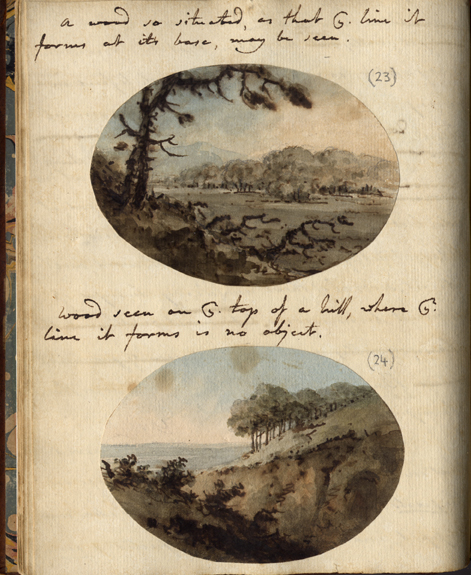
Gilpin's watercolor shows how best to achieve a picturesque effect through the clumping of trees.*

The following quote about William Gilpin’s influence on this new aesthetic movement is from the aptly titled, Penny cyclopaedia of the Society for the Diffusion of Useful Knowledge, Volumes 11-12, Charles Knight, London, 1838, p. 222:

But Mr Gilpin was a person of a remarkably refined taste, as is evinced by writings of his, of a class entirely distinct from those we have enumerated. These are his volumes in which he has illustrated, both by his pencil and his pen, the picturesque beauty of some parts of England, and generally the principles of beauty in landscape. The first of these works was published in 1790 in two volumes 8 vo; it was entitled Observations relative chiefly to Picturesque Beauty, made in the year 76 in several parts of Great Britain, particularly the Highlands of Scotland. This was followed by two other volumes of the same character, the greater part of them relating to the lake country of Cumberland and Westmoreland. Two volumes more on Forest Scenery succeeded. Besides these there are his Essays on Picturesque Beauty, Picturesque Travels, and the Art of Sketching Landscapes; Observations on the River Wye; and Picturesque Remarks on the Western parts of England. These form a body of works which were well received by the public at the times of their appearance, and which are now gathered into the libraries of the tasteful and the curious, so that copies rarely present themselves for public sale.”

The picturesque ideal expressed itself in literature, poetry, and paintings, and its influence could still be felt in the romantic paintings that depicted the natural beauty of America’s vast landscapes, such as the Hudson River School of painting.

Excellent posts about the topic are found in the following blogs:

*William Gilpin, How to Clump Trees, Bodlein Library

Read Full Post »

« Newer Posts - Older Posts »