Brrr. The coldest days of winter are upon us, prompting me to wonder: “How did people in days of yore keep warm?”
Today we can turn up the heat with the merest flick of a switch, but during the 18th and 19th centuries people had to make do in draughty and leaky houses with their high ceilings, ill-fitting windows, and lack of central plumbing and heating. Planning and a great deal of effort went into gathering fuel and maintaining fires in open fire places. Much of the heat escaped up chimneys and draughts were always a problem. Without the aid of room screens and fireplace screens, a person could feel both hot and cold at once standing in front of a fire. The upper crust might have had more resources to purchase good quality fuels and hire more people laboring on their behalf, but many a fashionable regency woman wearing a thin muslin gown covered by only a Norwich shawl would catch a deadly cold or pneumonia from wearing such inadequate covering. This phenomenon was so common in the early part of the 19th century that it was termed “the muslin disease.” – Rakehell.
 Travel:
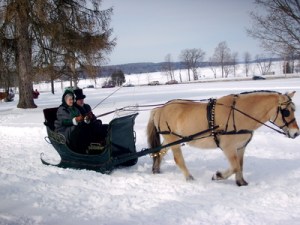
Travel in winter was not easy. Carriages and conveyances were unheated, and many people sat outside exposed to the elements. A footwarmer and fur blanket over layered winter clothing helped to stave off the cold for those who could afford such luxuries, but most people had to bundle up and deal with the weather as it came. Writing to her husband John in 1798, Abigail Adams describes winter travel conditions in the colonies, which were not unlike those on most roads in England at the time:
We came five and thirty miles to this Place. From New York our poor Horses have waded and dragged the Carriage through Snow banks and Mud, till I have dreaded their failure. They have Supported the fatigue however a mervaille and even Sloan as lean as a lath has brought along Frank in the Saddle very well. We have yet five and thirty miles to Phyladelphia.
I took a ride in the Sleigh yesterday afternoon towards Milton. The whole Earth looks like mid winter, and the Snow is 4 and 5 foot deep, in Banks driven together and consoladated so that it will lie at the Sides of the Road till next March or April. At Plimouth and Hingham there was very little, not much at Weymouth but the nearer you advance towards Boston the deeper it is. If it had fallen level it would have made excellent travelling.- 25 November
Clothing:
Bundling up in layers of wool, fur, cotton, and linen was the first line of defense. The following passage of people entering an inn describes how they removed their outer wear when traveling:
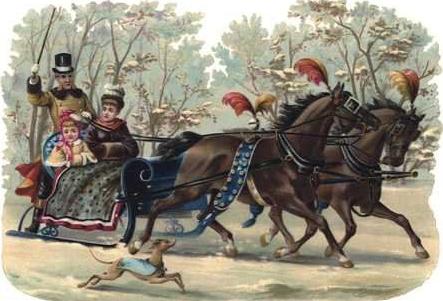
Meanwhile passengers are busy taking off coats one two and three in succession those were the days of bona fide great coats, nowadays become lessened and merely overcoats.Chins appear out of their many wrappages of silk, and fur caps are bundled into pockets. Stage-coach and Mail in Days of Yore A Picturesque History of the Coaching Age … By Charles George Harper
People wore layered clothing made of wool, flannel, or fur. Typical winter outerwear included hooded capes, great coats, scarves, cloaks, shawls, scarves, muffs, gloves, mittens, thick socks, stockings, long wraps, caps, hats, and ear mufs. Sitting in open sleighs, carts, and carriages, people would tuck comforters, quilts, or blankets around them, and bring umbrellas to protect them from freezing rain. Fur sets and fur trimming made of beaver, fox, bear, and marten were common. Seal skin coats prevented wind and rain from penetrating to the skin, and swans down muffs kept delicate hands warm and protected. A foot warmer heated with coal would complete the traveling ensemble.
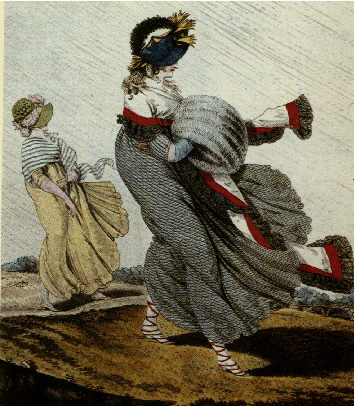
Morning dresses, April 1797
It must be added that people were more accustomed to the ambient temperatures than we are today. When I lived for six weeks in New Zealand in winter in a house without central heat, I quickly became accustomed to the cooler temperatures. (In fact, I now keep my house much cooler than I did before that protracted visit, a fact I quite often forget when guests come over.)
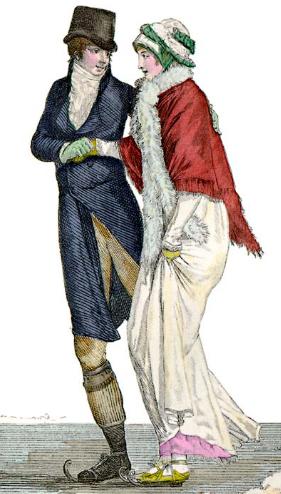
Regency couple skating, c. 1800
To return to yesteryear, layered clothing was the key to keeping warm. All but the most fashionable regency women would have worn several petticoats (even 4 or 5), stockings and/or socks, leather boots or shoes, a dress over a chemise, a thick shawl, fingerless mittens, and the ubiquitous cap as they went about their housewively duties. Outdoors, they would have added jackets, scarves, kid gloves, and a hat over their caps to keep warm.
Gentlemen wore drawers and sometimes a girdle known as a stomacher, woolen waistcoasts over muslin or linen shirts, and a coat to complete the indoor ensembles. Their cravats and high shirt points protected necks, tall leather boots protected feet, leather gloves, beaver hats, and multi-caped greatcoats completed the outdoor ensemble.
Gathering Firewood
Fuel came in the form of firewood, coal, or dried dung, depending on what a family could afford or was most easily available. Chopping wood took effort and was time consuming, and firewood needed to be seasoned to burn most effectively. The scarcity of firewood in deforested regions would force individuals to go far afield to search for logs and kindling.
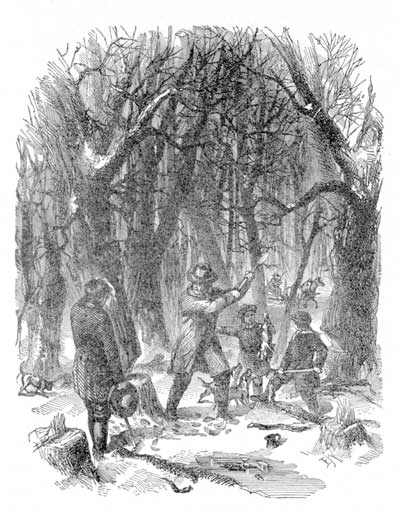
Wood cutters
F. L. Hartwell, a civil war soldier, wrote vividly about a soldier’s attempt to keep warm when camped out in mid-winter:
We have been very cold for the past 2 1/2 days as we had a snow & sleet storm from the northeast. we could not keep warm or even comfortable in beed [sic]or out as we could not all get around our fire at once, we have to go a mile from Camp to get wood to burn & green pine at that. How would you like that to burn at home well we have to go 2 times apiece in cold days making each 4 miles travel each day to keep us warm and cook by. – To My Beloved Wife and Boy at Home, p60. (Spelling and underline – the author’s)
Charles Crowe’s recollections in his Peninsular Journal (1812,1813, 1814) were as follows:
16th December
We reached Friera [Ferreirra do Zezere ?], after a tedious march, for we strongly suspected that our guide wilfully led us a circuitous route. Here we found a strong contrast to our last quarters, empty houses divested of everything, even of door and window frames, and our men had very comfortless lodgings. Some Officers had joined us from the rear, and we here mustered seven, all of whom repaired to a large mansion near the town. The owner fled to Coimbra when the French took possession of the country, leaving an old gardner in charge. This man very kindly brought a large quantity of wood for me to burn, for, excepting the kitchen, mine was the only room possessing a fire place. I soon made a good fire and resolved to spend a comfortable evening in writing home, and drying my little wardrobe. But I was soon found out, and five of our comrades came to spend the evening with me, and were so well pleased with so agreeable a companion, to wit, the fire, that they stayed late, and left me with a small store of fuel for the night, which was very cold, the room large, and my blanket damp. My great coat was my only covering, a deal form was my pallet, and my writing case served for bolster and pillow.
The Hearth:
For most households, the kitchen with its large open hearth and constantly burning stoves became the focal point for both family and servants in the evening. It was not unusual for master and mistress of the house to sit in the kitchen with the servants – the women sewing and the men reading – as they sat by the only source of heat and light at night.
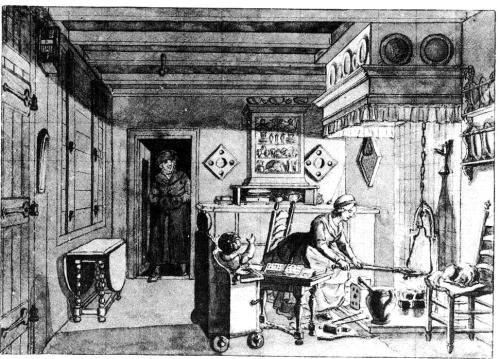
18th century Dutch kitchen interior
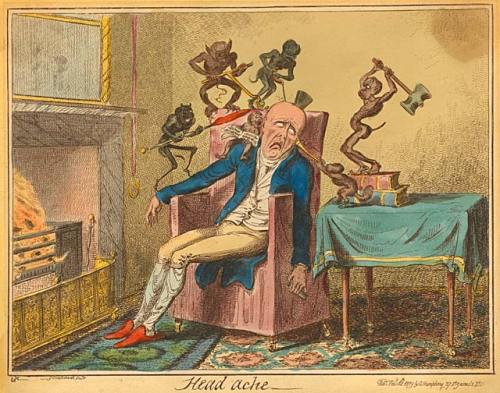
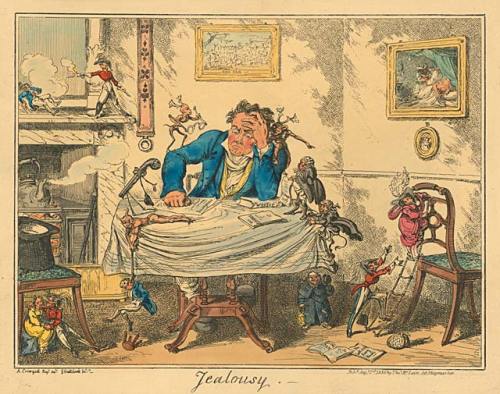
The above illustration of a Dutch interior in a small house is reminiscent of family scenes all over Northern Europe, with the family gathered in one room, along with the family’s pets. The two gentleman in the Cruikshank illustrations below seem to live in rented rooms. One has placed his table/desk near the fireplace, in which a boiling kettle is steaming (no doubt to add to Cruickhank’s satire on jealousy). The sick man sits in front of an open grate in a high-backed chair, which kept the heat from escaping. Coal fires were common in the city, where soot and smoke helped to create the pollution and fogs for which London was so famously known during the industrial revolution.
American Louis Simond, visiting London in 1810, remarked that ‘the smoke of fossil coals forms an atmosphere, perceivable for many miles’. Marianne, writing to Willoughby on a winter’s day in London would have needed to light a candle even at midday in order to see her pen and paper clearly. – How Clean Was Jane Austen’s London?
 The wealthy could afford to have rooms heated when and where they liked, and whether it was cold outside or not. In this photograph, Mr. Woodhouse in the A&E version of Emma is seen sitting by a fire expressly laid out for him in the drawing room at Donwell Abbey as the rest of the party picked strawberries. Such extravagance for one individual would have been impossible for a majority of the people at that time. As the 18th century progressed, fireplaces became more efficient. Rumford fireplaces, common from 1796 – 1850, were designed to carry away more smoke and reflect more heat. In Northanger Abbey, Catherine Morland was disappointed to note the brand-new Rumford stove that General Tilney had installed along with other modern improvements.
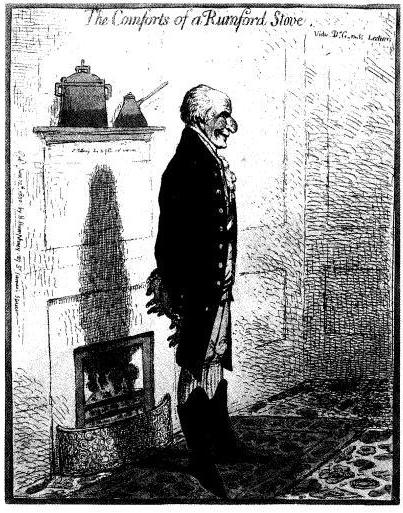
Comforts of a Rumford Stove, Gillray
Next week, Keeping Warm in the Regency Era, Part Two.
Additional links:
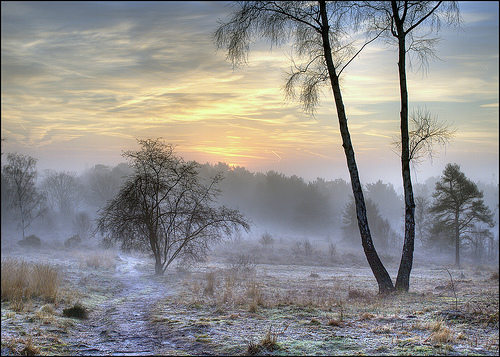
Top photograph: Surrey landscape

 Jean Judy makes charm bracelets using images from Jane Austen’s novels. She custom made the bracelet at left for me, using my favorite colors. These beautiful bracelets were also a hit at the last JASNA annual meeting, where Jean’s bracelets were worn by several members. View her selection in her Picassa Photo Album and on her blog, where her contact information sits.
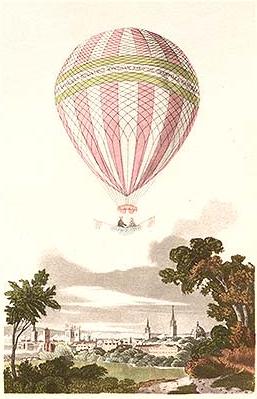 Heyer’s rich detail of life in London during the heyday of the Industrial Revolution sets this novel apart from the others. The book’s events occur after Beau Brummel’s gambling debts drove him to France in 1716-1817, the last year of Jane Austen’s life. This was a heady era of scientific discoveries and invention that changed the world forever. Through young Felix’s brilliant mind we see the wonders of the age unfold in the form of steam engines, scientific collections, and balloon travel. Sixteen-year-old Jessamy’s earnestness in studying to become a man of the cloth represents the burdens that befall a second son who knows he must make his own way in the world, but he is still boyish enough to get into trouble on occasion. And Harry, the eldest brother, set down from Oxford for his antics, is too frivolous to set a good example as heir. Under ordinary circumstances he is more than happy to leave the decision-making to Frederica. Under extraordinary circumstances he is more than likely to bungle events, including endorsing an ill-judged elopement.
 The plot of this book is simply delightful. Frederica’s “Baluchistan” hound and her two youngest brothers manage to wrap the reader around their paws and grubby fingers with very little effort. More importantly, the trio charms the marquis, whose ennui is legendary.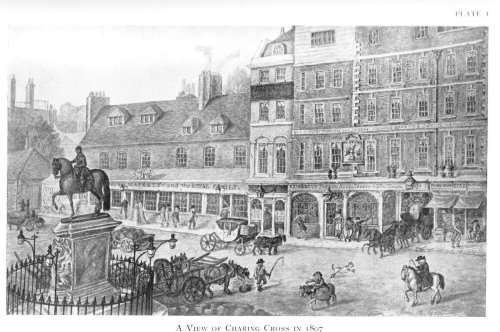







 Jane Austen's World