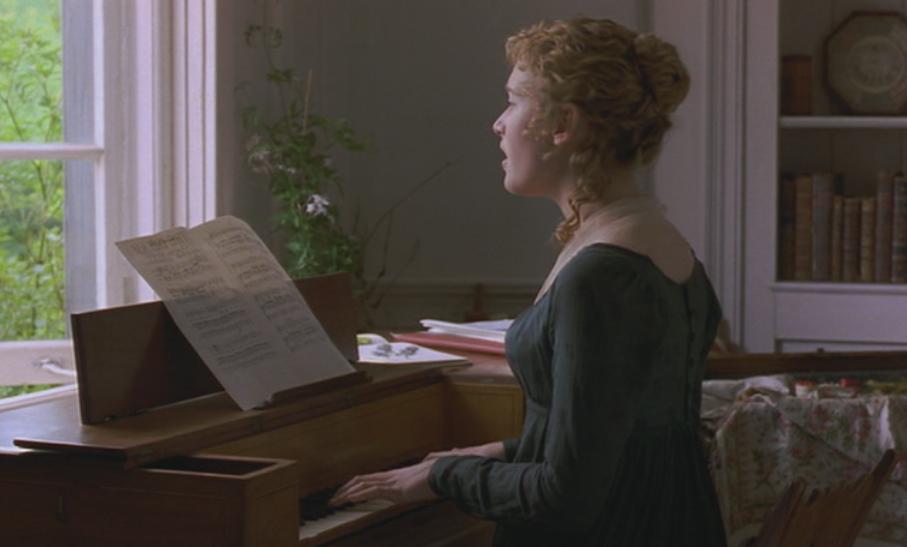
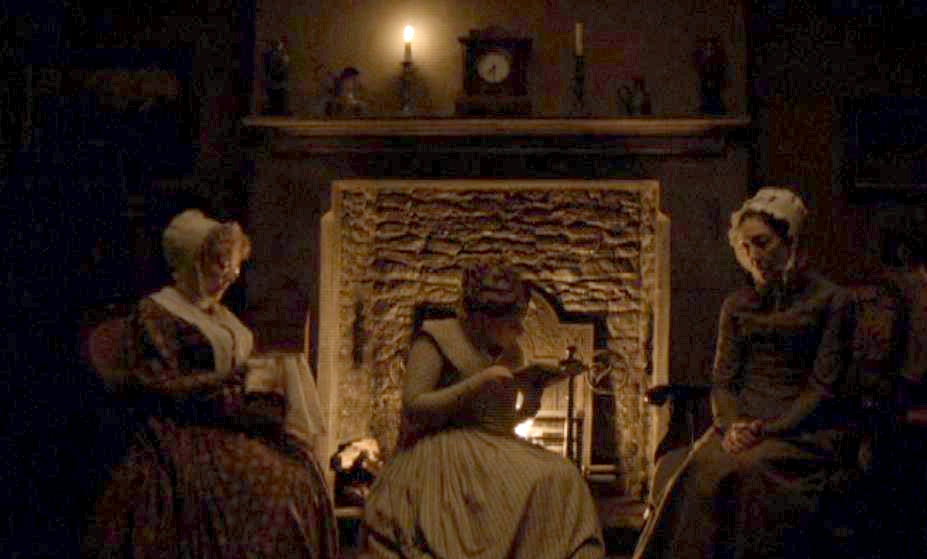
Until the mid-19th century, light was a precious commodity, and the cost of lighting a dark room well and to one’s satisfaction was an extravagance that few could afford. Recent film adaptations of Cranford and Sense and Sensibility point out precisely how light (or the need for it) affected people’s day and night routines. Near the start of Cranford, Mary Smith and the two Jenkyns sisters are shown huddled near the light of a single candle. To maximize their ability to read or do needlework in the evening, the three women sit near the fireplace in order to see better. Even so, there is barely enough light to work, and one can imagine how hot it must have been in such an enclosed environment on warm nights. This scene was not necessarily reserved for the poor or those who lived on a strict budget. In “Artificial Lighting Prior to 1800 and Its Social Effects”, W.T. O’Dea mentions the observations George Crabbe’s son made of a yeoman’s family:
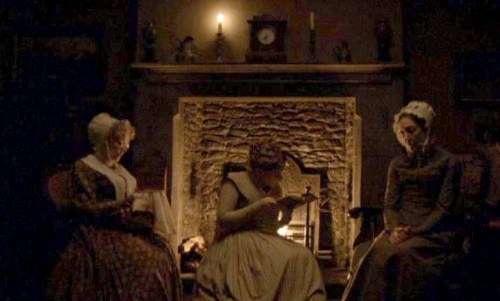
The extent to which even the better class households were deprived of adequate illumination can be appreciated from description, such as one in the life of the Rev. George Crabbe. His son, the biographer, speaks of a visit to the house of his great-uncle at Parham in Suffolk in 1791. Although the great-uncle was of yeoman stock he enjoyed the not inconsiderable income of about eight hundred pounds per annum. On most occasions “The family and their visitors lived entirely in the old-fashioned kitchen along with the servants. My great-uncle occupied an armchair, or in attacks of gout, a couch on one side of a large open chimney. Mrs. Fovell sat at a small table, on which, in the evening, stood one small candle, in an iron candlestick, plying her needle by the feeble glimmer surrounded by her maids, all busy at the same employment…”
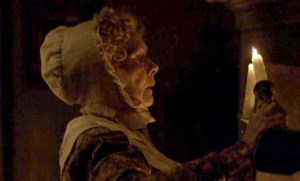 Appearances must be kept, as Mrs. Gaskell so aptly describes in her popular tale. When Miss Matty notices that one candle has become shorter than the other, she lights the taller one and snuffs out the short one. In this way, both ends are kept at around the same length. As soon as company arrives, both candles are lit, prompting Miss Pole to exclaim how bright it is as she enters.
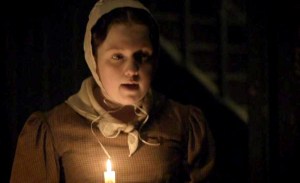
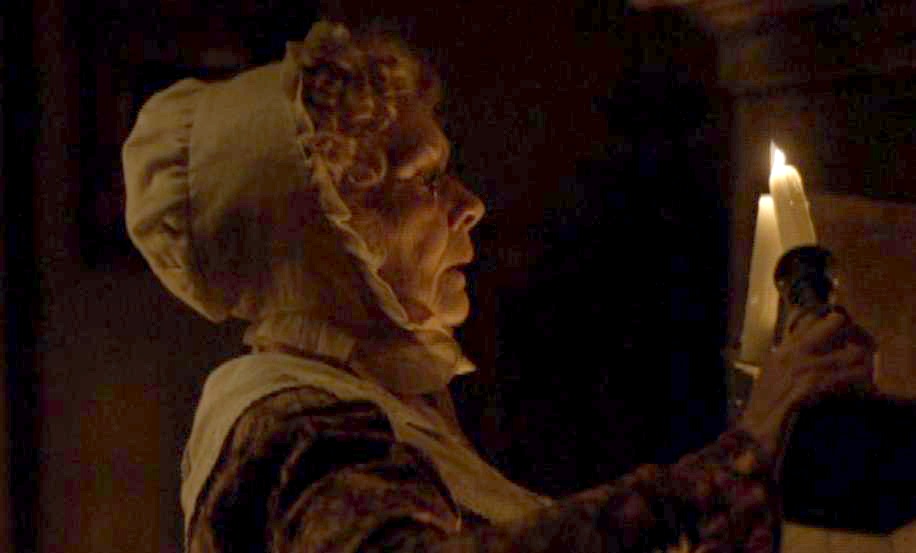
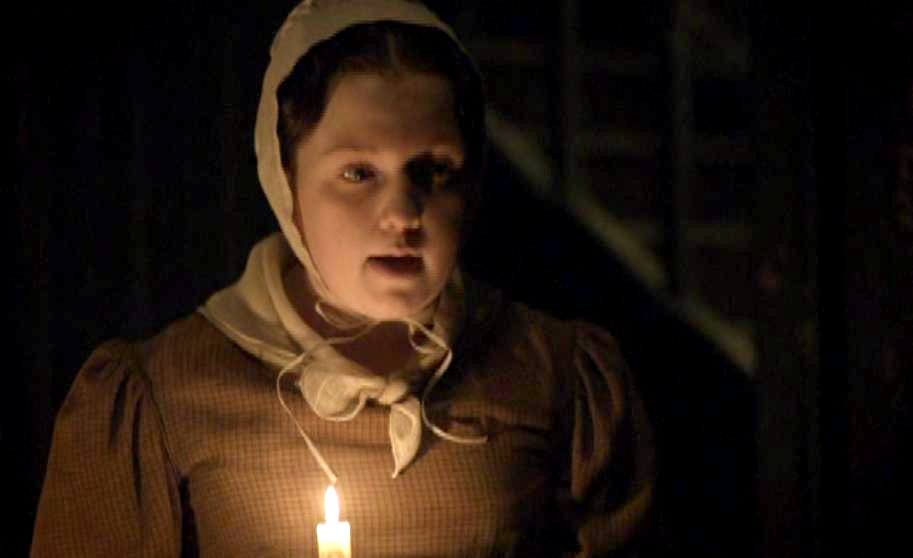
Dr. Harrison’s first evening in Cranford is not only a solitary one, but he sits in virtual darkness. His maid of all work stops by holding a single candle, which illuminates her face and little else, for the rest of the room remains in pitch darkness. During the long days of summer, most working people went to bed at sunset and rose by day light. The poor also burned rushlights, which were much less expensive than a candle and gave off a good clear light. Gilbert White wrote in 1789 in The Natural History of Selborne that while a single candle cost a halfpenny and burned for only two hours, eleven rushlights that cost only a farthing would burn for around half an hour each. There was also the danger of fire. One had to be careful to work so close to an open flame with delicate cloths or paper, and take care not to burn the edges of one’s cap as one bent near the light.
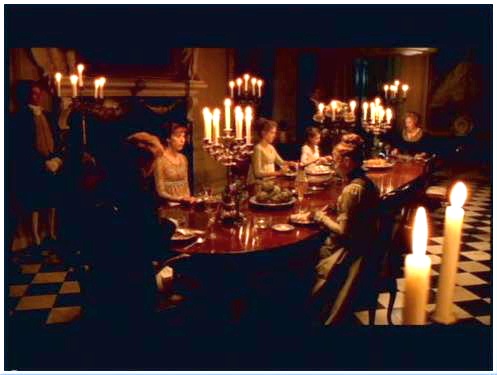
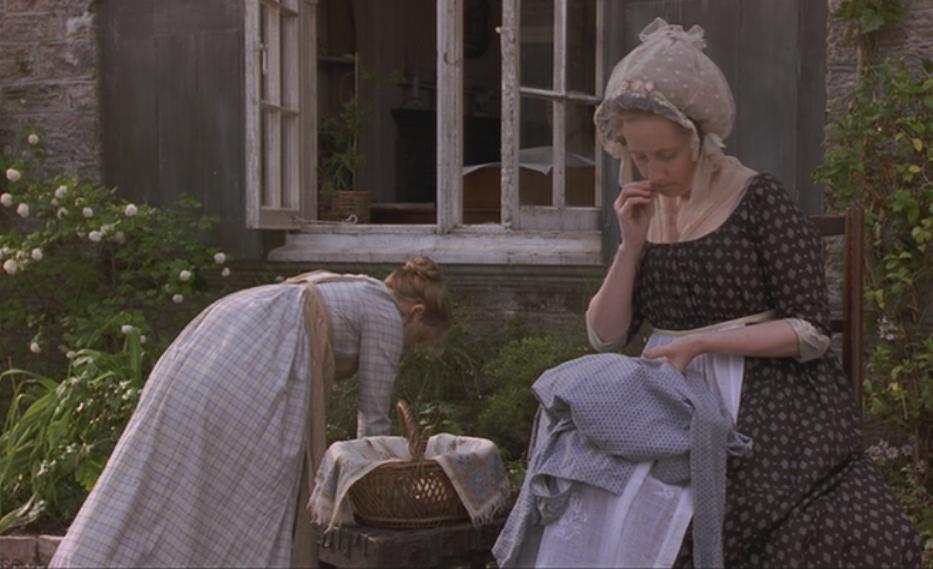
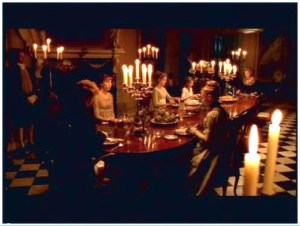 The situation was different for the wealthy as shown in this image of the Dashwoods eating at Norland in Sense and Sensibility 2007. This extravagant use of candles for one family for one evening meal (probably exaggerated in the film) represents one month’s supply of lighting for a less economically secure family. The rich could also afford mirrors, which reflected light back into the rooms, and it was the custom to place candelabras near reflective surfaces for just that effect. The diningroom scene points out how far Mrs. Dashwood fell down the economic ladder when she faced having to live on an income of 500 pounds per year. Sense and Sensibility 1996 stays faithful to the family’s new economic situation. The ladies are shown sitting by a window sewing or doing their work, or outside if the weather permitted.
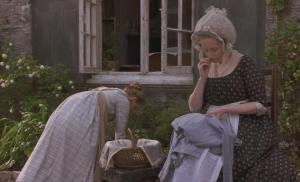
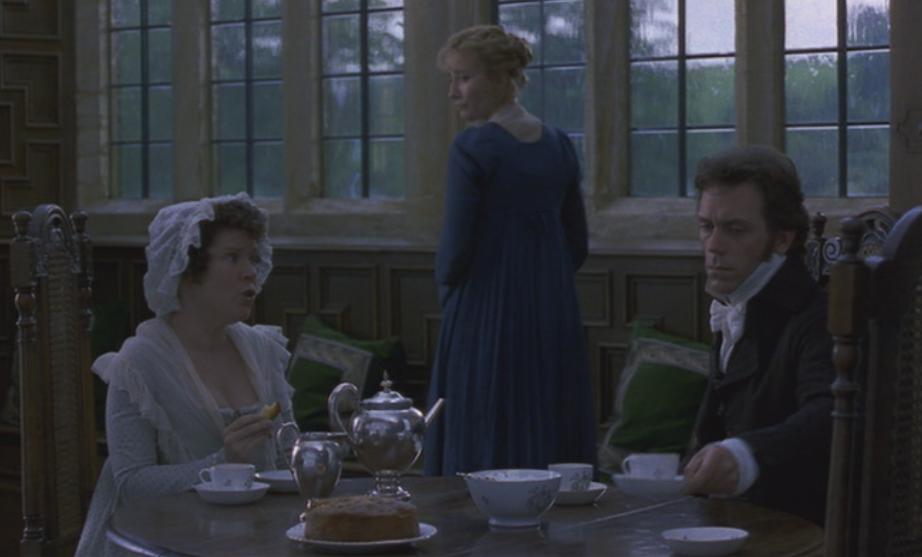
Windows were designed to let in maximum light, some of them reaching from floor to ceiling, or stretching the entire length of the room. Even when the windows were large, as was the case in Cleveland, the Palmers’ estate, the interiors would become quite dark on a rainy or overcast day. Furniture placement was also crucial, and groupings arranged in front of fireplaces or windows took maximum advantage of the light, whatever its source.
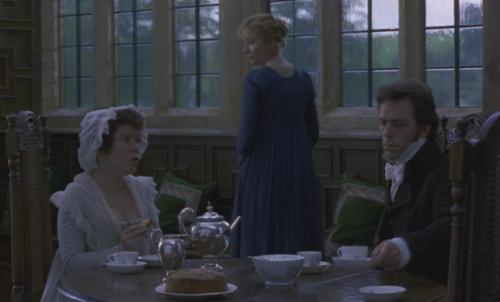 The choice for a room and its function depended on location and orientation. The morning room, I imagine, either faced east or south to take advantage of the earliest rays of the sun, but the best, most steady light, as every painter knows, comes from windows that face north. Lady Catherine de Bourgh, upon entering Longbourn observed to Mrs. Bennet: “This must be a most inconvenient sitting room for the evening, in summer; the windows are full west.” Lady Catherine makes a good point. Although such a room would take advantage of the waning sun, it would also become unbearably hot on a sunny summer’s day.
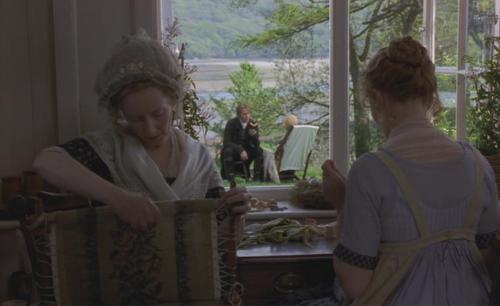
Working in poor light adversely affected eyesight. Mrs.Gaskell observed in the Life of Charlotte Bronte that by 1850 Charlotte’s weak eyesight “rendered her incapable of following any occupation but knitting by candle-light.” W. T. O’ Dea conjectured that “the absence of effective, inexpensive artificial illuminants after the day’s work was done must have had a profound influence not only on the quality of arts, crafts and handiwork but also on the persistence of illiteracy among the majority even after the introduction of printing.”
I shall end this post with a quote from Northanger Abbey, where Catherine Morland is exploring her guest chambers by the light of a single candle. She has just found a note and her imagination is working over time, but alas she will have to wait until morning to read its contents:
The dimness of the light her candle emitted made her turn to it with alarm; but there was no danger of its sudden extinction; it had yet some hours to burn; and that she might not have any greater difficulty in distinguishing the writing than what its ancient date might occasion, she hastily snuffed it. Alas! It was snuffed and extinguished in one. A lamp could not have expired with more awful effect. Catherine, for a few moments, was motionless with horror. It was done completely; not a remnant of light in the wick could give hope to the rekindling breath. Darkness impenetrable and immovable filled the room.
Find out more on the topic of lighting in my two other posts:
Source: “Artificial Lighting Prior to 1800 and Its Social Effects”, W.T. Odea, Folklore, Vol 62, No 2, (June, 1951), pp 312-324.
 The folks at PBS Masterpiece are giving away 20 Cranford novels by Elizabeth Gaskell. For an opportunity to win one of these books, all you need to do is click here and sign up for a free Masterpiece e-newsletter.
 Update: In addition, the site is offering a behind the scenes video, as well as streaming videos of Parts One and Two. After Sunday you can view all of Cranford online until May 23rd.









 Jane Austen's World