Feeds:
Posts
Comments

Image of the cover of The Jane Austen Society by Natalie JennerIt is my pleasure to introduce to you author Natalie Jenner and her debut novel, The Jane Austen Society. – Rachel Dodge

Let’s begin with a description of the novel to whet your literary appetites:

One hundred and fifty years ago, Chawton was the final home of Jane Austen, one of England’s finest novelists. Now it’s home to a few distant relatives and their diminishing estate. With the last bit of Austen’s legacy threatened, a group of disparate individuals come together to preserve both Jane Austen’s home and her legacy. These people—a laborer, a young widow, the local doctor, and a movie star, among others—could not be more different and yet they are united in their love for the works and words of Austen. As each of them endures their own quiet struggle with loss and trauma, some from the recent war, others from more distant tragedies, they rally together to create the Jane Austen Society.

Introducing Natalie Jenner, author of The Jane Austen Society:

I first “met” Natalie Jenner online last year, and we’ve since formed a lovely friendship—one that I foresee extending into the future for a very long time. That’s the thing about Jane Austen devotees: We always seem to find one another, even if we’re from different parts of the world, because of our shared love for Jane, her life, and her work. That magic is also what immediately drew me to Natalie’s debut novel, The Jane Austen Society, a story about a group of people who are drawn together based on their love for all things Austen and a desire to protect her legacy.

As a fellow writer, I couldn’t wait to pick Natalie’s brain about how she came up with such a beautiful concept for a novel. Her answers to my questions gave me a further glimpse into her creative process and the story of how this novel came to be. I’ve loved getting to know Natalie this past year. And I hope, once you read her interview, you’ll feel like you know her, too.

Q: When did you first discover Jane Austen and how have her books touched your life?

A: I discovered a beautiful 1976 Dutton edition of Pride and Prejudice on my parents’ bookshelves when I was a child, and I remember being besotted by the fact that the book came in a box with a ribbon that ran through it, by the wonderful ink and wash illustrations by Isabel Bishop, and most of all by that crazy dialogue-heavy opening scene with Mr. and Mrs. Bennet that reads just like a screenplay.

Austen’s books have touched my life in many ways: as a teenager, they introduced me to female characters with little social agency yet huge reservoirs of inner conviction and resilience and hope. As I started my own adult and family life, books like Persuasion and Sense and Sensibility in particular showed me a side to the pathos of real grown-up life that seemed missing from so much modern culture. And most recently, Austen helped me through a challenging time in middle age by her personal example of living with chronic pain and grief, and writing through illness and despair.

Q: What initially inspired you to write The Jane Austen Society? (Do you remember where you were when the idea first came to you?)

A: I remember exactly where I was. I had been spending a “quiet year” rereading all of Austen, looking for solace when my husband was diagnosed in his early 50s with a very rare and incurable form of lung disease. This led me to start reading as many books about her life as I could find, which in turn inspired me to take a bucket list trip to Bath and Chawton to literally walk in Austen’s footsteps, as well as attend my first JASNA regional event. I was also binge-watching a lot of Downton Abbey and British television during this time, including a home real estate series called Escape to the Country. When my husband’s lung decline started to stabilize following experimental treatment, I remember feeling hope for the first time in two years of what was frankly a medical nightmare. Along with hope, I was also surprised to find myself yearning to write again, after locking five unpublished manuscripts from my 30s away in a drawer many years ago. Initially I was going to write about a group of people trying to rescue an old British estate house, similar to Downton Abbey. But my daughter very clearly remembers me one day, out of the blue, looking up from my reading and saying very simply instead, “I am going to write a book about a group of people trying to save Jane Austen’s house.” And that is pretty much still the tag line for my book.

Q: At what point did you decide to write it as a fictional account? Did the story come to you all at once or did it slowly build as you planned and drafted?

A: Interestingly, because my first impulse was to write something completely fictional about a made-up house, the idea of any of it being related to Austen only came upon the heels of that. So, fictional first, then Austen second. I conceived of eight to ten characters, half men and half women, and I gave them jobs (as a career coach in my other life, I know how important one’s job is to one’s identity, and in looking back, I think that must be why so much of the action stems from the fact of someone being a doctor, or a lawyer, or a servant girl).

That was all the planning that I did in advance. When I sat down one day to write, an image immediately came to mind of a man, tired and lonely and sad, lying back on the very stone wall in the churchyard of St. Nicholas where I had rested the fall before when visiting Chawton. I remember typing that first chapter, having this man meet the Austen fan from America who has descended on his village, making up his life story, having him start reading a copy of Pride and Prejudice from the library (that moment we can all relate to, that very first “hit”), and then I wrote the words “He was becoming quite worried for Mr. Darcy” and right away I knew what my book was really going to be about. People in love with Jane Austen, and then learning to love themselves. I write completely without a plan or outline of any kind—I love it, it’s so exhilarating, and it lets my characters drive the action, so everything always comes as a complete surprise to me. That’s where all the fun in writing is for me. Revision is the penance for the fun.

Q: How do your characters “introduce” themselves to you? What is the process you use to create and develop them?

A: My characters appear to me completely formed and ready, in terms of their appearance but also their temperament, personality, and mannerisms. I can’t explain it, and I haven’t asked other authors how common that is, probably because I am afraid of the answer! I can immediately picture everything about my characters when they first appear to me except—strangely—the exact features of their face. Their faces always remain a little blurry, but that does enable me to do stunt-casting later on for my dream movie or tv version.

Q: Your character names are perfectly charming! How did you come up with their names?

A: This is also a strangely intuitive part of the process, as the names for the most part just pop up in my mind. But I do remember struggling with Dr. Gray’s first name, Benjamin, because I wanted it to be traditional and strong and pleasant, but also not overly common. And I am going to give you a little nugget: I had already picked Mimi for the Hollywood actress’s name, and it was only later in researching the name that I learned that “Mimi” is also a diminutive for “Mary Ann”—which was, obviously, so perfect, and a sign that I just could not ignore. Once I had all the names in place, and because I did not want to step on any real-life people in creating this fictional work about a very real society and place, I did go through census records online for the village of Chawton, trying to the best of my ability to ensure that no real villagers now or in the past shared surnames with any of my characters, just to avoid any unnecessary confusion.

Q: What was your research process for this book and what sources did you consult? Did you visit any Jane Austen sites in England?

A: So I had actually done a year of what I now call “unintentional research” when I was sitting in my garden rereading Austen and then reading every book I could find on the story of her life. I was particularly impacted by the following books: Among the Janeites by Deborah Yaffe, Jane’s Fame by Claire Harman, and Reading Austen in America by Professor Juliette Wells, all of which really got me thinking about Austen fandom and how it has manifested itself historically; and Caroline Knight’s memoir, Jane & Me: My Austen Heritage, which introduced me to the more private, familial side of Chawton House’s history.

Throughout my life I have visited and revisited many Austen sites, but during this particular time, I was fortunate to get to spend a week on my own in Hampshire. Every morning I would make the same walk to Chawton from Alton that Austen herself used to make. I would be the first person to arrive at the Jane Austen’s House Museum when it opened in the morning, and the last person to leave Chawton House at the end of the day. All of this “research” was done before I even had an inkling that I was going to write a book about any of it one day!

Q: Are there any characters or storylines in the book that strike a chord with you personally? Do you have a favorite character?

A: I love this question, because yes! Adeline the war widow can be a polarizing figure but her total immersion in her grief really resonated with me—it was like a funhouse mirror reflection of the great parts of her character: the intensity, the curiousity, the always-up-for-a-fight. She’s just so independent and her own person, and I loved that about her. I also loved Dr. Gray, who is propping this entire little village totally at the expense of his own emotional healing, which seemed so human to me. But my real soft spot is for Evie: she is my daughter and myself at that age, so single-mindedly focused on her intellectual growth and academic ambition, and just waiting, impatiently, for her moment in the sun.

Q: Where and when do you get your writing done? Can you share any rituals or quirks you have as a writer?

A: My main quirk as a writer is the fact that I can and do write anywhere, anytime. I gave up my home office when my husband started working from home, and so far I have not yet been able to get it back! I write by the fireplace and big window in the living room, in bed, at the dining room table, by the pool, and last summer I treated myself to an 8 foot by 8 foot writing shed in the garden. My absolute favourite time to write is when I first wake up, usually around 5 am if I am in the middle of a book and can’t stand the suspense myself of what’s going to happen next. All I need when I write is just my laptop and sometimes a cup of English breakfast tea to keep me going.

Q: What do you hope the worldwide Jane Austen community will gain from reading this book?

A: My goal for this book is even more global than that: I want everyone, Austenites and strangers to Austen alike, to reaffirm for themselves, through the experiences of my characters, the critical and essential role of hope in all our lives. As I say in the book, sometimes hope is all we have: but hope can also sometimes be just enough. I know it was for me. For Austenites in particular, I would love for them to appreciate and celebrate all of our individual and collective efforts in keeping the works of Austen so thriving and alive.

Q: If you could step into one of Jane Austen’s novels, which one would it be and which character would you like to play?

A: Elizabeth Bennet. All the way. In fact, I’m already halfway there in my mind as I say this. She is undoubtably the most delightful, charismatic, and authentic character in all of literature.

Q: Who is your favorite actor from the new Emma movie and what do you like most about his/her performance. (I think I know the answer, but I can’t wait to hear your thoughts!)

A: You are a good guesser because, yes, it’s Mr. Johnny Flynn. I was so averse to his casting announcement, and superficially so—he struck me as having a very young, British-boy-band, foppish manner. My Mr. Knightley (my favourite romantic figure in all of Austen) is tall, and imposing, and so smart. What I loved about Flynn’s performance in the new Emma movie was how he retained the imposing manner in any room, but gave it a quieter confidence and vulnerability that I hadn’t seen before. I could feel how much he wanted to love and be loved, and to start a family, and I just found that all so incredibly romantic and touching.

Q: Is there anything else you would like to tell us about this book?

A: I would add that I tried while I was writing, and in the dreaded revising, to throw in as many little “Easter eggs” as I could, so that the more hard-core Austen fans could have fun picking up on little allusions and parallels to events, characters, and romances from Austen’s own works. Although over the course of three drafts many of these parallels were intentional, some still surprised even me. Which, as I said before, is the total joy and fun of writing.

Image of Natalie Jenner

Natalie Jenner

AUTHOR BIO:

Natalie Jenner is the debut author of THE JANE AUSTEN SOCIETY, a fictional telling of the start of the society in the 1940s in the village of Chawton, where Austen wrote or revised her major works. Born in England and raised in Canada, Natalie graduated from the University of Toronto with degrees in English Literature and Law and has worked for decades in the legal industry. She recently founded the independent bookstore Archetype Books in Oakville, Ontario, where she lives with her family and two rescue dogs.

Rachel Dodge, author of Praying With Jane Austen, at the 2019 JASNA AGM in Williamsburg

Rachel Dodge at the JASNA AGM in Williamsburg, October 2019

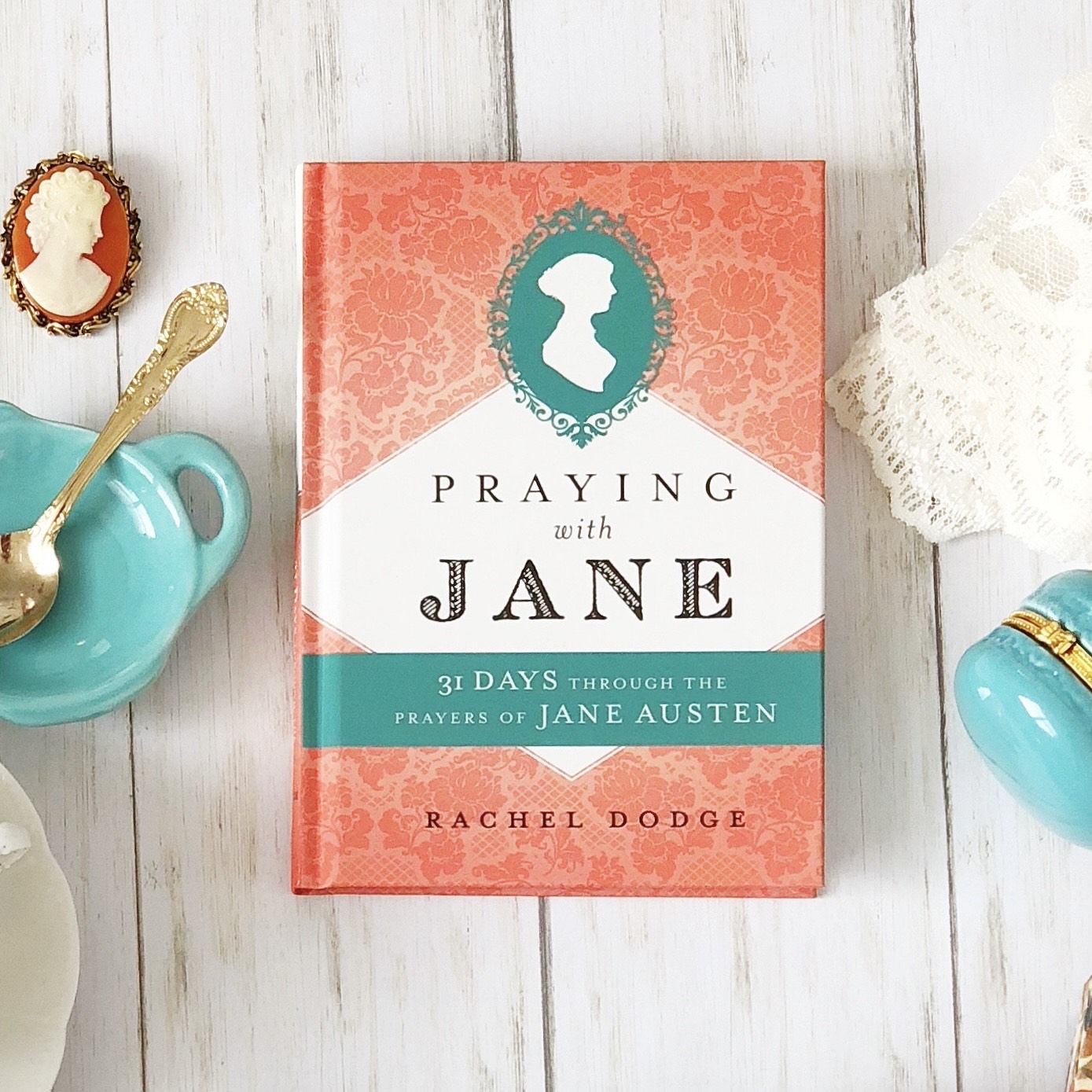
About Rachel Dodge, the interviewer: Rachel Dodge is a college English professor and the author of Praying with Jane: 31 Days Through the Prayers of Jane Austen and The Anne of Green Gables Devotional: A Chapter-by-Chapter Companion for Kindred Spirits (November 1, 2020). . You can find her online at http://www.RachelDodge.com.

WEBSITE | TWITTER | FACEBOOK | INSTAGRAM | GOODREADS

AUDIOBOOK NARRATED BY ACTOR RICHARD ARMITAGE:

The full unabridged text of THE JANE AUSTEN SOCIETY was read by the distinguished English film, television, theatre and voice actor Richard Armitage for the audiobook recording. Best known by many period drama fans for his outstanding performance as John Thornton in the BBC television adaptation of North and South (2004), Armitage also portrayed Thorin Oakenshield in Peter Jackson’s film trilogy adaptation of The Hobbit (2012 – 2014).

Link to YouTube audiobook excerpt: https://youtu.be/OJ1ACJluRi8

PURCHASE LINKS:

Just after the Second World War, in the small English village of Chawton, an unusual but like-minded group of people band together to attempt something remarkable.

You may order your copy of The Jane Austen Society here:

AMAZON | BARNES & NOBLE | BOOK DEPOSITORYINDIEBOUND | AUDIBLEGOODREADS | BOOKBUB

JOHN THE BLOG TOUR!

Join the virtual online book tour of THE JANE AUSTEN SOCIETY, Natalie Jenner’s highly acclaimed debut novel May 25 through June 30, 2020. Seventy-five popular blogs and websites specializing in historical fiction, historical romance, women’s fiction, and Austenesque fiction will feature interviews and reviews of this post-WWII novel set in Chawton, England.

BLOG TOUR SCHEDULE:

May 25 Jane Austen’s World

May 25 Austenprose—A Jane Austen Blog

May 26 Frolic Media

May 26 A Bookish Affair

May 26 Courtney Reads Romance

May 26 Margie’s Must Reads

May 26 The Reading Frenzy

View the Rest of the Tour Schedule in the Side Bar – The blog tour lasts until June 30th!


Volz BookInquiring readers,

My apologies to author Jessica Volz–who contacted me weeks before the COVID-19 lockdown about her book–for posting my review of her book several months late. She has been so patient that I must thank her for her graciousness. – Vic Sanborn

The highly interesting and informative Visuality in the Novels of Austen, Radcliffe, Edgeworth and Burney, is no fast walk in the park as far as reading goes, but it is worth the effort since it is filled with new and insightful information. One cannot skip or skim to learn about the way Austen and female writers of her era used visuality in language to communicate hidden meaning. In order to understand how visual language transmitted women’s emotions, issues, and areas of concern in a patriarchal society, I digested Dr. Volz’s words and reflected on how her observations helped me to reassess my understanding of the hidden language these 18th and 19th century authors used.

In her book, Dr. Volz studied the novels of four authors published between 1778 and 1815. Three of those novelists, Radcliffe, Edgeworth, and Burney, enjoyed recognition during Austen’s life, while Austen ultimately found lasting fame as a literary giant. This was a time when women’s views on their rights shifted, greatly helped by the Enlightenment’s campaign for human rights, the influence of the French Revolution in questioning conventional perceptions of women, and Mary Wollstonecraft’s revolutionary writings. Wollstonecraft wanted male-dominated females to attain power over themselves. While this emancipation would take a longer time than she even envisioned, Wolstonecraft influenced contemporary women authors to employ an approach that “concealed their resistance within an artful narration.” (1. Volz, p. 210.)

Volz’s findings found that in a patriarchal society, when women were expected to behave modestly and correctly and use phrases that were acceptable to their male relatives and husbands, female authors found a linguistic end-around through visual references. They:

…focused on ways their texts reveal the authors’ approaches to issues explored or suggested in the novels, including “women’s difficulties, polite society’s anxieties and the problems inherent in judging by appearances.” – (2. Painting With Words, Claire Denelle Cowart, JASNA, 2019.)

Thus, while the novels written by these four authors seemed to outwardly conform to societal standards, their heroines thought for themselves.

While the forms and functions of visuality that women novelists employed to their rhetorical advantage vary, they channeled their thoughts through several distinct visual pathways: visible and ‘invisible’ likenesses, architectural metaphors, the ‘made-up’ social self and communicating countenances.” (Volz, p. 212)

This review discusses some ways in which Dr. Volz examines how Austen employed the forms and functions of visuality. When she sent me her book, she was correct in predicting that I would be the most affected by the chapter that discussed Jane Austen. I’ll start with my first (and still favorite) Austen novel, Pride and Prejudice, and heroine, Elizabeth Bennet.

Elizabeth Bennet, Pemberley, and Mr. Darcy

While Dr. Volz discusses Pemberley well into Chapter 1, I did not begin to truly understand her analysis of Austen’s visuality until I reached this section. I knew Elizabeth Bennet was my favorite fictional heroine from almost the moment I met her at the age of fourteen. Lady Catherine deBourgh expressed the 18th century attitude towards women when she accused Elizabeth of being obstinate and headstrong. In other words, she was not the right sort of lady, especially not for Mr. Darcy.

On that first reading, I instantly understood that Elizabeth’s feelings towards Mr. Darcy were transformed as she walked along the beautiful grounds of Pemberley, viewed the house from afar in its perfect setting, moved throug its exquisite interior, listened to the raptures of his housekeeper as she described her master’s kindnesses, compared a miniature of his youthful self to Mr. Wickham’s (whose actions, as related by the housekeeper, described a cad), and then finally studied a large painted portrait of Mr. Darcy that to Elizabeth seemed true to life and captured her new understanding of his essence.

The architectural metaphors that Volz mentioned explain much in this description of Elizabeth’s leisurely ramble with the Gardiners along Pemberley’s grounds:

They gradually ascended for half a mile, and then found themselves at the top of a considerable eminence, where the wood ceased, and the eye was instantly caught by Pemberley House, situated on the opposite side of a valley, into which the road with some abruptness wound. It was a large, handsome, stone building, standing well on rising ground, and backed by a ridge of high woody hills;—and in front, a stream of some natural importance was swelled into greater, but without any artificial appearance. Its banks were neither formal, nor falsely adorned. Elizabeth was delighted. She had never seen a place where nature had done more, or where natural beauty had been so little counteracted by an awkward taste. They were all of them warm in her admiration; and at that moment she felt that to be mistress of Pemberley might be something!” (Pride and Prejudice)

As she views Pemberley’s grounds, Elizabeth can see herself living in this natural setting as its mistress, but she realizes with some sadness that this is no longer possible. To her regret, she rejected Mr. Darcy’s proposal based on her first impressions. Now that she sees him through a new lens, she recognizes how much their tastes and inclinations have in common. Moreover, she understands that Darcy, like his estate, Pemberley, has no artifice.

The lack of artifice is also how Mr. Darcy views Elizabeth – early in their association, he admires her expressive eyes and the liveliness of her character, which gave her a natural beauty much like the estate grounds he loves.

But no sooner had he made it clear to himself and his friends that she had hardly a good feature in her face, than he began to find it was rendered uncommonly intelligent by the beautiful expression of her dark eyes.” (Pride and Prejudice)

Austen also emphasized Darcy’s admiration of Elizabeth’s unorthodox, unladylike walk to Netherfield, which “improved her figure’s picturesque quality and intensified the expressiveness of her eyes.” (Volz, p. 60). His appreciation echoes the ideal of the picturesque in writings by Johann Kaspar Lavater (a Swiss physiognomist, philosopher, and theologian) and William Gilpin in his Observations Relating Chiefly to Picturesque Beauty (1786) which appreciated the irregular features of a person, place, or setting and that “gave them a certain charm and made them desirable subjects for painting.” (Ibid)

JaneAustenSilhouette-Wikimedia

Image, Wikimedia Commons

Volz writes much more about the mastery in which Austen unites Elizabeth and Darcy through visible and invisible likenesses and architectural metaphors. Yet Austen is known for her austere descriptions of person, place or thing. How does this reconcile with visuality? One of the best-known images of Austen is a silhouette used by Jane Austen societies the world over. Early in her book, Volz mentions Austen’s affinity and familiarity with silhouettes. Like her contemporary profilists, “Austen sought to produce verbal ‘shades’ that ‘”convey the most forcible expression of character.”’ (3. Marsh & Hickman, Shades from Jane Austen.)

Austen’s habit of eschewing detail when describing characters’ appearance indicates her preference for using a single telling line that, like the silhouette, supplies ‘infinite expression’ though a profile that is not overshadowed by the particulars within it.” (Volz, p. 36)

For me, this explains Austen’s spare use of details and how this writing style encourage the readers’ imaginations to take hold. As I age, I find new depths in her plots, whose meanings change as my perceptions of the world (and knowledge of her era) change. For example, as a young girl/woman, I couldn’t stand or understand Mrs. Bennet, and found her an irritating though comic character. The more I studied Austen’s era and the circumscribed lives women were forced to live, my sympathy for Mrs. Benne’s poor nerves and her quest to find husbands for her five daughters increased, while my patience with Mr. Bennet (though I never stopped appreciating his wit) waned.

Volz writes that “Austen’s use of an aesthetic vocabulary of character in her fiction directs the reader’s attention to the act of viewing and its ultimate subjectivity in creating couples united in their affections.” So true, but Austen does this so economically and so masterfully, that I am constantly astounded and motivated to reread her novels.

Elinor Dashwood and Lucy Steele

In Sense and Sensibility, Volz traces the evolution of Elinor’s certainty that Edward Ferrars favors her against her painful, but inexorable understanding that he is engaged to Lucy. The proof is supplied through physiognomic means in the form of a miniature likeness of Edward that he gave to his intended. Does this miniature prove that he loves her? Elinor isn’t sure. While devastated, she is a skillful observer, as painters often are. Why do he and Lucy only see each other twice a year? And why, she wonders, did Lucy never give him her picture?

This plot in Sense and Sensibility reads like a mystery, with Austen using visuality clues to lead Elinor/us to the realization that, by not giving Edward her visual likeness, Lucy’s attachment is tenuous at best. In Lavater’s opinion, a portrait is “more expressive than nature.” One can then deduce that a ring with a lock of Lucy’s hair means little compared to an actual likeness. Elinor can discern no real affection in Lucy’s body language or demeanor towards Edward, but this knowledge gives her no comfort. Only a woman is allowed to end an engagement and Edward is too honorable to go against convention. At the end of the novel, Elinor’s intuition proves to be correct and Edward, unceremoniously dumped by Lucy in favor of his brother, is free to declare himself to the woman he loves.

Emma Woodhouse and Harriet Smith

When it comes to the heroine that no one but Austen will much like, Volz explains that Emma is “as much of a product of Highbury as she is a shaper of it.” (Volz, p. 79). Emma’s status, while high in the ranks of Highbury society, does not detract from the dullness of her daily life as a modest female. In her twenty-one years, she hasn’t visited London, a mere few hours drive away in a carriage, or a seaside resort, or even Box Hill (until the famous scene at the end of the novel). After Miss Taylor became Mrs. Weston, a bored Emma (who took credit for uniting Mr. Weston with her governess) looks for another “project.” When her thoughts turn to Harriet Smith, her imagination and manipulation take over. She will mold Harriet into her vision of a young lady with prospects, even though Harriet is the natural daughter of an unknown somebody.

A famous scene in the novel centers on Emma painting a portrait of Harriet. Volz describes this portrait as an example of the heroine’s self-delusions (the likeness depicts Harriet as Emma would like her to be), and that the friendship among the two women represents something other than themselves. “Emma has redrawn Harriet’s character, which now ‘acts’ as improperly as the eye and hand that have shaped it.” (Volz, p. 80) Needless to say, Emma’s portrayal of Harriet has more to say about the painter than the sitter.

From the start of the alliance, the reader understands that this friendship is woefully out of balance. A weak mouse stands little chance against a powerful cat, and so Emma’s machinations blindly continue, but after Harriet reveals her love for Mr. Knightley, which she (unbelievably) thinks is reciprocated, Emma finally sees ‘the blinders of her own head and heart,’ although Emma feels sorrier for herself in her self-deception than she feels for her deluded friend. “Austen’s visual technique stages for the reader the dramatic shift in the heroine’s vision and perceptions.” (Ibid.) This is true, but Austen’s young heroine still has much to learn before the story ends.

In this section, Volz provides more interesting observations about the Emma/Mr. Knightley relationship, which readers will find equally fascinating.

Fanny Price and Mansfield Park

My final thoughts about Volz’s book are about her analysis of Fanny Price. Fanny’s journey as a young girl transported to a strange new house is demonstrated by the rooms she lives in. At first the lonely child cries herself to sleep, but as the novel progresses, the rooms she occupies within the house, first as an outsider and then as an accepted member of the household, correspond with her emotional growth. The more comfortable Fanny feels in her adopted home, the more she blossoms. Fanny’s “acquisition of a new private space within Mansfield serves as a metaphor for her progress towards social acceptance.” (Volz, p. 76)

When Fanny is banished to live with her parents in Portsmouth, she learns how much she has changed and grown. “Aesthetic contrasts teach the heroine and the reader to see that Mansfield’s values are diametrically opposed to those at Portsmouth, with its crowded, agitating interior.” (Ibid.) Mansfield Park has become Fanny’s home, and within it she shines both outwardly and inwardly.

Austen’s evolving views towards ideal landscapes are personified in her descriptions of Pemberley and Mansfield Park:

Whereas Elizabeth’s raptures over Pemberley’s physiognomic display highlight the place’s picturesque irregularity, here [in Mansfield Park], Austen defers to the presentation of organized beauty and agreeable symmetry, implying her own changed view of landscape design.” (Volz, p. 77)

Water at Wentworth, Humphry Repton. The second image shows the improvements to the scene

Water at Wentworth, Humphry Repton. The second image shows the improvements to the scene

This is not surprising, since one of the premier landscape architects at the time that Austen wrote  Mansfield Park was Humphry Repton, whose work Jane prominently mentions in the novel. Repton’s habit of removing irregularities from a landscape can be viewed in his red books, in which he presented before and after watercolors of his designs to his clients. The “after” watercolors remove any impediments to a perfect view or irregularities (by cutting down trees or adding features, such as a pond or a Palladian bridge).

I should also mention that Volz’s thorough examination of Austen’s visual aesthetic includes the author’s use of free indirect discourse (FID), which characterizes Austen’s writing. Approximately 20-30% of Austen’s narration is FID, in which both the narrator and a character are speaking at once.

Outside of direct dialogue, free indirect discourse is the most common, economical, and sophisticated way novels relay information about thoughts and speech. […] Austen’s employment of FID was revolutionary, for while earlier authors had used it to some degree, it remained to Austen to take advantage of the wide range of how FID could be deployed to manipulate our ironic understanding of her characters.” (4. Mooneyham White, Discerning Voice Through Austen, JASNA)

In our day and age, many readers no longer recognize the subtleties that 18th/19th century readers understood when reading novels by contemporary female authors. Dr. Volz’s observations help us to analyze their subtext and, in my case, prompted me to rethink my earlier reactions to Austen’s characters.

One can use Dr. Volz’s observations in analyzing other Austen characters on our own – Anne Elliot, Admiral and Mrs. Croft, and Henry Tilney, to mention a few. Austen scholars and Austen fans who have delved deeply into her characters’ lives and the history of Regency England will find this book fascinating and a useful reference in their libraries.

Image of Dr. Volz from Nineteenth-Century Studies Association

Image of Dr. Volz from Nineteenth-Century Studies Association

About Dr. Jessica A. Volz:

Dr. Jessica A. Volz of Denver, Colorado is an independent British literature scholar and international communications strategist whose research focuses on the forms and functions of visuality in late eighteenth- and early nineteenth-century women’s novels. Her latest book, Visuality in the Novels of Austen, Radcliffe, Edgeworth and Burney (London and New York: Anthem Press, March 2017), discusses how visuality — the continuum linking visual and verbal communication — provided women writers with a methodology capable of circumventing the cultural strictures on female expression in a way that concealed resistance within the limits of language. The title offers new insights into verbal economy and the gender politics of the era spanning the Anglo-French War and the Battle of Waterloo by reassessing expression and perception from a uniquely telling point of view.

Dr. Volz holds a Ph.D. in English from the University of St. Andrews and a B.A./M.A. in European Cultural Studies and Journalism from Boston University. She was recently named an ambassador of the Jane Austen Literacy Foundation, which was created to harness the global passion for Jane Austen to fund literacy resources for communities in need across the world. Dr. Volz has also served as the editor of two Colorado legal publications and as a translator for a number of Paris-based companies. In her spare time, she enjoys planning tea parties and plotting novels.

References:

1. Volz, Jessica A. Visuality in the Novels of Austen, Radcliffe, Edgeworth and Burney. Anthem Press, Anthem Nineteenth-Century Series, 2020. Print. ISBN:13-978-1-78527-253-0 (pbk).

2. “Painting with Words,” Visuality in the Novels of Austen, Radcliffe, Edgeworth and Burney, Jessica A. Volz. Review by Claire Denelle Cowart, JASNA News, 2019. PDF document downloaded May 18, 2020: file:///C:/Users/18046/Downloads/JASNANews_Summer2019_BookReviews.pdf

3. Hickman, Peggy and Marsh, Honoria, Shades from Jane Austen, London: Parry, Jackman 1975, xv-xxii.

4. Mooneyham White, Laura, Discerning Voice through Austen Said: Free Indirect Discourse, Coding, and Interpretive (Un)Certainty, Jane Austen Society of North America, Volu. 37, No1—Winter 2016, Downloaded May 20, 2020: http://jasna.org/publications/persuasions-online/vol37no1/white-smith/

Additional:

Coffee, Tea and Visuality: The Art of Attraction in ’‘Pride and Prejudice’, Jessica A.Volz, Jane Austen Literacy Foundation, February 22, 2017, Downloaded May 18, 2020:https://janeaustenlf.org/pride-and-possibilities-articles/2017/2/21/issue-8-coffee-tea-and-visuality

Edmundson, Melissa, “A Space for for Fanny: The Significance of Her Rooms in Mansfield Park,” Persuasions On=Line, Jane Austen Society of North America, V. 23, No.1 (Winter 2002), Downloaded 5/20/2020: http://www.jasna.org/persuasions/on-line/vol23no1/edmundson.html

Lavater, Johann Casper. Essays on Physiognomy: For the Promotion of the Knowledge and the Love of Mankind. Illustrated by more than eight hundred engravings accurately copied; and some duplicates added from originals. Executed by or under the inspection of, Thomas Holloway. Translated from the French by Thomas Holdcroft. 3 vols. 5 bks. London: John Murray 1789-98.

Oesteich, Kate Faber, “Jessica A. Volz – Interview,” Nineteenth-Century Studies Association (NCSA), May 10, 2017. Downloaded May 18, 2020: https://ncsaweb.net/2017/05/10/jessica-a-volz/

Purchase the book:

Inquiring readers: Covid-19 has meant making changes for us and our families, friends, and co-workers world wide. Rachel Dodge wrote this lovely article regarding stay-at-home activities in Jane Austen’s era that are still practiced. I think we can all relate!

As we practice social distancing and spend more time at home, I often think about what Jane would have done under similar circumstances. I can imagine she would miss making morning calls, traveling to visit family and friends, going to church on Sundays, and attending balls where she might dance “nine dances out of ten” (Jane Austen to Cassandra, November 1800).

With what we know of Austen’s home life in mind, I’ve compiled a list of activities that I hope will feed the minds, imaginations, and souls of my fellow Janeites:


Image of cover of Emma by Jane Austen, courtesy Rachel Dodge.

Image of cover of Emma by Jane Austen, courtesy of Rachel Dodge.

  • Read all the books

Books provided Austen with the intellectual stimulation and emotional escape her active mind required. (We can certainly relate!) She enjoyed a wide range of genres and didn’t limit herself to one category.

While libraries remain closed, we can follow our own literary pursuits to new places and take advantage of online resources, e-books (gasp!), and audiobooks. Better yet, we can go through our bookshelves and read the books we already own but haven’t read!

If you want to read the books Austen read, you can explore these resources:

Image of bookshelf courtesy of Rachel Dodge.

Image of bookshelf, courtesy of Rachel Dodge.


Use your creative gifts to connect with others

Austen enjoyed quiet moments by the fire and often found creative inspiration for her writing during those private reveries. Marianne Knight shares this memory: 

[Aunt Jane would sit quietly working beside the fire in the library, saying nothing for a good while, and then would suddenly burst out laughing, jump up and run across the room to a table where pens and paper were lying, write something down, and then come back to the fire and go on quietly working as before.” (Constance Hill, Jane Austen: Her Homes & Her Friends, 1901)

Later in the day, Austen would often share her creative work with her family, leading to hours of discussion and laughter. While sheltering in place, my friends and neighbors have taken turns sharing creative love offerings with one another—fresh flowers, special treats, recipes, wine, craft supplies, cards, and homemade bread. How can you share your gifts and talents with others during this time?

  • Play games

In the article “Spillikins,” The Jane Austen Centre (https://www.janeausten.co.uk/spillikins/) shares this: “Jane Austen was a very hands-on aunt, with numerous games and activities in her repertoire. Her nieces and nephews recall with fondness the many games, from paper ships to Battledore and Shuttlecock, that she would play with them by the hour.”

Spillikins was her particular favorite: “Our little visitor has just left us, & left us highly pleased with her… -Half her time here was spent at Spillikins; which I consider as a very valuable part of our Household furniture, & as not the least important Benefaction- from the family of Knight to that of Austen.” (Jane Austen to Cassandra, February 8, 1807)

If you have friends and family you’re missing right now, especially younger family members, try playing a game online or set up a Facetime game time. 

  • Enjoy walks and natural beauty

Austen (and many of her heroines) enjoyed a brisk walk. As we can see from her letters and novels, she liked the exercise and the beauty of her surroundings: 

We took a very charming walk from six to eight up Beacon Hill, and across some fields, to the village of Charlecombe, which is sweetly situated in a little green valley, as a village with such a name ought to be.” (Jane Austen to Cassandra, June 2, 1799)

My family likes to walk, bike, or go out on our deck when the weather is nice. We’ve paid closer attention to the beauty of a sunset, a mother duck with her ducklings, and the wildflowers blooming along our walking trail. If you can’t get outside, try an exercise program online. There’s something for everyone right now!

  • Pray with Jane
Image of Jane Austen's Prayers

Image courtesy of Rachel Dodge

The Austen family said morning and evening prayers together. You might take time to read through Austen’s prayers for a few days. She wrote three lovely prayers that cover many of the concerns of daily life. 

Austen herself was no stranger to distress and tribulation. She understood the dangerous realities of war, illness, childbearing, and sea travel during her lifetime. Some of the lines of her prayers are particularly fitting for times like these:

“Look with compassion upon the afflicted of every condition, assuage the pangs of disease, comfort the broken in spirit.” (Jane Austen, Prayers)

If you’d like to explore her prayers more fully, I created a 7-day Jane Austen prayer guide for COVID-19 here: https://www.racheldodge.com/7-days-prayer-jane-austen/

  • Write letters

Jane Austen wrote letters full of news and details. It was how she and her family and friends kept in close contact when they couldn’t be together in person. They shared everything – both the important and the mundane – in these missives!

I have now attained the true art of letter-writing, which we are always told is to express on paper exactly what one would say to the same person by word of mouth. I have been talking to you almost as fast as I could the whole of this letter.” (Jane Austen to Cassandra, January 3, 1801)

If you’re missing your friends and loved ones, why not write a letter? My daughter has been sending letters, stickers, and drawings back and forth in the mail with her best friend. They make their own envelopes and decorate them with colorful designs. 

  • Find comfort in familiar rhythms
Image of Tea with Jane Austen courtesy of Rachel Dodge

Image of Tea with Jane Austen by Kim Wilson, image courtesy of Rachel Dodge

In Caroline Austen’s book My Aunt Jane: A Memoir, she describes her aunt Jane’s morning habits: “Aunt Jane began her day with music . . . before breakfast—when she could have the room to herself—.” (Caroline Austen, My Aunt Jane: A Memoir, 1867)

Austen’s days had a certain cadence to them: She began the day with piano practice and letter writing. During the day, she wrote, sewed, visited with her family, and walked. In the evening, she and her family read out loud, played games, and talked. 

Keeping some of our routines as “normal” as possible (and finding new routines) helps give our days shape and definition. Perhaps you can host a weekly tea party or book discussion with your Jane Austen friends over Zoom!

Austen had an active imagination and would certainly have found many things with which to occupy her time. What else do you think Austen might have done? What routines do you find comforting in these turbulent times?

About the Author:

Rachel Dodge is a college English professor and the author of Praying with Jane: 31 Days Through the Prayers of Jane Austen. You can find her online at http://www.RachelDodge.com.

Thank you, Ellen Moody, for posting this information on my Jane Austen and Her Regency World Facebook group page.  Isolation has just become a little better.

Jennifer is still my favorite Lizzie Bennet.

Armchair Travelers: In other news, visit Chawton Cottage on Susan Branch’s site. See this site’s previous post, which also includes Chawton visits by Tony Grant, Rachel Dodge, and lil’ ol’ moi.

Image of Susan Branch's blog and post of her journey to Chawton Cottage

Image of Susan Branch’s blog and post of her journey to Chawton Cottage

The Peabody Institute Watch Party Concerts soothe our souls every Friday night. Catch them at this link.

Peabody


Stay safe, all. As my mamma says, “This too shall pass.” Vic

Inquiring readers,

During the Covid-19 lock down, I’ve missed traveling around my country. I intended to go abroad as well, but had to lay those plans aside. The internet affords me a way to satisfy my wanderlust.

Today as I e-searched Jane Austen’s gardens and her family’s use of fruits and herbs in making wines and home medicines, I discovered this lovely blog by author Susan Branch. Susan visited Chawton Cottage in 2012. Her photos and delightful narrative of her trip add to those I featured from blog contributors Tony Grant and Rachel Dodge. I’m publishing the first 20% of Susan’s post and will then link to her blog. Enjoy!

Image of Susan Branch's blog and post of her journey to Chawton Cottage

Image of Susan Branch’s blog and post of her journey to Chawton Cottage in 2012

Jane Austen

On our last day in England in the spring of 2012, just a few hours before boarding the Queen Mary 2 for our trip home, we stopped to visit Jane Austen’s house in a little country town called Chawton. I can’t say we saved the best for last, because everything we saw was “best.”  But this house was wonderful and better than I ever imagined it could be.  It’s in Hampshire, centrally located in the south of  England (very close to Southampton) — you can see it on the map on page six of my book chronicling this magical trip called   A FINE ROMANCE.

"Marry me, my wonderful darling friend" Quote by Mr. Knightley to Emma in the orchard

Crossroads

Sign to Chawton Cottage, the car park St. Nicholas church and Chawton House, and the village. Image courtesy Susan Branch.

First off, you have to know how this quiet neighborhood sounded this day!  The only sound missing is “my-toe-hurts-bet-tee” the nature national anthem of England, but there were wood pigeons cooing liltingly from every branch!

Chawton Cottage

Chawton Cottage with a view of the visitor entrance. Image courtesy of Susan Branch.

This is the 17th century house where Jane Austen did some of her most important work.  She lived here from 1809 to 1817, and published four novels during that time, Pride and Prejudice, Emma, Sense and Sensibility, and Mansfield Park.

How beautiful!  Let’s go find a parking space!

A Jack Russell terrier views Chawton Cottage from a house across the street. Image courtesy of Susan Branch.

A Jack Russell terrier views Chawton Cottage from a house across the street. Image courtesy of Susan Branch.

After parking, we walked for a little bit through the leafy old neighborhood and something interesting happened.  I took a picture of this little Jack Russell in a window of the house across the street from Jane’s and posted it here on the blog.  Later, after we returned home, I received an email from the owner of this house!  Her name is Mary and the dog’s name is Basil!  Mary had just happened upon our blog.  Isn’t that amazing? What a small world!  She’s actually written a cute children’s book about Basil which she sent to me . . .

Thatched roof cottage in Chawton. Image courtesy of Susan Branch.

Thatched roof cottage in Chawton. Image courtesy of Susan Branch.

 Many of the homes in Chawton have thatched roofs like Mary’s.  It’s a darling town ~ and we only had one afternoon. I wish we’d saved more time for this ~ there’s a lot of wonderfulness to see here.  Keep that in mind for when you go and have at least one full day.

To read the rest of this fascinating post, please click here  to enter Susan’s blog. Note her journey through Chawton village, the rooms through the cottage, and her walk in the gardens.

well behaved women rarely make history signBTW, I noticed on Susan’s sidebar a saying that I keep in my office. Sisters always have a way of finding each other!!

Other posts on this blog about Chawton Cottage and Chawton House