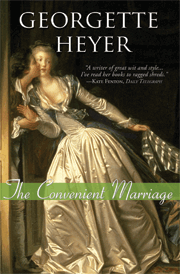
 The plot of the Convenient Marriage is different in so many ways from the typical Georgette Heyer novel. One is the tenderness with which the Earl of Rule treats his very young and captivating bride, and the second is that the couple has already tasted the delights of the marital bed and found the results not displeasing. The earl was all set to marry the eldest Winwood sister in an arranged marriage when her youngest sister Horatia “sacrifices” herself on the altar of sibling loyalty. Horatia’s older sister, Lizzie, is the Beauty of the family and in love with an impoverished soldier. Needless to say her family insists that she drop her soldier and marry the earl to save the family fortune. To help her sister out of her misery, Horatia sneaks off to see Rule and reasons (quite logically) that if the earl isn’t in love with her sister he might just as well marry her. The legal contract between the two families would not be altered with the switch in brides and he will still be assured that the future mother of his heir will have the appropriate pedigree. Struck by the simplicity of her argument and charmed with her slight stutter and forthrightness, the earl agrees to wed Horatia instead. Up to this point the book resembles more a 1930’s drawing room comedy than the typical historical romance novel we have come to expect from Georgette Heyer. One of her earlier books (1936) and set in the Georgian Era, the writing does not yet possess her command of the genre as she shows in later years, yet her descriptive style was already fully developed. In this instance, Heyer describes Georgian clothing with as much expertise as her knowledge of Regency garb:
It was naturally impossible for Horatia to visit a milliner without purchasing something on her own account, so when the flowers had been selected, she tried on a number of hats, and bought finally an enormous confection composed chiefly of stiff muslin in Trianon grey, which was labeled not without reason, “Grandes Pretentions.” There was a collet monte gauze scarf in the same delectable shade of grey, so she bought that as well. A cap a la glaneuse caught her eye as she was about to leave the shop, but she decided not to add that to her purchases, Lady Louisa having had the presence of mind to declare that it made her look rather prim.
The couple marry, they honeymoon, they return to London and live … not so happily after. It turns out that Horatia has fallen in love with her husband. Too unschooled in the ways of a man (for she is only seventeen) Horatia fails to realize that while she might not have her sister’s outer beauty, her intelligence, warmth, and charm are far more superior traits. Despite being short and possessing a pair of definite brows that stubbornly refuse to arch, she has bewitched her husband. With the earl so much older and secure in his own skin (he is thirty five), Horatia has a tough time interpreting his thoughts and actions and thus she fails to read the signs that he has fallen in love with her as well. And so begins a comedy of misinterpretations and errors on Horatia’s part, thinking Rule is in love with his mistress when in reality he has broken the relationship off. Horatia’s inept attempts to behave like a sophisticate and not interfere with Rule’s daily routine allows the earl’s nemesis, Robert Lethbridge, a foot through the door, and the plot begins to resemble Dangerous Liaisons. Lethbridge and Rule’s former mistress, Lady Massey, are hell bent on ruining our guileless heroine. Spoiled and bored, they team up for sport and to extract their revenge upon the earl. Horatia unknowingly falls into their clutches with her enthusiastic card playing, but Rule was not born yesterday and he can easily read his young wife’s transparent thoughts and actions.
The novel takes another twist and the reader now enters the realm of slapstick comedy, keystone cops and all. Horatia’s brother Pelham, an incompetent boob if ever there was one, enmeshes himself in Horatia’s affairs hoping to “save” her from ruining her reputation with Lethbridge, who has extracted a scandalous gambler’s promise from her. Pelham’s interference (and that of his equally inept friend), makes matters worse. Georgette Heyer often uses the ploy of a Greek chorus of family and acquaintances to enliven the action, and in this instance Pelham and his numskull friend do a splendid job of adding laughter and color to the plot. Added to the mix is a Dandy in the form of Mr. Drelincourt, the earl’s presumptive heir until Horatia conceives. He will do anything to separate the earl from his bride, but he fumbles and bumbles his way through life, acquiring the scorn of all.
As well as her talent for writing comedic scenes, Georgette’s casual observations about the Georgian Era are accurate and illuminating. Here she makes the distinction between a Macaroni and a Buck:
The Macaronis, mincing, simpering, sniffing at crystal scent-bottles, formed a startling contrast to the Bucks, the young sparks who, in defiance of their affected contemporaries, had flown to another extreme of fashion. No extravagance of costume distinguished these gentlemen, unless a studied slovenliness could be called such, and their amusements were of a violent nature, quite at variance with your true Macaroni’s notion of entertainment. These Bloods were to be found at any prize-fight, or cock-fight, and when these diversions palled could always while away an evening in masquerading abroad in the guise of footpads, to the terror of all honest townsfolk.
The book’s ending, though predictable, includes a rousing duel and is completely satisfying for the romantic at heart, with our Horatia recognizing that the earl has loved her for a long, long time and with the earl finally able to express his feelings for his young bride. Although thoroughly enjoyable, The Convenient Marriage is not one of Georgette Heyer’s best efforts. Having said that, I would read this book over 90% of the romances being published today. I give The Convenient Marriage four out of five Regency fans.
Click here to enter SourceBooks and to order the book.
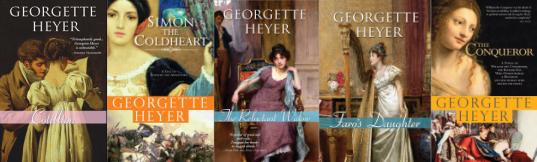
My Other Georgette Heyer Reviews Sit Below
 Out of three regency fans, I give this book four.
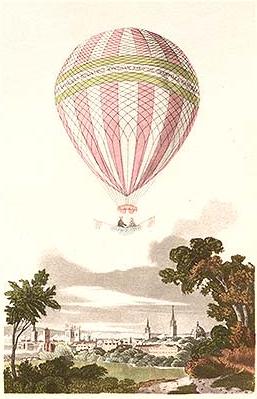 Heyer’s rich detail of life in London during the heyday of the Industrial Revolution sets this novel apart from the others. The book’s events occur after Beau Brummel’s gambling debts drove him to France in 1716-1817, the last year of Jane Austen’s life. This was a heady era of scientific discoveries and invention that changed the world forever. Through young Felix’s brilliant mind we see the wonders of the age unfold in the form of steam engines, scientific collections, and balloon travel. Sixteen-year-old Jessamy’s earnestness in studying to become a man of the cloth represents the burdens that befall a second son who knows he must make his own way in the world, but he is still boyish enough to get into trouble on occasion. And Harry, the eldest brother, set down from Oxford for his antics, is too frivolous to set a good example as heir. Under ordinary circumstances he is more than happy to leave the decision-making to Frederica. Under extraordinary circumstances he is more than likely to bungle events, including endorsing an ill-judged elopement.
 The plot of this book is simply delightful. Frederica’s “Baluchistan” hound and her two youngest brothers manage to wrap the reader around their paws and grubby fingers with very little effort. More importantly, the trio charms the marquis, whose ennui is legendary.
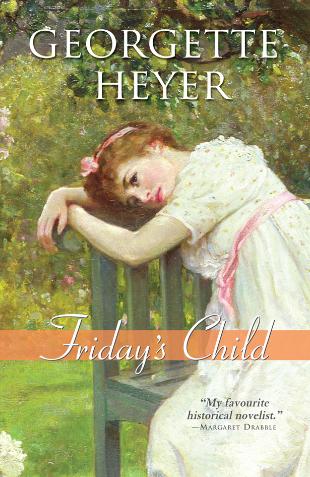 Inquiring reader: The January doldrums are upon us. The days are short, the weather is bleak, and it will be months before we can seriously garden again. What to do on a cold and wintry day? Why sit by the fire, of course, curled up with a good book, a pet warming one’s feet, a pot of hot chocolate at one’s disposal, and hours of entertainment in the form of romantic entanglements set in the regency era. To help you choose a good book, my elegant friend Lady Anne reviewed








 Jane Austen's World