By Brenda S. Cox
Last month, June 19-22, I had the joy of attending JASP, the Jane Austen Summer Program. I had only attended once before, during covid when it was online. That was fantastic, so I was delighted to finally get to go in person.
This year’s theme was Sensibility and Domesticity. The focus was on Sense and Sensibility (S&S), domestic arts, and trans-Atlantic connections between the young USA and Austen’s England.

Plenary Sessions
Plenary talks explored household books of the time; effects of the war on home life; “The Constitutional Safeguard of a Flannel Waistcoat”; and the Jane Austen Playlist, with a performance of songs connected to S&S.
In “Reading the Americas with Jane Austen,” Susan Allen Ford (author of What Jane Austen’s Characters Read And Why) explained what Austen would have learned about the Americas in books Austen is known to have read. For example, novelist Charlotte Turner Smith used her study of botany and travel writing to describe American scenery, as a teaching technique. In the introduction to her collection of tales, The Letters of a Solitary Wanderer, Smith argues that “young persons, who have no taste for any thing but narrative, may sometimes, by the local description of a Novel, learn what they would never have looked for in books of Geography or Natural History.” However, she presents Native Americans as savage and violent.
Anne Grant’s Memoirs of an American Lady, which Austen also read, gives a different perspective. It shows Native Americans as noble friends. Grant grew up in close contact with Mohawks, even learning to speak their language. Austen was able to get multiple perspectives on North America.
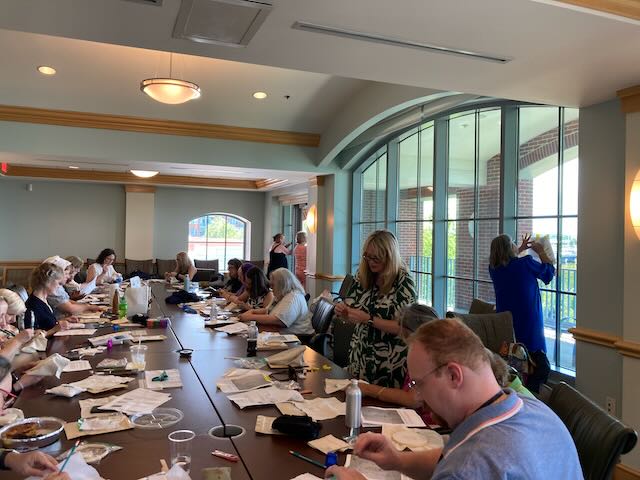
Jennie Batchelor, author of Jane Austen Embroidery, offered two fun embroidery workshops and a final plenary on “Transatlantic Domestic Arts in the Era of Jane Austen.” Jennie told us about resources used by women in England and America at the time, such as The Young Ladies School of Arts. That book gives instructions and receipts (recipes) for many kinds of ladies’ activities, from breeding canaries to gilding. It includes the technical, scientific knowledge needed for many of these skills. Fashionable boarding schools also taught such arts.
As one example, Sense and Sensibility mentions filigree work, which Lady Middleton expected Lucy to do at night by candlelight. Elinor kindly volunteered to assist Lucy. Filigree is quilling: cutting and rolling up small pieces of paper and fastening them onto a surface. This was quite fiddly, eye-straining work that Lucy was constrained to do in order to please her hostess.
Context Corners and Discussion Groups
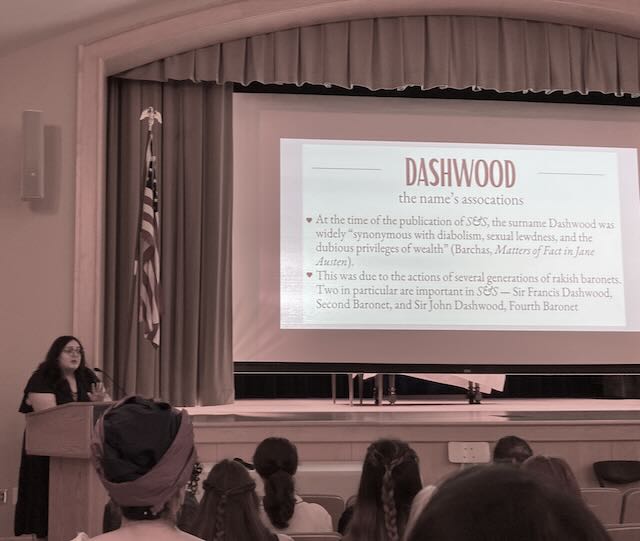
I was particularly looking forward to one special feature of JASP: context corners and discussion groups. Graduate students led four 15-minute sessions (“context corners”) discussing various aspects of Sense and Sensibility. Topics connected S&S with sensibility and sisters; inheritance law; the East Indies; and “Scandal and the Fallen Woman.” For that final topic, we considered when the “fallen woman” was considered morally corrupt and when she began to be considered as a victim of immoral men or capitalism. We also learned definitions of a “rake” and saw comparisons with real people, noting similarities between William, Lord Craven, and the fictional John Willoughby.
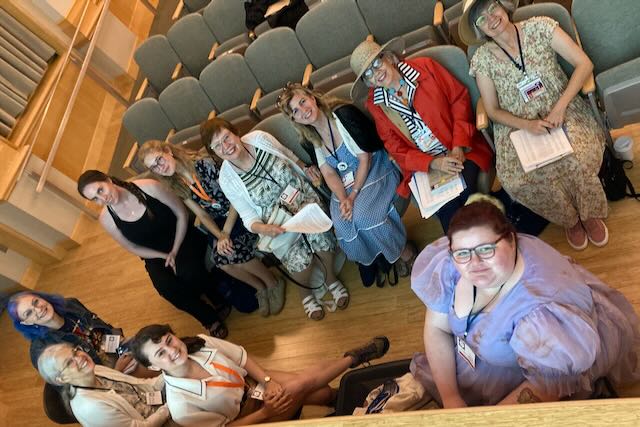
After each context corner talk, we split up into small groups named after places in S&S. Mine was Norland Park. Using lists of excellent discussion questions and quotes, we had far-ranging discussions which were great fun. We had 45-60 minutes per discussion, so we could really get into it and trade ideas, building off of each other’s insights.
Education was a major emphasis of the conference, and teachers had their own forums in addition to the regular events.
And More Delights
The rest of the time was filled with fun events, including:
- An opening banquet
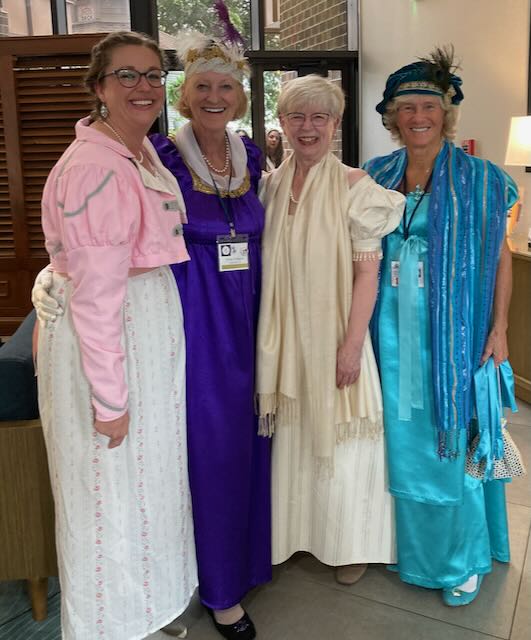
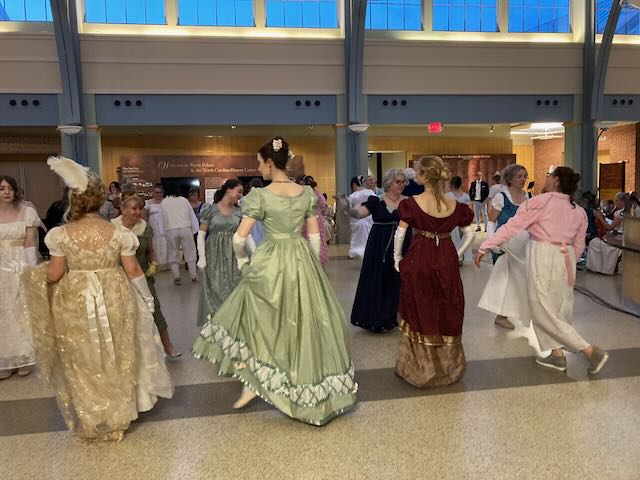
- Multiple fun dance practices with “Mr. Steplively” and a Saturday night Regency Ball, with Regency Games for those who preferred not to dance. (A nice touch was the availability of reasonably priced costumes for those who wanted to rent Regency gowns.)
- A theatrical evening, where we got to watch an original play connected S&S with Hamlet, and a screening of Sense and Sensibility: The Musical, a delightful take on the novel.
- An adaptations panel which included music and costumes used in film versions of S&S, and more.
- Optional tours
- An emporium selling Jane Austen Books along with other fun items, and a silent auction.
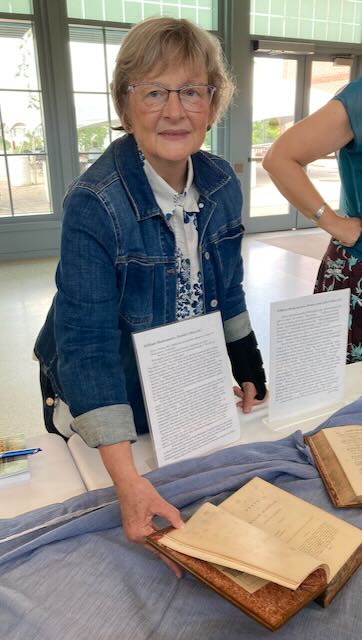
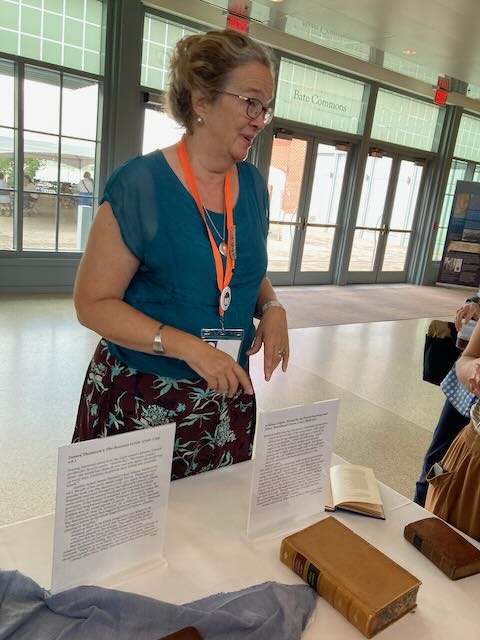
- A display of early editions of S&S and contemporary books by William Cowper, Sir Walter Scott, James Thomson, William Gilpin, and more.
Location, Location
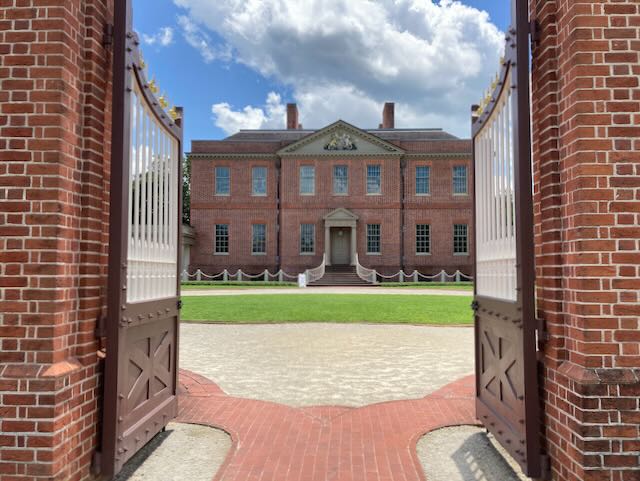
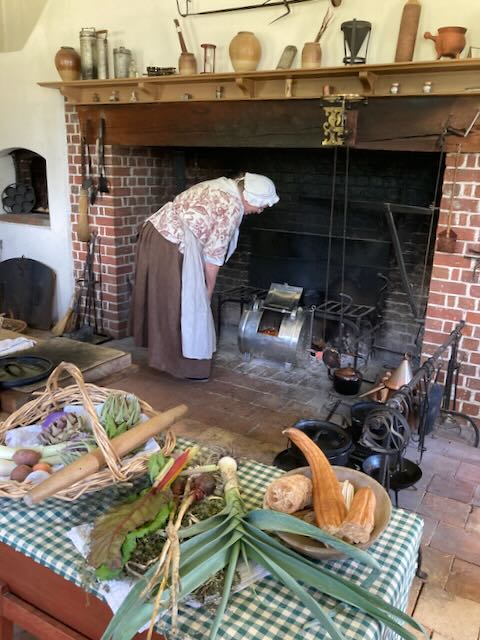
Past JASPs have been held at UNC-Chapel Hill. This year about 150 participants met in New Bern, a historic town near the coast in North Carolina. Waterside views were lovely, and we got to tour the beautiful Tryon Palace and its extensive grounds. Our sessions were held at the North Carolina History Museum nearby.
Next summer, JASP is moving to Seton Hill University in Greensburg, Pennsylvania. The topic will be Pride, Prejudice, and the Pursuit of Happiness. I’m hooked on this great program, and I hope to see some of you there!
(Note: All photos ©Brenda S. Cox, 2025, please ask permission before using.)
Brenda S. Cox is the author of Fashionable Goodness: Christianity in Jane Austen’s England. She also blogs at Faith, Science, Joy, and Jane Austen.







 Jane Austen's World