Feeds:
Posts
Comments

Posts Tagged ‘Regency Fashion’

Share/Bookmark// Find examples of Regency dresses and unmentionables in this extensive database by Démodé. The clothes featured in this link are from 1800 through 1830. Examples include corsets, bodices, shifts, underdresses, petticoats, day dresses, spencers, robes, etc, from collections around the world. These images are representative of the Démodé Regency collection.

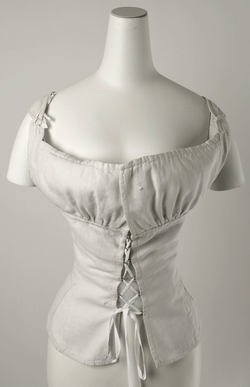
Corset, Metropolitan Museum, c. 1798-1810

1800 Muslin gown from the V & A Collection

Read Full Post »

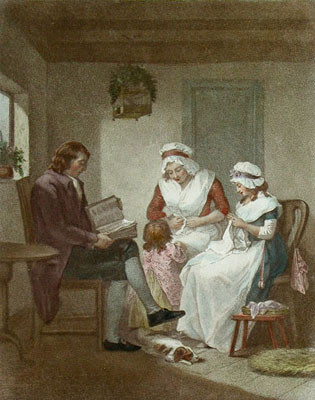
Domestic Happiness, after George Morland

We have come to associate the Regency period with fine white, high-waisted muslin dresses that were beautifully detailed and embroidered. Until quite recently in human history, a lady did not roam far from her sewing basket. She would mend, sew, and embroider whenever she had spare time. (Even the finest lady in the land could be found plying her needles.) During the day she would sit near a well lit window or even outdoors, and during the long evening hours she would sit by the fireside in a room with other family members, sharing the light from expensive candles (sometimes a single one). For entertainment, one of the men would read aloud from a book, or other family members would play musical instruments. Jane Austen was well known for her sewing skills and examples of her needlework are shown in the Jane Austen Museum in Chawton.
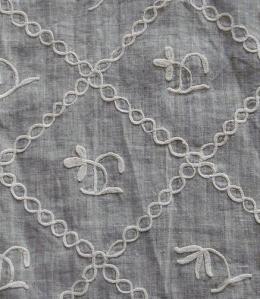
Diamond shaped pattern with a flower in the center

White work is a broad term, one that may be said to encompass any white-on-white needlework, that is, needlework that uses a white yarn or thread on a white ground to create a pattern. Various techniques are employed to make these patterns stand out in high relief against their monochrome background, with the result that many white work pieces have an intensely sculptural quality

All over the country, women carried their needlework with them on visits, and traded patterns among friends.

These techniques include embroidery, drawn work, pulled-fabric work, stump work, stuffed work, cording, quilting, candlewicking, and, later, weaving, both by draw loom and machine. – From Lap to Loom: The transition of Marseilles white work from hand to machine
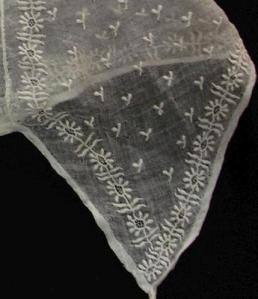
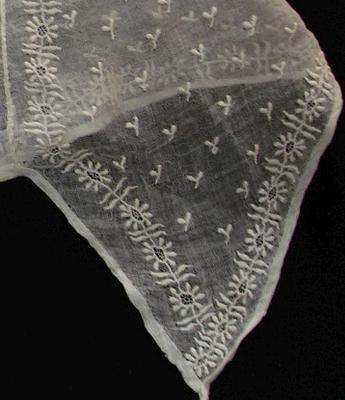
Detail of cap with twigs and flowers on a ladder motif

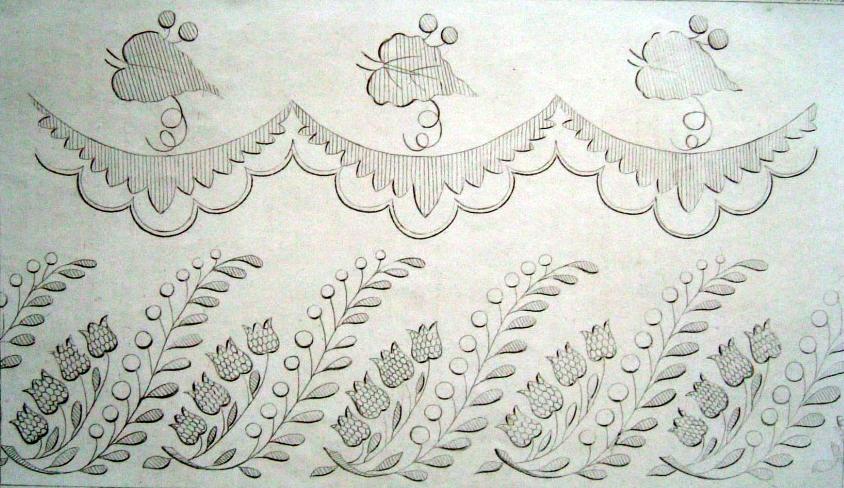
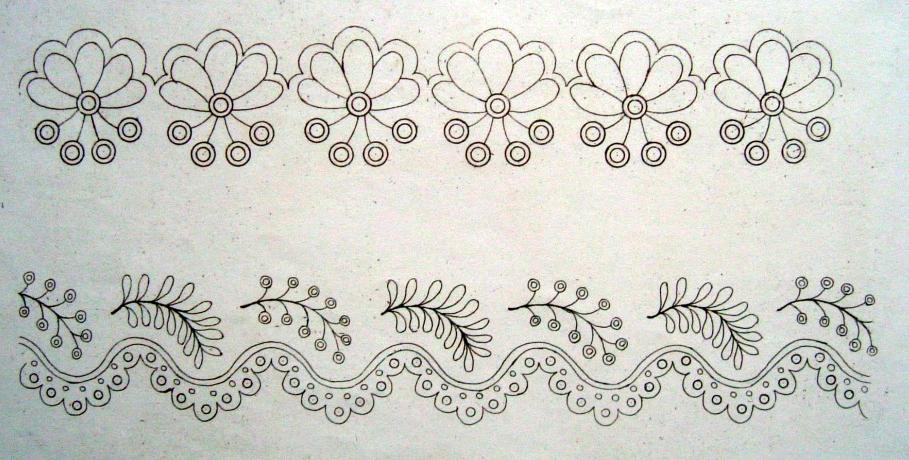
Whitework embroidery was frequently used on muslin dresses, fine lawn caps, handerkerchiefs, tablecloths, and bed linens. Patterns were featured in Ladies Periodicals, showing many different motifs, some fancier than others.
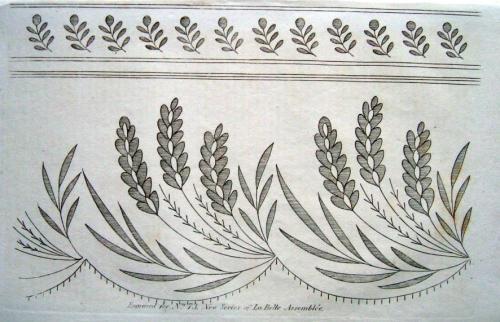
1815 La Belle Assemblee Wheat sheaf design

The finest whitework was done on cambric and fine muslin, or netting. This was called French embroidery, or French Hand Sewing. The most delicate threads and techniques were utilized to make gorgeous, lacy handkerchiefs, veils, bonnets, cuffs, collars and baby clothes, as well as gifts to very special friends…
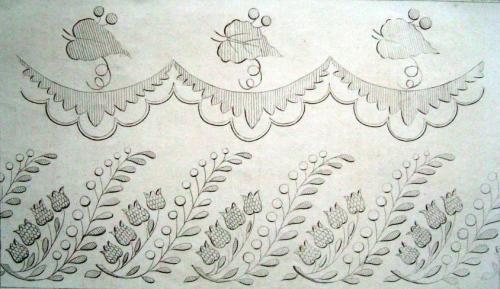
1823 Ackermann embroidery pattern

Christening gowns and robes of the time were very heavily embroidered and were most treasured by their owners. Lots of different patterns and stitches were used, with lots of feather stitching all over, leading to flowers made of satin stitch, eyelets, and buttonhole stitches so tiny as to be difficult to see, and almost all with matching bonnets and slips or petticoats. French knots decorated edges.
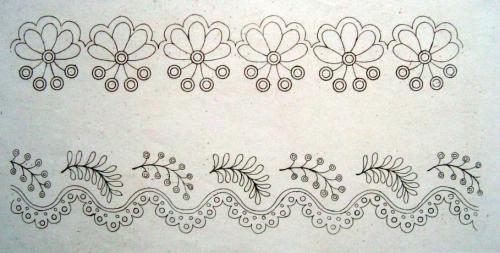
1825 Two simple muslin edging patterns

Wedding gowns, too, were embroidered with these techniques, and some of the grooms’ clothes, too, were embroidered to match! – Whitework embroidery

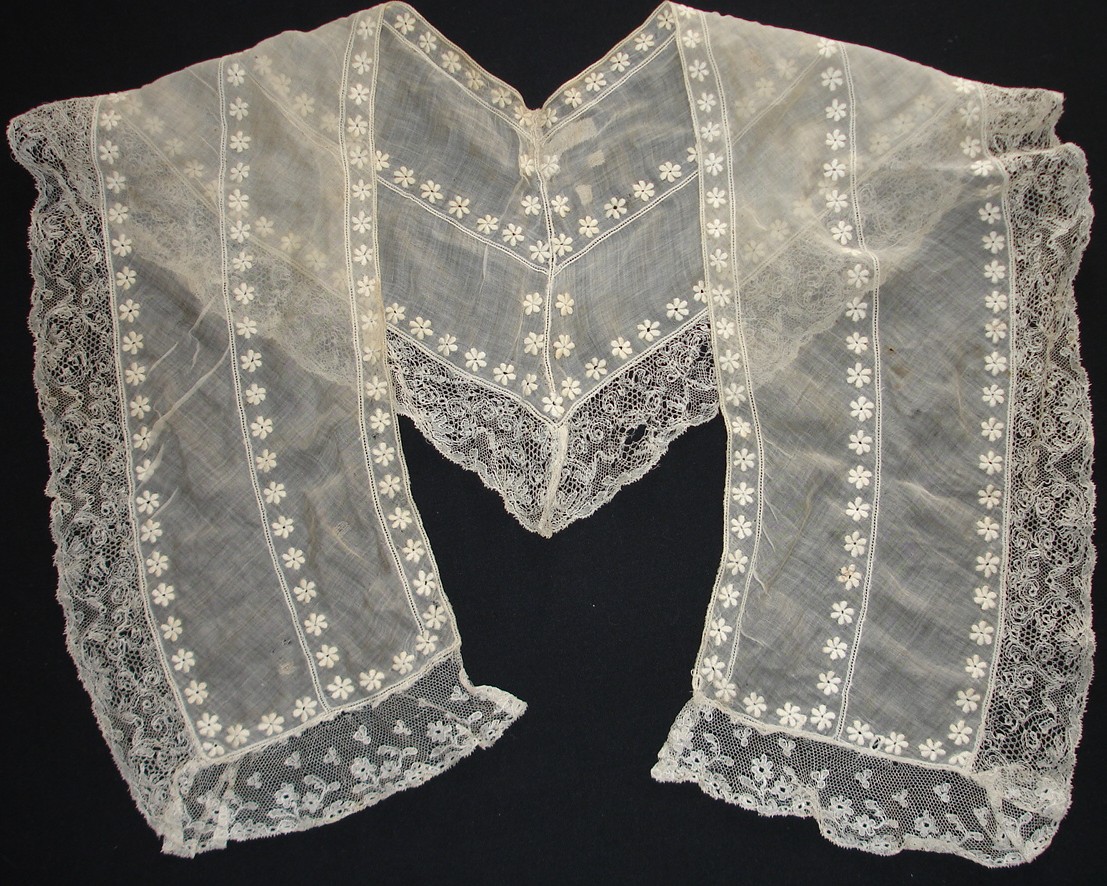
Embroidered collar with lace

More on the topic:
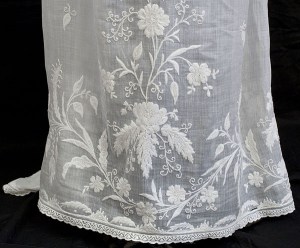
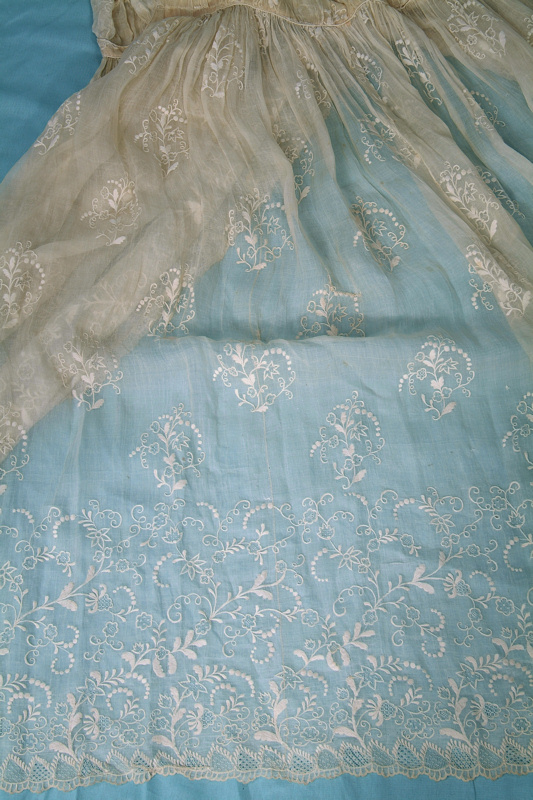
Detail of the hem of a muslin gown. Vintage Textiles.

Read Full Post »

IMDb has become an indispensable site for those of us who love movies. I especially love the trivia the site features about each film. Take Emma 2009, for example. Costumes that were recycled from other films are listed there. Let’s look at a few:

Johdi May's purple coat

The purple coat Jodhi May (Mrs. Weston) wears on market day in Highbury is the same costume Hattie Morahan (Elinor Dashwood) wears when she arrives at Barton Cottage in “Sense & Sensibility” (2008).

Elinor in purple pelisse

The dark Spencer worn by Louise Dylan (Harriet Smith) to visit the poor is the same costume Lucy Scott wears in “Pride and Prejudice”(1995).

Harriet Smith (Louise Dylan) in dark spencer

The off-white dress with floral embroidery on the bodice worn by Christina Cole (Mrs. Elton) for her big entrance in church is the same costume worn by Cesca Martin in “The Regency House Party” (2004) during her “engagement,” and by Natasha Little (Becky Sharp) at Park Lane in “Vanity Fair” (1998).

Christina Cole as Mrs. Elton, Her Entrance in Church

The gray gown with gold bow print worn by Tamsin Greig (Miss Bates) to Miss Taylor’s wedding is the same costume worn by Anna Massey (Aunt Norris) in “Mansfield Park” (1983), Phyllida Law (Mrs. Bates) in Emma (1996), Lindsay Duncan (Mrs. Price) when Fanny leaves home in Mansfield Park (1999), Janine Duvitski (Mrs. Meagles) in “Little Dorrit” (2008), and Linda Bassett (Mrs. Jennings) in London in “Sense & Sensibility” (2008).

Miss Bates in gray pelisse and Emma in a floral gown

The floral print dress worn by Romola Garai (Emma) to Miss Taylor’s wedding is the same costume worn by Dagmara Dominczyk (Mercedès Iguanada) for Edmond’s homecoming at the beginning of The Count of Monte Cristo (2002).

Johdi May in lilac floral colored wrap dress

The lilac colored floral wrap dress Jodhi May (Anne Taylor/Weston) wears at Hartfield is the same costume worn by Denise Black (Mrs.Brocklebank) in “To the Ends of the Earth” (2005), and Alex Kingston (Mrs.Bennet) in “Lost in Austen” (2008).

Wearing a floral waistcoat at the Cole's party, Jonny Lee Miller as Mr. Knightley

The blue floral waistcoat Jonny Lee Miller (Mr.Knightley) wears at the Coles’ party is the same costume worn by Joseph Beattie (Henry Crawford) in Mansfield Park (2007) (TV).

Henry and Mary Crawford

For more recycled fashion comparisons, go to this link.

Read Full Post »

Colin Firth wearing a reindeer jumper in Bridget Jones' Diary

The blog, Built on Facts, discusses Pride and Prejudice and Bridget Jones’s Diary in a post entitled: Metafiction and Self-Reference in Bridget Jones’ Diary

..not only is [Bridget Jones’ Diary] a retelling, it’s a retelling that’s very explicit about that fact. But that’s just the start; in fact Bridget meets him at a party wherein Mr. Darcy is standing around being standoffish, precisely as in Pride and Prejudice. And Bridget comments on this, pointing out to herself that if one is going to be named Darcy one shouldn’t be standing around standoffishly at parties.

More Intelligent Life dot Com features a long interview with Colin Firth about his movie, “A Single Man,” and his life and career. Quite insightful.

LOOK UP Firth’s name in a casting director’s address-book, and you’d find it under “a” for Archetypal Englishman. He has played the comedy version (the cuckolded, tongue-tied writer in “Love Actually”), the villainous version (a Blackadderish lord in “Shakespeare in Love”) and the subtle, smarter-than-he-first-appears version—decent Clifton, the young buffer who’s actually a spy, in “The English Patient”. Yet in reality Firth doesn’t have much time for England.

Both his major relationships have been with women from other countries—first the Canadian actress Meg Tilly, with whom he has a son, and now his wife Livia Guggioli, an Italian documentary producer and mother of his two younger children.

Trousseau features fashion from the 19th century through the early 20th century. This page shows gowns from 1801-1839. Clicking on a dress will lead you to a page; clicking on each image will lead you to an enlarged detail.

Detail of embroidered muslin dress, 1810-1814

Read Full Post »

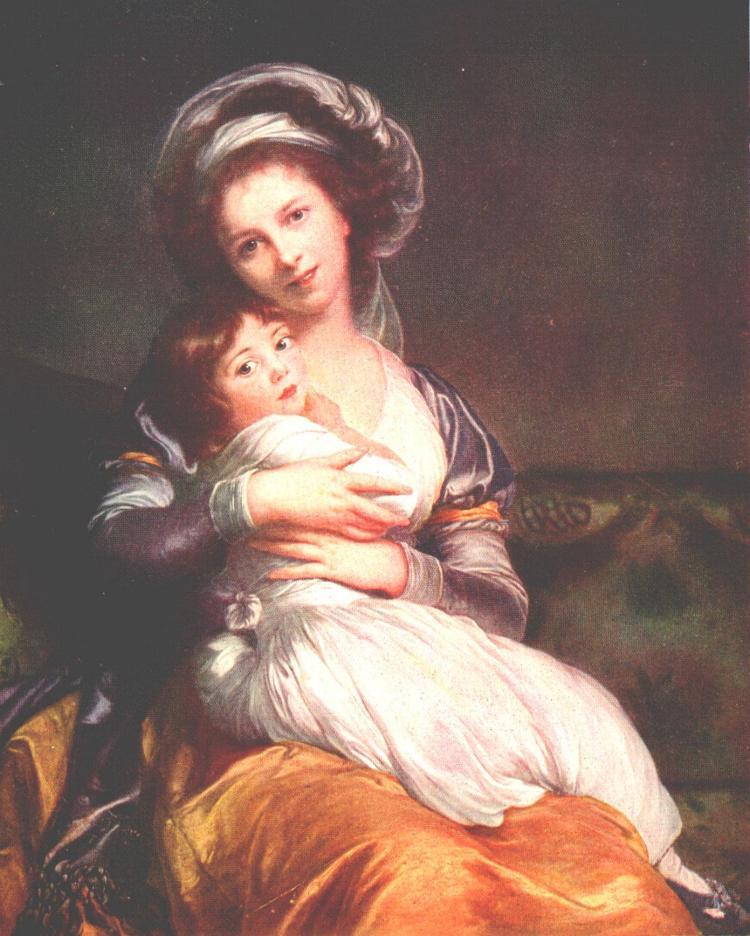
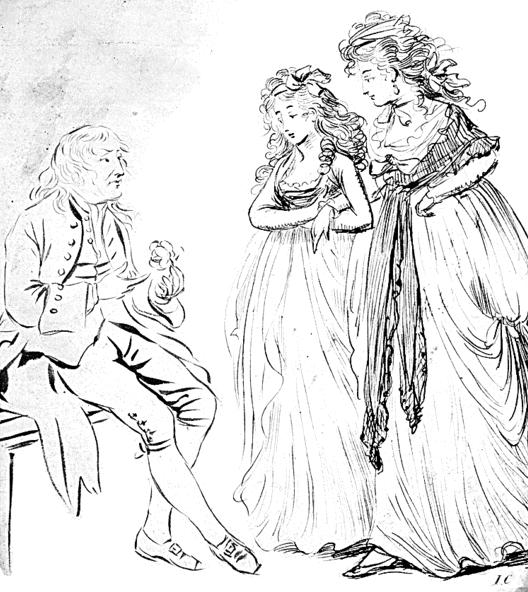
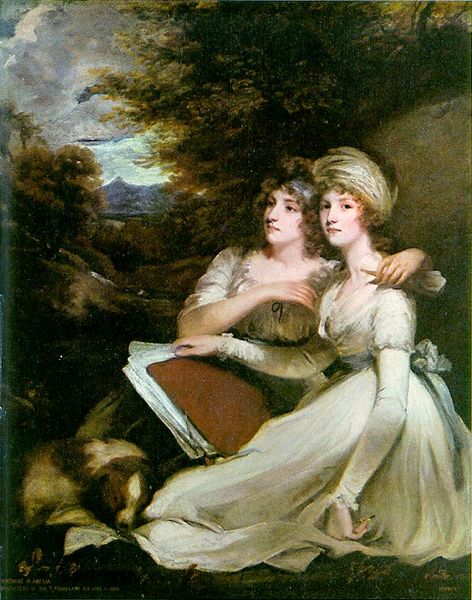
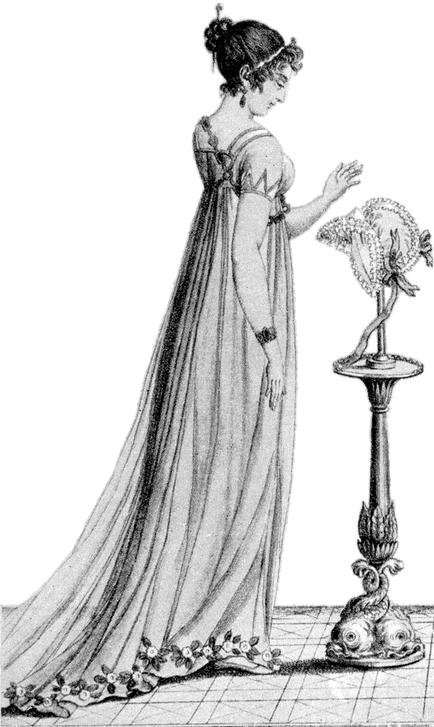
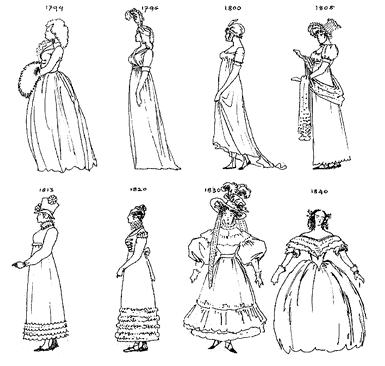
CassandraPretty Cassandra Austen, Jane Austen’s elder sister by two years, lived until the ripe age of 72 . This brief visual guide demonstrates how fashion changed during her lifetime. Wherever possible, I tried to represent Cassandra’s age and the clothes she would have worn during that period. I also used the paired women combination to evoke Cassandra and Jane, even in the years after Jane’s death. The last image shows the changes in the silhouettes of the gowns regarding waists, sleeves, skirts and trains.

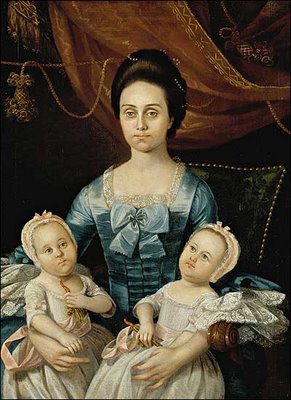
Mrs. Thomas Bolling with children, 1773. One can see the style of clothes baby Cassandra and Mrs. Austen would have worn after her birth.

Madame Vigee and child, 1780. Cassandra was seven and Jane had turned five, somewhat older than the child depicted in this painting.

Isaac Cruickshank Sketch 1790. Jane Austen would have been 15 and Cassandra 17 years of age. This image is NOT of the Austen sisters.

Jane Austen was 20 and Cassandra 22 when Hoppner painted this image of the Frankland sisters in 1795

Chemise dress, 1799. Lovely lines, but the trains so popular during these years must have collected dust and dirt.

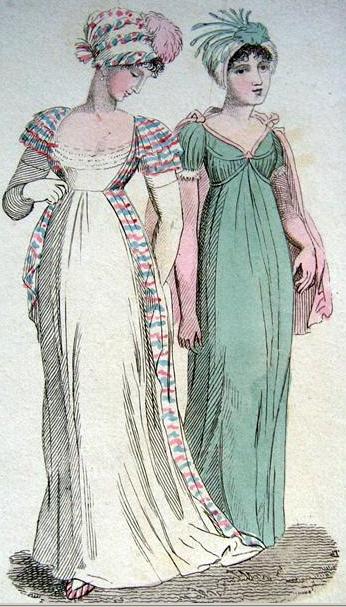
Afternoon dresses, Lady's Monthly Museum, 1802

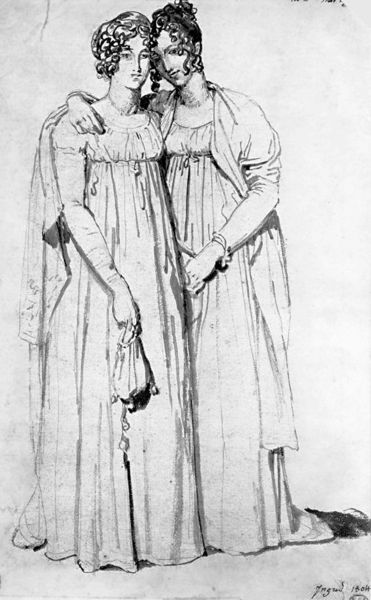
Ingres drew the Harvey sisters in 1804 when Jane was 29 and Cassandra had turned 31

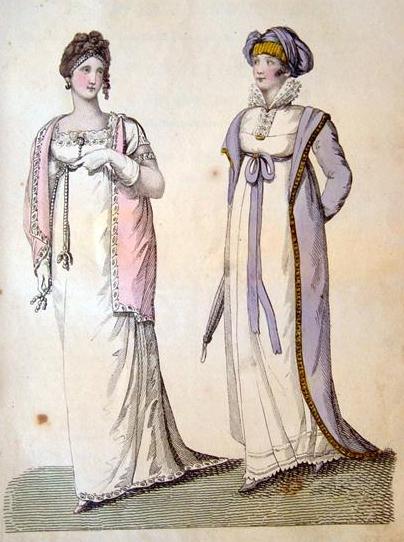
Belle Assemblee, English Costume 1807. Short trains are still fashionable.

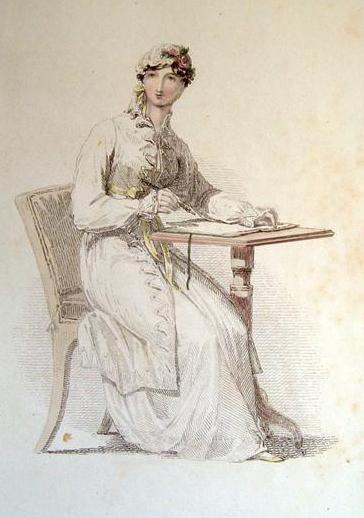
Regency morning dress 1813

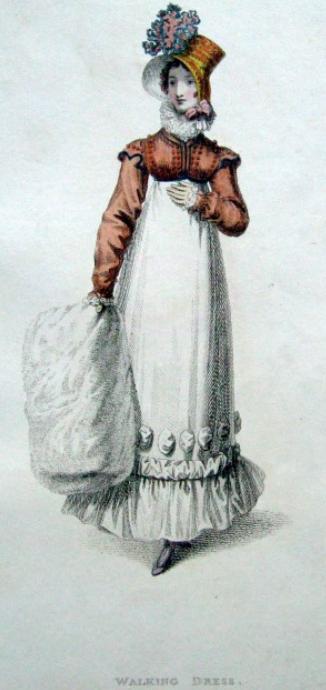
Walking dress 1817, the year Jane Austen died

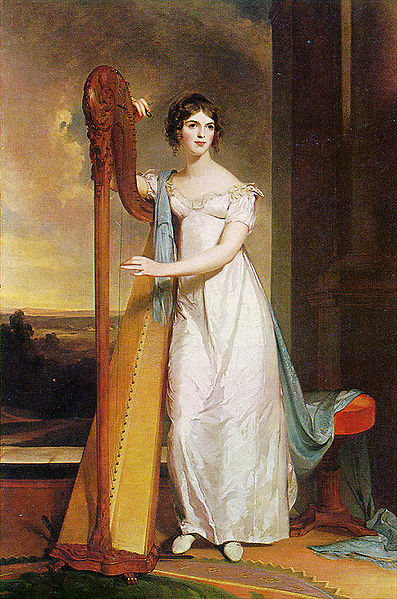
Eliza Ridgely painted by Sully, 1818.

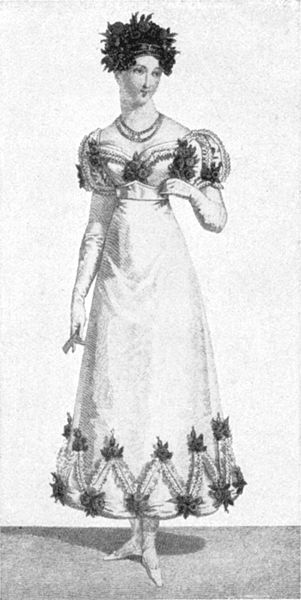
Ball gown, 1820. Notice the shorter dress length and the fancy hem.

Rust brown redingote, 1823

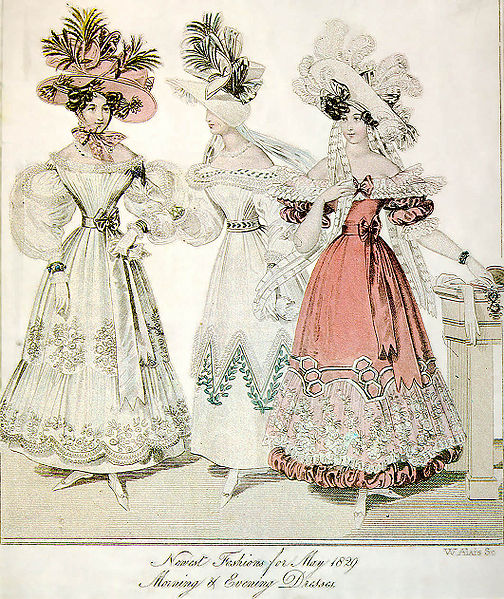
Morning and evening dresses in 1829. Notice how the elaborate hats and hairdos balance the large sleeves. The waistline is situated almost at its natural position and the hemlines reveal slippers and trim ankles.

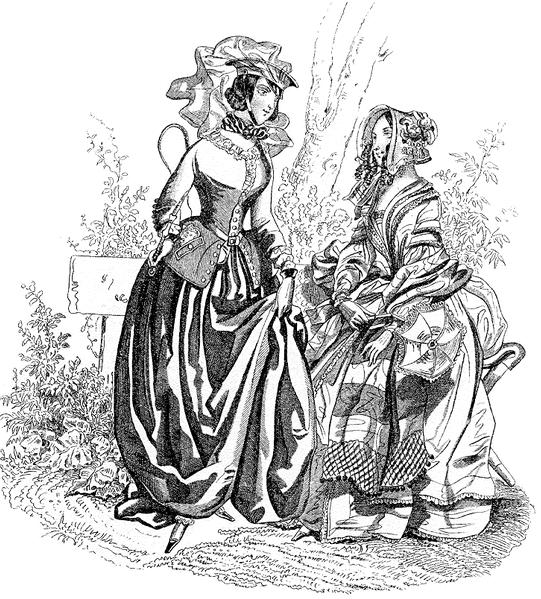
Riding Habit, 1842

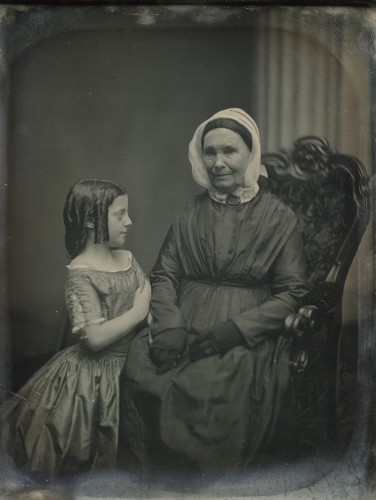
Would Cassandra have resembled this old woman in 1845, the year of her death?

Review of the changes in fashion silhouettes

More on the topic

Read Full Post »

« Newer Posts - Older Posts »