Feeds:
Posts
Comments

Posts Tagged ‘Regency Fashion’

Once upon a time children wore miniature versions of their parents’ clothing styles. Then, in 1780 or 1790, depending on the source you read, children began to be dressed differently, wearing fashions designed just for them.

Bowden Children, John Hoppner, late 18th c.

Bowden Children, John Hoppner, late 18th c.

Skeleton suit, Kate Greenaway

Skeleton suit, Kate Greenaway

Not that small boys, left to their own devices, would have worn high-waisted, ankle length trousers made of heavy cotton or linen and white cambric shirts with ruffled trim, but these “skeleton suits” as they were called were popular for at least fifty years. The pants had high waists, because they were buttoned onto the long sleeved jacket.

Although these long-sleeved, trousered suits were meant to be comfortable, they had three layers at the waist, not including underwear. Heaven knows how hot the boys must have felt in the summer or during active play! Or how quickly the white ruffed shirts soiled! Completing the outfit were white stocking, flat-soled strap slippers, and a military-style cap. The strapped slippers can best be seen in the 1841 fashion plate image at the bottom of this post.

Boy with cap

Boy with cap

A skeleton suit, one of those straight blue cloth cases in which small boys used to be confined before belts and tunics had come in … An ingenious contrivance for displaying the symmetry of a boy’s figure by fastening him into a very tight jacket, with an ornamental row of buttons over each shoulder and then buttoning his trousers over it so as to give his legs the appearance of being hooked on just under his arm pits. (Charles Dickens, Sketches by Boz, 1838-39.)

webmedia.php

Adding insult to injury, was the underwear that young boys wore under these layered clothes. This sample comes from the Manchester Art Gallery.

Detail of The Hoppner Children, 1791. Formal skeleton suit.

Detail of The Hoppner Children, 1791. Formal skeleton suit.

The smaller the boy, the more elaborately frilled the collar. Colors were generally light, with the most popular being blue or green. Sometimes the suits were made of scarlet or mustard as well. For more formal occasions, a colorful sash might be added and the trousers made of silk or velvet and trimmed with lace. A young man about to go to Eton would wear the larger Eton collar.

Detail of Fluyder Children, Sir Thomas Lawrence. Skeleton suit with sash

Detail of Fluyder Children, Sir Thomas Lawrence. Skeleton suit with sash

Detail, 1841 fashion plate

Detail, 1841 fashion plate

More Links:

Little Anne illustration, Kate Greenaway
Little Anne illustration, Kate Greenaway

Read Full Post »

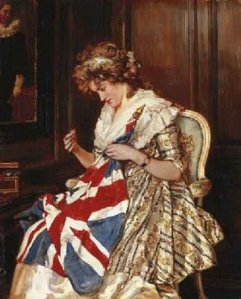
Sewing Victory, Talbot Hughes, 1900

Sewing Victory, Talbot Hughes, 1900

Talbot Hughes was a painter of romanticized genre and historical and landscape scenes who exhibited at the Royal Academy from the age of seventeen (1871) to 1903. For historical accuracy in his paintings he began to collect costumes from the 16th century to the 18th century. The collection was eventually displayed in 1913 at Harrod’s, and the clothes were afterward donated to the Victoria and Albert museum as a gift to the nation.

“The artist…has made the powder and patch era a special study, amassing wardrobes of sacques, flowered brocades, high-heeled mules, and full-bottomed wigs.” He dressed the models for his genre scenes in these clothes, styling hair and accessories to match, mor or less. His painting The Union Jack, for example, shows a ‘comely wench, with elaborately curled locks and a gold and white brocade sacque’. The neoclassical floral stripes of her silk jacket would seem to date from the late 1770’s, whilst her hairstyle and neckerchief are styled to the 1785-90 period. This painting was first shown at the Fine Art Society gallery in London in 1902. – Establishing Dress History, Lou Taylor, 2004,  p. 115.

What to Wear, Talbot Hughes

What to Wear, Talbot Hughes

This link leads to a fascinating site that describes the collection and includes turn of the century photographs of the costumes: Old English Costumes Selected from the Collection formed by Mr. Talbot Hughes A SEQUENCE OF FASHIONS THROUGH THE 18TH & 19TH CENTURIES Presented to the. VICTORIA& ALBERT MUSEUM, South Kensington, by HARRODS LTD. London S. W.  Descriptive notes were rewritten from “The Connoisseur,” November:

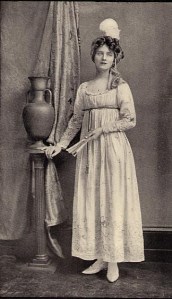
Empire style dress in embroidered muslin, 1800, Talbot Hughes Collection

Empire style dress in embroidered muslin, 1800, Talbot Hughes Collection

With the French Revolution an entire change of fashion took place, admirably shown by the costumes collected by Mr. Talbot Hughes. The elaborate splendour of the patch-and-powder period gave way to an extreme simplicity of dress in the classical style. The heavy brocaded and stiff flowered skirts were replaced by light gauzes and dainty muslins, which revealed the soft contours of the female form with a delightful and child-like grace. This lasted throughout the Empire period, and, indeed, for many years after Waterloo, until the crinoline came to put out the clinging draperies.

So startling was the change that in 1799 a Russian officer, accustomed at home to estimate the rank of a lady by the warmth of her clothing, offered a woman of fashion a penny in Bond Street, under the impression that, from her scantily clothed appearance, she must be a pauper.

Gold embroidered muslin dress, Talbot Hughes Collection

Gold embroidered muslin dress, Talbot Hughes Collection

There are some delightful specimens of this period in the Talbot Hughes collection – little, clinging frocks that must have fitted the ladies inside as closely as a glove, with low bodices and high waists, and with no room for a petticoat over the silk or cotton slip. Describing the fashion in Old Times, John Ashton writes: “I do not say that our English betters went to the extent of some of their French sisters of having their muslin dresses put on damp, and holding them tight to their figures till they dried, so as to absolutely mould them to their form, but their clothes were of the scantiest. As year succeeded year the fashion developed, if one can call diminution of clothing development.”

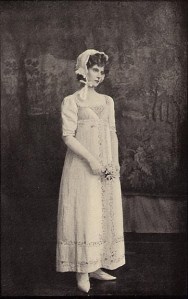
Muslin dress, 1810, Talbot Hughes Collection

Muslin dress, 1810, Talbot Hughes Collection

That was again the exaggeration of fashion among smart women of high society; but in the middle classes the period was chiefly noted for a charming simplicity. It was Jane Austen’s period, and, wandering among these costumes with Mr. Talbot Hughes, I was reminded again and again of the dear, delightful Jane.

Here is one of the “coquelicot,” or poppy-coloured sashes, which she so much favoured, and the cambric muslins which one reads of so often in her letters, as when she wrote:

“I shall want two new coloured gowns for the summer, for my pink one will not do more than clear me from Steventon. I shall not trouble you, however, to get more than one of them, and that is to be a plain brown cambric muslin for morning wear; the other, which is to be a very pretty yellow and white cloud, I mean to buy in Bath.”

The latest mode of the 18th century

The latest mode of the 18th century

Here are high-waisted gowns such as Jane Austen’s heroines wore when they “pinned up each other’s things for the dance,” and little white caps which saved Jane herself “a world of torment as to hairdressing,” and a cap of “satin and lace with a little white flower perking out of the left, ear, like Harriet Byron’s feather,” and the cloak, or pelisse, such as Jane wore when she went out for a walk in chilly weather, and the huge muff which is so characteristic, in pictures or the time.

The colours of these silks and cotton prints are delicate and “chaste,” as Jane’s young ladies would have said, but they must be described in the language of the time, which was somewhat fanciful.

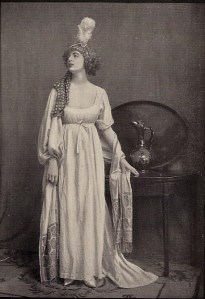
Muslin dress, 1795-1805, Talbot Hughes Collection

Muslin dress, 1795-1805, Talbot Hughes Collection

“One lady,” wrote Hannah More, “asked what was the newest colour. The other answered that the most truly fashionable silk was a soupcon de vert, lined with a soupir etouffé, et brodée de l’espérance. Now you must not consult your old-fashioned dictionary for the word espérance, for you will there find that it means nothing but hope, whereas espérance in the new language of the time means rose-buds.”

The middle-class ladies of this time were very cunning in their way of [retrimming] old materials with new adornments, and one is reminded of Jane Austen’s announcement:

“I have determined to trim my lilac sarsenet with lilac satin ribbon, just as my chine crape is. Sixpenny width at bottom, or fourpenny at top. Ribbon trimmings are all the fashion at Bath. With this addition it will be a very useful gown, happy to go anywhere.”

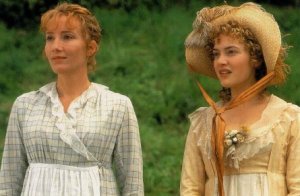
marianne_elinor_waitingThe photographs that accompany this 1913 article are especially interesting. Although the women were dressed as Regency ladies, they definitely have an early 19th century sensibility, made especially so by the hair, make-up, sets, and props. Compare and contrast our modern interpretation of regency fashion with these turn of the 20th century views. Generations from now, our images of that era will seem as dated as these nearly century old photographs.
Read Full Post »

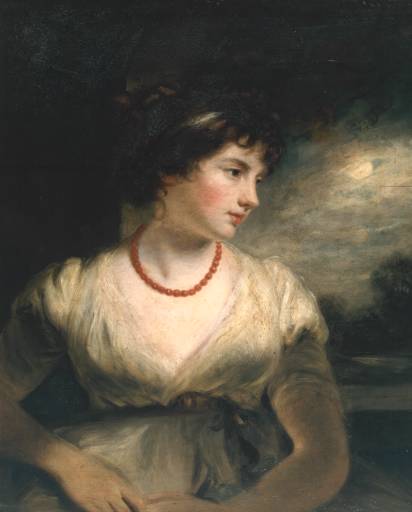
Lady Maria Hamilton, 1802, by Thomas Lawrence.

Lady Maria Hamilton, 1802, by Thomas Lawrence.

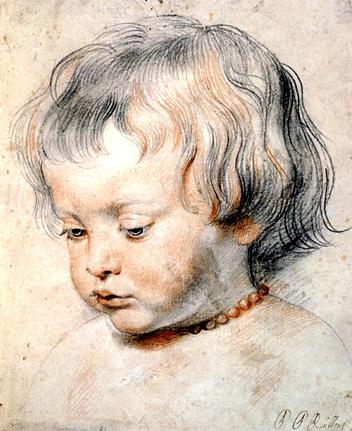
Inquiring Reader: You’ve probably seen the necklaces dozens of times without noticing them. I have. These beautiful single string coral necklaces worn by Regency ladies escaped my attention until my friend and blogging partner on Jane Austen Today, Laurel Ann of Austenprose, sent me some spectacular images, such as the one of Lady Maria Hamilton, who died in 1814 unmarried. Coral has enjoyed a long and ancient tradition, first worn as a talisman and later for its color and beauty. One of my favorite drawings by Peter Paul Rubens depicts his son with a coral necklace. At the time coral was thought to protect the wearer.

Nicolaas Rubens Wearing a Coral Necklace, Peter Paul Rubens, Red and black chalk heightened with white and some black ink on paper, c. 1619

Nicolaas Rubens Wearing a Coral Necklace, Peter Paul Rubens, Red and black chalk heightened with white and some black ink on paper, c. 1619

The tradition of giving children coral necklaces continued through the 19th century, as shown in this detail of a late 18th century John Hoppner painting of one of the Sackville girls. The gemstone was considered a guardian of sorts, protecting children from illnesses like stomachaches, fever, typhus, smallpox, and rickets. The mala beads were polished to a smooth sheen and matched in color. Bead sizes could be similar or gradated from small to larger stones that were strung in the center.

The Sackville Children, detail, John Hoppner, 1796

The Sackville Children, detail, John Hoppner, 1796

Handmade jewellery created during the late Georgian Era (1760-1837) is extremely hard to find today.  As styles changed, the pieces were remade rather than tossed out or sold. Until the latter part of the 18th century, coral was harvested from the sea largely by dredging. Fine quality red coral came from the Mediterranean – Algeria, France, Italy, Morocco, Spain, Tunisia and the islands of Corsica, Sardinia and Sicily, with some saying that the best corals came off the coasts of Algeria and Tunisia. Eighteenth century coral was a rich warm red and is unavailable today. In fact, original antique jewellery made with dark red coral is so difficult to find that it has become a highly prized collectible.

Jane Elizabeth, Countess of Oxford, John Hoppner, 1797

Jane Elizabeth, Countess of Oxford, John Hoppner, 1797

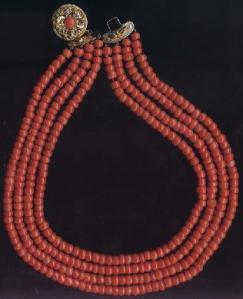
Early 19th century red coral necklace

Early 19th century red coral necklace

Simple round necklaces, like the one worn by the Countess of Oxford, were popular and complimented low necklines, but chokers were also fashionable, like the Georgian Cannetille Sardinian red coral four strand necklace on the left. Coral is made up of the skeletal material built up by small animals that live in slow growing colonies in the sea. Colors range from vivid orange, red, and white, to salmon and pale pink (called angelskin coral). In jewelry making coral is either carved into beads, cameos, and other forms, or is left in its natural branch-like form and simply polished. (My mother had such a necklace, which I played with as a child.) The most sought after color (and the rarest) is a deep red, as in the necklace at left.  Coral manufacturing during the Regency Period consisted primarily of filing beads of smoothed coral and stringing necklaces. Because coral consists of calcium carbonate, it is extremely sensitive to chemicals,  perfumes, and body acids. Like pearls, the necklaces must be washed with a damp cloth (no detergents) and restrung periodically.

Little boy placing a coral necklace on a dog's neck, Martin Drolling

Little boy placing a coral necklace on a dog's neck, Martin Drolling

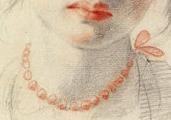
detail of Jacopo Vignali's Head of a Young Woman, 17th c

Many mystical and medicinal properties were attributed to coral, among them vitality, physical strength, stronger marital relationships, wealth, increased sensuality, and protection while out to sea. Coral was also used as a medicinal powder. Primitive physics believed that coral oxides mixed with honey made a person strong. Mix it with betel leaf and it made a potent cure for cough and heart disease. Coral powder is still a popular aphrodisiac in India today, which prompts avaricious collectors to dynamite coral reefs, putting fragile reefs in acute danger. In the detail of a 17th century drawing by Jacopo Vignali at right, one can easily see why this semi-precious stone was considered to have sensual qualities. The combination of the coral necklace and her full lips make the young woman look both fragile and seductive. Thank you, Laurel Ann, for introducing me to this fascinating topic! As you can see, I got a little carried away.

More information about corals can be found in these links:

Read Full Post »

Inquiring readers,

This fashion plate and accompanying description come from La Belle Assemblée Or, Bell’s Court Fashionable Magazine, August 1807, Volume III edition. The descriptions about dress are directly from the magazine. The publication featured quality engravings and advice about women’s fashions that became an essential part of the magazine, and also offered a special supplement of advertisements in the back that became a permanent record of commerce and fashion of the time. – A Magazine of Her Own, Margaret Beetham, p. 32. By the 1830’s, La Belle Assemblee, which had been such a force during the mid-18th to early 19th centuries, had merged with Lady’s Magazine before quietly dropping out of sight.

kensington-garden-dresses-1807-august

Text not available
La Belle Assemblée Or, Bell’s Court and Fashionable Magazine

We scarcely ever witnessed a period when taste and fashion were more perfectly in unison, nor any season when elegance and grace shone with such unrivalled fascination. Not only amidst the ranks of assemblies and opulence, but in those simple unobtrusive adornments appropriated to the intermediate station — in those chaste habits becoming such as move in a more domesticated sphere, have our fair country women exhibited testimonies of their advancement in taste and the graces of life.

The era is long since past when the daughters of our Isle condescended to turn copyists; and the females of a neighbouring kingdom are now happy to aid their exhausted inventions by adopting the correct graces of English style.

Frocks of coloured muslin or Italian crape with a painted border of shells in Mosaic worn over white sarsnet slip, are a new and elegant article; and French veils of coloured gauze forming at once the head dress and drapery are considered as most graceful ornaments. They are usually worn with a plain white sarsnet or muslin gown, with flowers or wreaths in front of the hair, placed towards the left side so as nearly obscure the eyebrow. La Belle Assemblée Or, Bell’s Court and Fashionable Magazine, 1807

Fronticepiece of the magazine

Fronticepiece of the magazine

Read Full Post »

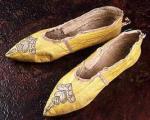
Slippers 1800

Slippers 1800

The Bata Shoe Museum’s website features a podcast about beautifully preserved dancing shoes from 1700. Last year, Regency Ramble offered a comprehensive post about shoes worn in the Regency Period. Additional information sits on Cathy Decker’s Regency Footwear Page that features a variety of links and images.

Read Full Post »

« Newer Posts - Older Posts »