Elizabeth continued her walk alone, crossing field after field at a quick pace, jumping over stiles and springing over puddles with impatient activity, and finding herself at last within view of the house, with weary ankles, dirty stockings, and a face glowing with the warmth of exercise. – Jane Austen, Pride and Prejudice, Chapter Six
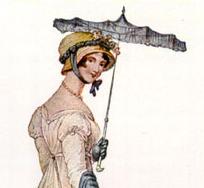 Exercise, cleanliness, and good skin care were as important in the 19th century as today. Back then a proper lady would not leave the house without covering her head with a bonnet, protecting her hands with gloves, and shading her skin with a parasol. Pale white skin had been highly prized for centuries, for it set a lady of quality apart from the working classes. Some women used dangerous cosmetics made of lead oxide to whiten their skin. These lotions, when used repeatedly, could lead to death or paralysis. It made more sense to follow a natural and safer regimen for preserving one’s looks:
“When the freshness of virgin youth vanishes; when Delia passes her teens, and fastly approaches her thirtieth year, she may then consider herself in the noon of the day, but the sun which shines so brightly on her beauties, declines while he displays them, and a few short years, and the jocund step, the airy habit, the sportive manner, all must pass away with the flight of Time. Before this happens, it would be well for her to remember that is is wise er to throw a shadow over her yet unimpaired charms, than to hold them in the light till they are seen to decay. (The Mirror of Graces, A Lady of Distinction, 1811, p 30)
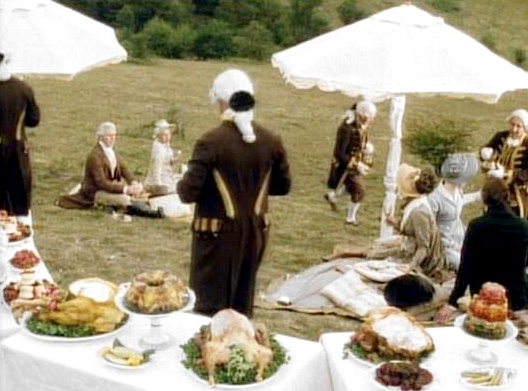 Such a shadow would be provided by a parasol, a canopy over a carriage, or an awning when eating out of doors. Exercise, while considered healthy, would have been performed in moderation. Daily walks were encouraged, but too vigorous an exertion was not deemed wise. A lady should not exercise to the point of sweating or turning her face red, as Elizabeth Bennet did when she walked three miles to Netherfield to be with her sick sister. In this regard, a Lady of Distinction noted:
The preservation of an agreeable complexion (which always presupposes health,) is not the most insignificant of exterior charms….The frequent and sudden changes from heat to cold, by abruptly exciting or repressing the regular secretions of the skin, roughen its texture, injure its hue, and often deform it with unseemly, though transitory, eruptions. All this is increased by the habit ladies have of exposing themselves unveiled, and frequently without bonnets, in the open air. The head and face have no defense against the attacks of the surrounding atmosphere, and the effects are obvious. (The Mirror of Graces, P 42)
Almost a century later, the Household Companion: The Home Book Of Etiquette, written by Alice A. Johnson, Mrs. Janet McKenzie Hill, and Dr. Henry HartShorne extolled a similar beauty regimen. In addition to protecting the skin from the sun and encouraging mild forms of exercise, the book also recommended adequate sleep. The authors quoted a charming old lady, who …
… revealed the secret of her fair and rosy complexion to a group of young women as follows : ” Late hours,” said she, ” and oversleeping ruin the complexion. Go to bed early, arise early, and you will grow old slowly, and retain your good looks to an advanced age. If, however, your position forces you into society and you are obliged to be up late at night, sleep an hour every afternoon. Before going to bed take a hot bath and remain in the water only a few moments. Then drink a cup of bouillon, and a small glass of Malaga wine. Sleep will soon follow, and last until the natural time of awakening, which is about ten o’clock in the morning under these circumstances. Take a cold plunge or sponge bath, a light breakfast of café au lait, and bread without any butter.” She continued: “Out-of-door exercise is an absolute necessity, but must not be carried to excess. A daily walk is excellent, and it is scarcely necessary to say that whole days of lawn tennis, croquet, etc., are not favorable to the complexion.”
One imagines that this elderly lady had heard these beauty tips from female friends and relatives who had lived during the early 19th century. Milky white skin remained a hallmark of beauty until the 1920s when Coco Chanel created a stir with the tan she acquired on the Duke of Westminster’s yacht.
- Make Your Own Regency Bonnet
- Regency Period Bonnet
- Looking Your Best in 1811
- Cathy Decker’s Regency Fashions: 1813 Walking Dress: 1st image
- 2nd image: picnic on Boxhill, Emma 1996









 Jane Austen's World