Feeds:
Posts
Comments

Archive for 2006

Sally Lunn’s House in Bath

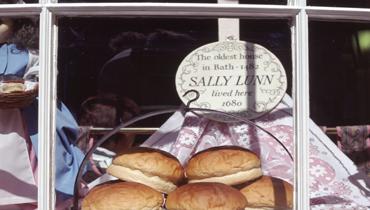
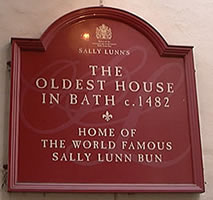
The oldest house in Bath is now know as Sally Lunn’s House, a picturesque building built in 1482 and located near Bath Abbey. The shop’s specialty for over 300 years has been the Sally Lunn Bun, a semi sweet bread made from brioche dough that tourists still purchase by the dozens to take home or eat on the spot in a small tea room setting.

Sally’s history may be more lore than fact. Some say she was a young French woman who lived in the late 17th century and sold bread on the street for a baker. Eventually she found work in a kitchen and began making a bun with sweet or savory toppings that became famous. Others say that the bun was originally created in France, while still others claim that Sally was English and the daughter of a local pastry chef.

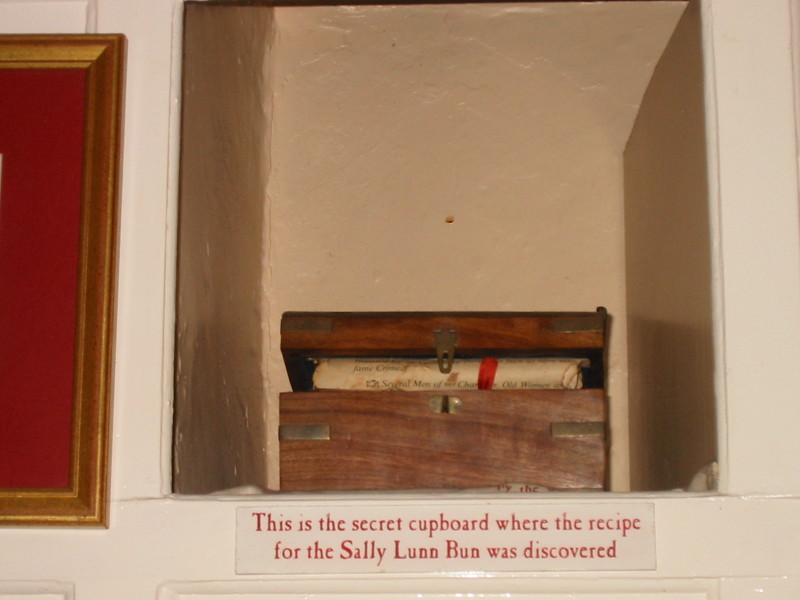
Whichever is the case, the shop, wildly popular during the Georgian Era and open for breakfast and tea, still attracts customers in droves. The orginal recipe of the Sally Lunn Bunn was discovered in the kitchen and was passed down along with the deed to the house.
Today’s visitors can visit the cellar to see the Roman foundations (c. 200 AD) and medieval kitchen (c. 1150 AD). The building itself was erected in 1482, and the stone facade added in 1720.

The following comes from the Sally Lund’s Museum in Bath, England:

“Legend has it that from her home in France, where the Protestant Huguenots were being cruelly persecuted, came young Sally Lunn to find employment with a baker who rented premises in Lilliput Alley. She sold his wares in the street, but when her skill at baking Brioche was discovered she no doubt spent for more time in the bakery itself. Sally Lunn’s Buns were a tremendous success; others tried hard to copy them, but her skill with the rich, soft and delicate dough inspired customers specifically to request the Sally Lunn. ”
Sally Lunn’s

4 North Parade PassageBath BA1 1NXTelephone: 01225 461 634

Read Full Post »


The Jane Austen novels available as podcasts or audio files on Librivox are:

Emma
Northanger Abbey
Pride and Prejudice

Books that are being taped:

Lady Susan
Mansfield Park
Persuasion
Sense and Sensibility

The completed audio books can be downloaded for free at this site: http://librivox.org/

The complete novels can be downloaded at two sites:

Project Gutenberg
Bibliomania

Read Full Post »

Decorative Arts


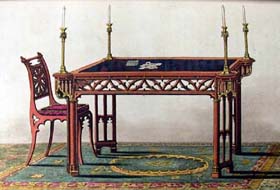
Prints and images of Gothic revival and design in late 18th Century to early 19th Century furniture and interiors reveal elaborate recreations of a bygone era. Many Georgian and Regency houses were crammed with furniture and artifacts similar to those represented in these pages.

Read Full Post »

Jane Austen and Bath


Jane Austen and Bath from Ellen Moody’s website leads to a fascinating article and photographs of the places in Bath Jane Austen visited or wrote about. Most of the photos were taken during the 1940’s or before.

Read Full Post »

Louis Simond, An American in Regency England, describes a meal with his host and hostess as thus:

“The master and mistress of the house sit at each end of the table–narrower and longer than the French tables–the mistress at the upper end–and the places near her are the places of honour. There are commonly two courses and a dessert. I shall venture to give a sketch of a moderate dinner for ten or twelve persons. Although contemporary readers may laugh, I flatter myself it may prove interesting in future ages.”

First course (not in order)
Oyster Sauce, Fish, Fowls, Soup, Vegetables, Roasted or Boiled Beef, Spinage, Bacon, Vegetables

Second Course (not in order)
Creams, Ragout a la Francoise, Pastry, Cream, Cauliflowers, Game, Celery, Macaroni, Pastry.

Dessert (not in order)
Walnuts, Raisins and Almonds, Apples, Cakes, Pears, Raisins and Almonds, Oranges

“Soon after dinner the ladies retire, the mistress of the house rising first, while the men remain standing. left alone, they resume their seats, evidently more at ease, and the conversation takes a different turn–less reserved–and either graver, or more licentious.”

Click on more links to food in the Regency Era:
Historic Food Links
The Food Timeline
Food and Drink in Regency England
The Art of Cookery
History of Tea in Britain

About the Art of Cookery: ‘The Art of Cookery’, written by Hannah Glasse, was published in 1747. It was a best seller for over a hundred years, and made Glasse one of the best-known cookery writers of the eighteenth century. As Glasse explains in the preface, the book was intended to be an instruction manual for servants – ‘the lower sort’ as she called them. During the 1700s there was a fashion for books of this kind, which were designed to save the lady of the house from the tedious duty of instructing her kitchen maids.”

Read Full Post »

« Newer Posts - Older Posts »