- A recent and personal account written by Lori Smith follows Jane Austen’s footsteps. Her A Walk With Jane Austen will be available in early October. Beautifully written, the book is worth the wait. You may pre-order the book at amazon.com.
Archive for August, 2007
In the Footsteps of Jane Austen
Posted in Book review, Travel on August 26, 2007| Leave a Comment »
The Dairy Maid and the Master of Uppark
Posted in jane austen, Jane Austen's World, Regency Life, Regency style, Regency World, Servants, tagged Dairy, Dairy Maid, Regency Servants, Sir Harry Featherstonhaugh, Uppark on August 26, 2007| 2 Comments »
 During Jane Austen’s time, the British adhered to a strict class system, but every once in a while (and much like a fantastic plot in a romance novel), a titled gentleman would marry a servant. According to the National Trust,
 Sir Harry Fetherstonhaugh… lived a prodigal life at Uppark entertaining lavishly and included the Prince Regent among his frequent guests. In 1810, however, he withdrew from society and devoted his attentions to discussing improvements to the house and grounds with Humphry Repton. At the age of over 70 he took the extraordinary step of marrying his dairy maid, and left the entire estate to her on his death in 1846. She, in turn, left it to her unmarried sister and together they made provision for the estate to pass, after the life tenancy of a neighbour, to the second surviving son of another friend and neighbour, the fourth Earl of Clanwilliam, on the condition that he should assume the name of Fetherstonhaugh.
 The dairy at Uppark, Sussex (above) designed by Humphry Repton. When Sir Harry passed by one day... he heard the dairymaid’s assistant, Mary Ann Bullock, singing. Sir Harry presented himself and asked for her hand in marriage. Mary Ann Bullock, aged twenty-one, was sent to Paris to be educated before being married to Sir Harry in September 1825. (Household Management, National Trust, p 30. ISBN 0-7078-0241-5)
How is this tale connected to Jane Austen and her world? By the merest thread. In Mansfield Park, Mr. Rushworth discusses changes for Sotherton Court after he had toured Compton, where he had viewed the improvements of the grounds by Humphry Repton. This short scene illustrates “the popular and expensive trend of improving one’s grounds to give the appearance of wealth both outside and inside the country home.” (Kerrie Savage, JASNA)
Another Idealized Image of Jane?
Posted in Uncategorized, tagged Jane Austen's portrait on August 25, 2007|

Online Texts and Journals, University of Pennsylvania
In closely viewing this rendering, I sense a “Victorian” influence around the lips and eyes. I am going on nothing more than my gut instinct and background in art.
On Becoming a Gentleman: Lord Chesterfield’s Letters to his Son
Posted in Uncategorized, tagged Regency Manners on August 25, 2007|
Next to good-breeding is genteel manners and carriage, and the best method to acquire these is through a knowledge of dance. Now to acquire a graceful air, you must attend to your dancing; no one can either sit, stand or walk well, unless he dances well. And in learning to dance, be particularly attentive to the motion of your arms for a stiffness in the wrist will make any man look awkward. If a man walks well, presents himself well in company, wears his hat well, moves his head properly, and his arms gracefully, it is almost all that is necessary.
One can imagine that Mr. Darcy’s and Mr. Bingley’s deportment and good breeding in Pride and Prejudice reflected the etiquette and manners described by Lord Chesterfield in his letters to his sons dating from 1737. Although Samuel Johnson derided these letters for teaching “the morals of a whore and the manners of a dancing-master,” their collections were published and became well known during the late 18th and early 19th centuries.
 Influenced by his own neglect as a child, Lord Chesterfield began to write the letters to Philip, his illegitimate son by a Dutch governess, when the boy was only five years old. When Philip turned twenty-five, Lord Chesterfield’s godson (another Philip) was born. Lord Chesterfield continued to send advice to this boy as well. Though quite illuminating about a father’s expectations of his son’s deportment, these letters were private and were never meant to be read publicly. (Bartleby.com) However, Lord Chesterfield’s advice remains fascinating, and much of what he related in them still holds true today. Regardless of what one might think of the information contained therein, the letters provide a fascinating insight into the manners and etiquette of the a gentleman in the 18th century:
Many people lose a great deal of their time by laziness; they loll and yawn in a great chair, tell themselves that they have not time to begin anything then, and that it will do as well another time. This is a most unfortunate disposition, and the greatest obstruction to both knowledge and business. At your age, you have no right nor claim to laziness; I have, if I please, being emeritus. You are but just listed in the world, and must be active, diligent, indefatigable. If ever you propose commanding with dignity, you must serve up to it with diligence. Never put off till tomorrow what you can do to-day.
Read the letters and about Lord Chesterfield in the following links:
- Letters To His Son On The Art Of Becoming A Man Of The World And A Gentleman, 1750, written by Chesterfield, Philip Dormer Stanhope, Earl of, 1694-1773
Prinny’s Carlton House Set
Posted in jane austen, Jane Austen's World, Regency Life, Regency style, Regency World, tagged Carlton House, Carlton House Set, Prinny, The Prince Regent on August 23, 2007|
 I’ve written posts about the Prince Regent and his lavish lifestyle before. Click here, here and here to read a few of them. The Prince’s association with Jane Austen is minor but crucial: He admired her novels, and she dedicated Emma to him.
The conventional wisdom is that Austen tried to squirm out of the tribute to the Prince. Was it “incumbent on [her] to shew her sense of the Honour” by dedicating her forthcoming novel to His Royal Highness? she asked Clarke. “It is certainly not incumbent on you” to do so, he responded, “but if you wish to do the Regent that honour either now or at any future period, I am happy to send you that permission which need not require any more trouble or solicitation on your Part” (16 November 1815). – Colleen A. Sheehan, Jane Austen Society of North America
Aside from his admiration of Jane Austen, this extravagant, dissolute prince was known for sponsoring major building and park projects that transformed London, including the renovations of Carlton House in London and the sumptuous Pavilion at Brighton. Both were designed in the neoclassical and Gothic styles we’ve come to associate with the Regency era’s furnishings, fashion, and architecture.
Carlton House, sumptuously decorated in the height of fashionable Francophile taste in line with the prince’s Whig sympathies by the important architect Henry Holland (1745–1806), was the setting for a series of the extravagant parties which the prince so loved to give, culminating in the famous Carlton House fete in 1811 on his appointment as Regent. The dazzled Thomas Moore wrote to his mother about this fete, detailing the delights of the indoor fountain and the artificial brook that ran down the centre of the table, and concluding, ‘Nothing was ever half so magnificent. It was in reality all that they try to imitate in the gorgeous scenery of the theatre’ (quoted in Hibbert, 1973, p.371). (A Prince at Seaside, Learning Space)
 (Image from Old London Maps)
You can view some of the rooms at Carlton Hose, such as the crimson drawing room, in this link to Decorative Arts and Design History in this link.


Blue Closet, Carlton House, The Royal Collection
The Prince Regent’s friends were also known as the ‘Carlton House Set.’ Read a detailed description of the Prinny’s high roller friends in this link: The Prince Regent and His Set from the Georgian Index.
 From left to right depicted are the Earl of Sefton, The Duke of Devonshire, Lord Manners, “Poodle” Byng, Byng’s poodle (name unknown), and the Duke of Beaufort.
Post script: Today is the one-year anniversary of this blog! Since early April of this year, over 20,000 of you have dropped by to visit, and I want to thank you for your support.
-
Join 7,218 other subscribers
-
2025 AGM in Baltimore
-

-
Items of Interest
Blog Stats
- 18,542,297 hits
- Follow Jane Austen's World on WordPress.com
-
RECOMMENDED BOOKS AND RESOURCES
-
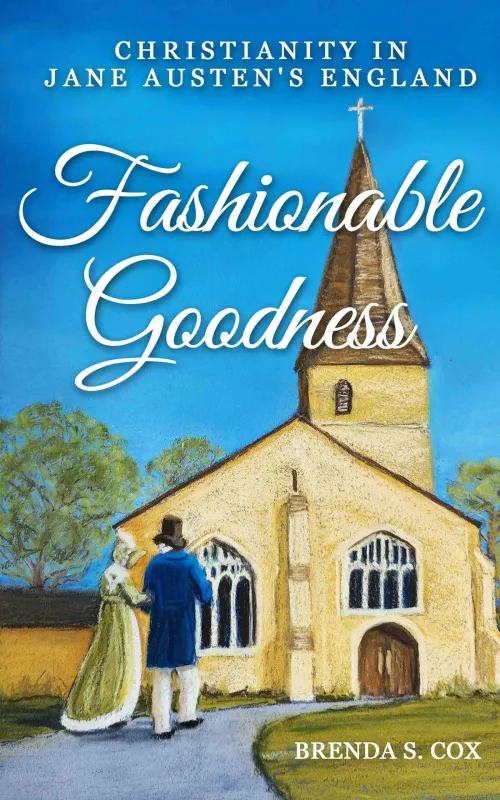
Fashionable Goodness: Christianity in Jane Austen's England is now available! By JAW contributor Brenda S. Cox. See Review. Available from Amazon and Jane Austen Books. 
We also recommend JAW contributor Rachel Dodge's devotionals based on Jane Austen's prayers and classic literature. Reviews:
Praying With Jane: 31 Days Through the Prayers of Jane Austen
The Anne of Green Gables DevotionalThe Little Women Devotional
The Secret Garden Devotional
The Tour of Doctor Syntax. Edited by Ben Wiebracht. Read the review of the book at this link. Click to order the book on Amazon US or Amazon UK or Jane Austen Books FREE Student Membership to JASNA
Available through December 31st, 2025. Click on image for details, and share this poster with other teachers and students!

The Obituary of Charlotte Collins by Andrew Capes

Click on image to read the story.
Comments
“My idea of good company…is the company of clever, well-informed people, who have a great deal of conversation.” – Jane Austen, Persuasion

Gentle readers: Please feel free to post your comments and continue the conversation! Due to SPAM, we will no longer accept comments on posts after 30 days of publication. In some instances, links will be removed from comments as well.
Administrators and Contributors
Pin It!

Top Posts
-
Recent Posts
Links to Jane Austen Blogs
May we suggest?
Hello, my name is Vic and I live in Maryland, USA. I have adored Jane Austen almost all of my life. I am a proud lifetime member of the Jane Austen Society of North America. This blog is a personal blog written and edited by me and my team. We do not accept any form of cash advertising, sponsorship, or paid topic insertions. However, we do accept and keep books and CDs to review.
If you would like to share a new site, or point out an error, please email us. (Yes, we are fallible. We'll own up to our mistakes and will make the corrections with a polite smile on our faces.) Write us at

Thank you for visiting this blog. Your comments and suggestions are most welcome.
Project Gutenberg: eBook of Stage-coach and Mail in Days of Yore, Volume 2 (of 2), by Charles G. Harper
STAGE-COACH AND MAIL IN DAYS OF YORE: A PICTURESQUE HISTORY
OF THE COACHING AGE, VOL. II, By CHARLES G. HARPER. 1903. Click on this link.
Top Posts & Pages
- Regency Fashion: Men's Breeches, Pantaloons, and Trousers
- Men's hair styles at the turn of the 19th century
- Regency Hygiene: The Bourdaloue
- Pictorial History of Regency Hairstyles
- Highclere Castle Floor Plan: The Real Downton Abbey
- Cheapside, The Gardiners, and Pride and Prejudice
- George Austen as a Father
- Moving in Jane Austen's Day
- Regency “Privy” Matters: Feminine Hygiene, Bodily Functions, and Childbirth
- The heaving Regency bosom, or was it? Some facts laid bare.
Tour Chawton Cottage on YouTube
-
Disclaimer: Our team makes no profit from this blog. We may receive books (physical or digitized) for review purposes.
-
Copyright Statement: © Jane Austen's World blog, 2009-2024. Unauthorized use and/or duplication of this material without express and written permission from this blog’s author and/or owners is strictly prohibited. Excerpts and links may be used, provided that full and clear credit is given to Jane Austen's World with appropriate and specific direction to the original content.




 Jane Austen's World