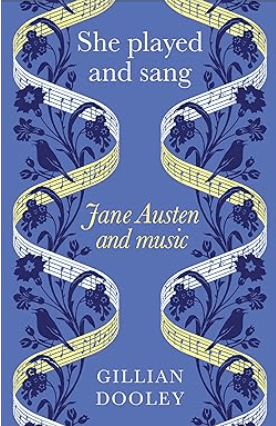
 In the introduction, author Gillian Dooley reveals her primary reason for writing a book about music in Austen’s life – that of exploring the “rhetorical link between writing and making music, especially given the musicality of her prose” (P 3). This statement reveals the book’s direction. She quotes Robert K. Wallace in Jane Austen and Mozart:
“the classical and neoclassical value of balance, equilibrium, proportion, symmetry, clarity, restraint, wit, and elegance that are typical of Austen’s novels and of Mozart’s piano concertos are typical as well of the music that Austen played on her square piano” – P 3
In pages 4-8, Dooley describes the connection between music and Austen’s writing with examples in her novels, such as Sense and Sensibility and Mansfield Park. Mind you, we are still in the introduction, which is rich with information.
The Jane Austen music manuscripts

Screen shot of an online search
These manuscripts consist of more than 500 separate playable pieces of eighteen albums, which can be found on the Internet Archive. Four of the surviving music books contain manuscripts in Austen’s hand (P 24). Dooley discusses the “160 or so” pieces of music that she meticulously copied by hand (listed in Appendix 2). These most likely represented the memorable music that meant more to her than the other pieces she played and sung as well.
The section that describes the Austen family music collection includes a wider range of musical tastes. When the Austens moved from Steventon to Bath in 1801, they brought along with them a large music collection, although there is no record of its details. Of the eighteen albums that we now know of, it was determined that seven belonged to Austen, and that the remaining 11 albums belonged to the extended family (P 87). Dooley mentions their names, including Eliza née Hancock, who married Henry Austen; Elizabeth Bridges, who married Edward Austen Knight; Louisa and Cassandra Austen Knight, Edward’s youngest daughters, and more.
Movie music vs. Austen’s preferences
I’ve tried over the years to find if the music played in the films based on Austen’s novels represent her actual taste in music, or the music popular in her time. Much to my chagrin, my feeble attempts took time, and I suspect that I still got much of the information wrong. So I embarked on a quick search in Dooley’s book.
I’ve long favored the earthy music and folksy ballads included in Emma 2020, which spoke to my heart. Was my instinct correct about these folk pieces’ connection to Austen’s musical tastes? Dooley provides some important insights.
One question I had was about Haydn’s and Mozart’s influence in her repertoire. Dooley mentions Haydn:
“In the later decades of the eighteenth century Franz Joseph Haydn (1732–1809) was far better known in London than Mozart. Adjacent to the Mozart duet in Austen’s album are three of Haydn’s English canzonets, in a hand which has been attributed to Elizabeth Austen, née Bridges, Edward’s wife. It is very similar indeed to Austen’s own handwriting … the presence of these songs, even if copied in Elizabeth’s handwriting, in Austen’s manuscript book indicates that she knew them and perhaps sang them.”
While Austen knew of Haydn, she was fond of the composer Ignaz Pleyel, who was his student, and she had a number of Pleyel’s pieces. As an aside, Dooley mentioned that Mozart’s music played a minor role (P 43) in her collection of music, which surprised me.

Over the years, Austen’s letters indicated that she shared musical information with friends and family, and that she planned to play country dances for her young relatives, some of whom recalled her singing for the family years later. She did not perform for company or in public, (PP 70-71). It was said that she had a fine singing voice.
“Most of the English nursery rhymes among the manuscripts are unattributed and the only one which uses the tune familiar today is ‘Dickory, dickory dock’. They appear towards the middle of the book and were probably copied by Austen to sing for the amusement of her young nieces and nephews” (P 64).
On a personal note, I favor songs, old or modern, that tell a story. Austen, it appears, recorded many such songs, such as Irish and Scottish folk songs. One song mentioned by Dooley was familiar to Austen, but was not recorded in her manuscript. Still, ‘Anna’ is representative of her tastes:
“ ‘Anna: A favorite Scotch song with variations for the piano forte composed by J. L. Dussek’. The Dussek variations are not to be found in any of her surviving music books. This Scottish folk song, which is more usually titled ‘Shepherds I have lost my love’, was well known at the time, appearing in musical arrangements by several other composers including Joseph Haydn and Ignaz Pleyel. Austen would have been familiar with the tune – she had a copy of an arrangement for [a] piano duet by Thomas Billington in one of her composite volumes of printed music. The song lyrics are not included in the Dussek and Billington versions, but Austen might still have known them.
Shepherds, I have lost my love;
Have you seen my Anna?
Pride of ev’ry shady grove,
Upon the banks of Banna!
I for her my home forsook,
Near yon misty mountain;
Left my flock, my pipe, my crook,
Greenwood shade, and fountain.
Never shall I see them more
Until her returning;
All the joys of life are o’er,
From gladness chang’d to mourning.
Whither is my charmer flown?
Shepherds, tell me whither?
Ah! Woe for me, perhaps she’s gone
For ever and for ever. – P 74
This story melts my heart. I grew up loving folk songs and this one is right up my alley. You can listen to it in the YouTube video below. The fact that the song has some connection to Austen makes it even sweeter for me.
But what of the waltz? Was it not introduced during Austen’s time? Did she not mention it? Indeed she did, but here’s the rub – Dooley explains that the waltz was controversial, even considered scandalous in some quarters:
“Those whose opposing opinions were recorded were either the jealous lovers of the female partners in a waltz who felt that the dance allowed other men to take liberties, or the authors of advice manuals for young women. The very fact that these opinions were voiced suggests that the waltz was already common and the opposition was therefore not universal at all … it is implied that the ‘irresistible waltz’ played by Mrs Weston in Emma (Volume II, Chapter 8) accompanied a ‘longways country dance set in waltz time, not waltzing in pairs’, which would have been more controversial. There are several waltz tunes from the 1790s in the ‘Juvenile songs and lessons’ album, but it seems likely that they were played to accompany country dances rather than the ‘turning waltz’ that was not widely danced in England until late in Austen’s lifetime.” – P 51
Poignantly, Dooley includes Caroline Austen’s memory of her Aunt Jane’s last four songs when “she had nearly left off singing” (P 229).
The book’s final pages (starting at P 235) includes a bibliography, two appendices, notes, and an index. Appendix Two covers an annotated list of manuscripts in Austen’s hand (PP 238 – 292). Information contained at the end is quite extensive and provides a wealth of information.
In my estimation, this book is a keeper and will be kept on my shelf of reference materials. It’s an interesting read, but, more importantly, it fills a gap in our knowledge of the music Austen loved, copied, and sang. Dooley brought to mind how important reading out loud was to Austen and the people of her time, and how important music was in an era when family and local musicians provided wonderful entertainments for their families and communities.
More on the topic
- Music and Class in Jane Austen » JASNA (https://jasna.org/publications-2/persuasions-online/volume-38-no-3/doolley-moffat-wiltshire/)
- Jane Austen’s Music: https://sites.google.com/site/janeaustensmusic/home
Publisher : Manchester University Press (March 5, 2024)
Language : English
Hardcover : 344 pages
ISBN-10 : 1526170108
ISBN-13 : 978-1526170101







 Jane Austen's World
Sounds like a lovely and informative book.
denise
The waltz was based on a folk dance called the Landler which went from servants to the nobility. Its progress was slower in England in the 18th century. As to Jane’s shunning Mozart, she couldn’t reveal her real knowledge or preference for fine music as it would have placed her in the demi-monde categorie.
Thanks for the review. I have been following Gillian Dooley for a while as I find period music fascinating and adds a whole new perspective to the understanding of an era. I’ve been looking forward for this book to come out, and I appreciate your review of it. Thanks