Feeds:
Posts
Comments

Archive for the ‘Austenesque novels’ Category

Drawing tonight for two Georgette Heyer books. Leave a comment at this link on Why I Love Georgette Heyer. Congratulations winners, Jan and Ginger, chosen through Random Number Generator! Thank you all for making a comment!

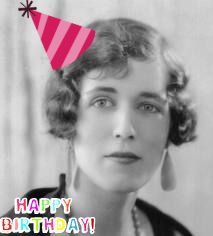
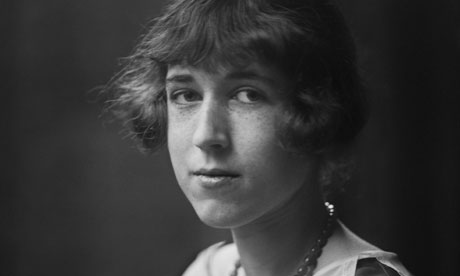
Georgette Heyer in 1923, when she was 21 and lived in Ridgway Place. She had already written The Black Moth for her sick brother Boris.

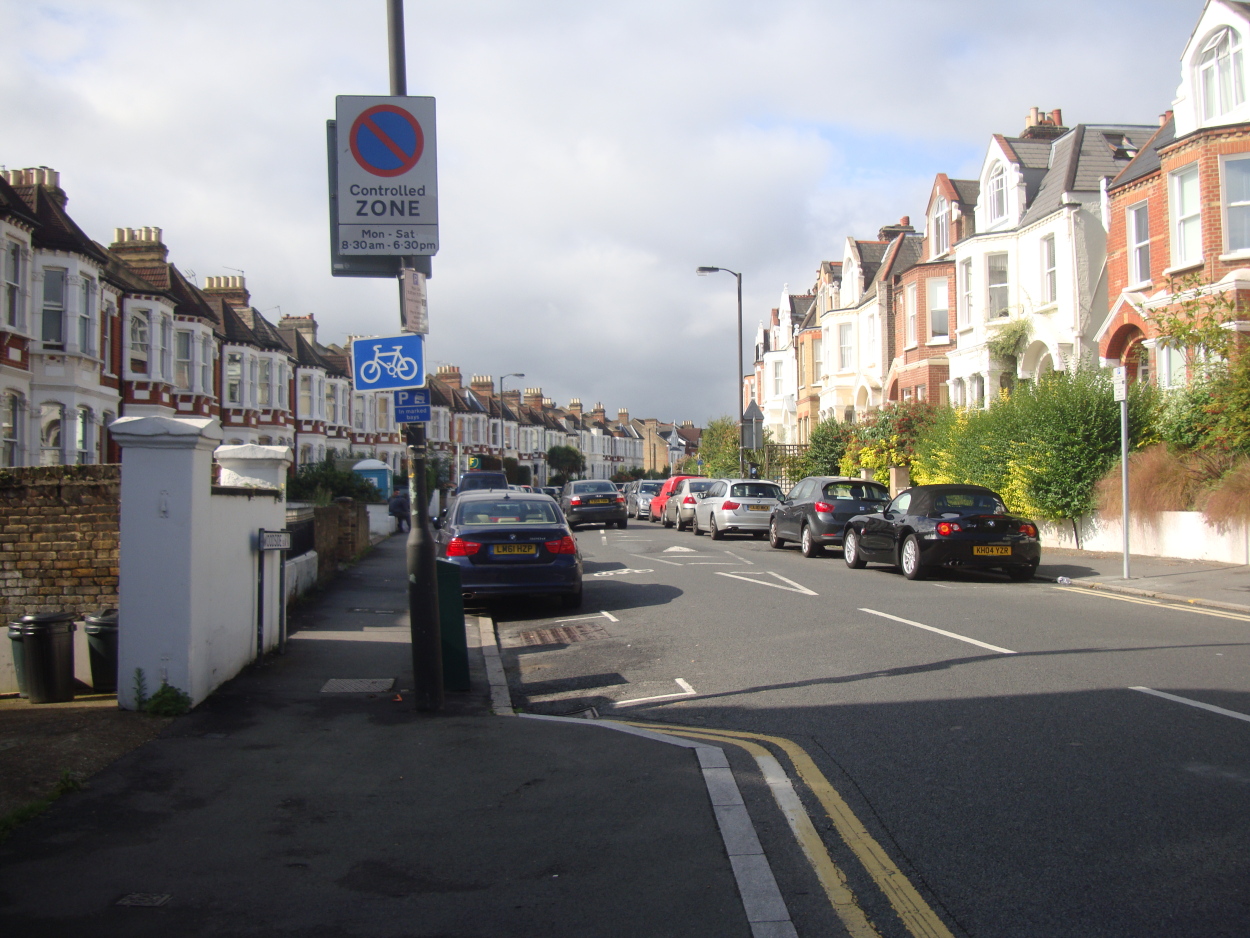
Georgette Heyer was born 110 years ago (August 16, 1902) at 103 Woodside, a mere 500 yards from Wimbledon Library. She was named after her father George, a descendant of a Russian fur merchant who had immigrated to England during the mid-19th century. The family lived at Woodside from 1902 to 1906 before moving to 1 Courthope Road. Georgette’s family lived in several houses in Wimbledon, all middle class, all close to each other.

Tony Grant, who lives in Wimbledon and took the images of her childhood homes and neighborhood for this post, speculates that “Maybe her  father and mother  rented rather than bought. That might not sound  strange to  you  but it is  rare  for us. We generally buy our  houses [and] don’t move  that often.”

Georgette Heyer’s birthplace. Image @Tony Grant

Another view of her birthplace

He adds an interesting tidbit:  “People here don’t really appreciate her that much. They tend to think she was always trying to give them a history lesson. Things they knew anyway…But I can see how someone who  wanted to immerse themselves in the period would love her.”

Woodside, Wimbledon

Georgette Heyer came from a respectable background. She and her family lived  at various addresses in Wimbledon: 103 Woodside (1902-6), 1 Courthope Road (c.1907-9), 11 Homefield Road (1918) and 5 Ridgway Place (1923–5).

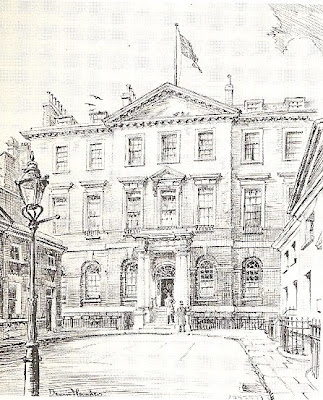
The Albany, Mayfair

She was married to George Ronald Rougier CBE QC, a mining engineer who later became a shopkeeper and then a barrister. For 24 years the couple lived in a rented space in Albany House in Mayfair, London, a swanky area where so many of her upper crust characters shopped and danced and found romance. They had one son, Richard. Georgette experienced great success during her lifetime, receiving excellent reviews and seeing the sales of her novels increase yearly. Almost 40 years after her death in 1974, her novels, especially her Regency romances, remain in print.
While Georgette was aware of the popularity of her Regency romances, she was unhappy that her more serious historical novels were not similarly embraced. On August 16th of this year, Tony reports that the Wimbledon Library will have no events to  remember her by. “I feel  quite sad now”, he added, “[She] probably needs a 150th anniversary to  get a mention!”

Read Full Post »

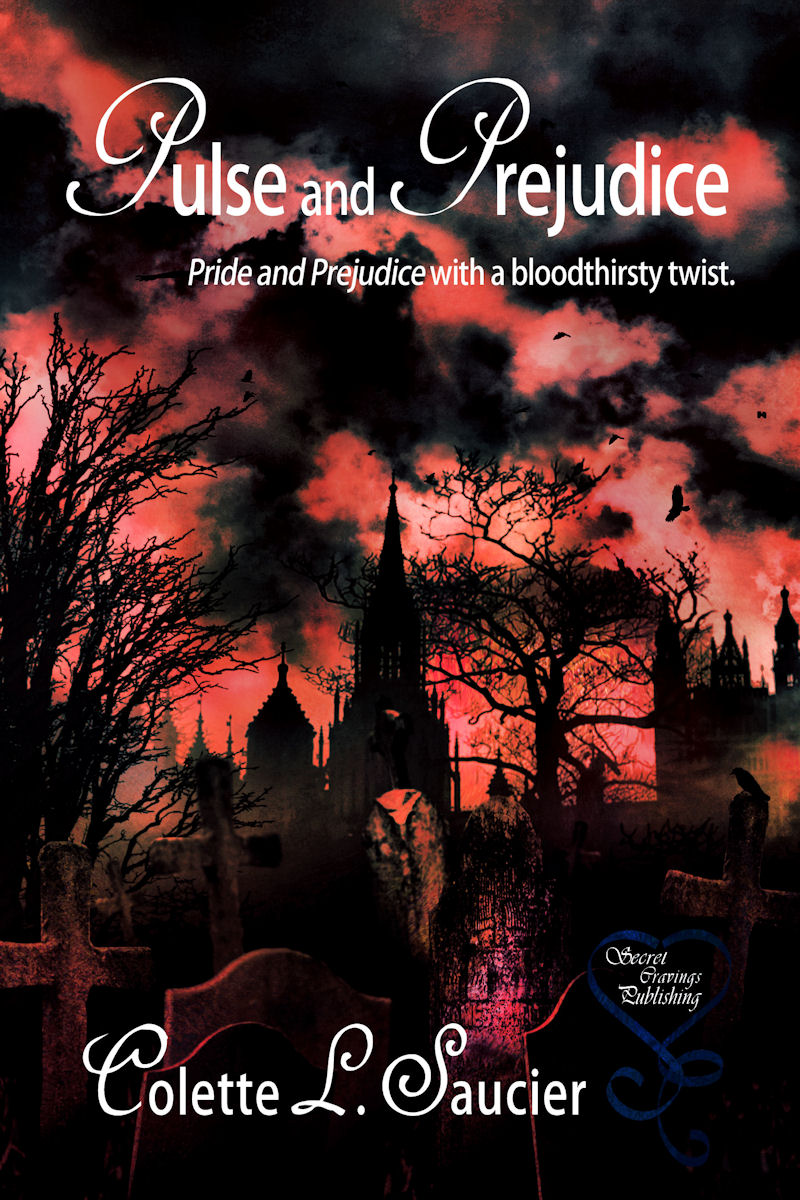
Gentle Readers, author Colette Saucier has written a description of her journey on writing Pulse and Prejudice, a vampire adaptation of Pride and Prejudice. Those of us who are fascinated with the vampire myth can relate to her journey! You can find more information about Colette and her book on Colette Saucier.com

This is a story of Mr. Darcy, Lord Byron, and vampires.

I love Pride and Prejudice. I have read it so many times, I cannot even remember a time before it was not part of my consciousness. Of course, I like all of Jane Austen’s novels, but the story of Mr. Darcy and Elizabeth speaks to me in a way the others do not. I do not believe I am alone in this, as it set the standard for every romance novel and romantic comedy since its publication 200 years ago: boy meets girl, boy likes girl, girl hates boy, girl and boy like each other, misunderstanding/outside forces tear them apart, reunion, reconciliation, happily ever after.

Quite a number of years ago, I had the misfortune of seeing what I refer to as the Pride and Prejudice mutilation, the 1940 film starring Laurence Olivier and Greer Garson. Not only did they dress all of the Bennet girls as Southern Belles, Greer Garson was thirty-six. THIRTY-SIX! Three years older than Olivier. I won’t even go into the plot except to say they had no right to call it Pride and Prejudice. After that, I decided never again would I subject myself to any adaptation of my beloved Austen. I did not even see the BBC miniseries with Colin Firth when it premiered.

So what changed? First, I saw the movie Clueless. I enjoyed every moment of it, all the while thinking to myself, “This is Emma!” Sure enough, Amy Heckerling had updated my second favorite Jane Austen novel. Then, without knowing Helen Fielding had written it as a modern variation on Pride and Prejudice, I read Bridget Jones’s Diary. Well, after that, I had to see Colin Firth’s Pride and Prejudice, and now I had a face to go with my Mr. Darcy. Thus ended my boycott of all things not-quite-Austen.

All of this, of course, occurred some fifteen years ago. Although my mind had been opened to the possibilities, I had no intention of writing any Austen adaptations myself. Then a little book called Pride and Prejudice and Zombies took off like wildfire and landed near the top of the New York Times bestseller list. I have never been a zombie fan myself, but I did love the film Shaun of the Dead. When I stumbled upon the zombie book in my daughter’s bedroom, I knew it was a parody, and I had hoped its approach would be similar to that film. I had never heard of a “mash-up” before, but now I know I do not like them. The (co)author had taken the complete text of Pride and Prejudice and just stuck zombies and ninjas between the paragraphs. Not impressed. The zombie book did, however, introduce me to the genre of Austen adaptations and variations, and an addiction was born. I ate them up like potato chips. Some were good, some were horrid, but many I found completely delightful. All of them allowed me to continue my literary love affair with Mr. Darcy.

Now to back up a bit, somewhere in the middle of my multiple readings of Pride and Prejudice (actual Austen, not adaptations), I learned about Lord George Gordon Byron. I had read some of his poems over the years, but after seeing the film Gothic, I became more interested in the man behind the words. That he was portrayed by a young Gabriel Byrne didn’t hurt! This film depicts the summer night when Byron and his pal Percy Shelley gathered with friends in Switzerland and told each other ghost stories, one of which became Mary Shelley’s Frankenstein.

That evening also inspired John Polidori to write The Vampyre – the original gentleman vampire. Although I never cared for zombies or werewolves or other monsters, I have always been a vampire fan. (To all of those publishers who rejected my manuscript because they believed the “vampire trend is over,” allow me to say, vampires will never of out of style. They’re immortal, after all!) I refer to the sensual, suave, and seductive variety of vampire, or the tortured souls such as Gary Oldman’s depiction in Bram Stoker’s Dracula. That image of the mysterious and charismatic vampire originated that night in 1816 with Polidori and Lord Byron.

Austen’s Mr. Darcy struck me as a Byronic figure – intelligent but arrogant, sophisticated and cynical, introspective and conflicted. “That man of loneliness and mystery, Scarce seen to smile, and seldom heard to sigh.” (The Corsair, I, VIII) Knowing that Polidori had based his Vampyre on Byron cultivated in my mind the idea that Darcy as a character – as well as Pride and Prejudice as a whole – lent itself well to a vampire adaptation; however, when I looked, I could not find the adaptation I envisioned. Yes, someone had published a vampire “mash-up,” but I have already expressed my opinion on those. I also found a vampire sequel told in gothic style. Regina Jeffers had written a fascinating novel inspired by Pride and Prejudice with Mr. Darcy as dhampir, battling against vampires while resisting the urge to become one himself.

I needed something more. I wanted Mr. Darcy to be an honest-to-goodness neck-biting, blood-drinking, night-walking vampire who could be healed in the moonlight as in the Polidori story. I felt the story must be told from Mr. Darcy’s point of view to explore that Byronic Hero aspect of his nature, which we only glimpse in Austen’s narrative, and allow the curse of vampirism to reveal further depths of character – an outcast, suffering, jaded . Because this adaptation of Pride and Prejudice did not exist, I had no choice but to write it myself.

I threw myself full-force into researching Regency England, vampire folklore, and Pride and Prejudice itself. This paranormal adaptation had to remain faithful to Austen in style, plot, and characters. How would Austen’s Elizabeth Bennet react to vampires? That itself required a thorough analysis of Elizabeth to ensure in this adaptation she remained true to the original character under remarkable circumstances. The novel had to be historically accurate and free of any anachronisms. I wanted it to be as if Jane Austen herself had written the story of Mr. Darcy as vampire, and I think I have succeeded. Well, except I did add another section – Beyond Pride and Prejudice – to peek into the passion, lust, and desire between Elizabeth and Mr. Darcy that simmers just under the surface in the original. Jane Austen teases us with hints of Darcy’s attraction to Elizabeth, and I could not leave that territory uncharted.

Thus, after fifteen years gestation, Pulse and Prejudice was born – an authentic vampire variation of the beloved classic. I hope I have written the paranormal adaptation others want to read as well.

Read Full Post »
A Request from a Graduate Student: Hello Fellow Jane Austen Readers! Have you ever read a published sequel to a Jane Austen novel? Are you a fan of Jane Austen sequels?

My name is Cliff Bryant, and I am a graduate student at Virginia Tech, conducting a research project on readers of published sequels of Jane Austen?s novels. I want to find out how readers came to read the sequels, and whether or not you like them.

If you are interested in participating in my study, just click on the link, and take the survey. It will take less than 10 minutes, and I will release the results in a few weeks, so you can check back and see how you compare to other Jane Austen sequel fans. (Feel free to contact me with questions at cliffbryant@vt.edu.)

(Just to be clear, I am talking about actual published sequels to the novels, not web fan fiction, or mash-ups like Pride and Prejudice and Zombies – though maybe that will be my next project!).

If you choose to participate, thanks so much! Just click the link, review the consent information, then take the survey!

Thanks!

(LINK – https://survey.vt.edu/survey/entry.jsp?id=1339705453120)

Read Full Post »

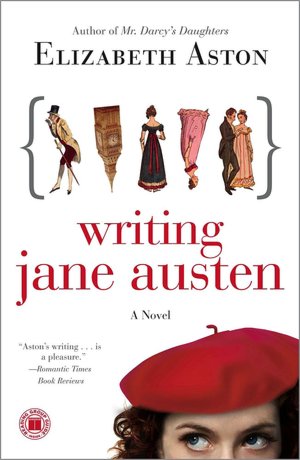
Have you ever read a book that made you squirm, yell out loud, and want to smash fine china to release your frustration? I usually put such books down and don’t bother to finish them. In this instance I was listening to Writing Jane Austen by Elizabeth Aston in my car and kept punching the on and off button. While I HATED Georgina, the main protagonist, the plot retained my interest just barely enough to keep me going.

Let me say up front that Elizabeth Aston knows her Jane Austen history and has a way with dialogue that is modern, smart, and funny. She also creates vivid characters with names like Henry LeFroy and Mr. Palmer, and has them shopping in stores like Mr. Darcy’s in Bath.

So what is my beef with Writing Jane Austen, which was published in 2010? Simply put, its heroine, Georgina. (I cannot recall her last name and am unwilling to relisten to the first CD to find out.) If an author asks me to spend hours of my life with her heroine, she should provide me with a character that commands my respect and/or interest. I could muster none for Georgina – no respect, no empathy, and absolutely no concern for her well being. In fact, if it hadn’t been for the wonderful young Maude, Henry LeFroy’s sister, I would have stopped listening to the audiobook after the first CD.

It is my firm belief that no well-educated author is as stupid as Georgina, the young woman who has been picked (for no good reason that I can see) to complete Jane Austen’s long lost and unfinished 3,000 word manuscript entitled “Love and Freindship.” Writing Jane Austen makes fun of the publishing industry’s mania for JA sequels, prequels, and mash-ups, and there are moments when Elizabeth Aston gets it completely right. But then I realized that this novel is as cynical as the  industry it is lampooning, and with a defective heroine to boot. Either Elizabeth Aston has created dumb Georgina on purpose to ramp up her contempt for money-grubbing publishing houses who have jumped on the Jane Austen bandwagon in pursuit of the almighty dollar, or she actually thinks that her dumb-as-a-post heroine has a few redeeming qualities. Not.

So why do I dislike Georgina so acutely? She lacks intellectual curiosity, has a less than open mind, and repeatedly demonstrates an inability to be practical in the face of a situation over which, if she possessed a smidgen of self-awareness, she has full control.  She is immature and uninteresting, a lethal combination. Much of the plot hinges on the fact that Georgina must write a 120,000 word book in the style of Jane Austen within a few months. The problem? She has never read a Jane Austen novel and has no interest in doing so, for she assumes that Jane’s books are a classic version of light chic lit, a genre she despises.

At the novel’s opening, Georgina is between a rock and a hard place. Her first book, a gritty, grim and dark Victorian novel, was forgettable, and her second book has stalled at Chapter One. Her agent threatens to drop her unless she writes Love and Freindship, and she is broke. The publisher’s advance will stave off her creditors and buy her more time to live in England. So, what does Georgina do after she gives in and agrees to write the book?  Anything but read a Jane Austen novel. At this point I began to develop an extreme dislike for Georgina that bordered on hatred. How stupid can you get? Elizabeth Aston keeps the reader dangling with this weak plot point: is Georgina EVER going to read a Jane Austen novel and write the damned book?

This wait was stretched out for so long that I nearly spat at my CD player. At one point I yelled, “Enough already, you stupid woman! READ Jane’s books!” Even a brainless monkey would have known that this is the first step one should take when one agrees to mimic a famous author’s writing style. Georgina’s reasons for resisting did not resonate with me. In fact, when she finally picked up Pride and Prejudice and reacted with  predictable gooey Jane Austen adoration, the only reason I kept listening to the audiobook was because I was driving along a boring stretch of highway.

What happened next in the book was so totally predictable that I began to laugh: After reading all of Jane Austen’s novels back to back in record time, Georgina now feels inadequate to the task of completing the manuscript of Love and Freindship. And so she is paralyzed with inaction.

Like I cared.

The heroine wasn’t all bad, I grudgingly admit. There were poignant moments, as when Georgina is brought to tears as she recognizes Jane Austen’s genius, or when she sees her writing table in Chawton Cottage and is actually able to muster an insight with her pea brain – that Jane could do so much with so very little.

I could have done without the interminable expositions about writer’s block, and some of the more improbable situations, such as ghostly apparitions of costumed people and carriages that were not integral to anything, except that the author seemed to think it a good idea to plop them in here and there. It is to Ms. Aston’s credit that she kept me listening until, well, almost the very end, for I did not quite finish the book, leaving the last CD in its sleeve. That’s how little I cared about Georgina and her angst about finishing Love and Freindship.

Reading or hearing this novel is akin to watching a TV movie of the week: Here today, gone tomorrow. In 20 years or so, as the Jane mania recedes into memory, you will likely find it for sale for 25 cents on the shelves of a Salvation Army store, while Jane’s excellent novels will still be  selling and selling and selling. Thankfully, I borrowed my audio book of Writing Jane Austen from my local library and did not have to part with a cent. If you are still tempted to read the novel, I suggest you do the same.

I am giving this book One Regency Teacup (out of five). In the words of the all-knowing Lady Catherine de Bourgh, “I am most seriously displeased.”

Read Full Post »

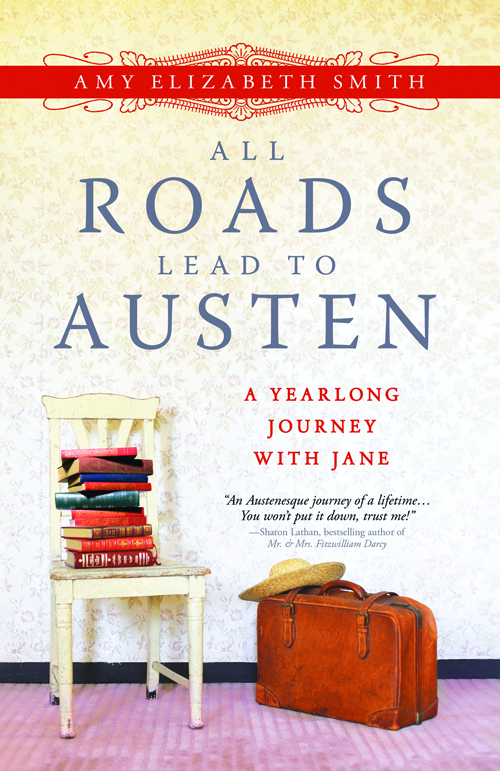
Inquiring Readers: All Roads Lead to Austen: A Yearlong Journey with Jane Austen by Amy Elizabeth Smith is now available through Sourcebooks. I will be reviewing this fabulous, intelligently written book later this week. Meanwhile, enjoy my interview with Ms. Smith about her Latin American adventure as she discusses Jane Austen’s novels en Español with Latin American book groups. All readers of this blog from any country can enter a contest to win a copy of this charming book. Please click on this link and leave your comment. Make sure to leave a way I can reach you. Contest is now closed!

Amy, I love that Jane Austen, a spinster who didn’t travel far or frequently in her lifetime, is so beloved the world wide over. Which country surprised you most in terms of her popularity there and why?

I found translations of Austen left and right in bookstores in Argentina. I met plenty of people there who’d read Austen and liked her or who’d seen film adaptations of her novels and enjoyed them. And the Jane Austen Society of Buenos Aires was the first Austen society in South America. But sometimes it’s hard not to be influenced by stereotypes about people — I’d heard that Chileans were “the English of South America,” so somehow I thought Austen would be popular in Chile. But when I was living in Santiago, the capital (which I absolutely loved), a number of people told me Austen’s not very well known in Chile.

As for Argentineans, I’d heard over and over from people in Mexico, Guatemala, Ecuador, and other places that Argentineans are, well, pretty arrogant. Other latinos kept passing on jokes like, “When Argentineans see lightening, what do they think is happening? They think it’s God, taking their picture!” So, I guess I got the idea that Argentineans might think Austen was stuffy or old fashioned or some such thing. But she’s popular, at least in Buenos Aires, according to my experiences.

What aspects of that particular culture do you think Jane would have enjoyed the most?

Bookstores, bookstores, bookstores. I had great experiences in bookstores all over Latin America, but Argentina — and Buenos Aires specifically — really is the bookstore capital of South America. It’s so easy for us now to take for granted that we can get our hands on just about any book we want, any time. We’ve got access to bookstores, next-day delivery with websites, and good public libraries. And electronic readers have made it easier than ever — just order whatever book you want, wherever you are on the planet! But imagine what it must have been like for an imaginative, inquisitive reader like Austen — how often did she ever set foot in a bookstore? How often could she afford to pay for books from a circulating library? How many books did her family or friends or neighbors actually own? I think Austen would have fainted from sheer pleasure at the sight of bookstore after bookstore on Avenida Corrientes in Buenos Aires.

Librerias Libertador: One of my favorite bookstores on Corrientes, in Buenos Aires

Jane Austen fans cross all religious boundaries. Can you identify any characteristics that Janeites share across the world, besides their obvious love for Jane Austen’s novels?

I honestly can’t speak for many places beyond Latin America (although I might try a next project in some other interesting countries!). But I suspect that there’s a kind of optimism that people — especially women — love about Austen. Her leading ladies find love, not in spite of being strong and intelligent, but because of it. That’s a pretty appealing idea in a world were, in many places, women are still told they’d better not appear too smart, or they’ll scare men off.

What were some of your most memorable experiences in writing this book?

I actually started the book while I was still traveling, although I didn’t finish it until after my trip was done. I wrote the first portion on Guatemala while I was living in Puerto Vallarta, Mexico. I was living well away from the tourist area, renting a partially-finished house that had glass in only one or two windows, so it was pretty noisy — street vendors would cruise by with loudspeakers, selling ice cream, vegetables, you name it. The people across the street had a huge bird caged outside their house that shrieked and chattered like a demon. And animals would wander in at will — there was one very persistent cat that kept making me jump out of my skin by appearing under my writing table with no warning.

There were animals all over the place in that neighborhood — no leash laws for dogs, and some of the neighbors had roosters and other farm animals. When I wanted a break from writing, I’d wander out to buy groceries or take my clothes to the laundromat. I always carried them in a plastic bag, and there was this goat a few houses down from me that was only tied up about half of the time. When it was loose, it usually ignored me, but when I had that plastic bag with laundry, it would come bolting after me — maybe its food came in a plastic bag, and it thought I had something good to eat? Or maybe it knew I had laundry and really wanted to eat my socks. Who knows. Sometimes I actually miss that goat — laundry day’s not the same without it.

A friendly neighborhood rooster from Puerto Vallarta, Mexico

Thank you, Amy, for your wonderful insights and good luck with your book. (I just love the cover!) Is there anything else you would like my readers to know about All Roads Lead to Austen?

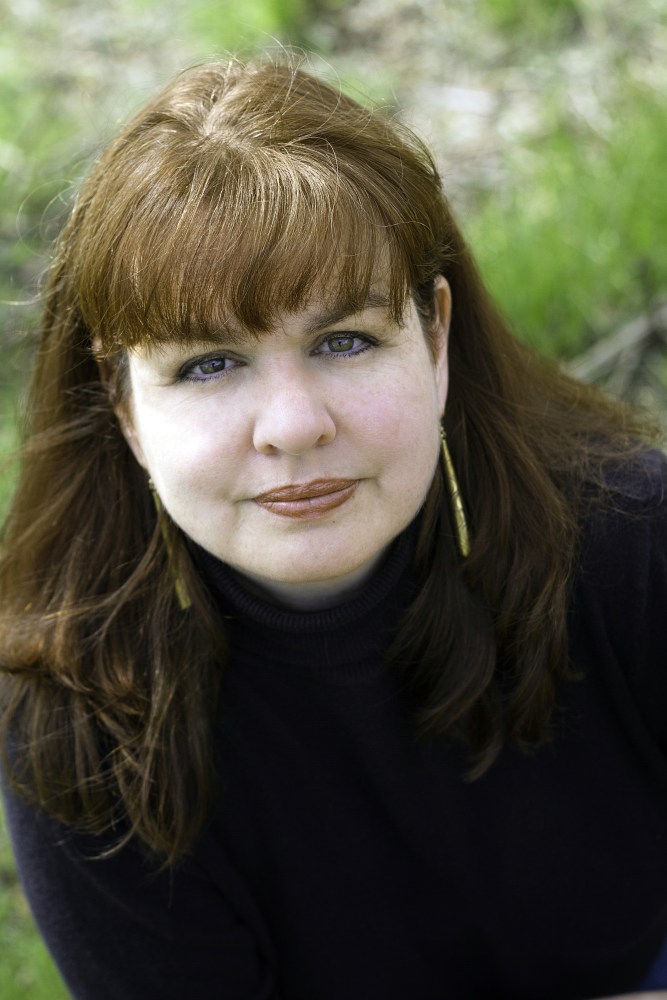
Amy Elizabeth Smith

I had two main sources of inspiration for this book — Azar Nafisi’s Reading Lolita in Tehran, and my own Jane Austen students at the University of the Pacific, in California. Readers can enjoy All Roads as a fun opportunity to sit back and be an armchair traveler, but I’d also love it if the book inspired some other international journey I could sit back and read about. Austen in China? Turkey? Belgium? Bora Bora? I’d love to see somebody else take on a journey like this with Jane. Even if they don’t want to write a whole book about it — I’d love to have people share reading-on-the-road stories on my website (http://allroadsleadtoausten.com/). Consider that an official invitation! And thanks so much for letting me visit here at Jane Austen’s World!

To Enter the Contest: Please make sure to leave your comment on Jane Austen Today at this link. The first two comments left on this post will be included in the random number generator drawing at midnight EST USA time on June 11. Please leave all other comments on Jane Austen Today. Make sure to leave a way I can reach you. 

Read Full Post »

« Newer Posts - Older Posts »