Feeds:
Posts
Comments

Archive for the ‘Book review’ Category

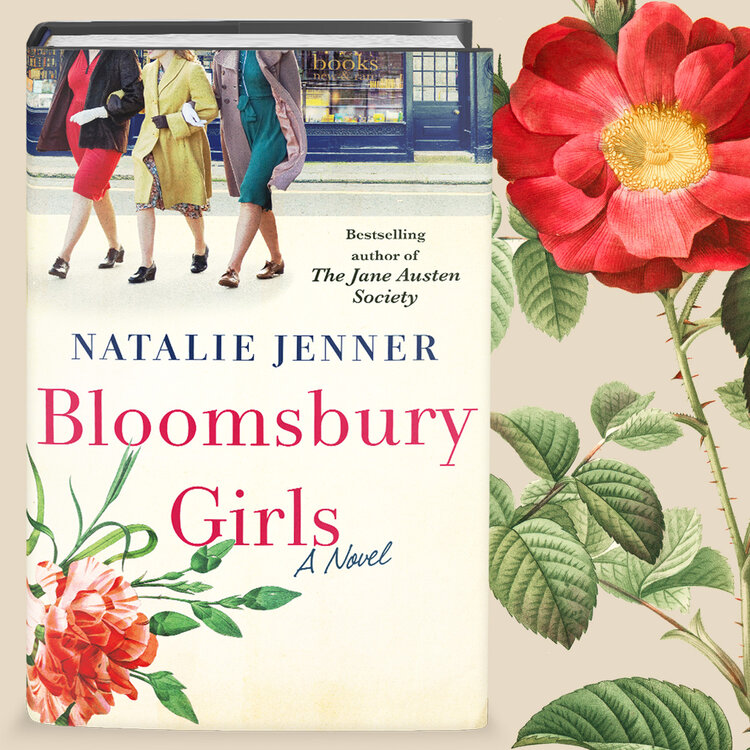
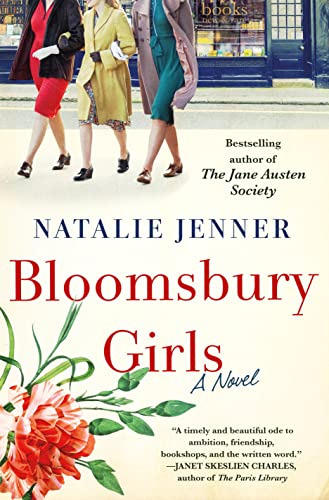
One bookshop. Fifty-one rules. Three women who break them all.

Natalie Jenner, the internationally bestselling author of The Jane Austen Society, has gifted us with her newest book, Bloomsbury Girls, just in time for summer! It’s a compelling and heartwarming story of a century-old bookstore and three women determined to find their way in a fast-changing world.

Book Description:

Bloomsbury Books is an old-fashioned new and rare book store that has persisted and resisted change for a hundred years, run by men and guided by the general manager’s unbreakable fifty-one rules. But in 1950, the world is changing, especially the world of books and publishing, and at Bloomsbury Books, the girls in the shop have plans:

Vivien Lowry: Single since her aristocratic fiance was killed in action during World War II, the brilliant and stylish Vivien has a long list of grievances–most of them well justified and the biggest of which is Alec McDonough, the Head of Fiction.

Grace Perkins: Married with two sons, she’s been working to support the family following her husband’s breakdown in the aftermath of the war. Torn between duty to her family and dreams of her own.

Evie Stone: In the first class of female students from Cambridge permitted to earn a degree, Evie was denied an academic position in favor of her less accomplished male rival. Now she’s working at Bloomsbury Books while she plans to remake her own future.

As they interact with various literary figures of the time–Daphne Du Maurier, Ellen Doubleday, Sonia Blair (widow of George Orwell), Samuel Beckett, Peggy Guggenheim, and others–these three women with their complex web of relationships, goals and dreams are all working to plot out a future that is richer and more rewarding than anything society will allow.

Purchase the Book HERE

My Review

Bloomsbury Girls is the perfect read for those of us who love a story that’s set in a bookstore and is filled with books and bookish people. As I began to read, it first reminded me of 84, Charing Cross Road by Helene Hanff, a slim volume that is forever memorable for most of us who have read it and/or seen the film. I enjoy books where the setting (the house, the shop, the city) is so special and memorable that it becomes like another character in the reader’s mind. In Jenner’s novel, Bloomsbury Books itself is a very much alive and poignant character–and one I enjoyed immensely.

Beyond the setting and the great bibliophile feels the book provides, Jenner has done an exquisite job of weaving together a beautiful cast of characters and their individual stories. There is depth and complexity to each character, each couple, each department head, each story arc.

Finally, the storylines surrounding the three lead female characters are delightfully drawn. I found myself intrigued by each one, enjoying their individual stories as well as the bigger plot at hand. When they begin to work together and their stories begin to tie together and intertwine, it’s intriguing and delightful. The things they accomplish when they link arms is truly inspiring.

Overall, this is a fun, summery read filled with all the good things I love most. I hope you’ll stop in and visit Bloomsbury Books. Though it may seem like an ordinary British bookstore at first glance, there is so much more going on behind the scenes than meets the eye.

Audiobook

If you have a long car trip ahead, or if you prefer to listen to your books while you work, the audio version of this book promises to be incredible. Acclaimed actor and narrator Juliet Stevenson, CBE, narrated the audiobook for Bloomsbury Girls, with a performance that has been called “vocal virtuosity.”

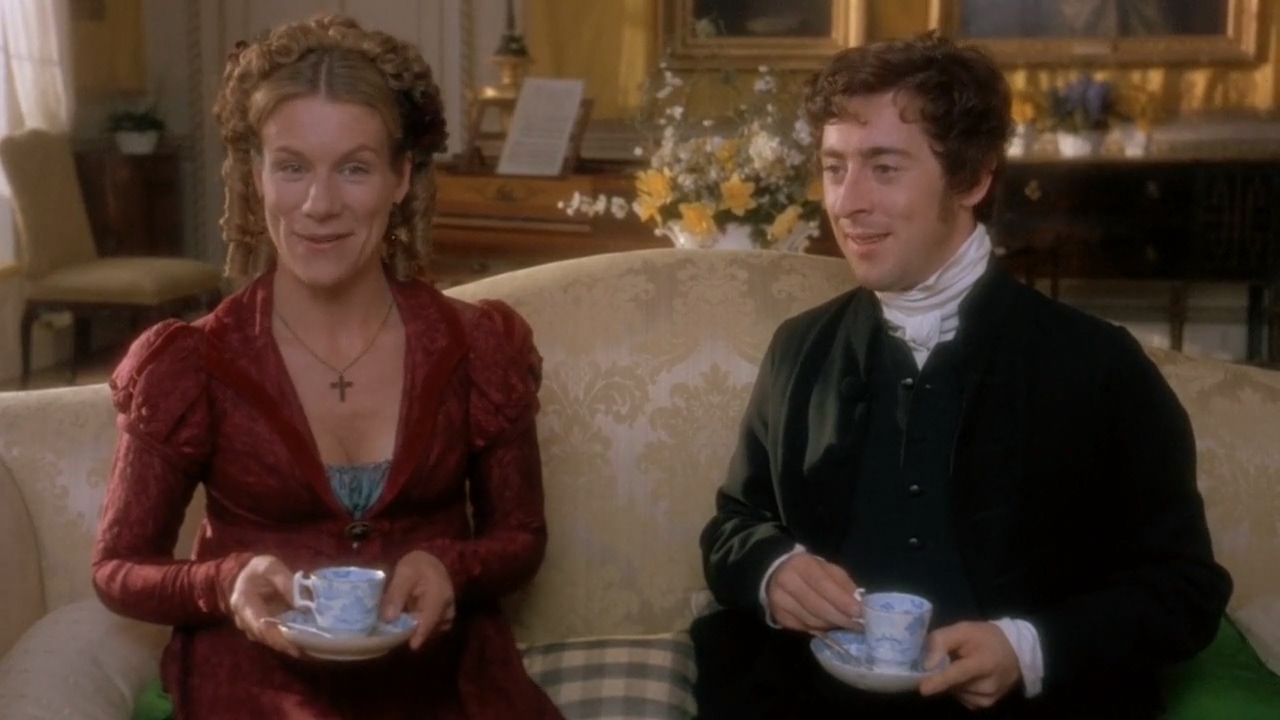
Stevenson is best known for her roles in Emma, Truly, Madly, Deeply, Bend it Like Beckham, Mona Lisa Smile, Being Julia, and Infamous. She is also the BAFTA-nominated and Olivier Award-winning star of many Royal Shakespeare Company and National Theatre productions. Regarded as one of the finest audiobook narrators working today, Stevenson’s other recent narrations include Julian Fellowes’ Belgravia and the collected works of Jane Austen and Daphne du Maurier.

Listen to the beginning of the audiobook here:

Stream Bloomsbury Girls by Natalie Jenner, audiobook introduction from MacmillanAudio | Listen online for free on SoundCloud

About the Author

NATALIE JENNER is the author of the instant international bestseller The Jane Austen Society and Bloomsbury Girls. A Goodreads Choice Award runner-up for historical fiction and finalist for best debut novel, The Jane Austen Society was a USA Today and #1 national bestseller, and has been sold for translation in twenty countries. Born in England and raised in Canada, Natalie has been a corporate lawyer, career coach and, most recently, an independent bookstore owner in Oakville, Ontario, where she lives with her family and two rescue dogs. Visit her website to learn more.


RACHEL DODGE teaches college English classes, gives talks at libraries, teas, and book clubs, and writes for Jane Austen’s World blog. She is the bestselling author of The Little Women Devotional, The Anne of Green Gables Devotional and Praying with Jane: 31 Days Through the Prayers of Jane Austen. You can visit Rachel online at www.RachelDodge.com.

Read Full Post »

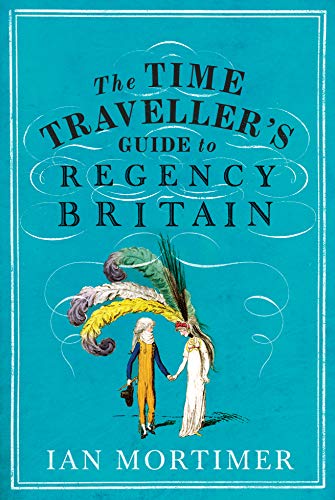
Book's coverStrictly speaking the oficial Regency lasted from 1811 to 1820, but the author, Ian Mortimer, takes the reader on a journey to Great Britain – England, Wales and Scotland – from 1789 to 1830, a time period that is in line with most other historians, literary critics and antiques experts.

This book achieves something unique – a historian’s perspective written in a style of writing that is exciting to read. I did indeed feel like a time traveller as I was taken through the British countryside, Brighton, London, and Manchester. Mortimer touches all aspects of British life – from the vitality of the era, expansion of cities, and the explosion of scientific advances, trade, transportation, and the island’s population. Mortimer describes both the good and the bad effects of the industrial revolution, and the results of enclosures in England on farmers with small farms and of the Highland clearances on Scottish crofters.

The era’s glittering lifestyle is not neglected and the author takes advantage of the journals and accounts of contemporary eyewitnesses. This is Karl Moritz’z impression of the rotunda in Ranelagh Gardens, Chelsea (1810):

“On my entry I mixed with this crowd, and what with the constant changing of the faces around me (most of them strikingly beautiful), the illuminations, the majesty and splendour of the place, and the ever-present strains of music, I felt for a moment as a child would on first looking into a fairy-tale.”

Above: Two images included in the book. Hover cursor over them for details.

Mortimer contrasts this memory with the description of a winter in London some twenty years later. Coal fires in London so polluted the air that soot floated without falling, and the fog and smoke darkened the skies even at noon.

As the rich built grand houses or renovated outdated mansions, and hired Capability Brown or Humphrey Repton to transform their grounds, many poor people suffered, for few resources or improvements were provided for them. Liverpool’s houses for migrant workers were designed in such a way as to provide no comfort or cleanliness. Two privies might serve two or three hundred people. The overcrowding was so severe that the population density was estimated at 777 per acre. So many other topics are covered: science, medicine and health; pleasure gardens and entertainments; occupations; food and drink; clothing; etc.

Time traveAfter reading this book, I had a comprehensive overview of the Regency era and recommend it to anyone interested in this period. Amazon Kindle edition (See cover to the right) offers a sample of the book’s Introduction, and Chapters 1 & 2 in full.

About the Author:

Ian-MortimerDr Ian Mortimer has been described by The Times newspaper as ‘the most remarkable medieval historian of our time’. He is best known as the author of The Time Traveller’s Guides: to Medieval England (2008); to Elizabethan England (2012); to Restoration Britain (2017); and to Regency Britain (2020). He is a Fellow of the Royal Historical Society and a Fellow of the Society of Antiquaries, and has published research in academic journals touching on every century from the twelfth to the twentieth. For more information, see http://www.ianmortimer.com

Read Full Post »

A guest post by Katherine Cowley

Katherine-Cowley-225x300

The Author

Readers and scholars have generally seen the reaction to snow in Emma as an overreaction, both ridiculous and absurd. Yet a look at the snowfalls in England in January and February of 1814 puts the snow in Emma—which was published in December of 1815—in context. Readers of the time would have seen the fears of snow as justified, or, at the very least, understandable.

A pivotal scene in Emma occurs at a Christmas Eve dinner at the Westons’ home. The dinner brings together a number of important characters—Emma, her father Mr. Woodhouse, the Westons, Mr. Knightley, Mr. Elton (who Emma believes is in love with her friend Harriet), and Isabella and John Knightley (Emma’s sister and brother-in-law). Yet the perfect holiday meal does not occur—the falling snow causes a panic (especially for Mr. Woodhouse), and everyone leaves early, hurrying home before more snow can arrive. This places Emma in the uncomfortable position of being alone in a carriage with Mr. Elton, which leads to one of literature’s most famous drunk proposals.

The General Consensus: Absurd Reactions to Snow

Modern readers and film viewers love to laugh at the absurd reactions to snow in Emma. We know with absolute certainty that it does not snow very much in England and that the reactions of the characters are overblown.

Take, for example, a sampling of quotes on the scene from past issues of Persuasions: The Jane Austen Journal. Louise Flavin calls Mr. Woodhouse an “over-cautious valetudinarian worrying over a half-inch snowfall.” Sara Wingard writes of the “false alarms raised.” Juliet McMaster describes how Mr. Woodhouse “becomes almost catatonic.” Jan Fergus features the scene in an article titled “Male Whiners in Austen’s Novels.”

In Nora Bartlett’s book, Jane Austen: Reflections of a Reader, she includes a chapter titled “Emma in the Snow.” She writes:

I have always treasured the snowfall in Chapter 15 of Emma, which endangers no one’s safety, despite Mr. Woodhouse’s fears, but threatens everyone’s equanimity: at the news that snow has fallen while the party from Hartfield is having an unwonted evening out at Randalls, “everybody had something to say”—most of it absurd.

Not Just Mr. Woodhouse

Mr. Woodhouse is often seen as a hypochondriac, and the portrait of him which Austen paints throughout the novel invites us to question his sense and find him amusing. When he learns of the snow, we read that he is “silent from consternation.” When he does speak, he says, “What is to be done, my dear Emma?—what is to be done?” Yet he is not the only character who reacts to the snow as if it is a serious matter.

Many readers have pointed out that the most sensible people during the evening are Emma and Mr. Knightley. Yet earlier in the day, Emma herself anticipates that snow could be a problem:

It is so cold, so very cold—and looks and feels so very much like snow, that if it were to any other place or with any other party, I should really try not to go out to-day—and dissuade my father from venturing; but as he has made up his mind, and does not seem to feel the cold himself, I do not like to interfere, as I know it would be so great a disappointment to Mr. and Mrs. Weston.”

During the snow scene, Mr. Knightley behaves rationally—he steps away from the house and checks on the road, discovering that there is only a half inch of snow. He also converses with the coachmen, who “both agreed with him in there being nothing to apprehend.” Taking this effort indicates his desire to help Mr. Woodhouse feel comfortable—but it also indicates that he considers it worth checking on the quantity of snow.

Mr. Weston, on the other hand, begins joking about wanting everyone to be trapped in his house:

[He] wished the road might be impassable, that he might be able to keep them all at Randalls; and with the utmost good-will was sure that accommodation might be found for every body, calling on his wife to agree with him, that with a little contrivance, every body might be lodged, which she hardly knew how to do, from the consciousness of there being but two spare rooms in the house.

Meanwhile, Mr. John Knightley speaks of what he perceives as the worst harm that could come to them:

I dare say we shall get home very well. Another hour or two’s snow can hardly make the road impassable; and we are two carriages; if one is blown over in the bleak part of the common field there will be the other at hand. I dare say we shall be all safe at Hartfield before midnight.”

It is little wonder that Norah Bartlett concludes that “‘everybody had something to say’—most of it absurd.” There is a beautiful absurdity to the scene, a lovely snapshot of humanity as we see individuals react very differently to a single threat.

Yet while Austen may be intentionally creating a situation meant to be read as absurd, the threat of snow would have felt real to readers of Emma in 1815.

The Snows of Early 1814

The novel Emma was published in December of 1815. Contemporary readers would have recent memories of frightening winters due to the intense snow falls across England during January and February of 1814.

Let’s take, as an example, the reports of snow on January 24th, 1814. In The Times, which was published in London, there was an article titled the “State of the Roads.”

1-Dover Roads

Transcription: State of the Roads. On the Dover road, the snow is 10 and 12 feet deep on the other side of Gravesend, where between 300 and 400 men are employed to clear a passage through it.

Clearly, it is no small matter for the road from London to Dover to be covered with 10 to 12 feet of snow, if more than 300 men were hired to shovel it. Yet it was not just the area southeast of London that was covered by snow. In Exeter—in southwest England—there was 4 to 6 feet of snow. Carriages heading from Bath to Marlborough became stuck in the snow. In Worcester and Gloucester it was reported that “it was as easy to get through a wall as pass the drifts of snow.” Mail coaches from Liverpool and Manchester made it to London, but they “risked their lives” in the process. Huge amounts of snow were also reported in Glasgow and Edinburgh, Scotland. 

The article continues:

4-Never since the establishment

Transcription: Never since the establishment of mail coaches has correspondence met with such general interruption as at present. Internal communication must, of course, remain at a stand till the roads are in some degree cleared; for besides the drifts by which they are rendered impassable, the whole face of the country presenting one uniform sheet of snow, no trace of road is discoverable, and travellers have had to make their path at the risk of being every moment overwhelmed. Waggons, carts, coaches, and vehicles of all descriptions are left in the midst of the storm. The drivers finding they could proceed no further, have taken the horses to the first convenient place, and are waiting until a passage is cut, to enable them to proceed with safety.

We can hardly blame Mr. John Knightley for his speculations about losing a carriage in the snow, when so many travelers in 1814 were forced to abandon their carriages.

On January 25, 1814, The St. James’s Chronicle discussed the potential sewage problems that could overwhelm (or flood) London, should the snow melt quickly. The paper also reported that in the village of Dunchurch, “drifts have exceeded the height of 24 feet.”

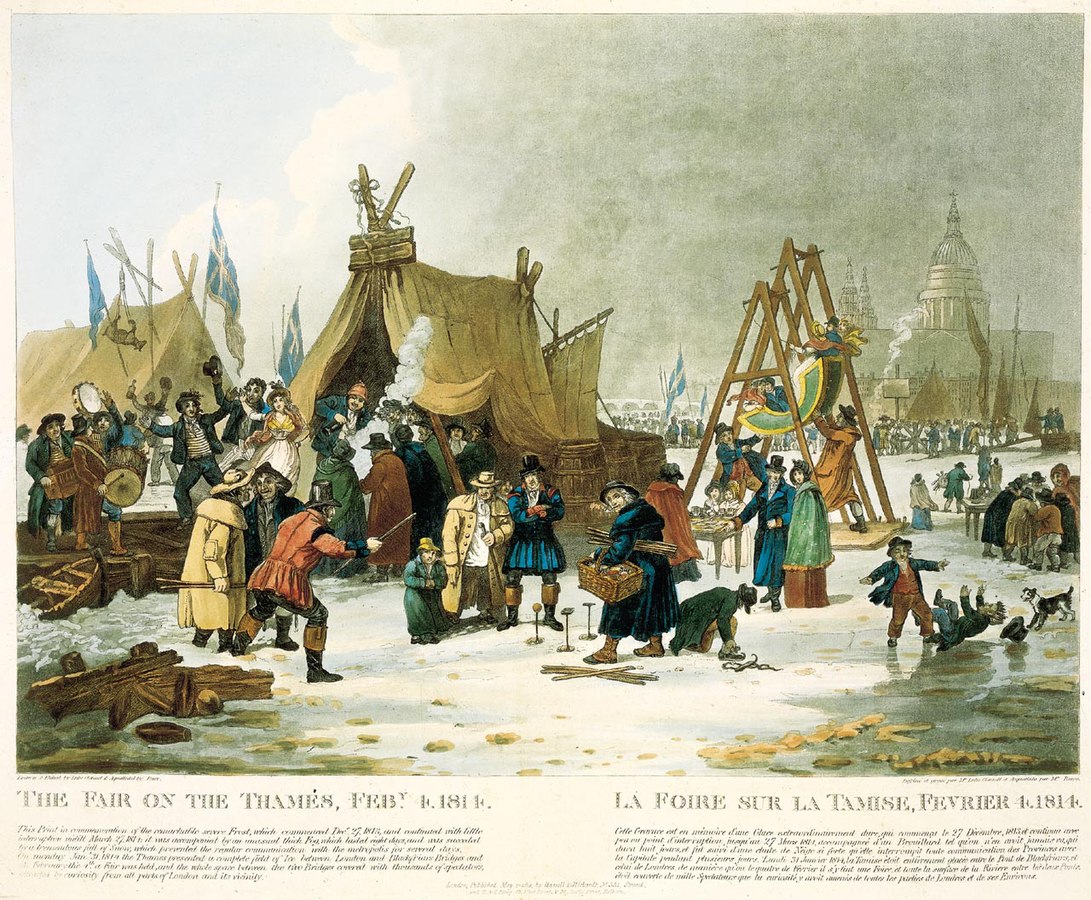
This was not snow to laugh at—for weeks the snow built up, making travel near impossible. In London, the Guildhall issued announcements not to shovel the snow from roofs onto the roads, because of the trouble it was causing. The snow did begin to melt, but then it became even colder, so cold in fact that the Thames River froze over in London, and the last London Frost Fair was held on its frozen waters. Printing presses were pulled onto the ice, meat was roasted on fires on the surface of the river, and tents were erected with various attractions. The ice was thick enough that an elephant—yes, an elephant—walked across the river, from one side of the Thames to the other.
Frost_Fair_of_1814_by_Luke_Clenell

The Fair on the Thames, Feb. 1814, by Luke Clenell (art in public domain). (To read more about the frost fair, see the following sources at the bottom of this post: Andrews; de Castella; Frost Fairs; Frostiana; and Knowles.)

The snows in 1814 were not just inconvenient: they were dangerous and sometimes even deadly. 

During the Regency period, it was difficult to stay dry and warm. Two previous posts on Jane Austen’s World address the efforts people took to keep warm in the Regency: part 1 and part 2.

In another article in The St. James’s Chronicle from January 25, 1814, several snow-related injuries were described. First we read that a middle-aged man slipped and fractured his knee, and then we read:

A young Lady of Kentish-town, whose name is Eustace, by passing from thence on Friday to London, by the public foot-path behind the Veterinary College, got completely immersed in a deep ravine by the side of the path which she was attempting to cross. After struggling for some time, she became quite exhausted, and must have fallen a victim to her unfortunate situation, had not two Gentlemen, who witnessed her distress, although at a considerable distance, ventured to her assistance, and relieved her from her perilous situation.”

With vivid prose, the article paints the precarious situation for Eustace—she almost fell “a victim to her unfortunate situation,” or, in other words, she almost froze to death.

While the middle-aged man and Eustace recovered from their mishaps, others were not so fortunate. 

This article, from the 19 January 1814 edition of The Times, reprinted information about deaths in Exeter and Shrewsbury on the 15th of January:

Transcription: Several accidents have occurred, some of which were fatal; on Wednesday a soldier was found dead on Haldon…and yesterday three of the Renfrew Militia were dug out near the same spot, and their bodies conveyed to Chudleigh…. Last week, several of the West Middlesex Militia, who had volunteered for foreign service, were frozen to death on their march from Nottingham. The unfortunate men had been drinking till they were intoxicated, and, lying by the road side, slept—never to wake again!

A week later, on the 26th of January, The Times reported on three more people who died in the snow.

3-Guard of the Glocester - The Times January 26

Transcription: The Guard of the Glocester mail reports, that three persons now lie dead at Burford; one a post-boy, who was dug out of the snow yesterday morning; a farmer, who was frozen to death on horseback; and another person, who died in consequence of the inclemency of the weather.

Reports of deaths caused by snow, ice, and cold were printed regularly in newspapers across the country throughout January and February of 1814. 

Readers of Emma would have read of death after death in the snow. Some of the readers might have become trapped in carriages in the snow, or forced to lodge with an acquaintance during the storm. If they had not personally suffered from the weather, they would have known people who had suffered. Would these readers really have blamed Mr. Woodhouse for asking “What is to be done, my dear Emma?—what is to be done?”

We do not have any letters from Jane Austen written in January or February of 1814, so we cannot directly access her thoughts on these snowfalls, yet we do know that she began writing Emma in January of 1814. She would have been well aware of the public memory that would develop around these snowfalls, and she uses the snow to not only influence the plot of Emma, but to create larger symbolism.

The scholar Elizabeth Toohey makes the argument that Mr. Knightley’s proposal to Emma is superior to Mr. Elton’s, in part because of the snow and all it symbolizes:

“Mr. Elton’s proposal takes place in a closed carriage in a snowfall at night with all the associations of coldness, darkness, and enclosure, in contrast to Mr. Knightley’s proposal, which occurs in the garden in the warmth of a late summer evening.”

Much of the beauty of Mr. Knightley’s proposal derives from its contrast with Mr. Elton’s proposal on a snowy night.

The characters of Emma lived in an age without snow plows, snow tires, or central heating, when large snowfalls were not just an inconvenience. Snow regularly caused disruption, injury, and death.

During their journey to the Westons, as the first snowflakes begin to fall, John Knightley declares:

“The folly of not allowing people to be comfortable at home—and the folly of people’s not staying comfortably at home when they can! If we were obliged to go out such an evening as this, by any call of duty or business, what a hardship we should deem it;—and here are we, probably with rather thinner clothing than usual, setting forward voluntarily, without excuse, in defiance of the voice of nature, which tells man, in every thing given to his view or his feelings, to stay at home himself, and keep all under shelter that he can.”

John Knightley’s view of snow has a certain soundness to it. Wouldn’t it behoove us all to take what shelter we can during difficult times?

As we read the snow scene in Emma, let us do so with a realization that while Austen may be painting an absurd portrait, the views of these characters are not, in and of themselves, absurd. For 1815 readers, a fear of snow and ice would be justifiable, or at the very least, understandable.

_________________________________________________________________

About the author

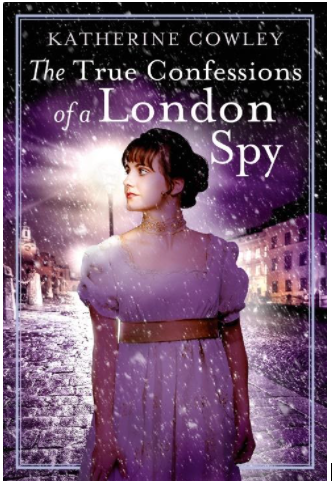
Katherine Cowley is the author of the Mary Bennet spy novel, The True Confessions of a London Spy, which features Mary Bennet of Pride and Prejudice in London during January and February of 1814. In addition to surviving epic amounts of snow and attending the last Ice Fair ever held on the Thames, Mary experiences her first London Season and investigates the murder of a messenger for Parliament.

Note from Vic, Jane Austen’s World: In 2021, we reviewed Katherine Cowley’s first mystery in the Mary Bennet series, The Secret Life of Mary Bennet. Attached to it is an interview with the author.

Accessing Regency Newspapers

If you would like to explore Regency newspapers, you can purchase an affordable monthly subscription to the British Newspaper Archive. They have digitized hundreds of newspapers from across the United Kingdom. While to my knowledge individual subscriptions to The Times Digital Archive are not available, many libraries and university libraries have subscriptions that allow you to browse and search the archives of The Times.

References and Further Reading

Andrews, Willam. Famous Frosts and Frost Fairs in Great Britain, George Redway, 1887. Accessed through Project Gutenberg, https://www.gutenberg.org/files/55375/55375-h/55375-h.htm, 1 Jan 2022.

Bartlett, Nora. Jane Austen: Reflections of a Reader, edited by Jane Stabler, Open Book Publishers, 2021.

de Castella, Tom. “Frost fair: When an elephant walked on the frozen River Thames.” BBC News Magazine, 28 Jan. 2014, https://www.bbc.com/news/magazine-25862141. Accessed 31 Jan. 2022.

Fergus, Jan. “Male Whiners in Austen’s Novels.” Persuasions: The Jane Austen Journal, vol. 18, 1996, pp. 98-108.

Flavin, Louise. “Free Indirect Discourse and the Clever Heroine of Emma.” Persuasions: The Jane Austen Journal, vol. 13, 1991, pp. 50-57.

“Frost Fairs: Where Thames Smooth Waters Glide. Frost Fairs on the River Thames.” Thames.me.uk, https://thames.me.uk/index.htm. Accessed 31 January 2022.

Frostiana: or a History of The River Thames, In a Frozen State, G. Davis, 1814.  

“Keeping Warm in the Regency Era, Part One.” Jane Austen’s World, 21 Jan. 2009, https://janeaustensworld.com/2009/01/21/keeping-warm-in-the-regency-era-part-one/. Accessed 31 Jan. 2022.

“Keeping Warm in the Regency Era, Part Two.” Jane Austen’s World, 3 Feb. 2009, https://janeaustensworld.com/2009/02/03/ways-to-keep-warm-n-the-regency-era-part-2/. Accessed 31 Jan. 2022.

Knowles, Rachel. “The Frost Fair of 1814.” Regency History, 3 Jan. 2021, https://www.regencyhistory.net/2020/05/the-frost-fair-of-1814.html. Accessed 31 Jan. 2022.

McMaster, Juliet. “The Secret Languages of Emma.” Persuasions: The Jane Austen Journal, vol. 13, 1991, pp. 119-131.

Mullan, John. “How Jane Austen’s Emma changed the face of fiction.” The Guardian, https://www.theguardian.com/books/2015/dec/05/jane-austen-emma-changed-face-fiction. Accessed 31 January 2022.

The St. James’s Chronicle (London, England), Tuesday, Jan. 25, 1814; pp. 1-4; Issue 8757. Accessed through The British Newspaper Archive 28 Jul. 2020.

The Times (London, England), Monday, Jan. 19, 1814; pp. 1-4; Issue 9122. Accessed through The Times Digital Archive 31 Jan. 2022.

The Times (London, England), Monday, Jan. 24, 1814; pp. 1-4; Issue 9126. Accessed through The Times Digital Archive 27 Jul. 2020.

The Times (London, England), Monday, Jan. 26, 1814; pp. 1-4; Issue 9128. Accessed through The Times Digital Archive 31 Jan. 2022.

Wingard, Sara. “Folks That Go a Pleasuring.” Persuasions: The Jane Austen Journal, vol. 14, 1992, pp. 122-131.

Read Full Post »
A Book Review by Brenda S. Cox

“Mr. Curtis’s [the apothecary’s] opinions were succinct . . . He looked at me–and into me, by way of a lanthorn beam directed down my throat–and pronounced me in want only of a period of rest and refreshment.”–Jane and the Year Without a Summer

Jane and the Year Without a Summer by Stephanie Barron is the newest “Jane Austen Mystery.”

Jane and the Year Without a Summer is the fourteenth book in a delightful series by Stephanie Barron. The novels show Jane Austen solving mysteries. I’ve enjoyed all of them! In the first of the series, Jane and the Unpleasantness at Scargrave Manor, she solved the murder of an earl in 1802. In each book, actual events, people, and places in Jane’s life are mixed with fiction, mystery, and a little romance.

In Jane and the Year Without a Summer, we’ve reached May 1816. So we’re nearing the end, sadly. Jane is suffering from the disease that will eventually kill her. But, of course, she doesn’t know that yet. So she goes to Cheltenham Spa with Cassandra to try the waters. She hates them, but, as always, gets involved in, and solves, a mystery. And she meets up with a romantic interest from a previous book.

You can enjoy this story without having read earlier books in the series. It’s been quite some time since I read the previous book, and I still followed this one easily.

Nothing really mysterious happens until over a third of the way through the book. But I enjoyed hanging out with Jane and Cassandra until then, and appreciating the real historical details woven into their story. The family is experiencing hard times, with Henry’s bank failure; Edward fighting a lawsuit; and Charles surviving a shipwreck and facing an inquiry over the loss of his ship. The apothecary tells Jane she needs a rest, so she uses some of her income from Emma to take Cassandra to a popular spa town.

The Year Without a Summer

At their boarding house, they meet a clergyman who calls himself a “man of Science.” (Though “natural philosophy” or “natural history” would have been more common terms used at the time.)  He prophesies apocalyptic desolations on the earth, based on an actual event.

Mount Tambora in Indonesia had erupted the year before (1815), the largest volcanic eruption in recorded history.  It filled the world’s atmosphere with ash for several years. This made 1816 a “year without a summer,” when crops failed and people went hungry around the globe. 

Austen experienced a wet, cool summer. John Constable pictures a storm moving in over Weymouth Bay that year, 1816. Public domain via wikiart.

Medicine

In another area of science, we hear the dubious medical advice of the Alton apothecary and the Cheltenham doctor. A real doctor is mentioned, though, who revolutionized medicine during Austen’s time by inventing vaccines.

Edward Jenner lived in Cheltenham at the time. He discovered that he could give people cowpox in order to prevent smallpox. (“Vaccination” comes from Latin “vacca,” meaning cow.)  Jane thinks that he “is of such dubious brilliance that some regard him as the Devil, and others as a god.” She says she was vaccinated by her friend Madame Lefroy, a clergyman’s wife who did vaccinate many people in her parish, near the Austens’ parish.

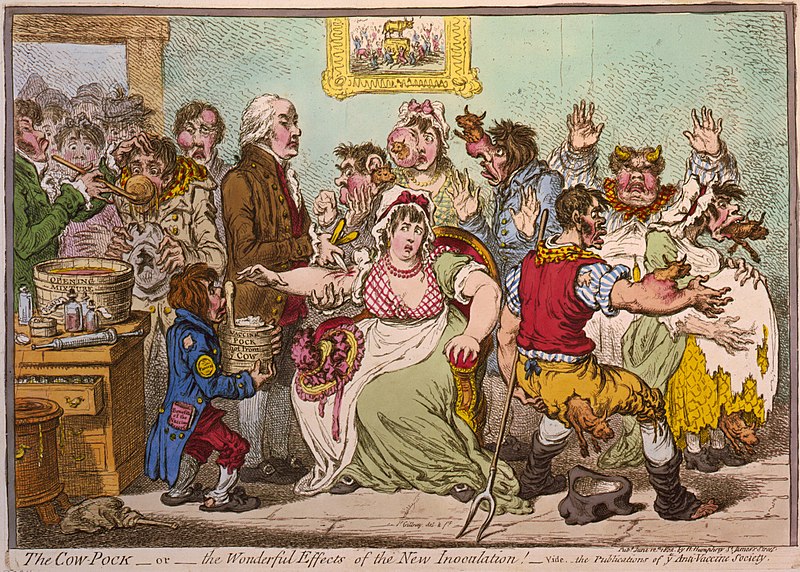
James Gillray’s 1802 cartoon, “The Cow-Pock, or the Wonderful Effects of the New Inoculation!” shows cows emerging from the bodies of people being vaccinated, illustrating the public’s fears of vaccination. Public domain via wikipedia.

“Weaknesses” of Women

The Cheltenham doctor Jane consults claims that her health problems are due to “an excess of uterine influence.” He claims that “denying the organ its proper function of childbearing” causes it to release poisons into the body, causing “every kind of affliction” common to women! Jane doesn’t think much of his advice. She comments to Cassandra that childbearing itself is even worse; some of their relatives died in childbirth.

Attitudes toward women are threaded through the novel. Jane’s brother James tells her, “the female mind is too weak to support the rigors of composition, and must necessarily fall into vice.” Jane, of course, ignores this. I’m wondering if James ever said anything like this (readers, do you know?), or if it’s just a reflection of popular attitudes. James wrote a poem, after the publication of Sense and Sensibility, praising her writing and adjuring her to continue writing. So if he said something like this later, it was quite a change.

[Spoiler alert—skip this paragraph if you wish.] The mysteries of the novel center around a frail young invalid, Miss Williams. She is trying to achieve independence. Her wealthy father’s will gave her an inheritance when she married, but she will lose control of it if she gets pregnant (or dies). So she becomes anorexic, refusing to eat. One of Barron’s many helpful notes tells us that anorexia frequently prevented menstruation and conception. So women sometimes used that choice as a way to control their own lives. However, when people close to “Miss Williams” die, questions arise. Is her wastrel husband trying to kill her to get her inheritance? Or is something else going on?

Stephanie Barron not only tells a compelling story, she has obviously done her research on Jane Austen’s life and world. We learn fun details ranging from how transparencies were made and displayed, to how much Princess Charlotte’s wedding gown cost.

I think any Austen fan will enjoy reading about Jane Austen’s fictional adventures during “the year without a summer.”

Jane and the Year Without a Summer comes out on Feb. 8. Enjoy!

Brenda S. Cox also posts on “Faith, Science, Joy, and Jane Austen,” and is working on a book entitled “Fashionable Goodness: Faith in Jane Austen’s England.”

For a scholarly examination, see Tambora and the “Year Without a Summer” of 1816 

Read Full Post »

A Review by Brenda S. Cox

“I was all in a fright for fear your sister should ask us for the huswifes she had gave us a day or two before”—Anne Steele, Sense and Sensibility, chapter 38

Christmas Ideas

I just finished a fall design, perfect for November. It adorns a “housewife”  (or “huswife”) sewing organizer I’ll give as a Christmas gift. If, like me, you enjoy sewing gifts for people, Jane Austen Embroidery will give you great ideas and patterns. Or, if you want something for a Jane Austen fan, or for someone who enjoys sewing and embroidery, the book itself would be a great gift for them!

Jane Austen Embroidery

Jane Austen Embroidery: Regency Patterns Reimagined for Modern Stitchers, by Jennie Batchelor and Alison Larkin, is a gorgeous book. With glossy pages full of beautiful photos, it’s a delight to read. I have done cross-stitch for many years, and dabbled in other kinds of embroidery, so I enjoyed learning more about stitching in Austen’s England.

Jane Austen Embroidery by Jennie Batchelor and Alison Larkin gives fascinating views of embroidery in Austen’s life and times, and projects for modern stitchers based on patterns of Austen’s time.

The book begins with an introduction exploring “Embroidery in Jane Austen’s Britain.” We learn about Austen’s enjoyment of needlework (which was often just called “work,” in her novels and elsewhere). Some of her contemporaries, including Mary Wollstonecraft, complained that it was drudgery and meaningless work. However, Austen’s letters show that she enjoyed style and had fun fashioning trimmings and garments.

The Lady’s Magazine

The Lady’s Magazine (1770-1832) is the source for the designs in the book. The authors explore the magazine’s history. It covered politics, science, cosmetics, essays, travel writing, poetry, serialized novels, music, and much more. According to Jane Austen Embroidery, The Lady’s Magazine balanced “traditionally feminine and intellectual accomplishments,” encouraging women to take up “the pen, as well as the needle.” Austen did both!

Embroidery patterns in the magazine were usually removed for use. It took the authors five years to track down sixty issues which still had intact patterns.

Readers of the magazine used the patterns with their own choices of colors, sizes, materials, and applications. Jenny Batchelor and Alison Larkin have adapted the patterns to modern materials and uses. They give detailed instructions.

The Lady’s Magazine covered many topics, ranging from politics to cosmetics. It encouraged women to take up the pen as well as the needle. Embroidery patterns were supplied regularly. Lady’s Magazine, August, 1770, public domain via Wikipedia

Overview of Jane Austen Embroidery

Seventeen pages explain in clear detail your options for tools, fabrics, thread, transferring the patterns to fabric, framing, working the stitches, and finishing your projects. I read this all the way through; even experienced stitchers will find helpful ideas here.

Three main sections make up the book: “Embroidered Clothes: Dressed to Impress,” “Embroidered Accessories: How Do You Like My Trimming?”, and “Embroidery for the Home: A ‘Nest of Comforts.” Each begins with an extensive discussion of uses of embroidery in Austen’s England aas well as references in her novels and letters.  For example, the authors say that in Northanger Abbey, when Henry Tilney was telling Catherine what she might write in her journal, he was complimenting her in an indirect way. He said that she “appeared to much advantage” in her “sprigged muslin robe with blue trimmings.” Sprigs were flowers or sprays of flowers, hand embroidered or printed onto the fabric.

Sewing Projects

Each section offers five projects with detailed instructions. Projects are marked “Beginner,” “Intermediate,” and “Advanced.” I didn’t notice this until I had already bought the material for an “Advanced” project, but I decided to go with it anyway!

For Beginners, in the first section the book offers a “simple sprig pattern” of two flowers on a stem, and a beaded pencil case with a swirling design from a gown pattern. Intermediate stitchers might sew a sequined evening clutch purse, embroidered from a waistcoat pattern, or an apron with an intricate “fireflower” pattern. Advanced stitchers can try  a “housewife” sewing organizer decorated with an autumn pattern.

Later sections offer a napkin set, cell phone pouch, tablet sleeve, reticule or jewelry pouch, muslin shawl, tea box top, work bag, cushion, sewing set, and tablecloth. All are lovely.

The Regency-Style Reticule or Jewelry Pouch, embroidered and beaded in bronze and gold, would add a lovely accessory to any Regency gown. Jane Austen Embroidery

The book tended to go a little freely between Austen’s time and modern times, so I wasn’t always sure whether techniques, materials, and designs were modern or traditional. But I was usually able to figure it out. Also I would have liked a few more pictures of embroidered items of Austen’s time; these were discussed but few were shown. Though I suppose more pictures would have added to the expense of the book, and it’s not too difficult to find pictures online.

The projects that interest me most were items actually used in Austen’s time: the housewife, reticule, shawl, tea box top, work bag, and sewing set. But modern stitchers might enjoy making things they can use daily, like a cell phone pouch or a tablet sleeve. There are plenty of options!

“Workbags were essential items for every needlewoman in the eighteenth and nineteenth centuries” (p. 126). This Beginner-level project is a “glittering gold and green work bag.” Jane Austen Embroidery

The Housewife (Huswife or Hussif)

To really try this book out, I decided to make the Harvest Housewife. A “housewife”—pronounced “hussif”—was “a folded, rolled purse-like object with internal compartments for carrying needles and needlework accessories” (66). It could also be used for carrying coins, letters, and other items. Miss Bates finds a letter under her housewife or huswif in Emma.

The housewife, huswife, or hussif was a sewing kit. Jane Austen made one for her sister-in-law and wrote a poem to go with it. This is the project in the book. Jane Austen Embroidery

We also know that Jane Austen made a housewife for her friend Mary Lloyd, which Jane’s nephew James-Edward Austen-Leigh described in his Memoir of Jane Austen.

He wrote:

“Her needlework both plain and ornamental was excellent, and might almost have put a sewing machine to shame. She was considered especially great in satin stitch. She spent much time in these occupations, and some of her merriest talk was over clothes which she and her companions were making, sometimes for themselves, and sometimes for the poor.

There still remains a curious specimen of her needlework made for a sister-in-law, my mother. In a very small bag is deposited a little rolled up housewife, furnished with minikin needles and fine thread. In the housewife is a tiny pocket, and in the pocket is enclosed a slip of paper, on which, written as with a crow quill, are these lines:  

‘This little bag, I hope, will prove

To be not vainly made;

For should you thread and needles want,

It will afford you aid.  

‘And, as we are about to part,

‘T will serve another end:

For, when you look upon this bag,

You’ll recollect your friend.’ 

“It is the kind of article that some benevolent fairy might be supposed to give as a reward to a diligent little girl. The whole is of flowered silk, and having been never used and carefully preserved, it is as fresh and bright as when it was first made seventy years ago; and shows that the same hand which painted so exquisitely with the pen could work as delicately with the needle.”

As far as I can find out, that housewife is no longer around; at least, I could not find pictures of it. The Jane Austen House Museum does have a little needle case, made of cardstock and felt, which Jane Austen made for her niece; that would be fun to try to recreate.

The Georgian Sewing Set includes a needle case, scissors case, and pincushion. The embroidery designs are from patterns for decorating shoes. Jane Austen Embroidery

My Project

The housewife was definitely an advanced project. Putting together all the pockets and attachments inside was complicated. I asked Alison for a photo of the finished product to help me out, which she cheerfully supplied (see my blog). In the end, however, I made my own modifications to it, so it would hold cross-stich supplies. That was fun and worked well.

The samples in the book are beautifully hand-sewn with silk fabric and threads. However, my money and time are limited, so I decided to use cheaper fabric, DMC thread, and a sewing machine. I spent less than $20. The book lists substitute colors for those who want to use DMC or Anchor thread instead of silks.

I was very pleased with the results. For details, see my post on my blog. My experience shows that you do not need to be an expert stitcher, or spend a lot of money, to make beautiful projects with this book.

My “housewife,” made with inexpensive materials, opened out. See my blog for more detail.

Next I may make an easier project, for myself.

Check this book out if you love sewing and love Jane Austen. Or, give it to your friends who do.

Happy sewing!

Jane Austen Embroidery by Jennie Batchelor and Alison Larkin is published by Dover Publications in the US and Canada, and by Pavilion Books in the UK.

Photographs from the book are by Penny Wincer; used by permission.

You can find Jennie’s fascinating talk on “Crafting with Jane Austen” at Jane Austen & Co. (Go down to the Staying Home with Jane Austen series, then click through the videos listed horizontally below that until you get to “Crafting with Jane Austen.”)

Jennie Batchelor’s website also links to other talks she has given.

Alison Larkin’s website includes blog posts on Georgian embroidery and lovely images

See also my post on Making a Housewife Sewing Organizer.

Read Full Post »

« Newer Posts - Older Posts »