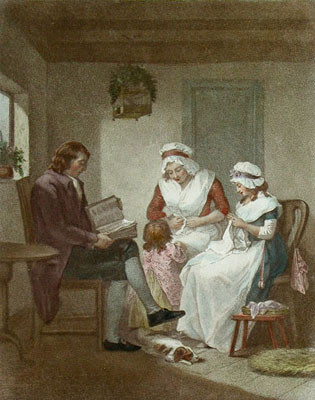
Domestic Happiness, after George Morland
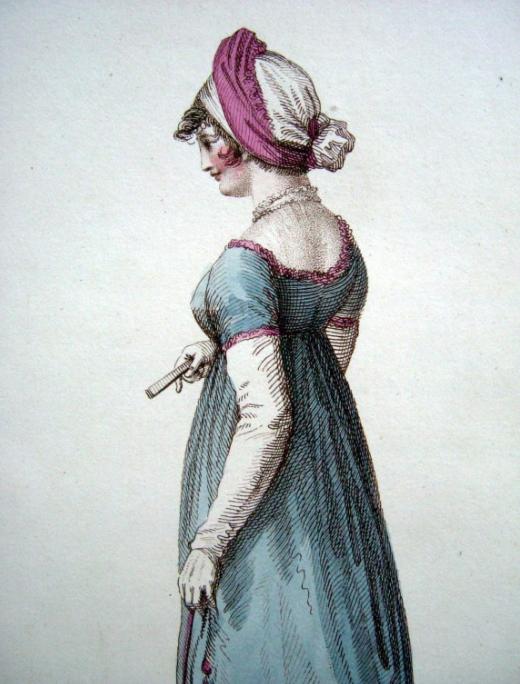
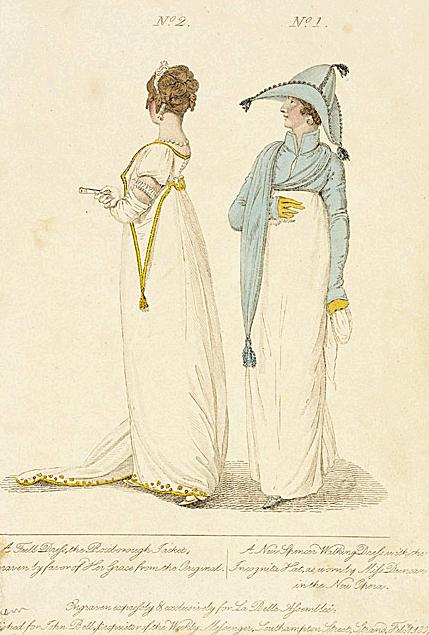
We have come to associate the Regency period with fine white, high-waisted muslin dresses that were beautifully detailed and embroidered. Until quite recently in human history, a lady did not roam far from her sewing basket. She would mend, sew, and embroider whenever she had spare time. (Even the finest lady in the land could be found plying her needles.) During the day she would sit near a well lit window or even outdoors, and during the long evening hours she would sit by the fireside in a room with other family members, sharing the light from expensive candles (sometimes a single one). For entertainment, one of the men would read aloud from a book, or other family members would play musical instruments. Jane Austen was well known for her sewing skills and examples of her needlework are shown in the Jane Austen Museum in Chawton.
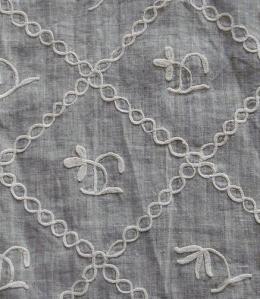
Diamond shaped pattern with a flower in the center
White work is a broad term, one that may be said to encompass any white-on-white needlework, that is, needlework that uses a white yarn or thread on a white ground to create a pattern. Various techniques are employed to make these patterns stand out in high relief against their monochrome background, with the result that many white work pieces have an intensely sculptural quality
All over the country, women carried their needlework with them on visits, and traded patterns among friends.
These techniques include embroidery, drawn work, pulled-fabric work, stump work, stuffed work, cording, quilting, candlewicking, and, later, weaving, both by draw loom and machine. – From Lap to Loom: The transition of Marseilles white work from hand to machine
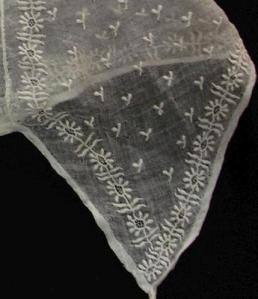
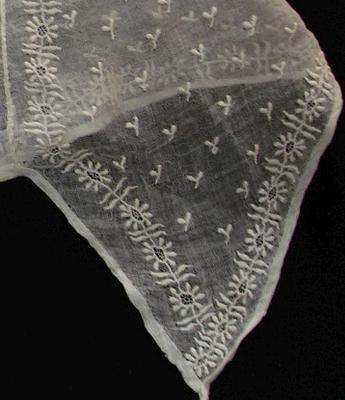
Detail of cap with twigs and flowers on a ladder motif
Whitework embroidery was frequently used on muslin dresses, fine lawn caps, handerkerchiefs, tablecloths, and bed linens. Patterns were featured in Ladies Periodicals, showing many different motifs, some fancier than others.
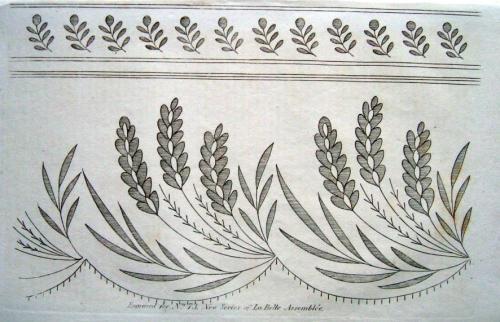
1815 La Belle Assemblee Wheat sheaf design
The finest whitework was done on cambric and fine muslin, or netting. This was called French embroidery, or French Hand Sewing. The most delicate threads and techniques were utilized to make gorgeous, lacy handkerchiefs, veils, bonnets, cuffs, collars and baby clothes, as well as gifts to very special friends…
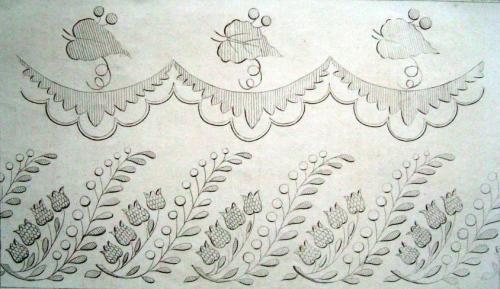
1823 Ackermann embroidery pattern
Christening gowns and robes of the time were very heavily embroidered and were most treasured by their owners. Lots of different patterns and stitches were used, with lots of feather stitching all over, leading to flowers made of satin stitch, eyelets, and buttonhole stitches so tiny as to be difficult to see, and almost all with matching bonnets and slips or petticoats. French knots decorated edges.
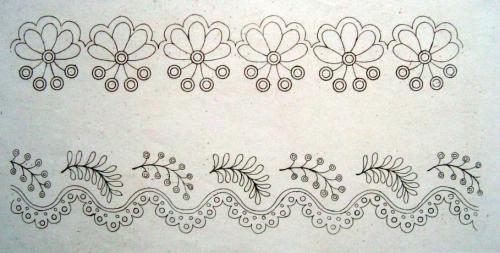
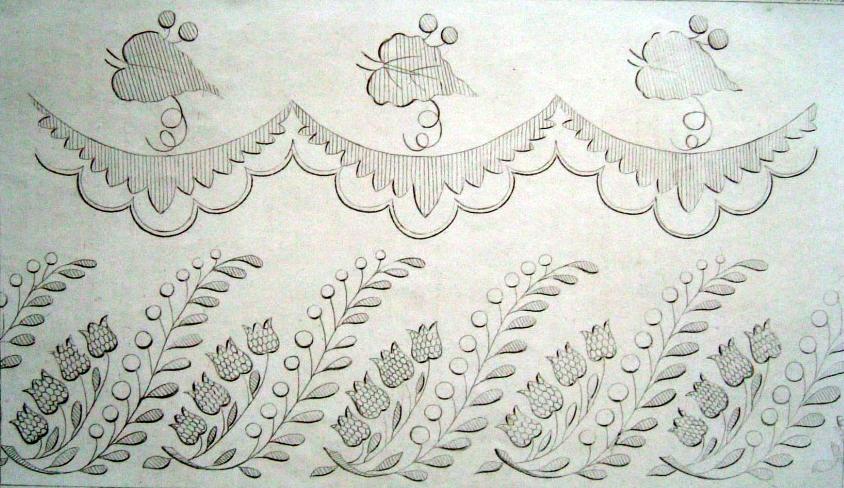
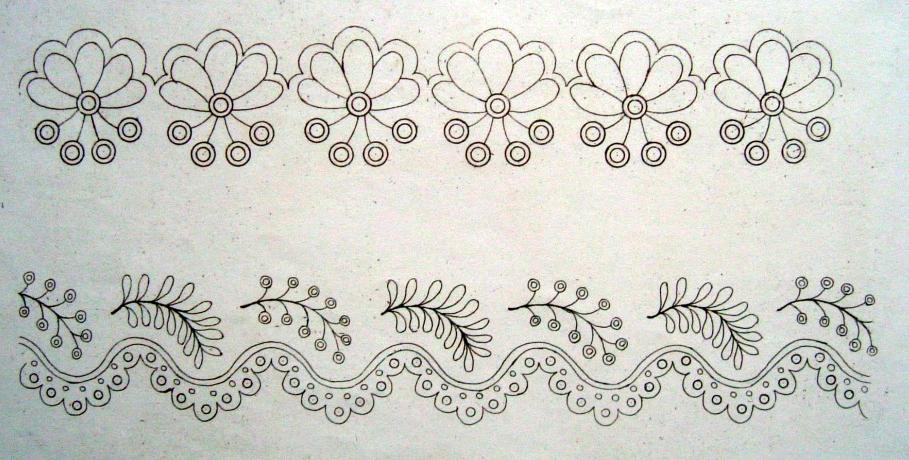
1825 Two simple muslin edging patterns
Wedding gowns, too, were embroidered with these techniques, and some of the grooms’ clothes, too, were embroidered to match! – Whitework embroidery

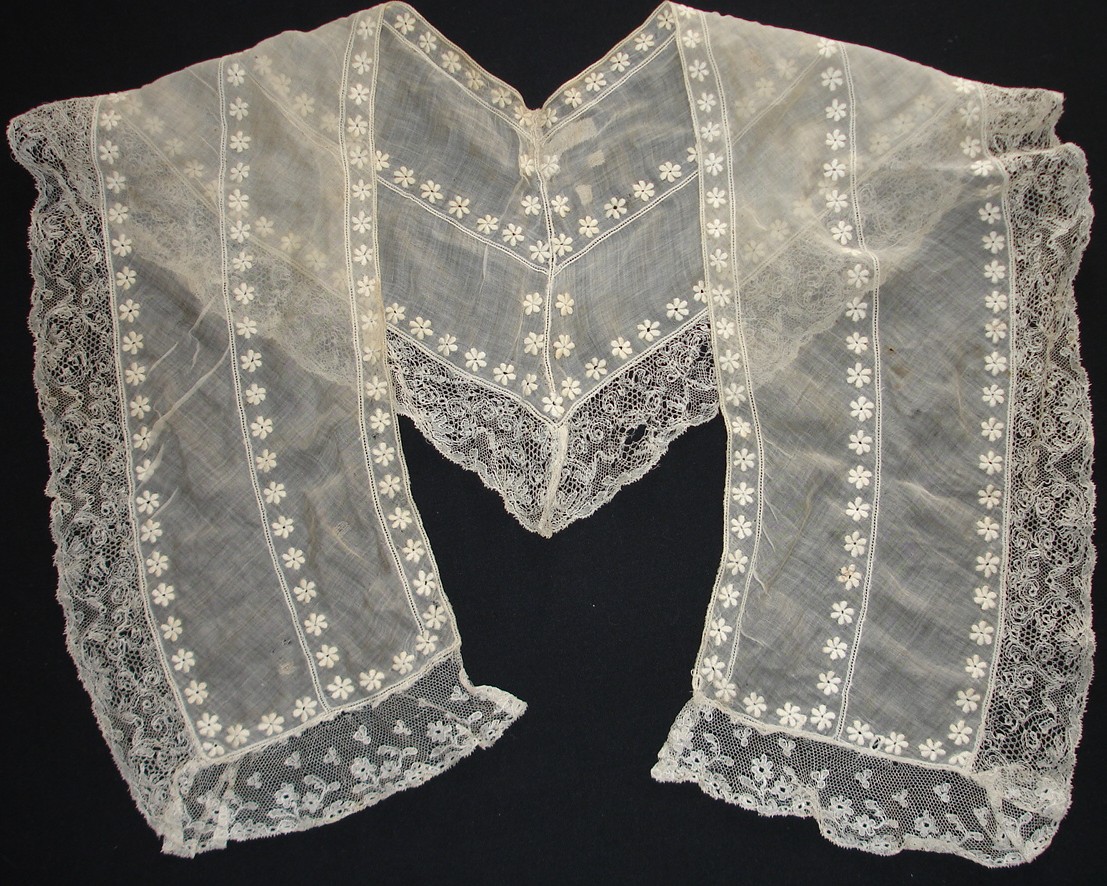
Embroidered collar with lace
More on the topic:
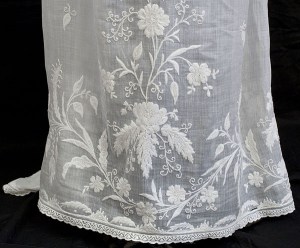
Detail of the hem of a muslin gown. Vintage Textiles.
Read Full Post »















 Jane Austen's World
