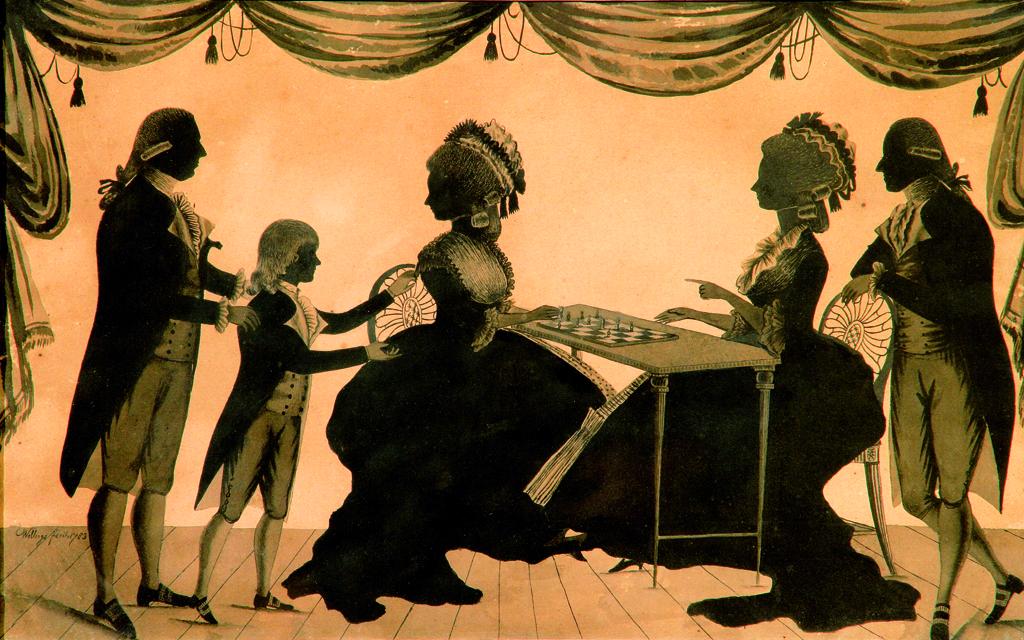
 Chawton House Library has in its collection a rare green suit worn by Jane Austen’s brother, Edward. The suit – a child’s frock coat with matching breeches – looks very similar to the clothes young Edward is seen wearing in the Wellings Silhouette, which depicts his presentation to his adoptive parents. The suit is made of green silk, while the coat is fully lined with gold taffeta. Edward apparently liked oversized buttons, which can be seen in this frock coat and in the Grand Tour painting he had commissioned during his travels through Europe as a young man.
As you can see from the images of the suit (below), extensive and expensive conservation work is needed to stabilize the suit’s condition to prevent its further deterioration. Work on long term preservation is required before the suit (which was made in 1789 ) can be displayed, and donations are needed for its long term preservation.
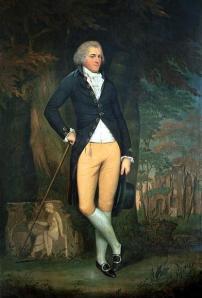
Edward Austen Knight on the Grand Tour
The suit’s provenance is impeccable. While experts can’t categorically say that this is the actual jacket worn in the Wellings silhouette, it certainly belonged to Edward. The suit was passed down through generations of the Knight and Bradford family, and finally ended up in a dressing up box belonging to the Bradford family. The Bradfords are relations of the Knight Family and also descendents of Edward Austen Knight. Richard Knight, current owner of Chawton House, was given the suit some years ago by the Bradford Family.
Edward a fortunate child, had two families who considered him their son: the Austens and the Knights. The following history (which is reproduced by permission), chronicles how Edward Austen was adopted by the Knight family, a practice commonly followed by childless couples of the time:
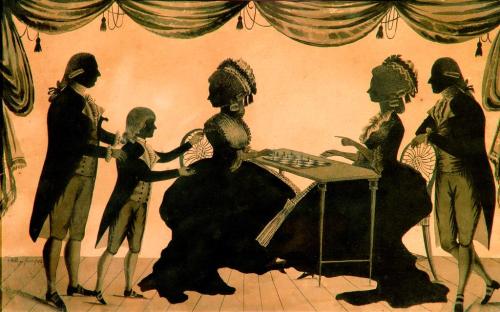
Rev. George Austen presents his son Edward to the Knight family
The freehold of Chawton House has remained in the Knight family ever since the sixteenth century, though on many occasions the ownership passed laterally and sometimes by female descent, requiring several heirs to change their surnames to Knight. Sir Richard Knight, who inherited at the age of two in 1641, had no children and he left the estate to a grandson of his aunt, Richard (Martin) Knight. His brother, and then his sister, Elizabeth, inherited in their turn. During the first part of the eighteenth century, Elizabeth undertook the further development of the house and gardens. She married twice, but again no children were born, and when she died the estate passed to her cousin Thomas Brodnax May Knight, who united it with his own large fashionable property in Kent, Godmersham Park.
In 1781, Thomas Knight II inherited, but when he and his wife Catherine showed no sign of having children of their own, they adopted a son of the Reverend George Austen, who was a cousin of Thomas Knight’s. The Austen’s had six sons and two daughters, and the Knights adopted the third eldest son, Edward. Edward Austen Knight eventually took over management of the estates at Godmersham and Chawton in 1797, living mostly at Godmersham and letting the Great House at Chawton to gentlemen tenants.
In 1809 he offered a house in the village to his mother and two sisters Cassandra and Jane, and it was there that Jane Austen began the most prolific period of her writing life. Her career as a novelist took off with the publication of Sense and Sensibility in 1811, and she went on to publish a further three of her novels while at Chawton (two more followed shortly after her death). She lived in Chawton almost until her death in 1817, only moving to Winchester near the end of her life to be nearer medical care.
This meeting and subsequent adoption is a pivotal moment in English literary history because, had not Edward been adopted by Thomas and Catherine Knight, and then inherited Chawton House, his sister, Jane Austen may not have been able to complete her novels and as a consequence, probably the most famous women writers of the age, would never have been discovered.
The Library intends to eventually display the suit in the Oak room at Chawton House, a room well known by Jane Austen and where the original of the ‘Wellings’ silhouette is located. Supporters are asked to donate funds for the project, which will cost £12,000 ($ 17, 318). A stockman and environmentally controlled cabinet need to be custom-made for a secure display. A child’s mannequin, which must be constructed of conservation quality materials, will also be made for the display.
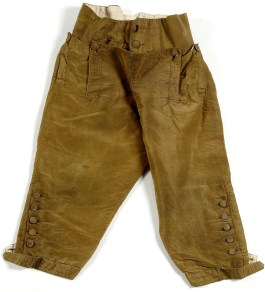
Green silk Breeches, dated to approximately 1789.

Frock coat with lining
Additional plans include making a replica suit to show to school children. Students and visitors will learn about the social history and background of the suit, including its style and construction, and from what materials the suit was made (silk and taffeta), who made it, and where the silk came from.
To make a donation, click on the link to the Virgin Giving website.
About Chawton House:
The house is open to the public for ‘Open’ tours in the afternoon of Tuesdays and Thursday each week, and pre booked tours most days of the week. Conferences based on studies of the ‘Long’ 18th Century and women writers are scheduled regularly. Last year an important three day international conference was held to celebrate the bicentennial anniversary of Jane Austen’s arrival in Chawton. The event was attended by Austen scholars from all over the world. In excess of 8,000 visitors visited the house, gardens and library last year.

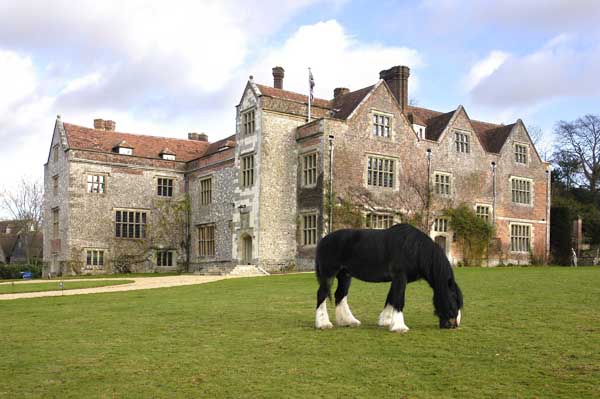
Chawton House (Image from website)
Chawton House Library works in partnership with Jane Austen’s House Museum to provide high quality visits to both sites for primary, secondary and A level schools and colleges. These include presentations of Jane Austen Life and works, tours of both houses, workshops relating to dress, manners and the use of herbs, dancing in replica clothing and an opportunity to handle real objects from the period of Austen’s life. For this work both Houses were awarded a Heritage Education Trust award. Restoration of Edward’s suit is integral to the history of Chawton House and also has an important place in the interpretation of the life and legacy of Jane Austen.
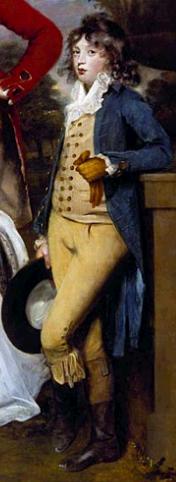
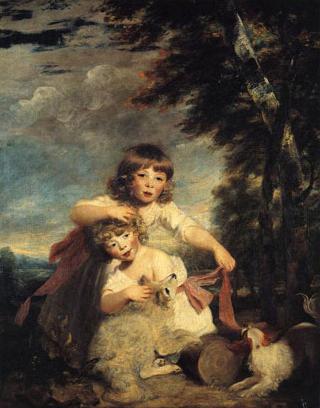
Thomas Draddyll in 1789 wears a typical boy's suit of the era. Painted by Sir Joshua Reynolds.
Breakdown of Project Costs
- Conservation of the Suit: £6629.35
- Display Case: £4788.13
- Mount or Stockman: £587.50
- Replica Suit: £646.25
- Total Project Costs £12,651.23
More on the topic:
Read Full Post »

















 Jane Austen's World
