Feeds:
Posts
Comments

Archive for the ‘Holiday’ Category

Making traditional black butter

Inquiring readers: Reader Cora Harrison recently placed this comment on my blog: “In one letter, Jane [Austen] spoke of serving ‘black butter’ with wigeon and that she thought the butter was bad … Poor Jane, I thought. However, in reading a book called The Feast of Christmas I discovered that black butter was not butter at all, but what I would call a fruit cheese, made from equal quantities of apples, blackcurrants or blackberries and less sugar, and then boiled until it sets – and of course, the colour would be black!”

Her comment so intrigued me, that I decided to look up the topic. Jane wrote to her sister on December 27, 1808:

The first pot [of black butter] was opened when Frank and Mary were here, and proved not at all what it ought to be; it was neither solid nor entirely sweet, and on seeing it Eliza remembered that Miss Austen had said she did not think it had been boiled enough. It was made, you know, when we were absent. Such being the event of the first pot, I would not save the second, and we therefore ate it in unpretending privacy; and though not what it ought to be, part of it was very good.”

The recipe for making black butter, or apple butter as it is commonly known today, harkens back to medieval times. After the winter crop was picked, the preserve was made in huge quantities. In the 18th century, twenty percent of Jersey’s arable land was made up of orchards, and the tradition of producing ‘black butter’ or ‘Le Niere Buerre’ became an annual social  and festive occasion.  Jersey black butter was made from cider apples that were slowly boiled over a fire. Women would peel hundreds of pounds of apples, while the men and children would gather enough wood to keep the fire going for almost two days. After the cider was ‘reduced’ by half, apples, sugar, lemon, liquorice and spices were added. The Jersey tradition of making black butter included singing, dancing, and storytelling all through the night and until early morning. Jersey Island black butter is characterized by the addition of liquorice, which made the preserve quite dark. – RecipeZaar & BBC Jersey Black Butter.

According to Food Legends, black butter “contains no butter, the butter in the name being like the cheese in lemon cheese, more a description of the consistency and application of the product than anything else; and second, it is not really black, indeed a great deal of effort goes into avoiding the burning that would change the dark brown mass to black.” The following is likely Jane Austen’s recipe for Black Butter. Traditionally, the preserve is spread on bread, or it can be eaten by itself:

    Take 4 pounds of full ripe apples, and peel and core them. Meanwhile put into a pan 2 pints of sweet cider, and boil until it reduces by half. Put the apples, chopped small, to the cider. Cook slowly stirring frequently, until the fruit is tender, as you can crush beneath the back of a spoon. Then work the apple through a sieve, and return to the pan adding 1lb beaten (granulated) sugar and spices as following, 1 teaspoon clove well ground, 2 teaspoons cinnamon well ground, 1 saltspoon allspice well ground. Cook over low fire for about ¾ hour, stirring until mixture thickens and turns a rich brown. Pour the butter into into small clean jars, and cover with clarified butter when cold. Seal and keep for three months before using. By this time the butter will have turned almost black, and have a most delicious flavour. – Copyright Maria Hubert von Staufer March 1995

Black butter on bread

This recipe, which Cora must have at first thought Jane Austen was referring to, is a black butter that is generally served with fish, such as skate or salmon:

Black Butter: Put into a frying pan the necessary amount of butter, and cook it until it has a brown color and begins to smoke. At this moment add a large pinch of concassed parsley leaves and spread it immediately over the object to be treated. – Chest of Books

More on the topic:

Read Full Post »

Gentle readers, I am taking a short hiatus from this blog for Thanksgiving week. Meanwhile, enjoy these images of people dining in days of yore…

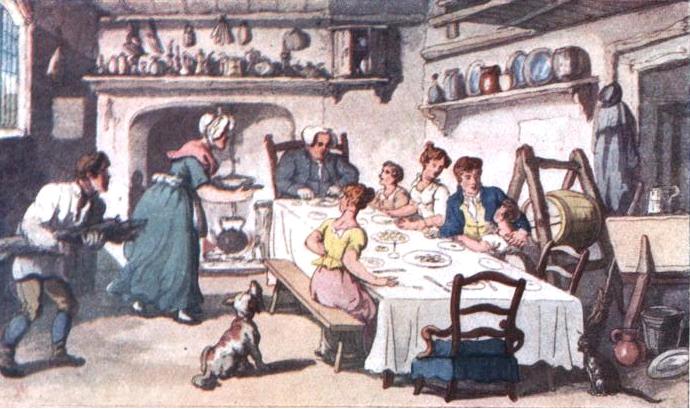
Dining for most people was a simple affair and food was taken from the land. Many families, unless their house was large enough to accommodate a dining room, ate in the kitchen.

Notice in this image of a family sharing a meal by Thomas Rowlandson (from The Vicar of Wakefield by Oliver Goldsmith), that the meal is eaten during the day and near the fire.

The rich could afford to eat by candlelight, as in this early 20th C. image of a Georgian dinner scene.

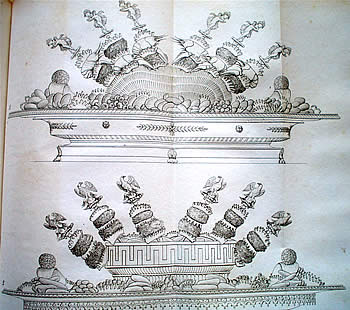
For some, like the Prince Regent, dinners were elaborate affairs.

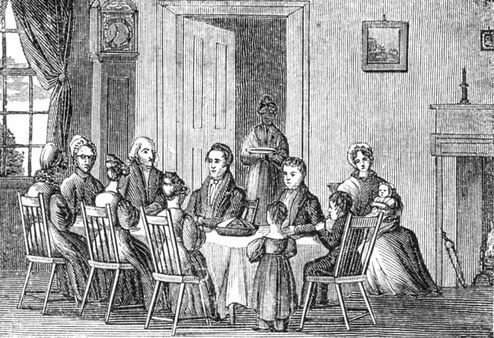
For other families the meal was more basic and simple.

Family Meal

The hours in which people ate meals were changing:

In the beginning of the sixteenth century in England, dinner, the main meal of the day, used to begin at 11:00AM. Meals tended over time to be eaten later and later in the day: by the eighteenth century, dinner was eaten at about 3:00PM…By the early nineteenth century, lunch, what Palmer in Moveable Feasts calls “the furtive snack,” had become a sit-down meal at the dning table in the middle of the day. Upper-class people were eating breakfast earlier, and dinner later, than they had formerly done…in 1808…dinner was now a late meal and supper a snack taken at the very end of the day before people retired to bed. For a long time luncheon was a very upper-class habit; ordinarily working people dined in the early evening, and contented themselves as they had done for centuries with a mid-day snack…Supper now means a light evening meal that replaces dinner; such a meal is especially popular if people have eaten a heavy lunch – The Rituals of Dinner, Margaret Visser [Penguid:New York] 1991 (p. 159-160) – Food Timeline

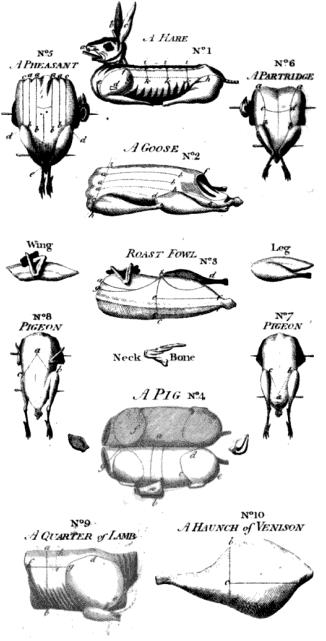
Image source: The Universal Cook: And City and Country Housekeeper, John Francis Collingwood and John Woollams, Principal Cooks at The Crown and Anchor Tavern in the Strand, 1792

Meat made up a large part of the Regency diet, even for the middle class. For most people living in London, the animals had to be brought a long way to market. Due to the length of the journey, the quality of meat was often poor. In contrast, venison and game procured from country estates and served fresh was often considered prize meat.

The Breedwell Family, Thomas Rowlandson

Families tended to be large and extended. In this boisterous family scene by Rowlandson, the Breedwells obviously bred beyond “the heir and the spare.”

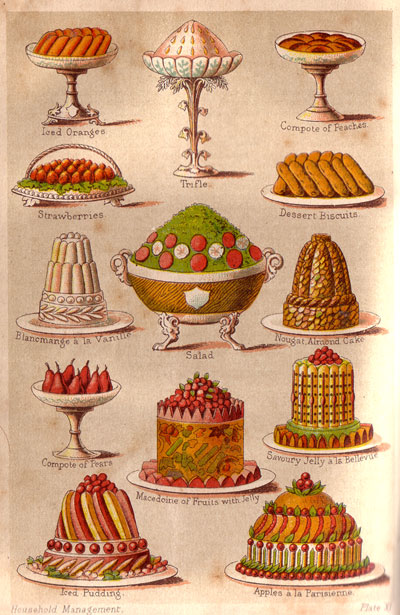
Desserts, Isabella Beaton

Desserts made up the last course of the meal. Even for the middle class this course was elaborate and plentiful, but for the rich it was spectacular.

Walled kitchen garden

Kitchen gardens provided fresh produce during the growing season. The very rich grew fruits and vegetables in hot houses, but most people ate meat, soups, or bread throughout the year. Fruit and vegetables were preserved, or, as in the case of apples and root vegetables, stored through the winter.

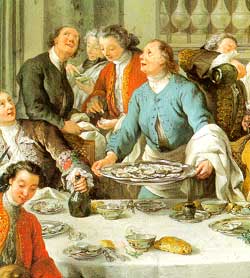
Seafood had to be served fresh and within hours of its harvest. Chances were that this tavern, where oysters were served on a platter, sits in a geographic area by the sea.

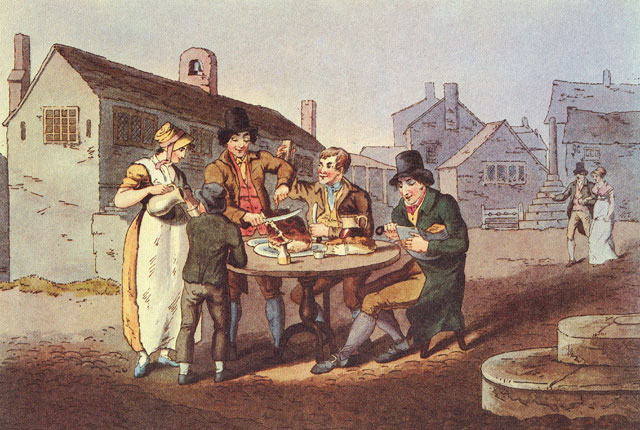
Life in Yorkshire

Elegant, or simple, the family meal meant togetherness.

Happy Thanksgiving everyone

More on the topic:

Read Full Post »

Robert Burns, Auld Lang Syne

Robert Burns, Auld Lang Syne

Midwinter celebrations  have been celebrated in England since ancient times. In Scotland one such celebration was known as Hogmanay; in England it was called New Year’s Eve. The Gregorian calendar marks December 31st as the last day of the year, but New Year’s Day was not always celebrated on January 1st. In Anglo-Saxon England the year started on the 25th of December. The day has also been celebrated  on March 1st, March 25th, and September 24th, depending on which calendar was used. As early as the 17th century,when the legal year began on March 25th,  Samuel Pepys would write about the passing of the old year on December 31st, eighty years before England moved the start of the year to January 1st.

Father time

Father time

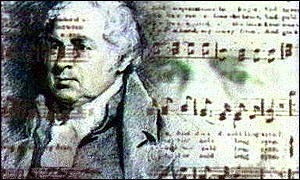
Today we sing  Auld Lang Syne at the stroke of midnight. Commonly thought to be written in the 1700s by the poet Robert Burns, who was inspired by earlier renditions, the song was published after his death in 1796. According to the BBC article, Have Old Connections Been Forgot? BBC news story, the song is “now thought that the tune to match the words was part of the overture for Rosina, an obscure operetta written in 1783 by Englishman William Shield, who was born in Swalwell, Gateshead in 1748.” The words Auld Lang Syne literally mean “old long ago,” or “the good old days.”

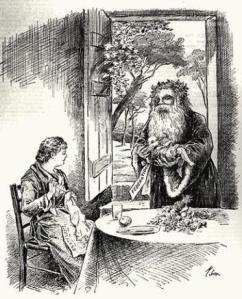
Since the days of the Romans, the passage of time has been associated with the god Saturn, who is the inspiration of Old Father Time.  Read my other post about New Year’s Eve at this link.

Have a safe and happy New Year’s Celebration!

Read Full Post »

This rare 1791 edition of Les Amours de Psyché et de Cupidon at David Brass Rare Books features lovely illutstrations of Cupid and Psyche. Happy Valentine’s Day!

Read Full Post »

New Year’s Customs

The following selection of quotes come from Yule Tides in Many Lands, Mary P. Pringle and Clara A. Urann, Boston, 1916, Project Gutenberg, pages 50-51.

“England of all countries has probably known the merriest of Yule-tides, certainly the merriest during those centuries when the mummers of yore bade to each and all

“A merry Christmas and a happy New Year,
Your pockets full of money and your cellar full of beer.”

There seems always to have been more or less anxiety felt regarding New Year’s Day in England, for “If the morning be red and dusky it denotes a year of robberies and strife.”

“If the grass grows in Janivear
It grows the worse for ‘t all the year.”

It was very desirable to obtain the “cream of the year” from the nearest[51] spring, and maidens sat up till after midnight to obtain the first pitcherful of water, supposed to possess remarkable virtues. Modern plumbing and city water-pipes have done away with the observance of the “cream of the year,” although the custom still prevails of sitting up to see the Old Year out and the New Year in.
There was also keen anxiety felt as to how the wind blew on New Year’s Eve, for

“If New Year’s Eve night wind blow South,
It betokeneth warmth and growth;
If West, much milk, and fish in the sea;
If North, much cold and storm there will be;
If East, the trees will bear much fruit;
If Northeast, flee it man and brute.””

Celebrating New Year’s  on Martha Stewart’s site discusses the origins of ringing in the new year with a toast.

The custom of toasting, as we know it today, originated in medieval England. Back then, the clinking of glasses was accompanied by the exclamation “Waes haeil,” Middle English for “Be well.” The word toast, in this context, came along in the seventeenth century, when pieces of spiced, toasted bread were placed in drinks, perhaps to enhance their flavor. Today, people throughout the world toast the New Year, but without the croutons of times past.

  • Click here for another New Year’s post on this site.

Read Full Post »

« Newer Posts - Older Posts »