Feeds:
Posts
Comments

Archive for the ‘Jane Austen in Bath’ Category

by Brenda S. Cox

“Hot! He [John Thorpe’s horse] had not turned a hair till we came to Walcot Church; but look at his forehand; look at his loins; only see how he moves; that horse cannot go less than ten miles an hour: tie his legs and he will get on.”–John Thorpe, Northanger Abbey, chapter 7

“Walcot Church” in Bath is one of several real churches that Jane Austen mentions in her novels. This particular church is closely connected to Jane Austen’s family. Austen made several visits to Bath and lived there for some years, so she knew Bath and its churches and chapels well.

As we’re celebrating Jane Austen’s life this year, we remember that church was an important part of her life. We’ve already looked at some of the churches she attended: St. Nicholas’ at Steventon, where she went as a child, St. Nicholas’ at Chawton, which she attended during the years she was writing most of her novels, and others (see links at the end of those posts).

St. Swithin’s Walcot in Bath. Completed in 1790, externally it is still much as it was when Jane Austen saw it.

“Walcot Church”

Walcot Church is the parish church of Walcot, right on the London Road coming into Bath. So it would have marked Thorpe’s arrival at the town. Wealthy and influential people worshipped there during the nineteenth century, so this may also be an indirect boast, as Thorpe tries to connect himself with a prestigious place.

A parish church can be called by the name of the parish or by the name of its patron saint. The patron saint of this church is St. Swithin, so the church is St. Swithin’s Walcot. St. Swithin (also spelled Swithun) was an Anglo-Saxon bishop. The patron saint of Winchester Cathedral, where Jane Austen is buried, is also St. Swithin.
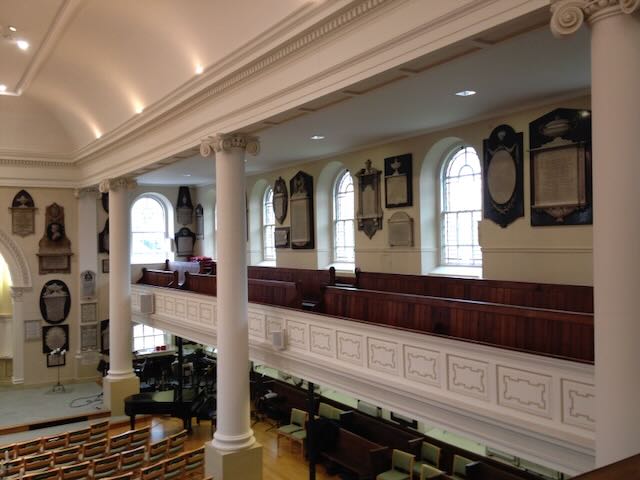
Many “monuments”–the plaques on the walls–commemorate wealthy and influential people who have worshipped at St. Swithin’s Walcot through the years. In Northanger Abbey, Catherine contemplates a similar monument to General Tilney’s wife at the fictional Northanger parish church.

St. Swithin

St. Swithin was associated with various miracles. He came to be connected mostly with the weather. July 15 is St. Swithin’s Day (each saint has a day associated with him or her in the church calendar, usually the day of their death). According to tradition, if it rains on St. Swithun’s day, it will rain for the next forty days, but if it’s clear that day, it will be clear for forty days.

Just before she died, Jane Austen wrote a humorous poem in which St. Swithin threatens Winchester race-goers with rain because they have forgotten him.
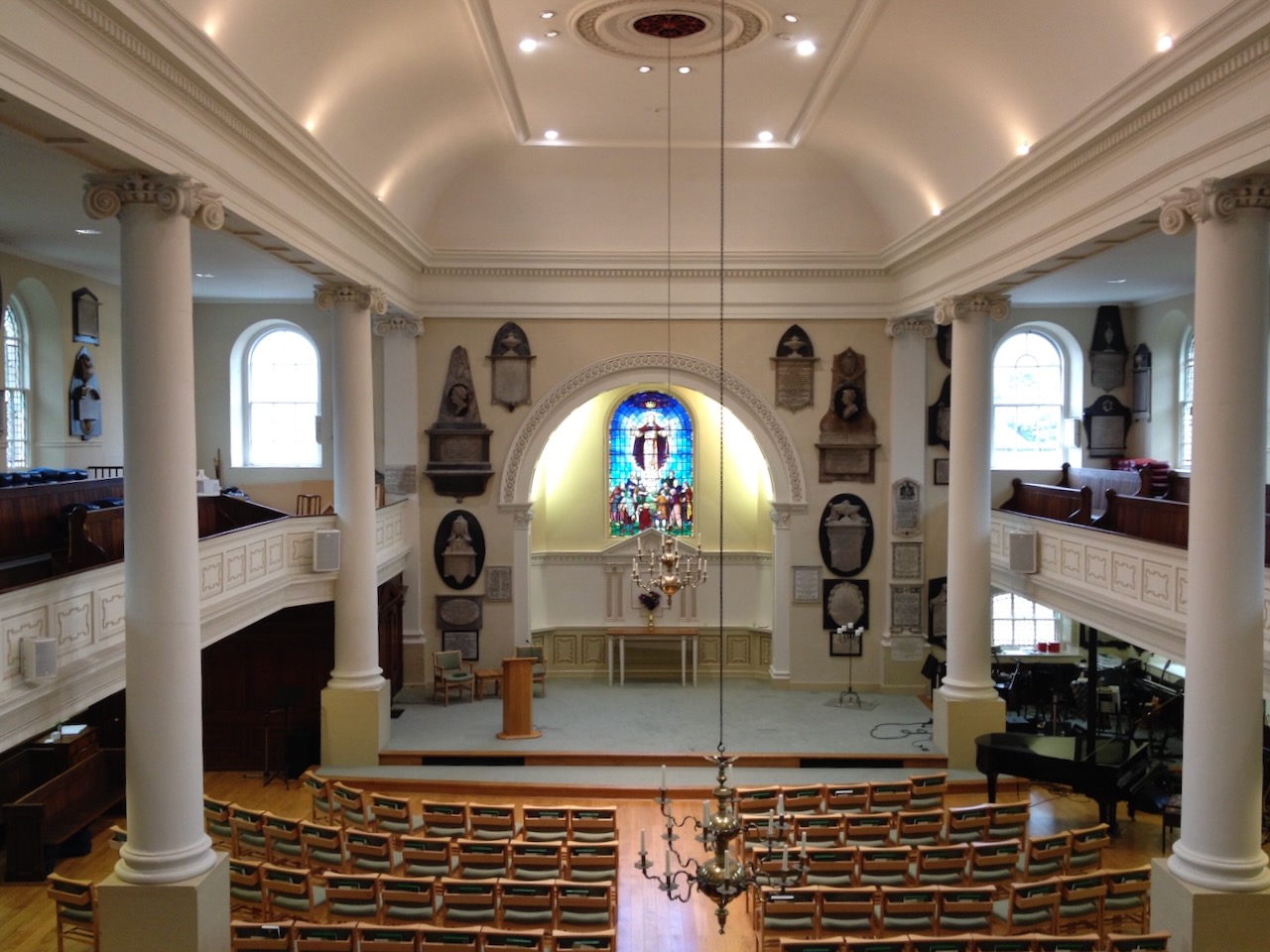
Interior of St. Swithin’s Walcot Church today. The stained glass window was first added in 1841 and replaced in 1958 after it was shattered in World War II. It portrays Christ ascending into heaven, surrounded by his disciples. Modern seating on the main floor, rather than pews, allows the church to host a variety of events.

Austen’s Parents’ Wedding

How was the Austen family connected with St. Swithin’s?

Jane’s father, George Austen, studied at Oxford University. He eventually became an assistant chaplain, then a proctor (in charge of student discipline), called “the Handsome Proctor.” At some point he met Cassandra Leigh, niece of the Master of Balliol College at Oxford. Cassandra was the daughter of a clergyman. Her father eventually retired and moved with his family to Bath. After he died, Cassandra Leigh agreed to marry George Austen, and they were married on April 2, 1764, at St. Swithin’s Church. The register states that Cassandra was living in Walcot parish, while George was in the parish of Steventon in Hampshire. Cassandra’s mother came to the wedding, and her brother, James Leigh-Perrot, and her sister, Jane Leigh, signed as witnesses. George was 32 and Cassandra was 24. They were married by license, presumably a common license, not by banns

By then George Austen had been ordained and gained the living of Steventon, through his relatives. The young couple went straight to Hampshire, where they rented the parsonage at Deane while the Steventon parsonage was prepared. Of course, Jane Austen was born in 1775 in that Steventon parsonage.
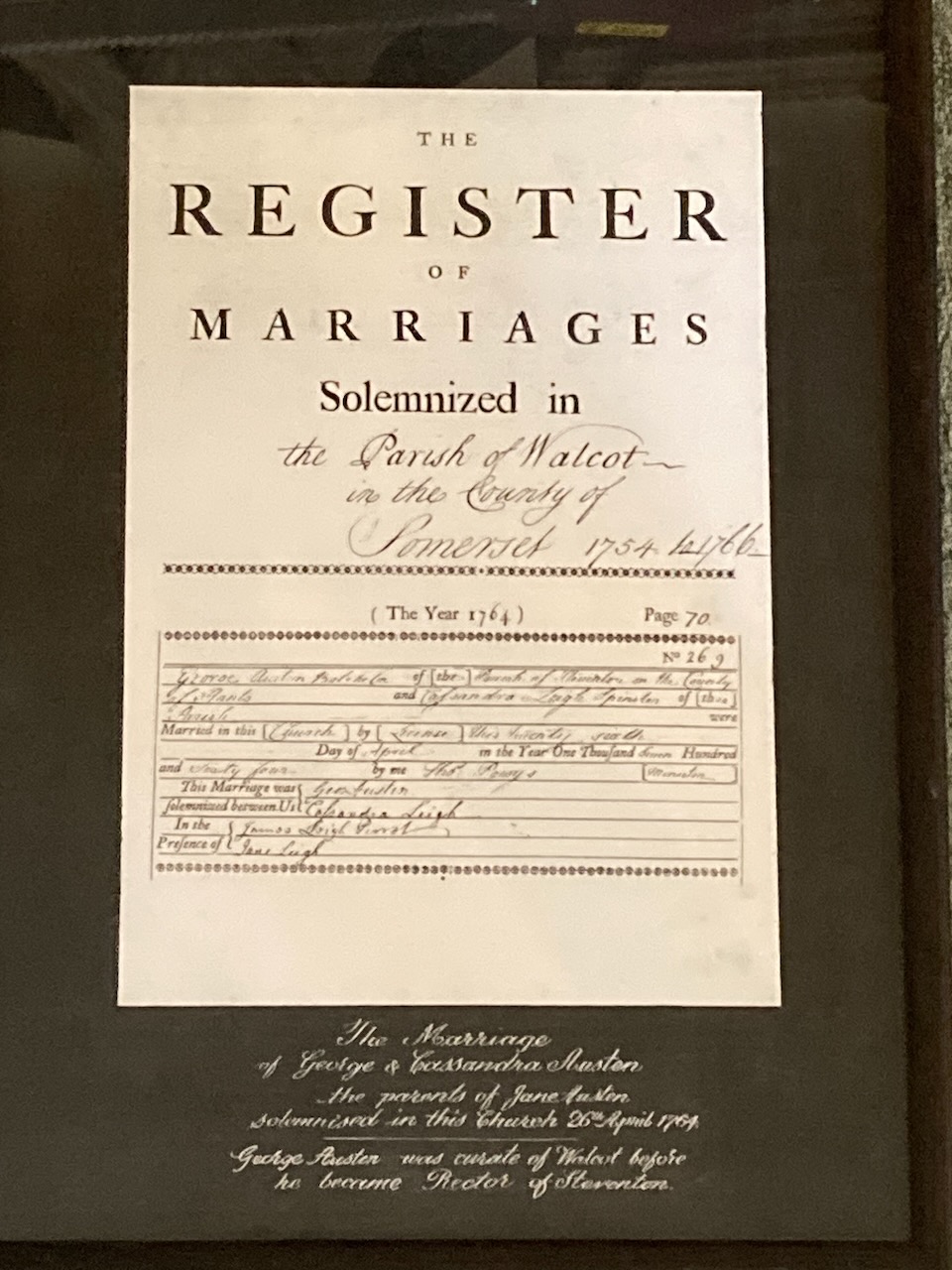
Copy of the entry in the marriage register for George and Cassandra Austen, married at St. Swithin’s Walcot on April 26, 1764.
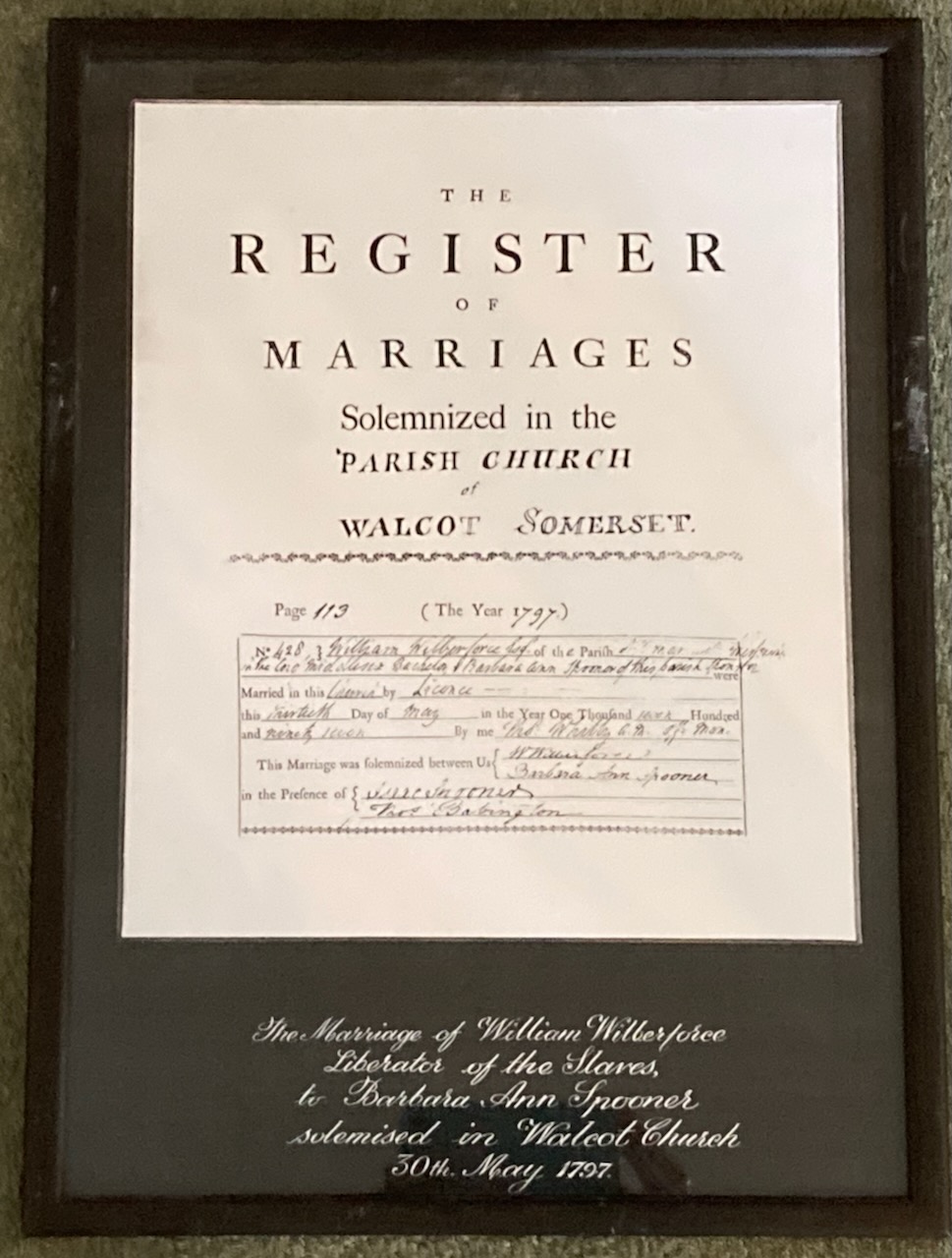
Another famous wedding at St. Swithin’s Walcot: William and Barbara Wilberforce were married there on May 30, 1797, after a six-week whirlwind courtship in Bath. Wilberforce led the fight against the trade in enslaved people and slavery.

George Austen’s Death

In 1801, George Austen left his Steventon parish to his son’s care and moved to Bath with his wife and two daughters, as his wife’s father had done much earlier. In 1805, George Austen died there. He was buried at St. Swithin’s, where you can still see his grave. Jane Austen wrote to her brother Frank, on Jan. 21 and 22, 1805:

“Our dear Father has closed his virtuous & happy life, in a death almost as free from suffering as his Children could have wished. . . . We have lost an Excellent Father. . . .The funeral is to be on Saturday, at Walcot Church. . . . [his body] preserves the sweet, benevolent smile which always distinguished him.” 

Jane did not have a suitor waiting in the wings (as her father had been waiting for her mother in a similar situation). She and her mother and sisters had to depend on her brothers for financial help after her father died.
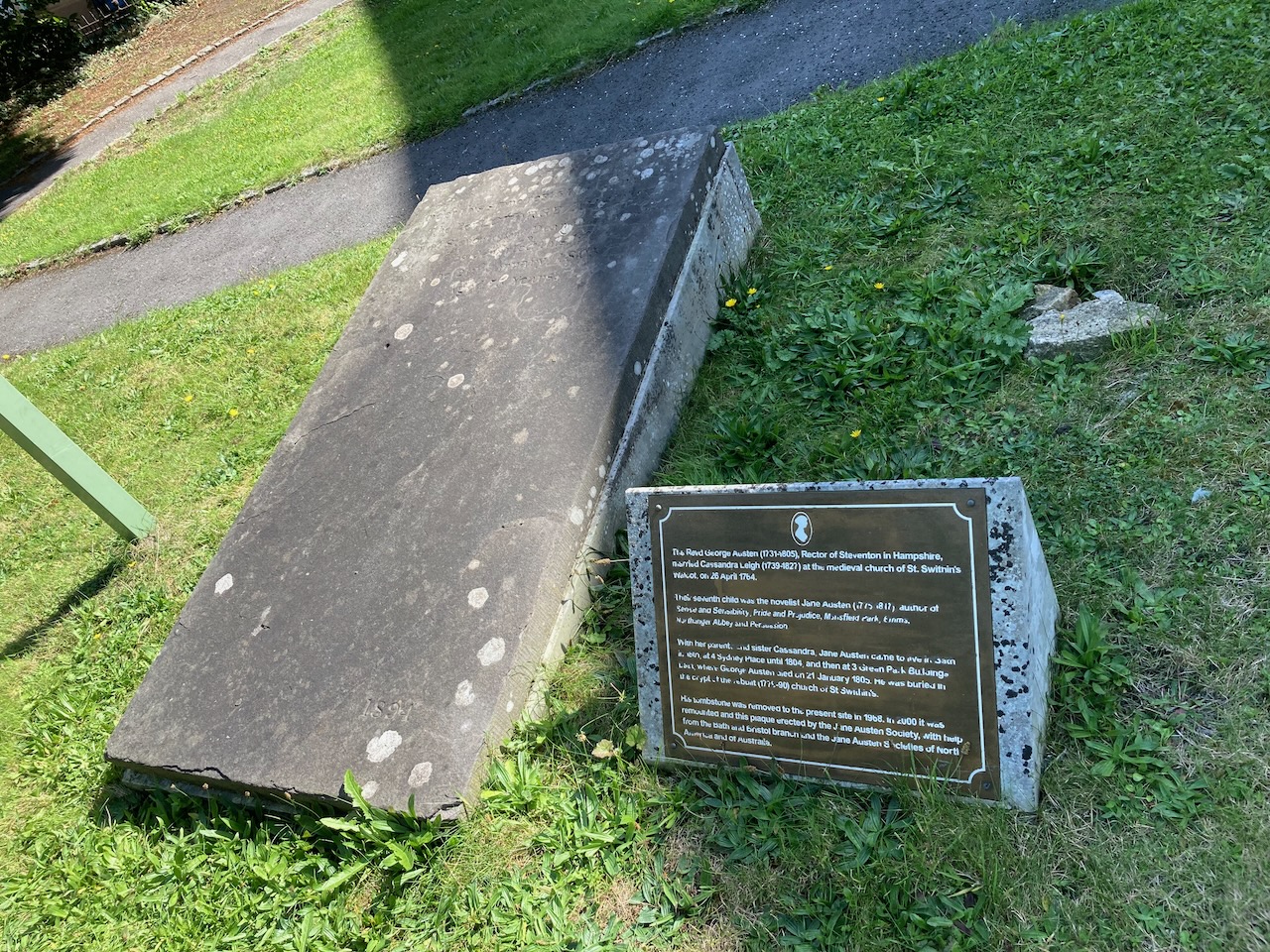
George Austen’s grave at St. Swithin’s Walcot. He died Jan. 21, 1805. The inscription on the gravestone is worn and hard to read. It identifies him as the rector of Steventon and Deane, who died age 75 (meaning, in his 75th year). The newer brown plaque, added in 2000, adds information about his daughter Jane Austen and her residence in Bath.
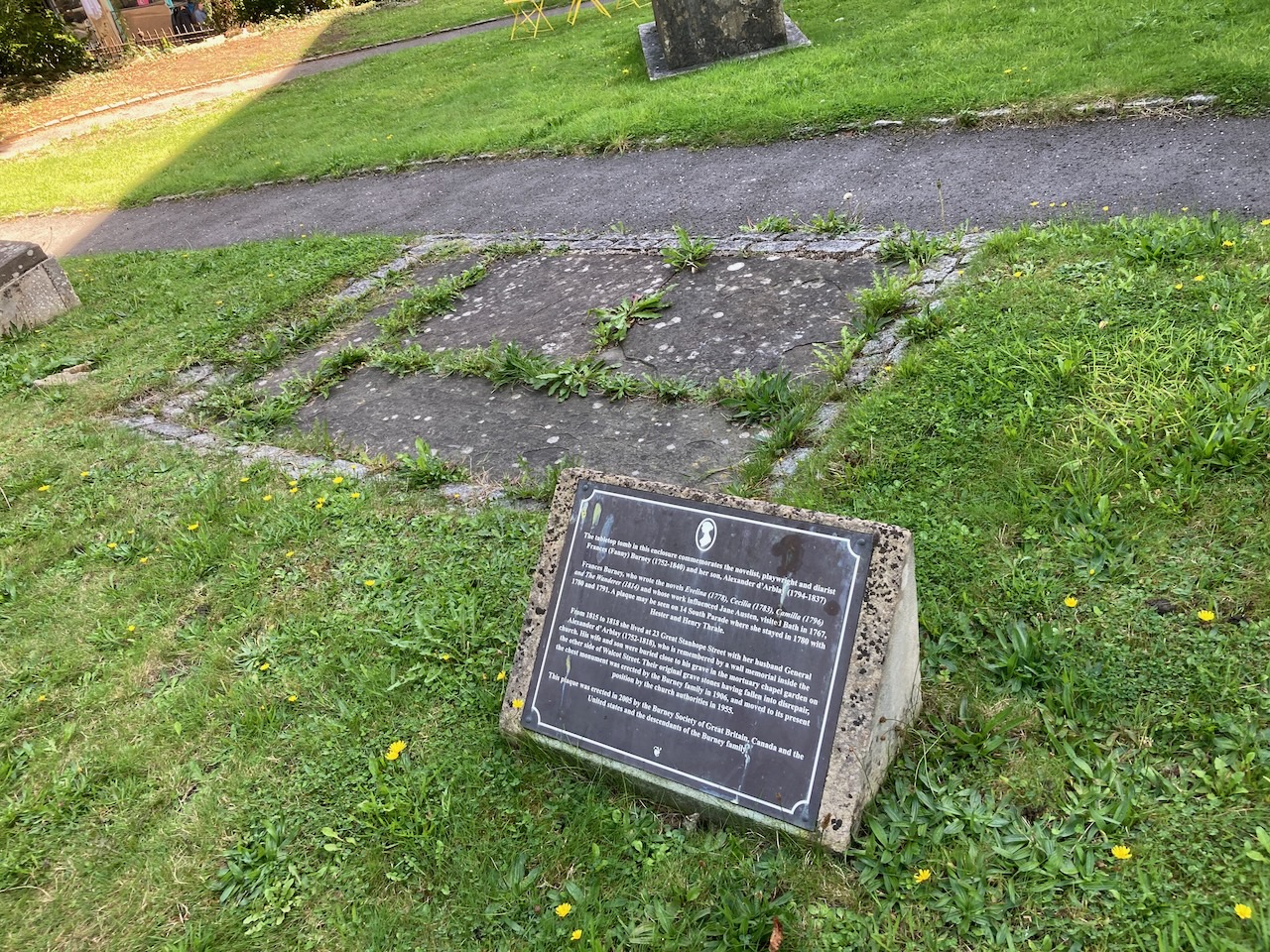
The author Fanny Burney, Jane Austen’s contemporary, is buried and commemorated nearby.

Did Austen ever attend church at St. Swithin’s? I’ve written another post exploring where she may have gone to church and chapel in Bath. It’s likely that she went to St. Swithin’s when she was visiting her aunt and uncle Leigh-Perrot who lived on the Paragon in Bath. That’s the edge of Walcot parish. The church is a steep walk uphill from their home. Later on, when Jane lived in Bath, she more likely went to chapels closer to her family’s various lodgings.

St. Swithin’s is a busy, thriving church today, with many activities going on. Some events of the Jane Austen Festival last fall took place there. The Charles Simeon Trust, started in 1836 by Evangelical clergyman Charles Simeon, is a patron of St. Swithin’s, as well as of Bath Abbey.

Other Churches Mentioned in Northanger Abbey

Northanger Abbey refers to four other real churches or chapels, more obliquely.

Thorpe says he bought his gig from a “Christchurch man.” He is referring to one of the colleges at Oxford University. Oxford and Cambridge are made up of semiautonomous colleges, and a student’s studies were mostly at his own college. Christ Church is a college at Oxford, and its college chapel is also Christ Church Cathedral for the diocese of Oxford. Thorpe shows a cavalier attitude toward “Christchurch” as well as toward everything else.

(A cathedral is the seat of a bishop, who leads a diocese made up of a number of parishes. A parish is a geographical area which was generally served by one main church, like the parishes that Edward Ferrars and Mr. Collins serve.)

Catherine and Isabella expect to worship together in a chapel in Bath; Austen doesn’t tell us which one. It may have been the Octagon Chapel, which would have been convenient to both of them.

Northanger Abbey also indirectly refers to Bath Abbey. Twice the “church-yard” in the center of Bath comes up. The two young men Catherine and Isabella are following go “towards the church-yard,” and later Catherine trips “lightly through the church-yard” to go make her apologies to the Tilneys. This would be the church-yard of Bath Abbey, in the center of Bath. Roger E. Moore, in Jane Austen and the Reformation, argues that Austen purposely did not name the abbey, which was historically the spiritual center of the town. She may have wanted to critique the fact that Bath in her time was a place of pursuing shallow entertainment rather than deeper spirituality.

Near the end of the novel, Catherine is headed home. She looks out for the “well-known spire” of Salisbury. This is ancient Salisbury Cathedral, which has the tallest cathedral spire in England. Her father’s parish is in Salisbury diocese.

While Jane Austen invents country parishes for her characters, she also connects them with spiritual places in the real world.
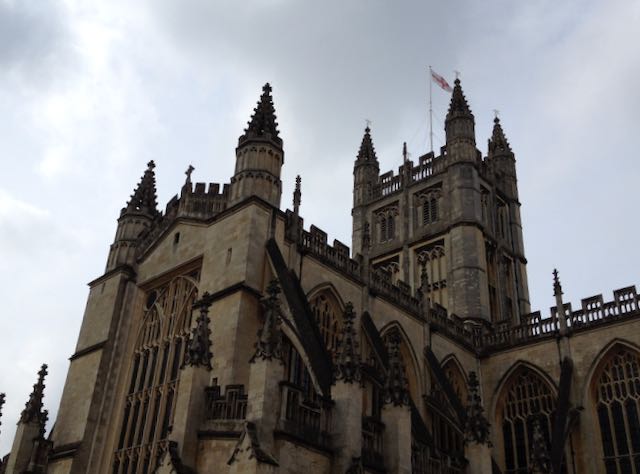
Bath Abbey towers above the city of Bath. It is not mentioned by name in Northanger Abbey, though its church-yard is mentioned.

All images above ©Brenda S. Cox, 2025
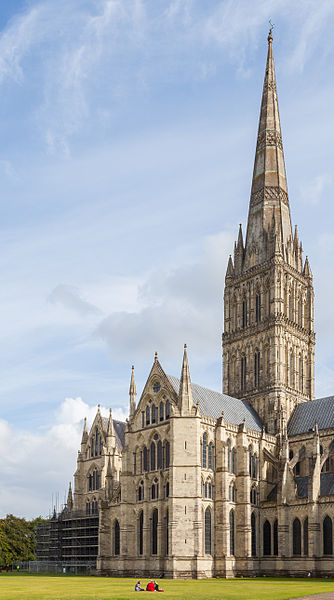
Austen includes real-life churches in her novels, such as Salisbury Cathedral, with the highest spire in England. This is Catherine Morland’s landmark as she heads home.
Photo by Diego Delso, CC-BY-SA license.

Real Churches in Austen’s Novels and Letters

Garrison Chapel

St. Swithin’s, Walcot and other churches in Northanger Abbey

St. George’s, Hanover Square

London Churches

St. Paul’s, Covent Garden: Actors’ Church

Austen Family Churches

Steventon

Chawton

Deane

Hamstall Ridware and Austen’s First Cousin, Edward Cooper

Adlestrop and the Leigh Family

Stoneleigh Abbey Chapel and Mansfield Park

Great Bookham and Austen’s Godfather, Rev. Samuel Cooke

Ashe and the Lefroy Family

Read Full Post »

As spring turns to summer on our month-by-month exploration of Jane Austen’s life, letters, and novels, we turn our attention to May in Jane Austen’s world. If you’re just jumping on the bus, you can find previous articles in this “A Year in Jane Austen’s World” series here: JanuaryFebruary, March, and April.

During last month’s April showers in England, we dreamed of May flowers…and the Hampshire countryside certainly is showing some May flower power. First up, our monthly view of Chawton House Gardens. It certainly is bursting with color!

Chawton House in May: Photo @ChawtonHouse.

May in Hampshire

May is the time of year when the sun shines more regularly and everything bursts into bloom. Summer is close at hand, which means the temperatures are starting to warm up a bit, but frequent rain helps keep the gardens cool and watered. Austen had this to say in May 1811 in a letter to Cassandra:

The chickens are all alive and fit for the table, but we save them for something grand. Some of the flower seeds are coming up very well, but your mignonette makes a wretched appearance. Miss Benn has been equally unlucky as to hers. She had seed from four different people, and none of it comes up. Our young piony (sic) at the foot of the fir-tree has just blown and looks very handsome, and the whole of the shrubbery border will soon be very gay with pinks and sweet-williams, in addition to the columbines already in bloom. The syringas, too, are coming out. We are likely to have a great crop of Orleans plums, but not many greengages—on the standard scarcely any, three or four dozen, perhaps, against the wall. (Chawton, Wednesday May 29, 1811)

Here is a glimpse of Jane Austen’s House Museum and its blooms this month.

Jane Austen’s House in May, Photo: @JaneAustensHouse.

May in Jane Austen’s Letters

We have several letters from May to peruse. Interestingly, several are written from Bath. In an interesting article entitled “A Brief History of Jane Austen in Bath” on VisitBath.com, we read this about Jane Austen:

While many assume that Jane’s connection with Bath began when she moved to 4 Sydney Place in 1801 after her father’s retirement, the Austen family’s history with the City actually dates back further. Jane’s parents were married at St Swithin’s Church in 1764, and Jane herself visited in 1797 and 1799, lodging with her mother and sister-in-law at 13 Queen Square in 1799 while her brother took the waters for his health. Before moving into Sydney Place, she also stayed with her aunt and uncle, the Leigh-Perrots, at No.1 The Paragon. These short visits had a lasting impact on the young Jane Austen, inspiring her to write Northanger Abbey about Catherine Morland’s first visit to Bath and her “eager delight” at all it offered. (VisitBath.com)

May 17, 1799 (Queen’s Square):

  • Jane’s thoughts on the house: “We are exceedingly pleased with the house; the rooms are quite as large as we expected. Mrs. Bromley is a fat woman in mourning, and a little black kitten runs about the staircase. Elizabeth has the apartment within the drawing-room; she wanted my mother to have it, but as there was no bed in the inner one, and the stairs are so much easier of ascent, or my mother so much stronger than in Paragon as not to regard the double flight, it is settled for us to be above, where we have two very nice-sized rooms, with dirty quilts and everything comfortable. I have the outward and larger apartment, as I ought to have; which is quite as large as our bedroom at home, and my mother’s is not materially less. The beds are both as large as any at Steventon, and I have a very nice chest of drawers and a closet full of shelves — so full indeed that there is nothing else in it, and it should therefore be called a cupboard rather than a closet, I suppose.”
  • Happy and content, despite a delay with her trunk: “I find no difficulty in closing my eyes. I like our situation very much; it is far more cheerful than Paragon, and the prospect from the drawing-room window, at which I now write, is rather picturesque, as it commands a prospective view of the left side of Brock Street, broken by three Lombardy poplars in the garden of the last house in Queen’s Parade.”
The Royal Crescent in Spring (Photo Courtesy of VisitBath.com).

May 1801 (Paragon):

  • May 5 (their journey): “I have the pleasure of writing from my own room up two pair of stairs, with everything very comfortable about me. Our journey here was perfectly free from accident or event; we changed horses at the end of every stage, and paid at almost every turn-pike. We had charming weather, hardly any dust, and were exceedingly agreeable, as we did not speak above once in three miles. Between Luggershall and Everley we made our grand meal, and then with admiring astonishment perceived in what a magnificent manner our support had been provided for. We could not with the utmost exertion consume above the twentieth part of the beef. The cucumber will, I believe, be a very acceptable present, as my uncle talks of having inquired the price of one lately, when he was told a shilling.
  • Food prices: “I am not without hopes of tempting Mrs. Lloyd to settle in Bath; meat is only 8d. per pound, butter 12d., and cheese 9 1/2 d. You must carefully conceal from her, however, the exorbitant price of fish: a salmon has been sold at 2s. 9d. per pound the whole fish. The Duchess of York’s removal is expected to make that article more reasonable — and till it really appears so, say nothing about salmon.”
  • New bonnets: “My mother has ordered a new bonnet, and so have I; both white strip, trimmed with white ribbon. I find my straw bonnet looking very much like other people’s, and quite as smart. Bonnets of cambric muslin on the plan of Lady Bridges’ are a good deal worn, and some of them are very pretty; but I shall defer one of that sort till your arrival.”
The Paragon from Travelpod
  • May 12 (a ball): “In the evening, I hope you honoured my toilette and ball with a thought; I dressed myself as well as I could, and had all my finery much admired at home. By nine o’clock my uncle, aunt, and I entered the rooms, and linked Miss Winstone on to us. Before tea it was rather a dull affair; but then the before tea did not last long, for there was only one dance, danced by four couple. Think of four couple, surrounded by about an hundred people, dancing in the Upper Rooms at Bath. After tea we cheered up; the breaking up of private parties sent some scores more to the ball, and though it was shockingly and inhumanly thin for this place, there were people enough, I suppose, to have made five or six very pretty Basingstoke assemblies.”
  • The sale of their belongings: “I thank you for your Sunday’s letter, it is very long and very agreeable. I fancy you know many more particulars of our sale than we do; we have heard the price of nothing but the cows, bacon, hay, hops, tables, and my father’s chest of drawers and study table. Mary is more minute in her account of their own gains than in ours; probably being better informed in them. I will attend to Mrs. Lloyd’s commission and to her abhorrence of musk when I write again.”
Fancy Ball at the Upper Rooms, Bath, Thomas Rowlandson
  • May 21 – the search for apartments continues: “Our views on G. P. Buildings seem all at an end; the observation of the damps still remaining in the offices of an house which has been only vacated a week, with reports of discontented families and putrid fevers, has given the coup de grace. We have now nothing in view. When you arrive, we will at least have the pleasure of examining some of these putrefying houses again; they are so very desirable in size and situation, that there is some satisfaction in spending ten minutes within them.”
  • Walking with Mrs. Chamberlayne: “It would have amused you to see our progress. We went up by Sion Hill, and returned across the fields. In climbing a hill Mrs. Chamberlayne is very capital; I could with difficulty keep pace with her, yet would not flinch for the world. On plain ground I was quite her equal. And so we posted away under a fine hot sun, she without any parasol or any shade to her hat, stopping for nothing, and crossing the churchyard at Weston with as much expedition as if we were afraid of being buried alive. After seeing what she is equal to, I cannot help feeling a regard for her. As to agreeableness, she is much like other people.”
  • On a small party: “We are to have a tiny party here to-night. I hate tiny parties, they force one into constant exertion. Miss Edwards and her father, Mrs. Busby and her nephew, Mr. Maitland, and Mrs. Lillingstone are to be the whole; and I am prevented from setting my black cap at Mr. Maitland by his having a wife and ten children.”
Panorama of Bath from Beechen Cliff, 1824, Harvey Wood

Jane wrote several other “May letters” from Chawton (1811) and Sloane Street (1813):

May 29, 1811 (Chawton):

  • Springtime storms: “Mrs. Terry, Mary, and Robert, with my aunt Harding and her daughter, came from Dummer for a day and a night,—all very agreeable and very much delighted with the new house and with Chawton in general. We sat upstairs, and had thunder and lightning as usual. I never knew such a spring for thunderstorms as it has been. Thank God! we have had no bad ones here. I thought myself in luck to have my uncomfortable feelings shared by the mistress of the house, as that procured blinds and candles. It had been excessively hot the whole day.”
  • Improvements: “The chimneys at the Great House are done. Mr. Prowting has opened a gravel-pit, very conveniently for my mother, just at the mouth of the approach to his house; but it looks a little as if he meant to catch all his company. Tolerable gravel.”

May 20, 1813 (Sloane Street):

  • Travels: “We left Guildford at twenty minutes before twelve (I hope somebody cares for these minutiæ), and were at Esher in about two hours more. I was very much pleased with the country in general. Between Guildford and Ripley I thought it particularly pretty, also about Painshill; and from a Mr. Spicer’s grounds at Esher, which we walked into before dinner, the views were beautiful. I cannot say what we did not see, but I should think there could not be a wood, or a meadow, or palace, or remarkable spot in England that was not spread out before us on one side or other.”
  • Settling in: “I fancy it was about half-past six when we reached this house,—a twelve hours’ business, and the horses did not appear more than reasonably tired. I was very tired too, and glad to get to bed early, but am quite well to-day. I am very snug in the front drawing-room all to myself, and would not say “thank you” for any company but you. The quietness of it does me good.”

May 24, 1813 (Sloane Street):

  • On visiting an exhibition and finding the Mrs. Bingley’s (Jane Bennet’s) likeness and looking for Mrs. Darcy’s (Elizabeth Bennet’s) likeness: “…to my great amusement, Henry and I went to the exhibition in Spring Gardens. It is not thought a good collection, but I was very well pleased, particularly (pray tell Fanny) with a small portrait of Mrs. Bingley, excessively like her. I went in hopes of seeing one of her sister, but there was no Mrs. Darcy. Perhaps, however, I may find her in the great exhibition, which we shall go to if we have time. I have no chance of her in the collection of Sir Joshua Reynolds’s paintings, which is now showing in Pall Mall, and which we are also to visit. Mrs. Bingley’s is exactly herself,—size, shaped face, features, and sweetness; there never was a greater likeness. She is dressed in a white gown, with green ornaments, which convinces me of what I had always supposed, that green was a favorite color with her. I dare say Mrs. D. will be in yellow.”
  • Later that evening, on searching for Mrs. D (Elizabeth Bennet): “We have been both to the exhibition and Sir J. Reynolds’s, and I am disappointed, for there was nothing like Mrs. D. at either. I can only imagine that Mr. D. prizes any picture of her too much to like it should be exposed to the public eye. I can imagine he would have that sort of feeling,—that mixture of love, pride, and delicacy.”
Jane Bennet, Pride and Prejudice (1995).

May in Jane Austen’s Novels

May isn’t mentioned too terribly much in Austen’s novels, but it is a special point of interest and conversation in Emma because of the timing of Frank Churchill’s visit and the timing of the ball:

Emma

  • Frank’s visit: “Emma heard that Frank wrote in the highest spirits of this arrangement, and seemed most fully to appreciate the blessing of having two months before him of such near neighbourhood to many dear friends—for the house was taken for May and June. She was told that now he wrote with the greatest confidence of being often with them, almost as often as he could even wish.”
  • Mr. Weston’s joy: “Mr. Weston’s own happiness was indisputable. He was quite delighted. It was the very circumstance he could have wished for. Now, it would be really having Frank in their neighbourhood. What were nine miles to a young man?—An hour’s ride. He would be always coming over.
  • A ball: “Mr. Weston’s ball was to be a real thing. A very few to-morrows stood between the young people of Highbury and happiness.”
  • May is better for everything: “Mr. Woodhouse was resigned. The time of year lightened the evil to him. May was better for every thing than February.”
  • Evening fire in May: “The whole party walked about, and looked, and praised again; and then, having nothing else to do, formed a sort of half-circle round the fire, to observe in their various modes, till other subjects were started, that, though May, a fire in the evening was still very pleasant.
Anya Taylor-Joy (left) as “Emma Woodhouse” and Callum Turner (right) as “Frank Churchilll.” (2020). Credit : Focus Features.

May Dates of Importance

This brings us now to several important May dates that relate to Jane and her family:

Family News:

May 1801: Austen family leaves Steventon and settles in Bath. Mrs. Austen and Jane travel via Ibthorpe. James Austen and his family take resident at Steventon rectory.

May 1807: Captain Charles Austen marries Fanny Palmer in Bermuda.

Historic Dates:

18 May 1804: Napoleon crowns himself emperor of France.

Writing:

May 1814: Mansfield Park published anonymously, “By the Author of ‘Sense & Sensibility,’ and ‘Pride & Prejudice.’

Sorrows:

24 May 1817: Jane leaves Chawton and moves with Cassandra to Winchester, for medical treatment.

On this day in 1817, Jane Austen left this house for the final time. She went to stay in Winchester, closer to her doctor, where she died two months later, on 18 July. -Jane Austen’s House Museum

May 24, 2024 @JaneAustensHouse

Lovely May

I hope you’re enjoying our journey through each month of the year in Jane Austen’s world. It is a joy to look through this lens into Austen’s life and letters. We’ll continue our exploration and find out what happened in June in next month’s installment, June in Jane Austen’s World!


RACHEL DODGE teaches college English classes, gives talks at libraries, teas, and book clubs, and writes for Jane Austen’s World blog. She is the bestselling author of The Little Women DevotionalThe Anne of Green Gables Devotional and Praying with Jane: 31 Days Through the Prayers of Jane Austen. Now Available: The Secret Garden Devotional! You can visit Rachel online at www.RachelDodge.com.

Read Full Post »

“Well, here we are at Bath; we got here about one o’clock, & have been arrived just long enough to go over the house, fix our rooms & be every well pleased with the whole of it. … it has rained almost all the way, & our first view of Bath has been just as gloomy as it was last November twelvemonth.

Jane Austen to Cassandra Friday, 17 May, 1799

Sunday, 11th September 2022 marks a celebration at Sydney Gardens in Bath to commemorate the completion of the Garden Restoration project. (Facebook: Garden Gala) This project started three years ago. The £ 3.4  million restoration of the gardens and historic buildings includes the Temple of Minerva (below) and the Loggia (link to a 1972 photo not in the public domain).

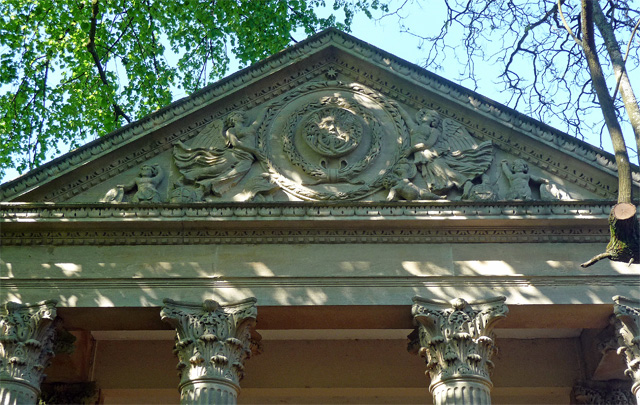
Detail_of_Minervas_Temple,_Sydney_Gardens,_Bath_(geograph_Stephen Richards

Detail of the Minerva Temple, Sydney Gardens, Bath. Wikimedia Commons, Public Domain Image. Stephen Richards, Photographer.

“There is to be a grand gala on Tuesday evening in Sydney Gardens, a concert, with illuminations and fireworks. To the latter Elizabeth and I look forward with pleasure, and even the concert will have more than its usual charm for me, as the gardens are large enough for me to get pretty well beyond the reach of its sound. In the morning Lady Willoughby is to present the colours to some corps, or Yeomanry, or other, in the Crescent, and that such festivities may have a proper commencement, we think of going to . . .”

Jane Austen to Cassandra, June 2, 1799 on a visit to Bath

Plan-of-sydney-gardens-1810

Plan of Sydney Gardens, 1810. Wikimedia Commons, Public Domain

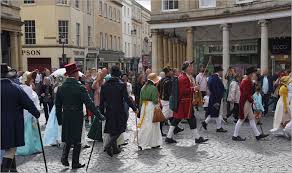
Bath’s 21st century gala celebrating the renewal of Sydney Gardens coincides with the Jane Austen Festival, a well attended and internationally recognized yearly event. Click here to see details for the 2022 Jane Austen Festival which will be held from the 9th to the 18th of September of this year.

janeaustenfestival.padfoot.bath

Jane Austen Festival in Bath, padfoot.org.uk

Location of the gardens:

Sydney Gardens is located at the end of Great Pulteney Street, behind the Holburne Museum. In Jane Austen’s day the museum was known as the Bath Hotel. Built in 1795, the park was popular from the late 18th into the 19th century. Jane and her family moved from Steventon to #4 Sydney Place in May, 1801, when the park was quite new.

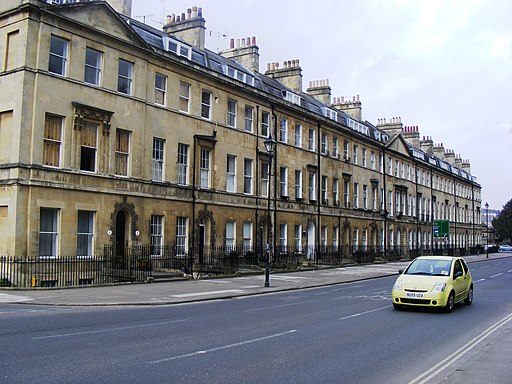
Sydney_Place_Bath-Wikipedia-Public Domain

Sydney Place today. A plaque commemorates the location of #4. Wikipedia. Public Domain

The house the Austen’s rented is situated across the street from the park, diagonally opposite the hotel. (See Google map image below.) 

Bath-Pulteney St-Sydney-Gardens

Sydney Gardens in relation to Great Pulteney Street in Bath, with a star over #4 Sydney Place. Screen shot of Google Maps

The distractions this pleasure garden afforded Bath’s populace and visitors were musical and theatrical entertainments, outdoor parties, fireworks, menageries, illuminated night time walks, and even a hot air balloon ascent. During Austen’s day, the Bath Hotel (now Holburne Museum) drew guests, and offered a tavern, coffee room, and billiard room. These amenities were expected by the upper crust during the height of Bath’s popularity. (“Outdoor Parties in the 1800’s vs Now” – Sasha Semjonova, 2021)

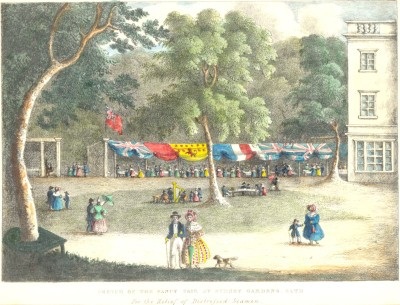
Sketch_of_the_Fancy_Fair_at_Sydney_Gardens,_Bath

Sketch of the Fancy Fair at Sydney Gardens, ca. 1836, artist unknown, Wikimedia Commons, Public Domain.

One can imagine that country women like Cassandra and Jane, who were accustomed to long daily walks and bracing air, must have loved their daily perambulations along Sydney Garden’s paths while smelling the scent of its grasses, trees, and flowers. Number 4 Sydney Place had a long narrow garden in the back of the house, so that the Austen women and a maid servant were able to grow some herbs and vegetables, and perhaps raise a few chickens for fresh eggs. The family could not grow all their own food and depended on frequent purchases for their provisions from city vendors, markets, and shops, where meat and produce were not as fresh and nourishing as at their former home in Steventon. 

Jane noted in June 1799 that public breakfasts were offered at Sydney Gardens every morning. She and others were enthusiastic about pretty illuminations (fireworks), visits to the theatre, long strolls in the city and its environs, and walks around the Pump Room to meet and greet other visitors. (Geri Walton.)

Recreating the Labyrinth in Sydney Gardens

Interestingly, Austen wrote this passage to her sister in January, over four months before the family moved to Bath:

“…it would be very pleasant to be near Sidney Gardens!  We might go into the Labyrinth every day.”

Jane Austen to Cassandra, January, 1801

The Labyrinth Austen mentioned fell into disuse and was reconstructed in 2017. Its restoration is fully described in Richard Wyatt’s article “It’s Amaze-ing!” in the November 20, 2017 issue of Bath Newseum. A short YouTube video entitled “Sydney Gardens: Recreating the Labyrinth” and created by the BathnesCouncil includes many images past and present. 

Articles about Sydney Gardens, with many images not in the public domain:

  • Visit Bath: Sydney Gardens from Visit Bath provides some lovely photographs of the current garden, which is among the last of the pleasure gardens that people in Regency England frequented. 
  • The Bath Magazine’s article entitled “The History of Sydney Gardens” offers lovely images of the gardens throughout the 19th century, from Austen’s time and on.
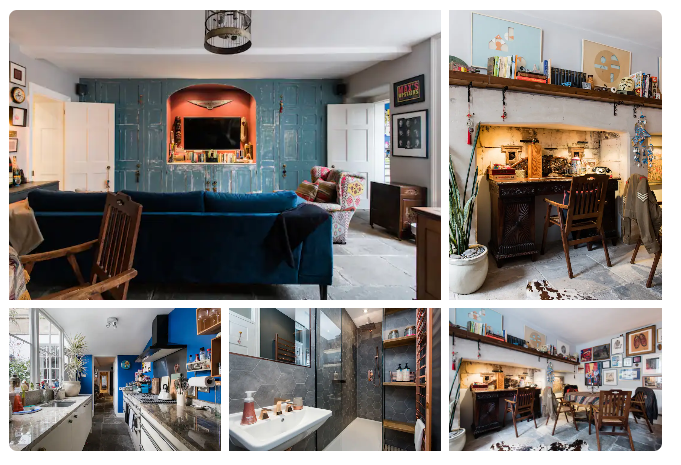
  • Today, #4 Sydney Place, the Austen’s first rented house in Bath is now available as an Airbnb. The Literary Hub discusses this house past and present. One can appreciate its proximity to Sydney Gardens and in some article view the long garden in back of the house, but the dwelling has been extensively renovated and, I assume, has been so changed that the Austen family would not recognize its interior. The reviews from those who have stayed there are positive. If one is inclined to rent the rooms, this link will take you to the page to check its availability. As you stay in Bath, you can “Walk: In the Footsteps of Jane Austen”, as described by Bath Magazine. My husband and I stayed at the Dukes Hotel many moons ago. Our view from our room was the Holburne museum.

No.4-SydneyPlace-Airbnb

Number 4 Sydney Place Airbnb screenshot. The modern renovations are in the former kitchen areas, described by Constance Hill in 1923. Obviously this part of the house has been renovated:

“…  a passage leads to a garden at the back of the house. The large, old-fashioned kitchen, with its shining copper pans and its dresser, laden with fine old china, looked as if it had remained untouched since the Austens’ day.

Chapter XII, Bath, Jane Austen: Her Homes & Her Friends, by Constance Hill, 1923

This charming blog post (with even more pictures) discusses a 2015 stay at the Austens’ former dwelling in Bath. Click Here. 

Other Resources:

Read Full Post »