Feeds:
Posts
Comments

Archive for the ‘Jane Austen Novels’ Category

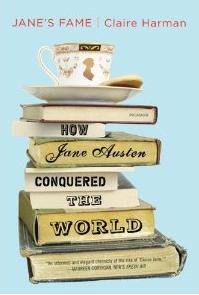
It is not often that a much-hyped book or film lives up to its reputation, as with The King’s Speech and Jane’s Fame: How Jane Austen conquered the world , the book by Claire Harman and the subject of this review. I’ll admit to being a wee bit partial to any book that mentions my blogs – Jane Austen’s World and Jane Austen Today – but this is not the sole reasons for my gushing over Ms. Harman’s lucid and accessible account of the slow rise of Jane’s Austen’s literary fame in the 19th century to her near rock-star status as a popular cultural icon today.

Jane’s Fame was published in 2009 amidst much controversy. Accusations of heavy borrowing and plagiarism flew from the mouth and pen of Ms. Harman’s former friend,  Kathryn Sutherland, who had published Jane Austen’s Textual Lives, from Aeschylus to Bollywood in 2005. Ms. Harman countered the accusations with equally strong words, saying she had followed the standard practice of sourcing all quotes and citing the earliest sources for her information. With this controversy in mind, I read Jane’s Fame with the same morbid curiosity that Two and a Half Men fans are reading articles about Charlie Sheen’s downward spiraling career today. I am delighted to announce that I think Jane’s Fame stands on its own, paying due homage to Jane Austen’s Textual Lives, but making what could have been a dry tale into an exciting read  for the modern audience.

Laurie Kaplan, who reviewed Sutherland’s book for the Jane Austen Society of Northern America, wrote:

Through an examination of biographies, portraits, manuscripts, films, and editions of the novels, Sutherland tracks the creation of Jane Austen as “a special cultural commodity.” From James Edward Austen- Leigh’s Memoir of Jane Austen (1870), which presents a “family-managed” biography of his relation, to the films, which sometimes bear only a passing relation to the novels, biographers, editors, and directors have “marketed” their own versions of “Jane Austen” to the public.”

I agree with this assessment of Sutherland’s book. Several years back I had read portions of Jane Austen’s Textual Lives and from it learned much about Jane’s slow rise in literary reputation and in the estimation of her peers. However, in my opinion Dr. Kathryn Sutherland’s revelations were not entirely new. Any Janeite who has read a number of Jane Austen biographies would have known that Jane’s literary reputation stagnated in the years after her death. The facts were scattered in a number of sources and Dr. Sutherland was astute enough to pull them together. She chronicled Jane’s rise in academic order, and had her efforts rewarded with the publication of her book by Oxford University Press. While her richly footnoted tome is perfectly suited for the shelves of a university library, her professorial writing style would in no way appeal to Mr & Mrs John Q Public.

Enter Ms. Harman.

One cardinal rule of copyright laws is that facts and historical events belong to the public domain. One cannot patent the dates of a person’s life or historic events. Ms. Harman, with her easy and accessible writing style and her academic knowledge, pounced on the Jane Austen bandwagon and came up with a runaway hit. In fact, Ms. Harman makes the rise of Jane’s fame seem exciting. Here is an excerpt of her description of James Edward Austen-Leigh’s attempt to take a look at Fanny Knatchbull’s letters from her Aunt Jane:

In 1869 Fanny’s sister Elizabeth Rice warned him not to wait for a sight of the letters, as there was virtually no chance of it. Lady Knatchbull, she said, was prone to giddiness and confusion, an impression of advancing senility confirmed by fanny’s daughter Louisa, who protested that her mother would have been only too delighted to assist James Edward ten years earlier, but it was too late now.”

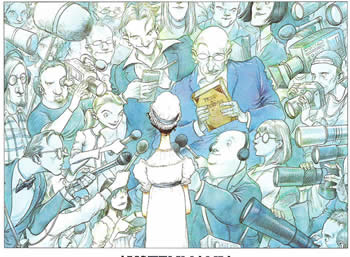
Chris Riddell's cover from the April 2009 issue of The Literary Review

It is universally acknowledged that Edward Austen-Leigh’s Memoirs of his aunt in 1869 (and quickly again in 1871) piqued the Victorian public’s curiosity, and that his biography prompted the buying public to purchase Jane’s novels in droves. In the first half of the 20th century, academics and the public alike discovered the rich literary minefield that Jane’s novels represented. Film adaptations only served to boost her reputation, and by 1995, when A&E presented a 6-part series of Pride and Prejudice and the Internet began to be embraced by non-geek users, the stage had been set for world-wide Austen adoration.

My major complaint about Jane’s Fame is that I suspect this book was written to meet a publisher’s deadline. The first 2/3 of its pages are rich with facts and anecdotes, with fully developed topics that satisfied my curiosity about Jane’s rise in popularity. But then the book’s pace speeds up and the last few chapters seemed rushed and thin. The most recent years of Jane’s popularity are barely covered, as if the author (and publisher) lost focus. Be that as it may, I read Jane’s Fame in two or three sittings and recommended it to my Janeite book club. They LOVED it. I am confident that you will too.

Please note: the ads at the end of this blog are a feature from WordPress. I do not make money from them.

Read Full Post »

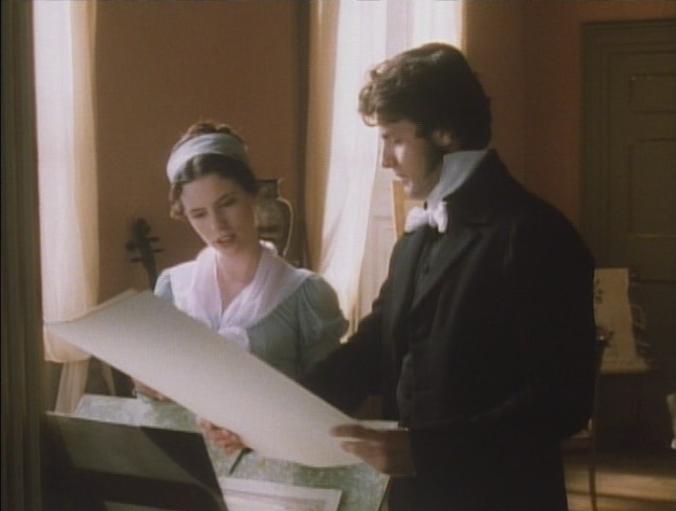
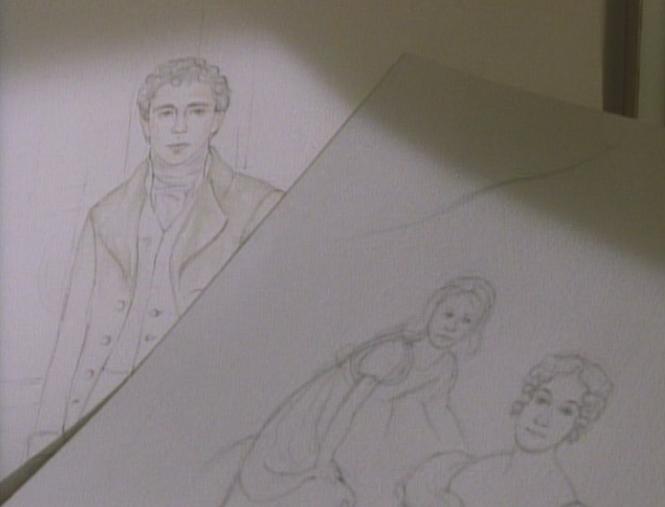
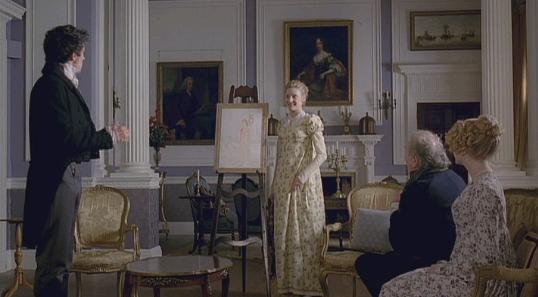
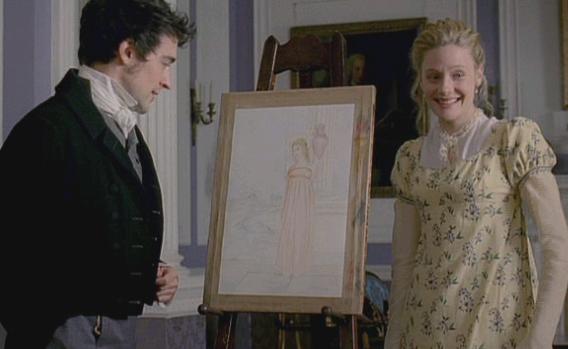
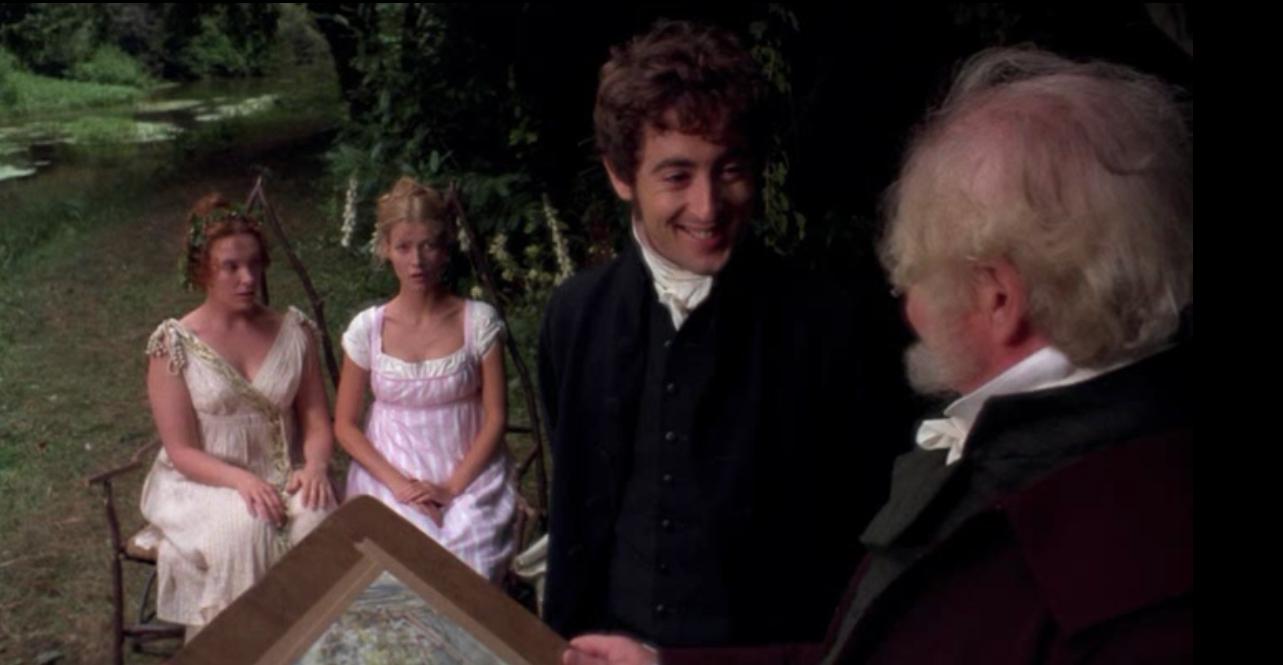
Emma (Kate Beckinsale) and Mr. Elton (Dominic Rowan) examine her drawings. Emma 1996 A&E

In the early chapters of Jane Austen’s novel, Emma, the reader learns that Emma “will never submit to any thing requiring industry and patience”, and that none of her portraits had ever been finished (although she had made some progress in drawing, considering the little labour she had submitted to). Steadiness and practice had always been wanting, preventing her from becoming an expert in this area.

In Volume 1, Chapter 6, Emma paints a watercolor likeness of Miss Smith in an attempt to draw Mr. Elton closer to Miss Smith. In Mr. Elton’s mind, the painting sessions present him with an opportunity to spend more time with Emma and toady up to her. Recent Emma film adaptations have captured this scene wonderfully, as you can see from the images that accompany Jane Austen’s text.

Did you ever have your likeness taken, Harriet?” said she: “did you ever sit for your picture?”

Harriet was on the point of leaving the room, and only stopt to say, with a very interesting naïveté,

“Oh! dear, no, never.”

No sooner was she out of sight, than Emma exclaimed,

“What an exquisite possession a good picture of her would be! I would give any money for it. I almost long to attempt her likeness myself. You do not know it I dare say, but two or three years ago I had a great passion for taking likenesses, and attempted several of my friends, and was thought to have a tolerable eye in general. But from one cause or another, I gave it up in disgust. But really, I could almost venture, if Harriet would sit to me. It would be such a delight to have her picture!”
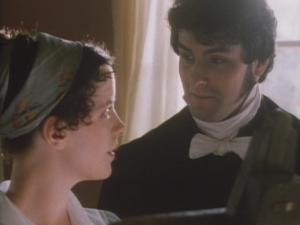
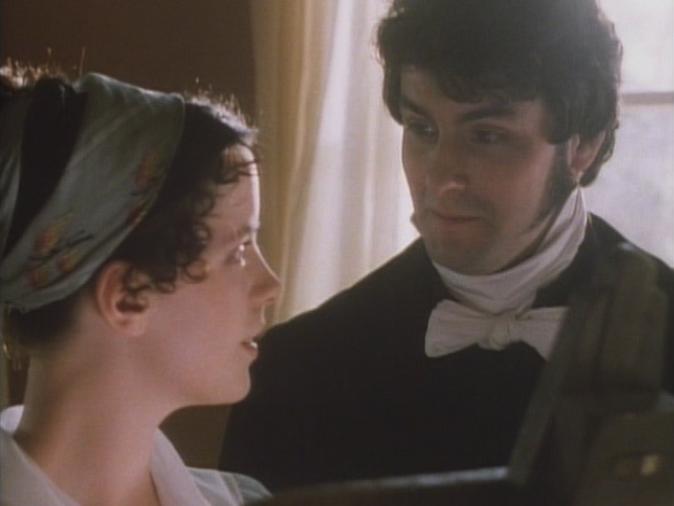
Mr. Elton entreats Miss Woodhouse to paint. Emma 1996 A&E

“Let me entreat you,” cried Mr. Elton; “it would indeed be a delight! Let me entreat you, Miss Woodhouse, to exercise so charming a talent in favour of your friend. I know what your drawings are. How could you suppose me ignorant? Is not this room rich in specimens of your landscapes and flowers; and has not Mrs. Weston some inimitable figure-pieces in her drawing-room, at Randalls?”

Yes, good man!—thought Emma—but what has all that to do with taking likenesses? You know nothing of drawing. Don’t pretend to be in raptures about mine. Keep your raptures for Harriet’s face. “Well, if you give me such kind encouragement, Mr. Elton, I believe I shall try what I can do. Harriet’s features are very delicate, which makes a likeness difficult; and yet there is a peculiarity in the shape of the eye and the lines about the mouth which one ought to catch.”

“Exactly so—The shape of the eye and the lines about the mouth—I have not a doubt of your success. Pray, pray attempt it. As you will do it, it will indeed, to use your own words, be an exquisite possession.”

“But I am afraid, Mr. Elton, Harriet will not like to sit. She thinks so little of her own beauty. Did not you observe her manner of answering me? How completely it meant, ‘why should my picture be drawn?'”
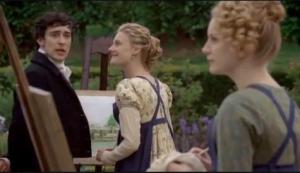
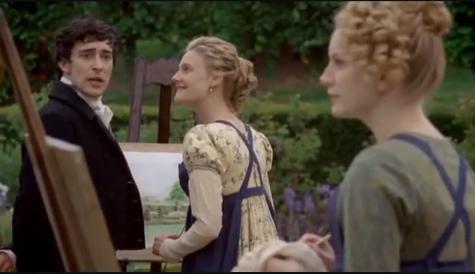
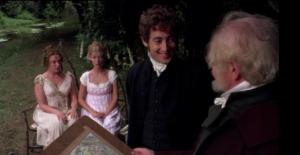
Mr. Elton (Blake Ritson) can envision Emma (Romola Garai) painting a portrait of Harriet (Louis Dylan). Emma 2009

“Oh! yes, I observed it, I assure you. It was not lost on me. But still I cannot imagine she would not be persuaded.”

Harriet was soon back again, and the proposal almost immediately made; and she had no scruples which could stand many minutes against the earnest pressing of both the others. Emma wished to go to work directly, and therefore produced the portfolio containing her various attempts at portraits, for not one of them had ever been finished, that they might decide together on the best size for Harriet. Her many beginnings were displayed. Miniatures, half-lengths, whole-lengths, pencil, crayon, and water-colours had been all tried in turn. She had always wanted to do everything, and had made more progress both in drawing and music than many might have done with so little labour as she would ever submit to. She played and sang;—and drew in almost every style; but steadiness had always been wanting; and in nothing had she approached the degree of excellence which she would have been glad to command, and ought not to have failed of. She was not much deceived as to her own skill either as an artist or a musician, but she was not unwilling to have others deceived, or sorry to know her reputation for accomplishment often higher than it deserved.

There was merit in every drawing—in the least finished, perhaps the most; her style was spirited; but had there been much less, or had there been ten times more, the delight and admiration of her two companions would have been the same. They were both in exstasies. A likeness pleases every body; and Miss Woodhouse’s performances must be capital.
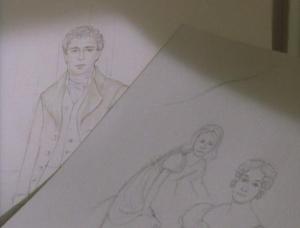
Emma's unfinished portraits of her family. Emma 1996 A&E

“No great variety of faces for you,” said Emma. “I had only my own family to study from. There is my father—another of my father—but the idea of sitting for his picture made him so nervous, that I could only take him by stealth; neither of them very like therefore. Mrs. Weston again, and again, and again, you see. Dear Mrs. Weston! always my kindest friend on every occasion. She would sit whenever I asked her. There is my sister; and really quite her own little elegant figure!—and the face not unlike. I should have made a good likeness of her, if she would have sat longer, but she was in such a hurry to have me draw her four children that she would not be quiet. Then, here come all my attempts at three of those four children;—there they are, Henry and John and Bella, from one end of the sheet to the other, and any one of them might do for any one of the rest. She was so eager to have them drawn that I could not refuse; but there is no making children of three or four years old stand still you know; nor can it be very easy to take any likeness of them, beyond the air and complexion, unless they are coarser featured than any of mama’s children ever were. Here is my sketch of the fourth, who was a baby. I took him, as he was sleeping on the sofa, and it is as strong a likeness of his cockade as you would wish to see. He had nestled down his head most conveniently. That’s very like. I am rather proud of little George. The corner of the sofa is very good. Then here is my last,”—unclosing a pretty sketch of a gentleman in small size, whole-length—”my last and my best—my brother, Mr. John Knightley. —This did not want much of being finished, when I put it away in a pet, and vowed I would never take another likeness. I could not help being provoked; for after all my pains, and when I had really made a very good likeness of it—(Mrs. Weston and I were quite agreed in thinking it very like)—only too handsome—too flattering—but that was a fault on the right side—after all this, came poor dear Isabella’s cold approbation of—”Yes, it was a little like—but to be sure it did not do him justice.” We had had a great deal of trouble in persuading him to sit at all. It was made a great favour of; and altogether it was more than I could bear; and so I never would finish it, to have it apologised over as an unfavourable likeness, to every morning visitor in Brunswick-square;—and, as I said, I did then forswear ever drawing anybody again. But for Harriet’s sake, or rather for my own, and as there are no husbands and wives in the case at present, I will break my resolution now.”
Harriet (Louise Dylan) responds to Mr. Elton's interest in her portrait. Emma 1996

Mr. Elton seemed very properly struck and delighted by the idea, and was repeating, “No husbands and wives in the case at present indeed, as you observe. Exactly so. No husbands and wives,” with so interesting a consciousness, that Emma began to consider whether she had not better leave them together at once. But as she wanted to be drawing, the declaration must wait a little longer.

She had soon fixed on the size and sort of portrait. It was to be a whole-length in water-colours, like Mr. John Knightley’s, and was destined, if she could please herself, to hold a very honourable station over the mantelpiece.
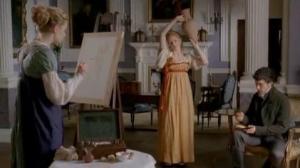
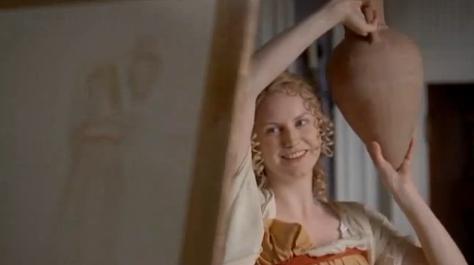
Keeping a pose for long for a portrait is difficult. Emma 2009

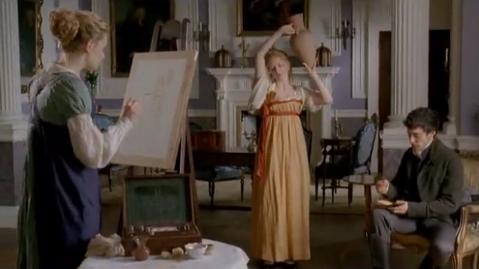
The sitting began; and Harriet, smiling and blushing, and afraid of not keeping her attitude and countenance, presented a very sweet mixture of youthful expression to the steady eyes of the artist. But there was no doing anything, with Mr. Elton fidgeting behind her and watching every touch. She gave him credit for stationing himself where he might gaze and gaze again without offence; but was really obliged to put an end to it, and request him to place himself elsewhere. It then occurred to her to employ him in reading.
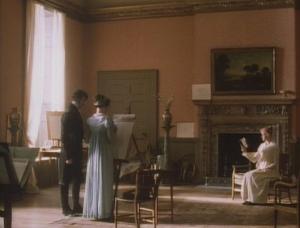
Mr. Elton oversees the process. Emma 1996 A&E

“If he would be so good as to read to them, it would be a kindness indeed! It would amuse away the difficulties of her part, and lessen the irksomeness of Miss Smith’s.”

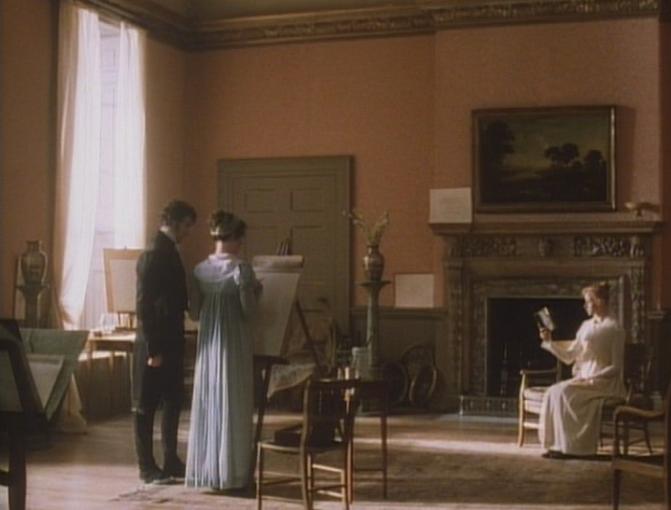
Mr. Elton was only too happy. Harriet listened, and Emma drew in peace. She must allow him to be still frequently coming to look; any thing less would certainly have been too little in a lover; and he was ready at the smallest intermission of the pencil, to jump up and see the progress, and be charmed.—There was no being displeased with such an encourager, for his admiration made him discern a likeness almost before it was possible. She could not respect his eye, but his love and his complaisance were unexceptionable.
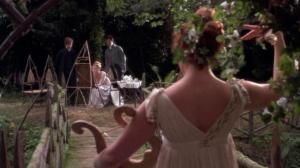
Emma paints Harriet, with Mr. Elton and Mr. Knightley looking on. Emma 1996

The sitting was altogether very satisfactory; she was quite enough pleased with the first day’s sketch to wish to go on. There was no want of likeness, she had been fortunate in the attitude, and as she meant to throw in a little improvement to the figure, to give a little more height, and considerably more elegance, she had great confidence of its being in every way a pretty drawing at last, and of its filling its destined place with credit to them both—a standing memorial of the beauty of one, the skill of the other, and the friendship of both; with as many other agreeable associations as Mr. Elton’s very promising attachment was likely to add.

Harriet was to sit again the next day; and Mr. Elton, just as he ought, entreated for the permission of attending and reading to them again.
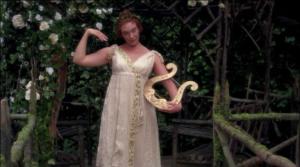
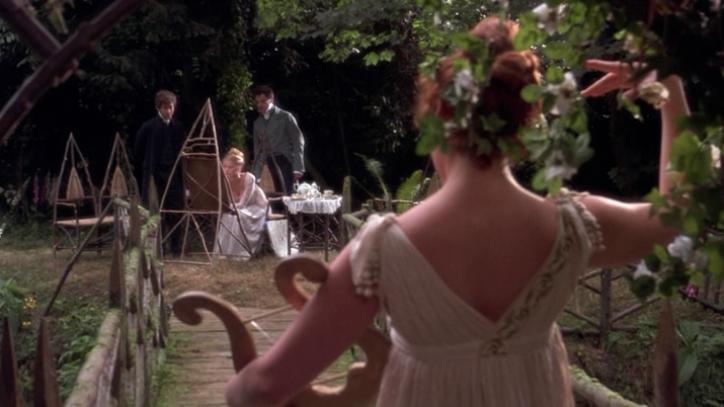
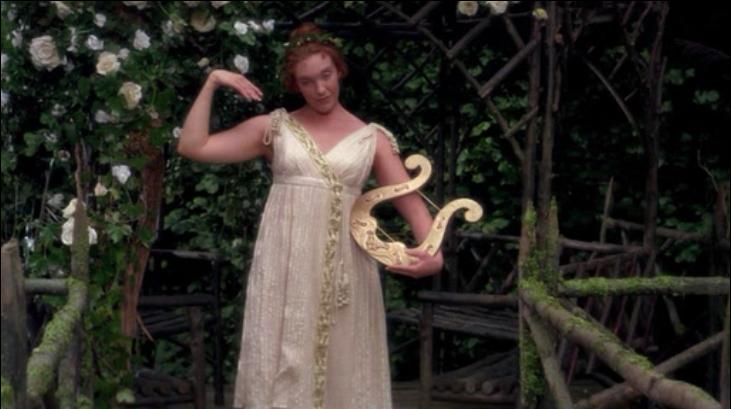
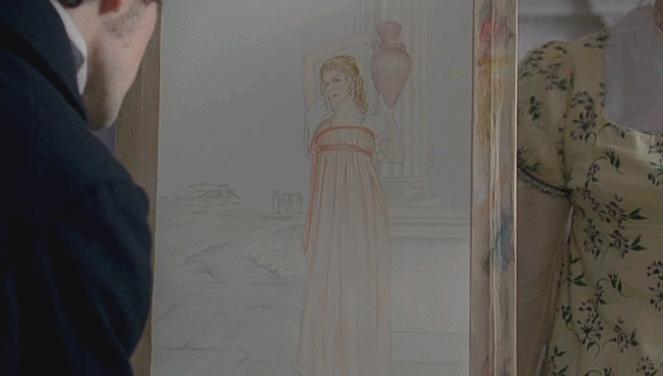
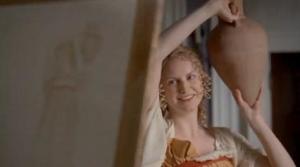
Miss Smith (Toni Collette) stands in a neoclassical pose. Emma 1996

“By all means. We shall be most happy to consider you as one of the party.”

The same civilities and courtesies, the same success and satisfaction, took place on the morrow, and accompanied the whole progress of the picture, which was rapid and happy. Every body who saw it was pleased, but Mr. Elton was in continual raptures, and defended it through every criticism.

“Miss Woodhouse has given her friend the only beauty she wanted,”—observed Mrs. Weston to him—not in the least suspecting that she was addressing a lover.—”The expression of the eye is most correct, but Miss Smith has not those eye-brows and eye-lashes. It is the fault of her face that she has them not.”
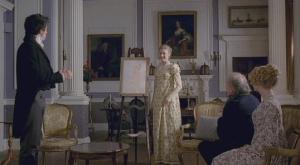
Mr. Elton applauds the unveiling of Emma's portrait. Emma 2009

“Do you think so?” replied he. “I cannot agree with you. It appears to me a most perfect resemblance in every feature. I never saw such a likeness in my life. We must allow for the effect of shade, you know.”

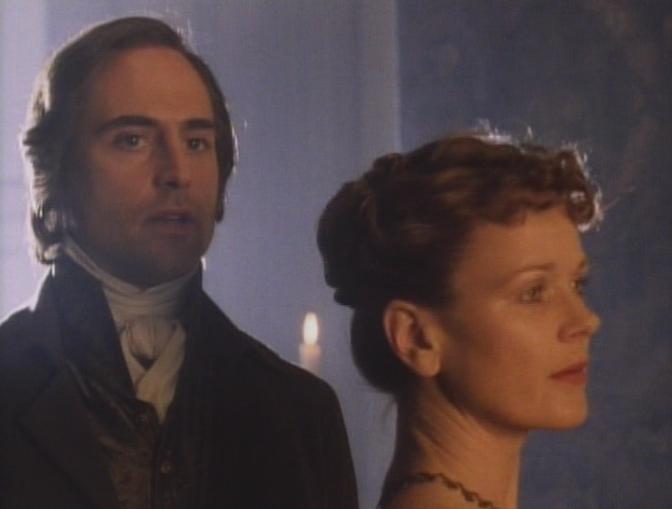
Mr. Knightley's (Mark Strong's) and Mrs. Weston's (Samantha Bond's) reactions. Emma 1995 A&E.

“You have made her too tall, Emma,” said Mr. Knightley.

Emma knew that she had, but would not own it, and Mr. Elton warmly added,
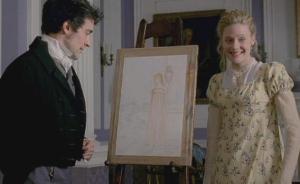
Mr. Elton's enthusiastic response continues unabated. Emma 2009

“Oh, no! certainly not too tall; not in the least too tall. Consider, she is sitting down—which naturally presents a different—which in short gives exactly the idea—and the proportions must be preserved, you know. Proportions, fore-shortening.—Oh, no! it gives one exactly the idea of such a height as Miss Smith’s. Exactly so indeed!”
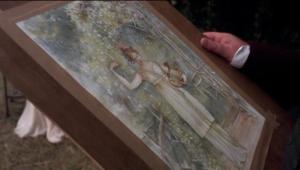
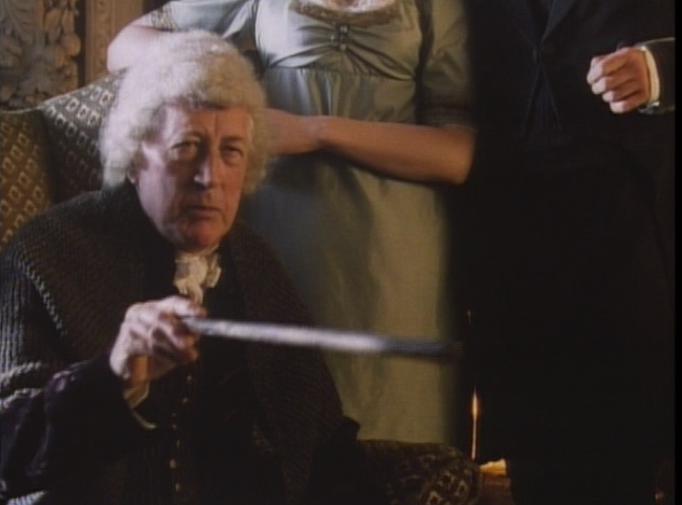
Mr. Woodhouse examines his daughter's effort. Emma 1996

“It is very pretty,” said Mr. Woodhouse. “So prettily done! Just as your drawings always are, my dear. I do not know any body who draws so well as you do. The only thing I do not thoroughly like is, that she seems to be sitting out of doors, with only a little shawl over her shoulders—and it makes one think she must catch cold.”
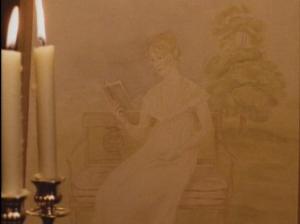
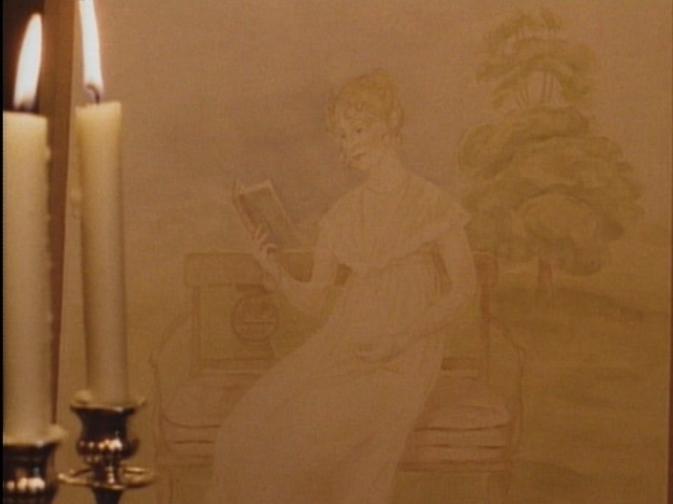
1996 A&E Emma's pale portrait of Harriet by candle light

“But, my dear papa, it is supposed to be summer; a warm day in summer. Look at the tree.”
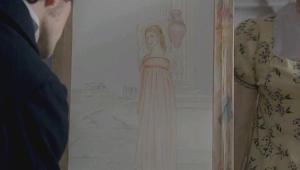
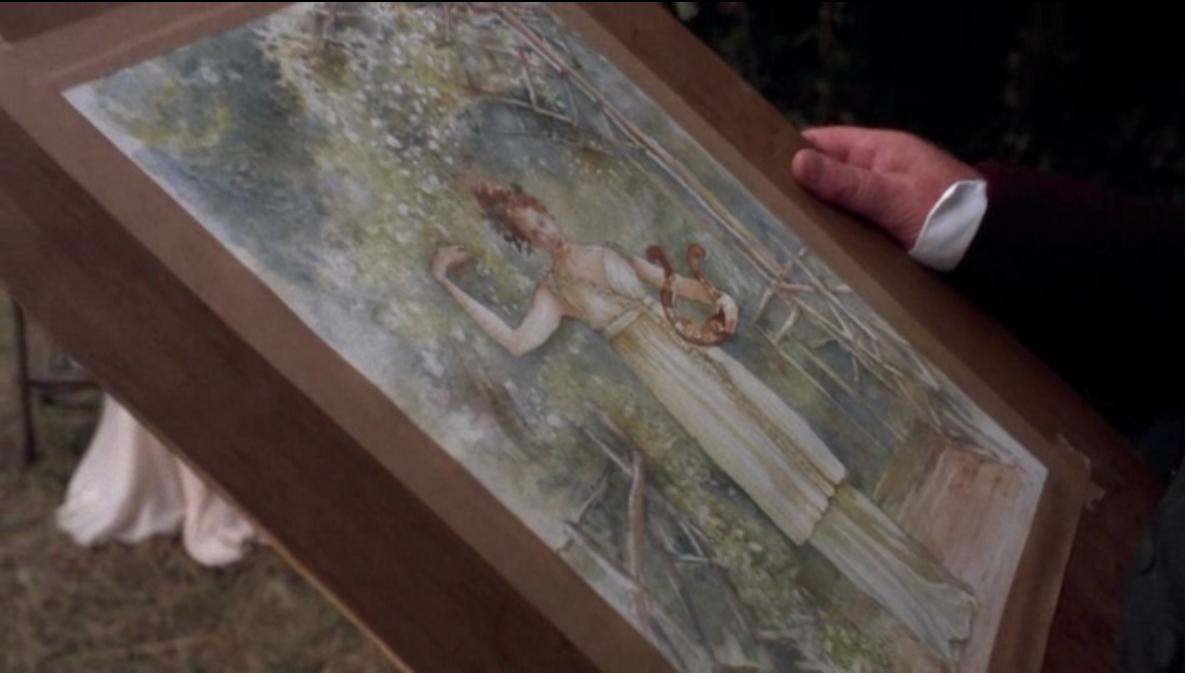
Closeup Emma 2009's painting of Harriet.

“But it is never safe to sit out of doors, my dear.”
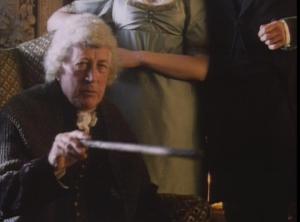
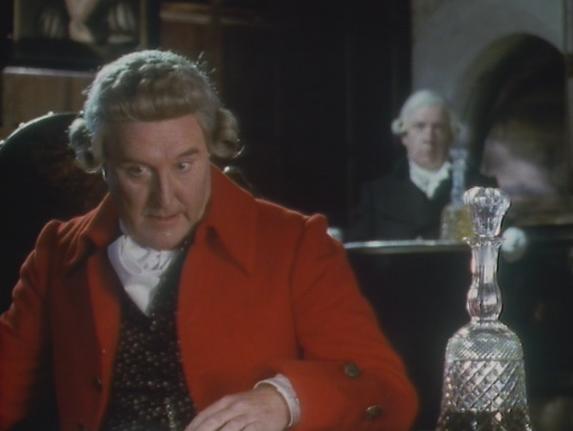
Mr. Woodhouse (Bernard Hepton) expresses concern for Harriet's warmth and comfort. Emma 1996 A&E

“You, sir, may say any thing,” cried Mr. Elton; “but I must confess that I regard it as a most happy thought, the placing of Miss Smith out of doors; and the tree is touched with such inimitable spirit! Any other situation would have been much less in character. The naïveté of Miss Smith’s manners—and altogether—Oh, it is most admirable! I cannot keep my eyes from it. I never saw such a likeness.”
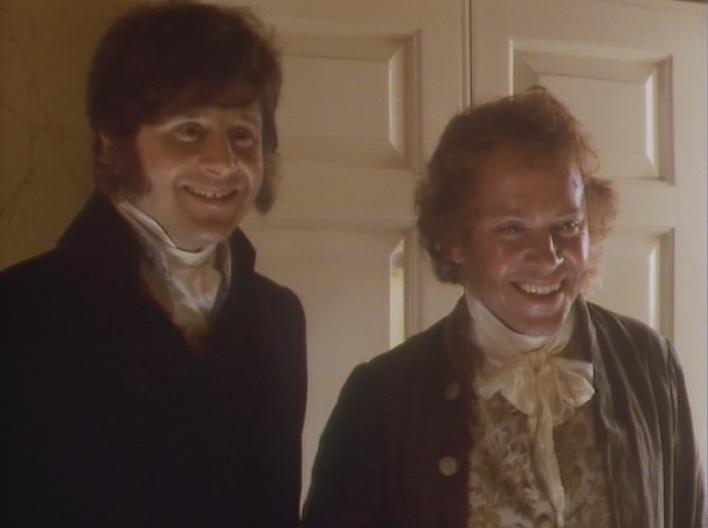
Mr. Elton (Alan Cumming) enthusiastically endorses the portrait and offers to take it to London to have it framed. Emma 1996

Mr. Elton expressed his extreme gratification by offering to ride to London in December to have the picture framed, leaving Emma with these happy but largely erroneous thoughts:
“This man is almost too gallant to be in love,” thought Emma. “I should say so, but that I suppose there may be a hundred different ways of being in love. He is an excellent young man and will suit Harriet exactly: it will be an ‘exactly so’ as he says himself; but he does sigh and languish, and study for compliments rather more than I could endure as a principal. I come in for a pretty good share as a second, But it is his gratitude on Harriet’s account.”

Read Full Post »

I recently finished reading a charming book by Cora Harrison, I Was Jane Austen’s Best Friend, in which Jane Austen has just reached the age of 15. It is February, 1791, and 16-year-old Jenny Cooper has slipped out of Mrs. Crawley’s boarding school to post a letter to Steventon Rectory warning Rev. and Mrs. Austen that their daughter, Jane, is seriously ill. By doing so, Jenny risks her reputation, for she ventures out alone and unescorted in a rough area of Portsmouth.

This scene sets the stage for the rest of the novel, in which young Jenny Cooper chronicles the months she spends with her best friend Jane and the Austens at the rectory.  The girls are avid writers: while Jane spins her creative tales, Jenny describes their routine days in her journal. And what days they were! Jenny observes Jane’s family and friends minutely: her gentle father and stern mother; her charming favorite brother, Henry, and the mentally challenged George, who lived with another family; Cassandra’s love for Tom Fowle; exotic cousin Eliza; the well-dressed Bigg sisters; and other vivid portraits of the people who inhabited Jane’s and Jenny’s world.

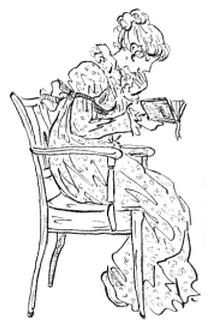
Jane Austen reads at Jenny's bedside. Image@Susan Hellard

The scenes are culled from actual events in Jane’s life and from letters that others wrote about her (for none of her letters from that time have survived). As teenagers are wont to do, Jenny and Jane dream of romantic encounters and parties and balls, engage in outdoor activities, and while away their time reading and writing and play-acting, or wishing for pretty gowns.

Image @Susan Hellard

The scene in which a pinch-penny Mrs. Austen must decide which color muslin would look best for ball gowns for all three girls (Cassandra, Jane and Jenny) is priceless, and the descriptions of tender romance between Cassandra and young Tom are heartbreaking to those who know he will die before they can be married. Tom LeFroy makes a suitably short appearance, and Jenny meets handsome Captain Thomas Williams, who in real life became engaged to her within three weeks of their first meeting, and whom she later married before her own untimely death.

Jenny witnessed Jane writing constantly and being inspired by the people she observed. For example, Jenny’s shrill sister-in-law, Augusta, becomes the prototype for Mrs. Elton and Mr. Collins is somewhat inspired by Jenny’s preachy brother.

Augusta. Image @Susan Hellard

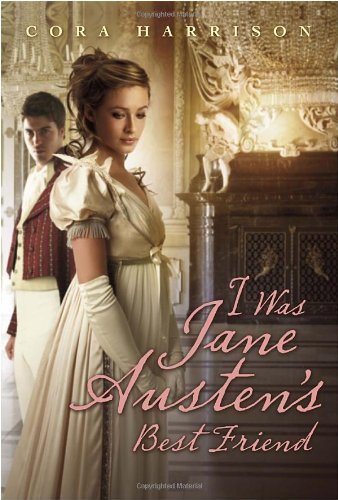
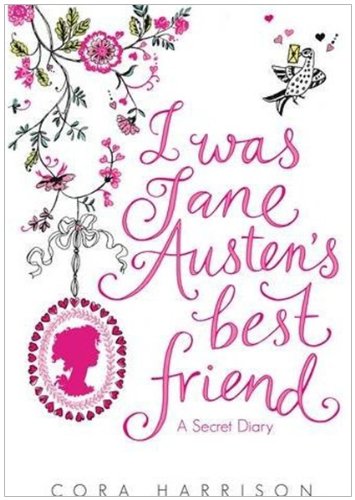
While I found the book a delight, not everyone has been thrilled with its purchase. The American cover of I Was Jane Austen’s Best Friend is a bit mature for a novel that targets young girls of eleven or so, but it explains the reason why so many older readers are buying the book.

This is what a high school  reviewer had to say about the U.S. cover: “… if you plan on buying [the book] at any time soon, make sure to check out the U.K. version… the cover art is so much cuter!” In fact, the U.K. cover (below) enjoyed the author’s full approval, and was drawn by Susan Hellard, the artist responsible for the charming illustrations displayed in this post and that are sprinkled throughout the book.

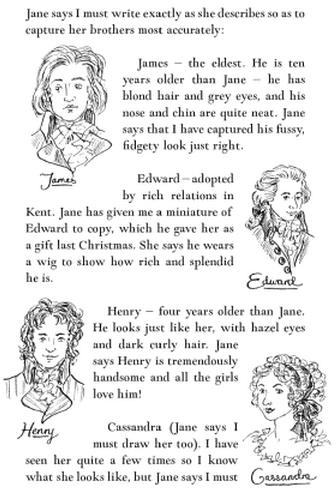
Page from the book, in which Jane describes some of her siblings. The style of writing is aimed at a very young audience. Drawings @Susan Hellard.

In writing this novel, Cora Harrison has kept her very young audience in mind. As you can see from the sample page above, the sentences are short and written in plain English, speech patterns and terms from the 18th century are kept to a minimum, the romance is sweet, and the story is written from a young lady’s point of view. While Ms.Harrison hoped that this book would introduce Jane Austen to very young readers, she also envisioned that mothers and grandmothers would enjoy reading the novel as well.

The book's U.K. cover

I have gone into great detail about the author’s intentions for a reason. Reviews of this book, while largely favorable, are varied. Lower rankings come largely from disappointed adult readers who expected a mature romance and a “more interesting plot.” But as the author wrote to me: “I didn’t want to do an in-depth analysis of love. I wanted to do a fun book, romantic in an old-fashioned style.”

Purists have also decried the changes in facts, dates, and characters, but isn’t it the novelist’s prerogative to change historical facts in order to move the plot forward? Besides, Ms. Harrison made her reasons for these changes clear in her Author’s Note in back of the book, which should have been placed as a Foreword. I also think that annotated notes for juvenile readers (such as those included for book clubs), would help adults explain some of the more obscure facts about the Georgian period to their children and place events in the novel in context.

Be that as it may, I rarely read review books from cover to cover, but I kept reading this one until I was finished (and then wished I had a daughter to give it to). This is a sweet book, filled with useful details about life in England 200 years ago. Ms. Harrison’s conjectures on how the Austens lived and interacted with each other is based on the letters and information about Jane that survived. After reading these pages, it is clear that Cora Harrison wrote her novel as an homage to Jane Austen. She also is an author with a mission. “As a teacher I am realistic enough to know that girls won’t automatically read Jane Austen unless their interest is awakened and I hoped to do that…”

More on the topic:

Read Full Post »

It wouldn’t be fair to neglect someone as important and dear to us as Jane Austen on her birthday. She was born on 16th December 1775, it’ll be 235 years next week . We owe so many immensely pleasant moments to her that we decided she deserved a great B-day celebration. My Jane Austen Book Club and other bloggers and Austen dedicated writers are going to have a blog party in her honour. You are all invited to join us on our “HAPPY BIRTHDAY, JANE!” event next Thursday December 16th. Who will be there? Where is the party going on?
My blog, Jane Austen’s World, will be joining in on the celebration with the post, Baby Jane Austen’s First Two Years! As well as these other fine authors and bloggers:

You’ll find Happy Birthday posts and tributes to Jane Austen on all these blogs on December 16th with the HAPPY BIRTHDAY, JANE logo created by Adriana Zardini (JASBRA) just for the occasion. Lovely, isn’t it? Visit all the blogs on December 16th and leave your comments + e-mail address to have lots of chances to win one of the wonderful gifts we are giving away:


The books include – 1 signed copy of…

  • Willoughby’s Return by Jane Odiwe
  • Confessions of a Jane Austen Addict by Laurie Viera Rigler
  • Rude Awakenings of a Jane Austen Addict by Laurie Viera Rigler
  • Murder at Mansfield Park by Lynn Shepherd
  • Intimations of Austen by Jane Greensmith
  • Darcy’s Passions: Fitzwilliam Darcy’s Story by Regina Jeffers
  • First Impressions. A Tale of Less Pride and Prejudice by Alexa Adams
  • Jane and the Damned by Janet Mullany
  • Bespelling Jane Austen by Janet Mullany

Other gifts:

  • Austen bag offered by Karen Wasylowski
  • DVD Pride & Prejudice 2005 offered by Regina Jeffers
  • Package of Bingley’s Tea. (flavor “Marianne’s Wild Abandon” ) offered by Cindy Jones
  • DVD Jane Austen in Manhattan offered by Maria Grazia
  • 3 issues of Jane Austen Regency World offered by Maria Grazia

Giveaways will end on December 23rd . Winners will be announced by Maria Grazia, organizer of this celebration, on My Jane Austen Book Club.

Read Full Post »

Until a cold felled me low this week, I had refrained from rewatching Northanger Abbey 1986, which I had a tough time sitting all the way through the first few times around. This film has left me feeling frustrated for its lost opportunities and many misses, and I wonder if the director and script writer wish today that they could change some of the creative decisions they made almost a quarter of a century earlier. In this film, we see the story unfold from young Catherine Morland’s (Katherine Schlesinger’s) point of view. This means we get a lot of Gothic novel fantasies made up by script writer Maggie Wadey, and hardly any Jane Austen at all.

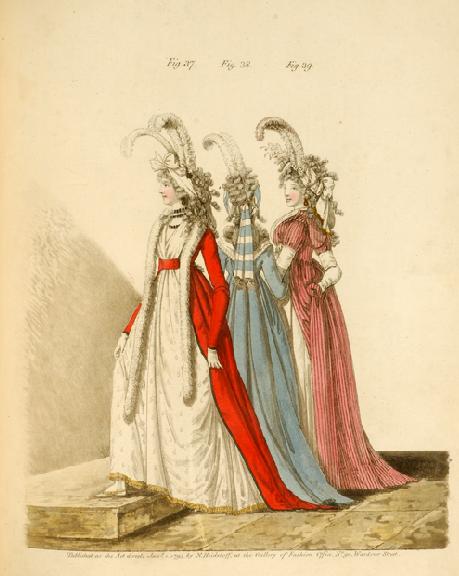
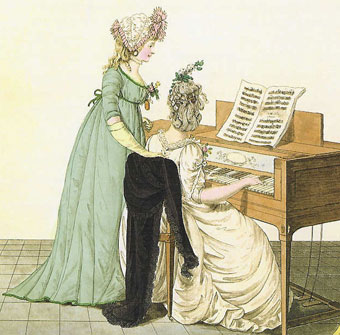
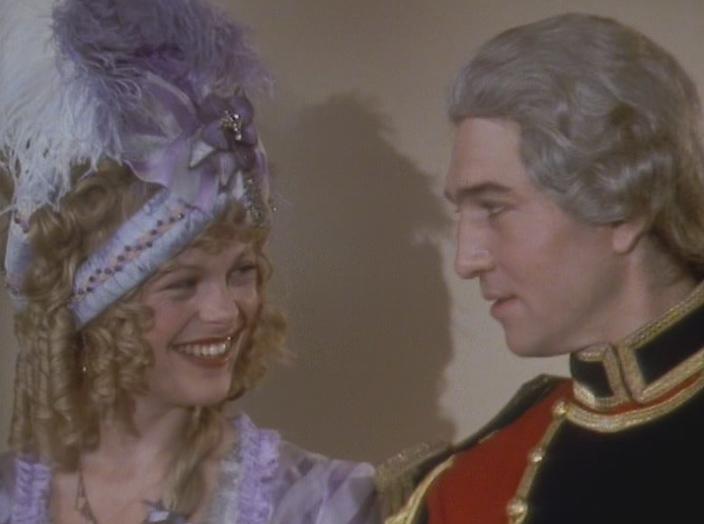
Isabella Thorpe and her mother wear outfits, hats, and hairdos that seem inspired by Von Heideloff prints

The production values are quite stunning, considering how old this BBC adaptation is and how poorly made films for television were in that era. Costumes designed by Nicholas Rocker are the fashion equivalent of beautiful meringues and chocolate bonbons (how could any of these women, except Mrs. Allen or Eleanor Tilney have afforded such luxurious gowns?). Despite the breathtaking settings and authentic backdrops, this 90-minute film adaptation with its strange synthetic music manages to entirely miss the satiric point of Jane Austen’s wonderful take on the gothic novel. And someone should have told the makeup department to lay off the heavy mascara and lipstick on all the ladies.

1795 Von Heidoloff fashion plate

Although the length of this adaptation is a mere 90 minutes, script writer Maggie Wadey added scenes and characters that detracted from the story or overwhelmed it, and that replaced moments in the book that were important to drive the plot forward and understand the characters better.

While Jane Austen made it clear that young Catherine had quite an imagination, these over the top film scenes were jarring and took away valuable cinematic time from good story telling.

I also found major problems with the musical score. The four musical clips embedded in this post and written by composer Ilona Sekacs in no way evoke the Regency era.  Click to hear the theme for the DVD – a 47 second music clip.

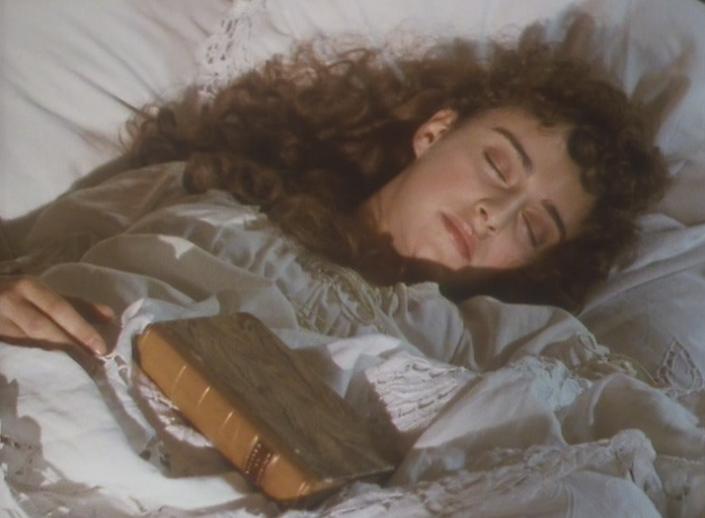
Catherine's Gothic dreams drive the music

Sekacs’ synthesized music and odd vocalizations from a female choir concentrate almost solely on giving us an eerie sense of ” Gothic doom”. Unfortunately, the composer uses the  “Lah da dah-Ooh” chorus throughout the film, and occasionally throws in a Gregorian Chant for good measure. Only during the ball scenes and at a musicale in Northanger Abbey are we allowed to hear music made with traditional instruments and that might have been heard during the Regency era.

An occasional tinkle from a pianoforte would have added greatly to a Georgian era atmosphere

I can only surmise that Ilona Sekacs was influenced by Vangelis, who had won an Academy Award for his score for Chariots of Fire five years before this production. Although Chariots was a period film, Vangelis’ electronic score sounded fresh and sweeping as 1920’s male runners practiced their speed against a back drop of endless beaches, rolling waves, and big sky. His score was a huge success in the early 80’s and he was rewarded for it. Alas for Jane Austen lovers, electronic synthesizers do not work as effectively in evoking a Bath drawing room, or as a backdrop for such Regency pastimes as walking, taking the waters, and carriage rides.

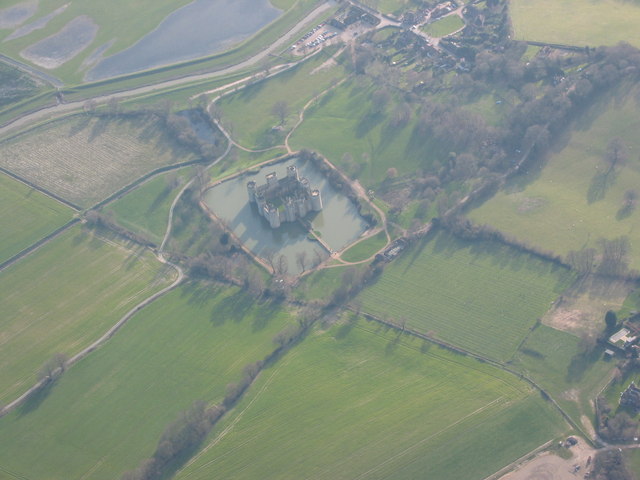
Bodiam Castle, built 1385

As the opening credits roll by, Catherine’s views Northanger Abbey from the carriage (to the accompaniment of this musical clip, which features male and female chanters and trumpets blaring). The Abbey is actually Bodiam Castle, a 14th-century keep with a water moat, and a well-known tourist destination.

Bodiam Castle's grounds from the air

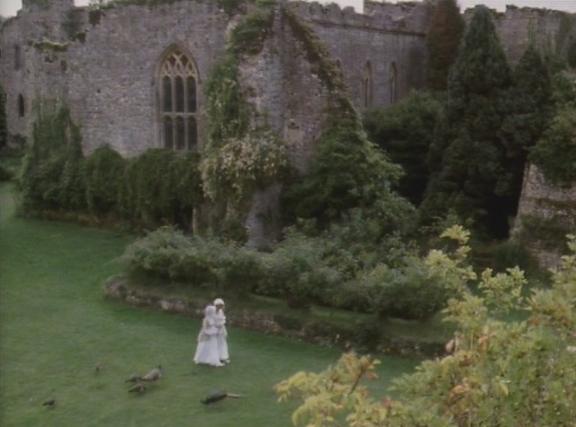
I instantly sat up and took notice, for I have visited Bodium Castle. It was a ruin during Jane Austen’s day and was only partially rebuilt in 1829, a good twelve years after her death. According to Jane’s novel, Northanger Abbey was surrounded by extensive gardens, and I wondered how the director would pull off the scene where the general boasted of his fruit trees.  Imagine my surprise when I saw Catherine and Miss Tilney walking towards a side entrance of an entirely new building with different architectural details and nary a moat in sight. “Badly done”, as Mr. Knightley would have said. Bad transition, indeed.

A stroll through the gardens of Northanger Abbey

But I have jumped ahead of myself, for there are other earlier errors for which I cannot forgive this production. Take Henry Tilney (Peter Firth), for instance. At the Assembly Ball, he bumps into Catherine and Mrs. Allen (a delightful Googie Withers) without a proper introduction from the Master of Ceremonies. Except for Henry’s comments about muslins, his fey but wise sense of humor is almost entirely missing at the start of this film.

Henry Tilney bumps into Catherine Morland and Mrs Allen.

I must admit that I do not like Firth‘s portrayal of Henry Tilney and could never see him as this character. But even so, Henry’s charming conversation was given short shrift, and he appears only long enough for Catherine to develop an interest in him before disappearing. Click here to view a YouTube clip (and hear period appropriate music) of Henry’s first meeting with Catherine.

James Morland introduces John Thorpe

Where Henry’s role was severely diminished, John Thorpe’s presence early in the film was largely retained.  Mrs. Allen and Catherine do not bump into Mrs. Thorpe as they walk through Bath, as Jane Austen had written. Rather, as you can see in this YouTube clip, Catherine’s brother, James, visits the Allens and makes the introduction. Catherine then meets Isabella, overplayed by Cassie Stuart.

Isabella Thorpe, pretty but calculating

Because of the film’s short length, Isabella’s overly forward and friendly manner seems doubly rushed. The second time she meets Catherine, she reveals her love for James and her wish to marry him, and the next thing you know, James goes racing off to his father to beg for his permission to marry her.

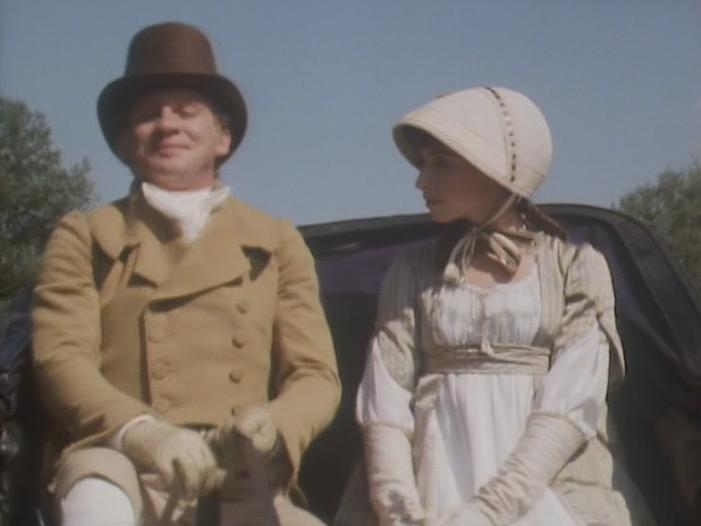
John's loud coat should clue Catherine about his character

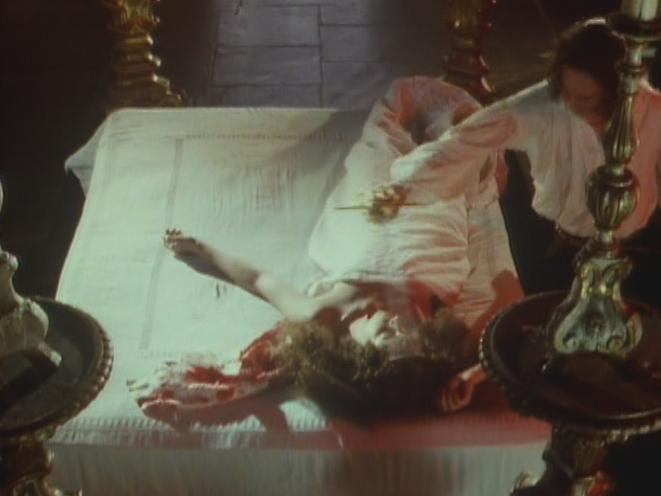
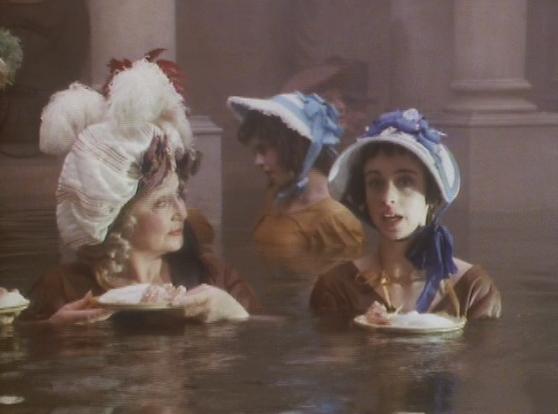
But once I again I digress.  John Thorpe (Jonathan Coy) is suitably sleazy (can’t you tell from his hideously striped suit?) and even Catherine leaves her Gothic fantasies long enough to be appalled by his boorishness. Thorpe’s early scenes are quite effective and then … he disappears. Except for a few mentions later, he literally falls off the face of the DVD, but not before he participates in one final scene in the hot baths, where Catherine, Isabella, Mrs. Allen, and Eleanor Tilney gather to bathe in the hot mineral waters. The party enters the baths to the strains of odd discordant music. An entire chorus is now crowding in on Catherine’s brain, and she can only stare wide-eyed around her.

Mrs. Allen and Catherine in the hot bath

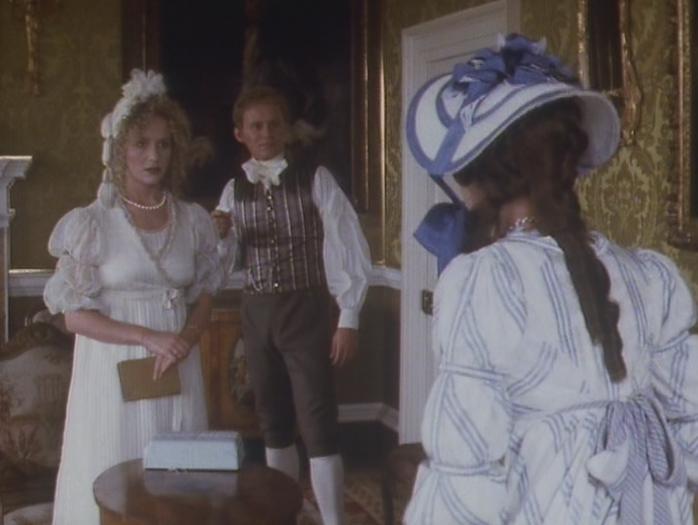
But Catherine, who has a full and active day ahead of her, can bathe for only a short time. She makes a walking date with pretty Eleanor Tilney (Ingrid Lacey), who happens to be there. After sweating for some time in a hot and humid room, Catherine and Isabella emerge from the building with every curl in place and looking fresh in their beautiful unwrinkled, delicate muslin walking dresses. Isabella begins to fret over Catherine’s excessive attention to Eleanor. It is at this point that the uninitiated will start to lose an important thread of the story, for unless the viewer has already read the book, she will have no idea why John and Isabella are so determined to have Catherine accompany them to Clifton.

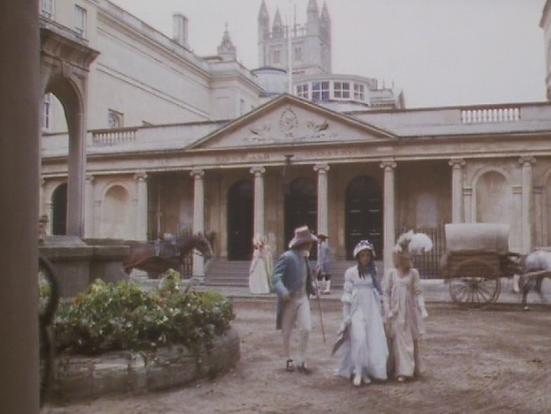
Bath is a beautiful setting as always

The plot has been so compressed and muddled, that the motivation that drives these characters is a bit murky.  The uninitiated will wonder: Why is John so interested in Catherine? Why is Isabella jealous of Eleanor? Why, indeed.

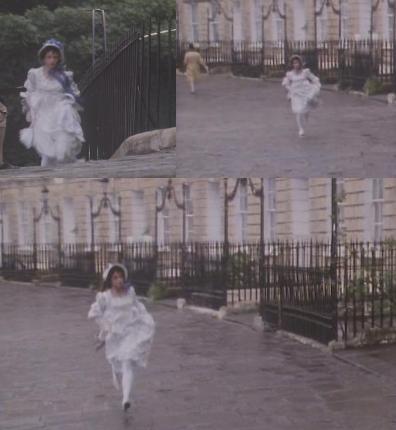
As John meets the ladies outside the hot baths he reveals that he has rearranged Catherine’s walking date with Eleanor, which sets Catherine’s temper off and sends her running through the streets towards General Tilney’s house.

In my opinion, this would have been a good time to insert Vangelis’s oscar-winning score for Chariots of Fire, since a run through Bath by a Jane Austen heroine is now rapidly becoming a Jane Austen TV adaptation tradition. (See Persuasion 2007.)

Catherine interrupts the Tilneys

Catherine rushes past the footman as he opens the Tilney’s front door, enters the house alone, and barges into the drawing room to apologize to Eleanor for John’s arrogance. All the while, she still looks fresh as a daisy.

The General meets his unexpected guest

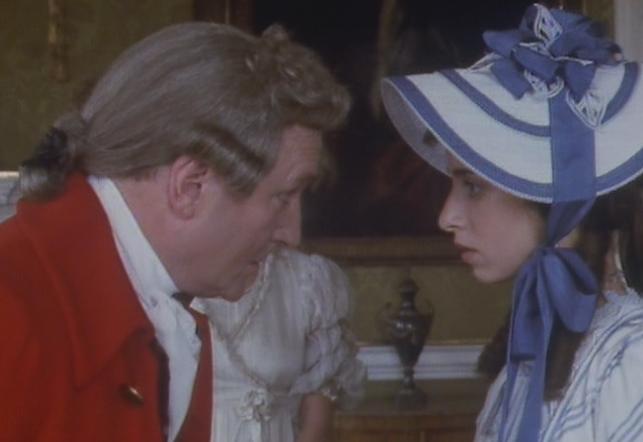
She meets General Tilney (Robert Hardy), who is simply delighted with Catherine and who encourages her to go on an outing with Henry and Eleanor as soon as possible. (The uninitiated will wonder: “why is he so intrigued with this rather simple, uninteresting girl?” Why indeed.) And so Catherine hurries off with the Tilney siblings to … Beechen Cliff ? Why, no! Jane Austen’s chosen spot for discussing the picturesque wasn’t deemed good enough and so the actors were taken to another location.

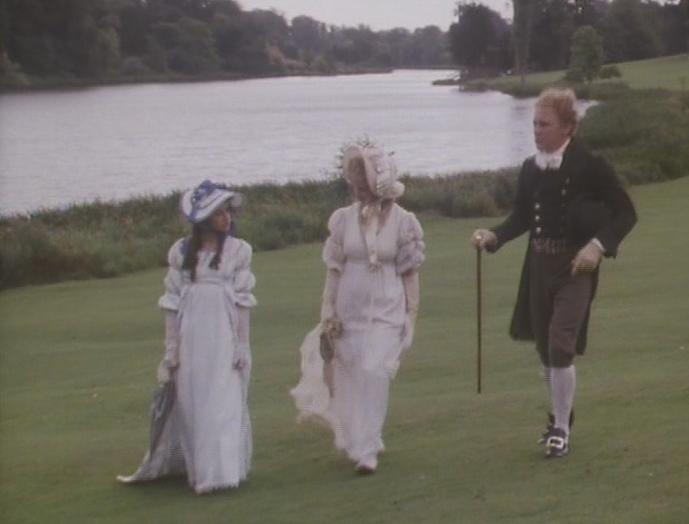
A walk along a sculpted lake instead of Beechen Cliff

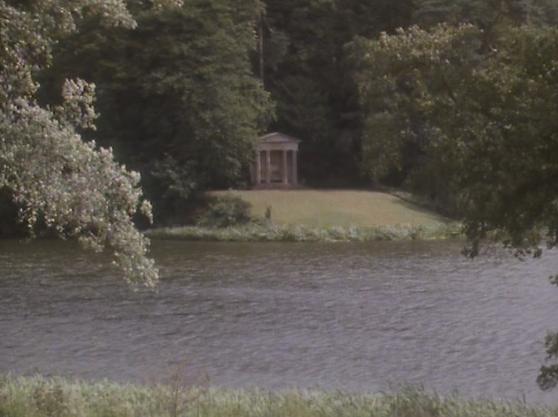
And thus they are filmed walking through a picturesque setting, with a lake and temple folly and weeping willows (so very 18th century refined), to talk about the picturesque.

A lake with temple folly

Instead of gazing at Bath from the heights of Beechen Cliff, the viewers are treated to the sight of Henry rowing the ladies across the waters.

At the end of this important scene (for Henry recognizes Catherine’s natural, unassuming, yet unformed airs), the music crescendos and the viewers hear 31 seconds of neo-jazz/Grecian tragedy music with a greek chorus and New Orleans saxophone.

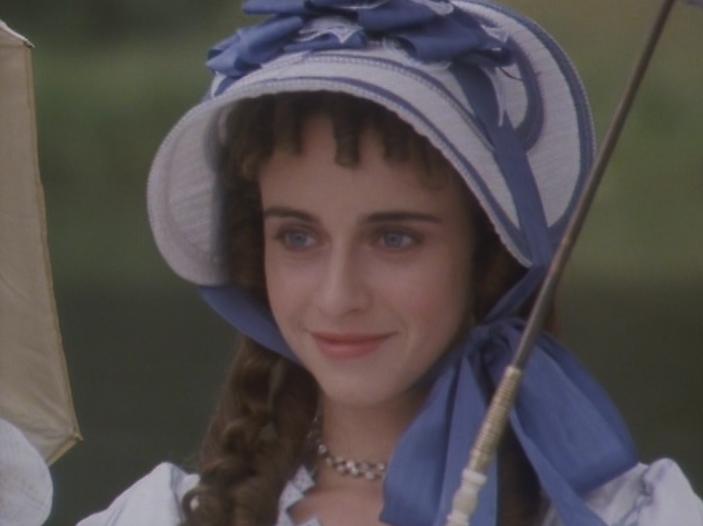
In this image, the description of Catherine rings true: ""Catherine grows quite a good-looking girl-she is almost pretty today."

At this juncture I must share the following comment, just to soften my own harsh critique. Jules, a very well spoken person, had this to say in 2005:

Ilona Sekacz wrote the score for a BBC TV version of ‘Northanger Abbey’ with Peter Firth. The music stood out a mile. A wonderful, haunting voice with a pulsing rhythm that has has stayed with me since I first saw the programme back in the 80s (I think). I could hum it now. I have tried to find this music but it has disappeared into cyberspace. Such a shame, it was so memorable. I bought the video years ago just to get the music. It’s not out on DVD but I transferred my VHS so I’ll never lose it.

I love this woman’s music, it’s unique and inspiring.

Isabella flirts with Captain Tilney and gets her comeuppance

Ok, so to each his own. I’ve gone on long enough about how much I dislike the film. In swift succession, Isabella flirts with Captain Frederick Tilney, prompting James to end their engagement; Catherine visits Northanger Abbey and makes a fool of herself trying to find intrigue and uncover a murder most foul,

Catherine rides with Henry to Northanger Abbey

and General Tilney discovers she’s as poor as a church mouse and casts her out of his house.

The general learns that Catherine is poor

Because time is so compressed in this film, Catherine is cast out of Northanger Abbey without explanation. The uninitiated will have no idea what has transpired, because no explanation was given at first. And because the camera does not follow her on her ride alone back home on a public stage without adequate resources, the uninitiated remain clueless about Catherine’s mature demeanor during that long journey alone and how dastardly the General treated her by forcing her to go unescorted, thereby placing her in harm’s way. Henry Tilney soon discovers he can’t live without her and comes after her on his steed. And because he comes across in this film as a prosy old bore, not a sharp-witted, dashing hero, the uninitiated will wonder what Catherine actually saw in him.
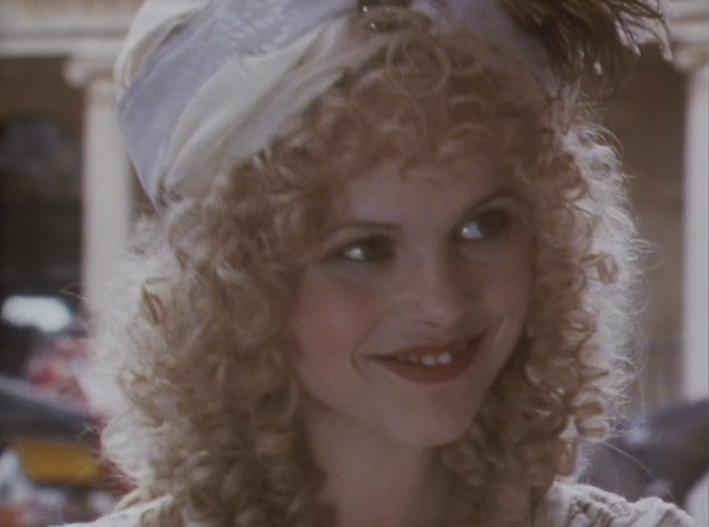
Henry comes for Catherine

Did I find anything of redeeming value in this film? Yes, but those comments shall have to wait for another critique. A production that added a marchioness who provided General Tilney with the latest gossip (and perhaps some sport in his bed), but that prevented Henry Tilney from saying some of his best lines deserves little praise.

Why was the marchioness (Elaine Ives-Cameron)added?

How would Lady Catherine de Bourgh have critiqued the film, I wonder?

“I send no compliments to the director or script writer. They deserve no such attention. I am most seriously displeased.”

I must explain that this film was one of the main reason why I did not read Northanger Abbey until the very last of Jane’s novels. The story as told in this film is quite awful, so you can imagine my delight and surprise when I finally met Jane Austen’s actual characters in print.

Read more on the topic:

Read Full Post »

« Newer Posts - Older Posts »